
The Conjuring: Last Rites Review: Mixing Reality and Fiction, Terror and Introspection
With The Conjuring: Last Rites, directed by Michael Chaves, an era of contemporary horror cinema comes to an end. Since 2013, the year in which James Wan brought the first installment to the cinema, The Conjuring, the franchise has become one of Hollywood’s most prolific and profitable sagas, capable of building a true narrative universe centered on stories of possessions, demonic entities, and paranormal investigations. Twelve years and several spin-offs later, the saga comes to its conclusion (although with this type of operation, nothing is ever truly engraved in stone) with a film that collects the legacy of the previous chapters and attempts to offer a definitive epilogue to the struggle of the Warren couple against the forces of evil. Like previous films, too, The Conjuring: Last Rites is inspired by a true case, that of the Smurl family infestation that occurred in the 1980s in West Pittston, Pennsylvania.
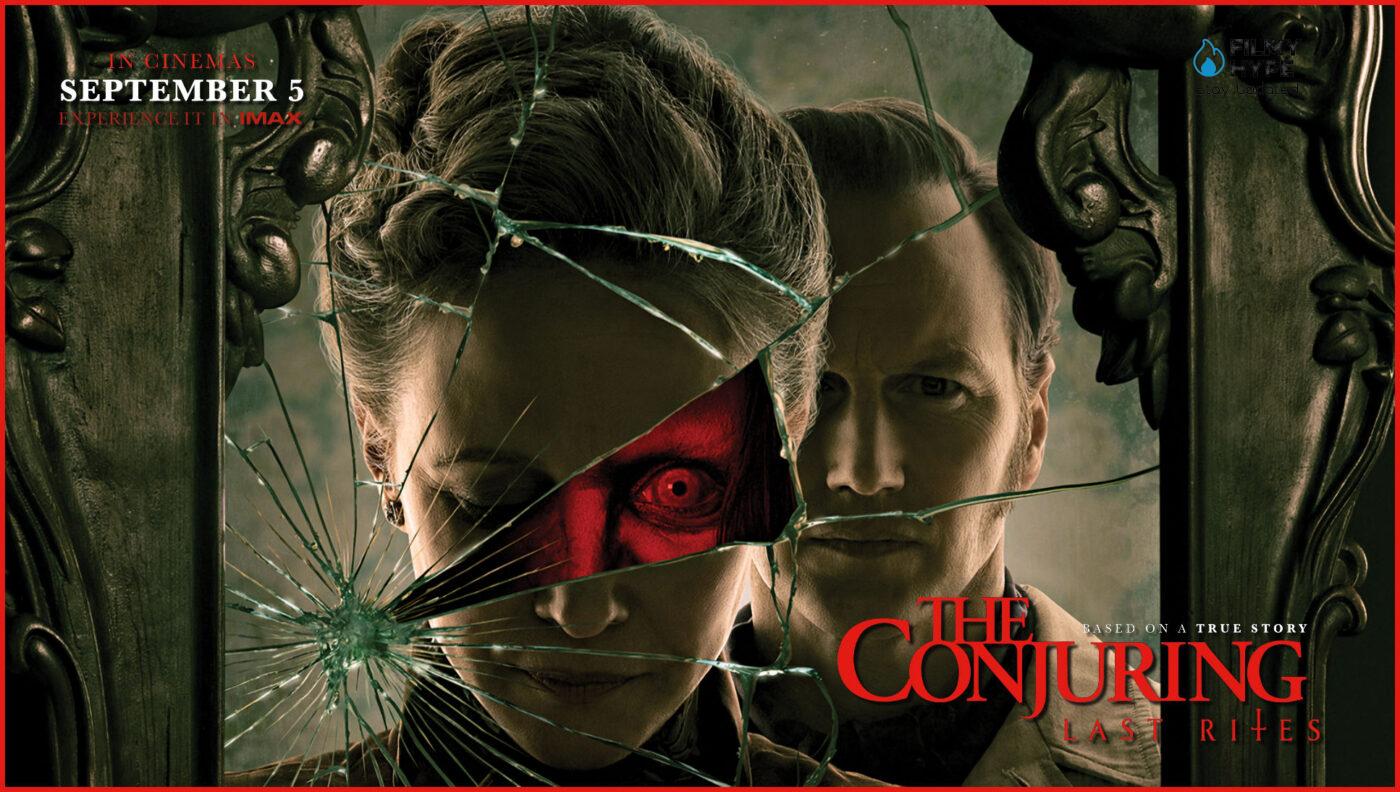
The Conjuring: Last Rites transports fans of the so-called “The Conjuring Universe” into the latest effort by the famous Warren couple, in a case that will touch them deeply, as well as upset their balance after the vicissitudes that fans know very well. Again, the feature film is based on a true story, finding its narrative roots in the case of the Smurl family infestation. Famous among mystery enthusiasts, the story of this family unit caused a sensation because, according to them, the house in which they lived was inhabited by a demon in the period between 1974 and 1989. Cinematic reality and fiction go hand in hand once again, therefore, in a series that has always worked in this way, however, forging The Conjuring – The final ritual on an underlying sentimentalism that aims to adequately greet the fans who have been following the events at the center of these films for years.
The Conjuring: Last Rites Review: Story Plot
Five years have passed since the trial of Arne Johnson (the story at the center of the previous one The Conjuring – By order of the devil, again directed by Chaves) and the Warrens have decided to put aside their investigative activity to dedicate themselves to university work and, above all, to the preparations for the wedding of their daughter Judy (a prologue set in the ’60s explains how the girl, born prematurely, is linked to the first real paranormal case faced by her parents). In parallel, the aforementioned Smurl family (headed by dad Jack and mom Janet) begins to be haunted by a supernatural entity after purchasing an antique mirror at a flea market. The case immediately hits the news, but at first Warrens are highly reluctant to provide their services… at least until the suspicion of a connection between Judy and what is happening in the Smurl house forces them to deal with the disturbing presence.
In The Conjuring: Last Rites, he finds Ed and Lorraine Warren, two people who have chosen to move away from the limelight of paranormal news and build a more balanced and peaceful private and working existence. The couple, famous for investigations that fueled debates between skeptics and believers, between faith and reason, decided to dedicate all their strength to a more institutional path, with the aim of transferring skills and testimonies within the academic environment. A choice which, at least apparently, seems to mark the end of an era of particular cases and disturbing presences, but also of myths and a fame that is still alive. Yet, the quiet of this family does not last in The Conjuring: Last Rites. The wear and tear of routine, the persistence of requests coming from those who know their value well, and a situation that affects them directly in private will lead them to an inevitable, even if partly painful, decision: to return to the field.
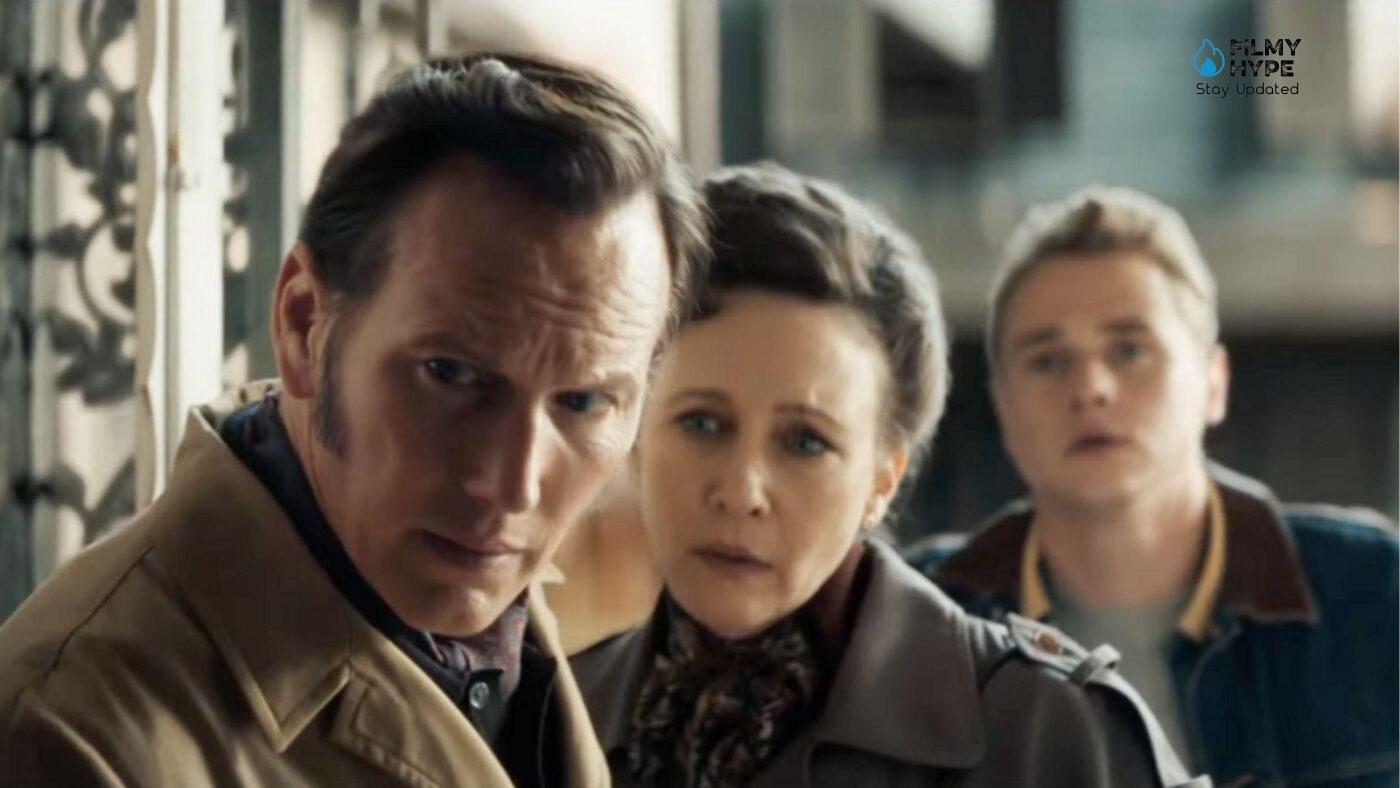
It is at this juncture that they meet Janet and Jack Smurl, a couple at the center of a family whose daily life seems undermined by inexplicable phenomena inside their home. The circumstances that lead them to this latest intervention are thus intertwined with the call of a past that has never been completely forgotten. The Smurl case then becomes the new center of investigation, bringing the Warrens back into the dynamics of a struggle between reason and suggestion, faith and fear. The line between reality and belief tapers once again in The Conjuring: Last Rites, with the Smurl family home as a stage for forces that escape any certain definition. A story that not only once again tests the resistance and strength of the protagonists, but reopens the eternal debate on the relationship between science, spirituality, and the unknown.
The Conjuring: Last Rites Review and Analysis
As anticipated, the entire game of The Conjuring – The final ritual is based precisely on family bonds, starting from the most intimate dynamics of a couple that transform into a family, with some terrible shadows hovering around the very act of “being born.”. The analysis and reflection on the relationships between mother and daughter are not at all new in the saga of The Conjuring, but here everything takes on an even deeper and more direct value, given that it investigates events that directly affect the Warrens, portrayed in two moments, extremely delicate aspects of their lives. Not just one family in difficulty, therefore, but two unexpectedly hit and injured by the inexplicable presence of something that comes from the past and which channels its interests through a memory capable of reflecting on the present of the story. So we find ourselves alongside Warrens: aged and tired, not disinterested, but still intent on keeping a balance between what they have experienced and what they would like to build, continuing with the most classic events of existence.
Here, The Conjuring: Last Rites chooses to move along two clear and complementary dimensions: that of the private and delicate underwear of a family that tries to “move forward” on its own path, and that of a terror that invests precisely this effort to remain distant and sheltered from the shadows, from the black of a fame that still exists. As also happened in the other chapters of this narrative universe, therefore, we return to humans and to relationships with others, in contact with the most atrocious and inexplicable evil. In addition to that, The Conjuring: Last Rites is clearly built on “a greeting”, on a nod with his hand breaking the fourth wall, referring directly to the fans of all time. In this sense, it works very well as a feature film, because in some way it recalls the first film and, at the same time, presents itself as a “passing of the baton” or, in any case, cloaks itself in an interesting and absolutely emotional generational legacy. Michael Chaves’ direction is directly interested in the action, it’s true, but it also leaves room for quotes and references from the saga itself, incorporating into the story a particular sense of travel with nostalgic features that don’t clash.
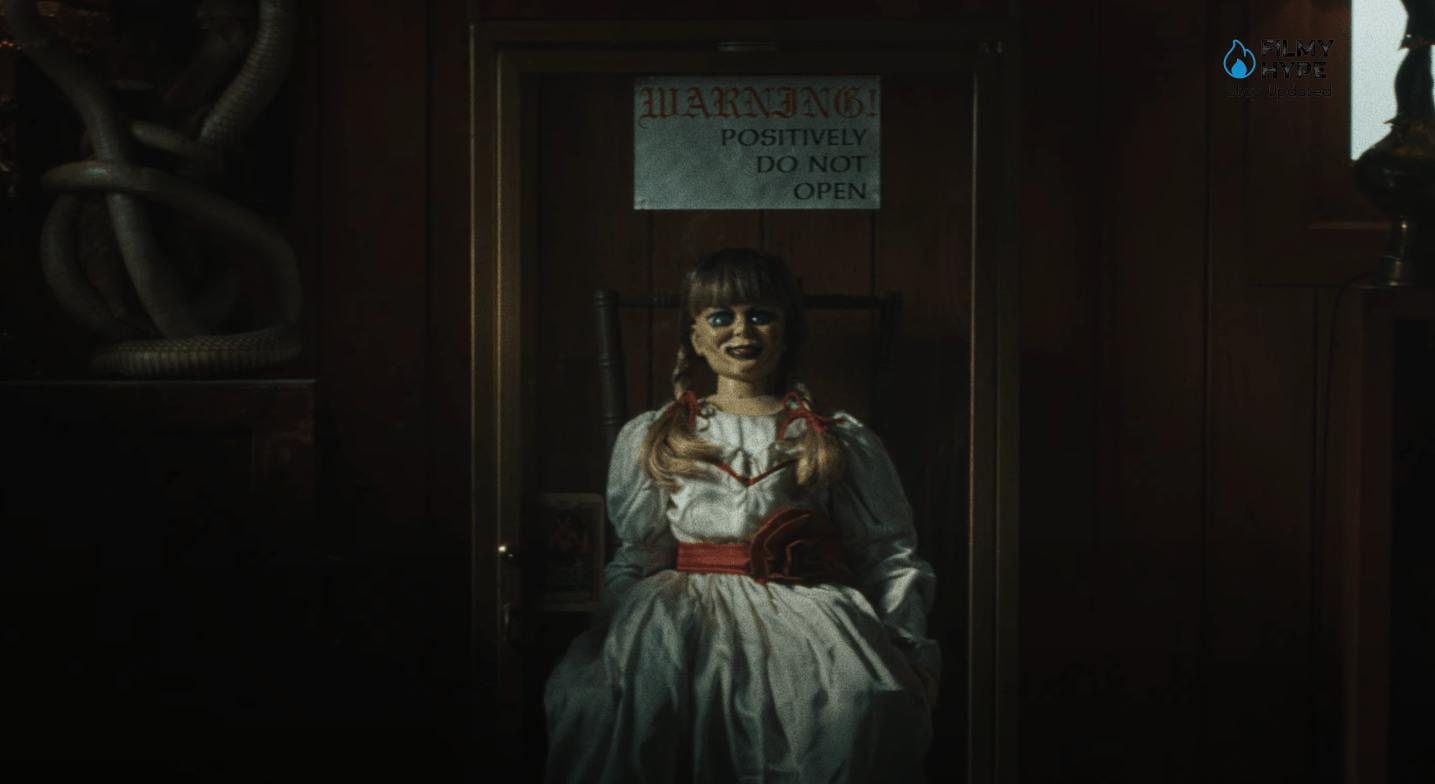
While not innovating in terms of horror, with some lapses in style in CGI and some not-so-original ideas, The Conjuring: Last Rites remains a film with a certain heart and an underlying feeling that should not be underestimated. A piece between memories and nostalgia that reminds us again how strong family bonds are, closing the cinematic journey of a couple, then family, that horror lovers will not forget, once again contributing to fueling the myth beyond fiction. The Conjuring: Last Rites, it was announced as “the last chapter” of the franchise of the same name, and this weight is already felt in the narrative structure: Chaves constructs the film as a definitive showdown, in which the Warrens are no longer simple witnesses of evil, but tormented figures who have to face the consequences of years of battles. Unlike the previous chapter, which moved on a terrain closer to the investigative/procedural thriller, here the story focuses on a personal and almost apocalyptic path, with Ed and Lorraine pushed to measure themselves against their human limits and with the ultimate meaning of their mission.
However, the beating heart of the story, the engine that supports the narrative (even when the horror component risks slipping into automatism and the infestation in the Smurl house of taking a total back seat), is represented by Judy (played by a convincing Mia Tomlinson). Its presence, in fact, is no longer marginal as in the previous chapters (if we exclude the spin-off Annabelle 3), but it introduces a generational element that expands the general discourse of the film interestingly: evil is not an isolated incident, but a cyclical force that regenerates and transmits itself, and with it the responsibilities of those who choose to counteract it are also handed down. Furthermore, the character of Judy allows the film to broaden the discussion relating to the dialectic between faith and doubt and, above all, to the eternal struggle between good and evil into the future: the latter does not end, it simply passes from hand to hand, from generation to generation, like a burden that is inherited. This element confers a final rite a less definitive tone than the title itself suggests, suggesting that rather than an absolute closure, it is a transition, a “final rite” understood as passing of the baton.
Despite having already demonstrated the ability to master the visual tension and grammar of jumpscare (he also directs the spin-off La Llorona – The tears of evil), Chaves never achieves the same directorial inventiveness as James Wan, which through the first two films had introduced a construction of fear based on long and unpredictable times; Last Rites, instead, appears more conventional, marked by expected moments and less capable of surprising the accustomed spectator. Where originality is lacking, Chaves compensates with a more solemn tone: the staging seems to want to constantly mark the sensation of being faced with an “end of the story”, with visual references to the previous chapters and with a dramatic crescendo that culminates in a comparison between the parts of a more spiritual than spectacular nature (the final act is undoubtedly the most successful part).
The Conjuring: Last Rites is not the best chapter of the saga. However, he carries out with dignity the task entrusted to him: to give a respectful conclusion to one of the most popular sagas in the recent history of the horror genre. There is no shortage of references to the past, as well as moments full of tension or emotionally significant, but this fourth and final chapter also reveals all the limits of a formula that, over the years and after many productions, has lost part of its originality. There remains the narrative coherence of a franchise that has always put the theme of family at the center, also of love and resilience as essential feelings and abilities to face the darkness, aware that every victory against evil has a price. Beyond all, this is perhaps the true legacy of the franchise.
The family, still the family, always the family. And why not? The Conjuring: Last Rites has two faces. There is a traditional horror on the surface, possession infestation subgenre, built on the juxtaposition of two types of fear: the shock induced directly by the story, and the disquiet about the likely/possible/actually unrealistic but destabilizing hook with real life. The fact that Ed and Lorraine really existed charges the horror of a sinister subtext; it may have really happened. It matters little that the status of the protagonists is truly controversial and that the majority of alleged cases of possession and infestation are dismissed by the Church itself as suggestion or, even worse, pure artifice: The Conjuring is the only franchise, among recent ones, to have made good use of the formula “taken from true events”.
Beyond horror is family chronicle: fathers, mothers, sons, and daughters, and the things that come between the feeling of a family. Ed and Lorraine look at each other in Smurl, and vice versa. The time that the film takes to match the two narrative lines, the pauses from pure horror in favor of the everyday story of two families – who are actually one, animated by the same threat – serves to sustain the suspense (something will happen, but when? and how?) and to imply that behind the external fear (the strange noises, the invisible presences) lies another, more creeping one. The only thing worse than the demon hidden at the bottom of the mirror is the threat reflected from the mirror: the thought that something might happen to the people you love.
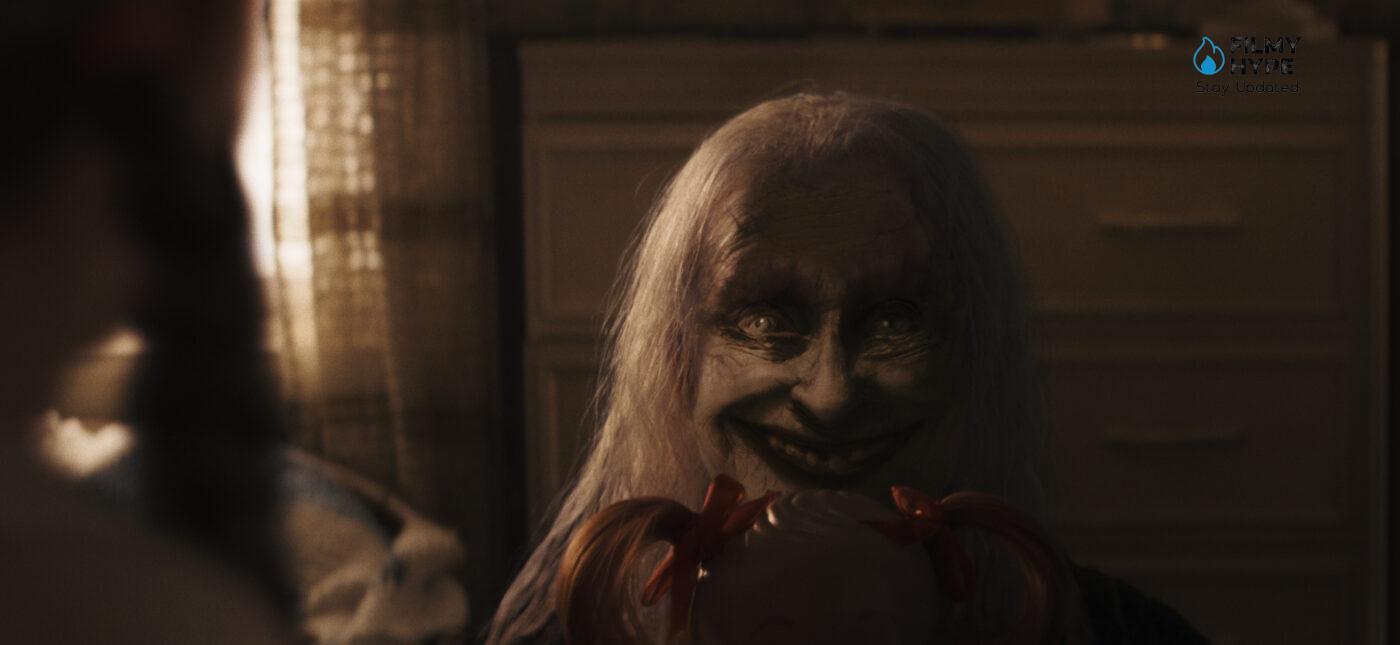
Here, the real enemy. Michael Chaves’s turn, with The Conjuring: Last Rites, a horror film for children told from the parents’ point of view. It is the story of a father and mother who must accept the idea that time (their time) has passed and that children go their own way, with all the risks involved. The minutes spent by the film fixing the pawns in view of the decisive clash, the sense of deaf threat accumulated, one brick of tension after another, the charisma and the alchemy tested between Vera Farmiga and Patrick Wilson, they allude to the possibility of a final pyrotechnic. Instead, also because many of its shocks had been anticipated, it is all quite static and conventional. The most visible advantage of The Conjuring: Last Rites it ends up being his biggest flaw: the sense of firm control over the story, the characters, the atmospheres, exercised by Michael Chaves, tastes like autopilot. It is a mechanized vision in search of flashes, shreds of vitality. Fearful of the big leap, the film doesn’t dare.
It applies especially to the first half, to the growing tension, to the time that history takes to put horror into a corner to talk to us about something else. This applies to the sense of dark oppression evoked by the photograph of Eli Born. This applies to the work of Vera Farmiga and Patrick Wilson, for Steve Coulter (Father Gordin), for Mia Tomlinson and Ben Hardy. It applies to these reasons, The Conjuring: Last Rites, a scary film that knows where to hit, but too cautious in playing with its strengths and not firm enough in dealing with its limits, its demons. It will gratify lovers of the franchise, not demoralize the layman. It is far, and far, from the plastic force and formal audacity of contemporary like Weapons. It is clear that, in the case of The Conjuring: Last Rites, the limits to originality and the constraints of the formula induced by membership of a pre-existing franchise weigh heavily. In the beginning, however, an ancient evil, which has survived time and the many battles of light over darkness, lurks –as is often the case and Stephen King knows something about it – right in the heart of the American province.
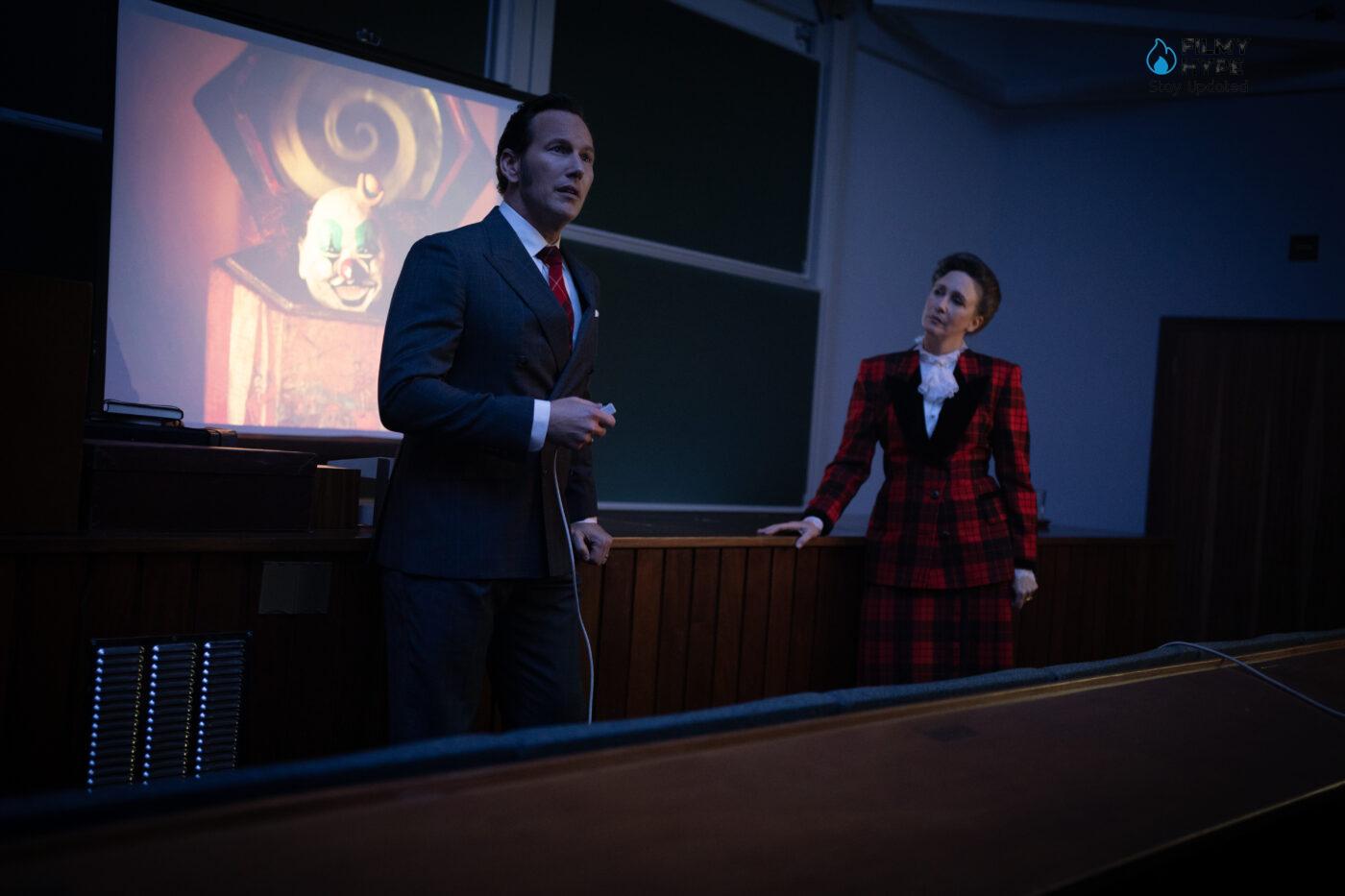
An evil that has a now well-known name – waiting is worth the surprise – that has raged this time against a working-class family in Pennsylvania, victims of abuse and torture of all sorts. The Warrens thus return to their origins and close the circle. On the scales, two families to save. With only one difference: one observed evil, the other controlled, dominated, and perhaps even generated it. Return, therefore, to the opening question. Distant from the legal thriller linguistics of the previous chapter, Last Rites he sinks again into the darkest, most distressing and desperate horror cinema, then tracing a sweet and melancholy streak that belongs to farewell: this time definitive and glorious, and inevitably to the family, now united more than ever, albeit due to evil and its impregnable roots. Michael Chaves, a sagacious author of scary cinema, offers enthusiasts and simply curious a feature film of great entertainment, both on a visual and writing level. The rhythms are no longer frenzied, but rather relaxed and melancholy, especially at the height of the battle and the Warrens’ epic farewell from the big screen and their audience. The chills are followed by smiles. Once again, however, they are only projections of a possible future: an embrace between ghosts, perhaps destined to melt or, on the contrary, to unite forever. Memorable.
The Conjuring: Last Rites Review: The Last Words
The Conjuring: Last Rites takes up the Warren saga, dragging them into the investigations relating to the Smurl family case, mixing reality and fiction, terror and introspection. The film explores the boundary between faith and reason, delves into the family bonds and delicate moments of the protagonists, and at the same time pays homage to long-time fans with quotes and references to the saga. Even without moments of impact in horror and with some lapses in CGI, Michael Chaves’ direction balances action, sentimentality, and nostalgia, offering an emotional farewell to the cinematic journey of the famous spouses. The Conjuring: Last Rites is not the best chapter of the saga. However, he carries out with dignity the task entrusted to him: to give a respectful conclusion to one of the most popular sagas in the recent history of the horror genre.
Cast: Vera Farmiga, Patrick Wilson, Ben Hardy, Beau Gadsdon, Elliot Cowan, John Brotherton, Peter Wight, Madison Lawlor, Kate Fahy
Director: Michael Chaves
Where to Watch: In theaters
Filmyhype.com Ratings: 3/5 (three stars)