
The Beast in Me Season 1 Review: Elegant and Psychologically Charged Thriller?
Vinegar’s The Beast in Me is presented openly. What, more disturbing atmosphere, but givenas a psychological thriller focused on the confrontation between two wounded, intelligent, and dangerously compatible personalities. The idea behind it is powerful: take a writer paralyzed with grief and bring her face-to-face with a man surrounded by suspicion of being a murderer. From this encounter, the series promises slippery emotional and moral territory, where every gesture can reveal a dark side. The initial atmosphere is magnetic: a rich neighborhood, an unresolved bereavement, a disturbing figure who moves in next door, and a woman who has lost too much to allow herself to be afraid. It’s not often you come across a television series where all the elements fit together perfectly. Normally, we find ourselves faced with extraordinary performances ruined by terrible dialogue, or interesting stories that are slaughtered by poor photography or rough editing. However, when the writing is solid and the director has the intelligence to leave room for the actors, something special can happen.
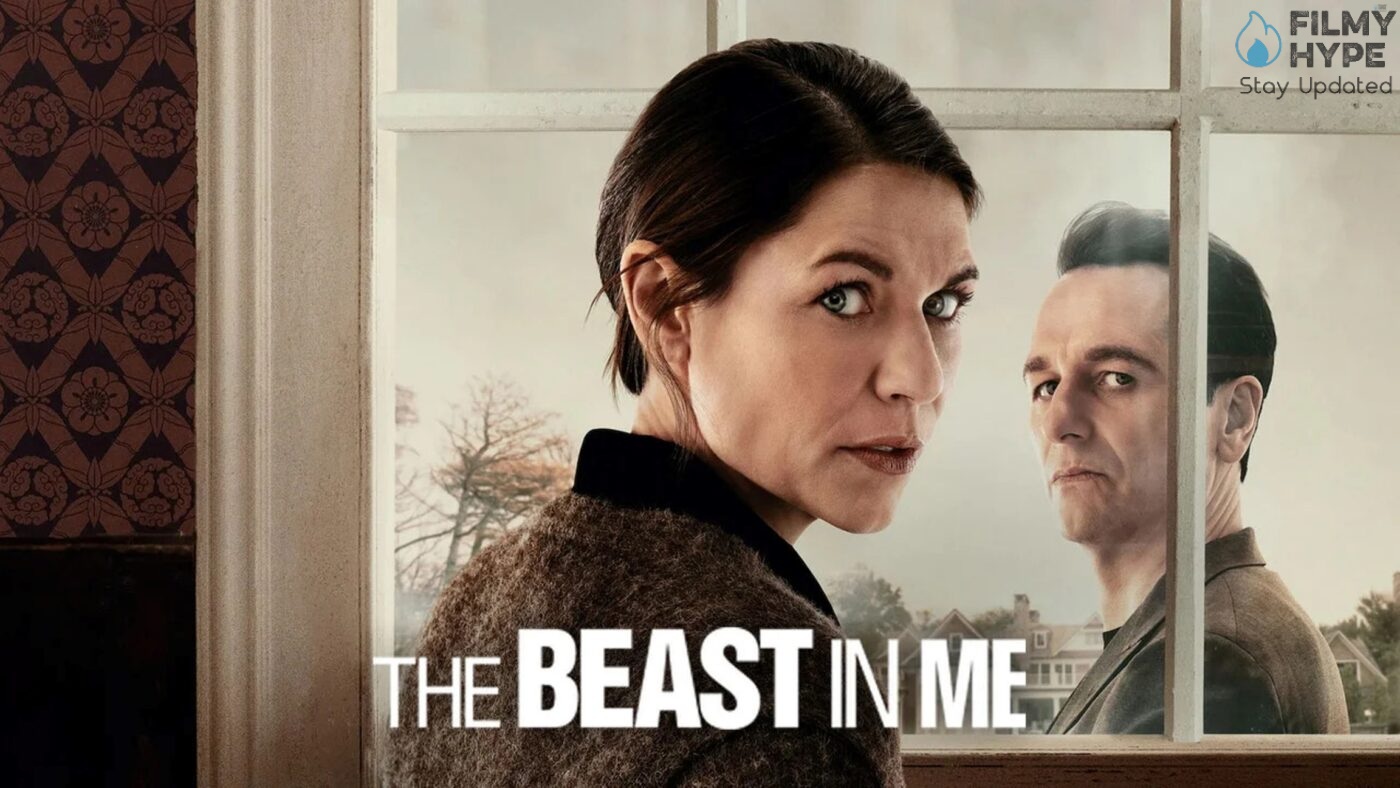
This is what happens in The Beast in Me, the new Netflix miniseries with Matthew Rhys and Claire Danes, two sacred monsters of acting that prove once again why they are considered among the best around. Personally, I would have liked an even darker and more disturbing atmosphere, but considering the amount of junk that comes out on the platforms daily, this product really deserves attention. “Defamation is boring.”. Word of Aggie Wiggs, best-selling writer with the face of Claire Danes, protagonist of The Beast in Me. The Netflix miniseries was born from an idea by Gabe Rotter, whose showrunner is Howard Gordon, co-creator of Homeland – Spy Hunt. A reunion between the screenwriter and the actress that sets high expectations for a show he sees among the producers, Conan O’Brien, and Jodie Foster. Also in the protagonist cast is Matthew Rhys in the role of Nile Jarvis, a millionaire who has become rich in the real estate sector, on whom a defamatory accusation hangs, having killed his wife and getting rid of the body.
The Beast in Me Season 1 Review: The Story Plot
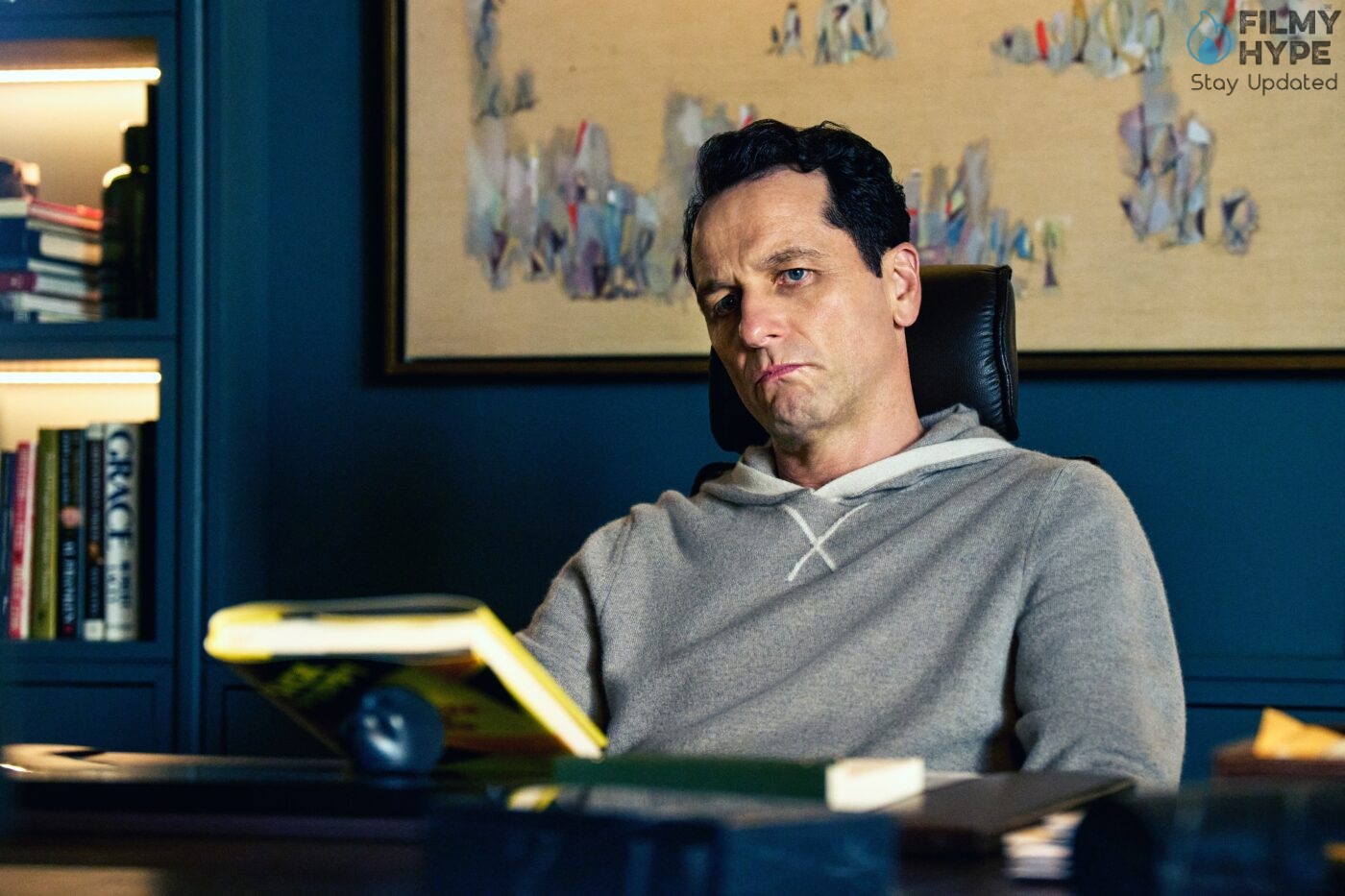
Nile is constructed like an enigma: a very rich, ambiguous man, suspected of his wife’s disappearance. He’s the kind of character who should be an unexploded bomb, full of implications, contradictions, and unspeakable secrets. Yet, the series seems to fear its own raw material. Matthew Rhys offers a calibrated interpretation, made up of small scraps and sinister smiles, but the script does not provide him with enough ground to get beyond the surface of suspicion. Nile functions as a destabilizing figure to Aggie, but less as a standalone character. The result is that the central relationship – the psychological duel that should sustain the entire series – oscillates between the promising and the predictable.
The meeting between Aggie and Nile is the theoretical heart of the series: two human beings who, despite starting from different traumas, seem to recognize themselves in their respective abysses. The series builds the initial dynamic well, made up of distrust, intellectual attraction, and mutual provocations. Nile understands Aggie more than she wants to admit. Aggie sees in him an opportunity to get out of her emotional torpor. But what should explode on paper remains dampened in practice. The cat and mouse game is elegant, refined, but rarely surprising. Their relationship remains incandescent on a potential level, never fully releasing the energy it promises in the first few episodes.
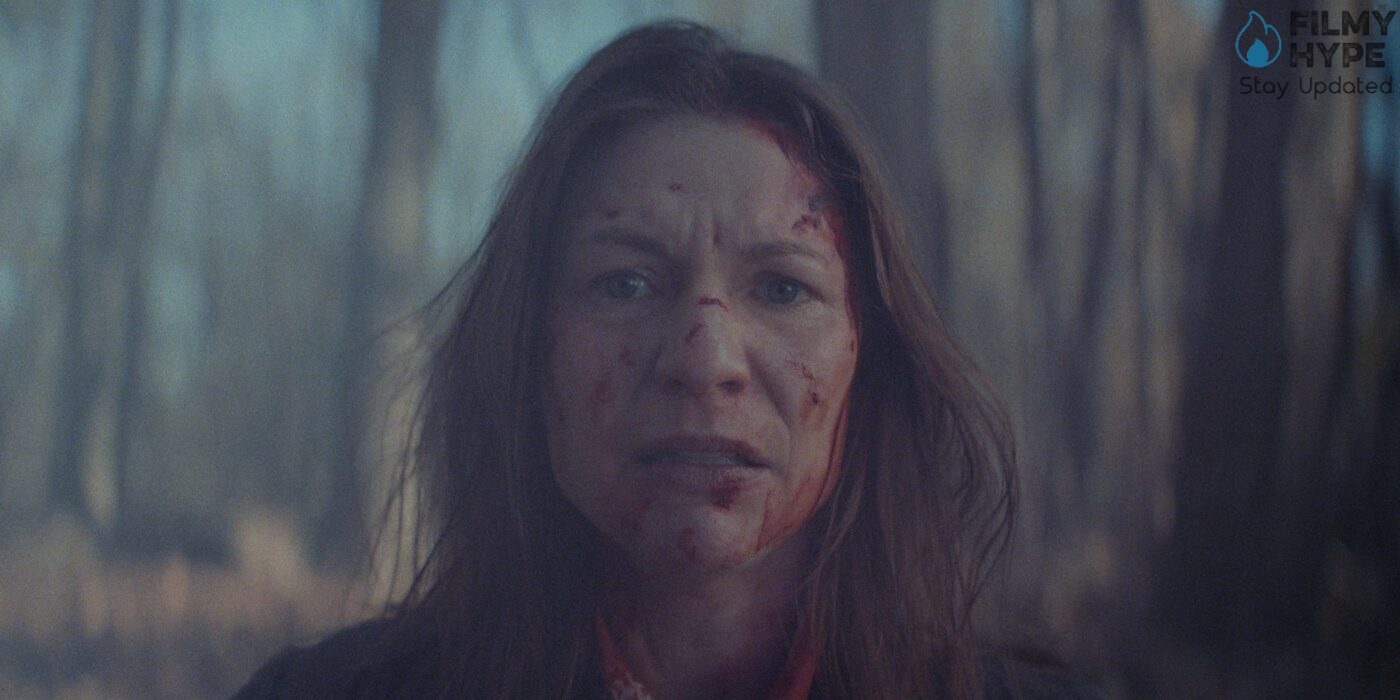
The story recalls the atmosphere of Succession with a touch of psychological thriller. Nile Jarvis, played by Matthew Rhys, is a real estate mogul who moves with his second wife, Nina (Brittany Snow), to a residential area nestled in the woods of Oyster Bay, New York. The move comes as suspicion hangs over him that he made his first wife, Madison, disappear. No one has forgotten that story, and his presence in the neighborhood immediately creates tension. His neighbor is Aggie Wiggs, a writer played by Claire Danes in great shape. Aggie’s house is literally falling apart, just like her existence after the tragedy that struck her: her young son died in a car accident, and this loss destroyed her marriage to Shelley (Natalie Morales). Now she lives alone, closed in anger and regret, completely disconnected from the rest of the world.
The Beast in Me Season 1 Review and Analysis
The first face-to-face meeting between Nile and Aggie is pure negative electricity. She does not hide contempt and distrust, but he instead displays a studied charm that masks something much darker. The spark of conflict strikes when Nile proposes to create a jogging trail through the neighborhood’s common woods, and Aggie firmly opposes it. The director, Antonio Campos, already the author of The Staircase, masterfully constructs this scene: the position of the characters in space, the looks, the movements immediately reveal the power dynamics in play. Cinematographer Lyle Vincent uses corners and gaps to create a sense of palpable unease that pervades the entire series. Aggie’s curiosity about Nile’s murky fame leads her to grow closer to him, until the man makes her an unsettling proposition. He asks her to abandon the project she has been working on for some time, a book about the unlikely friendship between Ruth Bader Ginsburg and Antonin Scalia, and instead devote herself to writing her biography. The goal of Nile is to rebuild her public image through the words of a respected writer.
Aggie accepts, driven by complex motivations that will gradually reveal themselves. The investigation into Nile’s possible guilt becomes a way for her to get out of the torpor into which she sank after the death of her son. Tom Hiddleston compared great acting to a tennis match, where the skill lies in responding to the strokes of the stage partner with the same intensity and precision. Watch Rhys and Dane’s acting together; it’s exactly that: a continuous exchange of emotions, looks, and nuances that keeps you glued to the screen. Claire Danes has one of the most expressive faces on television. His chin shaking, his cheekbones twitching in pain, his forehead wrinkled with anger, his eyes widening in moments of inappropriate exaltation: every micro-expression tells a story. Matthew Rhys, fresh from years spent playing misanthropic but fundamentally respectable characters as in Perry Mason, here completely transforms. His Nile Jarvis oscillates between sociopathy and vulnerability, between magnetic charm and physical violence, making it impossible to establish whether he is really guilty or simply a man deeply damaged by his own traumatic childhood.
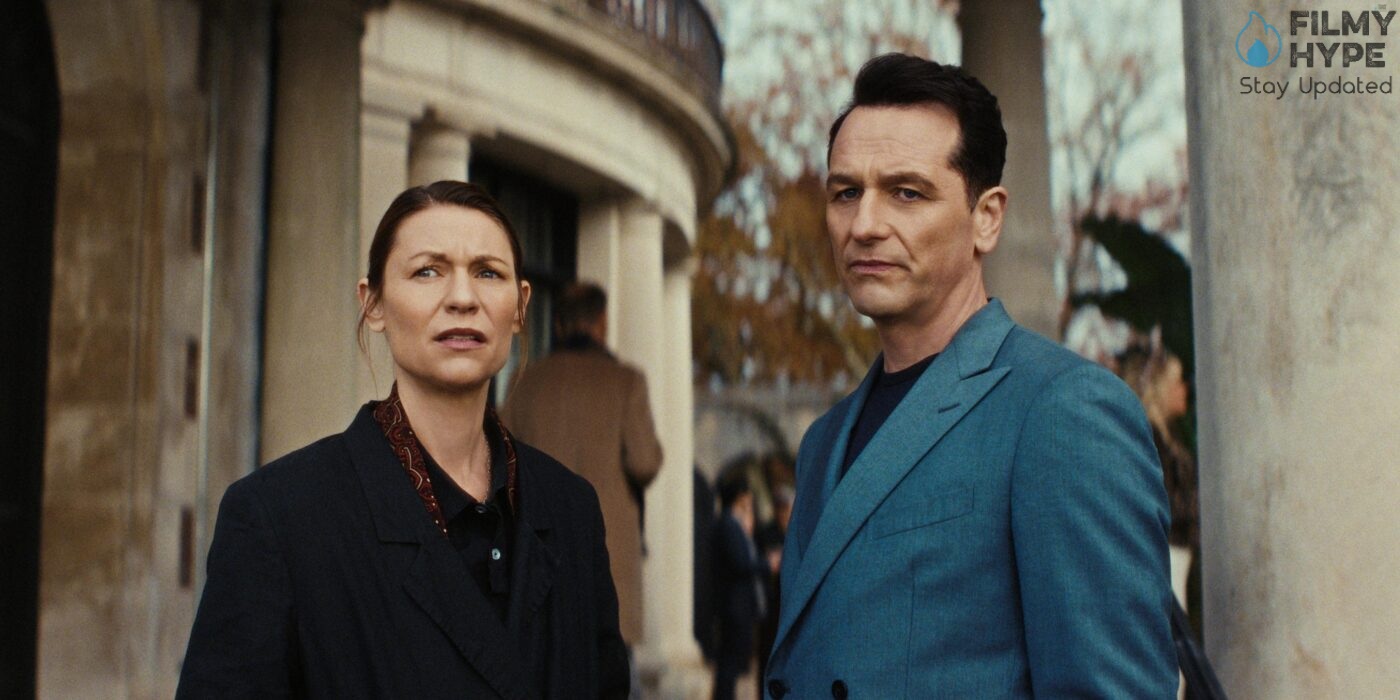
Rhys manages to emanate a toxic magnetism that attracts you despite the reason suggesting you stay away. Among other things, seeing him dance to the tune of Talking Heads could be the more sensual scene of the TV year. Who plays the oppressive father figure, our personal Logan Roy? Obviously, Jonathan Banks brings Martin Jarvis to the stage with his usual perfectly calibrated roughness. Martin is a billionaire determined to protect his empire from anyone, including his son. Banks possesses that rare ability to always be recognizable yet perfectly adaptable: the same actor who made us laugh like Professor Hickey in Community, here he totally convinces as a ruthless ruler of Long Island, elegant in his cashmere sweaters while devouring political opponents. Also, the supporting cast proves itself up to par. Brittany Snow, completely wasted in the terrible Hunting Wives, here is how Nina finally gets to show her talent, moving with calculated caution within marriage for reasons that will only gradually be understood. Hettienne Park, who deserved more important roles since the days of The Outsider and The Last of Us, gives an intense and distressing performance as FBI agent Erika Breton.
If all the elements work beautifully –from Loren Weeks’ set design that delivers some of the best wallpaper choices ever seen on television, to the hypnotic soundtrack composed by Sara Barone, Sean Callery and Tim Callobre with their haunting synths, to the writing that you dose the twists intelligently without ever falling into the gimmick – why doesn’t the series achieve absolute perfection? The title itself, The Beast in Me, suggests that each of us holds within ourselves a beast capable of monstrous actions when pain turns into uncontrollable anger. Danes and Rhys brilliantly manage to give life to two deeply wounded and complex people. However, the series could have gone further in blurring the lines between good and evil by showing how rarely in real life do entirely good or completely evil characters exist. He could have taken more risks in exploring the grey areas of the human soul.
However, it remains a minimal complaint when faced with a product of this quality. I advise you to turn off all secondary devices and dedicate your complete attention to these eight episodes, which represent a little gem in the current television landscape. One of the most fascinating elements is the socioeconomic subtext: the Long Island neighborhood as a golden refuge where money not only buys houses, but guarantees immunity. The tension surrounding the Jarvis family, the patriarchal power exercised by the father-tycoon, the political protests against their real estate empire… all of these elements could compose a rich and disturbing fresco. The series uses them more as decoration than as a true dramatic engine: the criticism of the power of the rich remains intuition, never complete analysis. However, the character played by Jonathan Banks introduces an interesting intergenerational dimension, showing how the violence of power is transmitted and deformed.
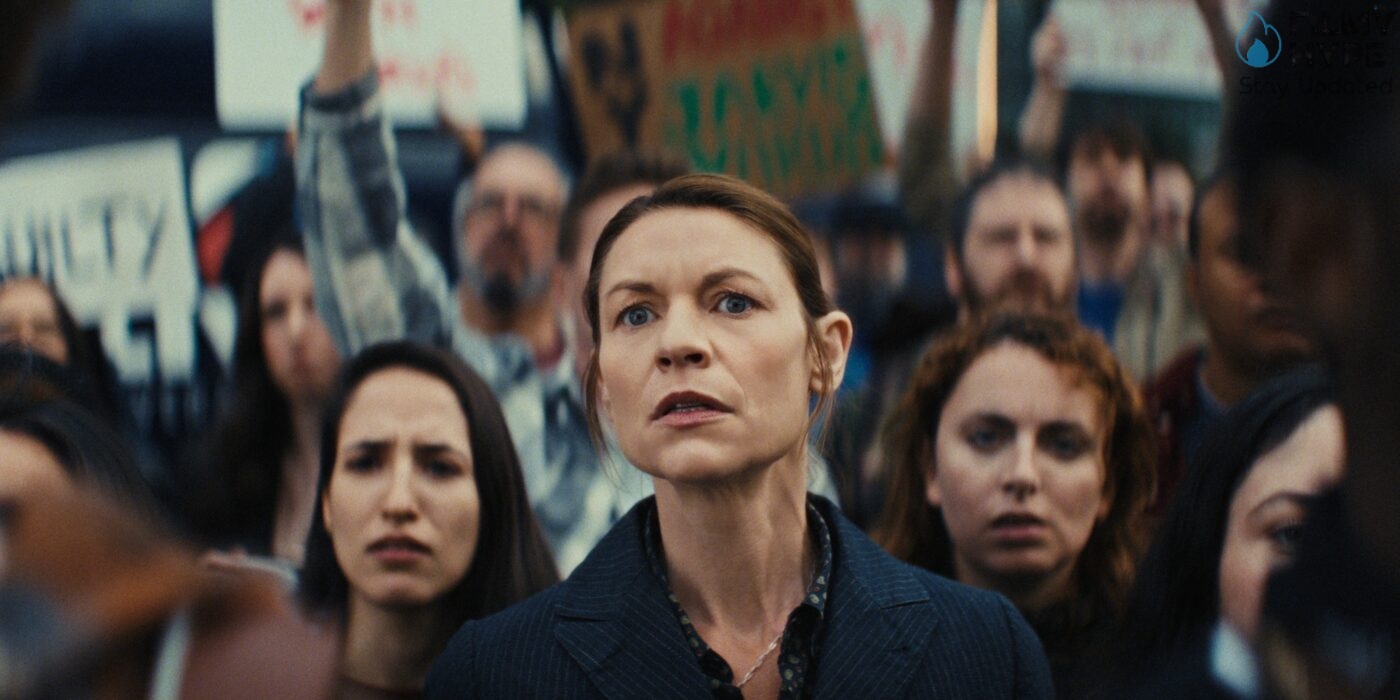
Shelley, Aggie’s ex-wife, brings with her a suspended tenderness that would have deserved more space. Nina, Nile’s new wife, is a face that moves between complicity and fear, but she, too, remains more suggestion than a defined figure. Agent Brian introduces the outside eye to the threat posed by Nile, but his story also seems to exist more to serve the plot than to develop organically. This is perhaps the most obvious choice of the series: everything converges on Aggie, often sacrificing the possibilities for dramatic expansion around her. Where The Beast in Me really excels is in building the atmosphere. The direction uses spaces, shadows, silences, and domestic noises to maintain a constant feeling of threat. The inside of Aggie’s house seems to be breathing, gurgling, complaining. The tight shots on the protagonists’ faces amplify every micro-expression, transforming even a banal conversation into a moment full of tension. The sound – pipes, steps, doors closing – becomes almost a third protagonist, a constant witness to the emotional precariousness of the characters.
If the atmosphere works, what struggles is the architecture of the tale. The series starts strong, settles at an intriguing pace, but progressively loses bite. The revelations are distributed irregularly, some twists and turns are anticipable, and an entire episode dedicated to the flashback ends up deflating the tension just as it should intensify. The impression is that the series could have been more incisive with a shorter format: in eight episodes, some dynamics are elongated, others neglected. The ending attempts to raise the cards and suggest a thematic decomposition: who really is the “monster”? Who manipulates whom? What is the price of truth? However, the last scene –meant to be disturbing or symbolic – risks leaving more perplexity than emotional impact. It doesn’t ruin the series, but it doesn’t elevate it.
Here we go back to defamation. Jarvis, always self-proclaimed innocent, had to move away from New York and move out of town to keep a low profile and stop the chatter linked to his name. A terrible element for business, which sees his family involved in the construction of a gigantic housing complex in the Big Apple, opposed by a young policy in favor of construction designed for the less well-off groups. In moving out of town, Jarvis and his new wife, Nina (Brittany Snow), end up becoming Aggie’s new neighbors. And this is where the trouble begins. The writer, depressed by the death of her young son, lives a solitary life. She spends her days trying in vain to write a new book and is haunted by guilt and rage. Meeting with the new neighbor is tumultuous, but it is also the spark that rekindles the long-extinguished fire. And, as time passes, a complex bond is created between the two, also sealed by Aggie’s decision to write a biography of a man. But behind that apparently editorial work, there is also a personal investigation by the woman determined to find out if Jarvis is innocent or guilty.
Psychological thriller which, through its protagonists, talks about masks that each of us wears every day and the ease with which the truth can be manipulated for one’s own gain. Seeing The Beast in Me leaves with a staid step; it is also true that, over the course of its eight episodes, the pace becomes faster. Thanks to a narrative structure in which viewers know more about the characters and the choice to play on multiple action levels that lead the story towards the final climax. As the title suggests, the series is about our most violent and dark. The one we try to repress, but which tells a lot about who we really are. The script emphasizes the consequences of what happens when we decide to atomize, or there’s nothing we can do to stop her. But what makes it interesting is the choice to change and shift the point of view, forcing us to look at a given situation from a different perspective.
The Beast in Me is also a story that addresses the theme of mourning and of lies which we (tell ourselves) so as not to have to face reality or, more simply, ourselves. Aggie, since her son’s death, no longer has any control over his life and work. Claire Danes gives us an interpretation that owes much to the silences, pauses, and facial expressions. Through the few flashbacks to his past, the series shows us the psychological and physical change of her character, who was crushed by the pain and lies she erected around herself to protect herself. In front of her is Matthew Rhys’ Nile Jarvis. A man rich in shadows yet magnetic– haughty as he is charming, ruthless, and at the same time capable of outbursts of generosity. The most fascinating element of the miniseries is precisely the transformation of their relationship, the tense exchanges, and moments in which they let each other’s guard down. Together, the Danes/Rhyes couple works, and the parallel double track that distinguishes their relationship is what keeps the viewer interested.

Another point in favor of The Beast in Me also includes a line dedicated to politics, thanks to the character of Oliva Benitez. A rising leader who, like Democrat Alexandria Ocasio-Cortez, looks to the lower strata of the population. What makes this part of the story so interesting, however, is linked to the themes of corruption and compromise what do they do? The Beast in Me is given as a series brought into reality. Intelligent entertainment, supported by excellent performances, carves out its space within a competitive offer in which it is increasingly essential to focus on the quality of writing. The Beast in Me reunites Claire Danes and showrunner Howard Gordon after 8 seasons of Homeland. The actress plays Aggie, a writer in crisis, devastated by mourning for the loss of her son. The meeting with Nile Jarvis (Matthew Rhys), a rich building contractor accused of killing his first wife, is the trigger that rekindles her and pushes her to return to writing. The complex relationship between the two is at the center of a story that intertwines psychological thriller and drama. The miniseries explores themes such as the manipulation of truth, mourning, and the masks we wear on a daily basis, placing emphasis on our darkest side. Despite an uncertain start, the pace progressively increases thanks to a narrative played on multiple narrative lines that move simultaneously. Excellent performances by Danes and Rhys for a series that also looks to the present by inserting references to political corruption.
The Beast in Me Season 1 Review: The Last Words
The Beast in Me is a Netflix miniseries where practically everything works: solid writing, skillful direction, evocative photography, and above all, Matthew Rhys and Claire Danes in a state of grace. The story of a billionaire suspected of the murder of his wife and the nearby writer investigating him is a well-constructed psychological thriller with an extraordinary cast. The only flaw: he could have dared more to blur the lines between good and evil. Otherwise, it’s a damn good series. The Beast in Me is an elegant and psychologically charged thriller, supported by two great performances but held back by a narrative that does not dare to the end. Fascinating, atmospheric, well-acted, but less surprising than it promises.
Cast: Claire Danes, Matthew Rhys, Brittany Snow, Natalie Morales, Jonathan Banks, David Lyons
Director: Antonio Campos, Gabe Rotter
Streaming Platform: Netflix
Filmyhype.com Ratings: 4/5 (four stars)







One Comment