Stranger Things Songs That Defined: Music as a Portal to Memory and Mayhem
In the world of Stranger Things, music is never just background noise. It is structure, breathing, memory, and warning. It’s the emotional core of a scene, a way for characters to say what they cannot speak aloud, and a tool to build tension without a single line of exposition. Over four unforgettable seasons, the Duffer Brothers and their team have masterfully turned iconic songs into central pillars of the show’s mythology. These tracks aren’t just nostalgic callbacks; they are active participants in the narrative. Some open emotional portals to the past, others function as a refuge, and a few remain forever associated with sheer survival. What follows is a deep dive into the definitive musical moments that shaped the identity of Stranger Things, exploring how each song became an unforgettable portal into the hearts of its characters.
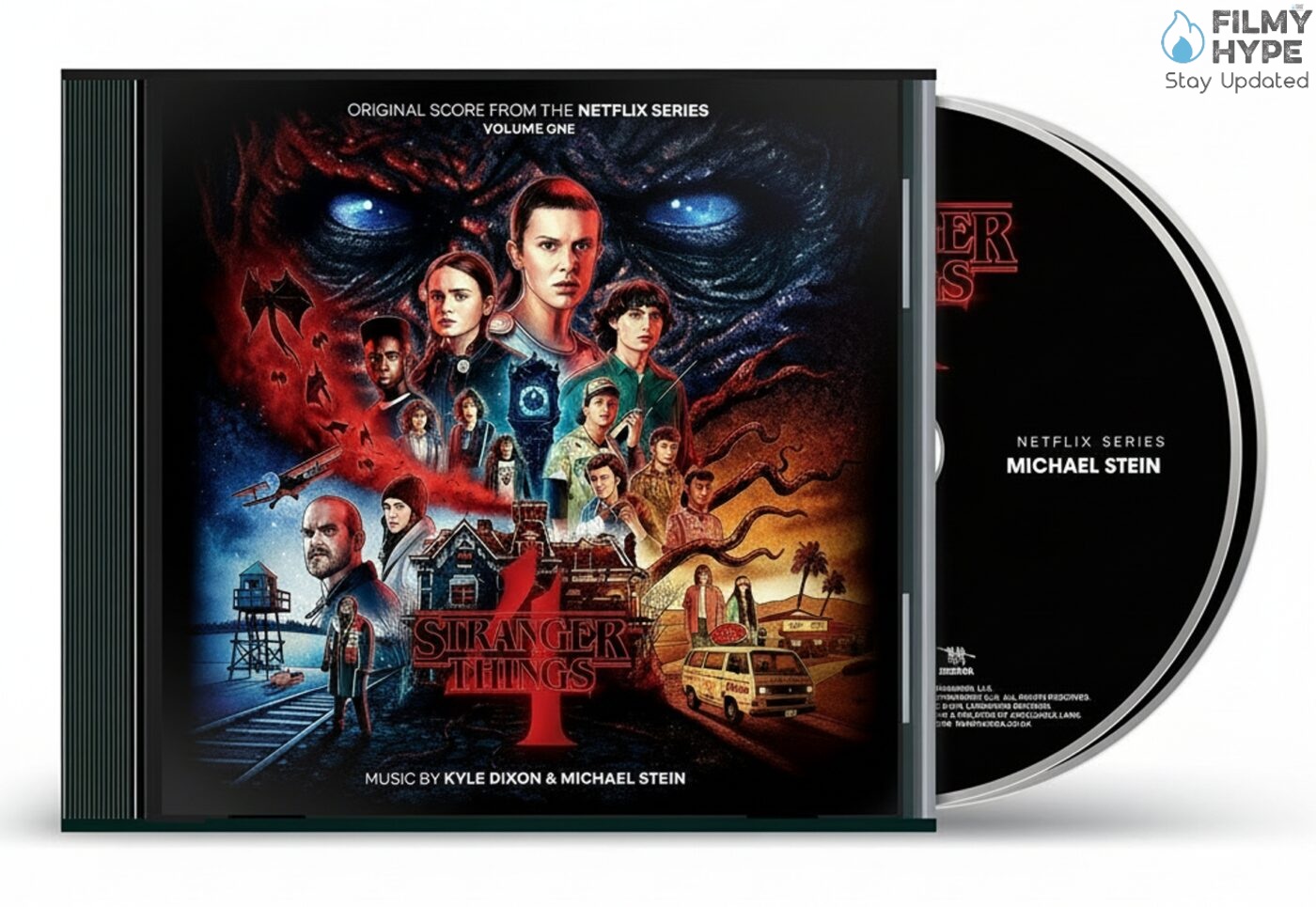
The Songs and Best Musical Moments of Stranger Things
“Should I Stay or Should I Go” — The Clash
The Song That Started It All: A Brother’s Bond and a Lifeline
The first song that truly mattered in Stranger Things wasn’t merely an ’80s hit designed to trigger nostalgia; it was the physical manifestation of a bond between two brothers. Jonathan gave Will The Clash’s cassette long before the series began, a simple, profound gesture to remind his younger brother that music could be a safe harbor. The song’s power is revealed early on, its raw, punk-rock chords echoing from a lost Walkman, seeping through the membranous walls of the Upside Down as Will Byers clings to its melody to avoid completely falling apart.
“Should I Stay or Should I Go” brilliantly condenses the show’s core existential dilemma: stay and fight, or flee and survive? Stay in the terrifying unknown or go back to a normalcy that may be lost forever? The lyrics, in their beautifully simple ambiguity, become an unwitting mantra for Will as he learns that survival isn’t just about waiting for rescue—it’s about sustaining your own identity when the world around you becomes monstrous and unrecognizable. Here, music functions as a defiant human echo in a dimension that denies all humanity. It was our first confirmation that sound—not light, not force, not speech—could travel through a portal more effectively than anything else.
“Heroes” — Peter Gabriel Version
The Song That Redefined Tragedy: Emotional Distortion and Heartbreak
The scene featuring Peter Gabriel’s haunting cover of David Bowie’s “Heroes” defines how Stranger Things uses music not to accompany emotion, but to completely reshape and distort it. As Joyce, Hopper, and Mike believe they have found Will’s body at the quarry, Gabriel’s slow, mournful piano and ethereal vocals transform a moment of shock into an unbearable, expansive lament.
This version is a masterclass in narrative subversion. Bowie’s original is a triumphant anthem of love and hope against all odds. Gabriel’s cover, however, drains all that hope, leaving only the ache of loss. The music doesn’t just accompany the tragedy; it creates it, underlining every gut-wrenching close-up and making the audience’s omniscience a source of profound pain. The strength of this moment lies in how the song alters our perception of time, stretching a brief event into a prolonged, almost ritualistic farewell. It was an early aesthetic statement: Stranger Things would use familiar songs not to confirm our feelings, but to twist them into something new and devastating.
“Africa” — Toto
The Song of Normalcy: Adolescence as an Act of Defiance
Not every song in Stranger Things is a vehicle for pain or existential dread. Some, like Toto’s “Africa,” are crucial for drawing out the tender, clumsy, and utterly relatable side of adolescence. Used in the second season, the song serves as a poignant reminder that for our young heroes, music is also a territory of belonging, a shared language that helps them navigate a world spinning out of control.
As Hawkins grows increasingly unstable, the characters desperately try to anchor themselves in a teenage routine, with songs like “Africa” functioning as aural talismans. The contrast between the song’s smooth, yacht-rock harmonies and the looming supernatural threat is obvious, but it never feels forced. Stranger Things has always understood that childhood doesn’t vanish overnight; it filters through the cracks even in the worst of times. “Africa” symbolizes that stubborn, beautiful insistence on holding onto something—anything—normal, when normality itself has ceased to exist.
“Ghostbusters” — Ray Parker Jr.
The Song That Blurred Fiction and Reality: Playing at Being Heroes
The Halloween sequence in Season 2 is a brilliant declaration of the group’s identity. Dustin, Mike, Lucas, and Will don their homemade Ghostbusters costumes with a conviction that blends pure humor, naivety, and fanatical dedication. The presence of Ray Parker Jr.’s iconic theme isn’t just a fun ’80s reference; it’s a way for the boys to verbalize what they can’t yet fully articulate. They are hunting ghosts, only their “Stay Puft Marshmallow Man” is a shadow monster from another dimension.
The song synthesizes a deeper character transition: the passage from playing at being heroes to the dawning realization that, unintentionally, they already are. The series doesn’t underline this growth with heavy-handed speeches. It does it with that song, in that scene, with that perfect mixture of childish enthusiasm and the weary weight of experience they carry. “Ghostbusters” becomes the permeable border between fiction and reality for these kids, allowing them to believe, if only for a moment, that they’re still just playing a game.
“Time After Time” — Cyndi Lauper
The Song of Intimate Refuge: A Moment to Breathe
The Snow Ball Dance could have been a minor, forgettable scene, but Cyndi Lauper’s “Time After Time” elevates it into one of the series’ most poignant turning points. The song arrives when the characters desperately need a respite—a moment not dominated by Demogorgons, Mind Flayers, or inter-dimensional portals.
Here, Lauper’s gentle ballad becomes a vessel for unspoken intimacy. Max and Lucas share an awkward, sweet dance. Dustin musters the courage to face rejection. Most importantly, Mike and Eleven reunite, their silent gaze speaking volumes. This is a moment built from the simplest of emotional materials: bodies moving closer, hesitant smiles, a world that stops falling apart for three precious minutes. “Time After Time” articulates a collective desire to return to a possible, peaceful order. It doesn’t achieve that peace, but it allows the characters—and the audience—to imagine it. And in the world of Stranger Things, to imagine a future is an act of profound resistance.
“Material Girl” — Madonna
The Song of Self-Discovery: Forging Identity in the Midst of Chaos
The third season needed to show that life—and adolescence—march on, even when supernatural danger lingers. Madonna’s “Material Girl” provides the perfect soundtrack for a pivotal, sun-drenched sequence where Max takes Eleven on a mall trip, forging a new bond of female complicity. It’s a burst of vibrant color in a season otherwise marked by the visceral, biological horror of the Mind Flayer.
This scene isn’t meant to be ironic; it’s a genuine exploration of identity. For the first time, Eleven isn’t just a lab experiment or a weapon; she’s a young woman discovering herself outside of fear and the immense pressure to save the world. The brilliant, unapologetic pop of “Material Girl” acts as a vehicle for this self-discovery, soundtracking an adolescence that is finally trying to assert itself without asking for permission.
“Never Ending Story” — Limahl
The Song of Absurd Tenderness: Celebrating the Weirdos
What could have been a cheap joke became one of the series’ most unexpectedly memorable and heartfelt scenes. To activate the key codes needed to save the world, Dustin must call upon his long-distance, genius girlfriend Suzie—who, in a moment of peak absurdity, insists on a duet of Limahl’s “Never Ending Story.”
The moment is ridiculous, yes, but it works because the show doesn’t mock its characters; it celebrates them. In the midst of an apocalyptic climax, Stranger Things boldly halts its breakneck pace to bet on the absurd as a form of pure tenderness. The music, instead of subtracting tension, heightens it through stark contrast. It’s a risky narrative move executed with total conviction, reminding us that tragedy and humor can coexist when both respect the emotional truth of the characters.
“Running Up That Hill (A Deal with God)” — Kate Bush
The Song as a Lifeline: The Ultimate Act of Resistance
This is, without a doubt, the most powerful and integrated musical moment in the entire series. It’s not just a song playing over a scene; it is the narrative engine of the scene itself. As Max runs for her life, desperately trying to escape Vecna’s mental curse, Kate Bush’s “Running Up That Hill” becomes her literal lifeline.
The sequence is a masterpiece of pure cinema where camera work, editing, sound design, and Sadie Sink’s breathtaking performance operate in perfect synchrony with the music. The choice of Kate Bush is genius for two reasons. First, the lyrics: the impossible pact, the desire to swap places to understand another’s pain, the imagery of an endless, uphill battle—they all mirror Max’s grief and trauma perfectly. Second, the tone: the song’s building intensity, its mix of ethereal beauty and raw desperation, provides the exact emotional landscape needed. The song doesn’t just accompany the action; it sustains it. Without “Running Up That Hill,” the sequence would lose its soul.
The song rewrote the audience’s relationship with Max, transforming her from a supporting, wounded character into the undeniable emotional protagonist of Season 4. It turned her grief—for Billy, for her broken family, for her own stolen childhood—into a breathtaking, visible act of resistance. It was the ultimate proof that in Stranger Things, surviving is also about remembering, with absolute clarity, who you are.
“Master of Puppets” — Metallica
The Song as a Heroic Act: An Anthem of Defiance
Eddie Munson, perched on the roof of his trailer in the Upside Down, shredding Metallica’s “Master of Puppets” to a horde of demonic bats, is perhaps the most cinematically thrilling music moment in the series. This isn’t just about the song itself; it’s about the ritual, the context, and the character’s decision to perform a final, defiant act, knowing it will likely be his last.
The song functions as a powerful aesthetic and thematic statement. The chaotic, virtuosic thrash of Metallica is the only fitting soundtrack to face an army of creatures controlled by a single, colossal mind. Eddie isn’t just playing to distract the bats; he’s playing to assert his very being. In that electrifying gesture, music stops being a narrative device and becomes a heroic act in itself. The scene is a perfect reminder that the series builds its epic scale without ever abandoning its adolescent sensibility. Eddie is, at his core, a misunderstood kid playing the song he loves at the most extreme, consequential moment of his life. “Master of Puppets” synthesizes the entire spirit of the fourth season: intensity, risk, and total, unwavering dedication.
The Stranger Things Music Map: More Than a Playlist
Over four seasons, Stranger Things has used music not as a period-accurate playlist, but as an essential emotional and narrative structure. The songs are a reading mechanism, setting the internal rhythms of the series, defining its turning points, and sustaining its moments of deepest anguish and brightest friendship. They have allowed the real world of Hawkins and the nightmare realm of the Upside Down to be mirrored with a clarity that dialogue and action alone could never achieve.
Every major song in Stranger Things has been a portal: a way in, a way out, a way to remember, and a way to fight. As we look toward the final chapter in Season 5, the key to a satisfying conclusion may well lie in understanding what the music has been telling us all along: this series isn’t just about monsters and portals. It’s about the sound a human heart makes when it’s trying not to disappear.