
Spartacus: House of Ashur | Who Is Ashur? The Rise and Rebirth of a Villain
Spartacus: House of Ashur: Within the brutal world of Spartacus, Ashur was always defined by one relentless quality: survival. Where others relied on strength, honor, or passion, he navigated the ludus through cold calculation, opportunism, and a genius for twisting any situation to his favor. Yet, the very cunning that kept him alive in Capua ultimately became the reason for his spectacular death. House of Ashur seizes that finality and shatters it, resurrecting the character in an alternate reality where he doesn’t just survive—he ascends to a throne he could never have claimed in the original saga.
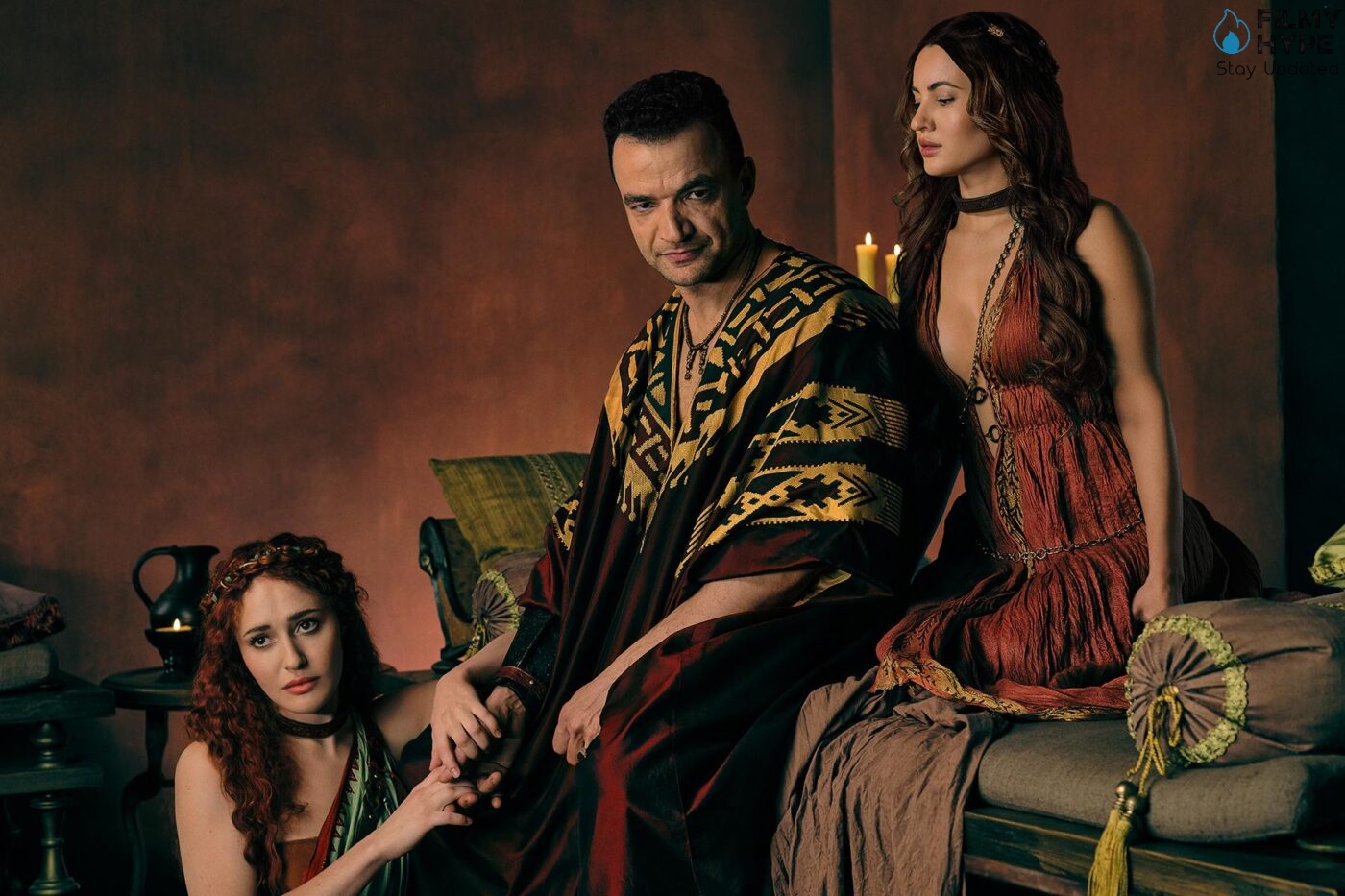
Spartacus: House of Ashur | Who Is Ashur? The Rise and Rebirth of a Villain
Unlike Spartacus, Crixus, or Crassus, Ashur has no direct historical counterpart in the records of the Third Servile War. He is a dramatic creation of the series, a narrative instrument crafted to expose the inner workings of Roman slavery.
However, he is grounded in a very real archetype from the ancient world. The Roman Empire teemed with slaves like Ashur: often from the Eastern provinces like Syria, valued not for brawn but for their literacy, linguistic skill, commercial acumen, and administrative cunning. These servants acted as translators, accountants, scribes, and intermediaries—men who wielded information as power from the shadows of their masters’ houses.
Ashur embodies this figure. He represents the non-martial intelligence of the slave system—the bureaucratic and psychological machinery that sustained the gladiatorial economy. His trajectory from injured gladiator to Batiatus’s scheming factotum reflects a plausible, if dramatized, path for a uniquely gifted slave. His later ascent to dominus in House of Ashur, however, is pure, glorious fiction—a narrative “what if” unleashed upon this cunning foundation.
Ashur’s Original Arc: The Survivor’s Tragedy
In Blood and Sand, Ashur is introduced as a gladiator forced into retirement after a career-ending injury. This physical limitation defines him; in a world of warriors, his weapon becomes his mind. As Batiatus’s assistant, he operates as the ludus‘s shadow: a translator, spy, fixer, and provocateur. He is amoral, adaptable, and indispensable—a minor but potent cog in the machine.
In Vengeance, he evolves into a full-fledged villain. Freed from Batiatus’s direct control but not from his own ambition, Ashur aligns with Praetor Glaber. His cruelty becomes more pronounced, particularly in his sadistic torment of Naevia. Here, his ambition crystallizes: he doesn’t seek the rebels’ idealized freedom. He seeks to become the master, to seize the very power structure that enslaved him.
His Death in Vengeance (Original Timeline): Ashur’s demise on the slopes of Vesuvius is a perfect, tragic culmination. Cornered by a vengeful Naevia, he is finally executed for a lifetime of betrayals. It is a morally coherent, definitive end. The survivor’s cunning finally overreached, and the narrative justice of the original series demanded his fall.
House of Ashur: The Rebirth of a Villain in a Twisted Universe
House of Ashur begins by confirming that death. We see Ashur’s soul tormented in the Underworld. His original ending remains canon—but not exclusive.
The fracture is delivered by the spectral Lucretia. She reveals destiny’s branches and shows Ashur the “fork” where he survived Vesuvius. In this alternate thread:
- He evades Naevia’s vengeance.
- He ingratiates himself with Crassus and Caesar.
- He becomes the one who throws the spear that kills Spartacus.
This last point is the ultimate usurpation. He steals not just a life, but martyrdom itself. As a reward, Crassus grants him the very symbol of his former subjugation: the rebuilt House of Batiatus. The slave becomes the Dominus.
The Profound Irony of Ashur’s Revival
The genius of House of Ashur lies in what it does not do. It does not redeem Ashur. It does not soften him. It does not force a moral awakening.
Instead, it presents a chilling hypothesis: What if the universe finally aligned with this villain’s nature? In the original timeline, his amorality led to his destruction. In this new reality, the same amorality—coupled with divine intervention—leads to his supreme triumph. He is the same opportunistic, manipulative creature. The world around him has simply changed to reward his darkest traits.
This makes Ashur’s story one of the most unique in modern television: the tale of a villain who finally finds the universe where he wins. His ascension is a dark reflection of the original saga’s themes. Where Spartacus’s story was about forging freedom through collective sacrifice, Ashur’s is about seizing power through individual betrayal. He is the dark counterpart, the living embodiment of the system’s corrupt core, now ruling the very house that once broke him.
House of Ashur thus completes Ashur’s journey not by changing his heart, but by changing his destiny. He stands as the bridge between the human, historical tragedy of Spartacus and the supernatural, mythological tragedy of the new series—proof that in some threads of fate, the worst men can rise highest.