
Run Away Series Review: A Harlan Coben Netflix Series With Forgettable Twists
Run Away Series Review: New year, new mystery in many layers, as usual, but designed to stay in the background. It will debut on Netflix on January 1, 2026 Run Away, a new title in Harlan Coben’s narrative universe, arriving on the streaming platform and a new family drama that, from the promotion, turns into a thriller. Or at least he tries. Run Away is written by Daniel Brocklehurst and directed by Nimer Rashed and Isher Sahota. The cast includes, among others, James Nesbitt, the official face of the series based on the novels by Coben, Minnie Driver, Ruth Jones, Alfred Enoch, and Ellie de Lange. A series that promises darkness and mystery, but let’s go in order and start with the plot. Simon Greene is a seemingly ordinary man, whose perfect existence – loving wife, three children, a solid career, and a beautiful home – actually hides some huge cracks, ready to come to light over the course of the eight episodes of Run Away.
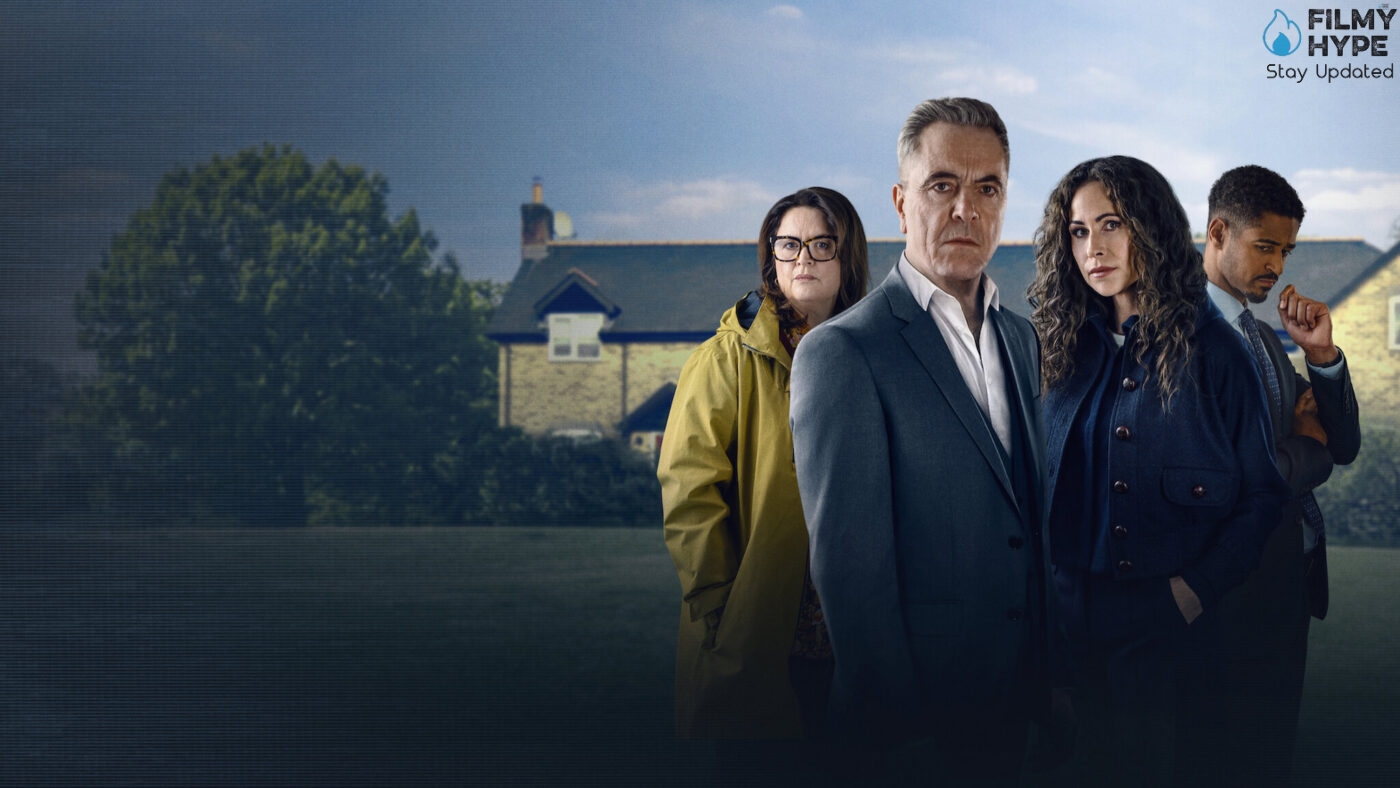
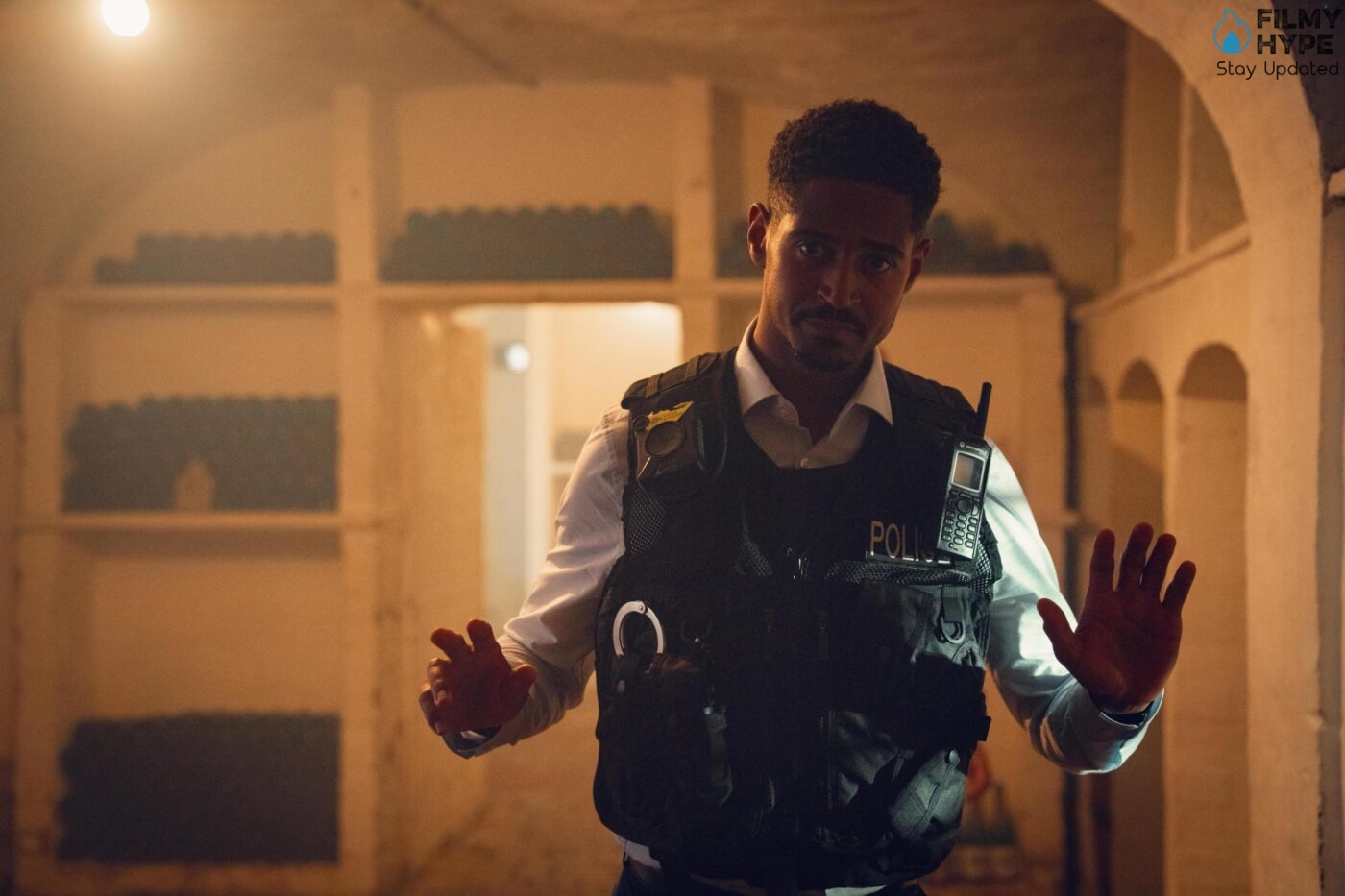
The family tragedy that marked the Greens’ lives is the escape of Paige, the eldest daughter, who fell into the depths of drug addiction after falling in love with Aaron, the classic “wrong guy” who progressively isolated her from her parents and dragged her into a world of violence and degradation. After six months of fruitless searching, Simon accidentally glimpses Paige in a public park, reduced to a pitiful state. The attempted reunion escalates in the worst possible way: Simon loses control and brutally attacks his boyfriend in front of dozens of witnesses, going viral in a video published online. Paige obviously disappears into thin air again, and when a few hours later, Aaron is found lifeless, Simon becomes the main suspect. Detectives Isaac Fagbenle and Ruby Todd will face a complicated case, while a tough private investigator conducts investigations that appear to lead to a mysterious cult and a pair of murderous psychopaths.
Run Away Series Review: The Story Plot
The story revolves around Simon Greene, played by James Nesbitt, a father who has lived in pain since his daughter Paige, a drug addict played by Ellie de Lange, ran away from home. Despite his wife, played by Minnie Driver, being convinced that Paige must grow up and detox on her own, Simon has never given up. He continues to search for her in secret, hoping to bring her home safe and sound. One day, Simon receives a message from someone who claims to know that Paige will be performing as a street performer in a park. Simon immediately runs to the scene and manages to find her.
The girl appears scared and under the influence of drugs, which sends Simon into protective mode. In an attempt to save her daughter, she attacks Paige’s boyfriend, a homeless boy. The scene is captured on the phones of those present, and Simon goes viral on the internet as “the man who beats up a homeless man”. But things get worse quickly. Paige’s boyfriend is found brutally murdered. Paige is still missing. Did she kill him? Was it Simon? Or is Paige still in danger? These questions push Simon to explore the darkest corners of society, from clandestine gambling dens to places frequented by drug dealers, all to find his daughter or at least find out what happened to her.

It all starts –the series’ official announcement reads– from a personal fear of Harlan Coben. Thus, a parent’s anxiety about the possible loss of a child becomes a novel and then a series on Netflix. And we come to the plot. But since it’s a mystery –and spoilers risk blowing all the twists and turns – we’ll stick to the official synopsis. A synopsis that goes like this: Simon had a perfect life: the love of his wife and children, a great job, a beautiful home. But everything falls apart when the eldest daughter, Paige, runs away from home. After finding her under the influence of drugs and vulnerable in a city park, he finally has the opportunity to bring his little girl home. But she is not alone, and an argument degenerates into shocking violence. After the accident, Simon loses his daughter again, and while trying to track her down, he ends up in a dangerous underworld, revealing dark secrets that could destroy his family forever.
Run Away Series Review and Analysis
And so, we were saying, a mystery. Or rather: Run Away – or Run Away in the original – as per tradition for Coben’s novels and adaptations, it is a mystery wrapped in a puzzle and wrapped in a misdirection. The series, because mini at the end of the day, does not have its good sides and its bad sides. Only in the end, the scales tip to the no side. But let’s start with the things that work, more or less: multi-layered construction. The Coben system – multiple parallel story lines that then intersect and intertwine to get to the episode that puts everything in order – is perfect for Netflix. One episode leads to another – also because cliffhanger writing (i.e. the narrative device that leaves the audience hanging with a twist or a situation of strong suspense) is always a certainty –, the sum of ‘stories’ in the story it gives the idea of a complexity that keeps you going and the banality of some plot twists that do not commit you so much as to require the totality of your attention allow a smooth navigation until the end.
The problem (the most obvious, at least) is the roast under the smoke. That is, the quality of that mystery. An intimate drama like the escape of a daughter lost in drugs, who, however, spoiler alert– hides something much bigger. And here we come from the no side. Closing the circle of this series is something that seriously risks becoming offensive to the viewer’s intelligence. And with her, the open ending. And then there are very deep plot holes that are plugged with absurd twists. On the production front, there is little to say. The photography is banal and very flat, the direction, between recalled scenes and explanations, is in line with the idea of binge watching for the morning of January 1, 2026, and the acting of the protagonists is soap-like. In short: a series of forgettable twists.
The main theme of Run Away is that of the relationship between parents and children, explored through all its possible meanings and nuances: biological and blood families and those of foster homes, exposing the flaws in the system, too often hidden from the state. But there is also talk of faith and the need to believe in something: in one’s closest relatives, but above all in someone who has all the answers and gives us the security and acceptance we need. They many storylines which are presented to viewers, in parallel with that of the Greene family, and with which the audience might initially get confused.
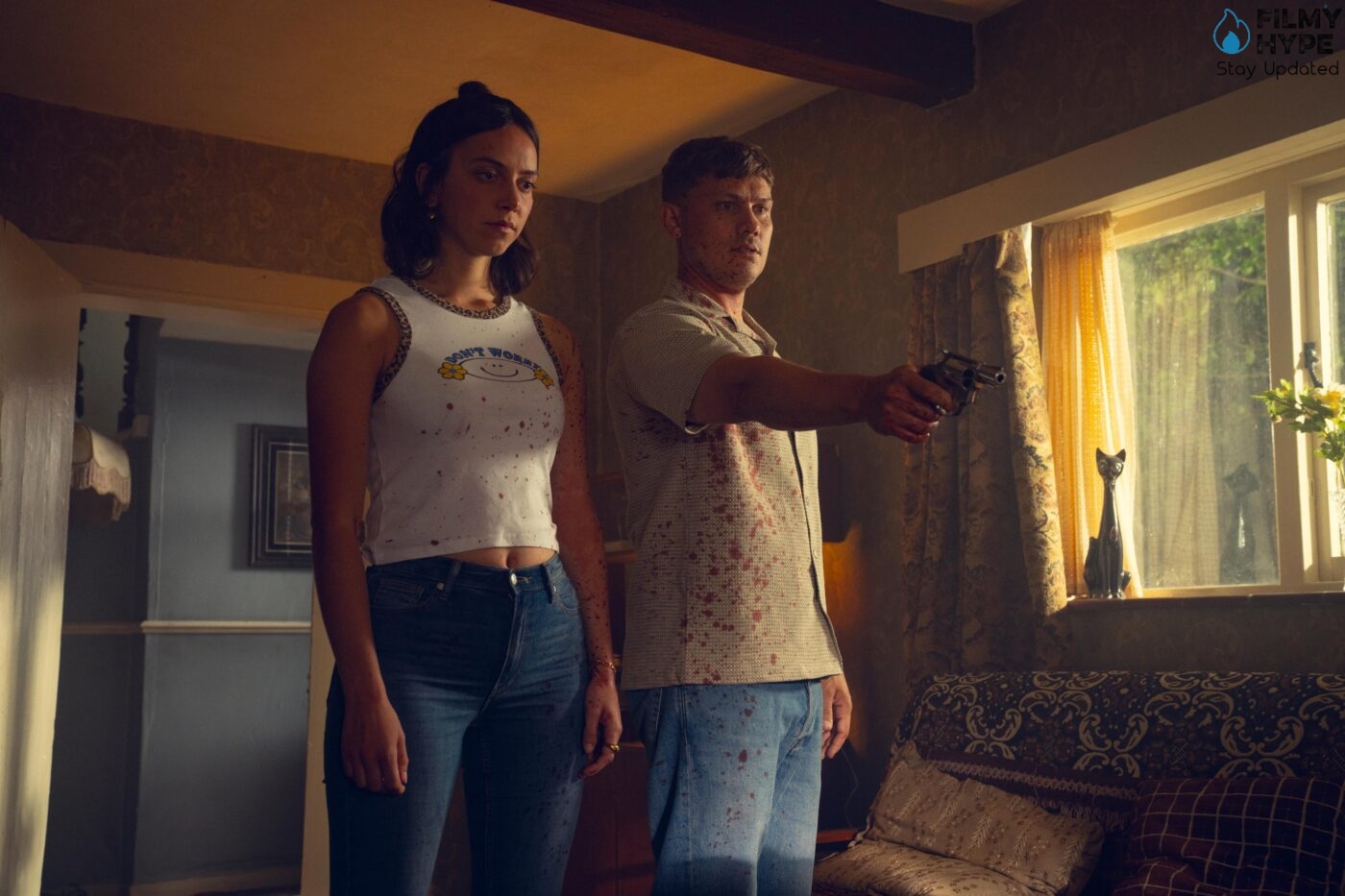
As they move forward, however, they will all acquire a meaning and a place within the great narrative mosaic. There’s private investigator Elena Ravenscroft (Ruth Jones) following the case of another missing boy and seems ready to go against the law, but we don’t know why; finally, there’s an unlikely hit couple, Ash (Jon Pointing) and Dee Dee (Maeve Courtier-Lilley), with a painful past and a secret mission they don’t seem to fully understand. Everyone will be faced with a very strong ethical dilemma.
Each piece will eventually fall into place, and despite a few too many stretches, we appreciate the choice of eight episodes in total and not just six, giving the story time to sink in and the characters time to warm viewers. Typical features of the Harlan Coben series include a disappearance, a search for the truth, secrets from the past ready to shock the protagonist’s core, the police hindered by their own bureaucracy, parallel investigations, endless twists and turns, a distinctive setting, and a typically British cast. Another point in common is the direction dynamic that uses chiaroscuro and typical thriller details to heighten the tension. Furthermore, the editing is strongly syncopated and almost psychedelic to stage the protagonists’ memories, as if they were flashes of memory. The goal is clearly to mislead the public, while also helping them piece together the truth piece by piece.
An aspect that, especially in the first half, can destabilize and which, at times, has the effect of an “explanation” but at the same time acquires its own narrative meaning and fluidity in the second part. As far as we’re concerned, in short, Run Away is among the Harlan Coben series not to be missed. The tight assembly, which seeks to avoid downtime and the numerous strategically placed flashbacks that reveal crucial information at the right time, creates a sense of insistent disorientation, then forces the script to make sudden turns to return the plot to its original path. A race against time that leaves little room for boredom but equally little for reflection, destined to be consumed in a nagging way, only to discover how it ends, except forget her quickly at the end credits of the season finale.
For a good number of spectators, it will soon come to a breaking point beyond which coincidences become exaggerated, twists absurd, narrative conveniences unbearable. And above all, the large number of main figures involved takes away the breath and depth of the main ones: from the two young killers in the wake of the Born killers (1994) by Oliver Stone to private detectives who stop at nothing, the outline on several occasions borders on the risk of becoming an involuntary caricature. And the same cast, led by the afflicted father of James Nesbitt and the mother of Minnie Driver, for much of the series, in a deep coma, seems ill-matched, having little material available to work on in the often elementary characterization and phone calls of the relevant characters.

Everyone has their own “Coben yardstick”, that point where plot holes and inconsistencies become too obvious to ignore. For those still dealing with the holiday hangover, the series could hold up through the eight episodes of this thriller, which, it must be said, is never boring. Others may find themselves hoping that Coben’s next annual series will anchor a little more in things like logic and reality.
“Run Away” starts well, with an intriguing premise and a protagonist played magnificently by James Nesbitt. The problem is that as the story progresses, it becomes more and more implausible, full of absurd coincidences and twists that seem put there just to shock the viewer. If you can turn off your brain and enjoy the ride without asking too many questions, you might enjoy it. But if you’re looking for a coherent, well-written story, you’ll probably be disappointed. The series moves fast enough to keep you glued to the screen, but not fast enough to make you forget all the script issues. It’s perfect for an early-year marathon when you don’t feel like overthinking, but don’t expect a masterpiece.
Run Away Series Review: The Last Words
“Run Away” is Harlan Coben‘s new thriller miniseries on Netflix. James Nesbitt as Simon Greene, a father searching for his missing drug-addicted daughter. When he finds her, he attacks her boyfriend, who is later found murdered. The girl disappears again, and Simon launches into a desperate investigation. What begins as a believable family drama degenerates into an absurd tangle of mysterious sects, murderers, and far-fetched coincidences. Nesbitt is excellent and saves the series, while Minnie Driver is completely wasted. Eight fast-paced episodes with too many plot holes. Perfect for those who want to turn off their brains, disappointing for those who seek narrative coherence.
Cast: James Nesbitt, Ellie de Lange, Ruth Jones, Minnie Driver, Alfred Enoch, Lucian Msamati, Jon Pointing, Adrian Greensmith, Ellie Henry, Tracy-Ann Oberman, Annette Badland
Director: Nimer Rashed
Streaming Platform: Netflix
Filmyhype.com Ratings: 3/5 (three stars)






3 Comments