
It: Welcome to Derry Ending Explained: Cameos, Nods to the Stephen King Universe and the Revelation About Pennywise?
ATTENTION SPOILERS! The HBO Max series It: Welcome to Derry’s first season concluded last Sunday, December 14, 2025, leaving fans of the Stephen King universe with some answers about the origin of terror in Maine… but also with new questions. So, would you like to review the most important points about his outcome? Well, if the answer is positive, this note is for you. Below, I present to you his ending explained. It is worth noting that the eighth and final episode of the first season of the production is titled “Winter Fire” and is directed by Andy Muschietti. In this one, not only is one shown a direct fight against the entity, but information is also offered that rewrites what we thought we knew—until now—about the horror saga. The closing of the first season of It: Welcome to Derry does not seek to be elegant or minimalist. It is an excessive, loaded, lysergic ending that condenses in a single episode everything that the series had been accumulating since the beginning: Derry’s collective trauma, the inheritance of fear, institutional violence, friendship as a last refuge, and, of course, the figure of Pennywise as a synthesis of something older and bigger than a simple monster. The final episode of Welcome to Derry –titled Winter Fire– functions as a culmination of the 1962 cycle and as a narrative hinge towards what is to come in 1935 and season 2.
It: Welcome to Derry Ending Explained: Cameos, Nods to the Stephen King Universe and the Revelation About Pennywise?
Andy Muschetti he took us to Derry in 1962 with his series based on the novel “It” by Stephen King, where throughout 8 chapters, we discovered a little more of Pennywise’s story, his origin and the connection of the events of this timeline with the events that happen 27 years later, when Beverly, Richie, Bil, Ben, Stanley, Eddie and Mike have their own encounter with the killer clown. The series revealed that Pennywise is a supernatural being who took the form of the clown after murdering a troubled widower, and who had arrived in Derry inside a mysterious comet that crashed there years ago. Furthermore, we discovered that the Native American community of Derry “locked up” the monster using fragments of the comet on which it arrived on Earth, and that they have been in charge of keeping an eye on it and locked it up for years, at least until the American army appears and decides, arrogantly, look for the pillars and try to control the creature. And while the adults caused all kinds of problems, a group of children, including Will Hanlon (Mike’s father in the IT movies), begin to be terrorized by Pennywise, and are forced to risk everything to try to stop him and save their friends.
The Breaking of the Cage: The Army’s Fatal Arrogance
The central plot engine of the finale is a catastrophic military miscalculation. General Shaw and his unit, representing the cold, institutional desire to weaponize fear, decide to deliberately shatter one of the thirteen mystical pillars that form the ancient, metaphysical cage imprisoning Pennywise (aka It) within Derry’s borders.
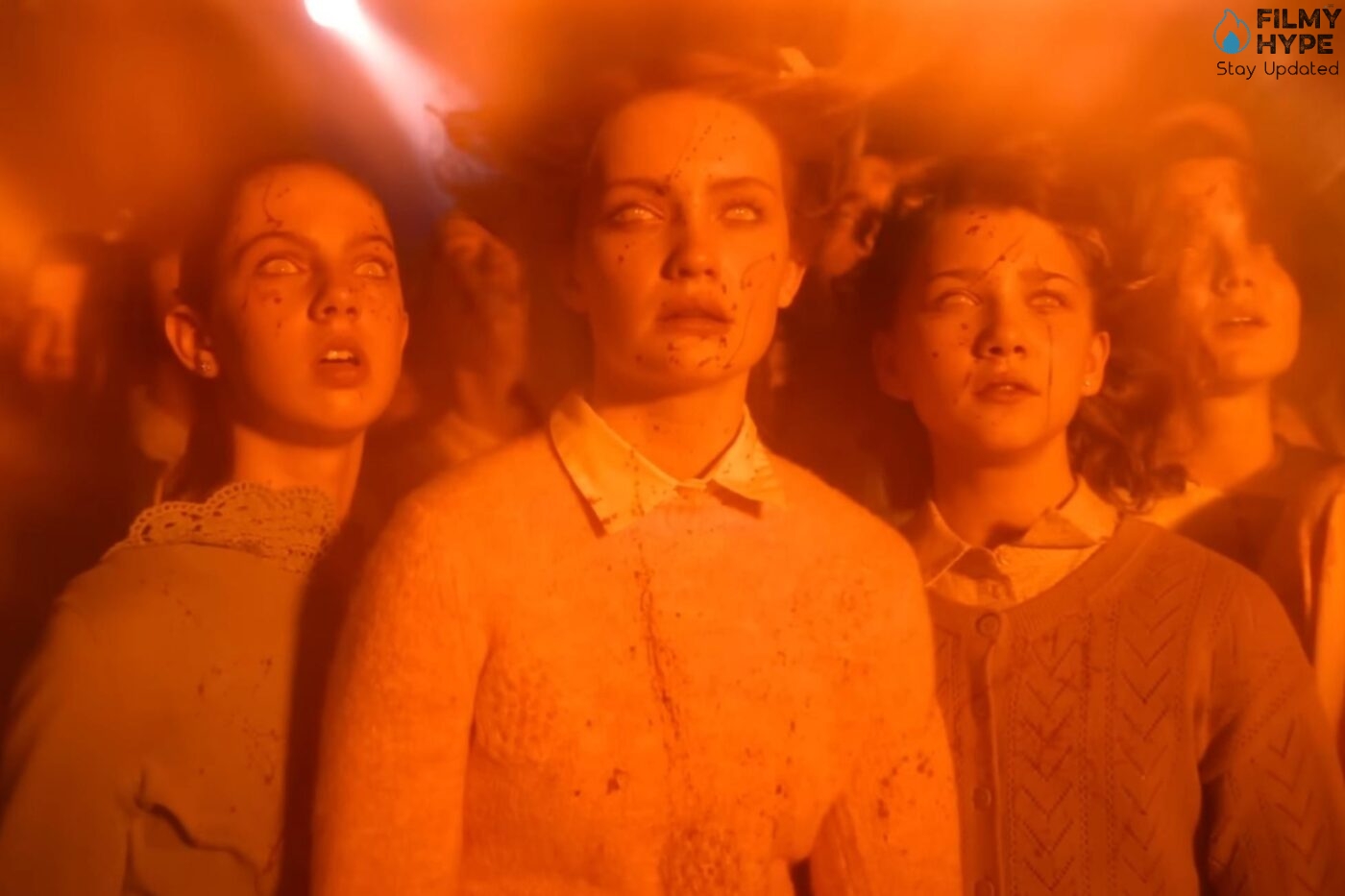
Their goal is not to destroy the entity, but to study and control it. This act of arrogant ambition is the season’s ultimate expression of human folly. The result is immediate and cataclysmic: the balance is broken, and Pennywise, no longer fully confined, begins to awaken to its full power. The town of Derry is transformed into a frozen, fog-shrouded nightmare landscape, a direct extension of the creature’s will. For the first time, the monster doesn’t lurk—it rules openly, leading a hypnotic procession of captured children toward its macabre circus.
The Dagger’s Journey: A Corrupting Relic
The only hope for restoration lies in a fragment of the original meteorite that brought IT to Earth—a relic referred to as “the dagger.” This object must be taken to a specific point near the river and buried to repair the broken cage. However, the journey is a psychological gauntlet. The dagger is not an inert tool; it is a corrupting influence that amplifies paranoia, sows distrust, and turns allies against each other. This brilliantly illustrates the series’s core theme: evil doesn’t just attack from the outside; it seeps into the cracks between people, exploiting their fears and turning their bonds into vulnerabilities.
Margaret Tozier and the Loop of Time
The emotional and metaphysical heart of the finale belongs to Marge (played by Megan Charpentier). During a desperate attempt to save the suspended children, Pennywise confronts her with a reality-shattering revelation: her full name is Margaret Tozier. She is the future mother of Richie “Trashmouth” Tozier, a key member of the Losers’ Club who will battle It in 1989.
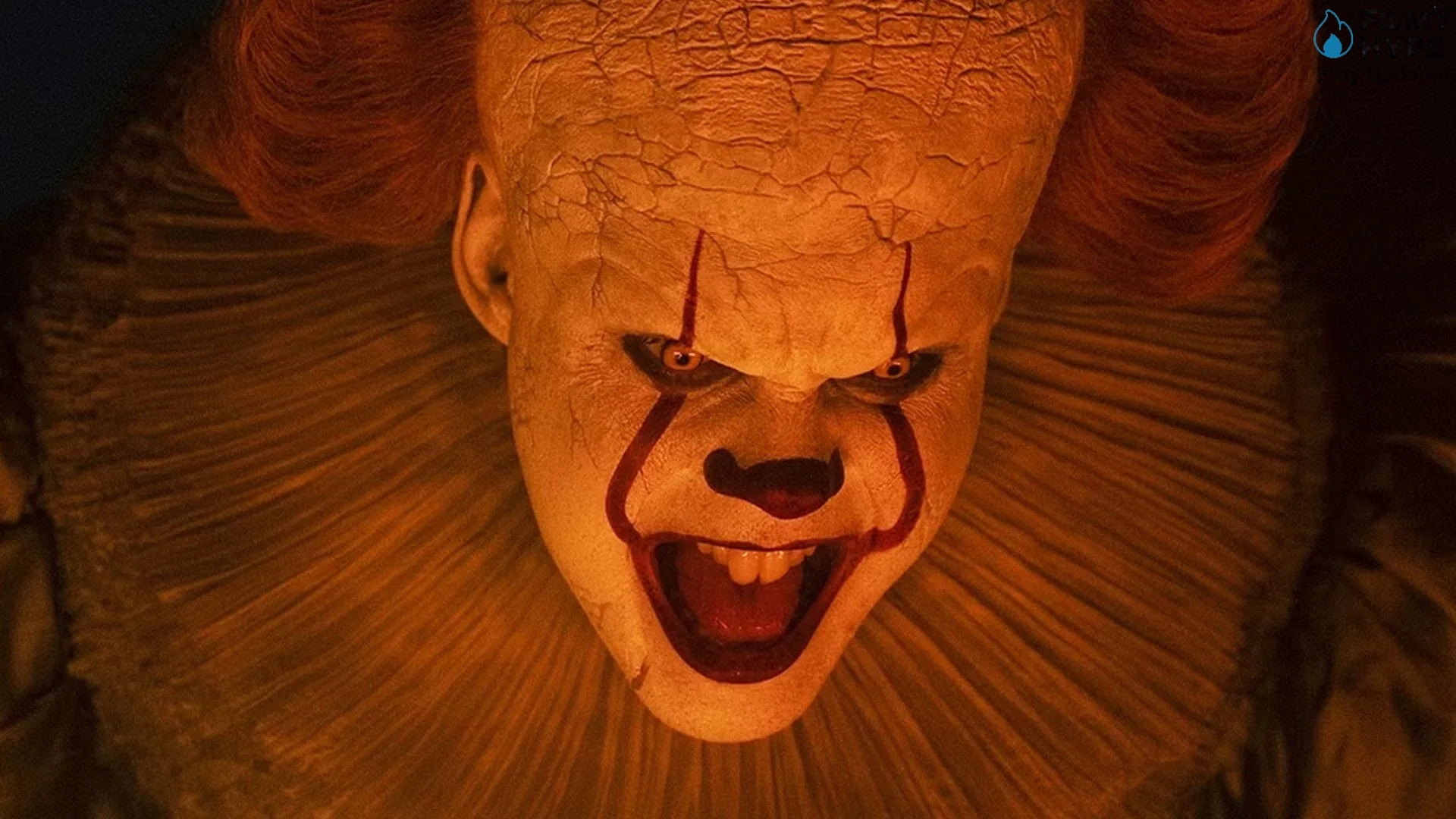
Pennywise’s taunt—“The fruit of your womb and its friends bring me my death… or my birth?”—is the episode’s most crucial line. It confirms that IT perceives time non-linearly. Past, present, and future are a continuous, accessible landscape for the ancient entity. Pennywise isn’t just a predator of the moment; it’s a creature aware of its own future defeat and potentially able to interact with the timeline to prevent it. Its attempt to kill Marge is, therefore, an attempt at retroactive genocide, to erase its future enemies by killing their parents before they are born.
The Shining Intervention: Dick Hallorann’s Role
The confrontation reaches an impasse until Dick Hallorann (played by Mackenzie Gray) utilizes his psychic gift, the Shining. In a Stunning sequence, he does not attack Pennywise physically but invades its mind. He temporarily traps the entity in a paralyzing nightmare, forcing it to experience consciousness as Bob Gray, the mundane, murdered circus clown whose identity IT stole. This moment of forced, humiliating humanity is a brilliant tactical stroke—it doesn’t harm IT, but disorients it long enough to create a crucial opening.
This also serves as a profound nod to the connected Stephen King universe, solidifying Hallorann as a pivotal figure who battles supernatural evil long before his fate at the Overlook Hotel.
The Sacrifice and the Restoration
The final act is a symphony of desperation. Taniel is killed, and a wounded Leroy passes the crucial dagger to his son, Will. This isn’t classic heroism; it’s a chain of human sacrifice passed from one generation to the next. When Pennywise breaks free, transforming into a vast, winged abomination straight from the pages of King’s novel, all seems lost.
Salvation comes from collective action and the lingering presence of the dead. With the aid of the spirit of the deceased, Rich, the group manages to bury the dagger at the sacred site. The repaired cage’s energy reasserts itself, pulling Pennywise back into a state of forced dormancy. The victory is profound, but pyrrhic. The entity is not destroyed; it is merely put back to sleep, its cycle reset. We, the audience, know exactly when it will wake again: 1985, the setting of It: Chapter One.
Epilogues and Echoes: Threads Through Time
The finale takes care to show the aftermath, which is quintessentially Derry: a mix of trauma, denial, and quiet departure.
Funerals and Farewells: Rich is buried, and the bonds formed in terror—like that between Will and Ronnie—are strained by the need to either flee Derry or be swallowed by its silent complicity.
Hallorann’s Departure: Having mastered his Shining, Dick leaves town. His final, wry line—“How many problems can a hotel bring?”—is a perfectly bittersweet bridge to his future in The Shining.
The 1988 Juniper Hill Scene: The season’s final, masterful stroke is a time jump to 1988 inside the Juniper Hill Psychiatric Hospital. We see an aged Ingrid Kersh, forever broken by her encounter with It in 1908. When a new patient, Beverly Marsh, arrives following her mother’s suicide, Ingrid whispers the iconic, chilling truth of Derry: “No one who dies in Derry really dies.”
This scene retcons and deepens a pivotal moment from It: Chapter Two. Ingrid Kersh is no longer a random, terrifying visage chosen by Pennywise. She is a specific, tragic relic of Its past, directly connecting Beverly’s personal horror to the town’s centuries-long trauma. It confirms that Pennywise’s torments are deeply personal and historically layered.
How the Finale Sets Up Welcome to Derry Season 2
The ending explicitly pivots the series backward in time. Season 2 will journey to 1935, a period referenced in King’s lore as containing another horrific cycle of It’s awakening.
The Bradley Gang Massacre: Season 2 is poised to center on this event, a bloody shoot-out and lynching that will serve as the 1930s equivalent of the Black Spot fire or the Kitchener Ironworks explosion—a massive, traumatic event fueled by human violence that both feeds and disguises its hunger.
Pennywise’s Temporal Awareness: The finale’s biggest game-changer is establishing that Pennywise is aware of future events. This means Season 2’s 1935 storyline will not be a simple prequel. It will be a chapter informed by the entity’s memory of its future defeats. This creates a terrifying new dynamic: the Losers’ eventual victory in 1989 may have echoes backwards in time, affecting how It behaves in earlier cycles.
The Unending Cycle: The core thesis is reinforced: Derry is a wound that never heals. Evil doesn’t need to be summoned; it returns on schedule, wearing the face of the town’s own worst impulses—racism, violence, secrecy, and fear.
The Cage is Restored, Not Destroyed
The central goal of the finale isn’t to kill It, but to repair the mystical cage that has trapped it under Derry for centuries. This cage was created from the meteorite that brought It to Earth, and was shattered by the army’s arrogance.
- The Dagger: The key is a fragment of that meteorite—a “dagger”—that must be buried at a specific point near the river. But carrying it corrupts the bearer, feeding on their fear and paranoia. This shows It’s true power: it turns people against each other.
- The Sacrifice: The final act is a chain of sacrifices. Taniel is killed, Leroy is wounded, and the ghost of Rich Santos—who died in The Black Spot fire—returns to help guide the dagger into place. Victory isn’t won by heroes, but by the accumulated weight of the dead.
When the dagger is buried, the cage’s energy resets. Pennywise is dragged back underground, forced into another cycle of hibernation. The victory is temporary, a stay of execution. We, the audience, know exactly when it will end: in 1985, when It wakes to face the Losers’ Club.
Pennywise Exists Outside of Time — And Knows the Future
The most important revelation comes when Pennywise confronts Marge.
It reveals her full name: Margaret Tozier. She will become the mother of Richie Tozier, one of the Losers who “brings his death.” Pennywise sees time as a flat circle—past, present, and future are all the same. It’s an attempt to kill Marge is an attempt to erase Richie from existence before he’s even born.
This changes everything. It means:
- Pennywise is aware of its future defeat.
- The Losers’ battle in 1989 has already echoed backward through time, influencing events in 1962.
- The threat is now metaphysical, not just physical. It isn’t just hunting children; it’s trying to rewrite history to ensure its own survival.
Dick Hallorann’s Role and Departure
Dick Hallorann uses his Shining not to attack It, but to invade its mind. He temporarily traps Pennywise in the identity of Bob Gray—the simple, murdered clown whose face It stole—forcing it to experience powerlessness and humiliation.
This act of psychic interference is what creates the opening for the dagger to be placed. Afterward, having mastered his gift, Hallorann leaves Derry. His final line—“How many problems can a hotel bring?”—is a direct nod to his fate at the Overlook Hotel in The Shining, tying King’s universe together.
The Post-Credits Scene: Connecting to the Films
The final scene jumps to 1988, inside the Juniper Hill Psychiatric Hospital.
An elderly Ingrid Kersh—driven catatonic decades earlier after seeing its true form—approaches a young girl crying over her mother’s suicide. The girl is Beverly Marsh.
Ingrid whispers: “No one who dies in Derry really dies.”
This moment:
- Retcons It Chapter Two: It explains who “Mrs. Kersh” really was—not a random monster, but a specific victim of It’s past.
- Confirms the Timeline: The series is in direct canon with the films. Beverly’s trauma is shown in its origin moment.
- Highlights It’s Enduring Curse: Derry’s tragedies are interconnected across decades. The horror never ends; it just changes faces.
What Happens to the Characters?
- The Hanlons: Leroy, Charlotte, and Will choose to stay in Derry. Will’s decision to remain suggests he will become the keeper of the town’s hidden history—a role passed down to his relative, Mike Hanlon, the future Losers’ Club historian.
- Marge: Now knowing she will be Richie’s mother, she carries a hidden knowledge of the future—a secret that will likely shape her son’s life.
- Ingrid: Remains forever broken at Juniper Hill, a living monument to Its cruelty.
- Pennywise: Asleep, but not defeated. The cycle is preserved.
The Bottom Line: Derry Always Wins
The true horror of Welcome to Derry isn’t the clown—it’s the town itself.
Derry is an organism that feeds on forgetting. The army covers up its experiments. The townspeople ignore the racism and violence. The survivors of the 1962 incident bury their trauma and move on, allowing the same patterns to repeat.
The ending proves that no one truly defeats It; they only reset the clock. The cage is restored, but the structural evils of Derry—the bigotry, the corruption, the willful blindness—remain untouched. Pennywise is just the symptom of a sick town.
When the finale fades to black, it’s not with hope, but with grim inevitability. The Losers’ Club will have to fight the same monster, in the same town, for the same reasons. Nothing has been solved. Everything has been preordained.
The last line lingers for a reason: “No one who dies in Derry really dies.”
It isn’t just about the dead.
It’s about the nightmares, the secrets, and the fear—all of them waiting, forever, for the next cycle to begin.
The Cameo In The Post-Credits Scene
The epilogue of the chapter takes us to 1988, where a young woman, Beverly Marsh (Sophia Lillis cameo alert), is shown devastated at the Juniper Hill asylum, after her mother’s suicide. There, the girl has a chilling encounter with an old woman, Ingrid (Madeleine Stowe). In that sense, the series reveals to us that Ingrid is actually the woman we know as Mrs. Kersh in “IT: Chapter Two” (2019), reaffirming himself as a key piece in the franchise.
The Time Revelation About Pennywise
This note couldn’t end without the most disturbing revelation of the season finale: it turns out Pennywise experiences time completely differently than humans. For him, “the past, present, and future are the same. His death is his rebirth”. And the clown suggests that his defeat at the hands of the famous “Losers Club” could be his “birth”… making it clear that the limits between his past and the future do not apply to its existence. This leaves open a terrifying possibility: yes, Pennywise, you can return at any time in the timeline when you wake up in your 27s, I could travel even further into the past. This, to annihilate Marge’s ancestors and her friends, preventing them from ever being born. So, with an enemy who conceives time non-linearly (very “Dark” or “Arrival”), “IT: Welcome to Derry” IT is established as more than just a prequel. Apparently, it’s his first chapter of an intergenerational battle that could alter the franchise as we had understood it from the beginning.
Conclusion: The Sleep of Reason
The ending of It: Welcome to Derry Season 1, masterfully avoids a clean conclusion. Instead, it re-latches the terrible trap. Pennywise sleeps, but Derry’s air remains thick with unsaid things and unresolved pain. The finale argues that true evil is not an invader but a parasitic tenant, woven into the foundation of a place, feeding on a community’s willingness to look away.
It reminds us that the real horror isn’t the clown in the storm drain, but the silence of the neighbors, the arrogance of power, and the inescapable truth that time, in Derry, is not a line but a loop—and the loop is about to turn again, deeper into the bloodstained past. The fear doesn’t end; it just waits for its next season.





One Comment