
Pluribus Series Review: Apple TV’s Series By Vince Gilligan Dig Into Your Brain
Pluribus Series Review: From 7 November, with the release of the first two out of seven episodes of Pluribus on Apple TV series, created and partly directed and written by Vince Gilligan, who created Breaking Bad and co-created Better Call Saul. Pluribus it’s a very different series from Gilligan‘s two most famous shows, with which he shares the protagonist Rhea Seehorn, who in Better Call Saul played Kim, Saul’s lawyer girlfriend, but, regardless of whether you are a fan of Walter White and company, this new production, which mixes genres such as science fiction, drama and comedy, you just can’t miss it if you want, in fact, get lost in the mental meanders into which Pluribus will lead you. After chronicling the dark side of ambition and power in Breaking Bad and Better Call Saul, Vince Gilligan returns with Pluribus, a series that has nothing criminal but everything profoundly human. It is his most ambitious and conceptual project, a work that uses science fiction as a mirror of the present.

In a world where a mysterious alien virus makes everyone happy, kind, and mentally connected, the only person immune is Carol Sturka (Rhea Seehorn), writer of romance fantasy novels. For her, the global utopia becomes a personal nightmare: the loneliness of the one still independent mind. When an author is linked to a series or films of a certain caliber, it is obvious that each of his new works is awaited and welcomed with different, greater, feverish attention. This will inevitably be the case. Vince Gilligan, who participated in X-Files, created Breaking Bad and equally iconic spin-off Better Call Saul, is now back with Pluribus. The show has been intriguing since the first announcements, thanks to the casting it put at the center of its story, Rhea Seehorn, whom we have already had the opportunity to appreciate in his previous work. And curiosity for the new series he created, available on Apple TV, she was satisfied with her vision, because it is a journey full of tension, irony, twists, and food for thought that accompanied.
Pluribus Review: The Story Plot
The series begins by showing what appears to be an alien contact, from which an experiment originates, which, as always in these cases, at a certain point, totally escapes the hands of the scientists who deal with it. We then meet our protagonist, Carol Sturka (Seehorn), a very successful writer of romance novels, even if considered rubbish by the author herself. One evening, returning from a profitable but still unsatisfactory stage of promotion of the latest novel, Carol and her manager/partner Helen (Miriam Shor) go drinking in a club in their city, Albuquerque in New Mexico, already known to the followers of Breaking Bad, when suddenly everyone around Carol seems to be in the throes of strange convulsions. As you can tell from a counter that appears on the screen, that moment marks the beginning of a new world. A world in which, because of that experiment that got out of scientists’ hands, the whole of humanity has contracted a virus that connects everyone in a kind of “hive mind” (to quote Stranger Things) that gives consciousness, knowledge, and memory collectively, in a peaceful and benevolent communion.
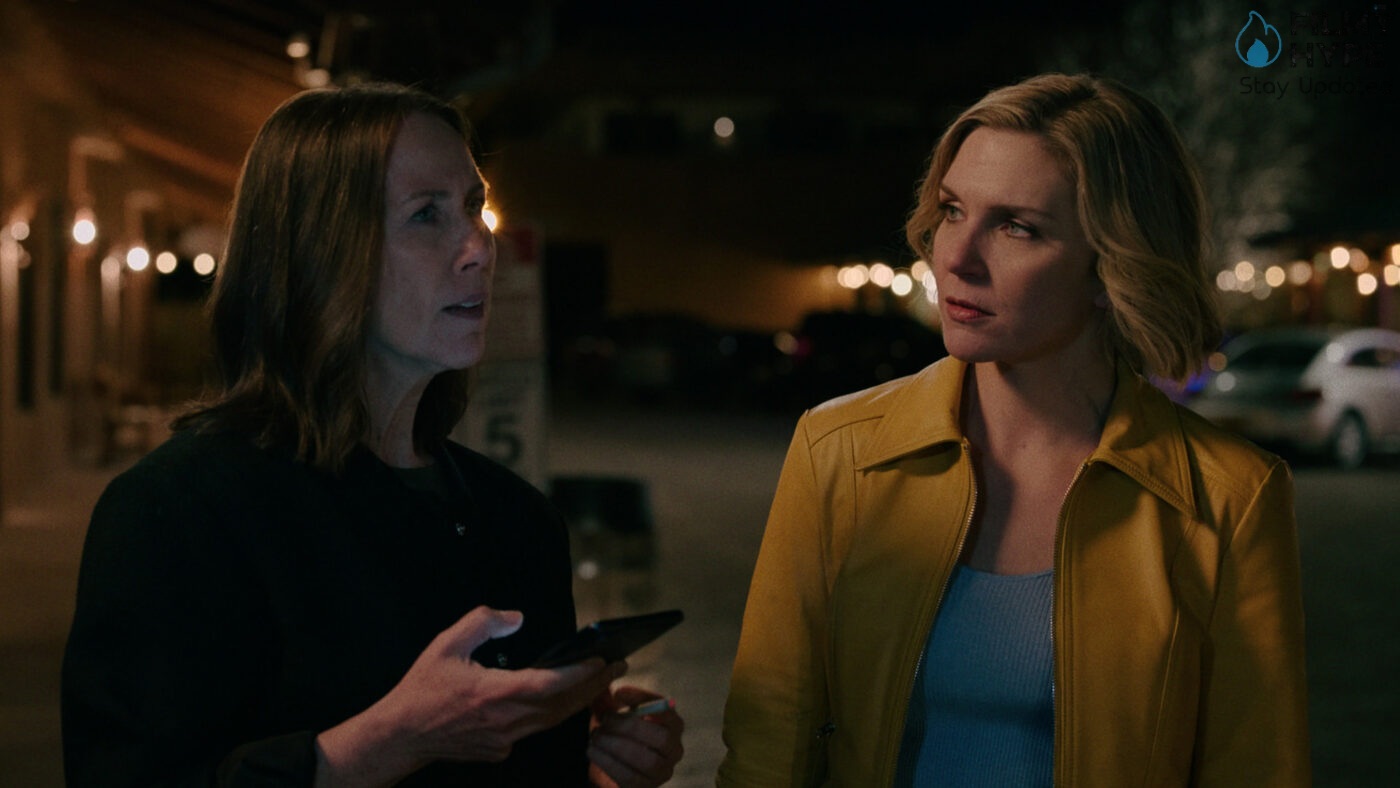
In practice, Carol, inexplicably immune, finds herself surrounded by people who smile, know how to do anything (provided it is without violence), and are all willing to help her in any way possible, respecting and complying with every request, even at the cost of their own safety. Yet, while she could easily take advantage of it, Carol has no intention of surrendering to this new world and decides to go in search of other “survivors”, and maybe even a way to make things go back to the way they were. From the first episodes, Pluribus presents itself as a luminous dystopia. No catastrophe, no destruction, just smiling faces, shaking hands, and world peace as sudden as it is disturbing. Gilligan plays with the idea that absolute perfection is not desirable, but inhuman. The “care” of the planet brings with it the erasure of the individual: everyone shares thoughts, knowledge, and emotions. No one says “me” anymore, but “this individual”. It is the apotheosis of connection, and the death of personal consciousness. In Carol’s refusal to “heal” is the heart of the series: a desperate and ironic act of resistance against the tyranny of happiness.
Pluribus Review and Analysis
Between episodes, but also while watching each episode, we found ourselves more focused on reflecting on what we would do in Carol’s place. To ask whether we would share its obstinacy or whether, and however much, we would use the situation to our benefit, enjoying a world of omniscient and sincere people willing to serve and revere us. Although at some point, there will inevitably be some side effects of such tranquility. And this stumbling of the brain, this investigation into one’s own mind, is the intended effect of a series that plays on the concept of variable and questionable happiness, on how one can be content in becoming a drop in the ocean (as in the finale of The Good Place) or desperate to maintain their individuality in an anonymous and serviceable world. The long silences, the vast panoramas, the possibility of having everything you want and nevertheless the desire to return to the world of before with its hatred and its wars: Gilligan mixes solitude and dialogues creating an alienating effect, in which Seehorn gives substance to a nervous and restless character in which we sometimes recognize ourselves and in others (more frequent for us) we really don’t. And perhaps this also unites Carol and the other characters born in the mind of Vince Gilligan.
Rhea Seehorn offers a masterful test. His face is a mask of cynicism, anger, and lucidity, but beneath that armor is a weary and sorrowful humanity. Carol is a successful writer who despises her readers, a disillusioned woman who finds dissatisfaction the only remaining sign of vitality. Seehorn moves from black comedy to existential drama naturally, restoring a three-dimensional, ironic, and fragile character. Gilligan writes an entire series for her, and it shows: Pluribus is her actor’s vehicle, a showcase of emotional nuances ranging from sarcasm to the purest fear. The atmosphere of Pluribus recalls both Orwell’s 1984 and Invasion of the Body Snatchers, but with Gilligan‘s ambiguous and sarcastic tone. The series moves between satire and social horror, alternating moments of unreal calm with sudden bursts of restlessness.
The message is clear: a perfectly aligned world is a dead world. Diversity of thought, anger, frustration, error, everything that makes us human, is replaced by obligatory collective well-being. Yet, Pluribus is never a philosophical treatise disguised as a TV series. There is humor, rhythm, and an irony that emerges even in the darkest moments, as if the series reminds us that freedom also comes through the right to laugh. Visually, Pluribus is a triumph of control. The environments are clear, geometric, and almost sterilized. Every smile is a courteous threat; every word of comfort hides a note of coercion. Gilligan and his production team (with cinematography directed by Marshall Adams and production design by Denise Pizzini) build a disturbing universe precisely because of its perfection. The large, symmetrical shots amplify the protagonist’s feeling of isolation, as if the whole world were conspiring to “make her happy”. There is also a return to the surreal tone of the X-Files days: the alien is no longer a monster, but an idea.
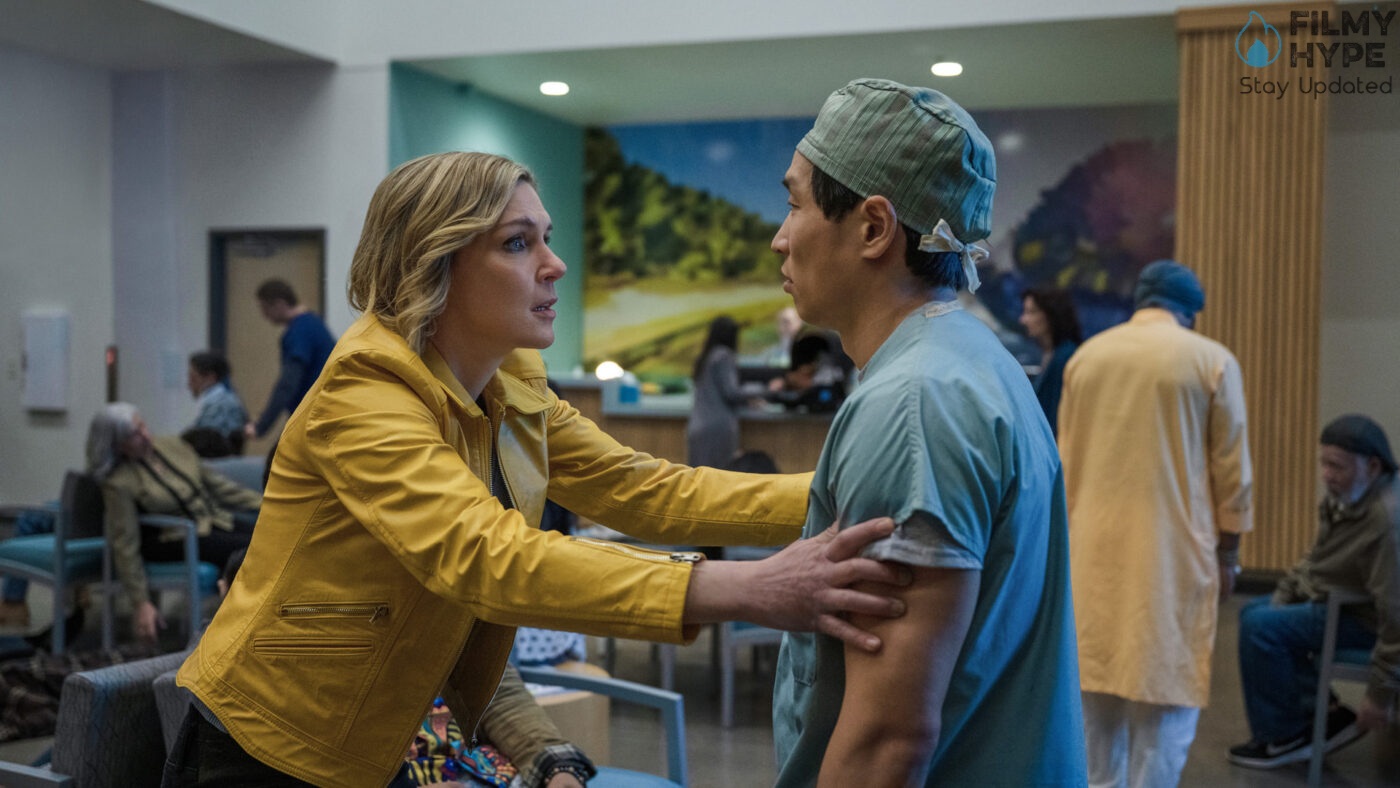
The first two episodes, written and directed by Gilligan himself, set up a deliberately slow, almost hypnotic narrative. It is an approach that might crowd out those expecting the fast pace of Breaking Bad, but it is consistent with the author’s vision. Pluribus is a series that doesn’t want us to run, but to think. Every scene, every seemingly static dialogue, is a provocation: what remains of the individual when everything is shared? This slowness is not a flaw but a poetic choice: the spectator, like Carol, is forced to deal with the silence, with the unnatural calm of the surrounding world. More than a science fiction story, Pluribus is a moral parable about free will. Gilligan overturns the typical perspective of dystopias: instead of showing us the chaos from which tyranny arises, he shows us a universal peace that is based on the cancellation of dissent. The virus that unites minds becomes a metaphor for every system that demands uniformity — social, political, or even digital. In an age where connection is all-encompassing, Pluribus asks us: How much are we willing to sacrifice to feel part of something? What if true freedom were the ability to say “no”?
After the first episodes, Pluribus presents itself as an extraordinarily dense series, but still poised between brilliant intuition and conceptual coldness. Gilligan has built an ambitious narrative framework that proceeds by subtraction, leaving more questions than answers. It is clear, however, that the intent is not to explain, but to disturb. Pluribus does not want to reassure or entertain; it wants to disturb with grace. It is an experience that is not consumed in binge-watching but is slowly digested. Without going into detail, therefore, we tell you about the structure of Pluribus: absolutely watch both episodes distributed in the first week, because in their being different from each other in terms of approach to the story and in setting the next path, they are indicative of a series that adds a level, discoveries, and new ideas to each new episode. Bit Lost (yes, we’re aiming high, but the reference seems clear as well as stated for some details that we won’t pre-empt) – quite the same Breaking Bad, between ever-present restlessness, so much irony and above all those splendid reflections that it arouses on being oneself, on homologation and its dangers, on falsehood and always having to be positive and happy.
A happiness to which Rhea Seehorn’s Carol is immune: the actress who was the true revelation of Better Call Saul confirms that ability to move between tones, to alternate with incredible skill the dramatic approach to the lighter one with surprising credibility. We believe in her, Carol, in the situations she finds herself involved in, in a world around her that has taken an absurd and unexpected turn. She is the guide of a cast that welcomes on the one hand and is restless on the other, giving substance to the ideas that the author puts into play, guiding us in a world that reflects in a fantastic guise some of the anxieties and deviant habits of our contemporaneity. It’s not a simple series Pluribus, because it asks the viewer to rely and let himself be guided on a journey that changes direction several times, but the hand of an author who knows how to manage this type of journey is evident, which returns to the genre, to sci-fi and fantastic assumptions, after working on The X-Files and combines its potential with the human being’s ability to investigate that he has demonstrated with his other series.
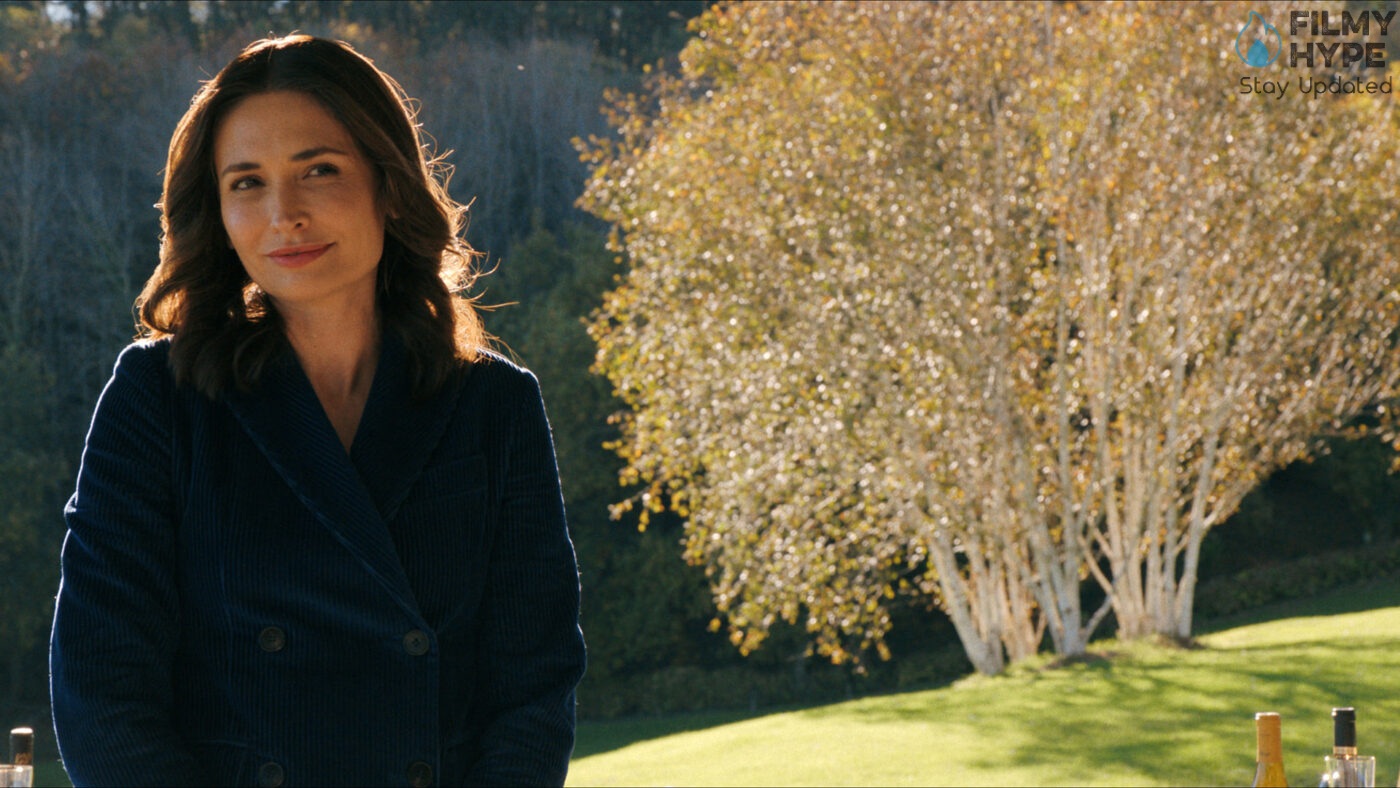
He returns to Albuquerque, at least for part of the story, but it’s not just their laziness and the convenience of being able to work with your historical team, as Vince Gilligan revealed in our interview, it is also because he knows that that environmental context offers him the locations he needed to carry on his story in an optimal way. There’s also a lot of music in it, Pluribus, with versions in different languages of American pop songs, to amplify the feeling of a global history, of a world that, in its interest, has taken a certain direction, and which suffers the same crazy rules. That of Pluribus, but also ours, is globalized above all negatively. Vince Gilligan borrowed narrative structures that we’ve seen so many times. He takes them, makes them his own, reworks them, making everything new, fresh, intriguing, and mesmerizing. An undertaking that only he could embrace, in a television panorama in which we are used to seeing everything: we are bombarded by a regurgitation of products that crowd, overlap, and forget.
No matter what opinions you may have, I challenge you to watch an episode and not feel the need to watch it again. I challenge you to let this TV series creep into your lives and not lead you to question yourself about life, about happiness, about your choices –even in the morning – while you pour the moka coffee into a cup filled with oat milk, or while you run to catch the bus and see it slide before your eyes, too fast to be stopped. I challenge you not to think about Pluribus while you are in a bad mood and answer badly to the colleague on duty who asks you a wrong question at the wrong time. While eating lunch from the cold Chislett, with a sad salad and some croutons that make her more likeable. Think about it, because everything we can tell you about Pluribus it’s just that it’s surreal, fresh, and colorful. But it’s a series about all of us, in a way you don’t expect. With the proven face of Rhea Seehorn, in the space of a second and a page of the book, it will have made you completely forget Kim Wexler (he even promised us a little’). With the transformism typical of great actors, with the tenacity of those who have remained hidden in the shadows for too long and are ready to take the place they deserve.
Pluribus Review: The Last Words
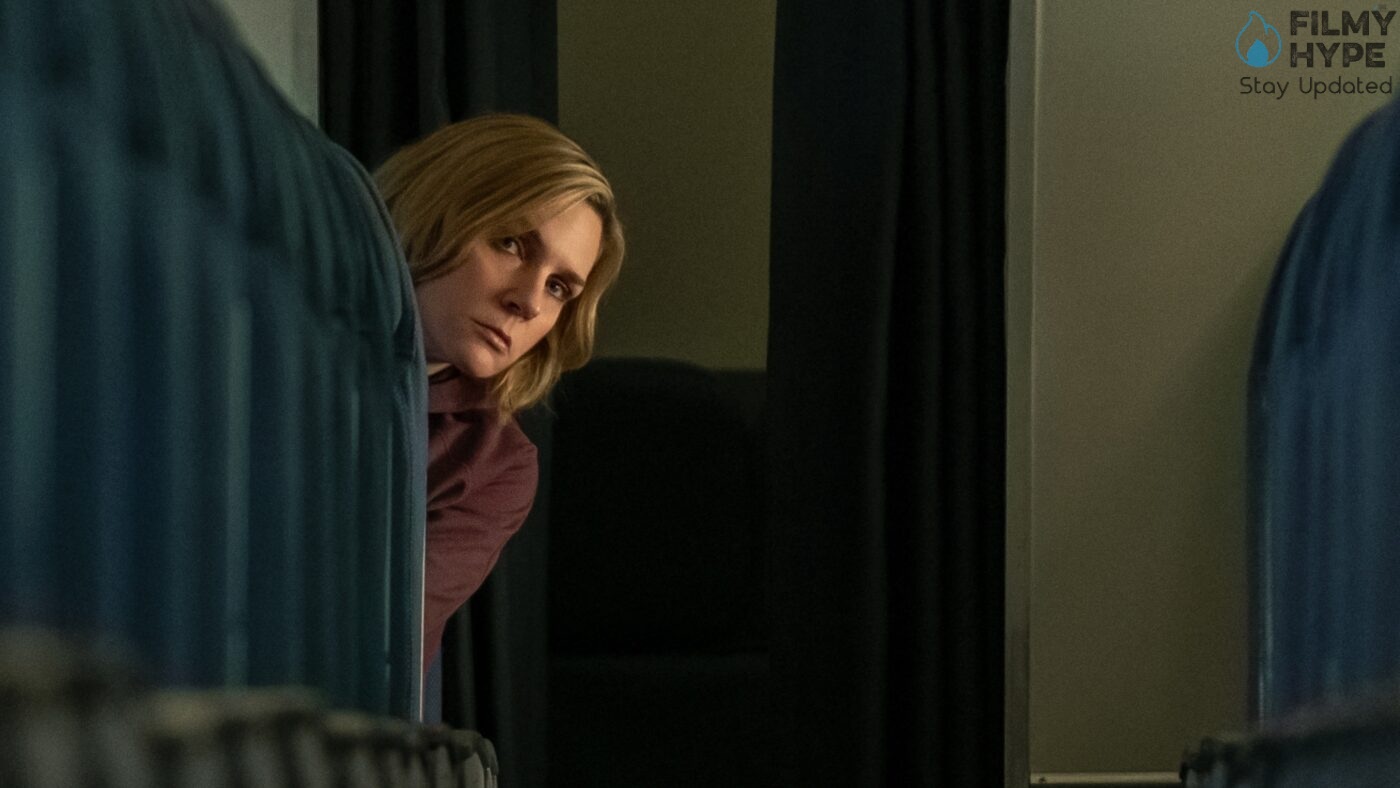
The author of Breaking Bad strikes again and creates a journey that surprises from episode to episode, which changes beautifully but remains consistent with the initial intent. Between drama and irony, Rhea Seehorn is perfect at carrying the vicissitudes of the protagonist of Pluribus on her shoulders and does justice to her author’s intentions, confirming the good things already seen in their collaboration on Better Call Saul. The setting of Albuquerque is also back, but the work done on the music and the selection of songs that launch the series from the American to the global context is also excellent. In Pluribus, an alien virus gives humanity total happiness, erasing pain and conflict. Only Carol Sturka, a sarcastic writer and immune to contagion, remains master of her own thoughts. Through its loneliness, the series explores the loss of identity, the dictatorship of optimism, and the need for dissent.
Cast: Rhea Seehorn, Miriam Shor, Karolina Wydra, Patrick Fabian, Giancarlo Esposito, Dean Norris
Creators: Vince Gilligan, Peter Gould, Jenn Carroll, Gordon Smith
Streaming Platform: Apple TV
Filmyhype.com Ratings: 4/5 (four stars)







One Comment