Nobody 2 Review: Puts Bob Odenkirk Back As A Trigger-Happy Everyman
Nobody 2 Review: The great insight of the first Nobody revolved around the choice of its protagonist. Winning idea to take the ordinary face of Bob Odenkirk and build above his somewhat resigned pout and on his stuffed posture the perfect ’Nobody‘, the unsuspected everyman. Especially because Odenkirk came from the role that consecrated him, the Saul Goodman of Breaking Bad, a mean and cowardly lawyer to whom even his series, Better Call Saul, was dedicated. Under that ‘nobody’ (the original title of the film), however, stood Hutch, a former assassin of the United States government with many points of contact with Saul, above all, a disposition in which he wallowed despite efforts to admit to himself the opposite. Indulging or rejecting one’s nature then returns to the cornerstone of “Nobody 2”, the second chapter at the cinema from 14 August, and this time directed by the Indonesian director Timo Tjahjanto. See, I am nobody. It surprised and shook the general public with its direct use of choreographed violence and interpretation of a grim, tormented Bob Odenkirk.
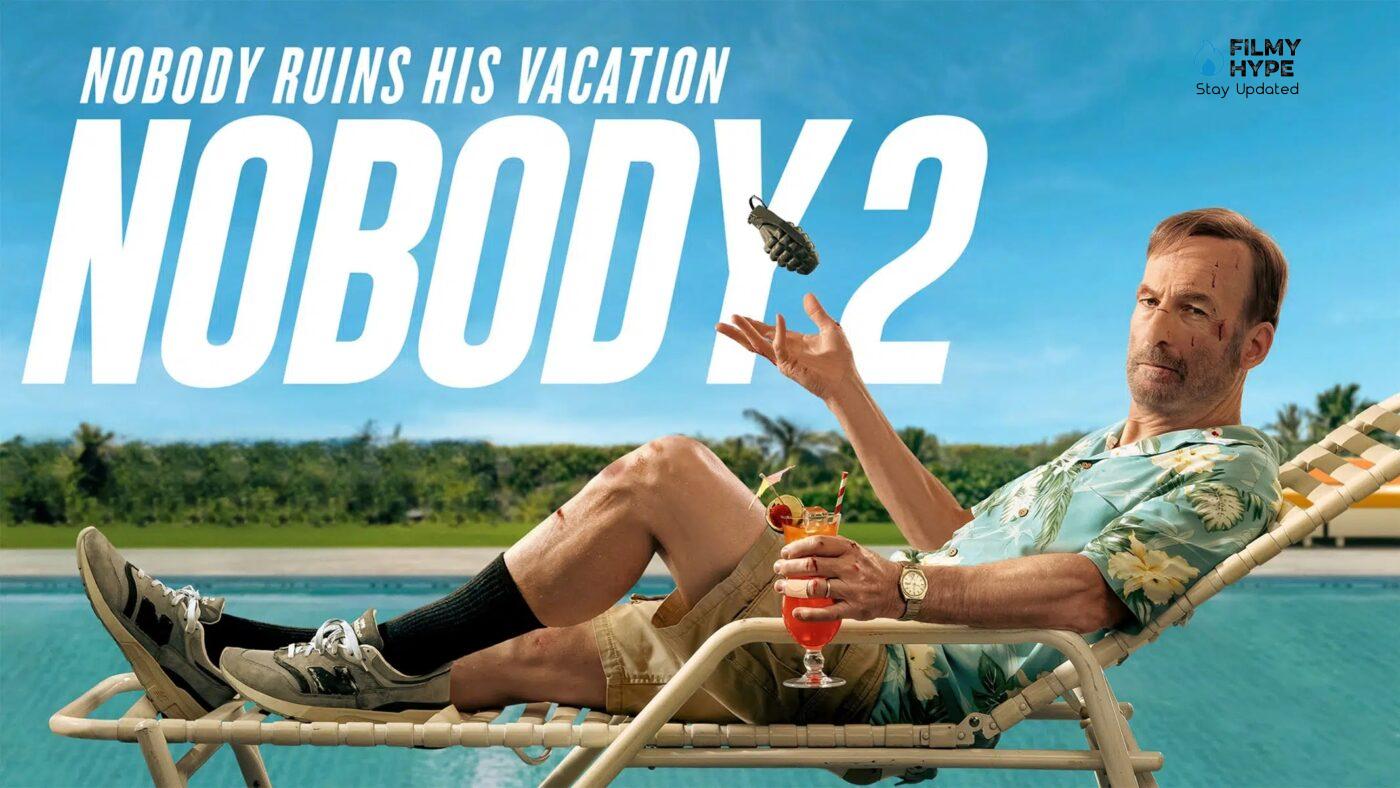
Nobody 2 takes the past lesson and reworks it into an equally action-packed film experience, but with a completely different narrative tone. What had left you stunned in the first film was linked to a series of formal elements that split into two a story that was not innovative in its progress but still cared for and smoothed in many of its parts. A real little pearl in the field of cinematographic action. The screenplay is again signed by Derek Kolstad, flanked this time by Aaron Rabin, Umair Aleem, and by Odenkirk himself, here also as producer, together with David Leitch and Kelly McCormick for 87 North. Production remains firmly anchored to Universal Pictures, while Italian distribution is entrusted to Eagle Pictures. The cast confirms the fundamental presences of the first episode: Connie Nielsen, Christopher Lloyd, RZA, and young people Gage Munroe and Paisley Cadorath. Added to these are the new revenues Colin Hanks ( Fargo, Dexter), as an ambiguous sheriff, John Ortiz (American Gangster, Fast & Furious), playground manager and morally swinging figure, and most importantly Sharon Stone, in an over the top test that sees her step into the villain’s shoes, Lendina, an elegant and ruthless criminal, the true antagonist of this second chapter.
Nobody 2 Review: The Story Plot
Four years later, Hutch Mansell had to deal with the Russian mafia (Odenkirk), and he is still forced into frantic ‘work’ rhythms to repay the debt of approximately $30 million and is facing a series of blows against international criminals that never seem to end. But he couldn’t help but have such an intense roadmap repercussion on his daily life and that of his loved ones, from his wife Becca (Connie Nielsen), what a plan you’re on distancing from him, to their children (Gage Munroe and Paisley Cadorath). What better time than for a little break and a regenerating escape to his place, happy? That Wild Bill’s Majestic Midway and Waterpark, where he and his brother Harry (RZA) used to holiday as children with the rude Father David (Christopher Lloyd). Which is part of the Mansell caravan upon arrival in the small tourist town of Plummerville, when a small disagreement turns out to be there spark that unleashes an unpredictable fire, in which they will be involved little thugs, corrupt, shady policemen entrepreneurs and the craziest and bloodiest crime boss who Hutch has ever met, the Lendina played by a cold and very bad Sharon Stone.
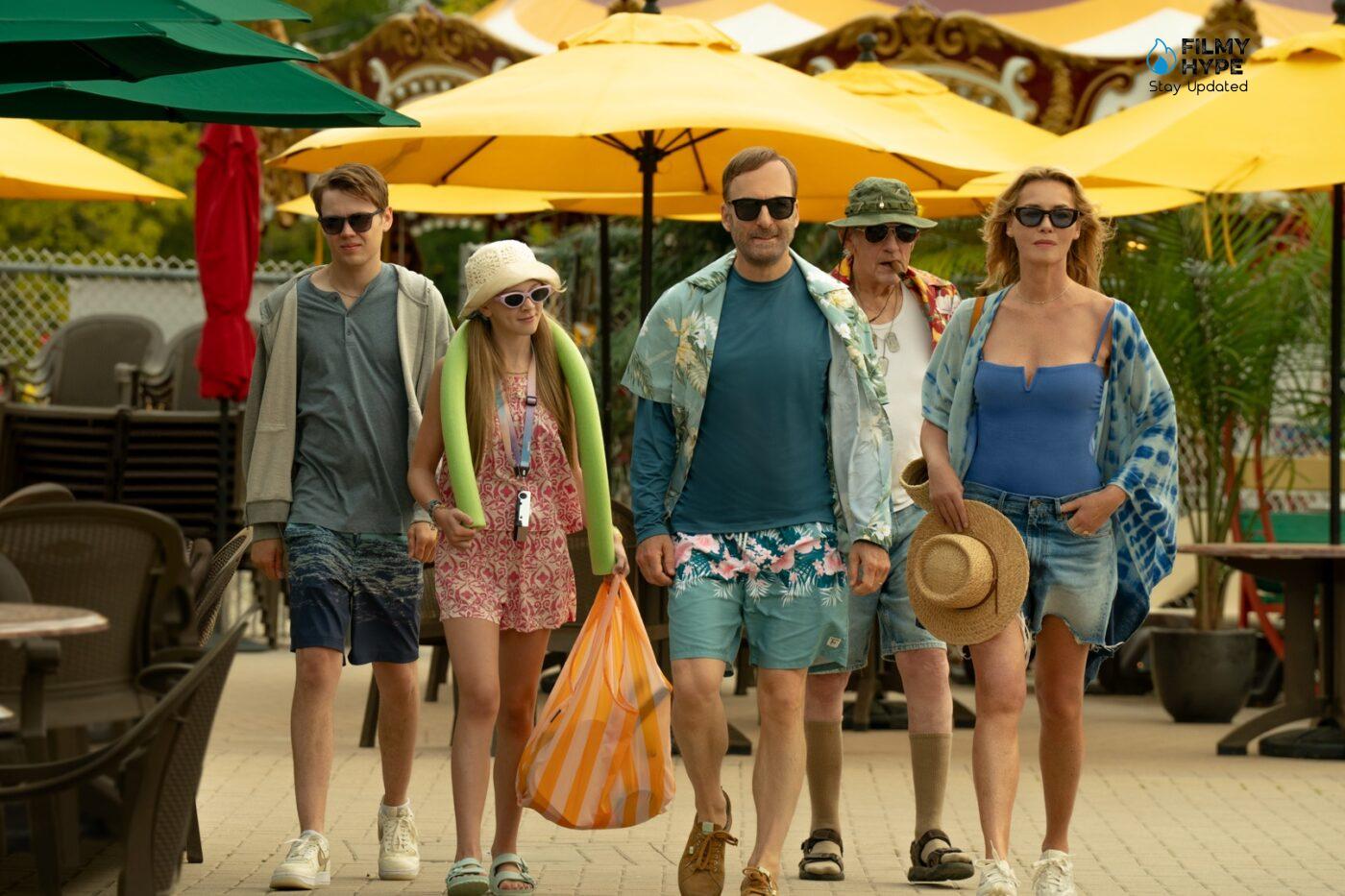
Nobody 2 takes us back to the life of Mansells, especially that of a Hutch (Bob Odenkirk) who seems to have returned to his historic full-time job. The first part of the feature film is extremely direct in this sense, even if the reasons for such a choice must be sought elsewhere. The kids grew up, and the situation evolved, but our absence, due to the various tasks, broke that quiet life that he had previously built for himself. To make things right, therefore, an idea is needed that puts the family unit back on its feet, an excuse for all to be together and build memories that hopefully remain indelible. Nobody 2, therefore, opens his story about a family in crisis who tries to glue their pieces together with a journey in one of the most unthinkable places in America, a sort of themed village with all the comforts, which, however, has experienced better times, anchored to a past that is now old and nostalgic. The Mansell family’s plans, however, will have to clash with something unexpected, which will turn an idea that not everyone is convinced of into an experience in the rotten and the dark. Between nostalgic tourism, “old school” comfort, and a continuously maintained water park, there are some shadows interested in anything but holiday earnings.
Nobody 2 Review and Analysis
Having established the concordance between the unusual acting body of Odenkirk and the genre in which it was cast, the action, and the approach to novelty of the first film is no longer possible. Derek Kolstad, in the screenplay together with Aaron Rabin and creator of none other than John Wick’s saga, therefore, shoots the characters even higher and levels everything up with a more humorous tone. Nobody 2 becomes a family matter when Hutch goes into burnout. Still struggling with the debt previously accumulated with the Russian mafia, he decides to take a break from his forced return to the field and to take his wife (Connie Nielsen), children (Gage Munroe and Paisley Cadorath), and father (Christopher Lloyd) on holiday in a location from his childhood. It’s clear that with someone like Hutch around, things can only go wrong. Moving to the bottom in that sub-strand of the immediate friction between the people of the city and those of the province, between well-behaved people and louts (a basic formula that in American cinema lends itself well to all film genres), the dislikes of the local sheriff (Colin Hanks) end up entangling the family in the typical and shady situation.
Here, the pen of Kolstad draws heavily from the narrative world-building experience of John Wick. Nobody 2 broadens the boundaries by looking more openly at a certain criminal underworld, but taken more picturesquely and more over the top, led by Lendina (a cartoon Sharon Stone), a mastermind who holds the reins of the illegal operations supervised by the local boss (John Ortiz). The internal conflict of Hutch always acts as a thematic carpet, a man who is distressed by how easy it is for him to fight, even when in reality he should just enjoy a margarita by the pool and set a good example for his offspring. The paradox of an inadequate (because violent) being inadequate (a colorless father and husband). It is clear that Tjahjanto’s film is even less serious than the first film and that here it follows an action of misunderstandings on which to plant summer and popcorn entertainment, with a work on choreography and clashes that indulge themselves, albeit without exalting.
Nobody 2 then it lasts just right – 89 minutes, good God! –, he has some subduedly iconic characters (Lloyd, but RZA also returns as Hutch’s swordsman brother) and he doesn’t mask his light vision even if less cool than before. If it wasn’t clear enough already, just think that the showdown is in an amusement park used as a village for pyrotechnics and bombers, with bullets whistling everywhere and TNT knocking everything down. In short, it is one ‘more’, but it does not care about anything else. As anticipated, while rediscovering the violent lesson in its most choreographic aesthetic, Nobody 2 uses it not only to amaze but to change the general spirit of a narrative that becomes much lighter compared to the past. The underlying irony in setting a crime story in the most disorienting of family trips immediately makes clear the voice of a work that plays with itself and its audience, exploiting the irrepressible monstrosity of its protagonist, more to entertain in this case.
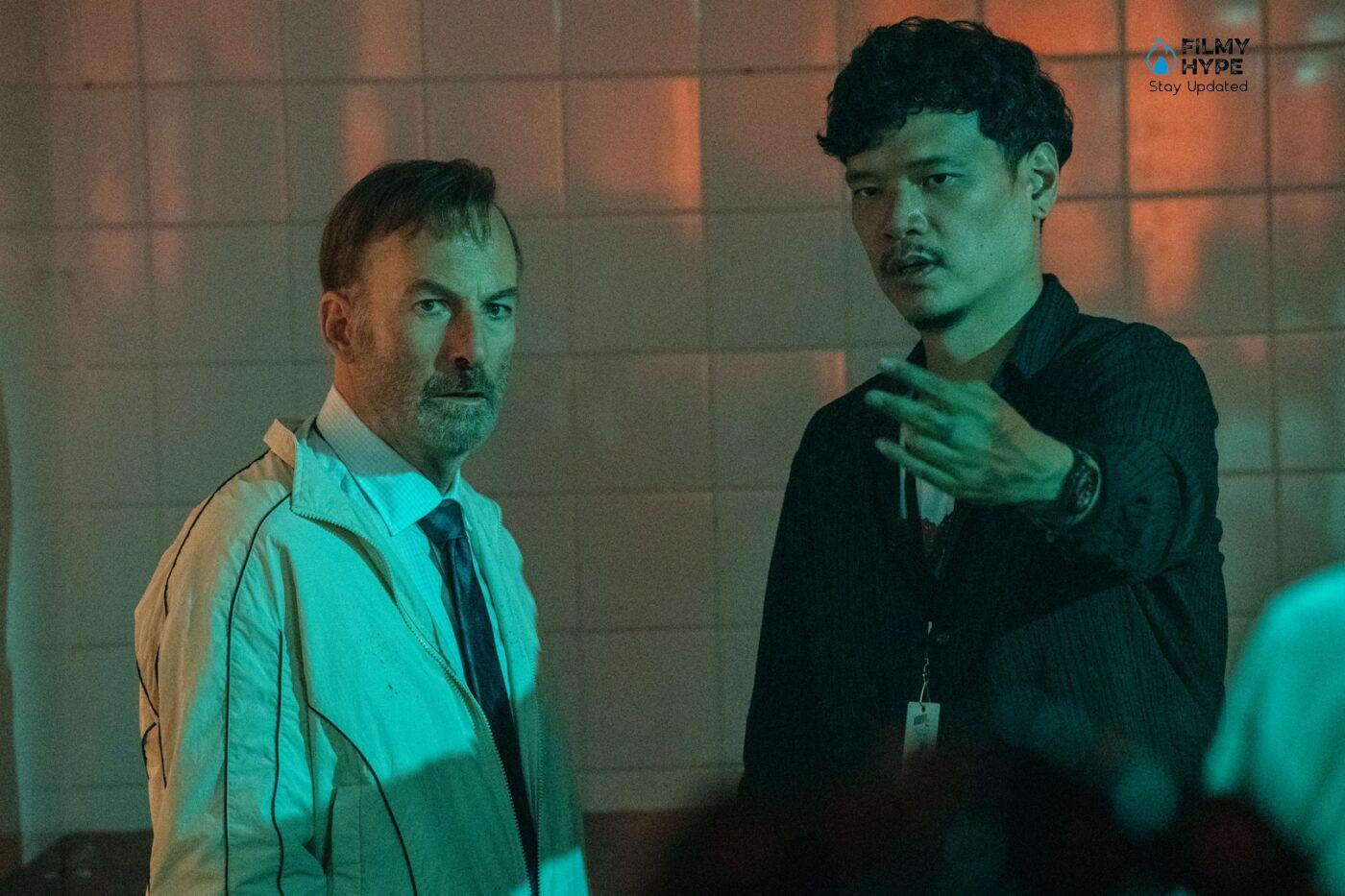
Here, Nobody 2 is a rambling family road movie, where anything can happen, alternating the Mansells’ personal affairs with that unfiltered bloody spirit that had characterized the first chapter. Between merciless beatings and a rather conventional enemy, everything becomes even more “cartoonish”, directing its energies towards having fun and surprising the spectator in the room. Timo Tjahjanto’s direction is syncopated and dynamic, ready to follow the violent exploits of a protagonist who only wants to “build memorable memories” with his family. In the naivety of a goal like this, a series of choices and obstacles appear, which soon transform the picture of the journey into something else, also involving characters from the first film. Everything, therefore, returns to the concept of family in Nobody 2, even if analyzed from unexpected angles. We look at the family legacy in the film, but also at the bonds that, for better or for worse, remain strong even in the most absurd and over-the-top situations imaginable.
At the same time, there is also mutual good and the desire to teach something, even if in a context in which all the conventional rules of the family unit fall through. Nobody 2 is a film that does not innovate the action genre, instead feeding on the stereotypes of family road movies and then continually turning their fortunes around with a touch that will surely satisfy fans of the previous feature film. From the combination of violence without brakes or filters and hilarity that passes entirely through the underlying narrative unruliness, a feature film is built that entertains but does not leave too much of a mark. A perfectly conscious work in the most action terms, which you can love in some way, but without surprising you too much. Fun becomes a constant in a feature film that wants to amaze by dabbling with the expectations of its audience and a mixed narrative structure. Bob Odenkirk still convinces his Hutch, although unfortunately, the wow effect was lost with the previous film, replaced by an over-the-top and conscious allure, purely entertaining, which does not add too much to what we have already seen.
Just mention the characters involved in the tourbillon directed by Thyme Tjahjanto (The Night Comes for Us, May the Devil Take You), it might make your head spin, and not there we didn’t even mention everyone! Don’t worry, there is no danger of getting confused or lost between complicated intrigues or crowded and endless fight scenes, the screenplay written by Aaron Rabin (Tom Clancy’s Jack Ryan) along with original author Derek Kolstad (not coincidentally creator also of John Wick) rests on solid foundation how elementary, the true strength of this second chapter. As for the saga that could hypothetically follow, certainly be fun and enthralling as long as she stays true to herself. Before that (the saga), meanwhile, this (sequel) can however be contested by one certain – how common to the wide competition of the greyer and more hackneyed action thriller in circulation – little originality, but after you having played the surprise effect in the first chapter, it was inevitable that the disruptive force of the entry onto the scene of the father-husband-killer-workaholic protagonist. Easy to predict his reactions in certain situations, less perhaps on the scale than those they hire in some cases, but who cares?
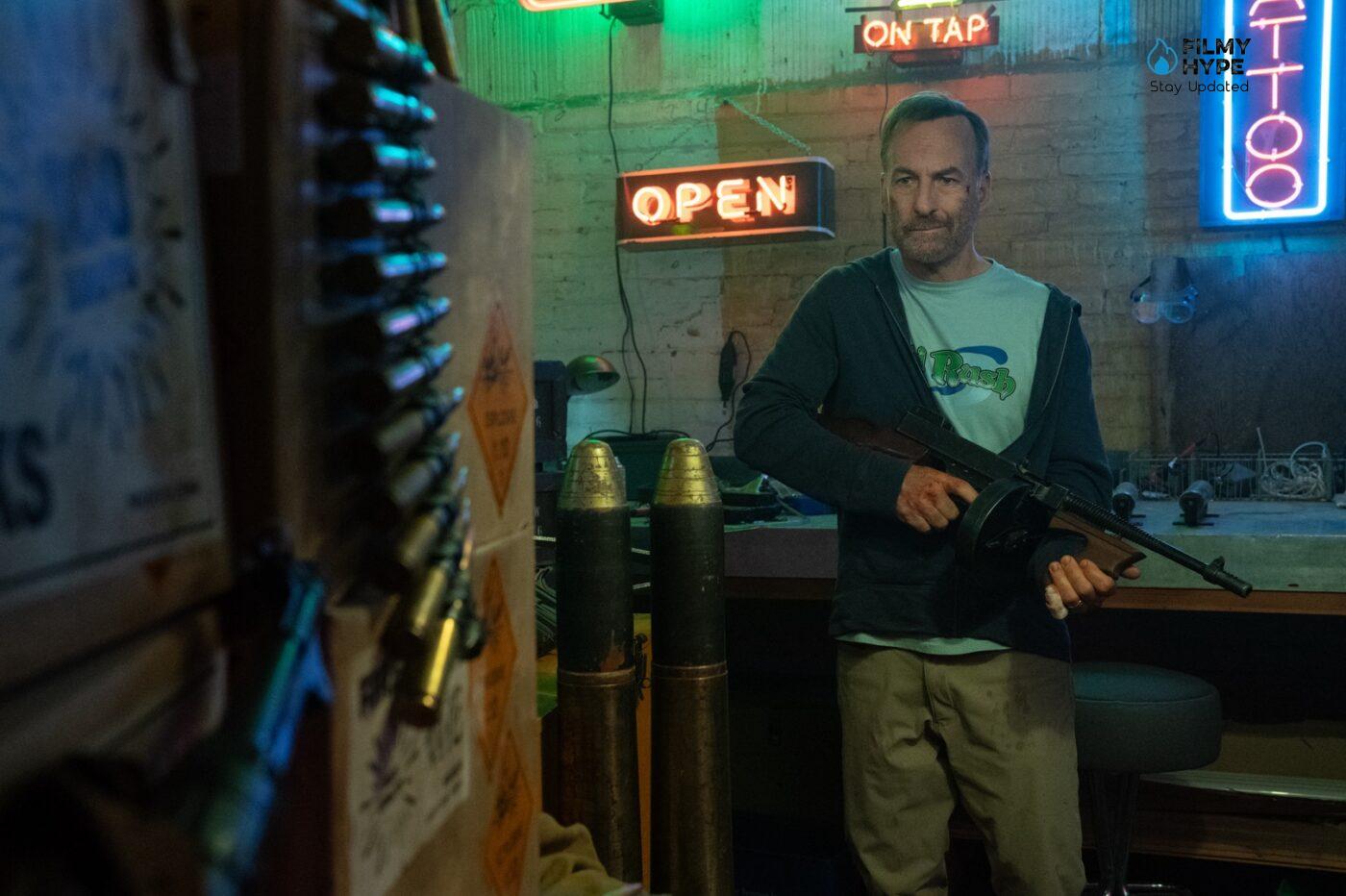
And the film is good for not worry about it, adjusting accordingly and letting go from the first images to an unbridled self-citationism, playing with the details, style, shots and shots, up to one series of scenes in which the ‘off-stage noises’ or the choreography orchestrated will remind most of Bud Spencer’s fistfights, with good peace of ambitions and directorial virtuosity. Less defensible it could be the choices made in the development of the story, of which –as often happens – it is the premise that captures, one preparatory part in which we discover family tensions and generationals of the Mansell family, coming to understand some skeletons in the cupboard of the house, to which one will devote oneself in the subsequent portions. Equally obvious, probably, then this one before, yet less slender (so as not to use the adjective “boring” than the movie certainly doesn’t deserve). Maybe due to an accumulation of characters which few Team Ups could support, perhaps for the stereotypical characterization of many of them (although its psychopathic sheriff always makes an impression), and for the blatant tendency to assign key roles to women on stage, practically all.
Everything works, as I have said, and we arrive with good momentum at a conclusion that it is unlikely to leave viewers dissatisfied. But they risk it to find themselves less enthusiastic about what they were and how much they were; they were deluded, and they would then be after the first half hour of the film. Un ‘Magnificent seven‘ (or 4+1, better) rich in clichés and promises kept, and a comic book villain, so fascinating and as magnetic as it is two-dimensional, to interpret which Sharon Stone she doesn’t seem to have had fun little, other than consoling himself for the opportunity that eluded the disappointing Blue Beetle Erotic villain it was then Susan Sarandon ). Luckily he is there, Bob is there, with his grimaces, his charisma and a unique style, which is difficult we will see retrace the parable of Liam Neeson – although the risk of mannered sequels is strong – and that it could instead open the doors to a franchise capable of synthesize dark comedy and action by taking up the baton that Keanu Reeves it never really led.
It immediately becomes clear: Nobody 2 it moves in the footsteps of the first film, repeating its dynamics and structure. Again, Hutch tries to bury his past, to suffocate the drive for punishment with the comfort of a bourgeois life. But violence is not just a shadow that pursues him: it is his second skin, ready to re-emerge at the first tearing of order. The construction of domestic quiet – of holiday, family lunch, shared memory – is once again defused by an external threat which, in truth, is the very projection of an identity that has never been reconciled. The story develops with coherence, but also with a certain predictability. Yet, in this repetition, there is a slight expansion of the thematic core. Family dynamics are barely scratched, but they seem to pulsate beneath the surface. Hutch is called to battle not only by the bloodshed but by the blood he shares; in addition to his father and brother, his wife and children also reveal themselves, in their way, contaminated by a sense of brutal justice, an idea of protection that is expressed through force. It is the family itself that replicates – genetically and morally – the drive for violence.
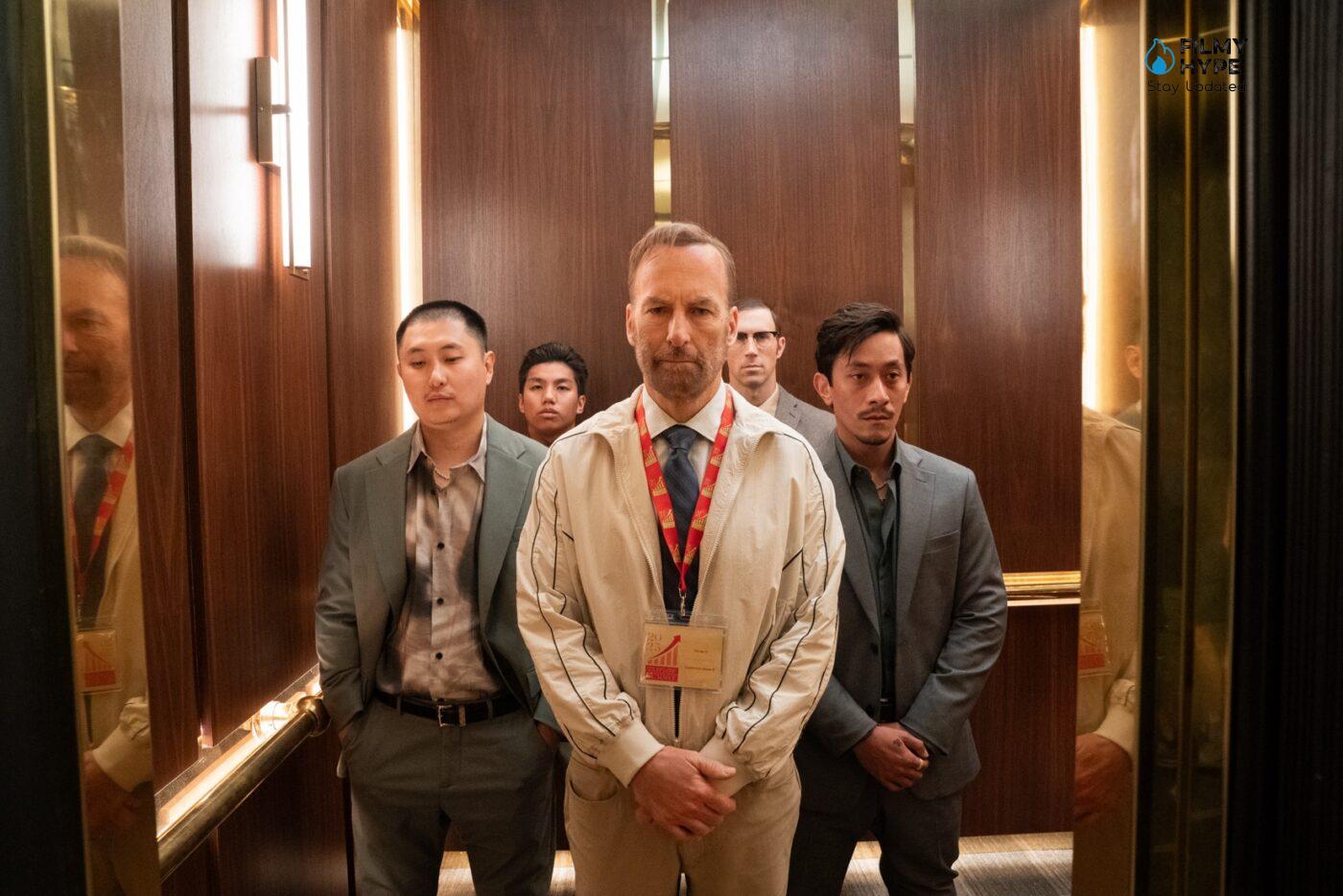
In this narrative universe, protecting means striking, and the well-aimed blow is often the most empathetic response there is. The tongue-in-cheek tone and once again flawless action choreography hold together the seriousness of the subtext with the most candid entertainment. But the final feeling is that Nobody 2 let it be more of an extension or repetition, rather than an evolution. Ultimately, the film signed by Timo Tjahjanto faithfully re-proposes the formula he surprised four years ago, but does not reinvent it. While maintaining a winning recipe can reassure, the film risks running aground in a pleasant repetition but without significant deviation. Bob Odenkirk, tireless, still holds the film on his shoulders: his interpretation continues to oscillate between irony and melancholy, drawing with finesse an often-disoriented character, incapable of managing his duplicity. The action sequences are once again the real driving force of the work: energetic, surprising, almost physical in their staging, palpable, real. Next to him, however, stands Sharon Stone, who gives Lendina a theatrical and feverish performance, capable of moving from glacial control to hysterical fury with a disturbing naturalness.
There is a visceral joy in her in taking on the role of the villain, and it shows. The setting – a water park populated by old monsters and new ghosts – represents perhaps the most marked variation from the first film, and gives the sequel a summery, holiday-like coloration that functions as much as a contrast as a frame. But now that we are already talking about a trilogy – or even a saga – we ask ourselves: what other narrative territories will Hutch be able to explore? For now, the holiday has turned into a battlefield. But the risk is that, continuing in this wake, the saga remains stuck in an eternal return of the ever-equal. The scheme implemented in Timo Tjahjanto’s sequel (the absence of Ilya Najšuller, who directed the 2020 film, can be felt) is almost the same as already seen in the first dazzling chapter (which has become a coincidence, especially in America). A sort of comfort zone devoted to entertainment, the exaltation of the common man, of the outsider to be supported and, why not, even embraced. We love Hutch Mansell, we love him because behind him there is the talent of Bob Odenkirk, and then because behind his normality, we find the traits of the best book. Someone who takes them, who falls, who gets up, and who, despite everything, always manages to do the right thing.
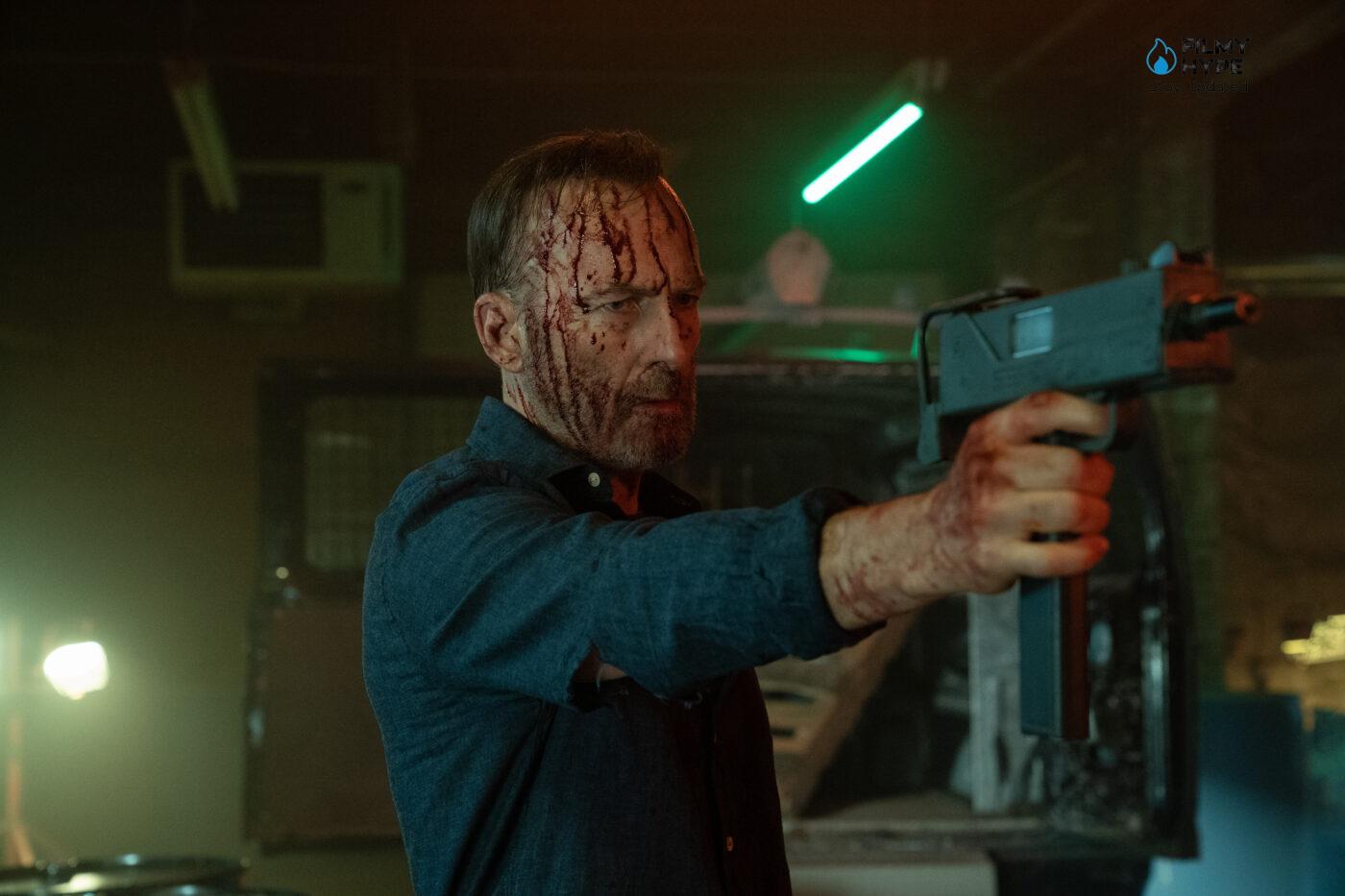
In short, the father or husband we would like. Perhaps, even the man we aspire to be. A theatrical violence which winks at comedy, and contextualized with respect to stage fiction. Violence is to be taken for what it is, which is linked to the galvanizing sense of the good that beats the bad, enhancing every blow delivered. An archetype that does not tire, and which continues to be the certainty of the best action sagas, from John Wick a Taken. A lightness of purpose which, however, ends up turning out this time ramshackle and approximate. Sure, in this case, and given the film diameter, it’s relative: Nobody 2 it keeps alive the spirit of a new brand action that makes the most of the “normality” of the main character (and we repeat how Hutch is stitched to the millimeter for the former Saul Goodman), now emphasized by a family context that proves suitable for the purpose sought: if it is essential to look up and create gods memories, we must start again from the dearest affections, distancing ourselves from the superfluous and toxicity. A precise context to be reread according to the dictates of the best action film, carbonated and sweetened like an iced drink to sip at the cinema. Is there anything better?
Nobody 2 Review: The Last Words
Nobody 2 takes up the violent, choreographic aesthetic of the first film, but reinterprets it in a lighter, more ironic key, turning into an over-the-top, familiar road movie. Timo Tjahjanto’s direction is dynamic and syncopated, at the service of a narrative that aims more to entertain than surprise, with a protagonist, Hutch – played once again by Bob Odenkirk – intent on “building memories” with his family in a context nostalgic and grotesque. The feature film plays with the stereotypes of action films and road movies, but loses the disruptive effect of the first chapter, limiting itself to entertaining without leaving its mark. Reflection on family ties is central, though extravagantly treated and lacking in real depth, and the result is a self-conscious and hilarious sequel, but less incisive than the original. There’s no doubt about it, it’s the characters that make the difference in an action film. The sequel to I Am Nobody could be ramshackle and sloppy, yet it works in its gassed, amused spirit, prone to humor and action. Proving once again how Bob Odenkirk is an amazing actor. And the duel with Sharon Stone, the villain version, is unmissable.
Cast: Bob Odenkirk, Nolan Grantham, Connie Nielsen, Pyper Braun, RZA, Christopher Lloyd, Michael Ironside, Colin Salmon, Billy MacLellan, Gage Munroe, Paisley Cadorath
Director: Timo Tjahjanto
Filmyhype.com Ratings: 3/5 (three stars) 🌟🌟🌟