
Gen V Season 2 Review: Raises the Bar Again After the First Season
Gen V Season 2 Review: From 17 September up Prime Video it’s out (with the first three episodes out of eight, the others will be released individually every Wednesday) Gen V Season 2, second season of the comedy-drama-superhero series created by Michele Fazekas as a “youth” spin-off of The Boys, and therefore set in the same universe Dystopia-comic inspired by the comics by Eric Kripke, executive producer of both series together with Seth Rogen and to Evan Goldberg, Rogen’s partner on practically every occasion. “Unmissable” is, we must admit, an adjective widely used to define films, TV series, shows, but also events and so on. In the case of Gen V Season 2, however, it’s not just a figure of speech: if you follow The Boys, this season’s vision of Gen V, it is essential to be able to understand what will happen next time in the final season of the mother series. Unfortunately, in Gen V Season 2, there is no Chance Perdomo, the interpreter of the young magnetic superhero of the first season, Andre. The production rightly decided not to find another actor for Andre, rewriting the season and dedicating it to the memory of Perdomo, who died in 2024 in a motorcycle accident just as he was going to start filming the new episodes.
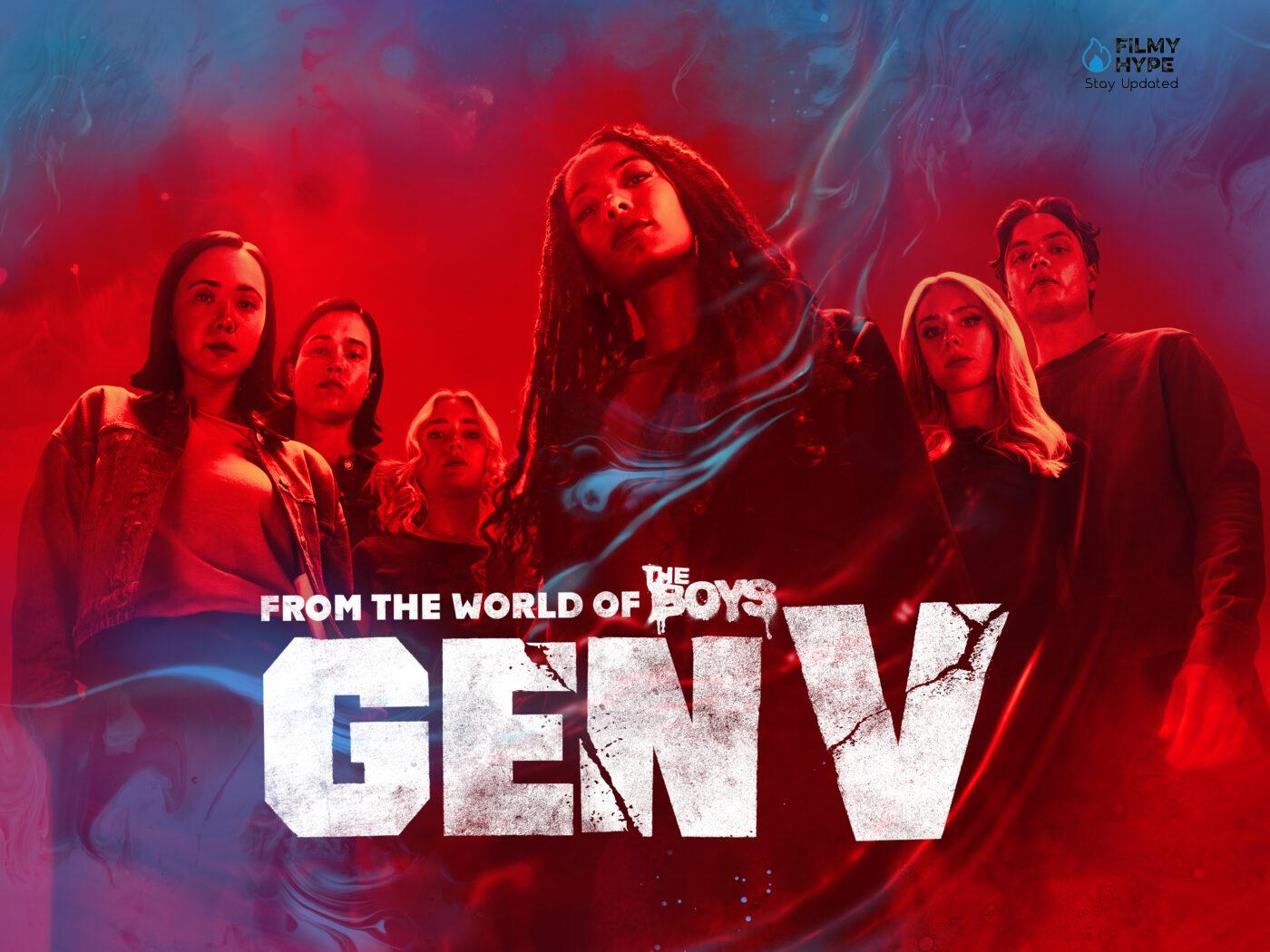
So, let’s see the plot of Gen V Season 2 together, without spoilers apart from those that can be understood from the teaser and the trailer, which we report in depth in the review, in the Italian version. Indeed, it is very current. The extreme violence in schools and universities, the totally polarized public debate, and the continuous manipulation of the truth by a certain political and media strand. The second season of the spin-off of The Boys (which then, as we told you in ours gen V review(such a spin-off is not) explicit in the clearest possible way who the target of its thematic attack is: Donald Trump and the whole MAGA world, that is, Make America Great Again, the ideological basis of Trumpian politics that takes his thoughts to the extreme. Being a satire that makes exaggeration its strong point, even criticism is never subtle, digging a crater in the intransigent Christian political ideology that animates most US Republicans. And then, luckily, there’s everything else about Gen V too.
Gen V Season 2 Review: Story Plot
Last season closed (here the complete review, if necessary) with the capture, decided by Homelander/Patriot, of Marie (Jaz Sinclair), Emma (Lizze Broadway), Jordan (London Thor / Derek Luh) and Andre (Perdomo) after the four of them had stopped the massacre of humans perpetrated by Cate (Maddie Phillips), whose right hand Marie had severed before she touched Jordan with her power and convinced him/her to be on his/her side, and Sam (Asa Germann), who had his/her recent memory (the cache, in practice) emptied by Cate to forget among other things the emotional bond with Emma and that of “hallucinated consciousness” with her deceased brother Luke. In the second season, Andre is dead, Marie has escaped from Elmira’s prison clinic, and Jordan and Emma are offered the chance to return to Godolkin University, after the usual brainwashing that Vought will carry out on the public, or be killed. Obviously, they chose, without enthusiasm, the first option.
At Godolkin, meanwhile, there is a new principal, Cipher (Hamish Linklater), with decidedly severe and even obscure methods, and Jordan and Emma will have their work cut out for them to re-enter the school community, but they will find an unexpected ally in Polarity (Sean Patrick Thomas), Andre’s dad, who is recovering from the crisis he had last season. Together, the few remaining good guys will have to come to the head of a mysterious and lethal project called Odessa, whose origins date back to when Thomas Godolkin (Ethan Slater), the scientist after whom the Young Supes is named, was still alive. A task made even more difficult by the fact that, as those who have seen know, the entire fourth season of The Boys, the ferocious Homelander Patriot now dominates unchallenged in America. The world of Jan V Season 2 starts exactly where we were left: Marie, Emma, Jordan, and the others are veterans of the rebellion against Vought and the attempt to escape from the left “God U”.
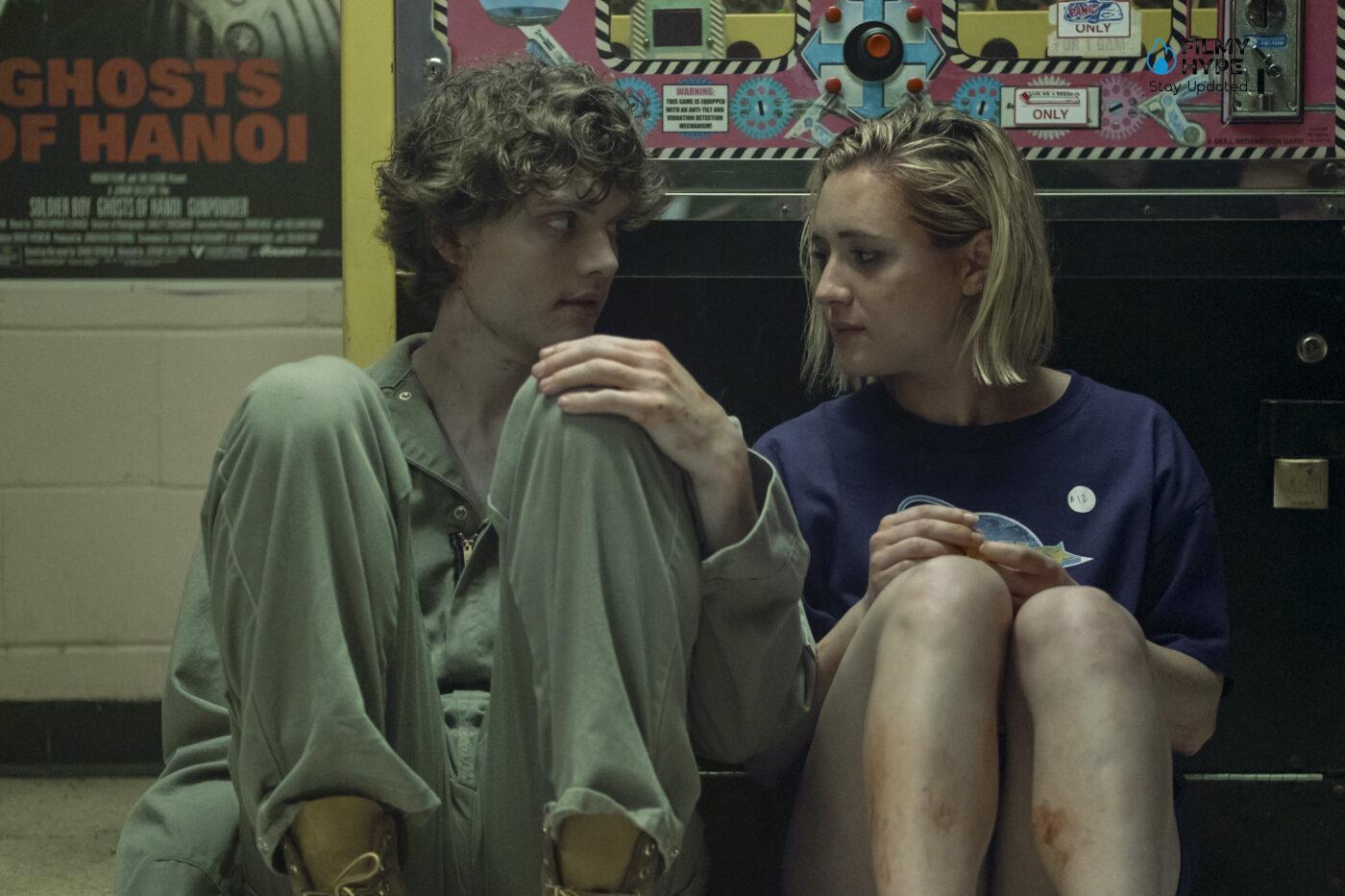
The new scenario is that of the Elmira prison, a symbol of the suffocation of the ubiquitous multinational. Here we discover that Andre died in an escape attempt, while Marie manages to escape alone, and Cate obtains the liberation of the others thanks to a negotiation with Vought. Of course, narrative coherence is not the strong point of this season. Some passages seem forced, like the speed with which the protagonists return to the scene, even though they had been branded traitors. However, the series consciously chooses not to get lost in explanations: the important thing is to keep the pace, push the plot forward, and not let logical quibbles slow down the action. It’s an approach that is shameless, but it works, because the strength of Jan V Season 2 is not in the justifications but in the ability to build tension and increasingly intense conflicts. What emerges forcefully is the figure of Cipher, the new dean played by Hamish Linklater. Enigmatic and disturbing, it represents the face that is seemingly smooth but secretly corrupted by the power of Vought. If the first season had focused on the virus capable of hitting supers, the latter shifts the focus to Project Odessa, a mysterious initiative that binds Marie and the very origins of Godolkin. A move that strengthens the link with the mythology of Vinegar Boys, and it broadens the scope of the spin-off.
Gen V Season 2 Review and Analysis
For obvious reasons, we would have preferred a million times to see a second season of Gen V with the Andre of Chance Perdomo. Its absence is felt, both because of the magnetism (in every sense) of the character and the interpreter, and because of some necessary consequent forcing in the story, with Polarity literally doing what she can. Despite some imperfections, however, we are totally on the side of the producers of the series who have chosen not to replace Perdomo with a new Andre, and indeed to dedicate the season to the unfortunate boy. The result, in the end, is a magnificent season and truly not to be missed, not only because it will help to understand the fifth and final season of The Boys, but because, trivially, it is electrifying, with the typical trademark of violent and disgusting scenes as much as they are funny, with the usual gallery of cruel and fascinating characters. And with a passionate and exciting story of the adventures of the protagonists of this series and also of the one that is a spin-off, in a fusion that takes the entire great Vought universe to a higher level.
On a narrative level, the second season of Gen V, meanwhile, had to bring its protagonists back to a sort of “original” status quo, since the center of the events always remains Godolkin University. Above all, the authors had to face in the fiction of the series the real tragedy of the death of Chance Perdomo, interpreter of Andre Anderson, who passed away due to a motorcycle accident in March 2024. Gen V Season 2 then makes his death an integral part of the narrative, given that to respect the actor, his character did not undergo a recasting in the second season. The lack of Andre, the weight of his absence, thus becomes a narrative engine for the motivations of the characters, as well as an important element for the unfolding of the plot. A sense of loss that brings reality into fiction, and at the same time becomes a celebration of Perdomo’s acting life through Andre’s fictitious life. All while there is a second year to face at university, and Gen V does it with some gems for the public, with elements that recall My Hero Academia or a little millennial cult like Sky High – Superpower School, although perhaps from this point of view, the scholastic narrative could be better integrated with the macro-events of the series.
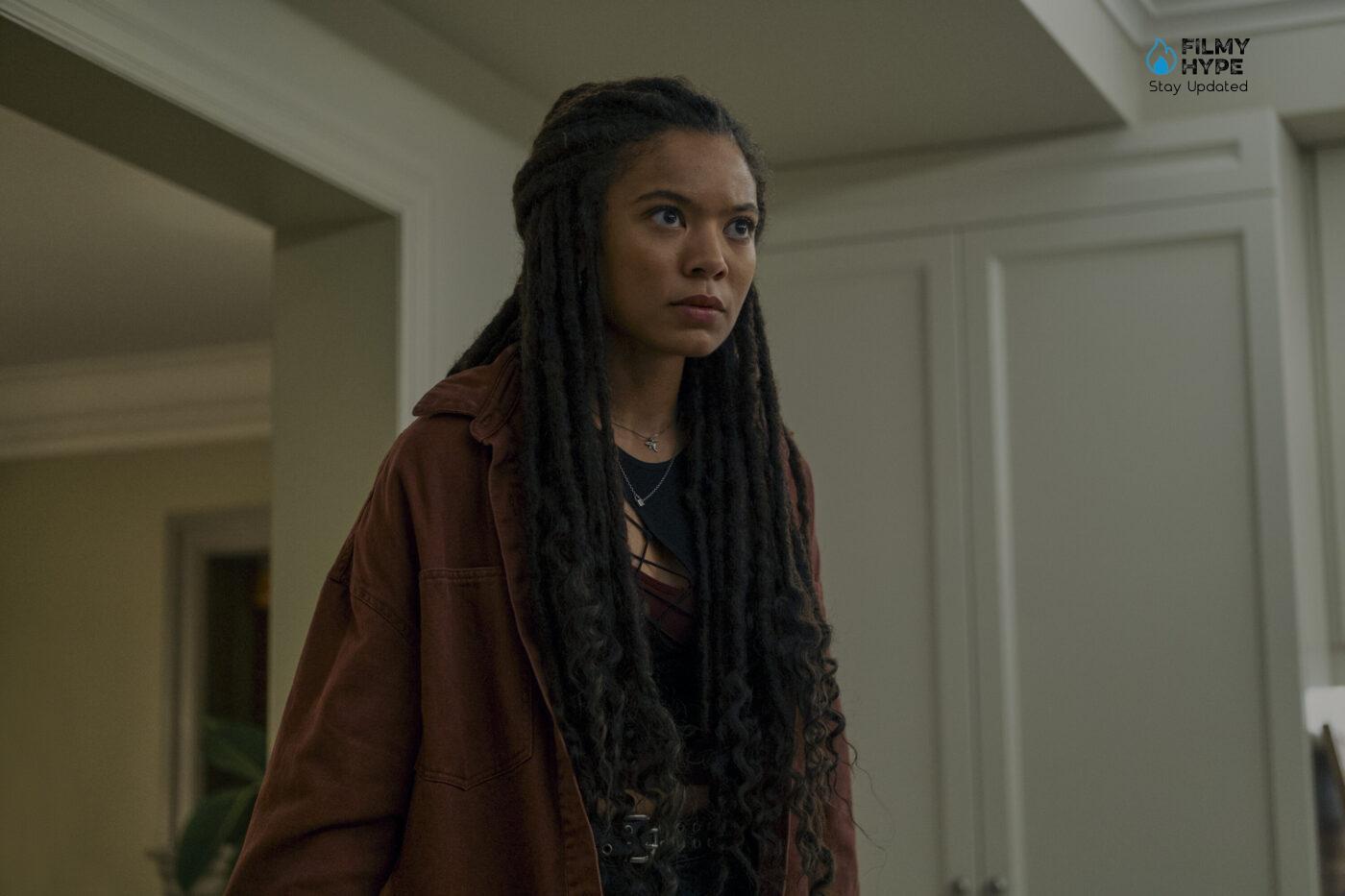
As had already happened for the first season, Gen V proves to be more than just a spin-off of The Boys. Indeed, this second round of eight episodes is even more interconnected than before with the mother series, because in parallel, it shows the already devastating effects of Homelander’s new policy and the autocratic turn of the Seven and Vought. You never feel like you’re in a secondary product; in fact, it’s all great preparation for the fifth and final season of The Boys, which is uploaded by Gen V, so that both can culminate together in a bloodbath that promises to be pleasantly truculent. Chicca of the season is the splendid character of Cipher played by Hamish Linklater, which sails on the shores of megalomania, anchoring us with fear on the ground every time it makes us perceive how much it is always a step forward. It’s just a shame about some flaws in the final comparison, perhaps orchestrated in a slightly too simplistic way in the management of the characters and their movements.
However, these are details in the set of a product capable of surpassing even the parent series, given the problems we had highlighted in the review of the fourth season of The Boys. And maybe the best quality of Gen V Season 2 is making us feel like an unhealthy desire to see how this grotesque superhero epic ends. After all, to paraphrase George Orwell: all Supers are the same, but some are more Super than others. In Jan V Season 2, this element does not disappear, but resizes. We see Sam struggling with a supe fraternity and Emma struggling with a marketing lesson from a winged influencer of butterflies, but these inserts have less space than in the past. The series chooses to speed up the main plot, sacrificing a little of that satirical freshness that had distinguished it. Compensating, however, is an emotional insight into the characters. Marie continues her search for her sister, a common thread that highlights her vulnerability behind the gory powers he controls. Emma confronts his struggle with eating disorders in a less metaphorical way and more authentically, finally making the connection between his internal problems and his ability to shrink. Also, Cate, crushed by guilt, is at the center of one painful reflection on forgiveness and responsibility.
An obvious aspect of Gen V Season 2 is the increase in direct links with Vinegars Boys. Important cameos like that of Sister Sage and Starlight are not just fan service, but signs of a progressive merger of the two lines’ narratives. It’s like Gen V stops being a “derived” to transform into an intermediate chapter of the saga’s main. This has its advantages: history gets richer, the threats become bigger and more coherent, and the viewer has the sensation of witnessing a narrative mosaic in which every piece fits together. However, there is also a reverse of the medal: Gen V risks losing his identity, becoming too dependent on the mother world. Satire university, the freshness of the characters, the desire to dare, yes, they dilute as the focus shifts to the larger epic of the serpentine. Yet, despite these critical issues, the season works. It isn’t perhaps at the dazzling level of debut, but it remains a vibrant series, capable of combining humor, black, brutal action, and moments of authentic emotion.
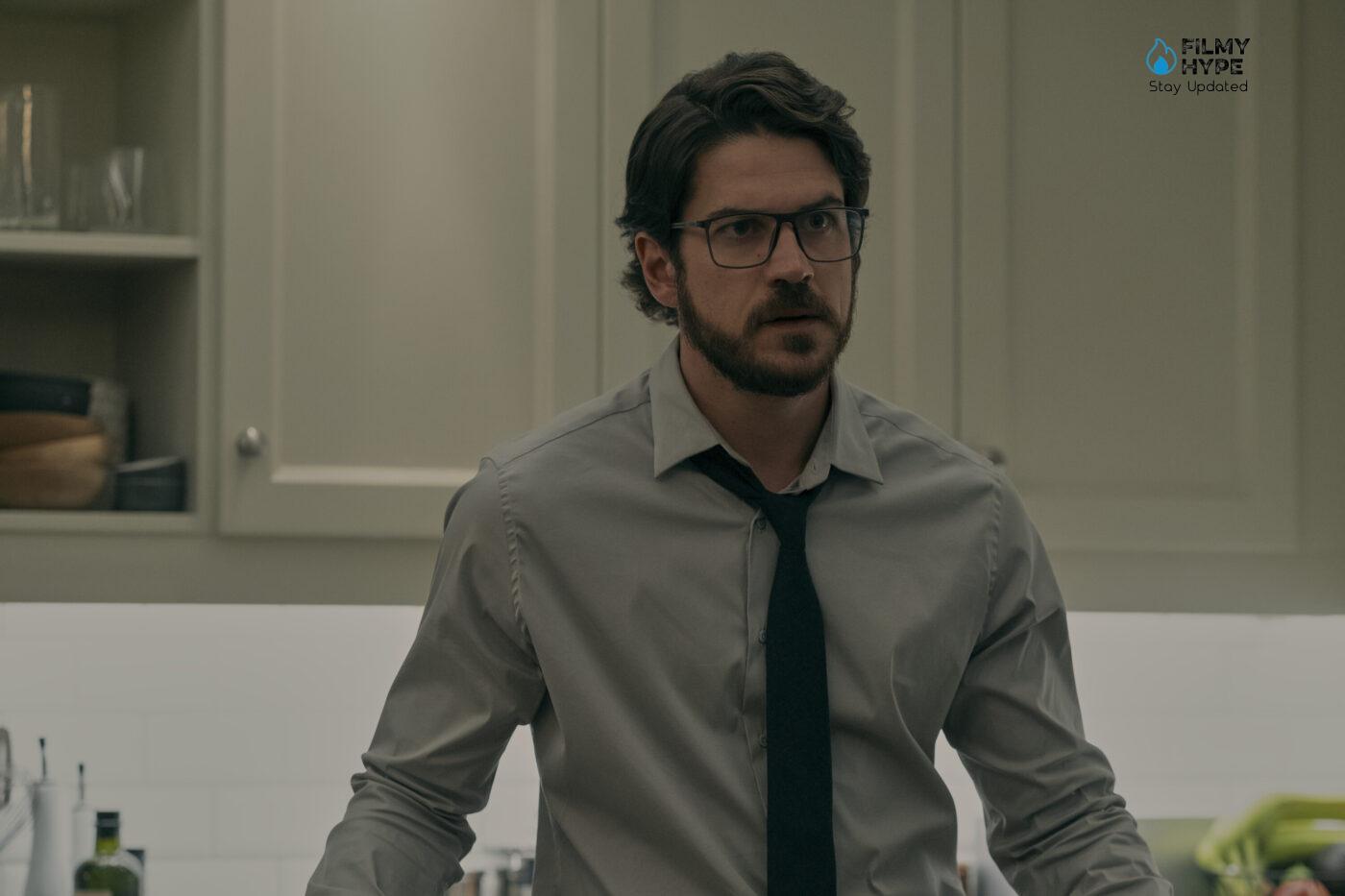
Most importantly, he gets to speak to fans in emotional language: mourning for Perdomo becomes part of the narrative, and it allows viewers to share a process with the cast collective. In Jan V Season 2, he loses some of his identity, relying on narrative shortcuts, and it reduces the satirical charge that had made it special. But it compensates with more intense emotional writing, an intriguing villain, and an ever-closer link with the universe of Vinegar Boys. Chance Perdomo’s death weighs like a boulder, but the series manages to transform it into a powerful narrative component, making the memory of the actor integral to the visual experience. Its progressive fusion with the series madre does nothing but embellish its original nature, without, however, taking away the space of these irresistible protagonists to grow and tell their story to the viewer.
The future of the spin-off is uncertain, especially with The Boys close to conclusion and other projects already announced. But if this were to be the last season, Jan V Season 2 would have, however, the objective was achieved: to leave your mark with a story of imperfect young heroes, fighting not only against external monsters but also against one’s own internal demons. When filming of the new episodes had yet to begin, the authors found themselves with a lot to worry about since Chance Perdomo, Andre’s interpreter – a fundamental character for the story – died in a motorbike accident. They therefore had to entirely rethink not only this second chapter but also the possible future of the series within the universe of The Boys, which is expanding with more spin-offs on the way. They were good: Andre’s death becomes the fuel that motivates the protagonists to seek the truth at all costs, even more than before; after all, they are young and still full of ideals, even though their childhood and adolescence were traumatized by Compound V.
They will also have some adults on their side, such as Andre’s father, Polaris (Sean Patrick Thomas), who gains greater prominence and importance in this second season. They won’t be missed, precious guest stars from the original series, so that we never forget how extremely intertwined this narrative universe is. Speaking of developments, albeit with some repeated patterns, between conspiracies and sentimental evolutions, Gen V once again talks about the New Generation of Supers, which should/could do better than the previous one. He also talks about the “evils of contemporary society” – the social reputation, the ranking, the little real attention to issues such as mental illness except in front of the cameras, the importance of gender and the rivalry between students – and above all about the New World Order given by the new US Presidency affiliated with Patriota (as happened in the finale of the fourth season of The Boys). Another wink at a reality marked by the ultra-right.
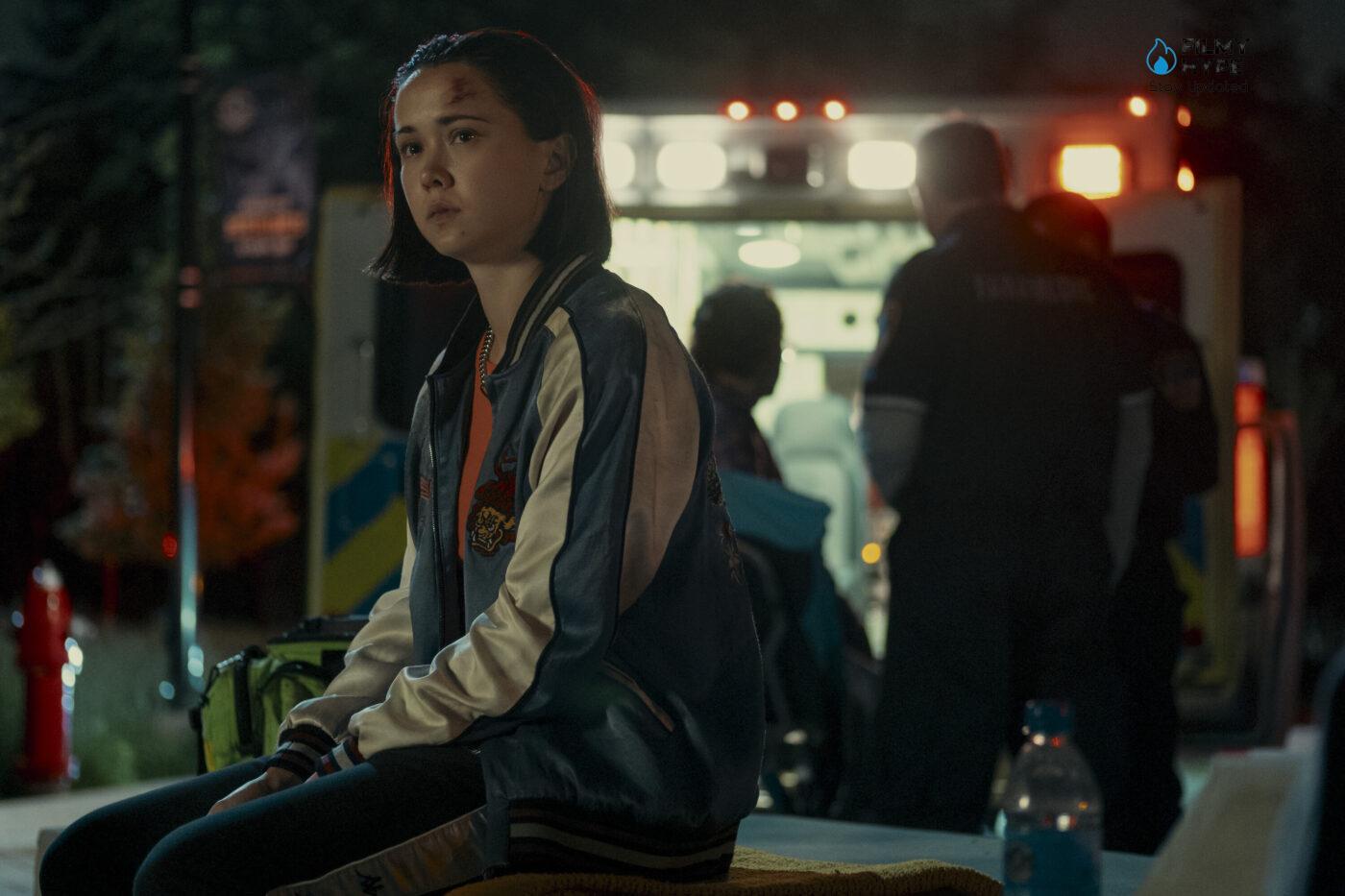
The Starlighters are hunted on sight – Annie, first and foremost, now a fugitive – and essentially the series overturns what the X-Men have denounced for years. Here it is the humans who are bullied and terrified by the Supers, who want to take back everything they have missed since they were injected with Compound V. There is no shortage of new powers, new twists and new references to society 5.0, assisted by a dynamic direction that makes fun of the rules of comic films, between foul-mouthed languages and scenes forbidden to minors. There seems to be only one “solution”: unity is strength, also because it is not from their own dysfunctional families that the characters can find comfort. The point is: will they be able to maintain it? The absence of Chance Perdomo, interpreter of the character of Andre Anderson, is one of the strongest and quietest shadows that run through the second season of Gen V. Andre was one of the main characters of the first season: brilliant, tormented, son of a hero (Polarity), and torn between loyalty to his father, his friends, and his own conscience. His storyline was in full evolution, and everything suggested that in the second season, he would have a central role, especially for the relationship with Marie, with Cate, and for the theme of the generational legacy.
The showrunner of the series, Michael Fazekas, made the right decision not to force a recast of the character, facing Andre’s death in the series with respect, intelligence, and sobriety: there are no long tributes or celebratory episodes, but the absence is felt in the silences, in the voids, in the broken relationships. You don’t pretend nothing happened. Some characters, particularly Emma and Marie, carry the emotional and narrative weight of its lack. Andre was a character who served as a bridge: between Marie and the others, between generations, between impulse and reason. Without him, the group fragments more. Alliances are more unstable, and emotions are more uncontrolled. In a certain sense, his absence sharpens the central theme of the season: the loss of a fixed point. Andre’s absence will also weigh heavily on the polarity story arc: a now disillusioned, but still influential ex-superhero. A classic shadow parent, authoritarian and ambitious, which in the first season profoundly marked his relationship, made up of silences and pressures.
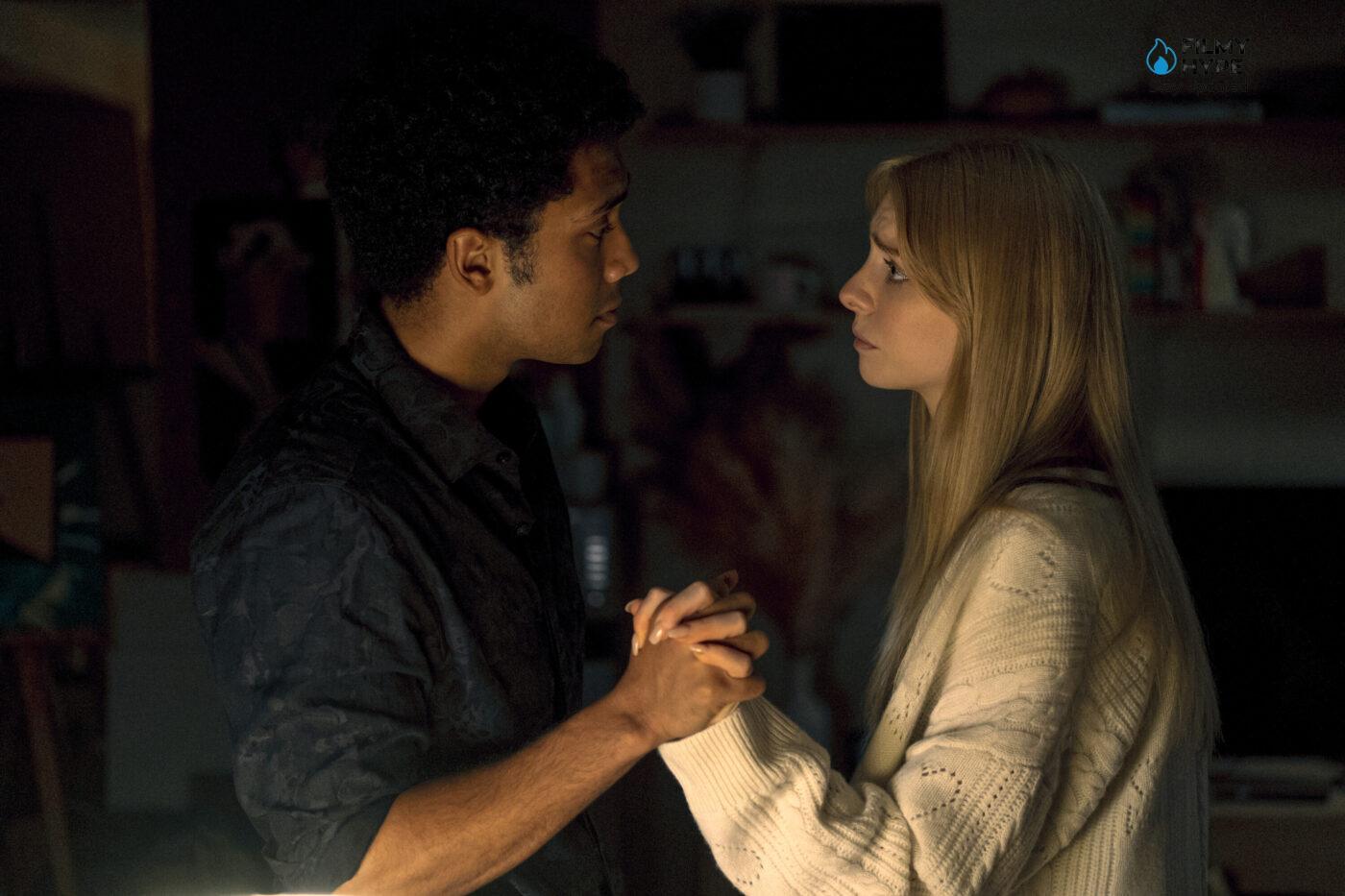
With the loss of his son, Polarity changes radically: he is no longer an arrogant and charismatic figure, but a grieving and disoriented father. Polarity, he doesn’t grieve, but manages it in his own way, as if it were a problem to be contained. This makes it even more tragic: he can’t experience pain as pain; it transforms it into strategy, into control, into silence. Thematically, Gen V season 2 moves closer to the political nuance of The Boys. The line separating what is right from what is useful is becoming thinner and thinner, and the shadow of Patriot is everywhere, though not always in the foreground. Its impact on society, on politics, and on the public perception of power is palpable. The series, like this, widens your gaze. It’s no longer a simple college drama with superpowers, but it becomes a reflection on how you grow up in a world that teaches you to win, even at the cost of losing yourself. The second season of Gen V is a remarkable quantum leap; it aligns with the narrative universe of The Boys imperfectly but ambitiously, also bearing the weight of its boldest choices.
Gen V Season 2 Review: The Last Words
Gen V Season 2 is an excellent continuation of what was created from the inaugural cycle. Even with some repetitions, the protagonists must once again manage to form a common front against the adults who want to silence the new generation from the rottenness they have buried over the decades. At the same time, they must be able to stop their peers, the Supers, who are now out of control due to the success of Patriot and the new US government. All starting from a valid exploitation of Chance Perdomo’s death to be included in the story. Between foul-mouthed jokes, crazy sequences, and outspoken ideas about the language (or no other part of the body), the spin-off is the necessary vision waiting for the grand finale of The Boys in 2026. The second season of Gen V raises the bar again after the first. A grotesque and distorted mirror of the United States, very current in showing what you see on the news, and often with the same amount of blood. A return to the status quo of the first season, while the consequences of the finale of The Boys Season 4, a series to which Gen V is increasingly connected, are very clear. Clear and exaggerated social satire, a bewitching villain, and the perfect narrative management of Chance Perdomo’s death: everything it takes to make us long for the fifth and final season of The Boys.
Cast: Jaz Sinclair, Lizze Broadway, London Thor, Derek Luh, Maddie Phillips, Asa Germann, Sean Patrick Thomas, Hamish Linklater
Creators: Craig Rosenberg, Evan Goldberg, Eric Kripke
Streaming Platform: Prime Video
Filmyhype.com Ratings: 4/5 (four stars)





One Comment