
Néro the Assassin Series Review: The Brutality of An Era Without Redemption?
Néro the Assassin Series Review: Néro the Assassin is a French series set in sixteenth-century France and available on Netflix. The protagonist, Pio Marmaï, plays a former murderer who discovers he has a daughter, Alice Isaaz, after years away; a piece of news forces him to confront his own past and a world where violence is the only possible language. Directed with particular attention to historical reconstruction and human relationships, the series talks about guilt and the difficulty of changing when time and choices seem to have already decided everything.
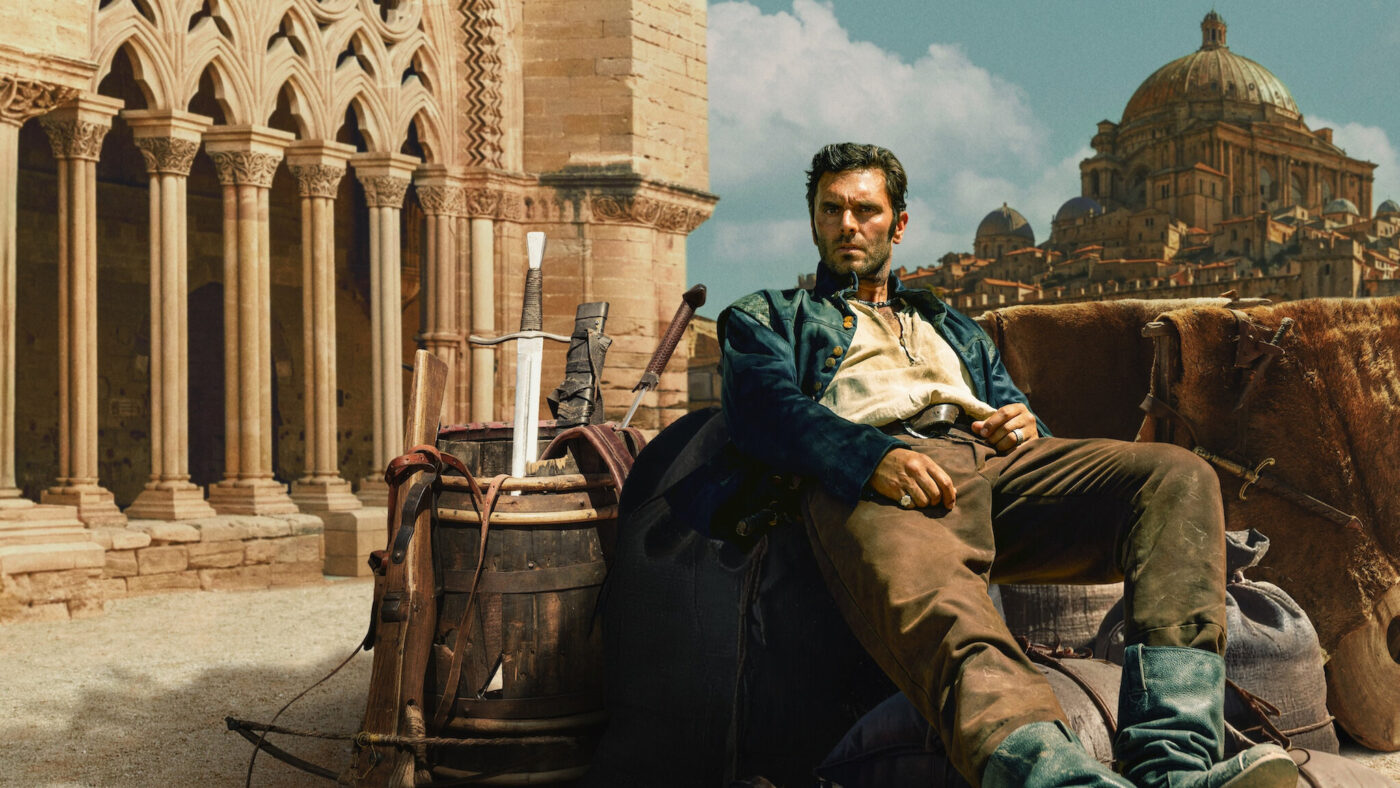
I have to be honest with you from the beginning: I had high expectations for Néro the Assassin, Netflix’s new French fantasy series available from 8 October 2025. The trailers promised a great dark historical saga, with a rich narrative universe and deep emotional intensity. Instead, I found myself in front of one nice and good disappointment. Despite the breathtaking visuals and convincing performances, the series completely lacks the emotional resonance that should be the beating heart of such a story. Directed by Ludovic Colbeau-Justin and Allan Mauduit, the series boasts an all-star French cast led by Pius Marmaï as Néro the Assassin, Camille Razat as the enigmatic witch, along with Yann Gael, Alice Isaaz, Olivier Gourmet, and others. Eight episodes of approximately fifty minutes each combine medieval setting, religion, and magic in a narrative about faith, rebellion, and the price of power.
Néro the Assassin Series Review: The Story Plot
The narrative begins in 16th-century France, between religious wars, fanaticism, and power struggles. Néro the Assassin (Pio Marmaï) is a former hitman who, after years of silence, discovers that he has a daughter, Pearl (Alice Isaaz), who grew up far from him. When the girl finds herself at the center of a plot, Néro the Assassin decides to protect her at all costs, facing enemies, old allies, and the secrets she had tried to bury. Ambiguous figures such as Horace (Olivier Gourmet) and Rochemort (Louis-Do de Lencquesaing) move around them, symbols of an era dominated by fear and greed.
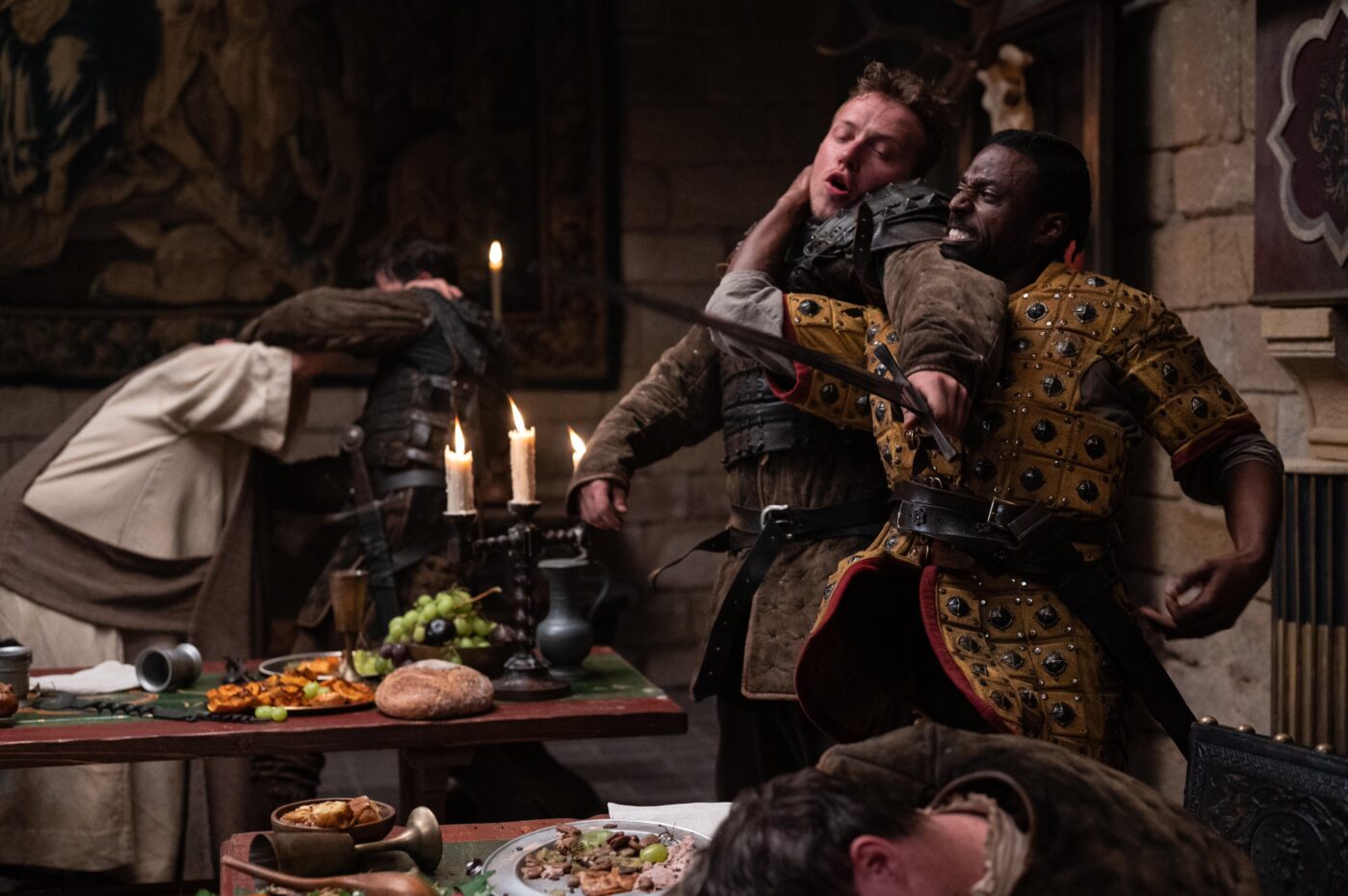
The story revolves around Néro the Assassin, a master of assassination, drawn into a deadly prophecy that puts him on a collision course with his daughter Pearl, from which he is separated. Together, they must navigate a drought-stricken, terror-ruled France of 1504, with the Church hunting witches and suffocating everything to do with witchcraft. Néro the Assassin‘s universe is dark and broken, and it’s the perfect setup for a juicy father-daughter story as well as a treatise on blind faith. Too bad the series never really takes that direction. Instead, Néro the Assassin simply continues to introduce new characters and plot points without ever allowing the viewer to truly form bonds. I hoped I could grow fond of Néro the Assassin‘s guilt or Pearl’s anguish, but the script always keeps them apart. Most of the interactions between the two characters are ineffective, and the love that was supposed to be the focal point of the show is left to starve.
Néro the Assassin Series Review and Analysis
One of the most successful elements of the series is its setting construction. The direction alternates open spaces and closed environments, fields immersed in fog and interiors illuminated by torches, giving a concrete image of sixteenth-century France. The sets and costumes do not have the rigidity of “textbook” reconstruction, but the vitality of a place that seems lived in. Photography works on sharp contrasts and muted colors, conveying the harshness of an era marked by fear and uncertainty. One of Néro the Assassin‘s strengths is his attention to context. The direction alternates open and narrow spaces, fields shrouded in fog, and interiors illuminated by candles, restoring a dirty, dark, and tangible Renaissance France. The sets and costumes do not have the coldness of “museum” reconstruction, but the consistency of a lived-in place, where every detail contributes to creating the right atmosphere. Finally, photography works on desaturated tones and clear contrasts, underlining the precariousness of a time in which faith and fear coexisted in the same gesture.
In addition to the personal dimension, Néro the Assassin explores how religion and superstition affect characters’ lives. The series clearly shows how spiritual and political power becomes confused, and how faith can become an instrument of domination or fear. References to the supernatural –apparitions, rites, symbols – do not serve to frighten, but to restore the climate of an era in which rational explanation was often replaced by fear. These elements are treated with measure and coherence, without ever forcing the story towards the fantastic. In this balance between belief and reality, Néro the Assassin manages to give depth to the historical context and make the choices of its protagonists more understandable. If there is one thing that Néro the Assassin it’s absolutely good at, it’s their aesthetic scale. Set, production, and cinematography are second-level. Dry, drought-stricken landscapes and rock-like castles are historically rich, and the series perfectly conveys the desperation of a land deprived of magic. The lighting and design have that high-end fantasy drama sheen that Netflix has accustomed us to. The sword battles and action sequences are beautifully choreographed.
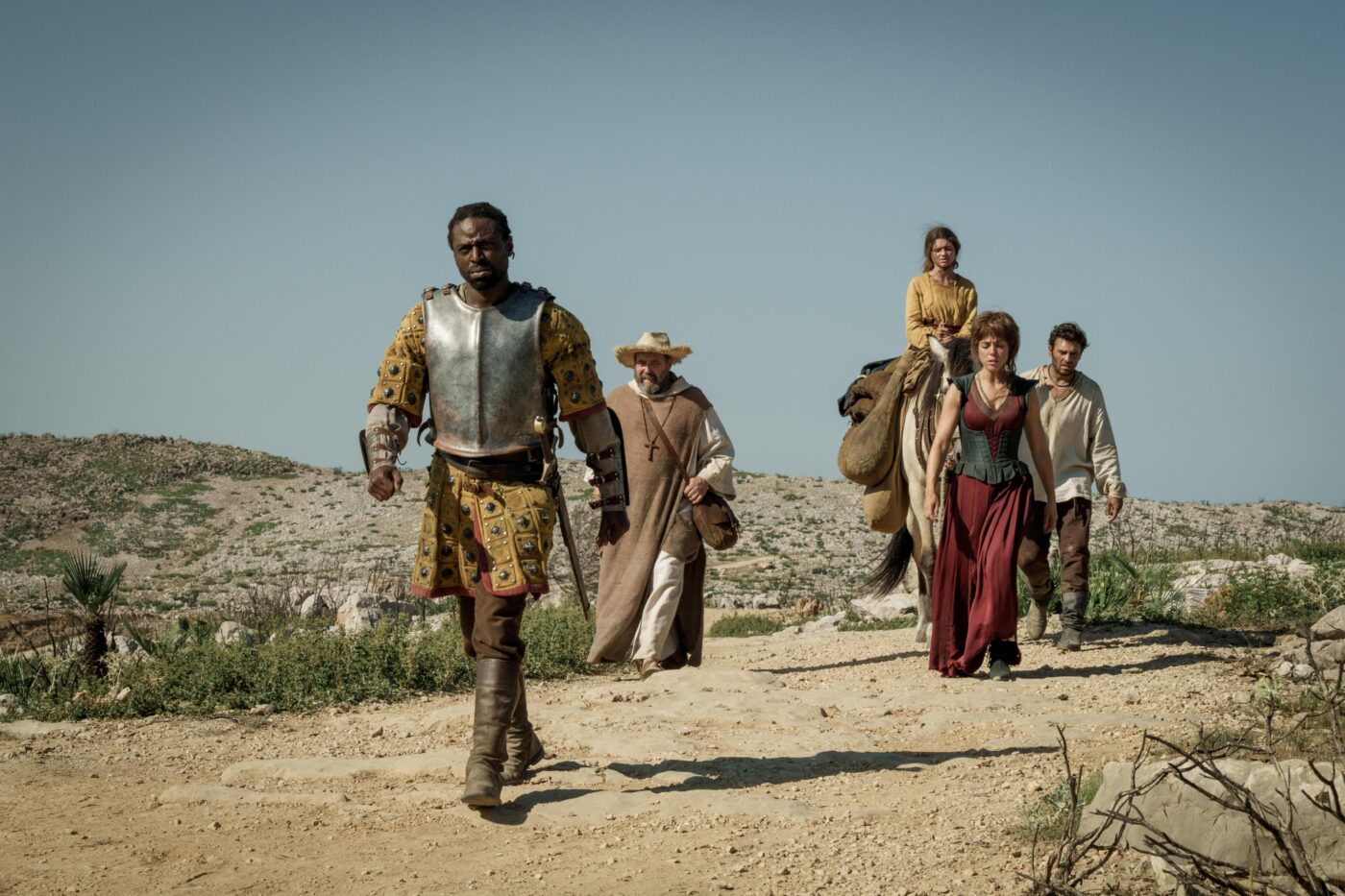
The locations range from the French Riviera (Nice, Menton) to Ventimiglia in Liguria, with its medieval quarter acting as a set for intense and mysterious sequences. However, the direction often seems lifeless. Every emotional moment, from betrayals to deaths, is represented in the same tone. There is no real tension or rhythm. Even when the story builds towards something dramatic, the editing undermines the emotion by moving too quickly to the next plot point. The series is meant to be an epic, but it lacks the passion and energy that make an epic truly memorable. If there is one thing that keeps the audience tuned to this French drama, it is the interpretations. Pius Marmaï gives a decent performance as a man tormented by his past. It brings quiet and strength to his character, although the plot prevents him from showing much depth. Camille Razat, as the one-eyed witch, is probably the least boring figure on the show. His haunting calm and shifting personality bring a little spice to the otherwise flat flow.
His character could have been the focus of the narrative, yet he ends up hanging without purpose or meaning in the finale. Also, Alice Isaaz as Hortense suffers from the sparse material, bringing only a little energy to the political plot. Yet despite excellence in acting, the problematic script can never be completely saved. In the past, dialogue sounded too formal or too tedious, and there was little humor or spontaneous interaction between people. For this reason, the show feels more like a history lesson than a fertile and vital world. What frustrated me the most in Néro the Assassin it’s that it establishes interesting premises –religion versus magic, power versus sacrifice, ethical corruption of institutions – and then it never goes deep enough. Obviously, he wants to make a statement about how bigotry can kill the truth and how the search for salvation can blind individuals. But these themes always remain on the surface. Even in the final episodes, when Pearl’s sacrifice is aimed at bringing back the rain and reviving “magic”, the emotional and symbolic sensation is jarring. No preparation would make such a climax effective. It’s the kind of moment that should make you think or cry, not one that leaves you confused and uninvolved.
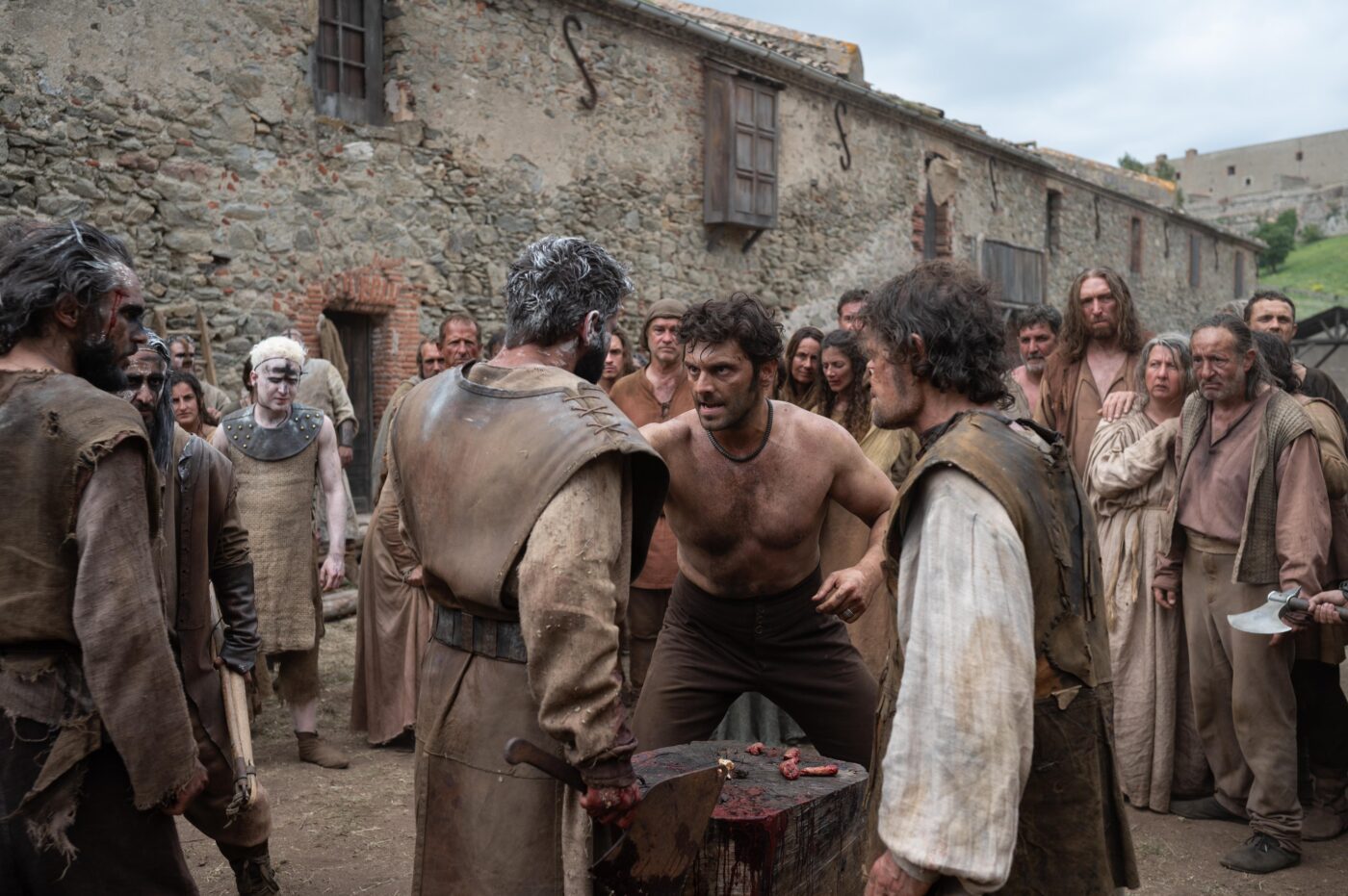
What is particularly disappointing is that the premise had so much potential. A world where religion conflicts with abandoned witchcraft, a witch who is potentially something more, and a murderer in need of redemption: all these elements are present. But the series never manages to incorporate them into a cohesive and rewarding narrative. He wanders through slow portions of boring travel sequences, then moves on to fast-paced sequences that have no emotional impact. The assembly is equally inconsistent. Central scenes, like Pearl’s transformation or Néro the Assassin‘s judgments, happen so quickly that you barely have time to absorb them. It’s a fragmentary narrative, as if key scenes were left in the editing room. In form already, Nero knows how to demonstrate solid arguments. Generous in action. The series does not skimp on bloodshed as much as the iron crossings to immortalize his implacable hero. The camera of the successive directors embraces the brutality of the hero. We also do not shy away from the pleasure of seeing the south of France and Spain, the land of asylum for spaghetti Westerns, become the scene of this story.
The dusty, but not desaturated, photography allows a real atmosphere to blossom. More broadly, the series has real desires for grandeur. This is particularly commendable at a time when the French cultural industry is still reluctant to embark on this type of proposal when they are not inspired by a famous novel or mythology. We can even note that, in the case of Arsène Lupin, a gentleman burglar from the beginning of the 20th century, Netflix had chosen to adopt a contemporary context. A decision that seemed to limit the full potential of Maurice Leblanc’s character. Here, the story is new, the context and themes have already been tested, of course, but the recipe works almost perfectly. Under its guise of a pure entertainment product, Nero tells of the fear of inheriting one’s faults and the difficulty of accepting what one transmits. And it works. We could obviously have fun collecting the inspirations of the trio of creators to bring this universe to life, original music that could be taken from Hans Zimmer’s score for Sherlock Holmes to an antagonist who obviously recalls that of Dumas and his saga of the Musketeers.
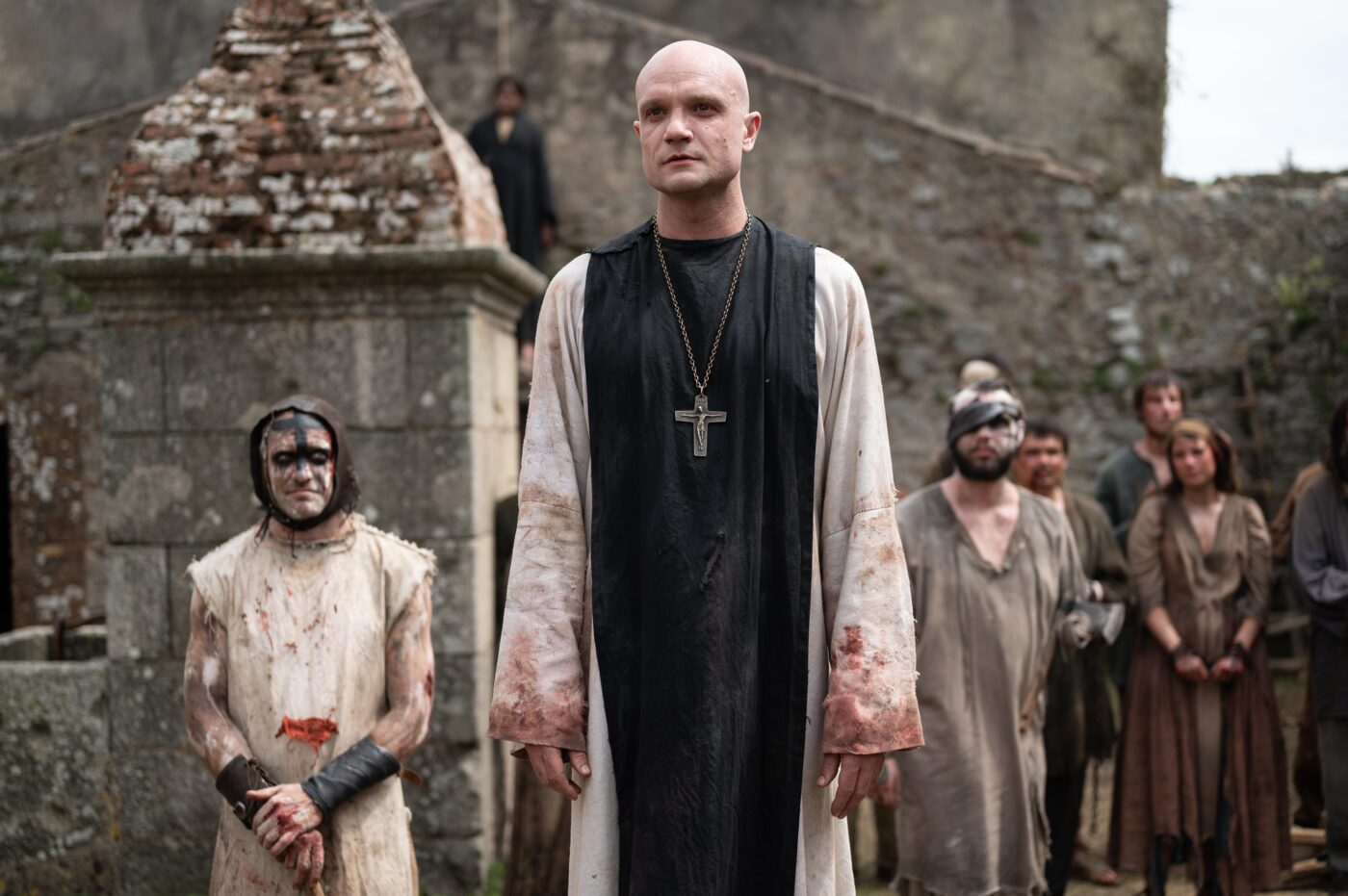
So, no, everything is not perfect; we can regret that certain actors and actresses are sometimes out of step with the rest of the cast. We can also emphasize that no real surprise is hidden in this story of redemption. But Nero’s sword is far from being dull. The series owes a lot to its headliner, perfect in the role of the laughing and uninhibited assassin. Pio Marmaï didn’t really have the space to demonstrate his talent in the diptych The Three Musketeers, locked in a plot that had other fish to fry. Here, he captures all the light and does not fail in his mission. From his repartee to his gestures, the French actor benefits from a much less classic writing of dialogues than with Martin Bourboulon. Olivier Gourmet also comes out with honors as a man of faith torn between his duty and his affect. The duo formed by Alice Isaaz and the young Lili-Rose Carlier Taboury also works wonderfully. We nevertheless have some reservations regarding the choice of Camille Razat for the antagonist, sometimes caricatured before the finale, which no longer offers her the opportunity to free herself from her models.
Néro the Assassin Series Review: The Last Words
Néro the Assassin is a series that focuses on atmosphere and internal conflicts rather than action. The protagonist, played by Pio Marmaï, holds together the harshness of the historical period and the fragility of a man seeking redemption. The direction builds credible environments, full of tension and details that convey the reality of time. Photography and sound help create a vivid and coherent world, where every choice has weight. The screenplay, despite some predictable moments, manages to maintain a balance between personal history and political framework. In both form and substance, Néro the Assassin is a nice Made in France surprise on Netflix. A series that dares to explore fantasy and that doesn’t skimp on its part of adventure, we dreamed of it. Pio Marmaï shines in the role of the anti-hero, supported by a cast of equally convincing supporting roles. Unlike its main character, Nero is an honest series.
Cast: Marmaï, Alice Isaaz, Olivier Gourmet, Louis-Do de Lencquesaing
Created By: Allan Mauduit, Jean-Patrick Benes, Martin Douaire and Nicolas Digard
Streaming Platform: Netflix
Filmyhype.com Ratings: 3.5/5 (three and a half stars)