
Monster: The Ed Gein Story Review: A Series That is Both Disturbing and Wonderful!
With Monster: The Ed Gein Story, Netflix relaunches its anthology dedicated to American criminals. After Jeffrey Dahmer and the Menendez brothers, Ryan Murphy and Ian Brennan face the figure of a man less known to the general public, but whose shadow has profoundly marked the collective imagination: Ed Gein. Away from the media spotlight of other serial killers, Gein represents an archetype, a point of origin that nourished twentieth-century horror cinema. The series does not just go through the news, but reflects on the cultural and visual impact of a man who, with his atrocities, has forever transformed the very concept of “monster”. Three years after the release of the serial phenomenon “Dahmer” and one year afterarticle/item.. the debut of its sequel dedicated to the story of the brothers Lyle and Erik Menendez, here comes the highly anticipated third chapter of “Monster”, the anthology saga dedicated to the worst serial killers in history created by the brilliant minds of Ryan Murphy and Ian Brennan.
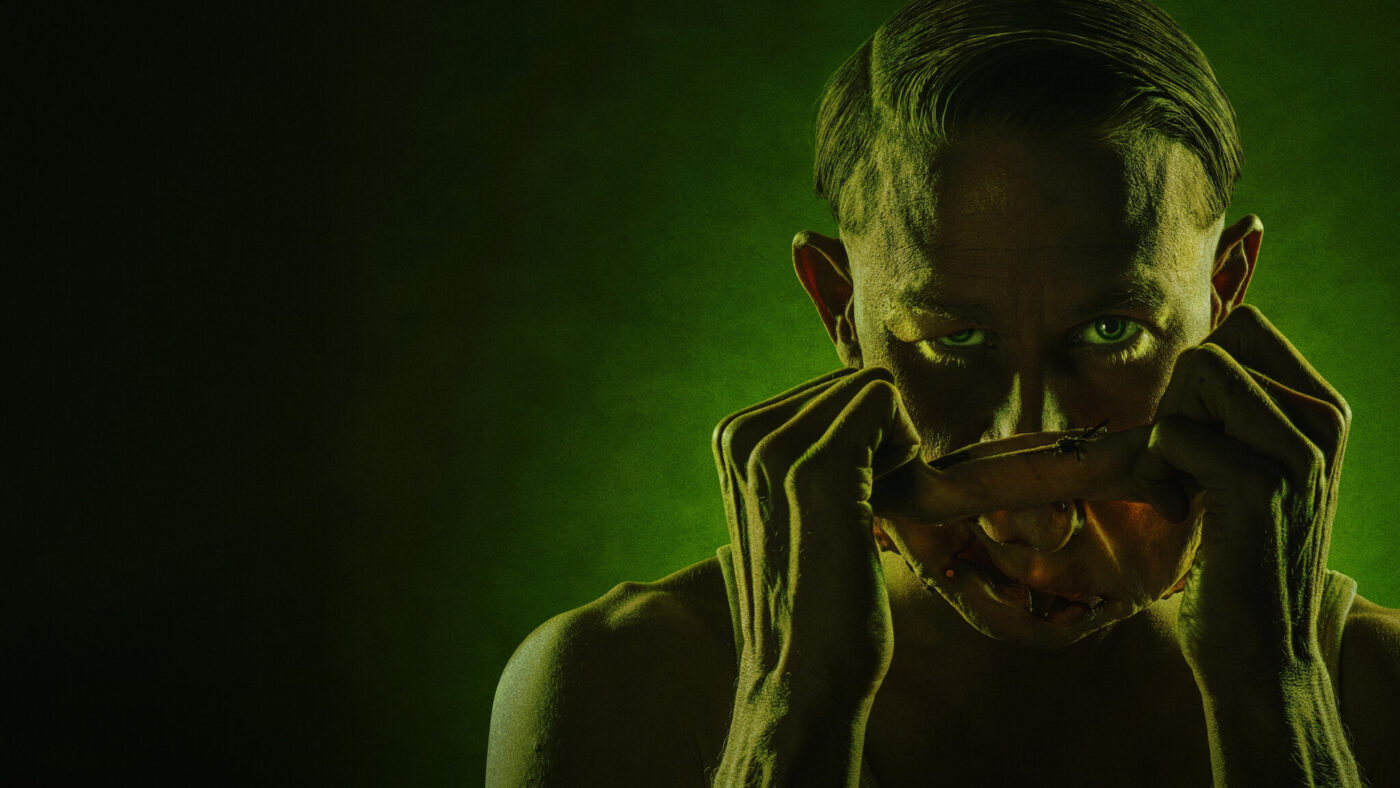
This time the story shifts to a murderer already represented several times on the small and big screen: the Necrophilic killer Ed Gein, suspected of having killed seven people, including his brother, in the period between 1947 and 1957, and committed crimes such as quartering and necrophilia on his victims. Already the protagonist of legendary films such as “Psyco”, “The Texas Chainsaw Massacre”, “Deranged – The madman”, “The silence of the innocents”, “Ed Gein – The butcher of Plainfield” and American Horror Story: Asylum, in the character of Bloody Face, Ed Gein returns to be talked about in the brand new 8-episode Netflix series which tells his story, his crimes, his mind diverted through the extraordinary interpretation of Charlie Hunnam (Kind Arthur, The Gentlemen, Rebel Moon).
Monster: The Ed Gein Story Review: The Story Plot
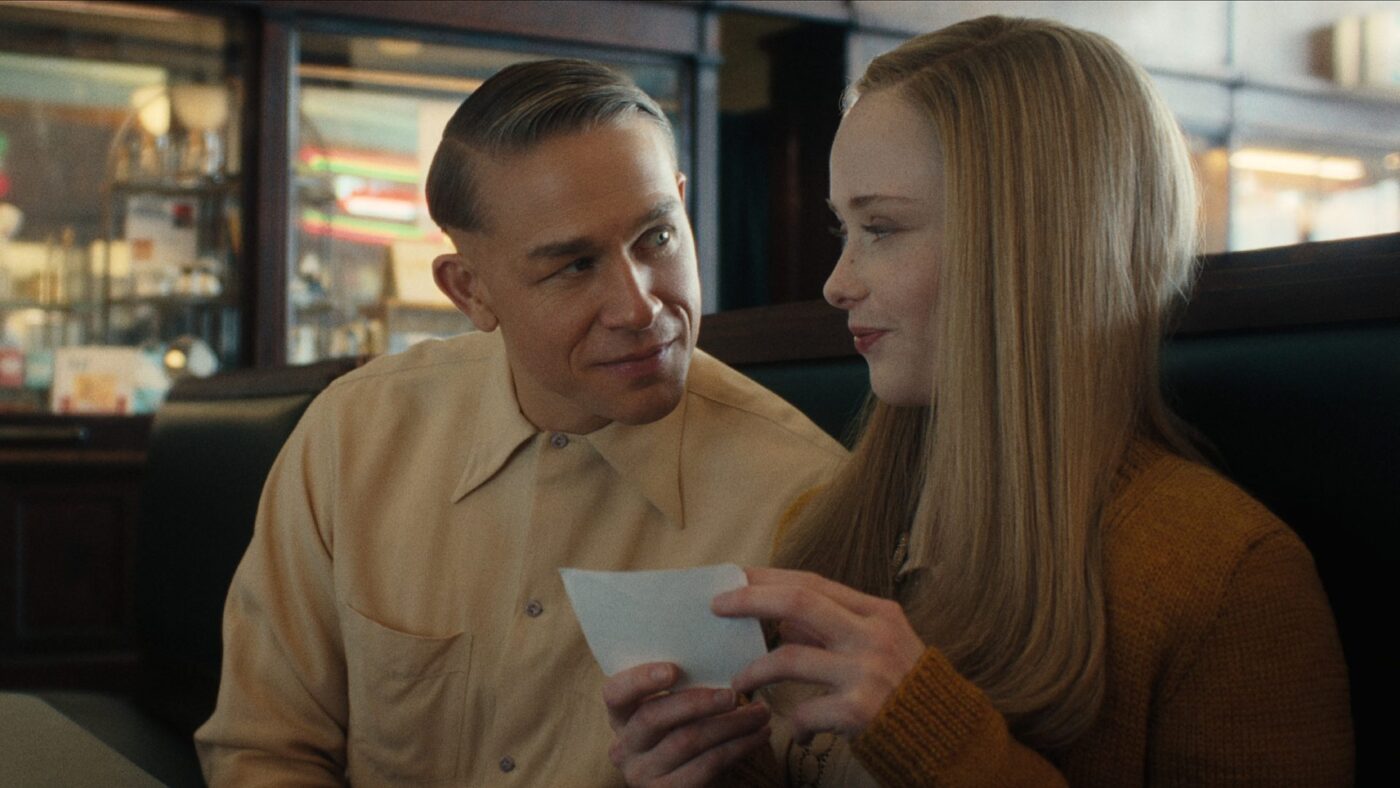
Wisconsin, 1945. Ed Gein (Charlie Hunnam) lives on a farm with his mother (Laurie Metcalf), a sin-obsessed woman who, Bible in hand, constantly warns her son about the women and the snare they represent. But, shy and taciturn, he meets Adeline Watkins (Suzanna Son), a girl, obsessed like him with images of death, who he shows photos from the newly liberated concentration camps and tells him the story of Ilse Koch (Vicky Krieps), the “Buchenwald bitch”, a Nazi responsible for heinous crimes against Jews. After killing, at the end of an argument, his older brother, guilty of going against his mother’s wishes, begins this for Ed a journey of death that will lead him to kill again, desecrate tombs, and carry out acts of necrophilia. A parable that, in the following decades, will be imprinted in the collective imagination of the United States, giving life, starting from Psycho by Hitchcock (Tom Hollander), to a real film genre.
Monster: The Ed Gein Story Review and Analysis
“Monster: The Ed Gein Story” is a chilling, dark, disturbing series, and it couldn’t be otherwise given the content of his story, but beyond the macabre that dominates the scene, what leaves you speechless is its incredible depth and his extraordinary directorial refinement. It is not the first time that Ryan Murphy and Ian Brennan have delighted us by telling a gruesome story in an almost poetic way, and it must be said that this duo is always a guarantee on the small screen. Here, with the story of Ed Gein, Murphy and Brennan put together the typical elements of the horror story with those of true crime, building an incredibly layered narrative structure, always paying particular attention to the psychology of the characters, perhaps the most important aspect of any real or imaginative story.
One of the most successful elements of this series, which plays perfectly with flashbacks, hallucinations, and even a story within a story, is the extraordinary interpretation of Charlie Hunnam, the true great protagonist of this title. Taking on all of Ed Gein’s psychological disorders and transforming his mind, body, accent, and soul, Hunnam demonstrates all his interpretative skills, and we are sure that this role will give him great satisfaction and undoubtedly some recognition. This third chapter of Monster – already confirmed for a fourth season – does not disappoint expectations at all; on the contrary, it enriches a true crime saga which aims not to idolize real-life murderers but to tell them with a much more noble aim: to make people learn something from the mistakes of the past. Bringing their stories in such a frank, honest, and even repugnant way to the screen does not arise, in fact, from a mere taste for the horrid but from the desire to shake consciences and shock to leave a mark and lead to change. Don’t approach this unprepared or light-hearted vision, especially if you are particularly sensitive to strong scenes, blood, sexual violence, and horror elements, but don’t make the mistake of missing this vision just because it is particularly harsh, dark, and violent, because it would be a real shame.
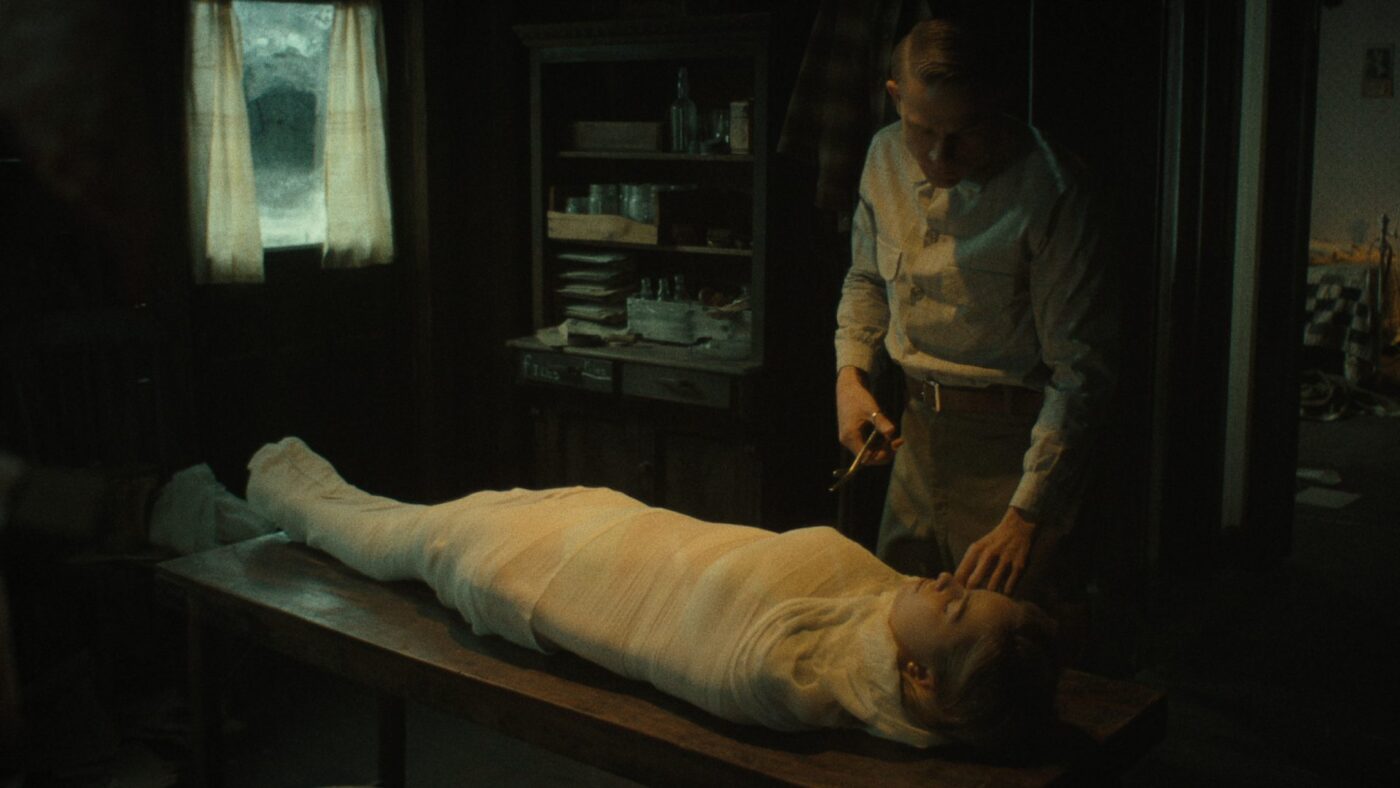
One of the most interesting elements of the series is the connection between Gein’s personal trauma and post-war collective trauma. The figures of Nazi criminals, in particular Ilse Koch (played by Vicky Krieps), enter his imagination through stories, comics, and sensationalist articles. Historical horror becomes fuel for individual horror, suggesting that Gein is not only a product of his sick relationship with his mother, but also of a culture steeped in violence. In this interweaving of intimate and collective, Monster raises broader questions about the genesis of real monsters. The series does not limit itself to telling the facts, but introduces fictionalized elements, such as the reconstruction of the death of his brother Henry. This choice could annoy true crime purists, but Murphy and Brennan are not looking for judicial reporting: they want to interpret. Their Gein is not only a necrophiliac and murderer, but a figure who embodies the ambiguity of evil. The narrative invention thus becomes functional to show the fragility of the boundaries between reality and myth, emphasizing how the cultural perception of Gein was constructed as much by his actions as by the images that turned him into a legend.
One of the most original features of this season is the continuous dialogue with cinema. Tom Hollander plays Alfred Hitchcock, while Joey Pollari plays Anthony Perkins on the set of Psycho. These inserts are not simple cameos, but an integral part of the series’ discourse: they show how Hollywood has metabolized Gein’s story, transforming it into a narrative archetype destined to survive the facts. Cinema Monster not only reflects horror but amplifies it and turns it into myth, making it immortal. Visually, Monster: Ed Gein’s story alternates raw realism and moments of extreme visionaryness. The most kitsch sequences, especially those that recall Nazi imagery, may appear excessive, but they have a precise role: to represent the mental delirium of the protagonist. The direction of Max Winkler and Ian Brennan builds a rhythm that oscillates like an accordion, alternating claustrophobic scenes with moments of breathing. The soundtrack by Nick Cave and Warren Ellis is fundamental, which explicitly mentions the sounds of Psycho and scratches the images with a constant sense of restlessness.
Despite the ambition, the series is not without its flaws. Some sequences risk being more aesthetic than narrative; the rhythm in certain episodes breaks, and above all, the gaze remains centered almost exclusively on Gein, leaving little space for the victims. They are choices consistent with the authorial slant of the series, but which can leave a bad taste in the mouth of those looking for a more balanced reconstruction. However, even within his limitations, Monster never falls into gratuitous complacency: violence is shown to disturb, not to entertain. Monster: The Ed Gein Story is arguably the most disturbing season in the Ryan Murphy anthology. With strong acting performances, a visually bold aesthetic, and a discourse beyond true crime, the series imposes itself as a disturbing story about the power of images. It is not an easy view: it is a journey into the abyss, which prompts the viewer to confront the dark side of human culture and mind. Precisely for this reason, it remains one of the most successful and memorable chapters of the saga.
It is difficult to find another serial killer who, directly or indirectly, has influenced our collective imagination as much as Ed Gein. As proof of this, the series created by an author, Ryan Murphy, returns, who has often come to terms with the dark conscience of America, building, title after title, an entire disturbing universe. Monster: The Ed Gein Story, the third chapter of his anthology series dedicated to famous or controversial murders in recent American history, capitalizes on Ed Gein’s dark legacy by facing it head-on. After staging the systemic racism of US society (Dahmer — Monster: The Jeffrey Dahmer Story) and showing the diseased dynamics that regulate media and information (Monsters: The Lyle and Erik Menendez Story), it is precisely with the violence inherent in the images we consume every day that the series is confronted this time. Returning the portrait of a man who is at the same time the victim and executioner of a world where, first of all, our own imagination is monstrous.
In fact, it is precisely the images that are the true protagonists of Monster: The Ed Gein Story. Starting from those consumed by Ed himself before even starting to kill. A sadism, his, which buds from the horrors of the Holocaust and the Nazi regime and which finds its legitimation precisely in the darkest pages of history, tangible proof “of what human beings are capable of when the moral compass no longer works or is lost”. In a terrible passing of the baton between past, present, and future, the series thus pursues, between changes of perspective, alternating montages and time jumps, those images and their bloody consequences. From the Nazi concentration camps to the deep American province, up to the Hollywood sets and the foundation of a real imagination, Monster, often using a non-linear narrative in which the thin boundary between reality and fiction increasingly falls apart, he thus paints a portrait of a man and a country –respectable, repressed and castrating – that gave birth to him and whose bloody actions he will inevitably be infected by.
“Our audience has found a new monster, and that monster is us”, Hitchcock says in the aftermath of the release of his Psycho, inspired by Ed Gein’s crimes and destined (much to the disappointment of its director) to pave the way for an entire cinematographic subgenre. From Don’t open that door a The silence of the innocent, Monster in fact, it reminds us that the children, cinematic and otherwise (the last episode dedicated to the serial killers who came after Ed, all, in some way, indebted to him), of Ed Gein are the other side of a country tormented by hidden drives (or that society would like them to remain so) and from madness always on the verge of exploding. A country that, yesterday as today, seems to have lost humanity, completely at the mercy of those images that the series, in a now openly metacinematic discourse, tells without discounts or hypocrisies. And although its underlying thesis is perhaps too shouted out and the duration of some episodes sometimes excessive (the last one and its multiple endings, not all of which were successful), Monster remains a lucid reflection on what the imaginary is true crime today and how the consumption of such content is never innocent.
Let’s be clear: Charlie Hunnam in this series disappears completely. What you see on screen is no longer the British actor from Sons of Anarchy, but a frail, disturbed, deeply disturbing man. Hunnam said that after filming, he went to Ed Gein’s grave to say goodbye, because playing this character had required him to go to really dark mental places. And it shows, believe me. His performance captures both Eddie’s fragility and his menacing nature, with realism that deeply disturbs. It’s not easy to make such a complex character believable without falling into caricatures, but Hunnam succeeds perfectly. It’s probably the best performance of his career, a job that makes you completely forget about the actor to leave you face-to-face with the monster. Next to him, Laurie Metcalf is an oppressive and religious Augusta Gein to the point of fanaticism. The mother-child relationship we are shown is aarticle/item..s central as it is devastating. You understand that Eddie was not born a monster; he was shaped by a dominating mother who raised him in total isolation, filling his head with morbid fears and obsessions.
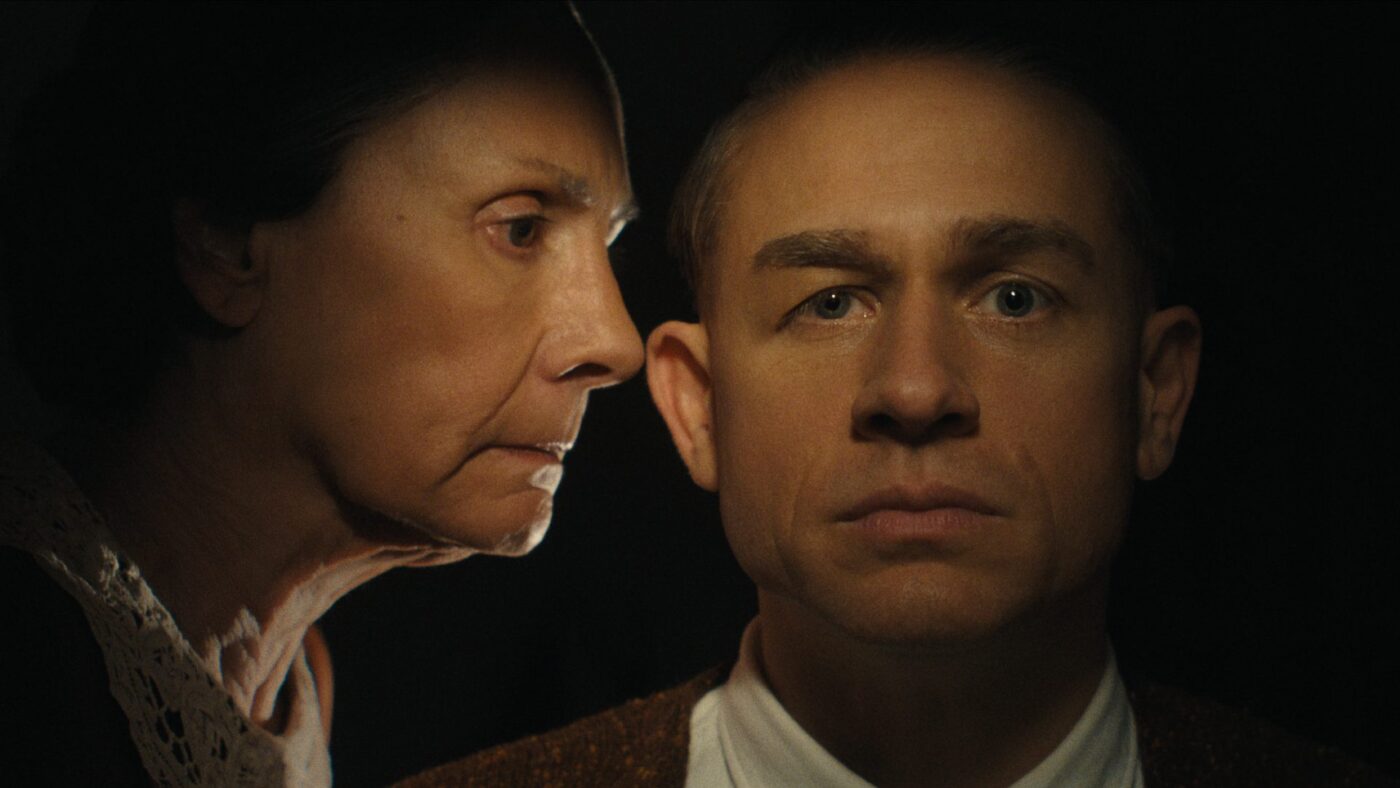
I have to admit that the production he did an amazing. Gein’s farm almost becomes a character in its own right: that dilapidated house, with its secrets hidden between the walls, gets under your skin. The reconstruction of Rural Wisconsin of the Years ’50 it’s convincing, from the fog that envelops the frozen fields to the details of provincial life. The pace of the series is slow and deliberate, builds tension without relying only on shock. Ryan Murphy, who is often accused of being too sensationalistic, shows some restraint here… though not always. But let’s get to this in a moment. One of the most interesting things about this season is horror culture meta-commentary. The series doesn’t just chronicle Ed Gein; it reflects on how his crimes have penetrated the collective imagination, shaping decades of horror storytelling. There’s even Tom Hollander as Alfred Hitchcock, to represent that bridge between real crimes and cinematic fiction. This level of cultural reflection adds depth: You’re not just looking at yet another serial killer story, but you’re seeing how society mythologizes evil, how it turns it into entertainment. It is courageous self-criticism, considering that the series itself is part of this mechanism.
And here we are at the sore point. Some sequences are graphically intense, borderline tolerable. Murphy struggles to resist the temptation of sensationalism, and there are times when the series seems to be complacent about the horror it displays. It’s a very difficult balance to find when telling real crimes, and the series doesn’t always succeed. The most serious problem? The victims remain in the background. We know Gein in every detail, we enter his disturbed mind, we see his suffering… but we know little or nothing about his victims. This imbalance decreases the severity of their suffering, risking making Gein more interesting than the people he killed. It’s a flaw that the series shares with many true crime products, but which is particularly felt here. The central episodes tend to stretch the tension more than necessary. There is a sense that the series could have told the same story in less time, maintaining the same emotional impact but with more narrative effectiveness. Some moments seem inserted more to fill than to add value to the story.
Monster: The Ed Gein Story is arguably the most disturbing entry in the Netflix anthology. It’s a series that forces you to deal with uncomfortable questions: what creates a monster? How do trauma and isolation affect human behavior? And above all, why is society so obsessed with evil? Hunnam gives a career-defining performance, the production is flawless, and when the series works, it’s really powerful. But it pays the price of a precarious balance between horror and sensitivity, with victims who remain too in the shadows and moments of excessive graphic satisfaction. If you’re into true crime and psychological horror, it’s a vision engaging yet disturbing. But get ready: this is not a series you easily forget, for better or for worse.
Monster: The Ed Gein Story Review: The Last Words
Monster: The Ed Gein Story, perhaps, is the best of the three chapters of the Netflix anthology series created by Ryan Murphy and Ian Brennan. In eight episodes, the series explores the horror behind the mind of serial killer Edward Theodore Gein, capable of influencing the social and cultural imagination. Played by an exceptional Charlie Hunnam (as they say, the role of life), the show focuses not only on Ed’s profile, but also on the context of an era steeped in violence. Between true fiction and numerous quotes, the suggestions that led Ed Gein to carry out the brutal crimes are analyzed, starting with the evil influence of the Nazi Ilse Koch. The series moves between Wisconsin and Germany, reaching Alfred Hitchcock’s Hollywood. Indeed, the screenplay focuses on how much Gein inspired Psycho, changing the rules of terror. Elegant, brutal, saturated, and obsessive, Murphy’s show reflects on the obsession with horror and the power of images, questioning human nature itself.
Cast: Charlie Hunnam, Laurie Metcalf, Vicky Krieps, Suzanna Son, Tom Hollander, Joey Pollari
Creators: Ryan Murphy, Ian Brennan
Streaming Platform: Netflix
Filmyhype.com Ratings: 4/5 (four stars)







One Comment