Last Samurai Standing: The True Story Behind the Netflix Series | The Meiji Period and the End of the Samurai
Last Samurai Standing True Story: For centuries, the word “samurai” conjured an image of unwavering order, strict hierarchy, and ritualized violence. It was a world governed by the sword, both in law and in spirit. But by the 19th century, that world was fracturing. The lone, mud-spattered figure of Shujiro Saga advancing through the Battle of Toba-Fushimi in the opening of Netflix’s Last Samurai Standing is more than just a dramatic prologue—it is a symbol of a deep, national rupture. This was the end of the Tokugawa Shogunate and the violent dawn of the Meiji Restoration.
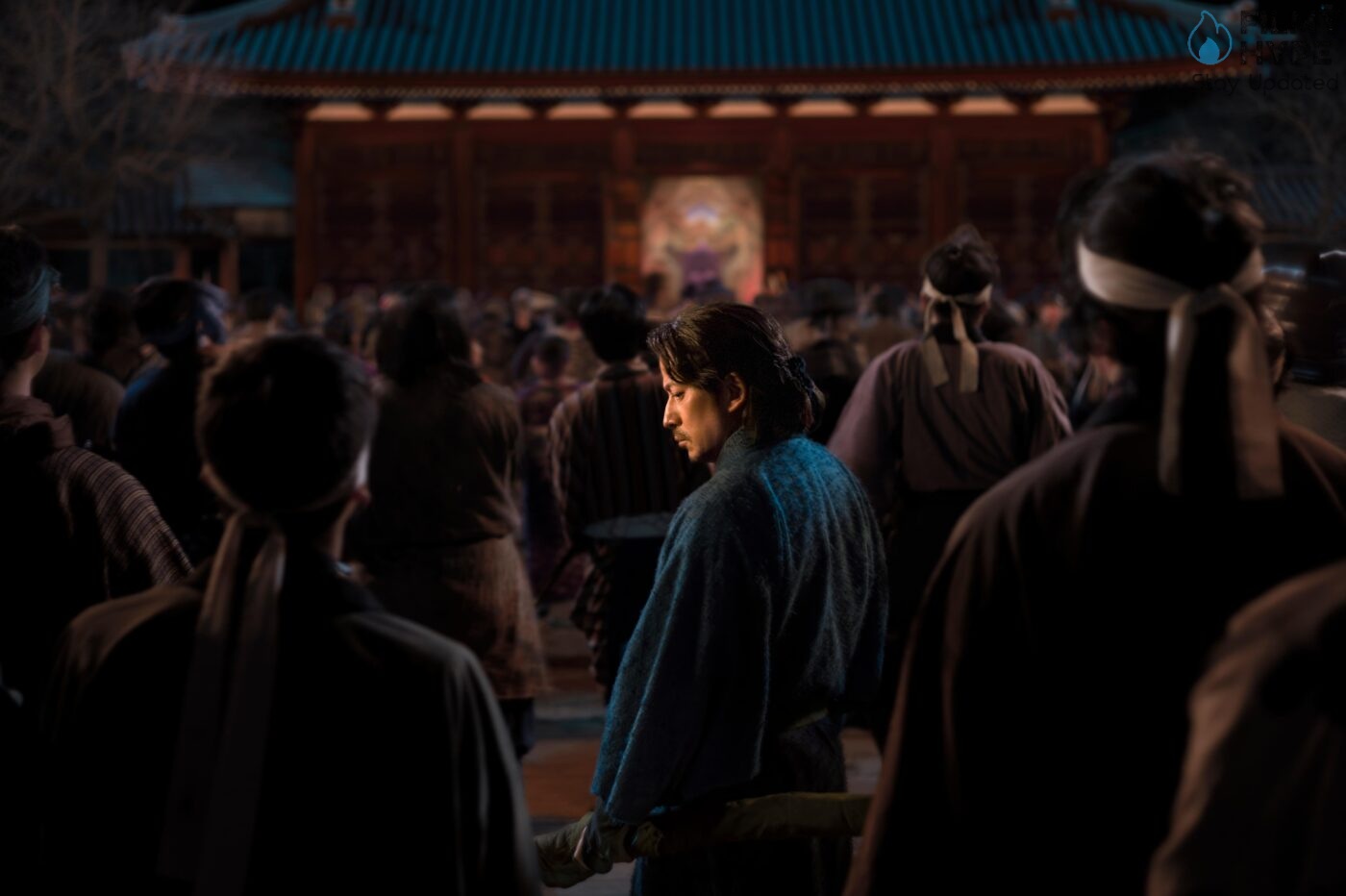
The series presents a hyper-violent survival thriller, but its true power lies in what beats beneath the surface: the chronicle of a collapse. It’s the story of an entire social class, a culture, and a code of honor being systematically dismantled. This is the true ground upon which the fiction is built.
The Real Historical Context of Last Samurai Standing
The Japan of the late 19th century was a nation in violent flux. History was advancing with the brutal, impersonal force of gunpowder and industrialization. For the samurai, it was a bewildering time; a moment to decide whether to run towards the future, resist it with their lives, or simply try to survive in the smoke of a dying era.
Last Samurai Standing captures this disorientation perfectly. It takes a time-ravaged warrior, Shujiro Saga, and throws him into a rule-less survival game. While the kodoku death tournament is a fictional device, the sensibility is historically accurate: it’s the feeling of a world going extinct, its inhabitants desperately clinging to the remains of an order that no longer exists.
The Battle of Toba-Fushimi and the Beginning of the End
While Shujiro Saga is a fictional character, the backdrop of Last Samurai Standing is concrete history. The series is set in the decade following the Boshin War (1868-1869), a pivotal civil war where the forces of the ruling Tokugawa Shogunate were defeated by a coalition loyal to the young Emperor Meiji.
The series opens with the Battle of Toba-Fushimi, the decisive conflict that sealed the Shogunate’s fate. This battle wasn’t just a military defeat; it was the symbolic end of feudal Japan. The samurai, who for generations had monopolized warfare, local administration, and the national identity of martial virtue, were suddenly rendered obsolete. A country hell-bent on modernizing to stand against Western powers had no place for a warrior class whose primary tool was the katana.
How the Meiji Restoration Transformed the Lives of Samurai
The new Meiji government embarked on a series of reforms that constituted a social earthquake for the samurai:
- Abolition of Feudal Domains (1871): The traditional han (domains) were replaced with modern prefectures, dismantling the local power structures that samurai lords (daimyo) and their retainers relied on.
- Creation of a National Conscript Army (1873): For the first time, an army was formed from commoners. The samurai’s exclusive right to be warriors—the very core of their identity—was stripped away.
- The Sword Abolition Edict (1876): This law made it illegal for samurai to carry their iconic katana in public. It was the ultimate humiliation, a legislative severing of their soul.
Faced with this existential crisis, many samurai became unemployed and destitute. Others turned to banditry or menial jobs. Between 1870 and 1880, a series of desperate samurai uprisings erupted, culminating in the Satsuma Rebellion of 1877, led by the legendary Saigo Takamori—often romanticized as “the last samurai.”
The Kodoku: History, Myth, and Reinterpretation in the Series
Last Samurai Standing dramatizes this historical trauma through a brutal allegory: the kodoku. In the series, 292 participants are forced to kill each other in a deadly race from Kyoto to Tokyo for a cash prize.
Historically, kodoku was an esoteric folk ritual, not a state-sanctioned tournament. It was believed a sorcerer could trap insects or small animals in a jar, letting them fight until only one remained, harnessing the concentrated “grudge” of the losers for supernatural power.
The series brilliantly reinterprets this myth into a macro-scale metaphor for the Meiji era itself. The kodoku represents the savage competition, the feeling of being trapped in a system designed for your extinction, and the desperate fight for survival in a new social order that valued capital and utility over honor and tradition. The cash prize—a concept almost alien to a samurai—symbolizes the painful transition to a cash-based economy where their skills had no inherent value.
The Cholera Epidemic of 1878: The Social Background of Shujiro Saga
The series adds further historical depth with the cholera epidemic of 1877-1879. This was a real and devastating event that killed an estimated 100,000 to 300,000 people in Japan. It exposed the vulnerabilities of the rapidly modernizing state: an entity obsessed with catching up to the West but struggling to provide basic public health and protect its most vulnerable citizens.
In the series, this epidemic is the driving force behind Shujiro’s desperation. His family’s illness and his poverty are not just personal tragedies; they are symptoms of a larger societal failure. He is not an epic hero fighting for glory; he is a man trained for war who must now sell his life in a brutal tournament simply to buy medicine. This grounds the spectacle in a relatable, human reality, making the historical context feel immediate and visceral.
Last Samurai Standing: Crisis, Identity, and Samurai Survival
The director of the series, Fujii, has spoken about his goal to “update the jidaigeki” (period drama). This update isn’t just stylistic—with its gritty, visceral combat and exhausted aesthetics—it’s also thematic. The series understands that the history of a class expelled from its place is a universal story, as relevant today as it was in the 19th century.
The central question of Last Samurai Standing—how do you survive when everything that defined you disappears? echoes far beyond feudal Japan. It resonates with modern anxieties about job insecurity, technological disruption, and cultural identity in a globalized world.
The appeal of Last Samurai Standing is not in its strict historical accuracy—no one believes there was a deadly tournament with checkpoints and wooden tags—but in its powerful ability to read history as an emotional and psychological landscape. It exaggerates and stylizes to illuminate a profound truth: Japan’s thrust into modernity, while celebrated, was accompanied by irreparable loss and profound social trauma.
When Shujiro Saga raises his sword, it is not to defend a perfect, romanticized past, but to navigate a present that has violently expelled him. In that tension—between dignity and despair, between the epic and the mundane—lies the true, beating heart of the history behind the fiction. It is the memory of a country that changed forever, while countless individuals, like Shujiro, tried to remain standing in the dust simply.