
Land of Sin Ending Explained (Synden): Who Killed Silas and What Happened to Dani?
Land of Sin Ending Explained (Synden): Land of Sin (Synden) is available from January 2, 2026, on Netflix. It is a Swedish thriller TV series starring detective Dani, who finds herself investigating a terrible murder, together with her young colleague, Malik. The two must find answers about what happened to teenager Silas, who was found dead on a farm on the Bjäre Peninsula. The case brings Dani and Malik into the heart of a patriarchal family feud that has been going on for generations. Not only that, but the investigator has a personal connection with the victim.
Meanwhile, Patriarch Elis tries to solve the case to intervene personally. After a teenager named Silas is found dead in a lake on the Bjäre Peninsula, Inspector Dani (Krista Kosonen) takes on the case even though she has a personal connection to the victim in “The Land of Sin, Swedish Netflix miniseries created and directed by Peter Grönlund (“Goliath”, “Beartown”). While investigating with her new partner, Malik (Mohammed Nour Oklahoma), the protagonist is pressured by the patriarch of the Duncke family, Elis (Peter Gantman), who plans to take justice into his hands. Who is the real murderer?
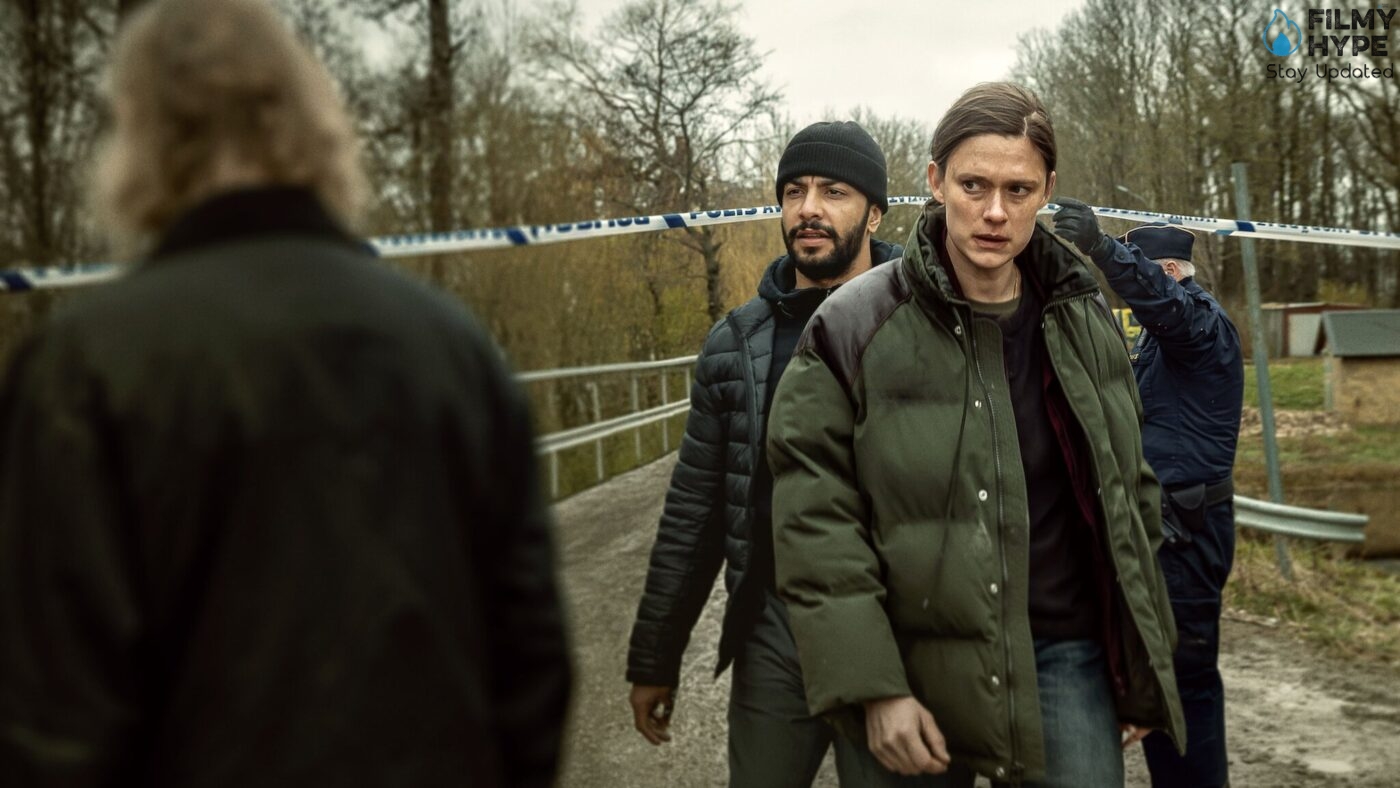
The dramatic thriller set in an uncertain world marked by conflict and violence begins with Dani learning of Silas’ disappearance through a call from Ivar Duncke, who demands that she look for the teenager. The body later appears in a lake, but forensic examinations determine that he was murdered elsewhere. Who did it? Elis demands that the police stay out of it, but Dani ignores him. Dani and Malik follow several leads in search of an unknown suspect. The investigation reveals a dark family feud between the Dunckes that dates back generations. The three brothers, Ivar, Elis, and Ragnar, are in litigation over “The Land of Sin”, since landowners receive subsidies for arable land.
Land of Sin: The Story Plot
Land of Sin (Synden), 2026) is a rural crime drama that explores how violence, guilt, and family secrets are transmitted from one generation to another in a community marked by inequality and institutional abandonment. The story begins with the disappearance and death of Silas, a young man trapped between the economic precariousness of his family and the world of local drug trafficking, an event that uncovers old rivalries between two brothers, inherited tensions, and a network of lies that involves parents, children, and authorities. As the investigation progresses, the series makes it clear that the real conflict revolves not just around a crime, but the moral decisions each character has made to survive in a land where justice rarely comes in time.
The series opens with a haunting premise: the disappearance of Silas, a troubled young man from the remote area of Bjera. The case lands, uncomfortably, on the desk of Detective Dani Anttila, a woman bound to the victim by a shared, painful past. Having once been Silas’s foster carer, Dani is a woman haunted by her own failures—both with him and with her estranged, addict son, Oliver. Paired with the idealistic newcomer Malik, Dani returns to a community that greets her with open hostility, led by Silas’s uncle, the formidable Elis. The discovery of Silas’s body—violently drowned and moved—shifts the investigation into high gear. Initial leads point to a life on the margins: debts to a local crime boss, Kare, and his shadowy superior, Jarven; a doomed romance with Nathalie; and the mysterious “Unknown Male 1” from his call logs.
The narrative cleverly leads us down this path of criminal underworld intrigue, making Jarven a compelling suspect. However, “Land of Sin (Synden)” excels in its misdirection. The real monster isn’t lurking in the criminal underworld; it’s festering in the family home. The investigation’s most devastating turn comes when “Unknown Male 1” is revealed to be Dani’s own son, Oliver. The DNA evidence is damning, placing him at the crime scene. In a heart-wrenching act of professional duty over maternal instinct, Dani orchestrates Oliver’s arrest. This arc is a masterclass in personal tragedy, exploring Dani’s unbearable position between the law she upholds and the son she is losing.
Land of Sin Ending Explained (Synden): Who Killed Silas and What Happened to Dani?
Dani took Silas into her home when the teenager had problems with his family and was dealing with his drug addiction. However, he asked him to leave when his son Oliver was affected. This also caused him to lose Oliver, who ran away from home after refusing to go to rehab. Because police found Oliver’s DNA under Silas’ fingernails, he becomes the prime suspect. Dani tries to help him, but Malik convinces her that it is best to hand him over to the authorities. Although he instantly regrets it, he can no longer do anything, and his son remains in an isolated cell while the investigation is carried out. Furthermore, Dani is left out of the case.
Meanwhile, Elis seeks justice on his own, just as he promised his brother Ivar before he died. After some digging, he discovers that his nephew owed money to El Tejón, a dangerous drug lord. Although he is not an easy rival, Elis looks for a way to get rid of him. As Elis exacts revenge for Silas’ murder, the Duncke wives continue to clash over “The Land of Sin”. Silas’ mother insists that Katty’s family owes them a great debt. What exactly do you mean? To the money you receive from the government for your land, or to another matter?
Who Murdered Silas?
Despite the instructions of his superiors, Dani gets involved in the case to prove his son’s innocence. With Malik’s help, he discovers the land dispute and the government subsidy. She also understands that Elis only made a deal with her to confirm her suspicions about The Badger. When Malik finds Harald Duncke’s car, Katty realizes that the truth will come to light and affect her family, so she convinces her son Harald to take the blame. Because? Silas’ real killer is Jon, Elis’ eldest son. After Silas threatened Katty, the woman asked her son to take care of the matter.
Jon lost control of the situation and murdered Silas, and he also asked his mother for help to dispose of the body. When Elis discovers the truth, she decides to protect her children at any cost. While escaping from the police, Kimmen, Silas’s younger brother, appears to be seeking revenge. Elis takes the blame to stop Kimmen from shooting her children. Dani and Malik arrive at the swamp, but cannot stop Silas’ brother from murdering Elis. To end everything, Dani decides that Elis will remain responsible, despite Malik’s objections. At the end of “The Land of Sin”, Dani reunites with her son, apologizes, and convinces him to go to rehab.
The Final Revelation: A Tragedy Born of Greed, Not Crime
The series’s genius lies in its pivot from a drug-fueled thriller to a Shakespearean family tragedy. The catalyst for Silas’s death wasn’t his debts to Kare but a generations-old feud over the family estate, ironically named “Land of Sin (Synden).” The land, barren yet valuable for development rights, was unequally divided by the patriarch: the profitable concessions went to Elis, while his brother Ivar (Silas’s father) received only tools and livestock. This injustice bred decades of resentment.
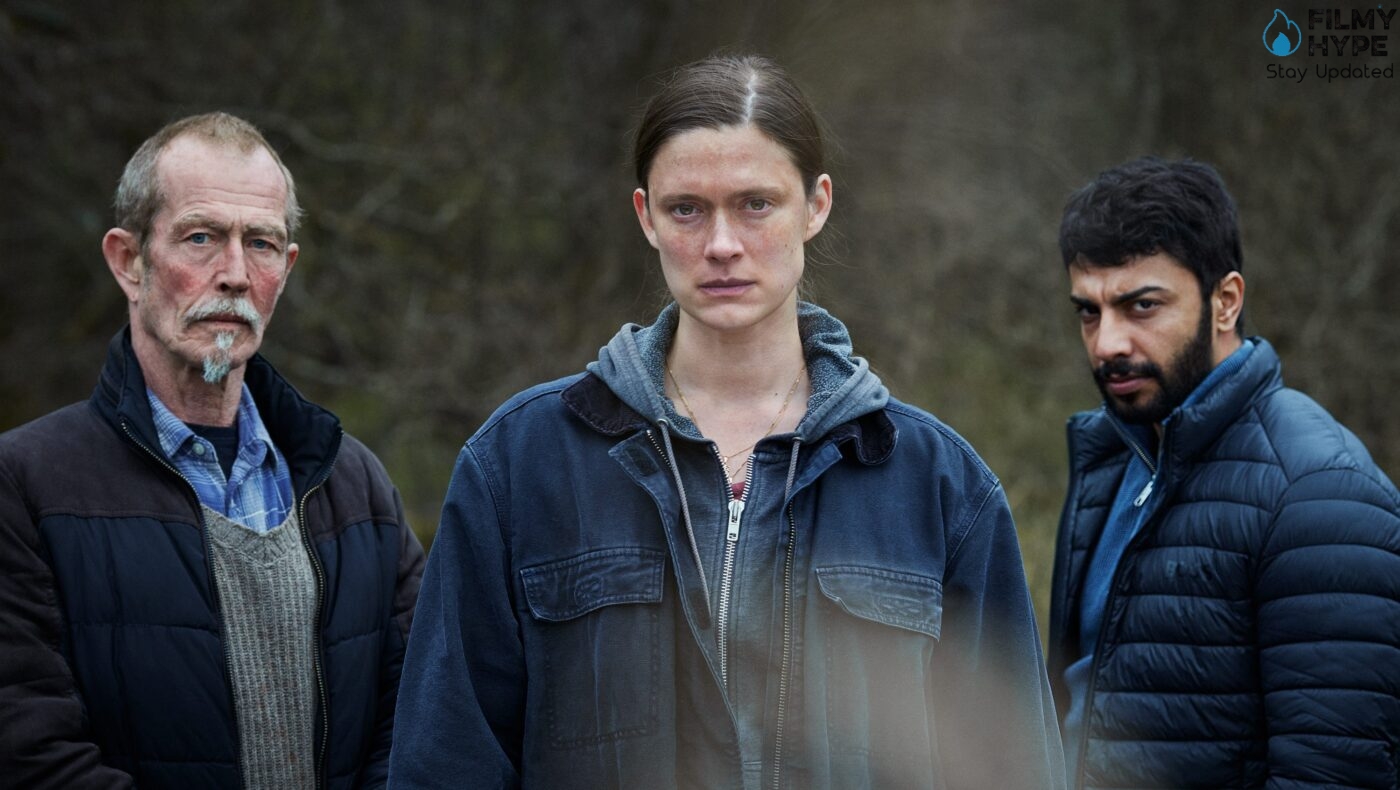
On the night of his death, Silas, emboldened and desperate, confronted his aunt Katty at the Land of Sin (Synden) estate, demanding his family’s share of the money. Katty, a chillingly pragmatic and greedy matriarch, saw Silas as a threat to her family’s financial future. She manipulated her eldest son, Jon, into confronting his cousin, framing it as a defense of the family’s honor and his neurodiverse younger brother, Harald.
The confrontation on the windswept beach was never meant to be murder. It was a clash of two young men poisoned by their parents’ bitterness. An insult about Harald ignited Jon’s rage, leading to a physical struggle that ended with Silas held underwater. Jon’s panicked call to his mother set in motion the cover-up, making Katty the architect of the ensuing tragedy.
Character Arcs: Sacrifice, Guilt, and Ambiguous Justice
Dani and Oliver: A Fractured Path to Forgiveness
Dani’s journey is the emotional core. Her decision to arrest Oliver represents the ultimate professional sacrifice, shattering their already fragile relationship. Oliver’s rage stems from feeling abandoned—first when Dani returned Silas to his toxic family, and now through her perceived betrayal. His guilt is twofold: for his physical fight with Silas earlier that fateful day, and for surviving a life of poor choices that led his friend to death.
Their reconciliation is tentative and earned. Oliver’s release doesn’t magically heal wounds. It’s Dani’s persistent, remorseful presence—and her own vulnerability in nearly losing him—that allows a crack of light in. The finale suggests not a perfect happy ending, but the hard-won possibility of a new beginning, built on the ashes of shared trauma.
Elis: The Tragic Patriarch
Elis begins as an antagonist—a hostile, territorial force opposing Dani’s investigation. Yet, “Land of Sin (Synden)” peels back his layers to reveal a man bound by a twisted sense of duty. Unaware of his wife’s manipulations and his son’s guilt initially, his entire being is dedicated to protecting his family and land. When the truth unravels, his final act is one of breathtaking sacrifice.
Cornered by Silas’s vengeful younger brother, Kimmen, Elis knowingly takes the blame for the murder. He tells Kimmen, “It was me,” offering his life not just to spare his son Jon, but to give both his children a chance to escape the cycle of violence. His death on the Land of Sin (Synden) is powerfully symbolic; he becomes one with the very soil that caused the feud.
Malik: The Moral Compromise
The rookie Malik enters Bjera believing in black-and-white justice. His arc is about learning the grey, suffocating morality of this closed world. In the finale’s crucial moment, Dani instructs him to accept Elis’s false confession and let the official record show Elis as the killer. Malik’s agreement is a silent, profound moment of growth. He understands that sometimes, legal justice is not the same as moral resolution. Elis’s sacrifice deserves to stand, and exposing Jon would only perpetuate the tragedy without true healing. It’s a controversial but narratively satisfying conclusion that marks Malik’s transition from an outsider to someone who understands the “Land of Sin.”
The Fate of the Survivors: Poetic and Brutal Justice
The finale delivers consequences that feel both brutally stark and poetically fitting.
- Jon and Harald: Granted a fragile escape. Their father’s death and false confession buy them a chance at Ragnar’s farm. Jon must live with the knowledge that his rage killed his cousin and his sacrifice killed his father. Harald, a pawn in his mother’s game, is freed from her control. Their future is uncertain, but it is a future—the only gift Elis could give.
- Katty: The Mob’s Judgment. In the series’s most chilling scene, Katty does not face a court of law. The community, whose “own justice” has been hinted at throughout, enacts its verdict. Abandoned in her home, she is set upon by a faceless mob of villagers—likely including Ivar’s family and others wronged by the Land of Sin (Synden)s’ greed. Her death is the show’s ultimate statement: in this world, the community is the law, and it punishes the true source of the sin—the manipulative heart that set the tragedy in motion. Her fate underscores the series’ core theme: sins of greed and manipulation beget a violence that consumes the perpetrator.
- The Community of Bjera: It ends as it began—insular, judgmental, and bound by its own cruel codes. The murder is “solved” to its satisfaction, equilibrium is brutally restored, and the outsider, Dani, leaves. The Land of Sin remains, its dark history buried one layer deeper.
Final Analysis: Why “Land of Sin (Synden)” Stands Out in the Noir Pantheon
“Land of Sin (Synden)” distinguishes itself by masterfully subverting genre expectations. It starts as a detective procedural but evolves into a devastating family saga where the detective is profoundly, personally implicated. The real mystery isn’t “whodunit,” but “how did this family become this way?” The setting is a character itself. The stark, beautiful, yet oppressive landscape of northern Sweden mirrors the emotional isolation of the characters. The “midnight sun” offers no relief, only an unblinking light on ugly truths.
The finale succeeds because it prioritizes thematic resonance over tidy resolutions. True justice is shown to be impossible. Oliver carries guilt, Dani carries remorse, Jon carries trauma, and Elis carries the blame to his grave. Katty, the instigator, meets a brutal end. The system, represented by Dani and Malik, ultimately bends to accommodate a deeper, more tragic truth about sacrifice and closure. In ranking the best Swedish crime dramas on Netflix, “Land of Sin (Synden)” demands a top spot for its ambitious narrative, complex character studies, and its uncompromising, haunting conclusion. It’s a powerful reminder that the greatest sins are often not committed in shadowy alleyways, but in sunlit homes, passed down like a cursed inheritance.