Alien: Earth Review: A Science Fiction Series That Fascinates and Makes You Think
Filmyhype.com Ratings: 4/5 (four stars)🌟🌟🌟🌟
Alien: Earth Review: The “Alien” saga expands and does so with a new TV series, “Alien: Earth” which landed on FX Network and Hulu on August 13 with the first two episodes, followed by one new episode per week. It is an eight-part serial story, edited by Emmy winner Noah Hawley, which fully enters the science fiction universe born from the brilliant mind of Ridley Scott in 1979. It was right around the beginning of the ‘80s that the British director gave birth to what would become one of the masterpieces of the sci-fi genre, terrorizing audiences all over the world with its fascinating and terrifying xenomorph, an alien creature created by the Swiss artist HR. Giger and physically created by the Italian Carlo Rambaldi – the same name behind the E.T. alien – who, thanks to this “monster,” won an Oscar for best special effects in 1980. From a symbol of horror to a pop icon, the xenomorph of Street Alien has done a lot of it and is about to return to instill terror once again in the series “Alien: Earth” which transports us to an imaginary future where alien life forms they clash with an increasingly greedy, petty humanity eager to defeat death and dominate the world.
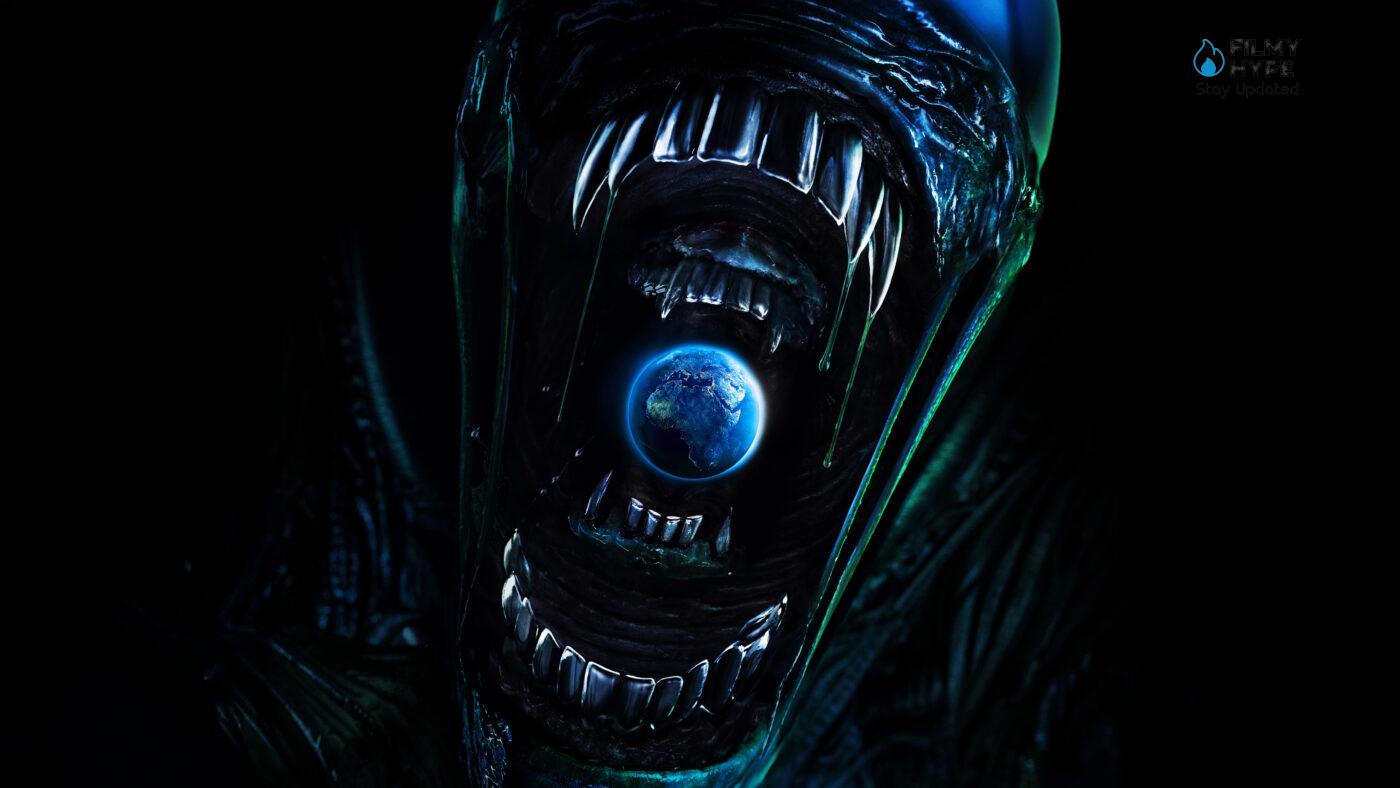
Alien: Earth marks an important moment in the franchise’s history, bringing for the first time the horror and tension typical of the saga directly to our planet. Set in 2120, just two years before the events of the first film with Ellen Ripley, the series, created by Noah Hawley it doesn’t just exploit the charm of science fiction’s most iconic monster, but builds a complex world in which the alien threat is intertwined with political conflicts, corporate interests, and ethical dilemmas. The author, already known for their ability to renew consolidated narrative universes, faces the challenge with a personal approach, favoring characters and social dynamics over pure spectacularity, which, however, has its pertinent moments. The Earth of the future shown by the series is dominated by giant corporations that act as sovereign entities, controlling entire cities and resources. It is a context in which the boundary between economic and political power has completely disappeared, and in which individual survival is constantly conditioned by the decisions of a few. In this scenario, the crash of a Weyland-Yutani ship becomes the event trigger of a spiral of tension involving humans, creatures, extraterrestrials, and new synthetic life forms.
Alien: Earth Review: The Story Plot
Set in 2120, two years before the events of the original 1979 film, Alien: Earth intelligently exploits the change of scenery. We are no longer among the dark depths of space, but on our planet, now dominated by five megacorporations, prominent among which are the ruthless Prodigy and the timeless Weyland-Yutani. The spaceship disaster Maginot, which crashed into the heart of Prodigy City, serves as a narrative detonator for a story that weaves together horror, science fiction, and ethical reflections, introducing new extraterrestrial life forms, the constant xenomorphic threat, and, above all, a new generation of “hybrids”. At the center of this conflict stands Wendy (played by Sydney Chandler), the first specimen of a human transferred into a synthetic body. It is she who embodies the thematic heart of the series: what does “identity” really mean if the mind survives, but the body is no longer ours? With surprisingly refined writing, the series delves deeply into the tension between human and post-human, between memory and reality, and between fear and adaptation, creating an existential drama that blends with pure terror.
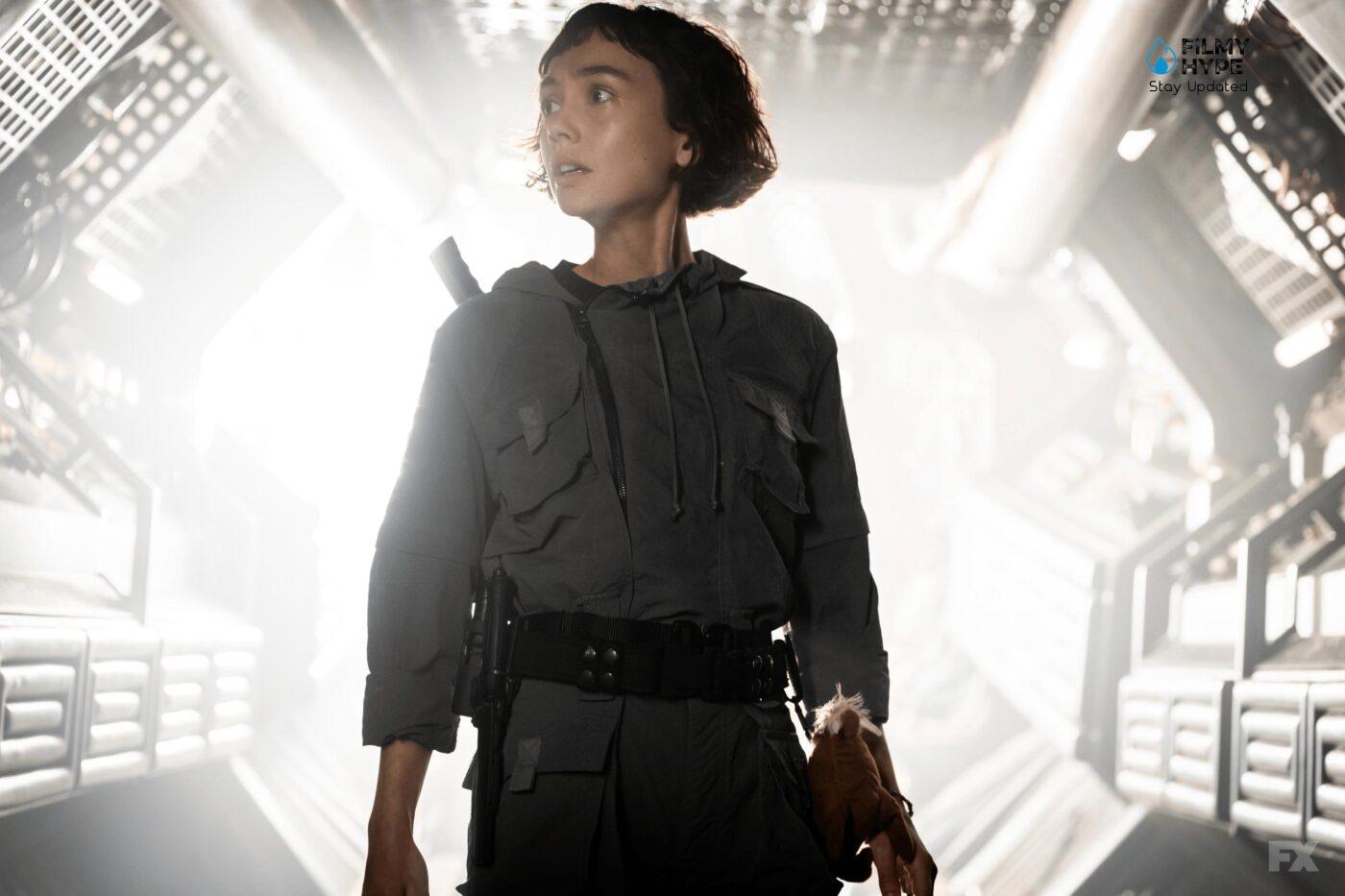
At the center of the plot, we find Wendy, played with intensity by Sydney Chandler. In life, she was a terminally ill girl; now, his consciousness was transferred into a synthetic, fruit body of an experiment conducted by the corporation Prodigy. Her new condition gives her superhuman strength and endurance, but it also places her in a gray area between humanity and machine, where the nostalgia for what he has lost coexists with curiosity for what she could become. The brother, Hermit (Alex Lawther), believes her dead and ignores that she works for the same company that employs him as a doctor. Their meeting it’s one of the most touching moments of the series, and it becomes the thread host who goes through history. Through the two brothers, Hawley explores the concept of family in a world where biology is no longer the only element that defines ties, evoking the eye to contemporaneity. In parallel, Wendy leads a small group of other “hybrid”, sick children transformed into synthetic adult bodies. Their childish naivety contrasts with physical appearance and fighting skills, generating moments of tenderness but also restlessness, above all when confronted with the brutality of events.
Alien: Earth Review and Analysis
What “Alien: Earth” does very well is tiptoe and respectfully fit into the legendary saga of which it is part. The references to the first Alien film are clear, and Noah Hawley’s desire to enrich but not distort the world he has chosen to expand is evident. And this is appreciable. Although inspired by the original, however, this series proves to have its personality, adapting perfectly to the times it tells of, which shows the limits, contradictions, strengths, and weaknesses. “Alien: Earth” tries to give us a possible version of the future of humanity with a current, profound, intense story that focuses both on the themes covered, such as immortality, the fear of what is different, power, and technology, but also on the characters, their emotions, and their bonds. Furthermore, with excellent direction, screenplay, photography, and special effects, this new “Alien” proves to be not only a pleasant series to watch but a truly layered world in which to immerse yourself with your mind and heart.
For the entire duration of the story, the audience is constantly faced with multiple existential questions: “What does it mean to be human?”, “Are humans better than machines?”, “What we usually consider evil and what evil is, they are the same thing?”. “Alien: Earth” continually pushes us to reflect on all this and does so by balancing very well the moments of action, where the story moves forward, with those of description, where the action stops to leave room for the characters and reflective ideas. A great job has been done with this series. A saga has been modernized while maintaining the main components that have made it iconic. The horror nature of the story remains with the right focus on the monsters – more and more and more realistic and scary – but the focus is much more on the human factor, on the philosophical, political, moral aspect of the story, and on entertainment all around that entertains but above all leaves something on an emotional level. So far, this series has not disappointed us, and we are sure that it will not do so at the end either.
Directorial style and narrative by Noah Hawley, it is recognizable from the first frames: rhythmic editing, dark and evocative photography, measured dialogues, and multi-level symbolism. The result is full of mystery and restlessness, built more on tension than on explicit fear. The moments are genuinely scary; they are not numerous: some jump scares are far too predictable, but the suspense grows gradually and constantly, thanks to an intelligent use of the unshown and off-screen elements that have always characterized the best psychological horror. Hawley does not limit himself to re-proposing the narrative scheme of the original films, but consciously chooses to expand the universe of Alien, bringing it to territories unexplored and disturbing. The presence of hybrids, terminal children whose consciousness is transferred into adult synthetic bodies, is one of the most daring elements of the series: an idea that is both fascinating and disturbing, enriching the philosophical framework of the story. Suggestions coexist in them, ranging from Frankenstein to Ghost in the Shell, passing through the myth of Peter Pan. It is in these elements that the series finds its own identity, capable of talking about the future without giving up reflection on the present.
One of the greatest advantages of Alien: Earth is its ability to dialogue with the past without being a slave to it. There are references to the film saga, well-dosed and never intrusive: small tributes that will delight historic fans. The series dares to go further, opening new narrative horizons. New alien forms, new and above all new political structures are introduced, questions existential and moral issues, which further enrich the mythology of the franchise. The universe of Alien, often confined to closed and claustrophobic spaces, here becomes surprisingly stratified, complex, and alive. Also on the production plan, the project lives up to expectations… and perhaps exceeds them. FX and Hulu have invested decisively, aiming for one high-level visual rendering, detailed settings, and a cure for those who have nothing to envy of cinema. Some sequences, such as the exploration of the Maginot ship, are striking for visual impact and tension construction and would not look out of place on the big screen at all.
As ambitious and visually powerful as it is, Alien: Earth is not without its flaws. The plot, rich in subtext and philosophical implications, may be too cerebral for those expecting a more linear, action-packed narrative. The conceptual depth, while laudable, sometimes slows the pace, especially in the early episodes. Even on the character front, not everything works perfectly. Some secondary characters struggle to emerge decisively, and even the protagonist Wendy, though well-developed thematically, fails to always assert herself emotionally in the most intense scenes. Although tension is a well-orchestrated constant, the visceral terror, a hallmark of the saga, seems more evoked than truly experienced. The series opts for reflection and atmosphere, partially abandoning the sense of looming, brutal menace that made the first Alien iconic.
Alien: Earth is a rare example of how an iconic narrative universe can be expanded without distorting it. Noah Hawley creates a prequel that is also a profound and timely reflection on the body, consciousness, identity, and the all-encompassing power of multinational corporations. All this without ever losing sight of the essence that made Alien a timeless cult classic: the anguish of first contact with the unknown, the sense of creeping threat, the vulnerability of the human body in the face of an incomprehensible entity. But this time, what makes everything even more unsettling is the fact that the unknown doesn’t come from a distant galaxy: it’s on Earth, among us, and perhaps within us. The introduction of hybrids – that is, human beings whose minds have been transferred into synthetic bodies – if developed well, can lead to several exciting moments. Furthermore, among the best things seen so far, we need to talk about the “new” look of the Xenomorph. The moment we descend into this cylindrical purgatory, which will lead to the first meeting of the protagonists with the Alien, we see him for the first time, showing off his titan appearance and reflective light that plays with black and blue. Joy for the eyes.
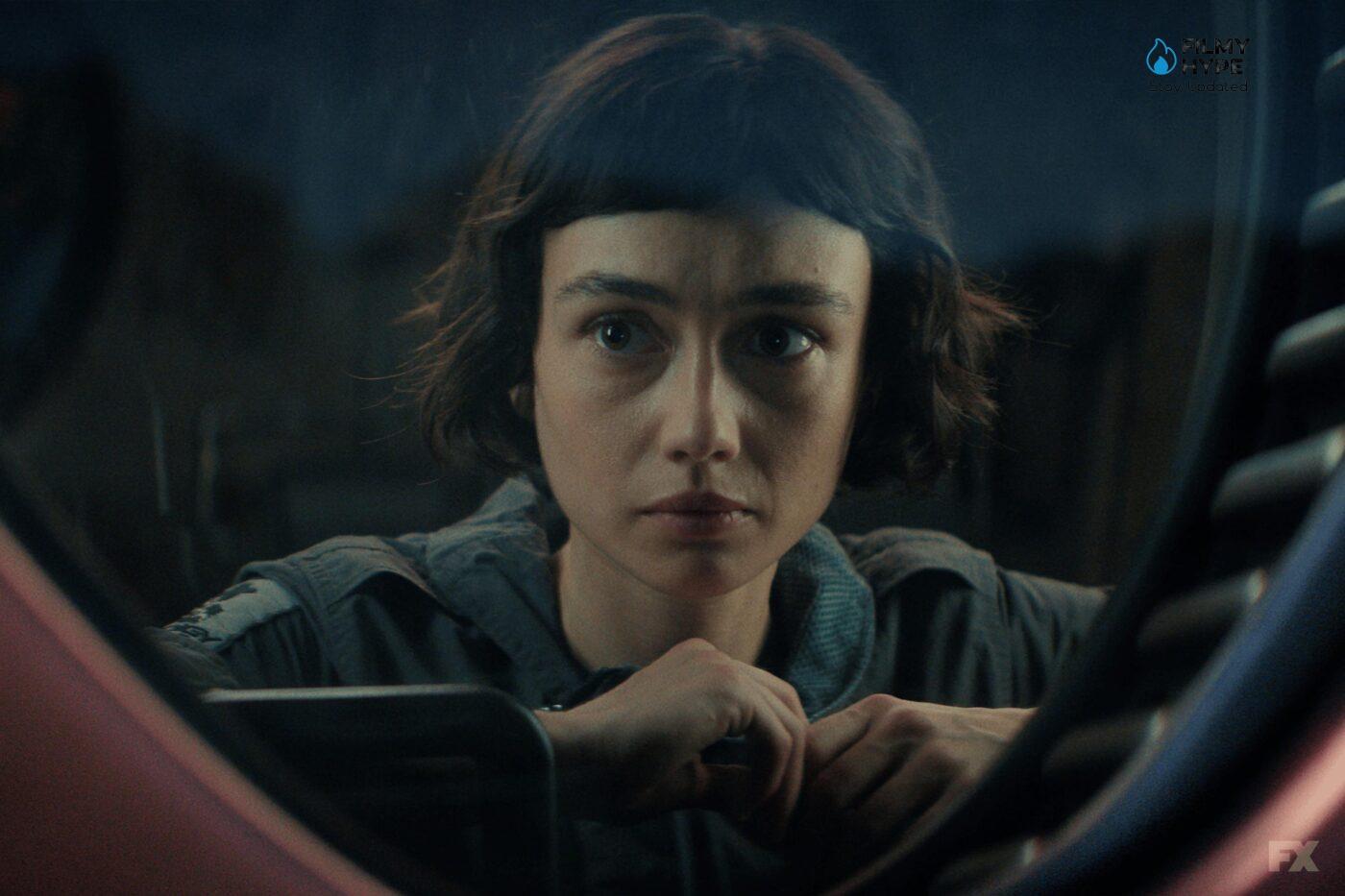
Aesthetically, Xenomorphs have never been more threatening and fascinating. The first two episodes of Alien: Earth seem to be on the right path for a TV series that promises to change the franchise (and perhaps television) forever. One of the most brilliant gimmicks of Alien: Earth is the explicit insertion of the Peter Pan metaphor. Prodigy megacorporation CEO Boy Kavalier (Samuel Blenkin) is something of a post-apocalyptic Peter, a disturbing young genius, dressed in guru bathrobes and the garb of a billionaire influencer. His dream? Achieving immortality by charging the consciousnesses of terminal children into adult synthetic bodies. Wendy (played by a magnetic Sydney Chandler) is the first to undergo the trial. His transformation is not just physical: from a fragile human being, he becomes something new, powerful, misunderstood even by his creators. Around her moves a team of others “Lost Boys” – children in the bodies of adults – each with a name taken directly from Barrie’s work. A refined and sinister narrative game, which combines childhood with bioethical manipulation, innocence with technological domination.
The world of Alien: Earth is a hyperbole of our present. Weyland-Yutani controls the Americas, Prodigy dominates Asia, and the battle for scientific supremacy is also a war of marketing, branding, and body control. The Maginot ship, operated by a small crew and a cyborg security officer (Babou Ceesay), carries a cargo of alien monsters, but is just one element in a world populated by genetic creatures, out-of-control experiments, and hyper-capitalist structures that they feed on suffering. When the ship crashes to Earth, in the heart of the city of New Siam, a spiral of events begins that alternates pure horror, action, and moments of profound ethical restlessness. The xenomorphs are still here, true to themselves, lethal, silent, splendid in their biomechanical brutality. But the real surprise is the new bestiary created by Hawley: mutant creatures, sprawling eye parasites, crawling insects, all intelligently inserted into the fabric of the narrative.
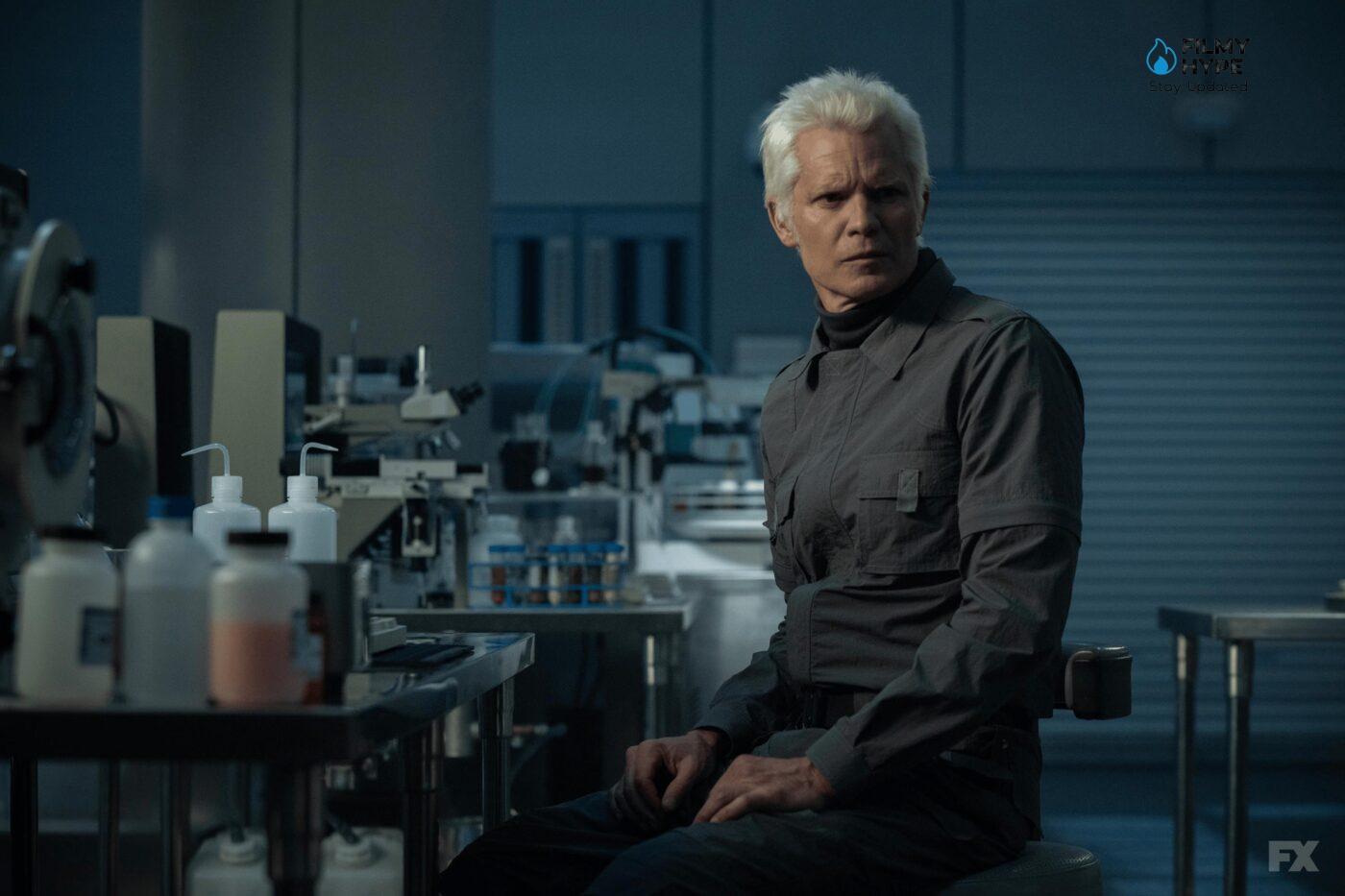
Horror is corporeal, visceral, but also symbolic: each monster seems to represent a modern fear, from the loss of identity to technological dehumanization. The scene of the xenomorph breaking through amid a decadent elite party is reminiscent of Hannibal’s nightmares and Parasite’s social satire, condensed into a few effective moments. The cast is one of the strengths of the series. Sydney Chandler plays Wendy with charming duplicity: fragile and powerful, human and alien. Samuel Blenkin gives the public a perfect contemporary villain: arrogant, childish, brilliant, and totally irresponsible. Timothy Olyphant, as synthetic mentor Kirsh, is the ambiguous consciousness of the series: sarcastic, enigmatic, perfectly immersed in his role. Alex Lawther, as Wendy’s human brother, also adds further emotional layering to the plot, embodying the trauma and hope in a world that no longer has time for authentic feelings.

Visually, the series is a triumph of design and direction. From the angled corridors of ships to futuristic buildings reminiscent of post-brutalist sculptures, everything contributes to building a coherent and disturbing dystopian imagery. The direction alternates slow camera movements with explosions of chaos. The fight scenes are fragmented, dirty, and deliberately confusing, while the static shots always suggest a looming threat. To top it all off, the credits roll accompanied by heavy metal tracks (Black Sabbath, Tool), which transform each end of the episode into a sonic ritual of catharsis and tension. What sets Alien: Earth apart from previous incarnations of the franchise is how evolution is placed at the center of the narrative. Not only the biological evolution of monsters, but also the technological, social, and even philosophical evolution. What makes a human being truly human? Is it consciousness, the body, the memories? Or empathy, pain, fear of death? The series does not give simple answers, but offers uncomfortable questions. And it does so with the stylistic confidence of someone who knows perfectly well that the greatest horror is the one we cannot explain.
Besides this part anchored in the past, Alien: Earth dedicates the rest of his time to the aforementioned children with robotic bodies, intent on coming to terms with their new condition (no longer having a human brain, with its natural chemical reactions, they are no longer able to experience things as they once did. It’s as if someone had silenced their sensations). The theme that revolves around the entire series is “when a stain isn’t a machine?”, a question posed directly by the cyborg Morrow (Babou Ceesay) to Slightly (Adarsh Gourav), one of the lost children, insinuating into him the seed of doubt. A theme far from those covered by classical tetralogy (the fear of the unknown, monstrous motherhood, etc.), which focuses on synthetic life forms, a peculiarity usually associated with other science fiction sagas, such as Blade Runner. A choice dangerously close to the boring existential delusions of the android David 8, played by a very blond Michael Fassbender in Prometheus and Alien: Covenant- certainly not the most successful and beloved chapters of the franchise. As in the case of the two prequels just mentioned, here too, in some moments, we forget that we are watching a production linked to the world of Alien.
To be counted among the most successful and original aspects of Alien: Earth, there is certainly the soundtrack by Jeff Russo, guitarist of the post-grunge group Tonic. With very old ’90, it proves to be excellent in underlining both the most contemplative and tense moments. Furthermore, Russo’s work is accompanied by a decent selection of rock and metal songs, which accompany the closing credits of each episode (ranging from Ronnie James Dio’s Black Sabbath to Tool, passing through Metallica and Smashing Pumpkins). But despite the aforementioned merits of the musical sector and some interesting characterizations, one gets the impression that Alien: Earth can never really take off. Even the attempt to introduce other dangerous creatures, other than the xenomorph, does not help to revive the situation. With a concept more akin to short forms of storytelling, it wasn’t easy to create a TV series focused on Alien without running the risk of diluting its effectiveness or distorting its essence; both mistakes in which the creation of the talented Hawley, unfortunately, falls disastrously.
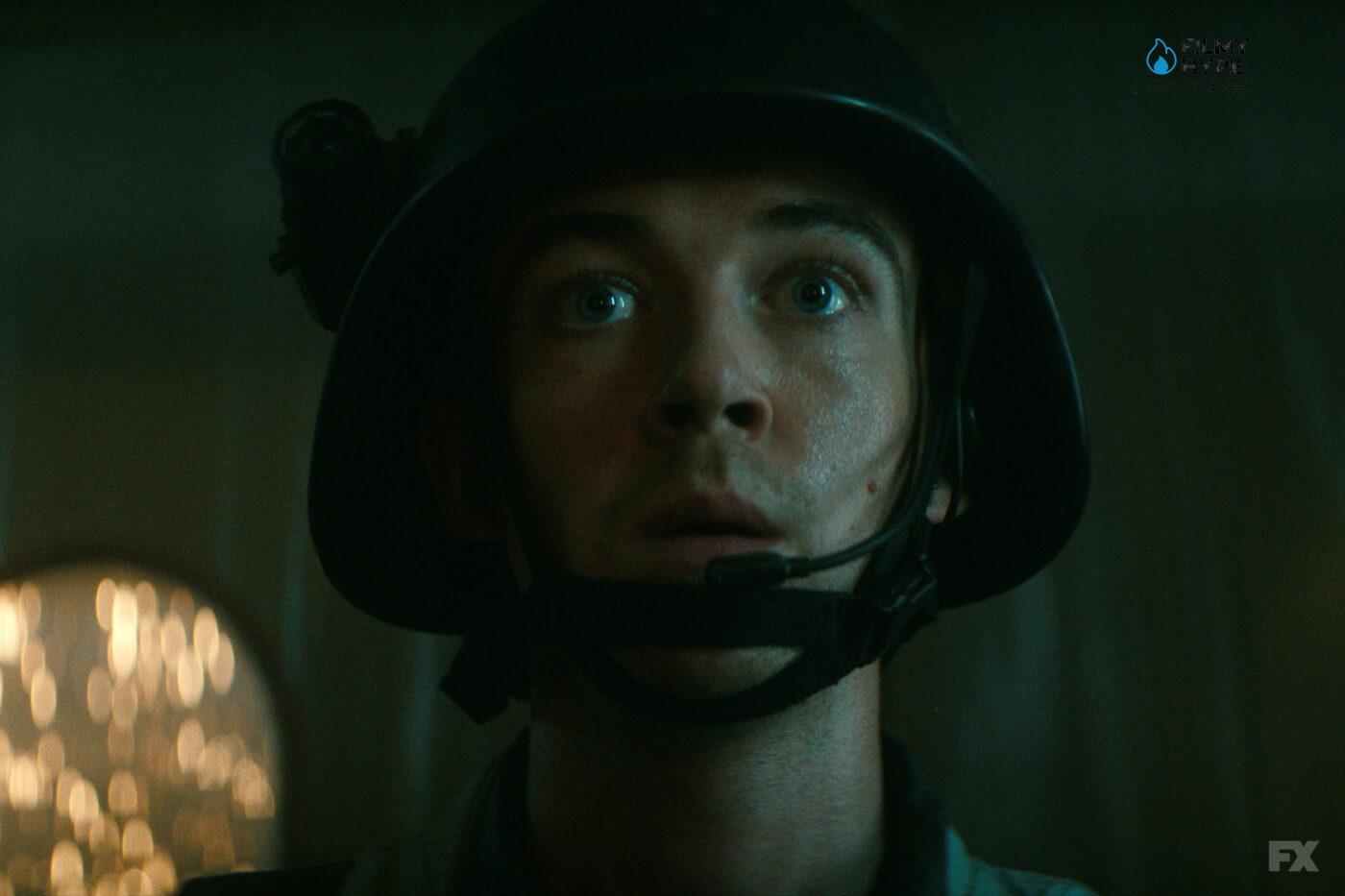
The main conflict not only shows the “classic” conflict between humans and Xenomorphs. The rivalry between Prodigy and Weyland-Yutani, two giant industrialists with ruthless methods, creates fertile ground for intrigues, betrayals, and power games. The struggle for control of the crashed ship — and its cargo of alien organisms — unleashes a silent war made up of sabotage and risky missions, and manipulations. The aliens transported from the ship include not only the infamous Xenomorph, but also other equally threatening species, the result of an imaginary, disturbing, and original visual. Every creature is treated not as a simple “monster to fight”, but as a biological puzzle, an unpredictable variable capable of altering the balance of power. This approach enriches the narrative universe and broadens the range of perceived threats. Hawley doesn’t give up sequences of pure bodily horror, with sudden attacks and moments of claustrophobic tension, but places them in a broader context, where the real threat is the will of the corporations to exploit any life form, human or alien, to obtain profit or power.
One of the most interesting aspects of Alien: Earth it’s the way it treats synthetic hybrids not as mere narrative tools, but as protagonists of a journey of identity and discovery. Children trapped in adult bodies, these characters maintain curiosity, language, and childish spontaneity, generating moments of unintentional humor and emotional vulnerability. Through them, the series reflects on issues such as the definition of humanity, the value of memory, and the possibility —or illusion — of immortality. Since synthetics are not natural prey of Xenomorphs, the traditional tension of the saga turns into a more challenging philosophical question: to what extent two “non-human” life forms can find common ground of survival against human domination? Kirsh’s character (Timothy Olyphant), an older-generation synthetic charged with guarding young hybrids, serves as a bridge between the past and future of the saga. With irony and detachment, he guides the boys towards an acceptance of their condition, while aware that the world around them is not ready to welcome them.
The production is of a very high level, and you can feel the effort in creating a world consistent and visually suggestive. The sets, which alternate futuristic urban environments with decadent industrial spaces, evoke both the dark aestheticism of the first films of the saga and the dark aestheticism of the first films of the saga cyberpunk suggestions at Blade Runner. The Weyland-Yutani ship stuck in one luxury shopping area is a symbolic image of the series, capable of summarizing the collision between technology, capitalism, and ruin. The special effects are credible and disturbing, especially in the rendering of the new creatures, some of which introduce threat forms of the all-new. Although none can match the iconicity of the first appearance of a chest burster, the design and putting in the scene demonstrate an obsessive attention to detail. Alien: Earth is ambitious; she manages to balance loyalty to the saga’s original and desire to explore new narrative territories.
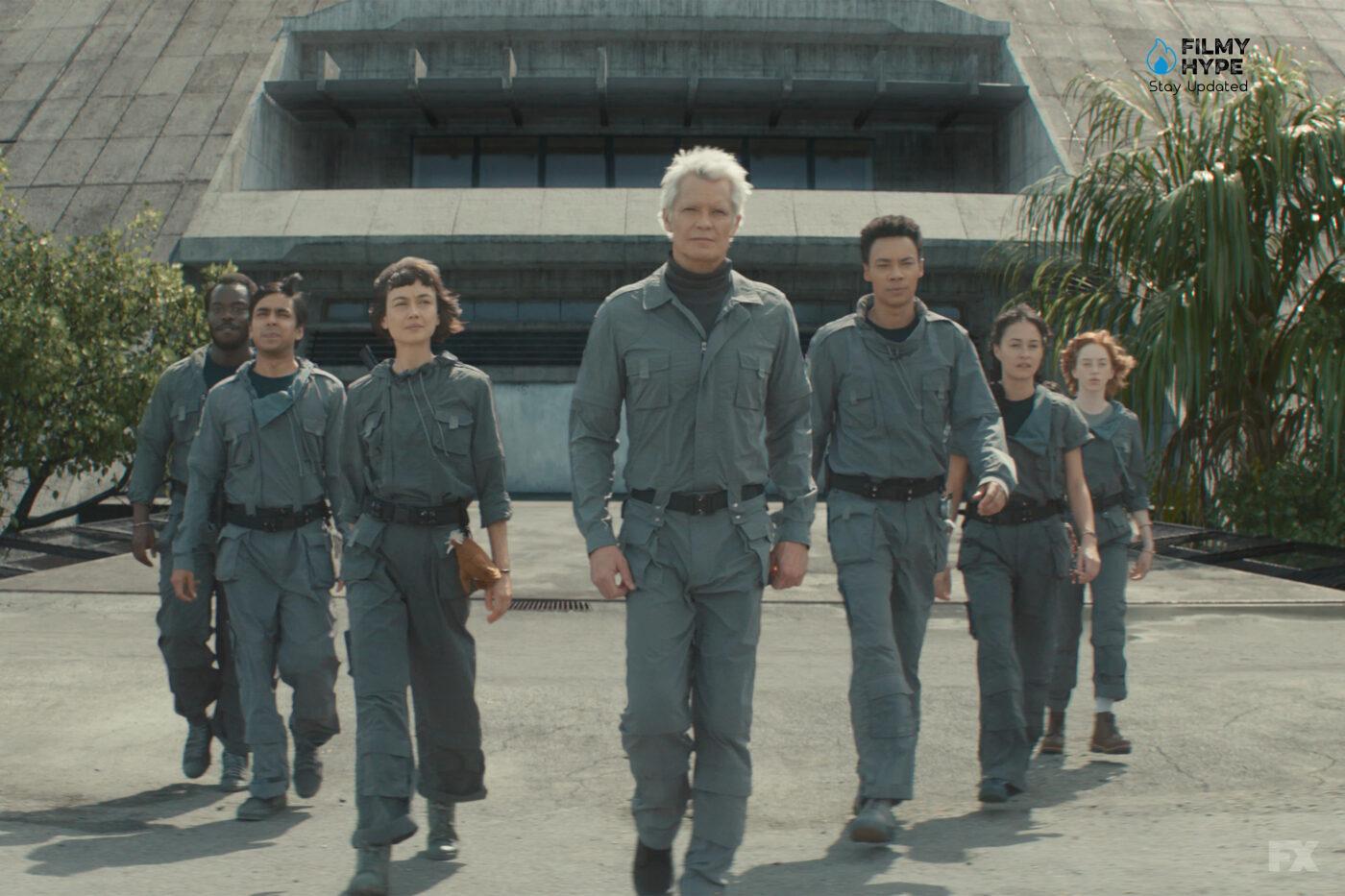
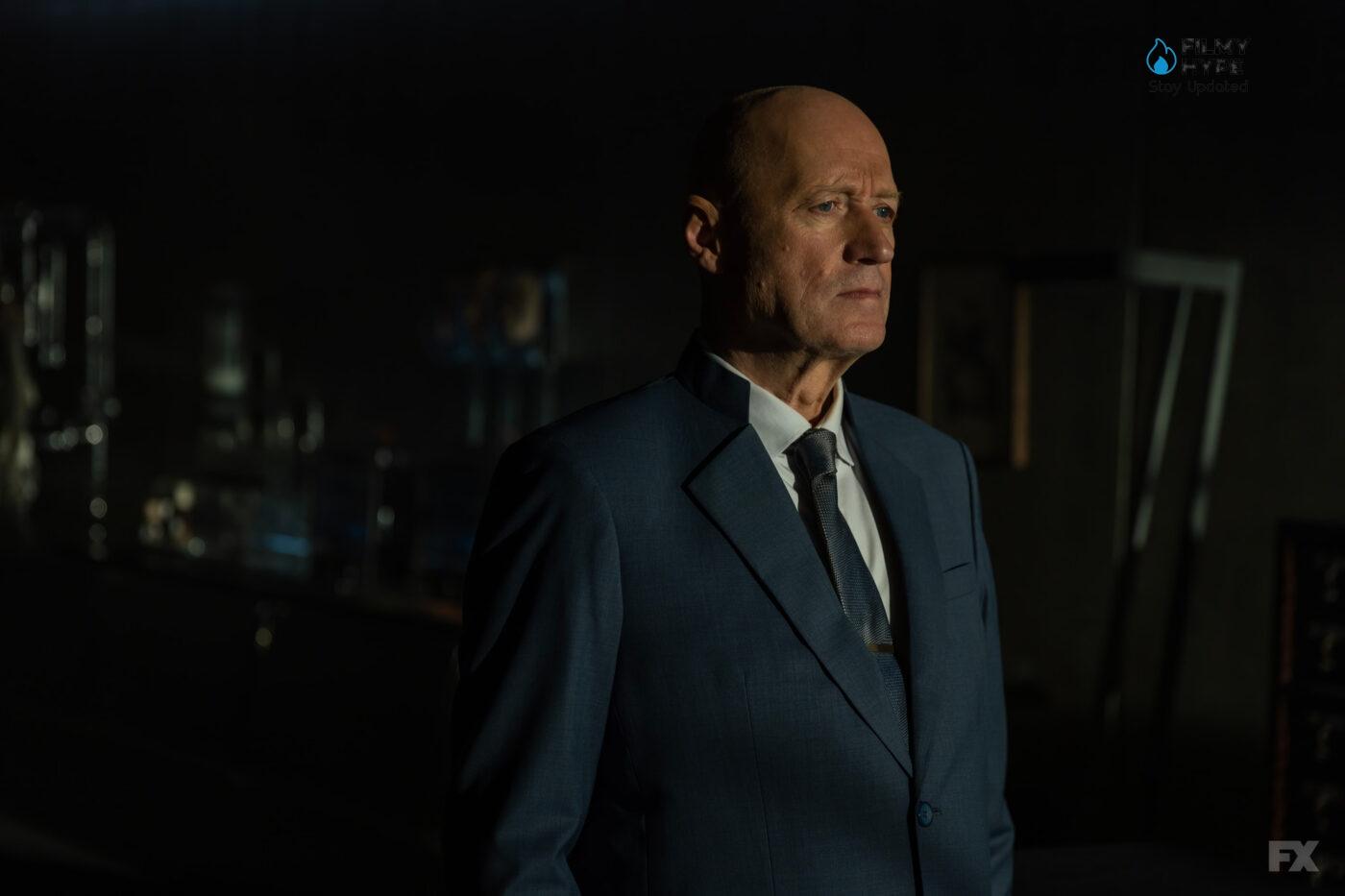
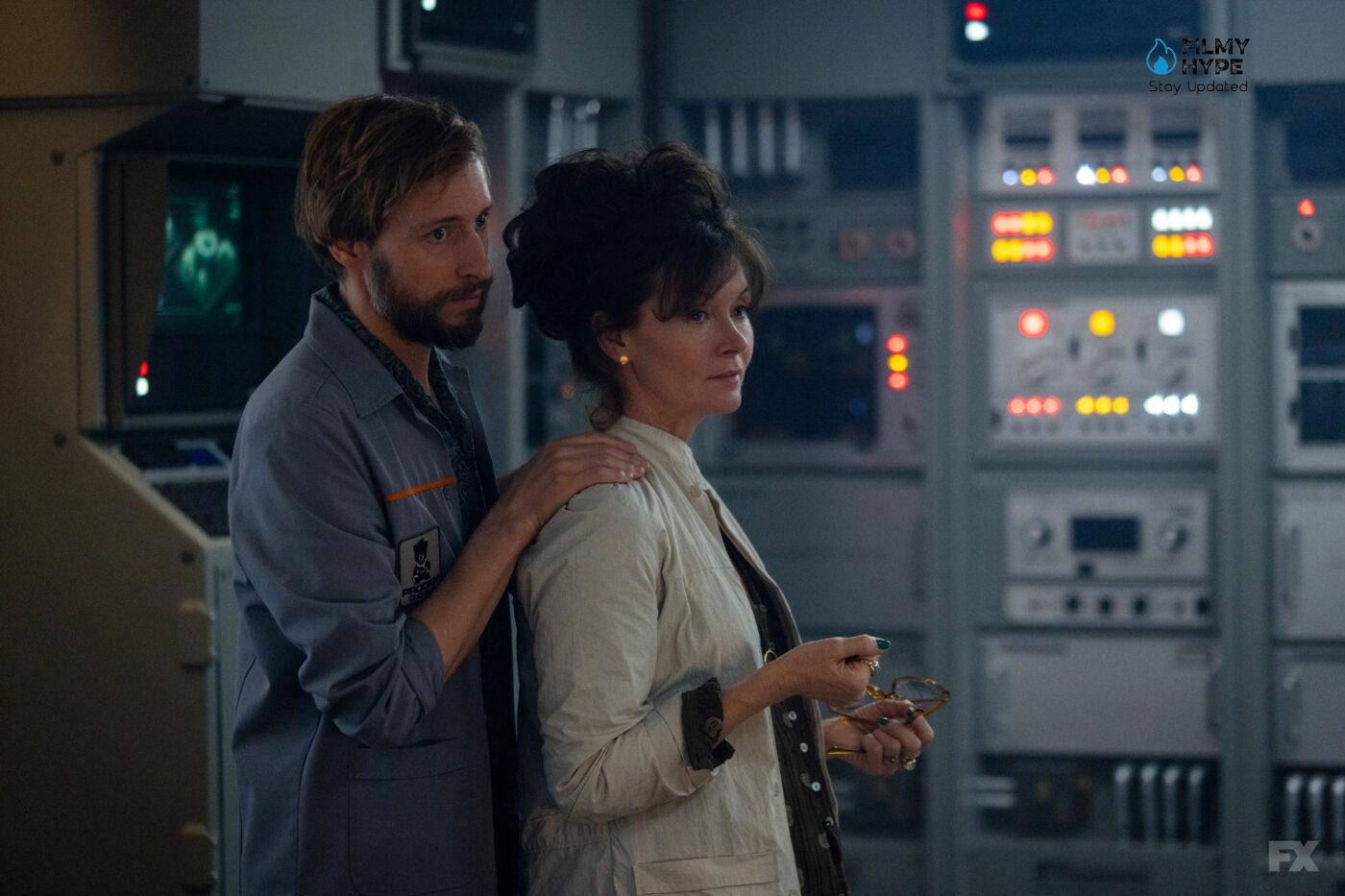
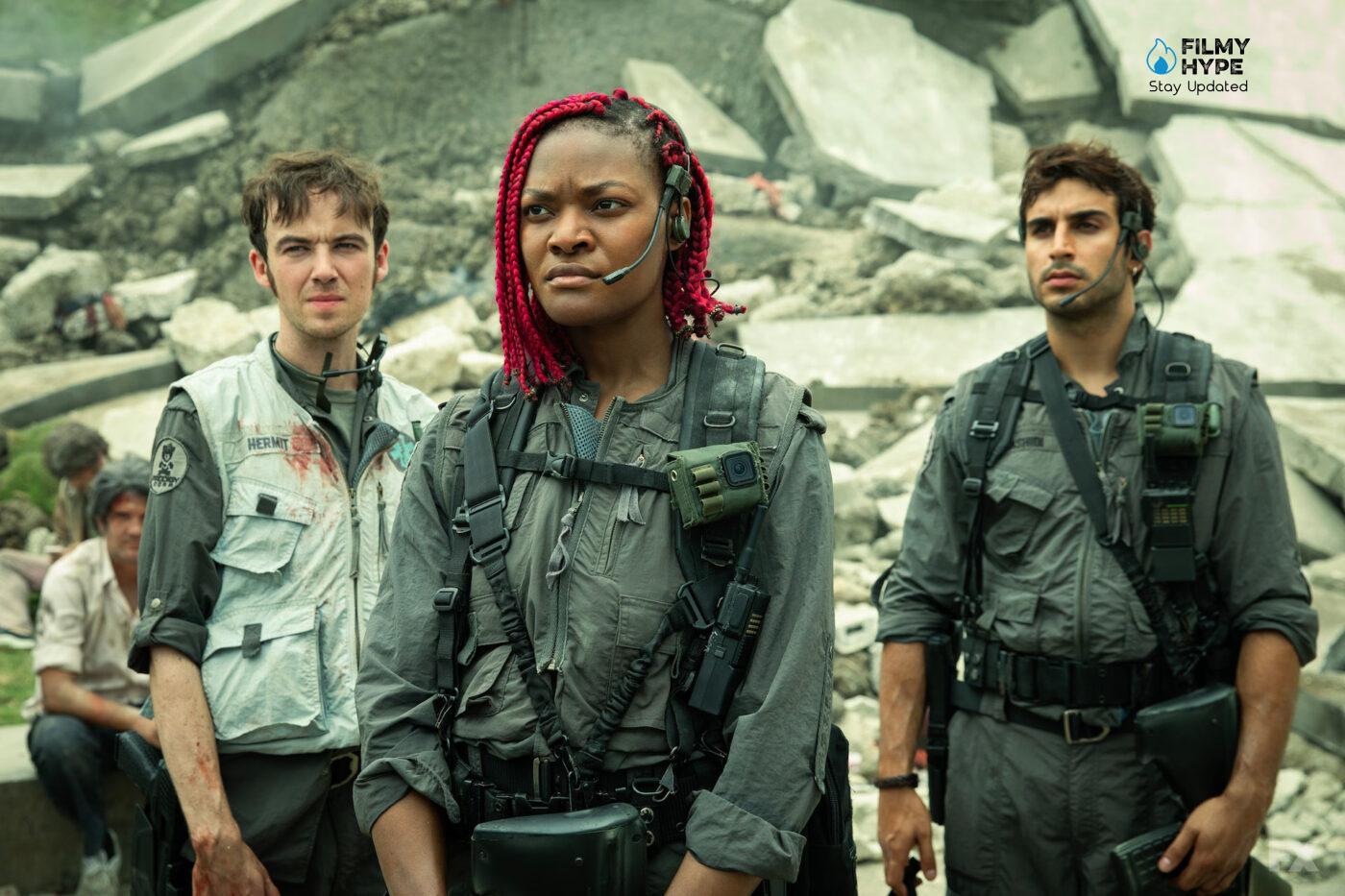
The choice to bring action to Earth and focus on synthetic hybrids opens up new possibilities and introduces more themes compared to the classic man–alien fight. Despite some rhythm problems and partial loss of the typical claustrophobia of film chapters, Alien: Earth strikes for character depth, visual richness, and ability to expand the universe Alien without betraying its spirit. Hawley proves once again that it can transform a film icon into a complex, exciting, and visually powerful serial story. The Alien saga returns with the prequel series Planet Earth, created by Noah Hawley of Fargo. Like the recent Romulus, this television production also relies on the legacy of the original chapter, opting for a retro-futuristic aesthetic and recalling some scenes from Ridley Scott’s classic. The series, unfortunately, is divided between this nostalgic approach, in which the characters will find themselves wandering through dark and claustrophobic corridors for the umpteenth time, and parts in which they move too far from the classic themes of the franchise. With a concept more similar to short forms of narration, it was not easy to create a serial production focused on Alien without running the risk of diluting its effectiveness or distorting its essence; Planet Earth, unfortunately, falls into both errors.
Alien: Earth Review: The Last Words
Alien: Earth is an ambitious narrative and visual experiment that blends classic horror, literary allegories, and technological dystopia. Noah Hawley signs a disturbing, layered, and visually impressive series, which, while renouncing narrative linearity, manages to build a coherent and fascinating world. It’s a return to the existential terror that made Alien great, but with a new soul: more cerebral, more restless, and perhaps even more necessary. Alien: Earth tries to update the saga by making it more in line with contemporary themes. To do this, Noah Hawley chooses to prefer themes and writing to the horror component, but decrees the loss of that lethal and dark charm that kept the viewer glued to the screen. The most successful aspect is therefore the well-characterized, complex, and authentic characters, combined with a sensible reflection on the relationship between us and artificial intelligence.
Cast: Sydney Chandler, Samuel Blenkin, Timothy Olyphant, Alex Lawther, Babou Ceesay, Lily Newmark, Adarsh Gourav, Erana James, Jonathan Ajayi, Sandra Yi Sencindiver, Essie Davis, David Rysdahl
Directed: Noah Hawley
Streaming Platform: FX Network and Hulu
Filmyhype.com Ratings: 4/5 (four stars) 🌟🌟🌟🌟