James Gunn vs Zack Snyder: Who Really Understood Superman?
Superman is the archetypal superhero, the icon that everyone else has modeled themselves on. He is the hero who saves without asking for anything in return, who represents the best of humanity while not being human. Yet, for at least two decades, Hollywood has tried to reinvent it with mixed success, trying to understand how to tell such a pure character today without making it seem anachronistic. In 2013, Zack Snyder tried to respond to this challenge with Man of Steel, giving life to an epic and tormented Superman. A god who fell among men, incapable of fully understanding his own identity. The film was divided: on the one hand, those who appreciated the mythological ambition of the vision, on the other, those who criticized its excessively dark tone and lack of humanity. In 2025, James Gunn brought Kal-El back to the room with a completely different proposal. More colorful, lighter, more emotional. But above all, more faithful to the original spirit of the character. And this is precisely where the question arises: Who is the real Superman?
James Gunn Vs Zack Snyder: Who Really Understood Superman?
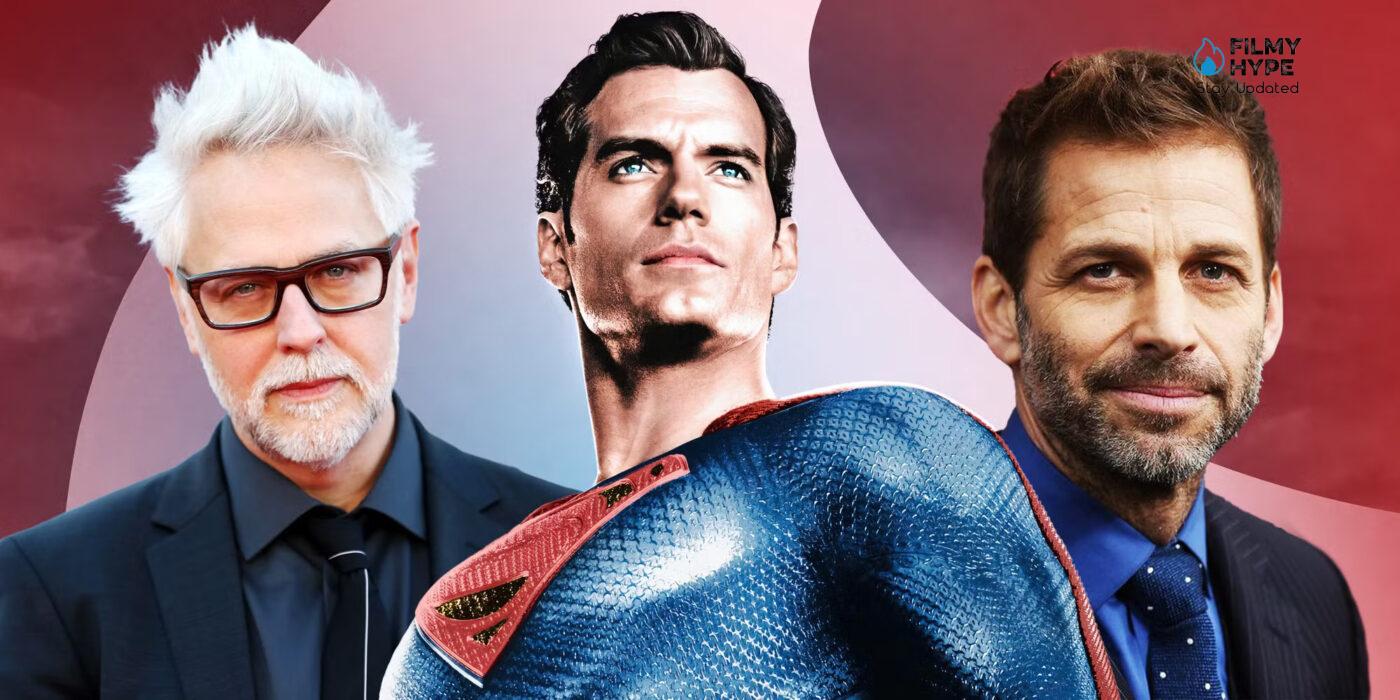
Superman is the archetypal superhero, the blueprint upon which all others are modeled. He is the hero who saves without expecting reward, the alien who embodies humanity’s highest ideals. Yet, for decades, Hollywood has struggled to adapt him for modern audiences, balancing his inherent purity with contemporary storytelling sensibilities. In 2013, Zack Snyder took on this challenge with Man of Steel, presenting a Superman who was epic, tormented, and deeply conflicted—a god among men struggling with his own identity. The film polarized audiences: some praised its mythological grandeur, while others criticized its bleak tone and emotional detachment. Then, in 2025, James Gunn offered a radically different vision. His Superman was vibrant, heartfelt, and unabashedly optimistic—a return to the character’s roots while still feeling fresh. This stark contrast raises a crucial question: Who truly understood Superman—Snyder or Gunn?
Two Opposing Views of the Same Myth?
The Superman of Zack Snyder (played by Henry Cavill) was born as a direct response to the cinecomics of the post-Nolan era: realistic, serious, gloomy. His version of Kal-El is tragic, almost Christological. He is an alien who experiences his own diversity as a condemnation, a solitary being destined to carry the burden of distrustful humanity on his shoulders. Snyder tells it with desaturated photography, low tones, and solemn music: Superman’s every gesture is full of profound, often overwhelming meanings. James Gunn, on the contrary, embraces the pop dimension of the character with conviction. His Superman is powerful, but also vulnerable, emotionally accessible, and at times clumsy. David Corenswet plays him with a mixture of sweetness, self-irony, and idealism that is more closely reminiscent of the Superman from the Silver Age comics or the version played by Christopher Reeve. Gunn does not disown complexity, but doses it with balance, leaving room for fun, emotion, and a sense of wonder.
A Superman Finally… Human
One of the historical criticisms of Snyder’s Superman is excessive emotional coldness. His humanity often remains in the background, sacrificed in the name of epic and tragedy. Clark Kent is barely hinted at, relegated to some childhood flashback or the final scene at the Daily Planet. His daily life is a detail, not a value. With Gunn, however, Clark Kent returns to being fundamental. He is clumsy, self-conscious, and deeply attached to his upbringing in Kansas. The relationship with his adoptive parents, Ma and Pa Kent, is tender and realistic. Away from the Hollywood emphasis seen with Kevin Costner and Diane Lane, the Kents here really look like two normal people, not two stars disguised as farmers. Corenswet plays Clark lightly but without superficiality. He is a good man, but not perfect: he gets angry, he feels insecure, he has ethical doubts. It is precisely in these cracks that the character acquires three-dimensionality. His humanity is not an obstacle, but his greatest strength.
Loyalty to the Spirit of Comics
Snyder always maintained that he wanted to “modernize” Superman, freeing him from what he thought was dated or naive. And indeed, his Man of Steel rejects many of the character’s iconic elements: the costume is dark, morality is nuanced, and traditional values are questioned. In that vision, Superman is an alien who must decide whether humanity truly deserves to be saved.
James Gunn, on the other hand, starts from the opposite assumption: Superman should not be updated; he should be remembered. His film is full of visual and narrative references to classic comics: the costume with the red underwear, Krypto the super-dog, the other superheroes, the extraterrestrial threats, and the imaginary cities. But it is not sterile nostalgia: it is a return to the essence, to what has always defined the Man of Steel.
Gunn himself explained that he took inspiration from Grant Morrison’s All-Star Superman and Mark Waid’s Kingdom Come, two works that celebrate the character in his purest form. And it shows: in his film, Superman is not a martyr, but a lighthouse. Someone who saves because he believes in human beings, not despite them.
A Different Policy, But Not Absent
Snyder’s Superman also takes himself very seriously on a political level. It addresses issues such as surveillance, religion, and the reaction of governments to a superhuman threat. But he does it in a heavy, at times didactic way, often reducing Superman to a symbol rather than a character.
Gunn, while maintaining a lighter style, does not give up subtext. His Superman is aware of the consequences of his actions, intervenes in geopolitical scenarios (such as the conflict between Boravia and Jarhanpur), is criticized by the press, is observed with suspicion by citizens, and even mocked on social media. He is a Superman who reads hashtags about himself and is hurt by other people’s opinions. In other words: a hero who lives in our world, not above it.
The idea of Superman as an immigrant, much contested by a certain American right, has actually been present in comics since the ‘40s. Gunn only brings it back to the foreground, connecting it to the present without ever being ideological. The message, after all, is simple: Superman is one of us, and this is his greatest power.
Lois Lane, Lex Luthor, and a World Already Alive
Another strong point of Gunn’s film is the chorality. The world around Superman is not a backdrop, but a complex and rich reality. Lois Lane, played intelligently by Rachel Brosnahan, is a modern, brilliant, ironic journalist with a strong professional ethic. The relationship with Clark is made of complicity but also of confrontation, especially on a moral level.
Lex Luthor, in Nicholas Hoult’s version, is a credible and current villain. He is not just a crazy billionaire, but a spot-on caricature of the technological elite of our time: arrogant, manipulative, convinced that he can rewrite the world in his image. Gunn tells it with irony but also with sincere contempt.
Plus, the film is not an original story. Superman already exists, and the universe around him is already populated with other superheroes. This allows the story to be dynamic, eventful, and focus on who Superman is, not where he comes from.
A Film That Speaks to Everyone
Gunn’s Superman succeeds in something that seemed impossible: speaking to everyone, without distorting himself. It is a film accessible to children and full of subtexts for adults, full of tender moments, fun action, and subtle reflections. It’s not perfect — some visual choices divide, humor doesn’t always work, and CGI is at times excessive — but it’s personal, heartfelt, and true. And above all, it’s hopeful. After years of cynical, depressed, traumatized superheroes, Gunn reminds us that Superman’s greatest strength is not flying or lifting buildings. He’s smiling while he does it.
The Superman We Needed, Not What We Expected
It is not a question of saying that one is “better” than the other. Zack Snyder’s Superman had his dignity, his weight. He spoke to a disillusioned audience in a difficult historical moment. But maybe, just today, we needed something different.
James Gunn’s Superman isn’t just more faithful to the comics. It is more faithful to humanity. He is a Superman who does not ask to be worshiped, but to be understood. Who doesn’t sacrifice himself out of guilt, but out of love? And maybe, after all this time, it’s really the Superman we’ve been waiting for.