It: Welcome to Derry: The Complete Origin Story of Pennywise Across Novels, Films, and Series
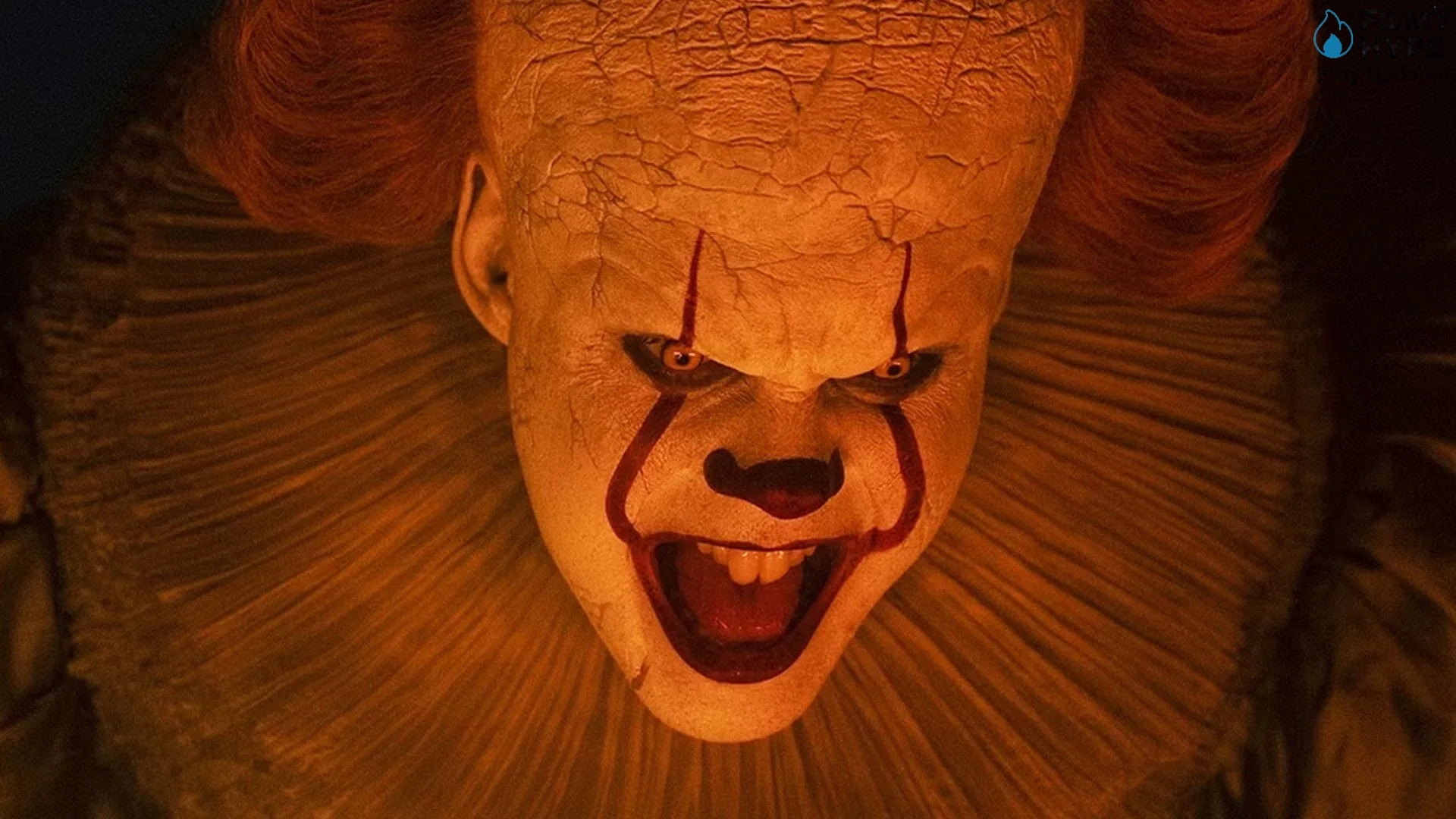
IT: Welcome to Derry: The town of Derry, Maine, has haunted generations of readers and viewers not merely as a setting, but as a character—a living, breathing entity with a malignant heart. At its core pulses Pennywise the Dancing Clown, the favored disguise of IT, a being of unimaginable antiquity and hunger. For decades, Stephen King’s monumental novel and its subsequent adaptations presented the origin of this entity in fragments: cosmic hints, traumatic flashbacks, and psychological horror. However, the series IT: Welcome to Derry performs a remarkable narrative surgery. It doesn’t just recount the origin; it excavates it, providing a tangible archaeology of terror that decontextualizes everything we thought we knew.
IT: Welcome to Derry: The Complete Origin Story of Pennywise Across Novels, Films, and Series
The pivotal moment arrives in Episode 4 of IT: Welcome to Derry. Through the psychic intervention of Dick Hallorann (a deliberate thread connecting King’s multiverse), the series forces a reckoning with a buried past. Taniel, a character rooted in the indigenous history of the region, becomes a vessel for a story passed down through generations. This isn’t a whispered legend but a clear, deliberate testimony—an archive and a warning. The series masterfully selects, rearranges, and expands the existing canon, making the abstract terrifyingly concrete without breaking its continuity. It answers the question that has lingered since 1986: Where did It come from, and why Derry?
The Fall: Prison from the Stars
The first radical departure from the established mythos is the manner of arrival. King’s novel describes It as a being from a dimensionless void known as the Macroverse, tumbling into our universe’s prehistoric past almost whimsically. The films, particularly It: Chapter Two, visualize this as a stunning, cataclysmic meteor strike—a bolt of eldritch light piercing the primordial earth.
IT: Welcome to Derry reframes this event with chilling pragmatism. Taniel’s story begins not with a willing entity, but with a fall. A shooting star—a celestial object—crashes into the western forests of what would become Maine. This is no simple impact. The series introduces the crucial concept of the star as a prison. The entity later known as It did not arrive freely; it was contained within this celestial capsule. The crash shatters its vessel, releasing what was inside, but also scattering the very material that held it. This correction shifts the being’s nature from an active invader to a dangerous, escaped specimen, setting the stage for all future containment efforts.
The First Balance: The Galloo and The People of the Forest
Before Derry, there was only wilderness and the Penobscot people, Taniel’s ancestors. They were the first to approach the crater. What they found was not a god to worship or a demon to flee, but a wounded, trapped thing confined to the cave system beneath the wreckage. This introduces a profound period of prehistoric coexistence absent from all other versions.
The indigenous people, through keen observation and respect for the unnatural, established a critical boundary. They understood they could not destroy the being—dubbed The Galloo in their lore—nor should they provoke it. The forest itself became a buffer zone, a border maintained not by force but by understanding. This period of fragile stability is a key contribution of IT: Welcome to Derry. It suggests that the horror is not inherent in the creature’s existence alone, but in the rupture of balance.
The Breaking Point: Settlers, Fear, and the First Feed
The arrival of European settlers shatters this millennia-old detente. Driven by expansion and resource extraction, they advance on the forest, cutting, digging, and hunting without knowledge of the ancient border they are violating. The series makes a potent argument: the first act of violence was human. The disruption of this delicate ecosystem provokes the Galloo’s first documented attack on a settler.
Here, the series introduces its biological theory of fear. The creature, previously subsisting on lesser energies, tastes human terror—a potent cocktail of adrenaline and cortisol. This fear is not just emotional sustenance; it is a power source. That first kill is less a malicious act and more a catastrophic discovery: human fear is the richest fuel it has ever encountered. Its strength multiplies, and the passive border becomes a hunting ground.
Necani’s Sacrifice: The Thirteen Pillars and the Sacred Circle
Faced with this escalating threat, the indigenous people fight back not with conventional weapons, but with the only substance the creature fears: fragments of its original prison, the fallen star. This reddish mineral, a physical piece of the cosmic event, becomes their tool. For a time, it holds the line.
The series then delivers its most significant narrative creation: the character of Necani, Sesqui’s daughter. Driven not by vengeance but by a desperate need to understand, she enters the forbidden forest alone. She finds the star’s core and makes a monumental decision. She fractures the mineral into thirteen pieces and buries them in a wide perimeter around the creature’s territory.
This act of ritual geography creates the Sacred Circle, a confinement field that explains a lingering mystery from the novel and films: why does It’s influence seem bound to Derry and its immediate surroundings? IT: Welcome to Derry provides the answer. The Thirteen Pillars function as a spatial prison. The Deadlights—the creature’s true form as pure, insane energy—can manifest and hunt within the perimeter, but cannot cross it. This is vividly demonstrated when characters in the series cross an invisible line, and the pursuit abruptly ceases. The creature doesn’t stop by choice; it is physically barred.
From Cave to Well: The Urbanization of Terror
Taniel’s history also provides the missing link between the prehistoric cave and the modern sewer system. The original impact crater, the heart of the Galloo’s domain, is the exact geographical point upon which Derry would eventually be built. As the town expands, its foundations and infrastructure—most notably the well under the house at 29 Neibolt Street—pierce directly into this ancient lair.
This retcons the familiar settings from Andy Muschietti’s films into a deliberate historical progression. The Neibolt Street well isn’t a random access point; it is the modern-day architectural echo of the original crater, a direct pipeline to the epicenter of the horror. Derry isn’t cursed because It chose it; Derry is cursed because it was unknowingly constructed atop its prison.
The Military Mind: Weaponizing Fear
IT: Welcome to Derry introduces a compelling new antagonist: human institutional folly, in the form of a U.S. military investigation. Led by figures like Shaw, the army hears Taniel’s story not with reverence, but with cold, strategic calculation. They identify fear as a bioweapon. If the creature consumes terror, perhaps it can be harnessed or its principles replicated to intimidate enemies.
This plotline creates a direct lineage of arrogance: from the settlers who blindly broke the natural boundary, to the military who seek to exploit a force they cannot comprehend. Both represent external powers altering a system they do not understand, with catastrophic consequences. The series suggests that the military’s meddling in the late 1950s/early 1960s is a key factor in weakening the pillars’ hold, directly setting the stage for It’s awakening in 1960 when Georgie Denbrough meets Pennywise.
The Birth of Pennywise: Bob Gray and the Blacksmith Fire
Perhaps the series’ most haunting contribution is giving Pennywise a human genealogy. The novel and films suggest the clown form is a glamour, a psychic lure tailored to childhood fears. IT: Welcome to Derry roots this choice in a specific, tragic historical event: the Kitchener Ironworks explosion of 1908, which killed 88 children.
Episode 6 reveals an old photograph in Mrs. Kersh’s album: a man named Bob Gray, a traveling clown performing in Derry at the time of the fire. The series posits that the catastrophic, collective terror of that event—the anguished screams of dying children and grieving parents—created a psychic maelstrom of unparalleled intensity. The creature, drawn to this feast of fear, did not merely mimic a clown. It consumed and assimilated the actual identity of Bob Gray, who likely perished in the disaster.
The clown form is thus not an arbitrary choice. It is a crystallization of Derry’s deepest trauma. The monster wears the face of a man present during the town’s most horrific pre-Pennywise tragedy, forever linking its identity to human suffering. This transforms Pennywise from a mere monster-shape into a ghost of collective memory, a walking, feeding monument to Derry’s inherent evil.
Synthesis: Canon, Cosmos, and Concrete History
IT: Welcome to Derry achieves a remarkable synthesis of the existing mythos:
- From King’s Novel: It retains the cosmic scale—the Macroverse, the Turtle (Maturin), the eternal conflict between forces. It doesn’t deny these elements; it simply grounds them. The Deadlights are the energy within the prison. The Ritual of Chüd remains a mental/spiritual battle.
- From Muschietti’s Films: It adopts and expands the visual language of the meteor strike and the Deadlights. It uses the cinematic portrayal of fear as a palpable, almost physical substance.
- Its Own Contribution: It adds the indigenous history, the Thirteen Pillars as a physical mechanism for containment, the biological reading of fear, and the historically grounded origin of the Pennywise persona.
The result is a richer, more terrifying whole. The origin of It is no longer just a cryptic paragraph about the Macroverse or a spectacular visual effect. It is now a layered story: a cosmic accident, followed by a period of ancient stewardship, shattered by colonial disruption, contained by sacrificial ritual, and finally corrupted by urban growth and military hubris. Pennywise emerges not just as a monster, but as the byproduct of every human mistake made on that land.
Conclusion: The Terror in the Soil
Ultimately, IT: Welcome to Derry succeeds in making the horror of It profoundly tangible. It translates metaphysical dread into historical consequence and geographical fact. The series argues that the true horror may not be the ancient alien entity in the dark, but the unseen manner in which we build our lives around it. Our houses are on its prison walls. Our sewers tap into its lair. Our worst tragedies become their masks.
The monster from the stars is forever locked in a dance with the monsters of human history—greed, violence, arrogance, and trauma. By giving It a clear origin story, IT: Welcome to Derry doesn’t diminish its mystery; it deepens our understanding of the fear. It shows us that sometimes, the most universe-shattering terrors are not only in the void above, but buried in the very ground beneath our feet, waiting for us to forget the pillars that hold them back.