House of Guinness Series Review: A Compelling But Discontinuous Saga
House of Guinness Series Review: With House of Guinness, Steven Knight – creator of Peaky Blinders – backs up Netflix with a new family saga set in late nineteenth-century Ireland. At the center of the story are the Guinnesses, the family that transformed beer into an economic and cultural empire. The series, supported by the performances of Anthony Boyle, Louis Partridge, Fionn O’Shea, Emily Fairn, and James Norton, tells the story of the void left by the death of the patriarch and the struggle for control of one of the most powerful companies in the country, while the streets of Dublin explode with political revolts and social tensions. I’m not a big beer drinker, but I’m a huge lover of Ireland. In the past, for work reasons, I have taken part on more than one occasion in press activities organized by the Irish Tourist Board and have toured both the Republic of Ireland and Northern Ireland far and wide.
My face was also immortalized on the foam of a pint of Guinness thanks to a contraption specifically designed to imprint photos or dedications on the Bierschaum. I repeat, I’m not crazy about beer, but it was a party organized in Milan by the Irish tourism board, and it seemed rude to me not to submit to it and then gulp down that “self-celebratory” mug. The situation changes if, from beer, we move on to Mr. Steven Knight, an English screenwriter, producer, and director born in 1959 who, between cinema and television, has signed a lot of very appreciable stuff (even running into some painful slips, especially, in recent years, on the big screen). Well, I’m passionate about him. To make you understand: that’s what he created, Peaky Blinders, the cult series starring Oscar-winning Cillian Murphy set in Birmingham between 1919 and 1933. A few months ago, many (not me) tore their clothes for M – Son of the Century, which, stylistically speaking, is a version “for dummies” of Peaky Blinders. But then again, it’s directed by someone like Joe Wright, the man who gave the history of cinema a chilling film like Pan: A Trip to Neverland, so it’s not like I could expect who knows what.
House of Guinness Series Review: The Story Plot
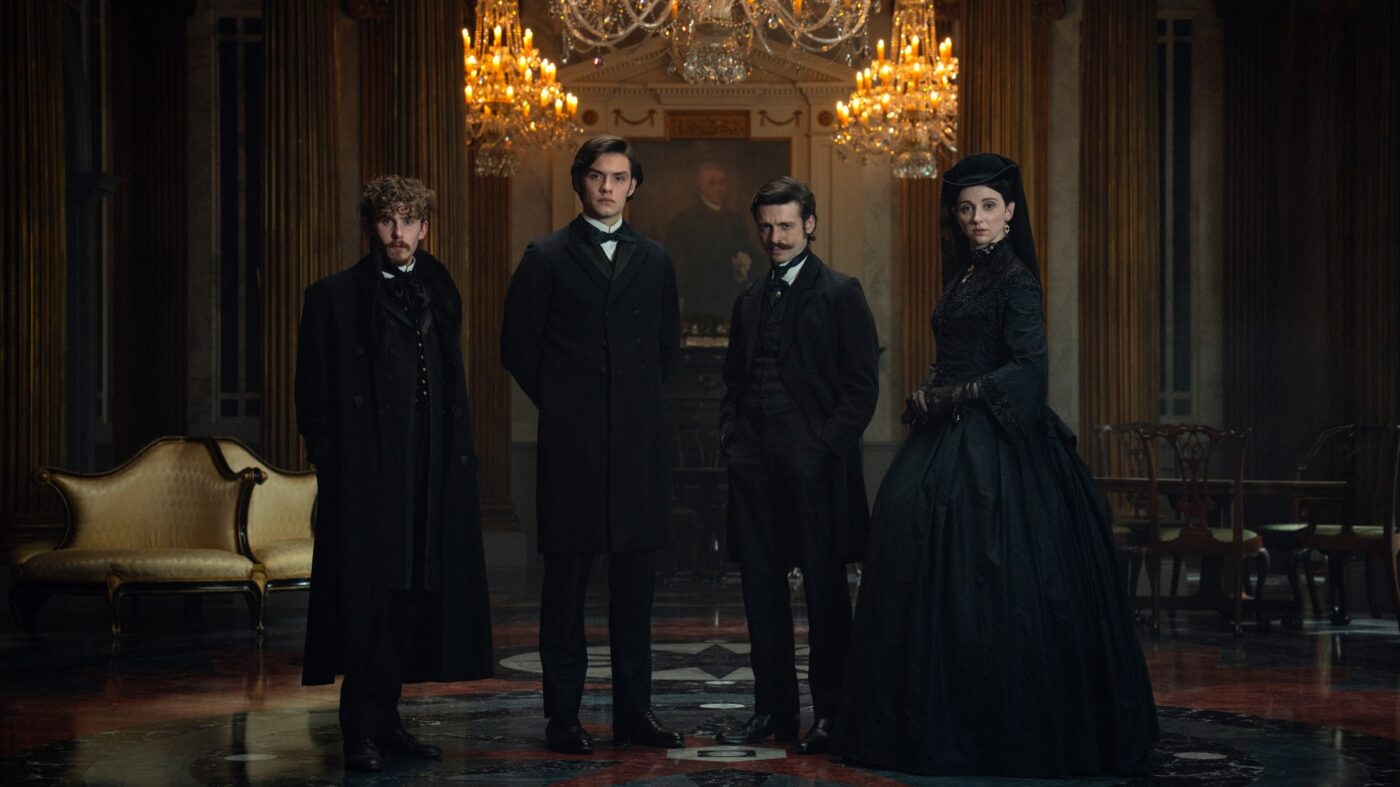
Dublin, 1868. Sir Benjamin Guinness dies, leaving his four children to face an inheritance that risks dividing them. Arthur (Anthony Boyle), the eldest, prefers the vices of London to factory work; Edward (Louis Partridge), the youngest, has the head and ambition to lead the brewery, but not the birthright; Benjamin (Fionn O’Shea), fragile and self-destructive, cannot free himself from alcohol and gambling; Anne (Emily Fairn), marked by illness and unshakable faith, she is excluded a priori for the simple fact of being a woman. Joining them is Rafferty (James Norton), a trusted man and true director in the shadows, while outside the gates, the voices of the Fenians are growing louder, led by Ellen (Niamh McCormack) and Paddy (Seamus O’Hara), who see Guinness as the symbol of a power to be overthrown. Between wills, funerals, and loves destined to create scandal, the family must choose whether to defend their position or risk losing it forever.
The series opens in medias res: patriarch Benjamin Guinness has died, leaving behind an empire as solid as it is fragile. For the city’s inhabitants, his figure was not a source of pride, but of resentment. The streets of Dublin are ablaze, the Fenians celebrate his passing, and the funeral becomes a symbolic battlefield, where the social and political tensions of colonized Ireland come to the fore. It is in this context that Benjamin’s children are forced to confront not only their economic legacy but above all the burden of a name that signifies power, privilege, and enemies. Just as in Peaky Blinders, Knight intertwines history with private history, showing how great collective change always passes through the intimate cracks of families. The heart of the series is the conflict between the Guinness brothers. Arthur (Anthony Boyle), the eldest, appears intolerant, more drawn to London high life than to family duty.
Edward (Louis Partridge), the youngest, is the only one with a true vision for the brewery’s future, but he must come to terms with his subordinate position. Alongside them are Anne (Emily Fairn), excluded from the inheritance because she is a woman, and Ben (Fionn O’Shea), unable to free himself from his vices. The reading of their father’s will not only divides but cements a bond of mutual dependence: Arthur and Edward must manage the estate together, or risk total loss. This is the source of the tension that underpins much of the story, between sibling rivalry, financial responsibilities, and personal ambitions. Perhaps best described by their sister Anne: Arthur is so frivolous because he is frightened by his own obscurity, and Edward so serious because he is frightened by her good heart.
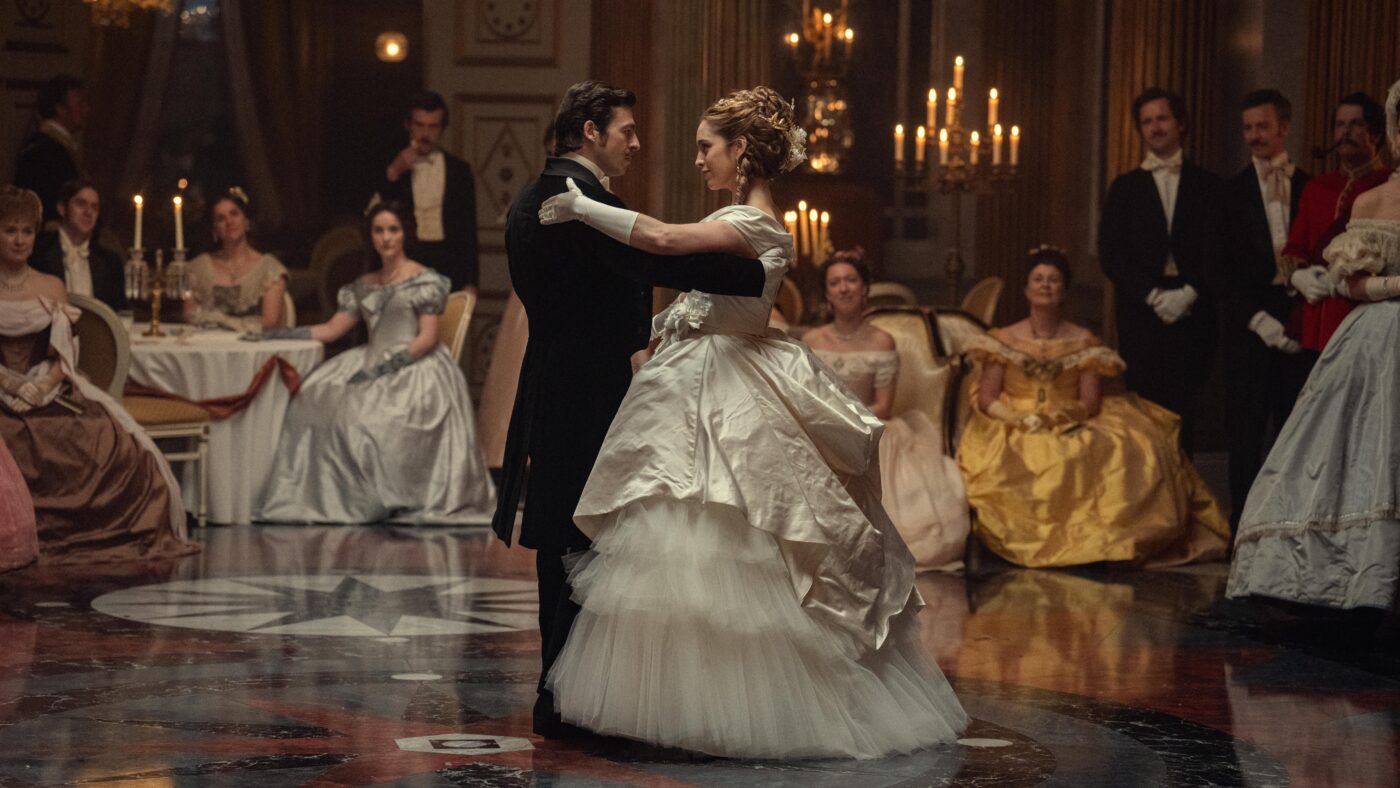
At the same time, the Fenian rebellion—led by Ellen (Niamh McCormack) and Paddy Cochran (Seamus O’Hara)—provides a political and social counterpoint to the family drama. The power struggles within the brewery walls resonate with those playing out on the streets of Dublin, highlighting the contrast between those who accumulate wealth and those who fight for their survival and freedom. The staging, in keeping with Knightian tradition, is sumptuous: dark and baroque photography, a historical reconstruction that blends fidelity with dramatic license, and a powerful soundtrack that blends Fountains, DC, and classical music. However, despite the evident aesthetic care, the narrative risks losing its edge midway through the season. From the fifth episode onward, the pace slows, and family dynamics begin to repeat themselves, weakening a story that would perhaps have benefited from a more compact format.
House of Guinness Series Review and Analysis
House of Guinness doesn’t claim to be a rigorous historical reconstruction. Rather, it chooses to tread the path of myth, transforming the brewing dynasty into a kind of Shakespearean tragedy. In this sense, Knight confirms his ability to universalize a deeply local story: the conflict between brothers, the weight of power, and the tension between tradition and modernity become themes that transcend the confines of 19th-century Ireland. The series’s strength lies above all in the performances. Anthony Boyle gives Arthur a mix of fragility and brutality, while Louis Partridge creates an idealistic yet not naive Edward, ready to confront a world that doesn’t take him seriously. James Norton also delivers an excellent performance as the loyal Sean Rafferty, a bridge between the people and the bosses.
And yet, something is missing. While Peaky Blinders managed to keep the viewer glued to the screen, here the plot seems less incisive, almost diluted. The eight episodes seem to try to include too many elements without giving each one the space it deserves. The result is a delightful and visually captivating series, captivating with the power of its setting and the power of certain scenes, but unlikely to be remembered as the masterpiece Knight created in the past. House of Guinness is a solid historical drama, capable of entertaining and captivating those drawn to family sagas and Victorian Ireland. It’s not the author’s best work, but it remains a testament to his ability to transform real events into narratives charged with tension and symbolism. A glass of Guinness, perhaps not the most sparkling, but still worth savoring.
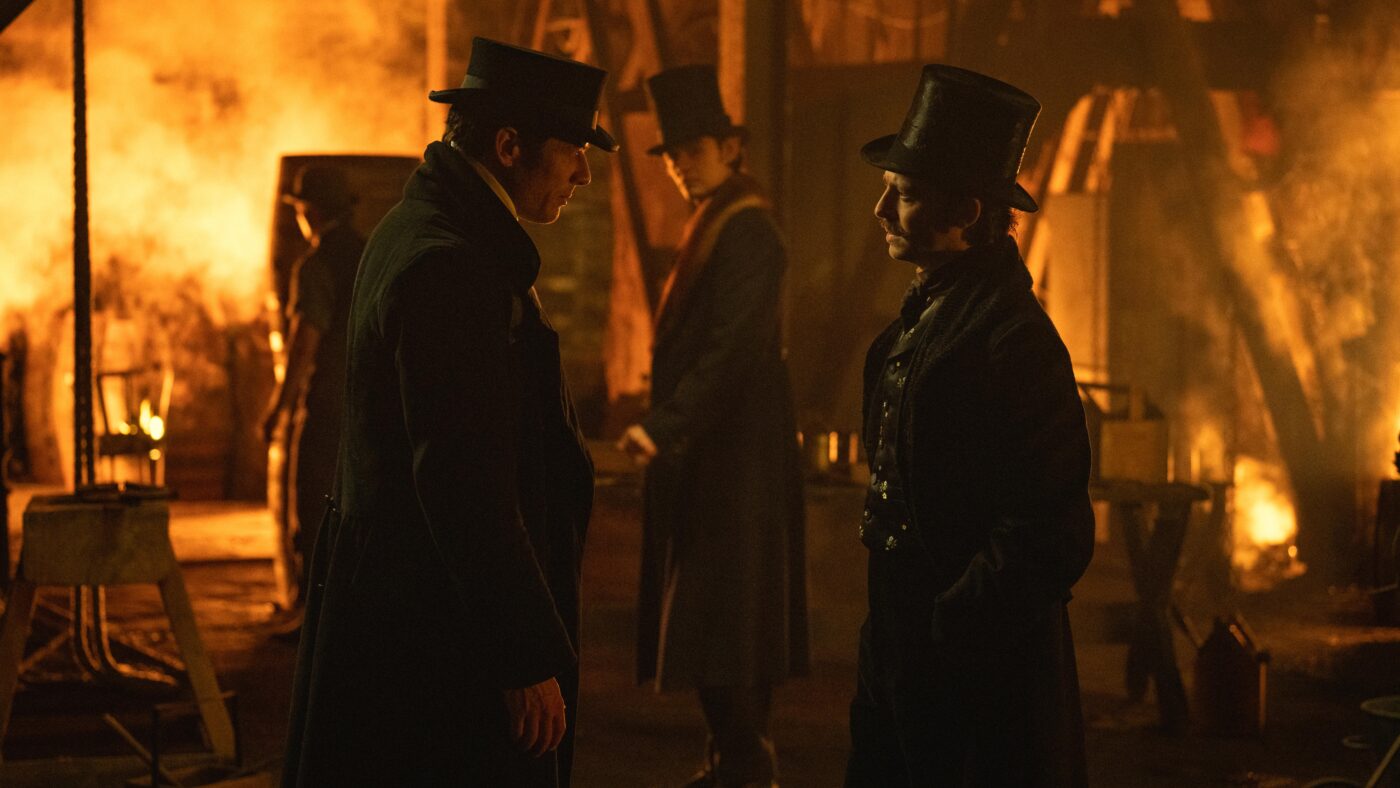
With House of Guinness, even more successfully and “roughly” than what he did with A Thousand Blows, Steven Knight does what he does best: telling, with a decidedly post-modern rhythm and aesthetic, a cross-section of true story (with all the narrative concessions of the case). If you love the typical atmospheres of Peaky Blinders, rough and raw, to remain anchored and enchanted in front of House of Guinness you will only need the first 180 seconds of the first episode in which, among the pounding beat of the soundtrack which punctuates superimposed writings which immediately make clear what will be the key times of the series, we are shown how the well-known dark beer is born. Except that we are shown with the same explosive force of effort and fire that we would expect to observe in a hot steel mill.
Then the recipe is Knight’s well-tested one: a mix of true story mixed with high-school entertainment. Yes, because in House of Guinness, the story of Sir Benjamin Guinness’ four sons and a series of satellite characters is told, but it also tells the story of a country that, for a long time, was torn apart by bloody divisions. On the one hand the Fenians who, both in Ireland and in the United States (a fundamental area for the economic affirmation of the brewery), pushed to have an independent and Catholic nation without ties of any kind with England, on the one hand the Unionists, like the late Sir Benjamin, who, also by virtue of their economic and noble status, pushed to remain permanently anchored to the United Kingdom. That of the founding family of the legendary brewery is a story that has its roots in that of the entire Irish nation, and they are both magnetic. Also, thanks to the energetic direction of Tom Shankland and Mounia Akl and a decidedly convincing cast, in which we also find with extreme pleasure that Jack Gleeson extraordinary interpreter of the fetid Joffrey Baratheon in Game of Thrones, and a darker staging, if we want, compared to the convincing A thousand blows anyway, House of Guinness deserves a promotion with top marks.
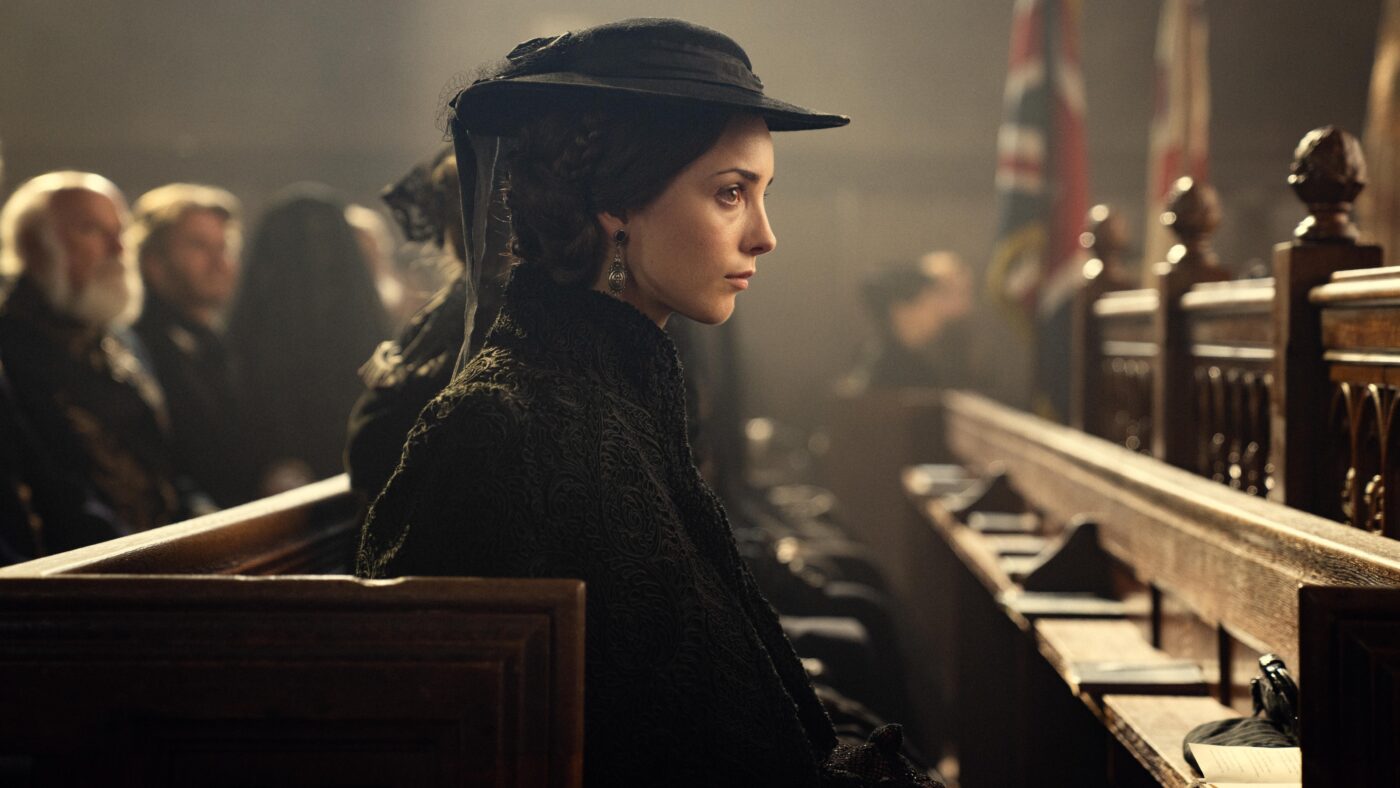
In fact, the most intriguing aspect of the series is how House of Guinness you remain confined not only to patrician rooms and accountancy coffers, but you connect the economic history of the brewery to the political and social history of 19th-century Ireland. The beer empire is a symbol of an Ireland under domination, where wealth and poverty coexist, where struggles for independence, for religious and civil rights, and for cultural identity emerge. The production and export of Guinness beer is not only a business: it becomes an economic engine, a vector of international prestige, but also a point of contact with injustices — working conditions, inequalities, exploitation, tensions between classes. The revolts, the nationalist ferment, the request for autonomy, the social and religious conflict – all this is the indispensable backdrop, not just scenographic decoration. And the Guinness family, rich and powerful, cannot ignore it: they must find their way to be in the world, to choose a side — and these internal conflicts become a metaphor for national conflict.
Steven Knight, creator of Peaky Blinders, proves his genius once again: The idea of putting together a historical family saga with almost modern tensions, with a rhythm that alternates contemplative moments with bursts of drama, is typical of his style. The direction of Tom Shankland and Mounia Akl adds visual depth: the historical environments are carefully reconstructed, but the gaze is modern — not a museum piece. Lights, costumes, scenography live, breathe. Another striking aspect: the contemporary soundtrack in a costume drama. Very current sounds that fit into nineteenth-century contexts generate estrangement, but also emotional immediacy — they make it clear that, despite the era, the challenges are still today.
If from these premises, House of Guinness reminds you of Peaky Blinders, we can confirm that the rarefied and smoky atmosphere is the same. Once again, a dirty Ireland-England in the streets and alleys, not only in the slums but also among the enriched bourgeoisie that the protagonist family represents. The task of the new head of the family – will it be Arthur or Edward? – is to hold the remains not only of all the brothers and sisters, uncles and cousins, ready to throw themselves on the inheritance as if it were a freshly drawn mug. Among these, an unrecognizable ex-Geoffrey Baratheon in the madmen of the jaunty Byron Hughes. But also, the reins of the company and above all of the family reputation, otherwise even the professional one risks sinking together with all the income. Written by Steven Knight, it becomes at times idealistic, pragmatic, and open to compromises like Eddy’s industrial vision, even towards the Fenians, bitter enemies who want revolution: the result is something softer. Let’s be clear: there is no shortage of vulgarity, blood, violence, and one strongly rock & punk soundtrack.
But at the same time, the general tone is lightened with a continuous warning of hope for the times to come and for the new era of Guinness, both at the brewery and in the world, giving it its own identity. This aspect could turn up the noses of the author’s fans, who are also fond of Taboo or recently To Thousand Blows. Yet this new title could complete an ideal saga. Set design, costumes, make-up: all the technical departments and maestros did not spare themselves in the punctual and bewitching historical reconstruction, inserting some modern elements, such as the superimposed writings that update the sums of money of the time. A sign of rebellion, just like that of the protagonist brothers. The direction entrusted to Tom Shankland and Mounia Akl manages to enter those alleys and buildings to show all the contradictions and hypocrisies of the “upstairs” and the “downstairs”, painted with a photograph of the cold tones of a city in continuous evolution and expansion, hungry for novelty.
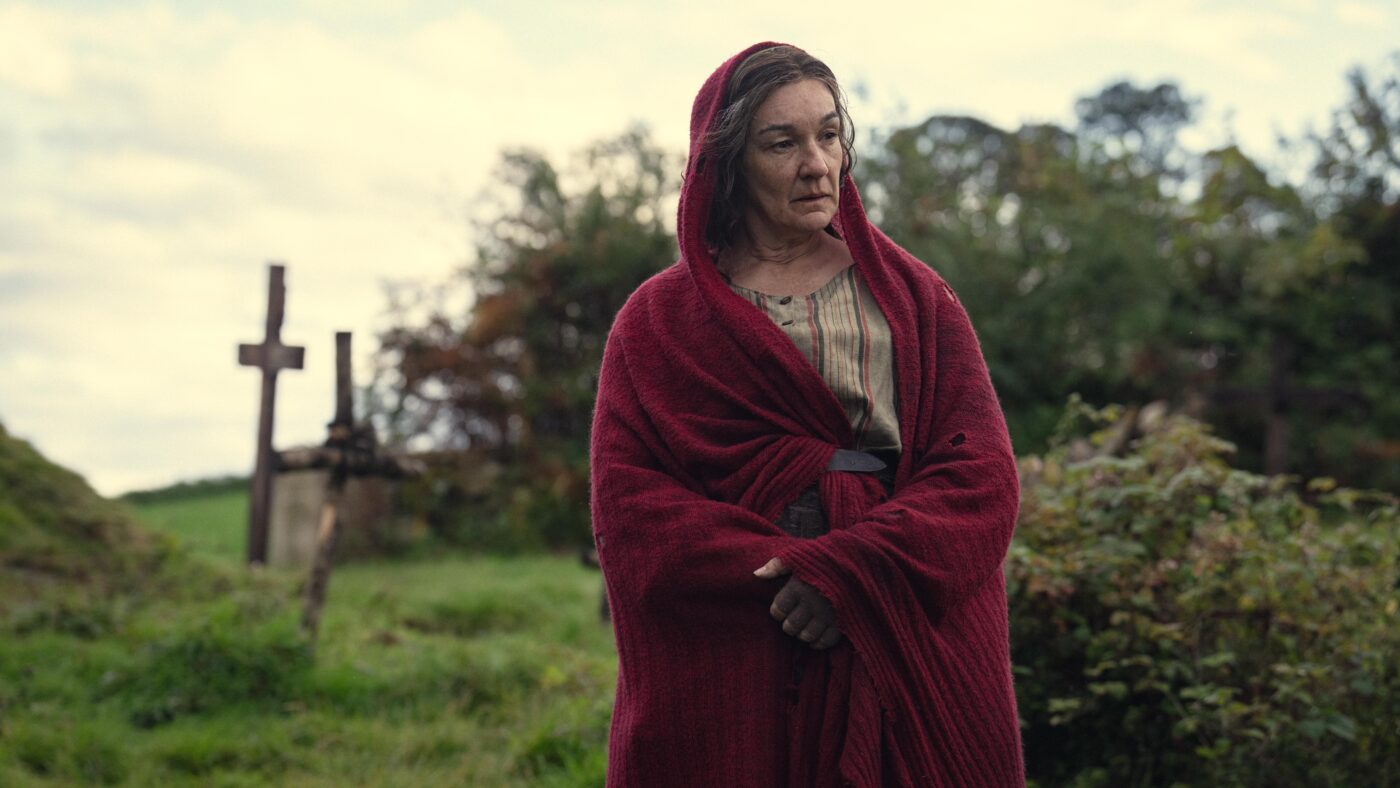
The series immediately impresses with its visual style: slow-motion entrances, explosions that transform the city into a film set, and dialogues with almost theatrical tones. Tom Shankland’s direction does not seek sobriety but impact, underpinned by a modern soundtrack that accompanies scenes meant to stick in the viewer’s mind. The effect is captivating, although this focus on gesture and spectacularity often leaves less room for characters to delve deeper. The audience gets involved, but sometimes with the feeling of witnessing more of a great show than an intimate drama. Knight chooses a different approach than Peaky Blinders: Guinnesses are not portrayed as corrupt or ruthless figures, but as people suspended between privilege and their weaknesses. Arthur embodies the rejection of duty, Edward the ambition to expand the empire, while Anne and Benjamin remain on the margins, victims of social conventions and their own demons, respectively.
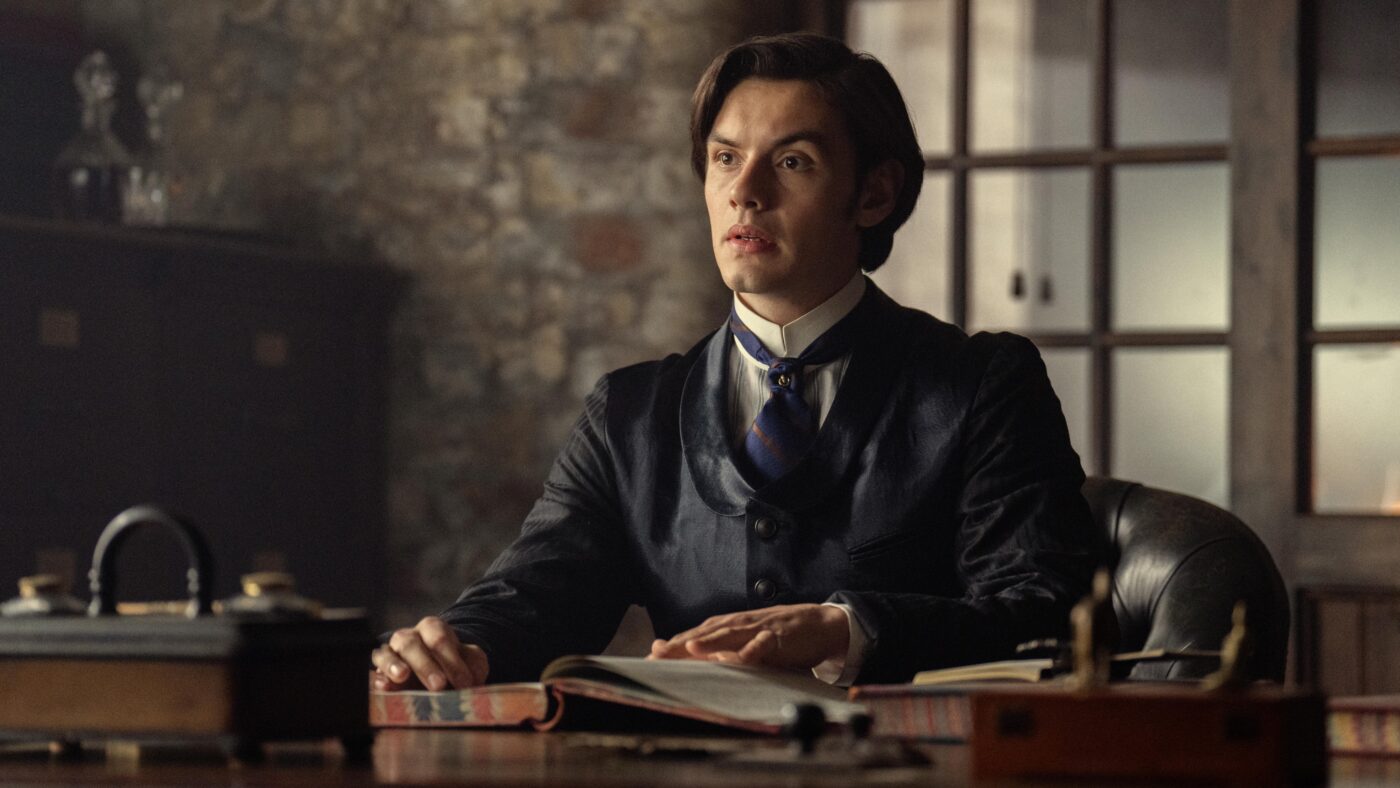
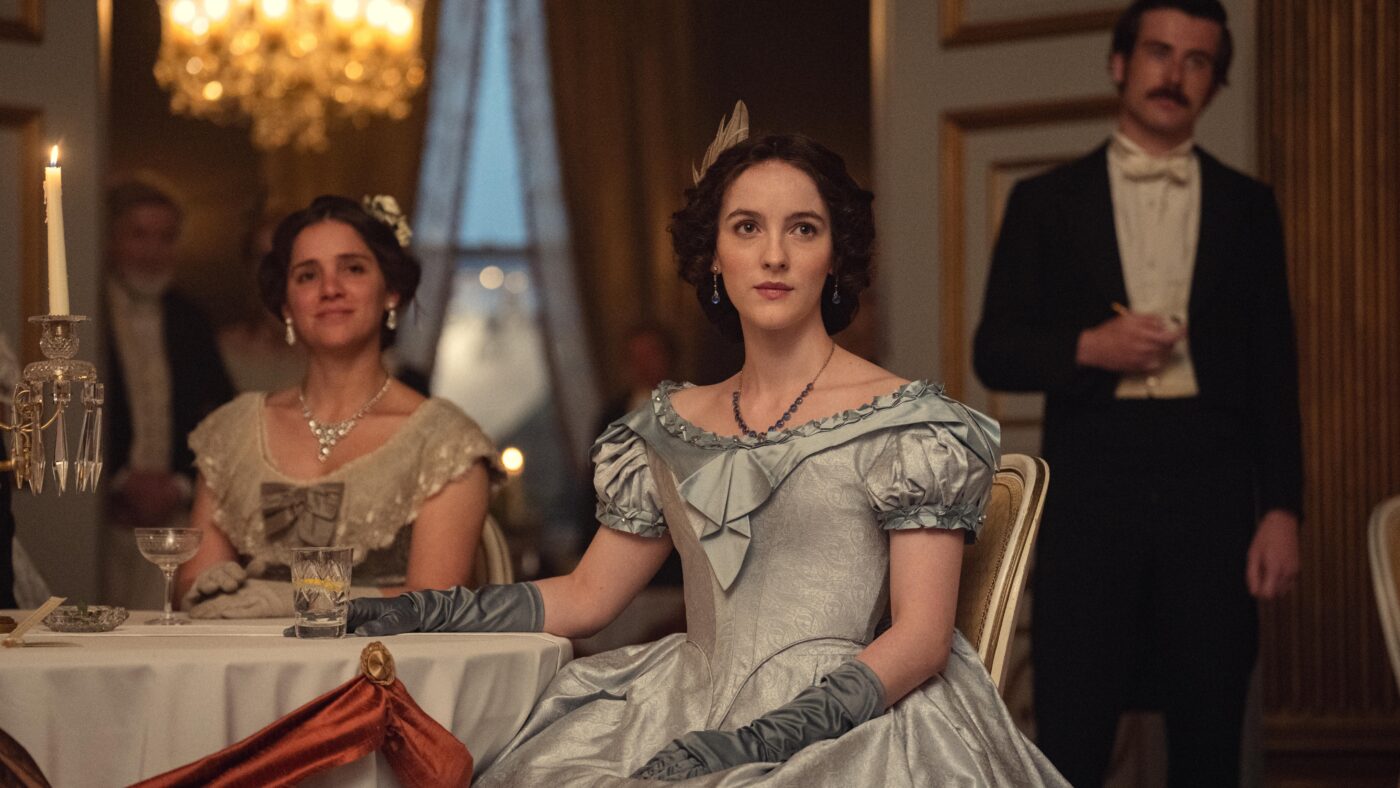
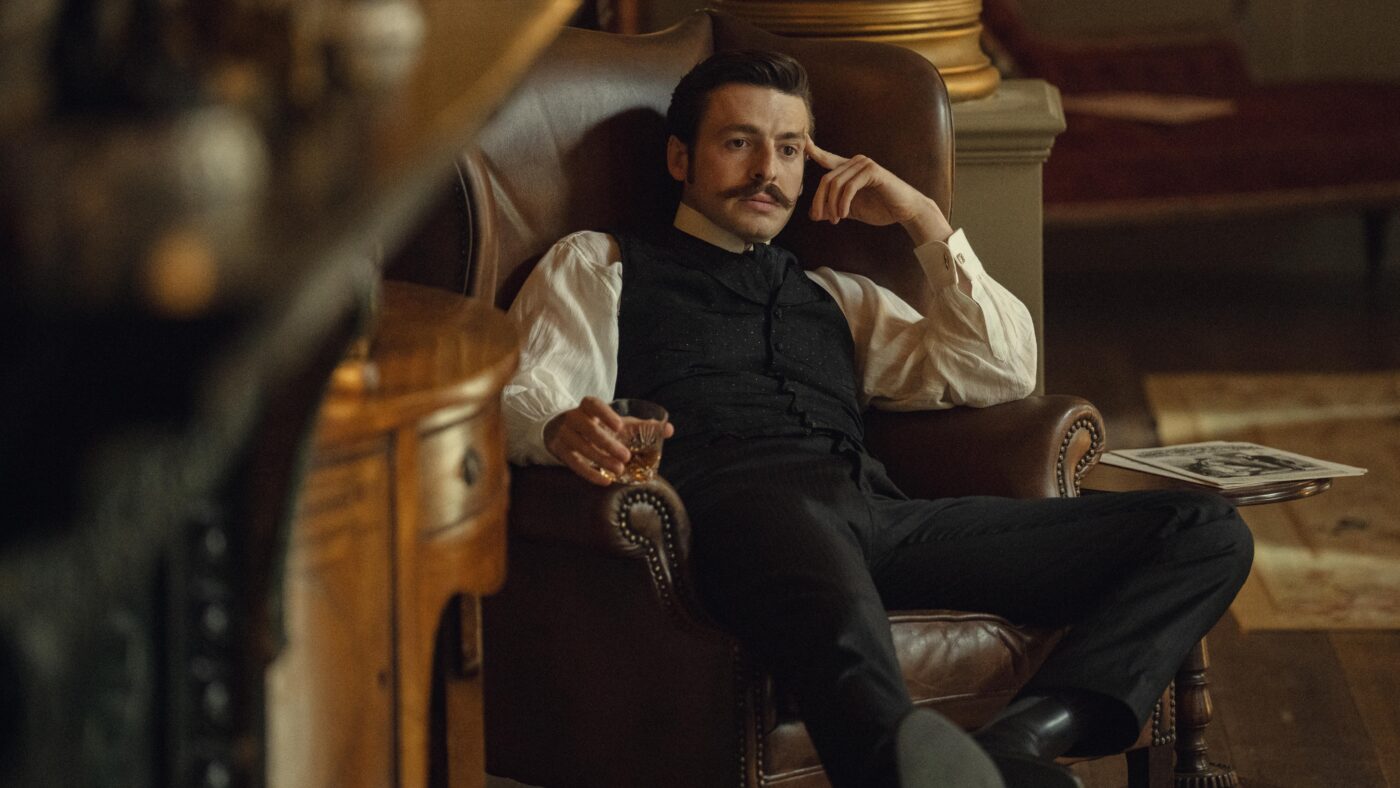
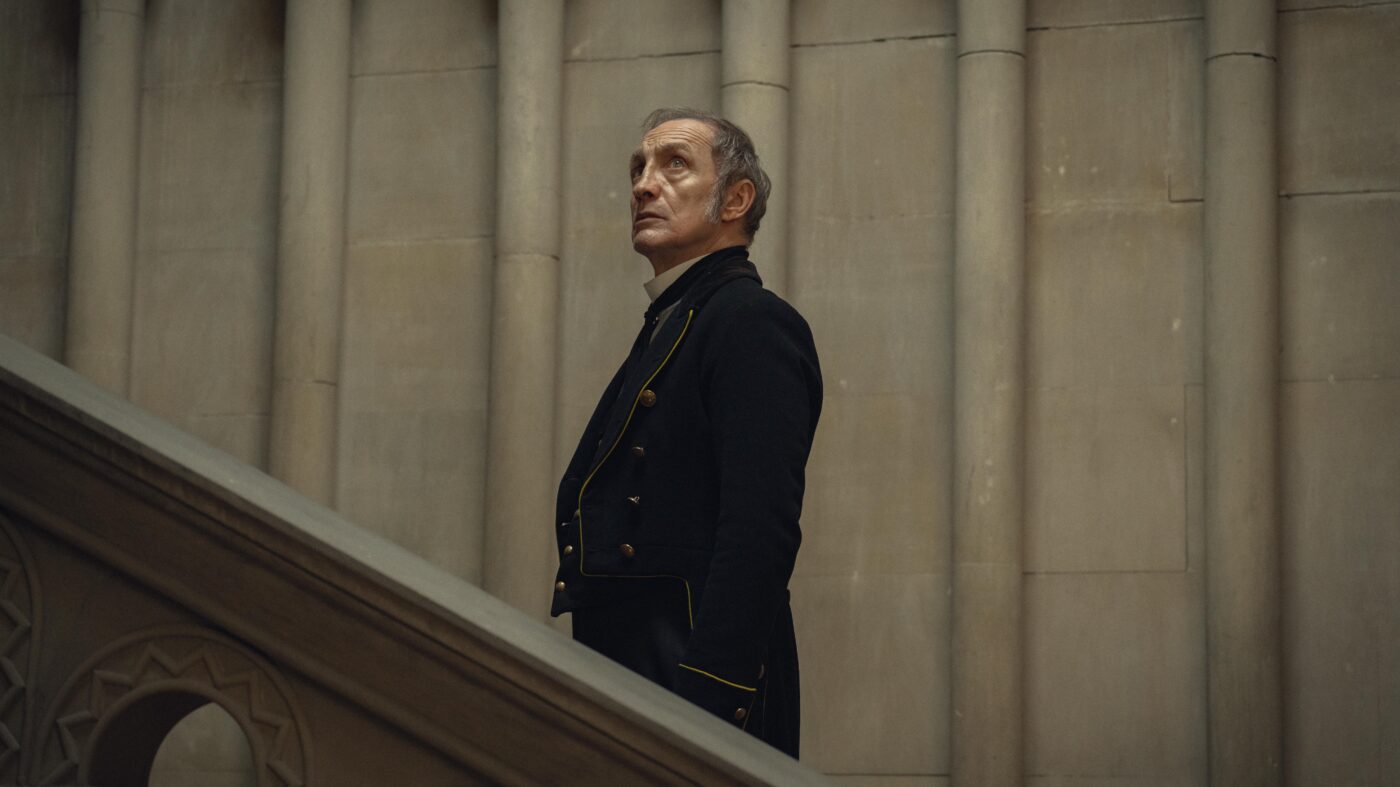
The series shows how the family tries to appear united and beneficent, but without ever hiding the distance that separates them from poor and revolting people. It is not a story of condemnation, but of contradictions, where empathy towards the protagonists coexists with the awareness of their privilege. The series starts with great strength, immediately presenting family conflicts, street protests, and choices destined to mark the future of the protagonists. As the episodes pass, however, the narrative loses compactness: Subplots multiply and some characters end up on the margins, with passages that appear more repetitive than necessary. The interpretations – James Norton in particular – and the ability of the series to intertwine personal events and historical tensions in an Ireland undergoing radical changes remain convincing. House of Guinness doesn’t have the impact of Peaky Blinders, but it still offers a solid tale for those drawn to family sagas and power struggles.
House of Guinness Series Review: The Last Words
House of Guinness takes the viewer into nineteenth-century Dublin, amidst funerals interrupted by protests, scandalous loves, and infighting over the legacy of a Brassicolous empire. Steven Knight chooses the path of great entertainment, favoring powerful images and theatrical moments at the expense of a more subtle study of the characters. The result is a series that seduces with rhythm and style, but which, in the second part, loses a bit of compactness, dispersed among too many subplots. The interpretations remain memorable, particularly that of James Norton, and the atmosphere of an Ireland crisscrossed by political and social ferment. Despite its limitations, the series manages to engage and restore the charm of a dynasty that marked an era. Those who loved Peaky Blinders will find many points in common, but House of Guinness manages to stand out: not a mere déjà vu, but a new family epic that makes the true (or partly fictionalized) story as fascinating as it is disturbing.
Cast: Joaquín Furriel, Natalia Verbeke, Carlos Santos, Miren Ibarguren
Created By: Álex Pina, Esther Martínez Lobato
Streaming Platform: Netflix
Filmyhype.com Ratings: 4/5 (four stars)