Hostage Netflix Series Review: Those Who Love Political Thrillers Cannot Miss the Series
Hostage Netflix Series Review: Hostage series, the more you follow it, the more you seem to look in the mirror, unfortunately or fortunately, it depends on your point of view. The political thriller miniseries created by Matt Charman is an exciting and intriguing journey through mysteries, plots, lies, and betrayals, and an aura of realism hovers that is at times truly disturbing. All for the benefit of Suranne Jones and Julie Delpy, two women, two leaders, different in everything yet united by uncertainty. The English have accustomed us to great miniseries thrillers. Bodyguard with Richard Madden, it had kept us glued to the screen with a mix of action, political tension, and personal entanglements. Broadchurch, instead, had shown how even a small provincial village could become the scene of an exciting and complex investigation. This is why I arrived on Netflix of Hostage, a miniseries in five episodes signed by Matt Charman (screenwriter de Bridge of Spies), seemed promising.
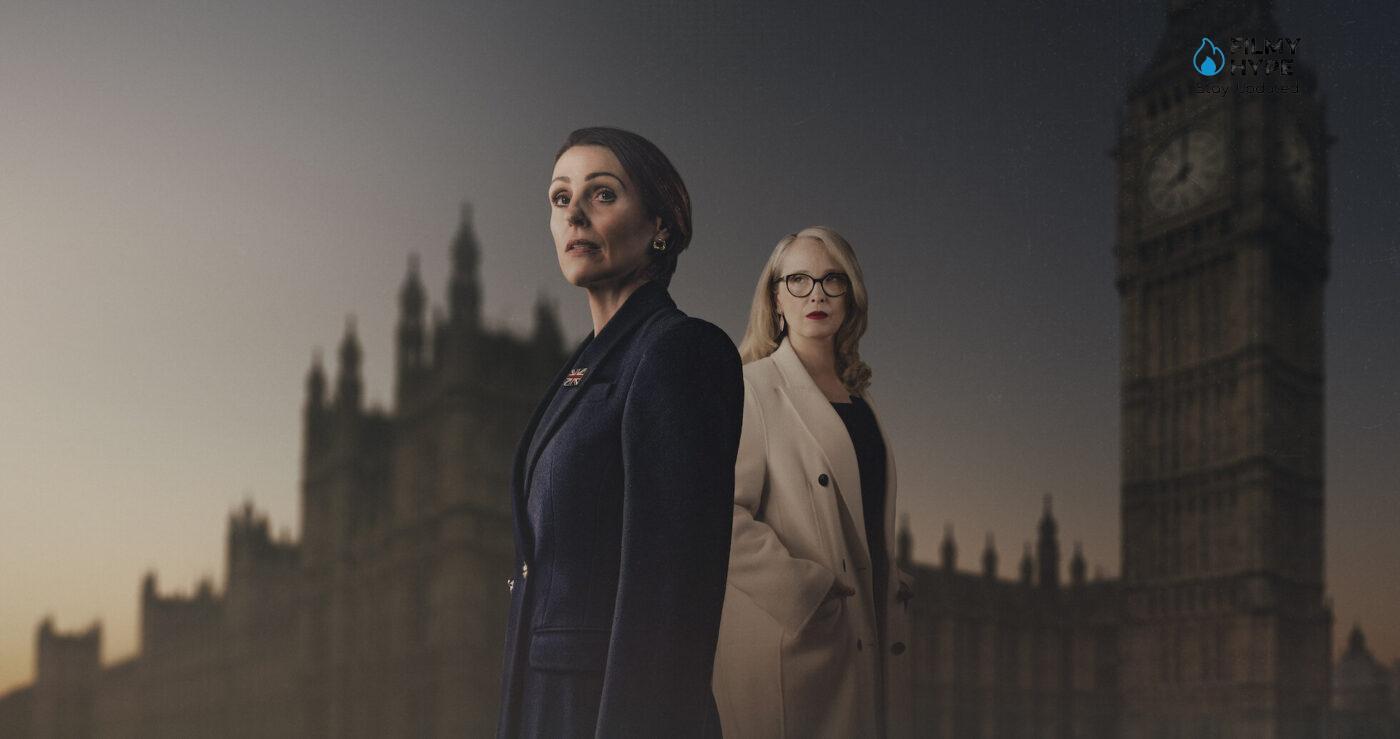
The underlying idea was intriguing: two women in power forced together to face an international crisis that threatens not only their careers, but also their families. On paper, a perfect mix between the institutional realism of The Crown, the political thrill of House of Cards, and the freshness of The Diplomat. In short, the expectation was that of a solid, modern, and feminine thriller, capable of talking about European politics and, at the same time, the human frailties behind the leaders. And indeed, Hostage starts on the right foot. But it’s a bit like getting on a high-speed train which, after a few kilometers, stops in the middle of nowhere. The idea was good, the beginning too, but the development soon leaves room for a series of narrative choices that make you regret what the series could have been.
Hostage Netflix Series Review: The Story Plot
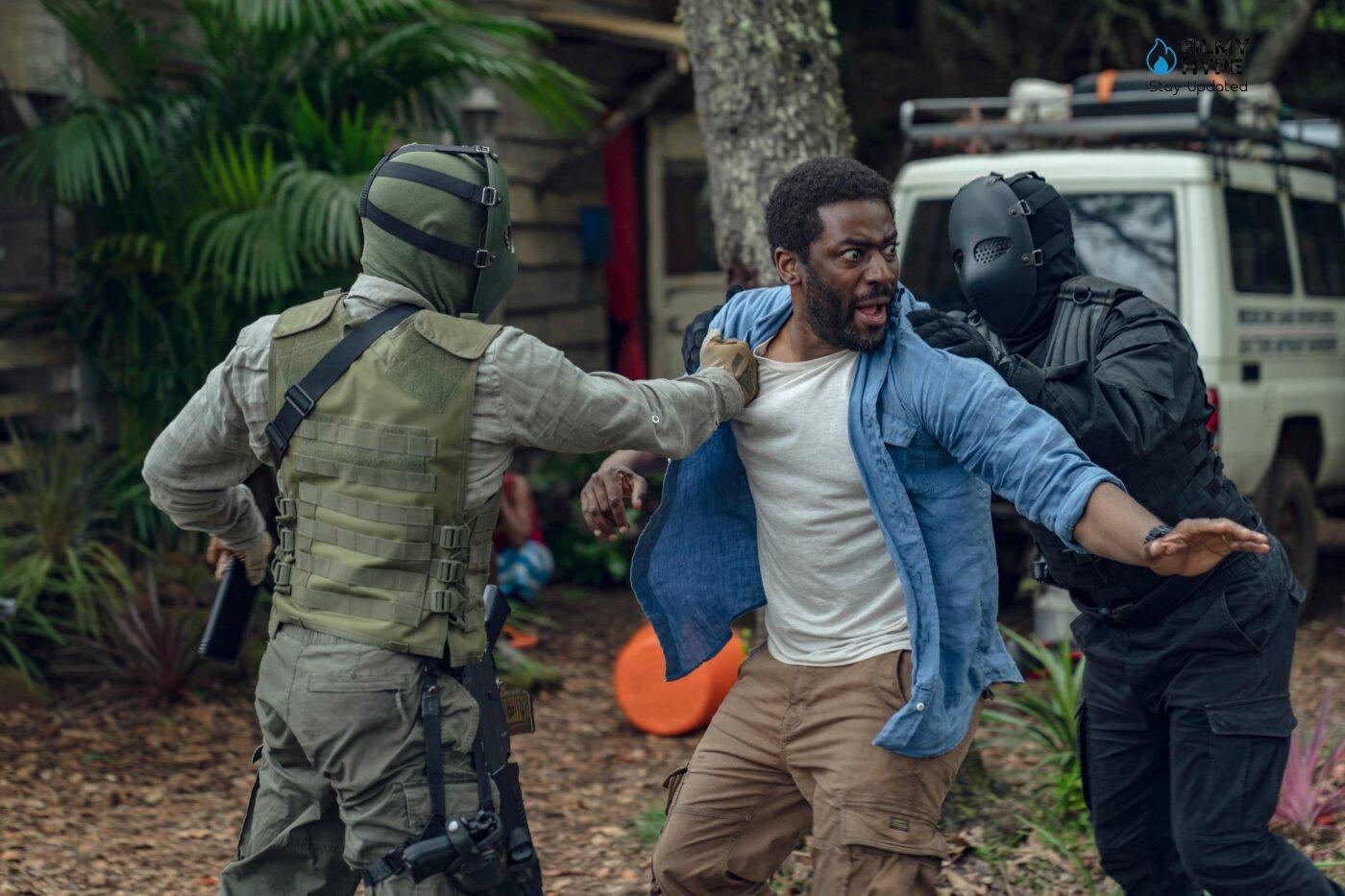
Hard times for the new British Prime Minister, Abigail Dalton (Suranne Jones). Elected a few months ago, she has launched an ambitious political program, which aims to reduce military spending in favor of new social policies, giving a decisive left-wing lash. It’s a shame, however, that he has to deal with an unprecedented crisis in the national health service, fierce opposition, and the need to strengthen political ties with France. The only problem is her transalpine counterpart: Vivienne Touissant (Julie Delpy). She, transformative and ambitious, has recently allied herself with the far right of her country, and rather than creating a real programmatic alliance between the two nations, she aims to blackmail and corner Abigail. While the two are busy exchanging proposals, pitfalls, and poisonous attacks during meetings, Abigail’s husband, Doctor Alex Anderson (Bashy), on a humanitarian mission to French Guiana, is kidnapped by a group of mysterious mercenaries. Shortly afterwards, the conditions for her release were announced: Abigail had to resign.
The French leader, rather than helping her, initially tries to squeeze her to her advantage, only to then find herself in difficulty from a political point of view. Within a short time, the two women will be forced to put aside rivalries and divisions, try to understand how to overcome a crisis together, behind which dark forces are moving, determined to make democracy a mere puppet in their hands. “Hostage” in 5 episodes, despite a somewhat hesitant start, which also requires a little too much from the suspension of disbelief, he quickly manages to get into gear, becoming a perfect example of how to create an exciting political thriller series. “Hostage,” she arms herself with absolutely perfect twists and above all with a writing that can give the two protagonists considerable caliber, complexity, and an ability to create empathy in the viewer. At the center are two women, called to deal with power and responsibility, with the media, which is a double-edged sword, and where, in the end, one always risks confusing one’s own gain with the good of the country.
Hostage Netflix Series Review and Analysis
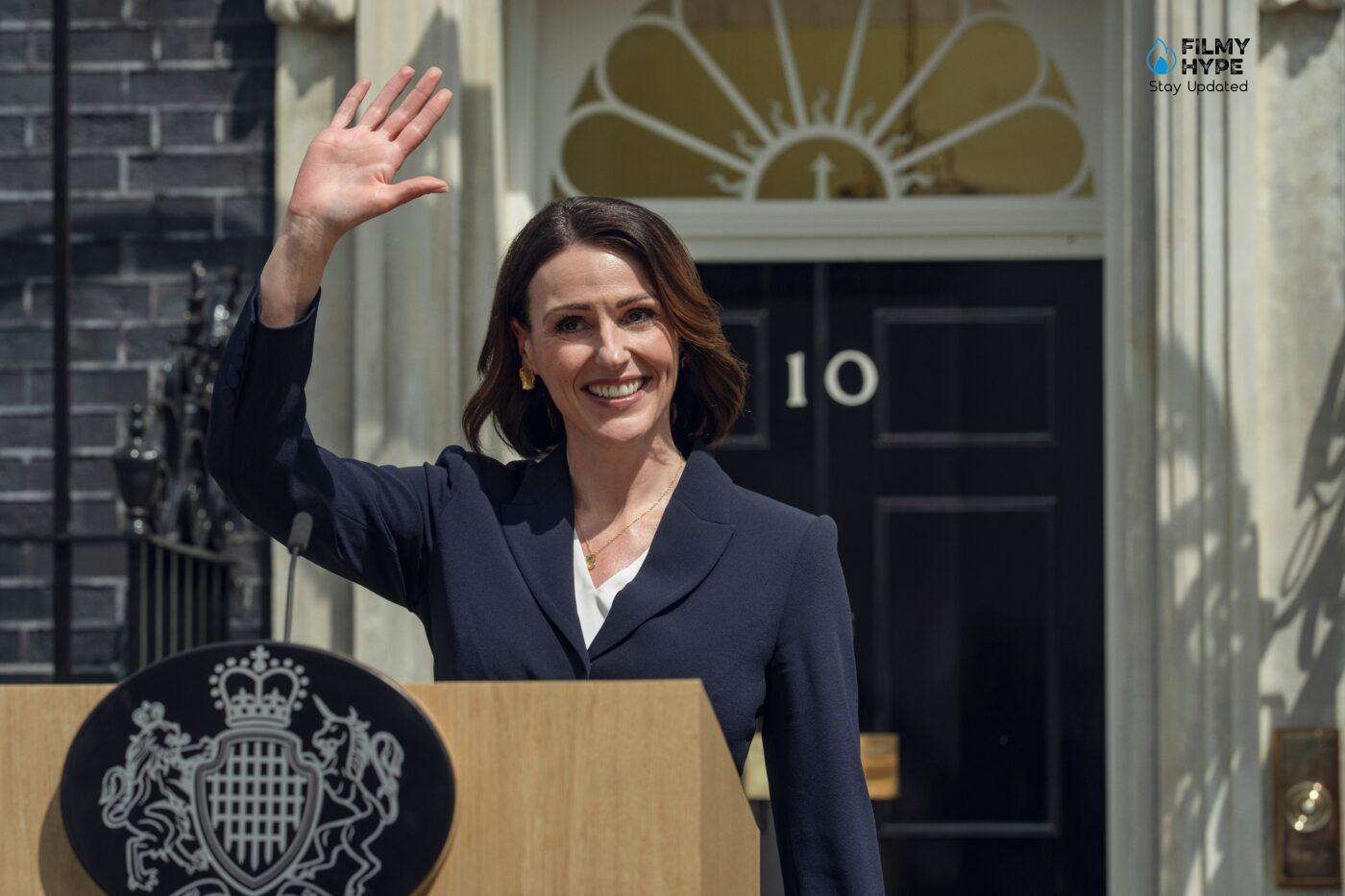
“Hostage” owes much to Suranne Jones, one of the most popular faces on the British small and big screens. The actress is perfect in outlining this liberal political leader, who believes in compromise, but is also adamant in defending her ideals, her position, with a complicated personal life, and who ultimately finds herself literally under siege. Idealist, sentimental behind appearances, sensitive, he must, however, finally go down the warpath and will prove capable of every subtlety, cunning, and adaptability which is counterbalanced by his alter ego. Julie Delpy is not even so covertly inspired by Marine Le Pen, just as Yvette Cooper and Angela Rayner seem to be the source of inspiration for the character of Abigail. Metallic, poisonous, cold, calculating, as we move forward, he actually discovers a much more complex personality, and here, too, credit must be given to the writing, which manages to give space to both. There are verbal clashes and dialogues of the highest level; we see them challenge each other and then agree on strategies, in a miniseries that reminds us how complex the political game is.
It goes without saying that “Hostage” is a series that tells us about the terrible state of health of democracy, besieged by a subversive and fascist right, by media without ethics and control, and by money. The miniseries has no problem addressing the theme of returning machismo. This turns out to be the great, true, underground enemy of two female leaders who, in times of difficulty, are clearly attacked as such and not simply as bearers of an idea or interest. The defects concern some inconsistencies in the plot, with an overly simplistic ending, and continuing to insist on the need to have more women in power, almost as if it were the recipe for saving democracy. A theory already disproved for decades, paradoxically right from the United Kingdom (Margaret Thatcher and Theresa May were not a magnificent example). Having said that, “Hostage” is certainly great news for fans of the genre, and not only that, but it is also proof that whenever it wants, Netflix still knows how to come up with surprises when it doesn’t go for algorithms, and that’s it.
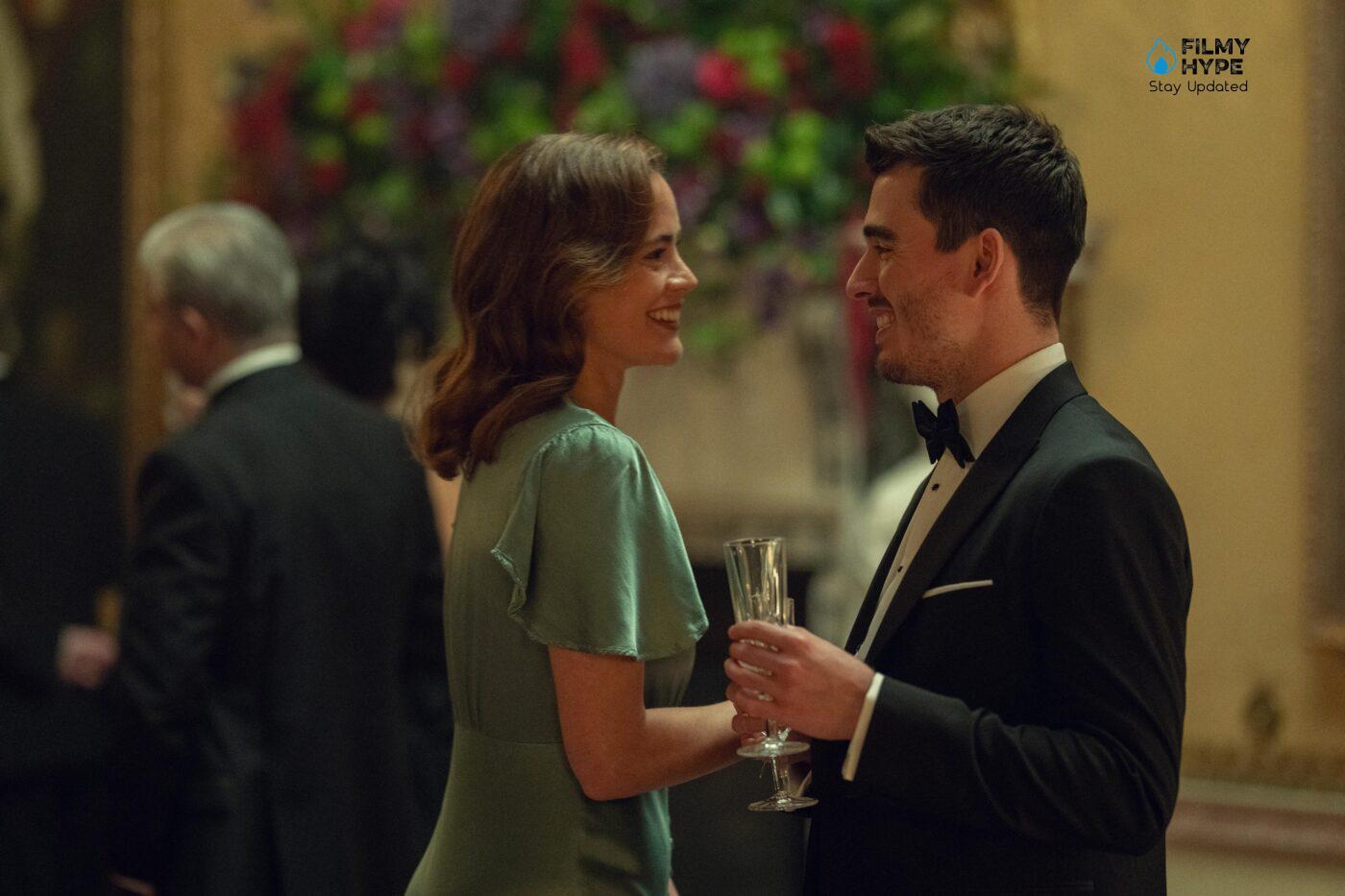
Visually, Hostage, he never really manages to impose himself. See The Diplomat, he knew how to play with international scenarios, institutional buildings, evocative panoramas, and mass scenes. Here, we find ourselves faced with a staging that always seems too small for the weight of history. The interiors appear personality-less, the action sequences are reduced to the bare bones, and the exteriors, almost absent, anonymous. The directions aim for the homework. A fixed camera in political dialogues, some aerial shots here and there, but without ever finding a stylistic twist that gives identity to the story. One wonders if he wasn’t there too a budget problem because in the moments in which the series should raise the pace, everything seems to be shot in a small way, with few essential extras and sets. Where Bodyguard he managed to make every chase and every explosion seem like an epochal event, here everything appears a bit on a smaller scale.
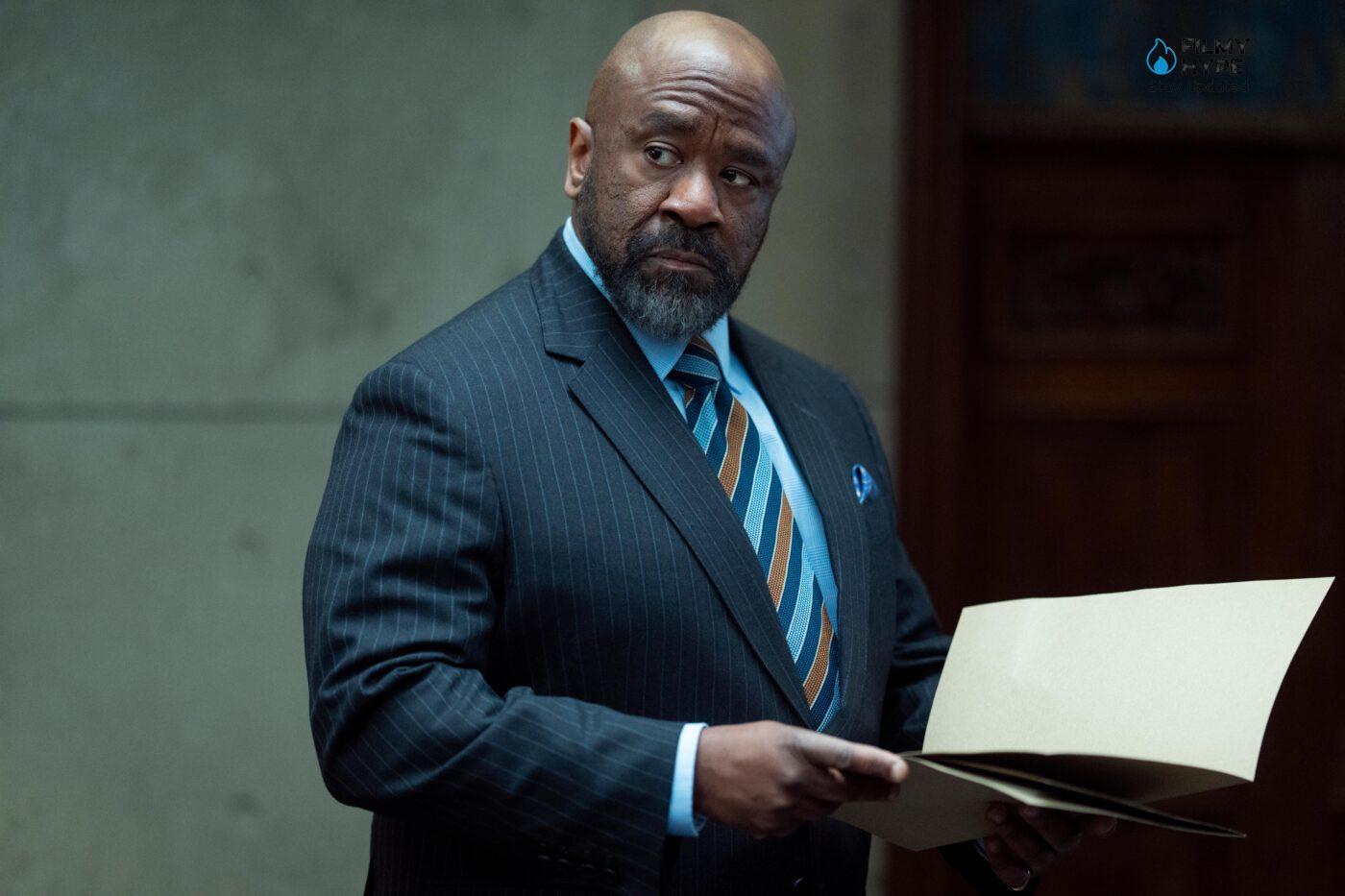
Luckily, the two protagonists are holding everything together: Suranne Jones and Julie Delpy. The first offers an intense and multifaceted performance, managing to make credible an idealistic but vulnerable leader, trying to stay calm as her personal world collapses. Julie Delpy, for her part, enjoys playing a glacial, ambitious French president. Almost caricatural, although close to certain figures of real politics, but still fascinating to look at. The problem is that the rest of the cast is left on the sidelines (unfortunately!). Dalton’s husband, played by Ashley Thomas, doesn’t go beyond being a doctor in distress, with no emotional overtones to make his kidnapping truly engaging. Political advisors, assistants, family members: all characters who enter the scene as extras with a precise narrative function, but without ever evolving or conquering the viewer. It’s a shame, because serious shows like The West Wing or, more recently, Borgen demonstrated how a good ensemble cast can enrich a political narrative. Here, however, Hostage chooses to bet everything on the two protagonists, leaving the rest as an indistinct background.
And we come to the heart of disappointment: writing. Matt Charman creates a plot that at the beginning seems to have all it takes to tell the fragility of democracy and the difficulties of women in power, but soon slips into the resynchronize more predictable that. The kidnapping becomes a telephone pretext to set the narrative machine in motion, while the coup d’état orchestrated by dissatisfied generals appears as a solution lazy and stereotypical, which adds nothing new to the panorama of political thriller. The inconsistencies accumulate: the suspicious death of a relative of the premier that is never investigated, political decisions that no real leader would make without consultations or consequences, and the total absence of law enforcement when they would be needed most. All elements that end up breaking the suspension of disbelief, leading the viewer to continually ask: but seriously? And when a series takes you out of the story to reflect on its flaws, the game is already lost. By comparison, too Designated Survivor, which was certainly not a masterpiece, managed to maintain a minimum of internal coherence, making its twists at least plausible in the context of the plot.
Hostage, instead, it seems more like a puzzle narrative in which some pieces were deliberately left out, with the hope that the viewer doesn’t notice. At the end of the five episodes, the strongest feeling is that of disappointment. Hostage had all the ingredients to become the new great political thriller Netflix’s European: a high-level cast, a current theme, and an international plot that spoke both about politics and feelings. Ma, the promise is not kept. The result is a miniseries that starts with a bang and ends as one soap. Who would like to have the panache of The Diplomat, may he never find an identity. This hints at important themes such as misogyny in politics, the fragility of democracy, and the eternal conflict between private life and public responsibility, without the courage to really delve into them. The protagonists do everything they can to handle the story, and some dialogues work, but it’s not enough. What remains is the feeling of a wasted opportunity. Hostage could have been a series of compelling, courageous, and modern. Instead, it is content with easy solutions, phoned-in twists, and narrative choices that do not do justice to the potential of the premise. It’s not a terrible series, but it’s a series that, precisely because of the talent and ideas available, leaves a bitter aftertaste. And perhaps, for today’s viewer, this is worse than failure: feeling taken a little Hostage, yes, but by mediocrity.
It’s one impossible choice, the one that both protagonists must perform. At the same time, in fact, even the French President, who could help Dalton recover her husband since he is in French territory, is blackmailed in turn by the kidnappers. Both risk compromising their future in politics and are called to choose between their professional and personal lives. A choice that becomes doubly difficult for a woman, as she is judged and put in the spotlight and magnifying glass twice, by the press and by public opinion. The two women, strong and determined, face a great dilemma as they try to lead their country and risk their lives firsthand. They are almost forced, by events and what people expect from them, into a ruthless rivalry: they will have to learn to collaborate for the good of the common foreign policy but also of the internal one. As often happens in this type of story, even a little predictably, it will be both victims of a conspiracy; on the other hand, in political thrillers, you always have to look at your own home rather than across the Channel. The choice to talk about a present-future in which climate change and the economic crisis have practically come to an end.
Julie Delpy doesn’t have much luck with Netflix. First with On the Verge – At the limit, his first series written and directed in the first person, after the success of the Before Trilogy by Richard Linklater, she had half convinced us to face the female maturity of a group of friends at 50. Now in Hostage, she tackles it – only as an actress – also on a political level, reminding us how for public figures the sphere between personal and professional is truly labile and doubly difficult to manage. There is a very interesting and revealing dialogue about it between the two when they talk about loneliness despite being constantly surrounded by someone, in their work as in their family life. Precisely for this reason, between one fairly predictable twist and another, a direction that tries to keep on a razor’s edge but does not always succeed, a series of situations emerge that we have already seen in as many genre titles. Not even the supporting cast manages to emerge – Corey Mylchreest, who is Matheo, Toussaint’s stepson, and Lucian Msamati, who is the trusted Kofi Adamako for Dalton – focusing almost exclusively on the stage presence of the two main characters.
Two actresses who have enough experience and charisma to do it, but who at the same time show their side in some situations and not others. They end up being Hostage Series not only of their voters but also to a history already seen. One of the most frustrating aspects of Hostage is its inability to take full advantage of the themes it evokes: the fragility of democracy, the exploitation of personal pain for political ends, systemic sexism in the public judgment of women in power. These are all interesting ideas, but rarely explored in depth with courage. The series seems to hint at complex issues and then immediately returns to the next twist. At a time when the public is asking fiction to engage with current events, Hostage prefers entertainment to analysis. Hostage is a series that entertains but doesn’t leave its mark. It has a good pace, a close-knit cast, and some successful narrative gimmicks, but suffers from rushed writing and dramatic construction that favors the surface. You look at it with pleasure, but not with enthusiasm. It is a missed opportunity to say something more incisive about power, female leadership, and the compromises that lurk in contemporary politics.
Hostage Netflix Series Review: The Last Words
The TV series created by Matt Charman (writer of Bridge of Spies by Steven Spielberg) looks at the other shows of its genre without innovating; however, it entertains and proposes a reflection on the current socio-political climate and possible rivalries, on the isolation of women in power, and on the issues of responsibility and moral compromises. The story is intense, and at times manages to entertain; it is well interpreted and visually refined. Hostage, for these reasons, combines reflection and entertainment while also being able to count on two excellent protagonists who play complex characters, but also authentically human and far from any cliché regarding women in power. She has the merit of having been able to scrutinize, above all, how the pressure suffered by women occurs when they find themselves at the top of the institutions. Particularly here, about two women who, beyond the less interesting performances of the secondary actors, give us a good performance while they are on the battlefield.
Cast: Suranne Jones, Julie Delpy, Ashley Thomas, Lucian Msamati, Isobel Akuwudike, Corey Mylchreest, Jehnny Beth
Directed: Isabelle Sieb, Amy Neil
Streaming Platform: Netflix
Filmyhype.com Ratings: 3/5 (three stars)