
Harlan Coben’s ‘Lazarus Season 1’ Review: Shuffling Cards with Each Episode Until a Jaw-Dropping Ending?
Harlan Coben’s ‘Lazarus Season 1’ Review: From 22 October, all 6 episodes are available on Prime Video. Lazarus is a British TV series created by American writer Harlan Coben and English screenwriter Danny Brocklehurst, who had already worked together on the Netflix series One Deception Too Many. The collaboration between Coben and Netflix, in fact, has given rise to several successful series, such as Caught, Missing You, Gone for Good, The Stranger, and more. On Prime, however, Coben’s only precedent is teen mystery Shelter, cancelled after just one season. Perhaps to avoid new cancellations, Coben has therefore thought of a limited series, which ends within the space of only one season. But we’re pretty sure that Lazarus will be significantly more successful, thanks to a story that mixes genres such as crime, thriller, and horror, providing compelling and satisfying entertainment that is clearly above average. To understand more, let’s continue this review with the spoiler-free summary of the plot.
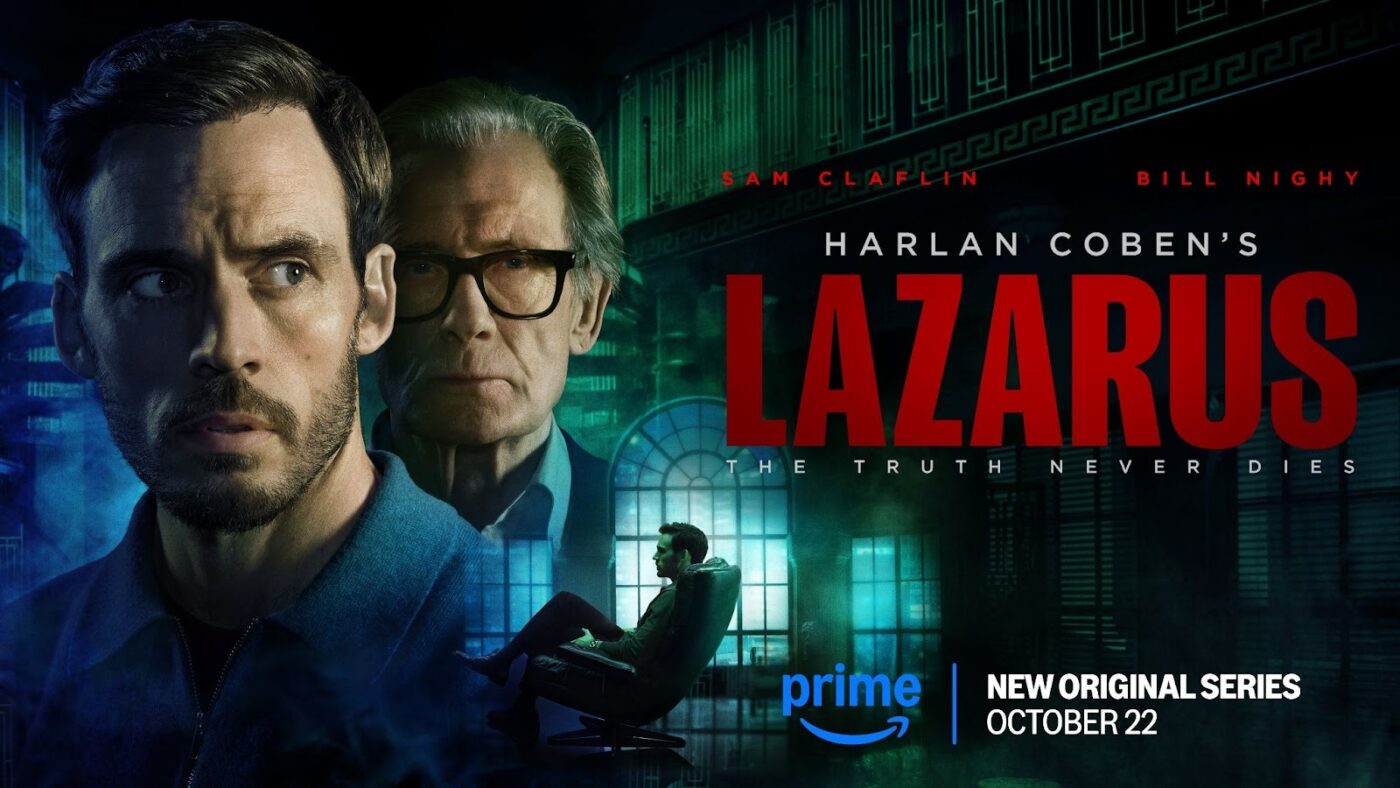
With Lazarus, Harlan Coben attempts to revive his own narrative universe, leaving the enclosure of literary adaptations for the first time. In fact, it is not a transposition from one of his novels, but an original project created for Prime Video, written by Danny Brocklehurst (Coben’s historical collaborator) and supervised by the author himself as co-creator and executive producer. The intent is clear: to push the brand “Coben” beyond the limits of traditional crime fiction, introducing a supernatural component into a tale that weaves together family traumas, guilt, and unresolved investigations. On paper, an ambitious experiment. On the screen, a series that struggles to find balance, divided between ghost story atmospheres and psychological thriller mechanics.
Lazarus Season 1 Review: The Story Plot
The prologue of the series dates back to 1998, when the young Joel (Sam Claflin) returns home after his high school dance to find his twin sister Sutton (Eloise Little) murdered; soon after, he goes to report the tragedy to their father, psychologist John Lazarus (Bill Nighy). Over twenty-five years later, Joel, who has never forgotten that trauma, became a forensic psychiatrist. One day, he goes to a judicial psychiatric hospital to talk to a detained patient, who tells him to talk to God and that God promised to make Joel suffer. When the visit ends, Joel receives a phone call from his other sister Jenna (Alexandra Roach), who tells him that their father, whom Joel refused a call shortly before, has just committed suicide. After many years Joel then decides to return to the city where he grew up and where he finds some old acquaintances, in addition to Jenna, such as his friend Seth (David Fynn), who has become a policeman, his ex-wife Bella (Karla Crome), his father’s secretary Margot (Amanda Root) and detective Alison Brown (Kate Ashfield), who is Seth’s boss.

That evening, after confessing to his friend that he doesn’t believe his father committed suicide, Joel goes to his father’s office to look for some clues, when a woman named Cassandra (Sianad Gregory) bursts in and lies down on the sofa and starts talking about his nightmares and his problems with his boyfriend. He tries to stop her, pointing out that he is the son of Doctor L, whom the woman is looking for, but she gets by, and he decides to listen to her until she suddenly disappears. Joel wants to see clearly and, sifting through the archive and investigating on his own, discovers that Cassandra was a client of John’s 25 years earlier, until his death by murder. Joel then realizes that he has spoken to a ghost, and the spirit of another deceased person he sees later, namely his father, also confirms this. Joel then understands that he will have to question all his professional rationality, to try to understand who killed his father and sister. But even though his best friend is a cop, it’s not easy to explain to him that he discovered certain clues by talking to the dead…
The story revolves around Joel “Laz” Lazarus (Sam Claflin), a successful psychiatrist, son of a famous therapist, Jonathan Lazarus (Bill Nighy). When his father takes his own life, leaving behind a mysterious note with the phrase “it’s not over” and an indecipherable drawing, Laz returns to the family home to grieve. But the event reopens an even deeper wound: twenty-five years earlier, her twin sister Sutton had been killed in circumstances that were never clarified. As the man tries to make sense of that past, he begins to see and hear his father’s patients, all long dead, calling him by his parents’ name and seeming to want to communicate something to him. These apparitions –which could be ghosts or projections of the subconscious – become the key to connecting a series of unsolved murders, forcing Laz to question his own sanity.
Lazarus Season 1 Review and Analysis
The first installments of Lazarus are striking for the visual atmosphere: a milky filter, fragmented editing, and constant use of flashbacks create an almost dreamlike effect, as if Laz’s memories were literally dissolving on the screen. The direction amplifies the sense of disorientation, mixing present and past without warning, while the soundtrack alternates distorted sounds and sudden silences. However, this stylistic approach is not supported by a script that is up to par. The visions – initially intriguing – multiply until they become predictable; the revelations are explained two or three times, and the supernatural, instead of generating restlessness, becomes a shortcut to solving the narrative knots. Coben and Brocklehurst seem to want to suggest that pain can generate its own ghosts, but the series can never decide whether to treat them as psychological metaphors or as real presences.
The cast of Lazarus is one of its strengths, but also the main victim of the material. Sam Claflin, in the role of Laz, offers a physical, nervous performance, capable of conveying bewilderment and obsession. His every gesture tells of a man consumed by trauma and the desire for redemption, but forced to endlessly repeat the same scenes of grief and discovery. Bill Nighy, in the role of the father, appears in flashback and in ghostly form: elegant, enigmatic, but relegated to a decorative role. The potentially explosive chemistry between the two actors remains almost unspoken. Surrounding them are a host of secondary characters –including the policewoman friend, the sister, and the assistant – built more as narrative functions than as figures with depth.
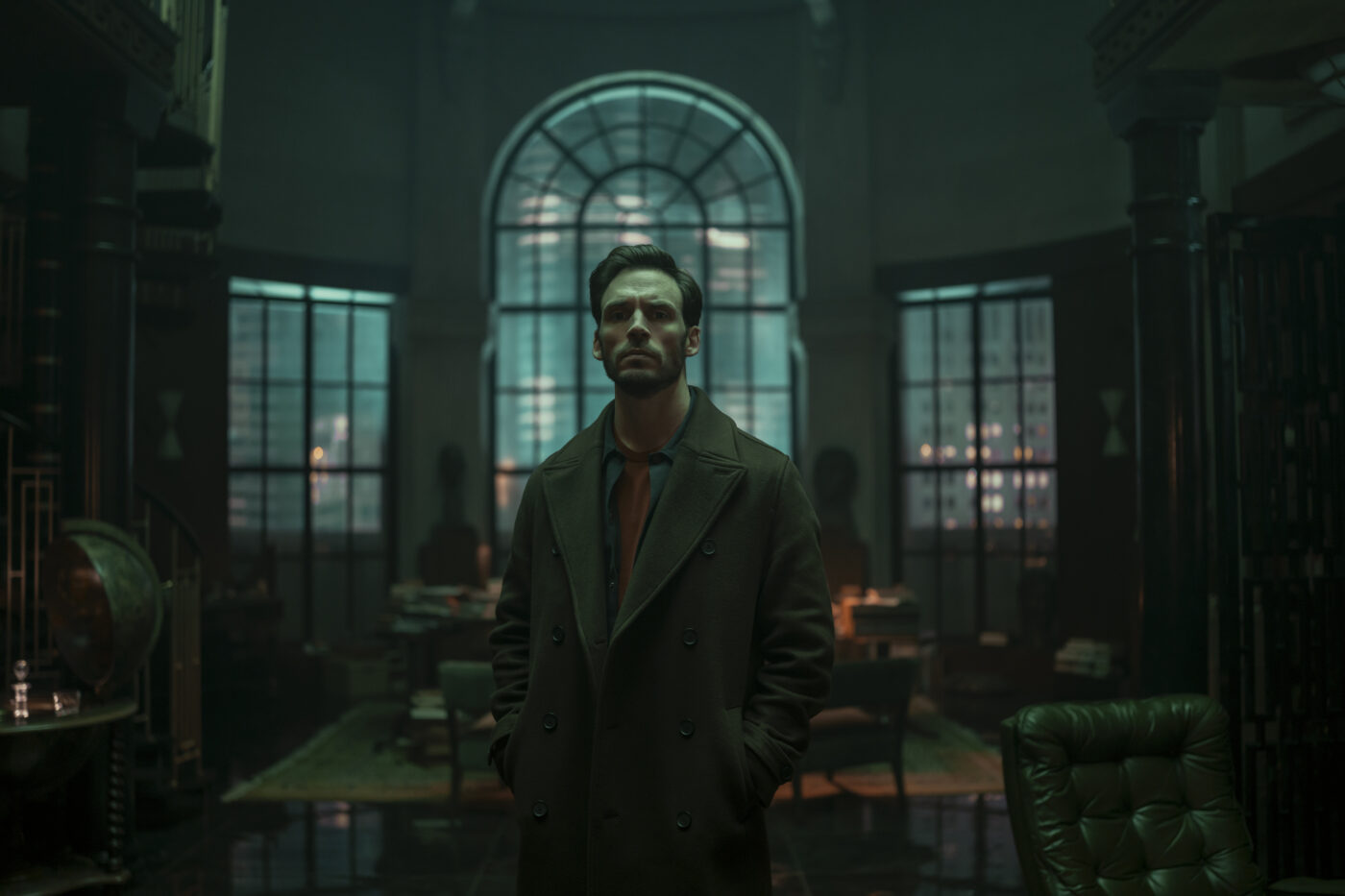
As often happens in Coben products, the structure is that of the puzzle thriller, in which each episode adds a piece of truth. But here the mechanism jams: the series appears repetitive and overloaded, with dialogue explaining what the viewer has already seen and flashbacks chasing each other without adding new information. Coincidences multiply, logic gives way to melodrama, and the supernatural component ends up weakening the tension rather than increasing it. There is a moment, near the middle of the season, when Lazarus even seems to forget the main plot to focus on inner monologues that lead nowhere: it is in these passages that the series reveals its weakest nature, that of an experiment lacking a solid emotional center.
Yet, despite his inconsistencies, Lazarus manages to exert a certain perverse fascination. The staging, often over the top, and the excess of twists make it one of those products that one looks at with a mixture of disbelief and curiosity. Just like Coben’s best (and worst) works, the series ends up becoming “embarrassingly compelling”: the more the plot loses meaning, the more the desire to understand where it is going grows. It’s a type of entertainment that doesn’t aim for credibility, but for pure serial instinct: Lazarus knows it’s exaggerated, and perhaps this is also why, after all, it lets itself be watched. The title recalls the biblical figure of Lazarus, the man brought back to life by Jesus. In this series, however, the resurrection takes on a different meaning: it is not a miracle, but a curse.
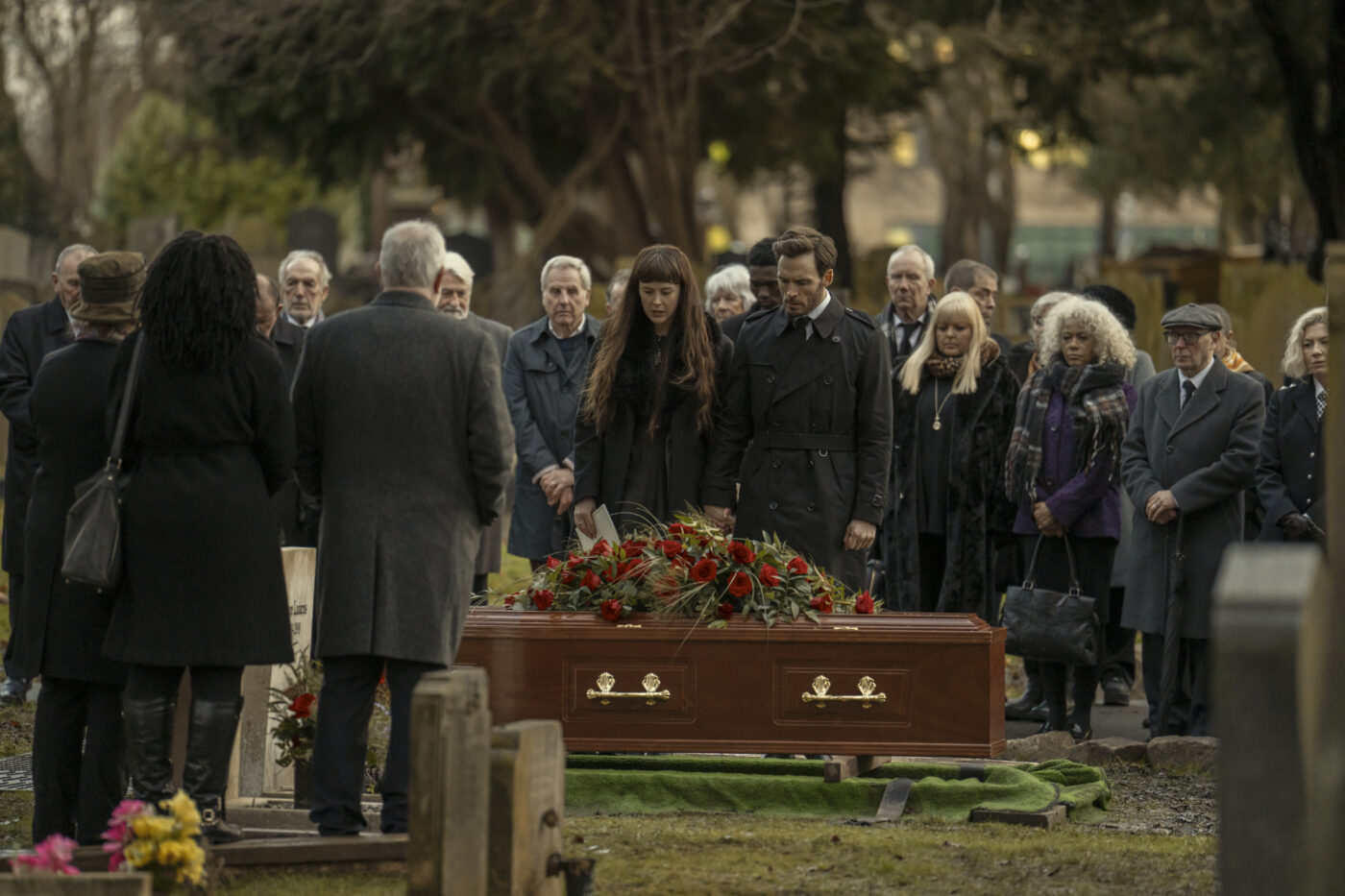
Laz awakens the ghosts of the past, but instead of freeing himself from them, he is swallowed up by them. It’s as if every attempt to “resurrect” family memories only brings more death. In this sense, Lazarus is a tale about hereditary guilt and the impossibility of really starting again, a classic theme of the author, transformed into a lucid but unresolved nightmare. In the end, Lazarus almost seems like an unintended metaphor for Harlan Coben’s career: prolific, recognizable, but now trapped in its own mechanisms. The attempt to innovate with the supernatural proves unsuccessful, and what remains is a visually elegant but narratively empty series, where even the best actors seem to move like shadows in a space that is too large and too cold. The resurrection, this does not happen: Lazarus remains a fascinating experiment on paper and tired on the screen.
Lazarus is an almost miraculous series, which, like the evangelical character from which it takes its name, rises from the world of the dead and walks in amazement with the audience at every step. Six compelling episodes along which clues, traps, and deceptions are scattered, and when it seems like we have reached the truth, we are caught off guard again and again, layer after layer. The alternation of darkness and light, in scenes as well as in relationships and dialogues between characters, best conveys the feeling of confusion and despair that seizes the protagonist whenever he believes he has found the culprit and finds himself forced to dig further. Coben and Brocklehurst bring life and death to a story that plays with genres and viewers, shuffling cards with each episode until a jaw-dropping ending. And which confirms, if there were still any need, that British series that focus on thrills practically always win. And this time, Prime’s bet on Coben is also a winner.

Lazarus Season 1 Review: The Last Words
Lazarus is a Prime Video miniseries co-created by Harlan Coben and Danny Brocklehurst, starring Sam Claflin and Bill Nighy. It mixes thriller and supernatural into a tale of guilt and hallucination, but the confusing plot, contrived dialogue, and uneven pacing scuttle the starting idea. Suggestive and acted with commitment, but more chaotic than engaging. Ultimately, Lazarus it’s a compelling journey for those who love family mysteries with a paranormal twist. It doesn’t reach the top of Coben’s best works like The Stranger or Safe, but it offers a dose of suspense and atmosphere that makes for compulsive viewing. Consisting of only 6 episodes, the series is not too demanding, but can also be viewed in a single day.
Cast: Sam Claflin, Bill Nighy, Alexandra Roach, David Fynn, John Bradley
Directed: Andy de Emmony, Joss Agnew, Rebecca Gatward
Streaming Platform: Prime Video
Filmyhype.com Ratings: 3.5/5 (three and a half stars)