Death by Lightning Series Review: A Fragile Balance Between Satire and Tragedy!
Death by Lightning is a forgotten American story. The Netflix miniseries, available from November 6th, retraces (obviously in a fictionalized way) the election and presidency of James A. Garfield, the 20th president of the United States, and the events leading up to his murder by Charles J. Guiteau, an exalted admirer of his, who ended up shooting him. We are in 1881, the year in which Garfield (played by Michael Shannon) is surprisingly named President of the United States. Garfield is a man of impeccable moral judgment, a preacher during the Civil War, intelligent and humble, who comes to power in a completely casual way. His charisma is admired by all, and he himself does his utmost to try to change corrupt America. His ideas also attract dangerous people, such as Guiteau (Matthew Macfadyen), a fanatic who believes he has a great role in this age of transformation. His ideas border on madness, and when he realizes that Garfield does not recognize his ambitions, Guiteau will go from being his most passionate admirer to a ruthless killer.
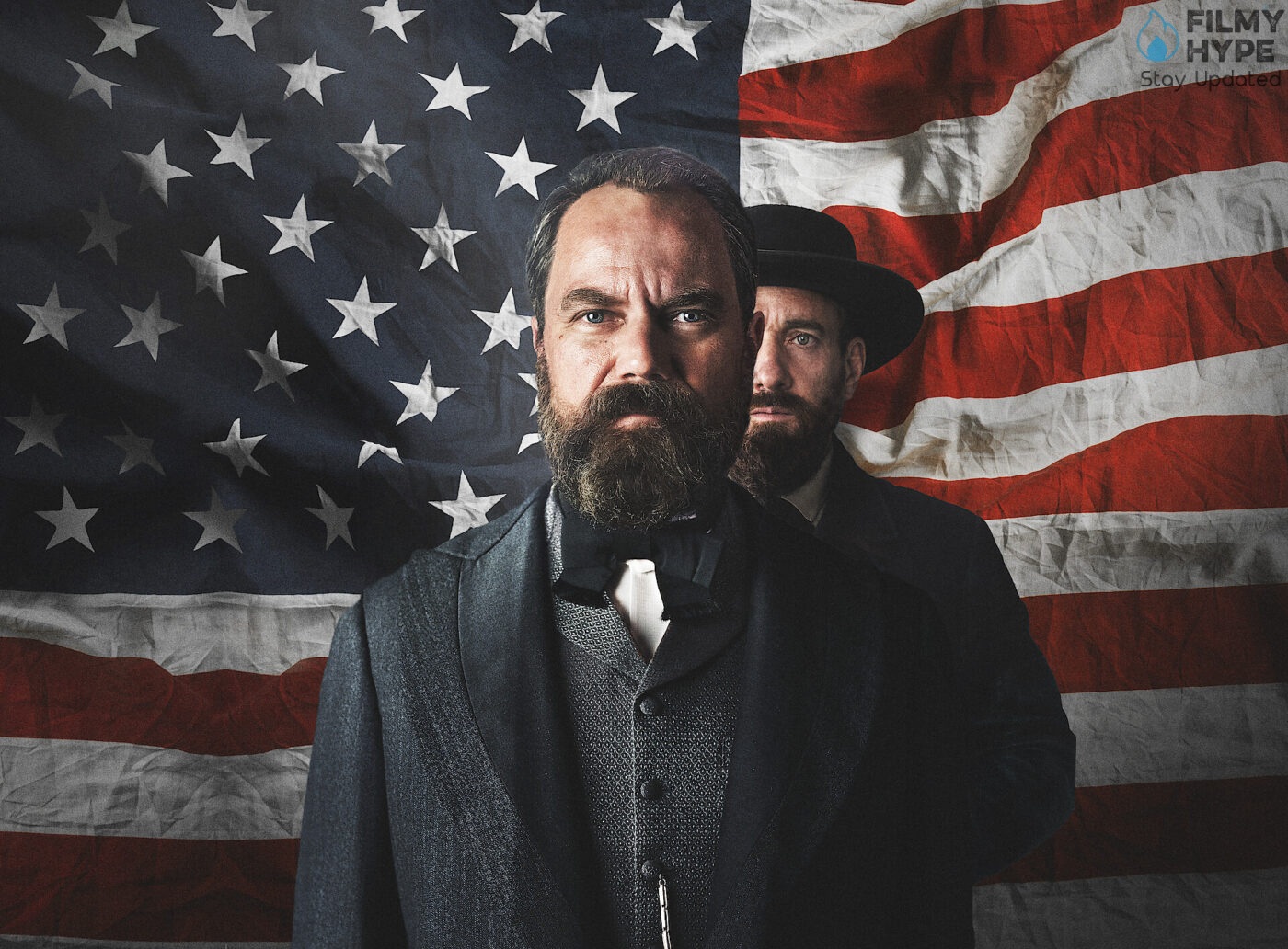
With Death by Lightning, Netflix brings to light one of the most bizarre and tragic episodes in American history: the assassination of President James Garfield in 1881 at the hands of Charles Guiteau. The series, based on Candice Millard’s essay Destiny of the Republic, is a work that combines historical reconstruction and psychological study, returning a fragmented, corrupt America full of contradictions. In the story created by Mike Makowsky and directed by Matt Ross, the fate of the two men –the idealistic politician Garfield and the failed fanatic Guiteau – is intertwined until an epilogue that seems written more by madness than by logic. Taken from the historical essay Destiny of the Republic: A Tale of Madness, Medicine and the Murder of a President of the writer and historian Candice Millard, the series signed by Mike Makowsky and directed by Matt Ross (with the veterans’ production of Game of Thrones, David Benioff and UNOBTRUSIVE. Weiss) turns a forgotten story into a vibrant and surprisingly timely drama.
Death by Lightning Series Review: The Story Plot
Based on the book Destiny of the Republic by Candice Millard, Death by Lightning it’s a crazy journey into an American story forgotten by most people. Even by the American people themselves. The tenure of James A. Garfield was short but intense, remaining in office from March 4 to September 19, 1881. His end is equally absurd, but it also opens a case on social conditions of the time: There has long been debate about whether Garfield could have survived the injuries from the shooting if only doctors had the right hygienic conditions, knowledge, techniques, and equipment available today. Death by Lightning it’s also a story that reflects today’s society, with a sharp focus on politics – from the intrigues of power to alliances, the men who hold control and move the pawns behind the scenes.
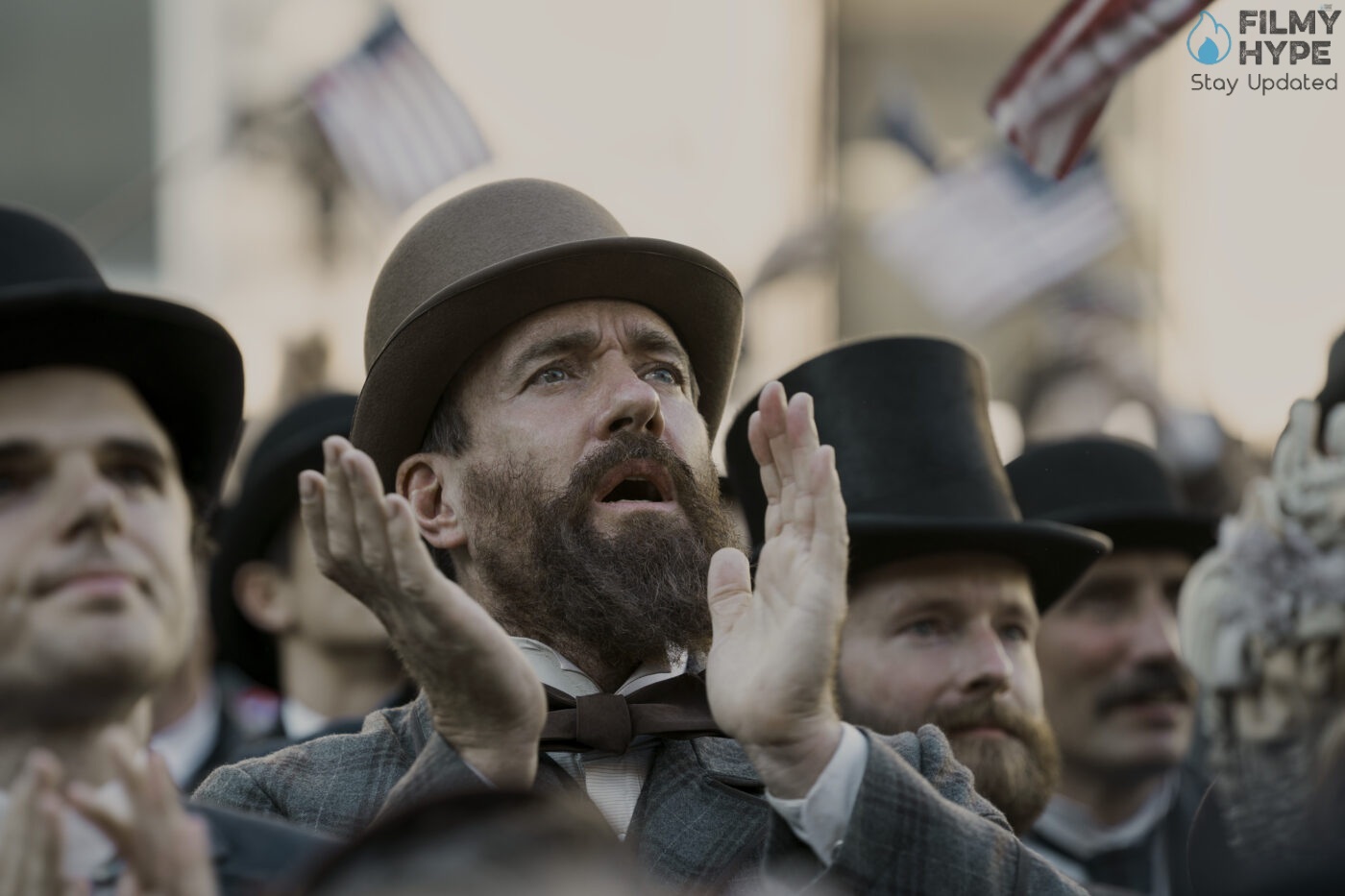
Writing puts itself at the service of the story and its protagonists, exceptional in their respective roles. Michael Shannon is a President/hero, who fights against injustices and does not know that he is frowned upon by his subordinates. Garfield has a political agenda opposite to that of the American elite, as it promotes civil rights and equality among social classes. However, Shannon’s interpretation is often overshadowed by the stage presence of Matthew Macfadyen, who proves to have matured more as an actor, especially in the roles of loser/outsider. Macfayden is perfect in any scene; gestures, facial expressions, and all body language accompany his theatrical performance, and so he manages to best build an extroverted character, on the border between genius and madness. A note of merit also to Nick Offerman as Vice President Chester A. Arthur: histrionic and ruthless, he is at his best in scenes where he shows his contempt for the inept Guiteau.
Death by Lightning Series Review and Analysis
Matthew Macfadyen confirms that he is one of the most versatile actors of his generation. After Succession, the British actor brings an even more pathetic and disturbing character to the screen: Charles Guiteau, swindler, failed preacher, and vanity killer. Macfadyen does not offer a caricature, but a disturbing and human portrait of desperation. Every gesture – the pulled smile, the nervous laughter, the blank gaze – gives back the image of a man devoured by the need to be seen. The series finds its sick heart in him, so much so that every time he disappears from the screen, he is missed. Next to Macfadyen, Michael Shannon plays James Garfield with the measure and melancholy typical of great tragic heroes. His Garfield is a man of principles, a president who tries to cleanse politics of corruption, but who is overwhelmed by a system bigger than himself.
Shannon offers a necessary counterpoint to Guiteau’s madness: where one is excess, the other is silence; where one seeks fame, the other seeks justice. However, the script doesn’t always manage to give his character the space he deserves, sacrificing him in favor of the most spectacular and disturbing part of the story. Death by Lightning is not only the story of an assassination, but also a corrosive portrait of American power. The series shows a political system in which corruption and cronyism dominate, and in which even the purest ideals are overwhelmed by compromise. The supporting characters –played with great energy by Nick Offerman, Shea Whigham, and Bradley Whitford – embody this moral decadence with irony and ferocity. Offerman, in particular, builds a tragicomic Chester Arthur, suspended between buffoonery and the awareness of his own failure.
Although full of extraordinary moments, the series shows some discontinuities in tone. In the early episodes, satire dominates, with a lively pace and an almost theatrical taste for the absurd; but as the tale approaches the crime and the death of the president, Death by Lightning changes tone, looking for a gravity that he doesn’t always manage to conquer. The writing tends to repeat some dynamics –especially in showing Guiteau’s obsessive madness – and the excessive attention to his delirium ends up reducing the political weight of the story. However, in the sum of its defects, the series manages to restore a profound meaning: that of a country condemned to relive its mistakes. What makes Death by Lightning interesting is not just the quality of the staging or the skill of the cast, but the ability to make the past resonate in the present. Looking at the power struggles, populist rhetoric, and corruption of the late nineteenth century, it is impossible not to think about today’s world. Makowsky does not judge, but suggests: American history, he seems to say, is a cycle of ambition and disillusionment, of men who confuse glory with salvation. In this, Death by Lightning becomes more than a historical miniseries: it is a cruel but necessary mirror.
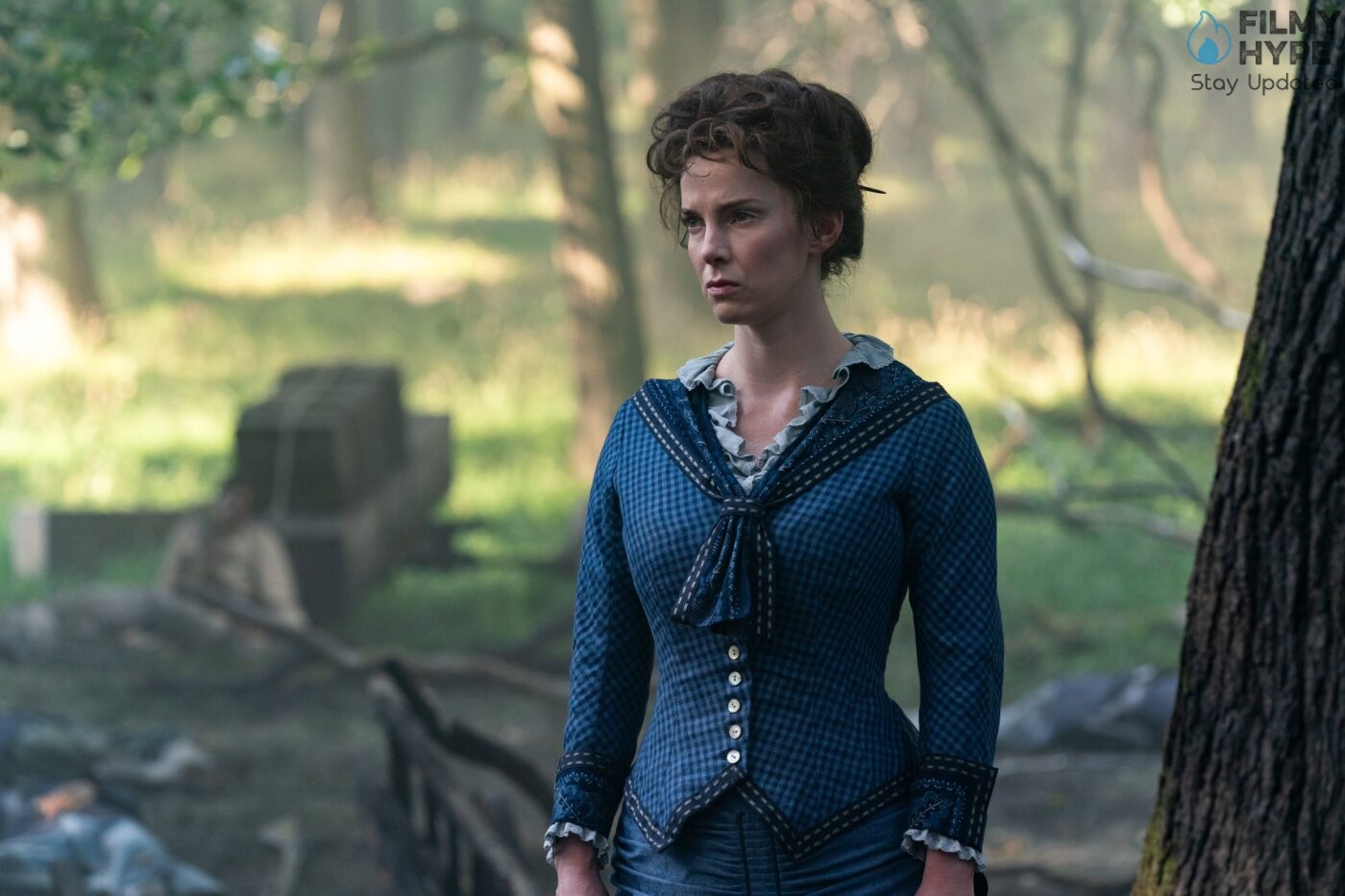
If there is one thing that Death by Lightning does better than many costume productions turns a dusty episode of American history into a psychological duel worthy of a modern thriller. On the one hand, we have James Garfield, played by Michael Shannon, in a state of grace. A frank, principled man, so honest that he was almost anachronistic even for the 19th century. On the other hand, Matthew Macfadyen as the delusional Charles Guiteau, the man who killed him, and who became from that moment on… a name that no one remembers. And this is where the great melancholic irony of the series begins. Guiteau, since the first episode, has been obsessed with making his mark. He repeats it, dreams it, and believes it to be destiny. “One day, my name will be known throughout the country”, it’s his mantra. A motto that continually shouts to everyone, in the form of requests and supplications. Even threats. But no. It will end up in a glass jar, forgotten in a museum warehouse. It is America that promises you greatness but consigns you to oblivion and Death by Lightning, he tells it with a bitter smile and a magnifying glass aimed at human vanity.
The most surprising part of the miniseries is perhaps the most statistics and statistics: politics. Yes, because the 1880 Republican Convention, that circus of alliances, under-the-table exchanges, and endless ballots, is staged at a pace you don’t expect from a historical drama. Garfield enters politics almost by chance, nominating another candidate and finding himself elected. One of those situations that today we would define as “system bug,” but that in reality is simply proof that power is a game of chess in which less predictable players win. Makowsky writes these dynamics with a clarity that does not need forced updates. It’s not the usual series that winks at the America of Republicans or Democrats. Rather, it is a broader and older reflection on how men, faced with power, always remain the same: ambitious and calculating. Ready for anything to be there.
It’s the quid pro quo that rules the world, yesterday as today. And in the chaos of votes and promises, Garfield emerges by chance but remains through conviction: he is the ideal in power, a concept as rare as it is fragile. If Shannon is the face of principle, seriousness, and reason, Macfadyen is the mask of delirium. Charles Guiteau is a character who lives in a state of permanent self-hypnosis. A charlatan who believes himself to be a prophet. A failure who sees himself as a hero. We follow him, from one lie to another, as he tries to ingratiate himself with everyone who matters, until he convinces himself that killing Garfield will be the way to become immortal. But Death by Lightning doesn’t judge him. It observes him with cruel compassion, like watching an insect continually bumping into glass. Macfadyen is magnificent in conveying that mixture of clumsiness, desperation, and mania. In the end, when Garfield’s widow (a splendid Betty Gilpin) promises him she’ll do everything she can to make the world forget him, the viewer realizes she feels sorry for him.
This is the tragic effect of the series: the story of a murderer who wanted to be remembered, and of a president who deserves to be remembered. Makowsky, the author of Bad Education, masters the art of transforming corruption into entertainment. His screenplay alternates sharp dialogue with meaningful moments of silence. It’s a writing that never pontificates but rather lets the characters reveal themselves through their contradictions. The irony is subtle, intelligent, and makes even the darkest scenes sparkle. From Garfield the carpenter admitting to his daughter that he’s terrible with a hammer to Vice President Chester Arthur (a gruff Nick Offerman), who, drunk as a thief, shouts “Music! Fights! Sausages!”, everything is designed to allow the viewer to discover who they’re dealing with. Matt Ross’s direction accompanies everything with elegant balance. There’s an almost theatrical composure in the institutional moments and a dirty, visceral touch in the more intimate scenes.
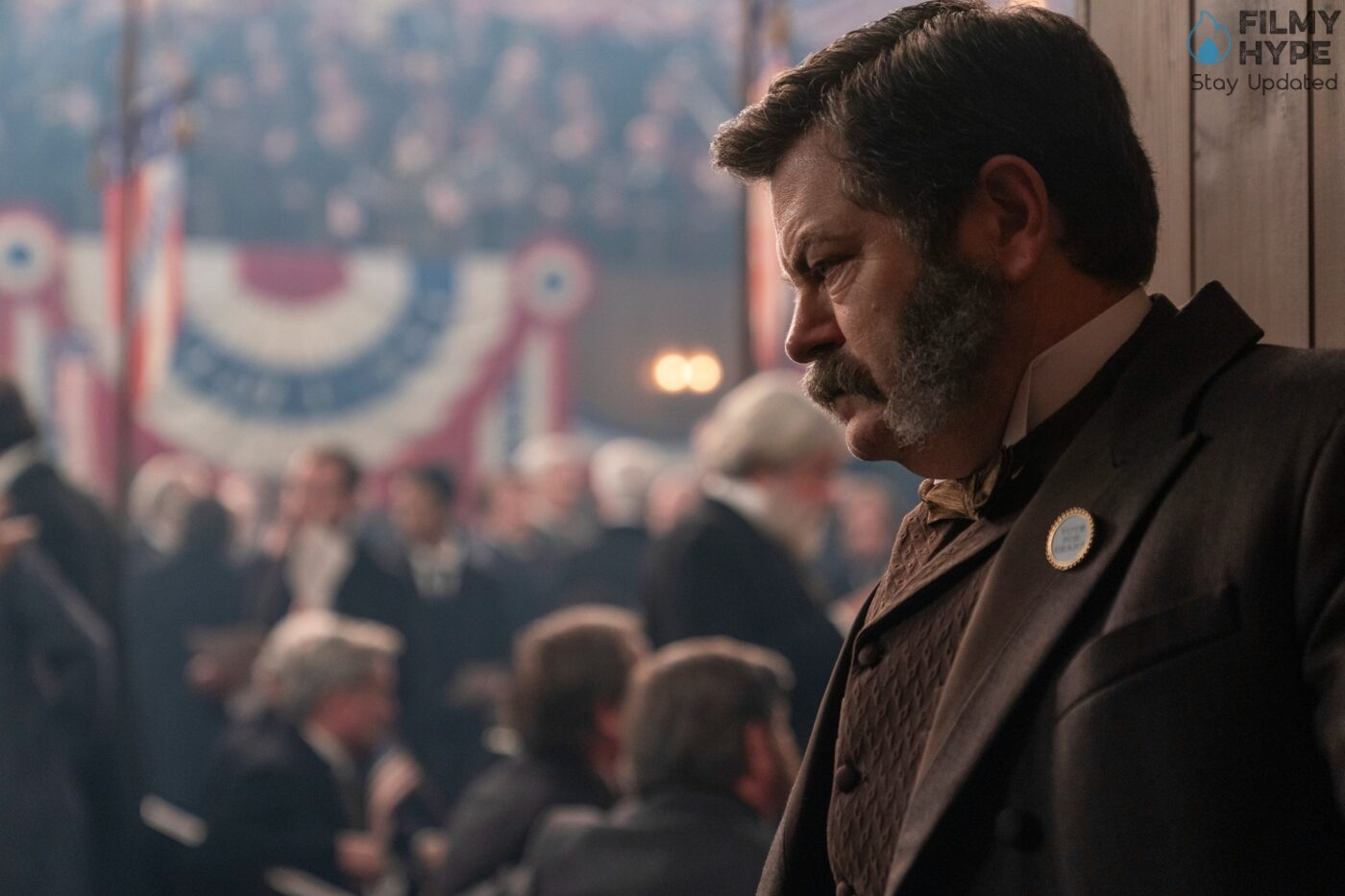
The contrast between the two souls—order and madness, duty and obsession—is also conveyed visually: the warm, solemn colors of Garfield’s world versus the cold, bruised tones of Guiteau’s world. Ross knows how to use the camera. Not to spectacularize, but to get close to faces, to reveal every micro-expression, every crack in the soul. Even in the scenes of Garfield’s convalescence, drama is never sought. If anything, the more human and complex side of the entire story is emphasized. One of Death by Lightning‘s greatest strengths is its lightheartedness, without superficiality. It’s a series that doesn’t take itself too seriously, despite dealing with a presidential assassination. The irony, never out of place, serves to humanize, not to downplay.
It’s a melancholic, almost compassionate irony that accompanies the characters without mocking them. You don’t laugh, but you smile often, and that smile, at the end of the episode, leaves a bitter taste. Humor is a lens, not an escape. It’s what keeps the series from slipping into didacticism or smugness. Instead of teaching you history, it makes you experience it, makes you “feel” it as something contemporary. Not because it’s about today, but because it speaks so well of the man of all time. As one of the American critics who enthusiastically welcomed the series wrote, “you don’t have to look overseas to find stories stranger than fiction.” Death by Lightning confirms it: just open a history textbook and know how to read the absurd side. At the heart of Death by Lightning, after the shooting, comes the harshest and most intimate part: James Garfield’s long agony.
The wounded president struggles for weeks, entrusted to the care of the best doctors of the time. Scientists who acted according to what was then considered right, convinced that the disease was a matter of humors and not invisible bacteria.
Among them is a young African-American doctor, bringing new ideas on hygiene and contamination, who is sidelined not so much for incompetence as for prejudice and academic rigidity. It’s a striking sequence because it doesn’t accuse but rather states. It depicts an era poised between tradition and modernity, in which scientific knowledge was still a minefield of convictions and pride. When, in the finale, it’s discovered that Garfield died not from the bullet but from an infection, the series doesn’t point fingers. It simply reminds us how fragile human knowledge is, and how all progress is born from errors and obstinacy. In this contrast, between the certainty of those who believe they know and the humility of those who dare to begin to doubt, Death by Lightning finds one of its most powerful images: the fragility of the body as a metaphor for the fragility of power.
Despite being set in the heart of American politics, Death by Lightning doesn’t need to discuss the present to be timely. Makowsky doesn’t write a pamphlet but a profoundly human story, one that speaks to the need to feel seen, recognized, and accepted. His thesis is simple and devastating: not all of us want to be famous, but all of us want to exist for someone. Charles Guiteau killed Garfield not out of ideology but out of desperation. For him, the attack isn’t a political act (although he tries to justify it as an act to unite the party) but a cry: “Look at me!” After a life of rejection, closed doors, and averted glances, he believes that this extreme gesture can finally give him the place the world has denied him. In a certain sense, Death by Lightning recounts the most absurd and moving act of an invisible man: the attempt to enter history.
Garfield, on the other hand, lives and governs by ideals, but history forgets him. This is the cruel paradox that the series portrays with sweetness and bitterness. Those who seek light for the sake of truth are obscured. Those who claim it out of desperation end up burned by it. And in Guiteau’s final, terrified look, when he realizes he will be erased from collective memory, there’s more than the fear of death: there’s the awareness of having been seen only for his mistakes, never for who he was. It’s the tragedy of every human being who seeks a place in the world—and finds it only when it’s too late. At the end of its four episodes, Death by Lightning leaves a curious feeling: it’s a series that doesn’t weigh you down, despite dealing with death and oblivion. It’s fast-paced, entertaining, and yet it leaves a lasting impression. The pace is just right, without filler, and its (almost) four hours seem like the ideal length for a story that doesn’t claim to explain everything, but to evoke.
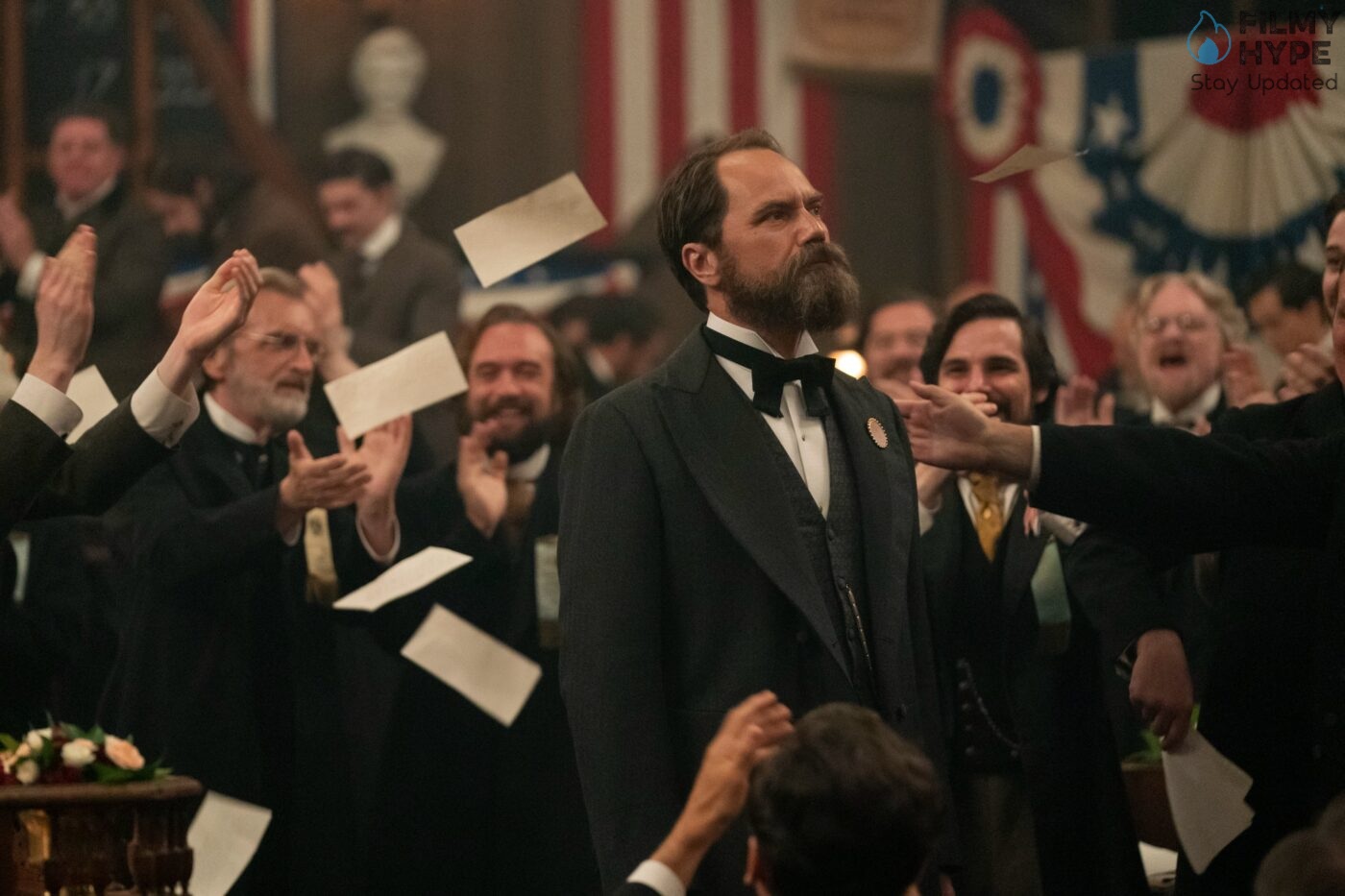
Of course, history lovers might have wanted more—more politics, more trial, more documentation—but it’s precisely in its balance that the series finds its strength: it’s a refined, accessible, and even at times funny product. In a television landscape dominated by remakes and dystopias, Death by Lightning dares to go back, to the mud and fervor of the 19th century, to remind us that the past is never as distant as we think. When the curtain falls and the final frame rolls, a fixed thought remains. Especially for us Italians. If it weren’t for Netflix, today the name James A. Garfield would be confined to quiz questions. Yet, thanks to Death by Lightning, this minor president returns to speak to us with a clear voice, alongside his lost assassin. It’s a historical miniseries that may not be among the greatest of all time, but it combines intelligence and heart, irony and melancholy, showing that great history is made of small men and that every gesture, even the most absurd, can change the course of time.
Death by Lightning Series Review: The Last Words
Death by Lightning is a historical miniseries that weaves together the psychological portrait of Charles Guiteau, assassin of President Garfield, with a bitter fresco of nineteenth-century American political power. Brilliant in Matthew Macfadyen’s acting and supported by a solid cast, the series alternates moments of black irony with a darker drama, sometimes losing balance but retaining a strong symbolic and reflective value. With four episodes, Death by Lightning manages to tell the essentials without resorting to plot fillers. From election to presidency and assassination, the miniseries misses no steps to get us straight into the heart of the story. Among the characters, the complex personality of Guiteau, supported by a perfect performance by Matthew Macfadyen, overshadows everyone else, including Michael Shannon and his alter ego, is overshadowed. MacFayden constructs a murderer through body language that makes him believable, even in his transformation from admirer to murderer: there is something that at some point snaps in him, and from which he himself can no longer escape. Death by Lightning tells an American story forgotten by most, which is certainly worth seeing for MacFayden’s performance.
Cast: Matthew Macfadyen, Michael Shannon, Nick Offerman, Shea Whigham, Betty Gilpin, Bradley Whitford, Paula Malcomson, Ben Miles
Created By: Mike Makowsky, Matt Ross
Streaming Platform: Netflix
Filmyhype.com Ratings: 4/5 (four stars)