
Death by Lightning Ending Explained: Why Guiteau Decided to Assassinate Garfield?
If you knew the real story, then the end of Death by Lightning, you know it, but both in the series and in real life, there are a few things to explain because nothing is as simple as dividing it into black or white; there are nuances and details that make this story more tragic than it already is. As you will have seen in the series, Garfield was one of the presidents who spent the least time in office, with only 120 days, and perhaps the saddest thing is that he could have been the best commander-in-chief he had ever had. His policies were very advanced for his time; his way of seeing administration as a way of serving the people and not lining his pockets was not usual; it could have marked a before and after, but Guiteau prevented him from doing so, or not?
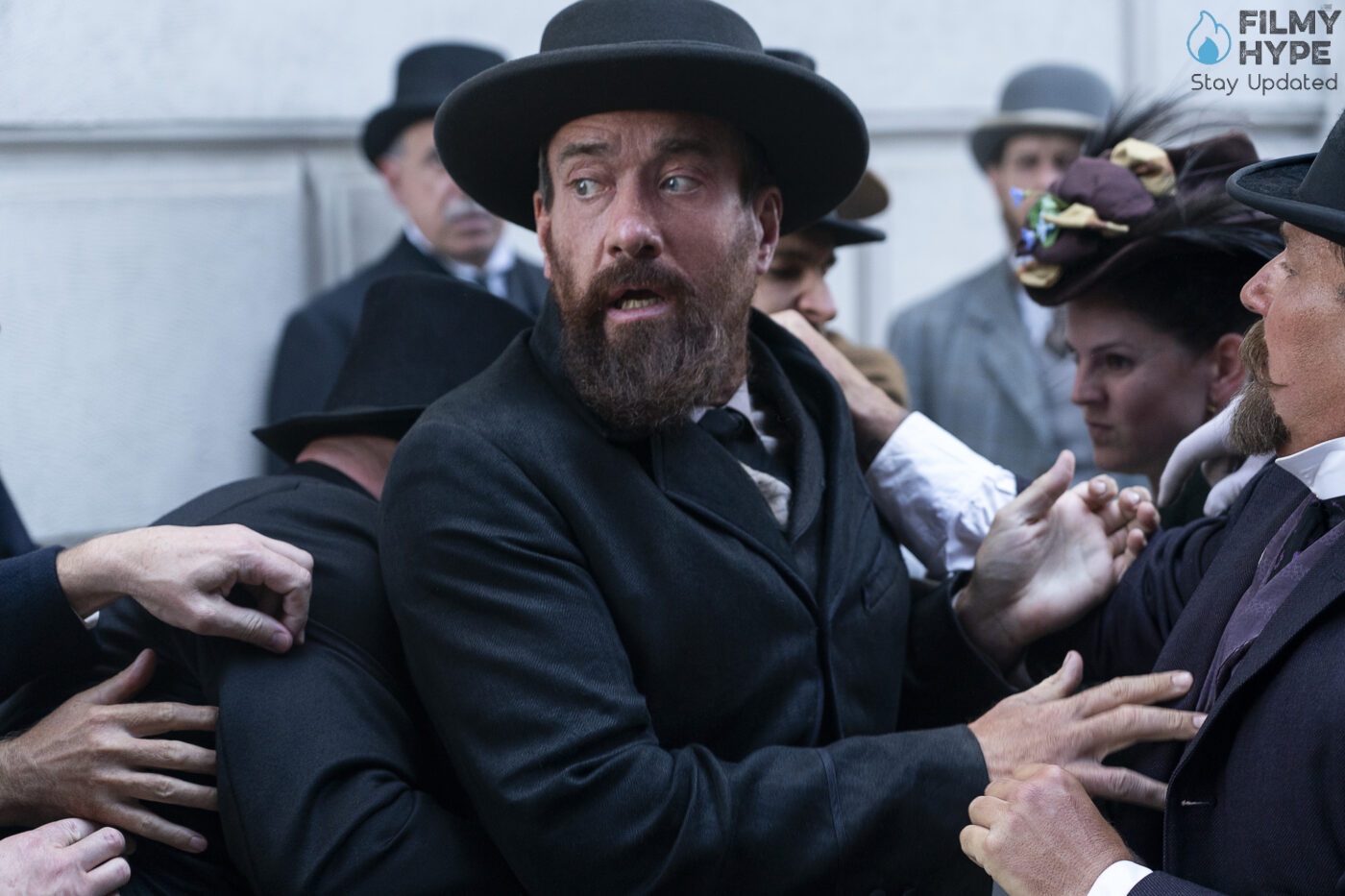
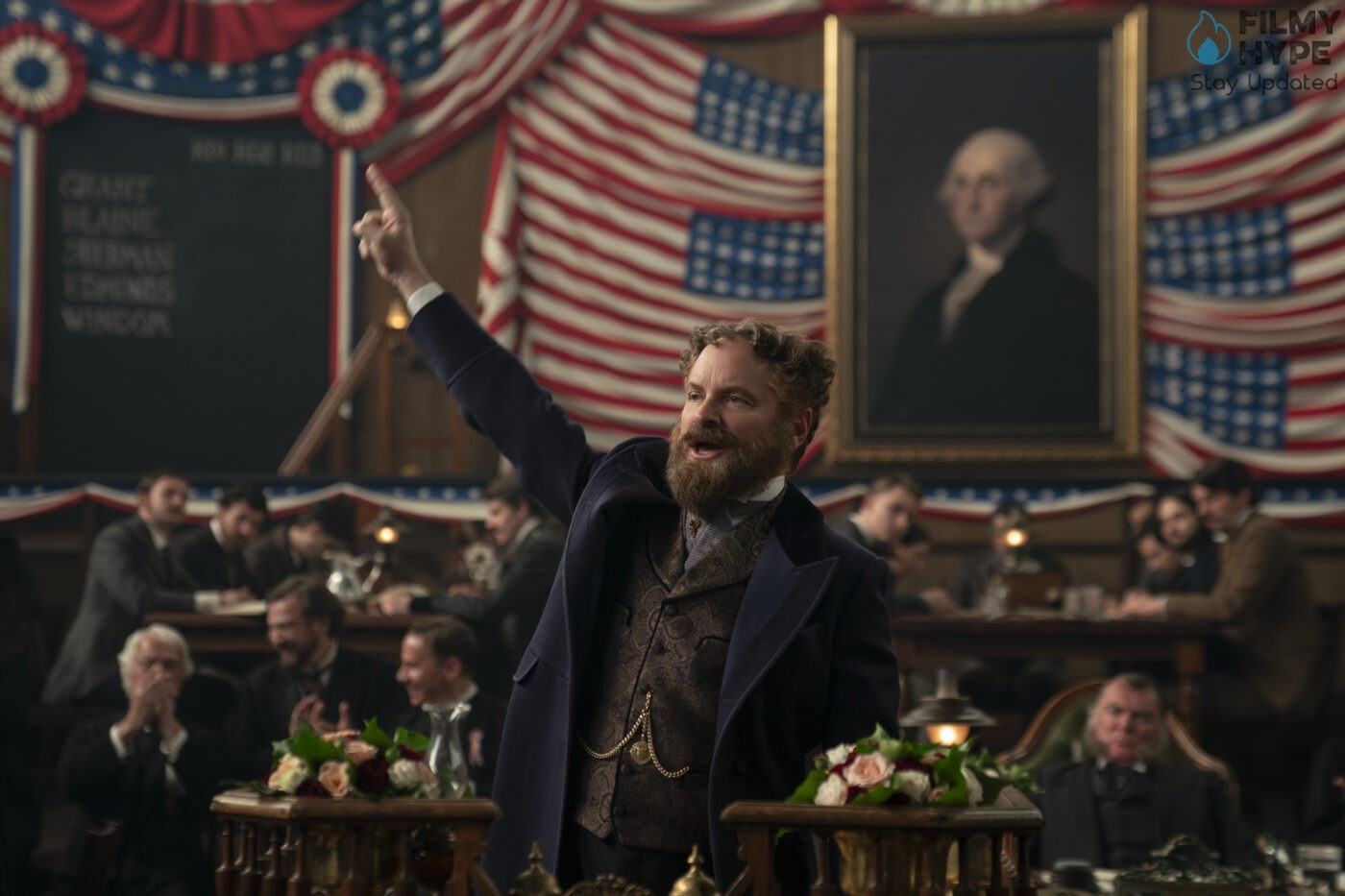
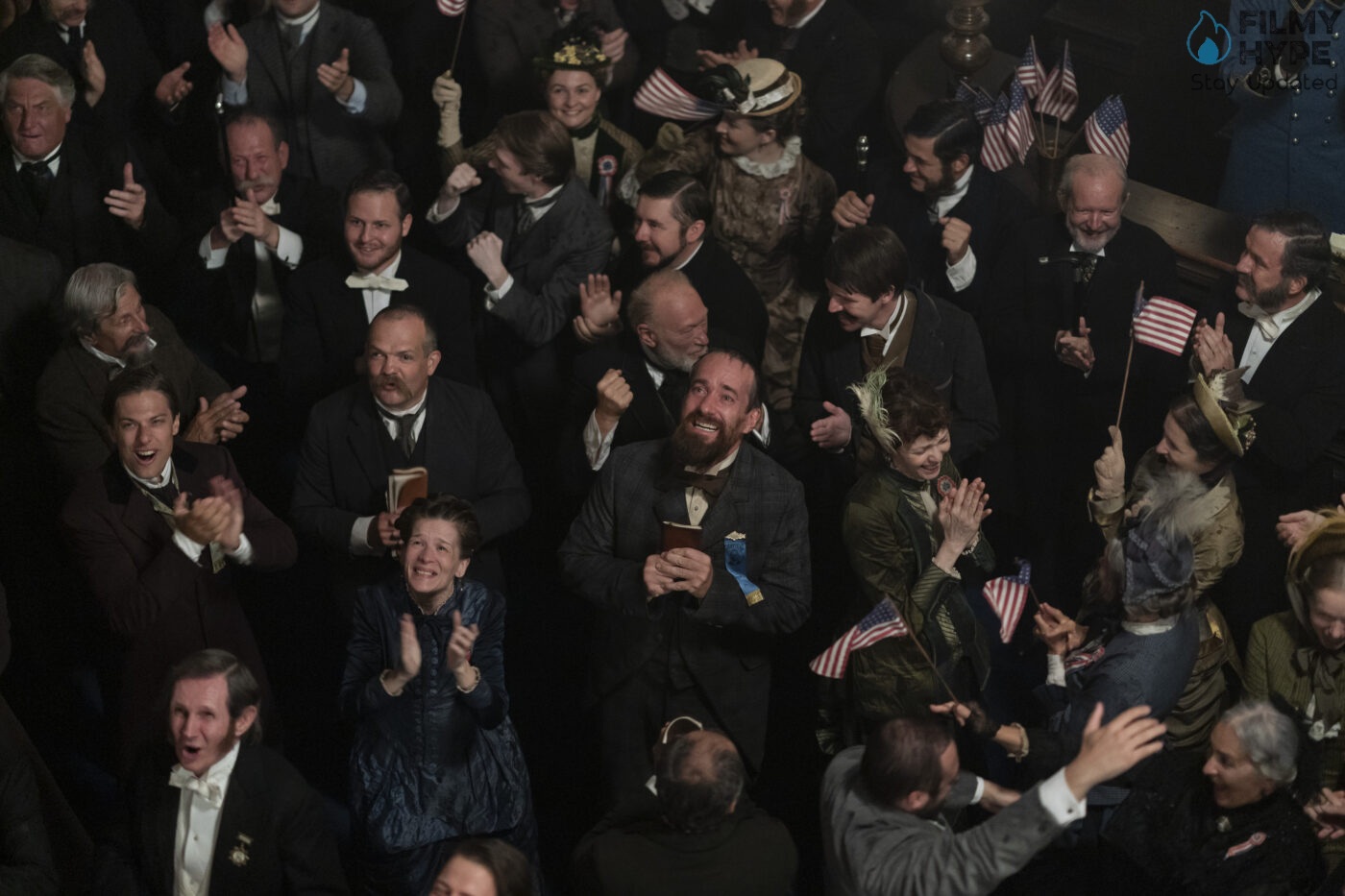
BEWARE, SPOILER ALERT. Based on the novel “Destiny of the Republic” by Candice Millard, “Death by Lightning” is a Netflix drama series that tells the epic and amazing true story of James Garfield, the reluctant twentieth president of the United States, and his biggest admirer, Charles Guiteau, the man who would end up murdering him. How is this real-life event portrayed in the production created by Mike Makowsky? The series, directed by Mike Makowsky and Matt Ross, began with a scene in 1969, where a group of men discovered Charles Guiteau’s preserved brain at an Army Medical Museum in Washington, D.C. The story then moved to 1880 and showed Guiteau (Matthew Macfadyen) imprisoned. Although he regained his freedom, it is clear that he is a lying and unbalanced man who longed for a better life. Meanwhile, James Garfield (Michael Shannon), a congressman from Ohio, gives an impassioned speech nominating Treasury Secretary John Sherman (Alistair Petrie) as a presidential candidate. After his shocking words, he won the election and was elected to the Republican National Convention.
Death by Lightning Ending Explained: Why Guiteau Decided to Assassinate Garfield?
The protagonist of “Death by Lightning” was not excited about his victory, since he did not aspire to the presidency, or at least that is what he said. Even his wife, Lucretia “Crete” Garfield (Betty Gilpin), questioned him for giving a speech like that if he didn’t secretly dream of the presidency. In any case, at that point, Garfield cannot turn back. Charles Guiteau took advantage of Garfield’s victory to approach politicians with supposedly innovative ideas. Of course, he was rejected, but he never stopped insisting, and although he didn’t know James, he found out what he could about him and declared himself his admirer, just as he did with the other candidates.
Before the election, Garfield campaigned from the porch of his house, while Guiteau tried to ingratiate himself with party leaders. When Garfield rose to the White House by a narrow margin of less than 10,000 votes, Guiteau was convinced he deserved a consular seat in that administration. After doing many things to get closer to the new president, Guiteau managed to deliver a campaign speech, which was originally written for Grant. But he wasn’t satisfied with that; he wanted his life to change just like James’s. After having the opportunity to speak with him, Guiteau looked for a way to gain his trust, but was interrupted by Crete’s illness.
A True Story of Ambition, Assassination, and an American Tragedy
The new Netflix series Death by Lightning pulls back the curtain on one of the most compelling and overlooked chapters in American history: the rise and brutal fall of President James A. Garfield. But is this gripping political drama based on a true story? The answer is a resounding yes.
The series, meticulously crafted by creator Mike Makowsky and based on Candice Millard’s acclaimed book Destiny of the Republic, chronicles the short-lived presidency of James Garfield and the twisted path of his assassin, Charles Guiteau. This article delves deep into the ending of the series, the shocking true events that inspired it, and the haunting legacies left behind.
The Premise: A Reluctant Leader and a Deluded Assassin
Death by Lightning opens with a powerful, modern-day vignette that sets the stage for its historical inquiry: men in a government warehouse discover a preserved brain, labeled “Charles Guiteau.” The question, “Who the fuck is Charles Guiteau?” is the very one the series seeks to answer.
The narrative then unfolds on two parallel tracks:
- James Garfield (Michael Shannon): A genuinely reluctant leader pulled from his roots as a scholar and carpenter into the highest office in the land against his will. The series explores the age-old question: was he truly devoid of ambition, or did he secretly crave the power he publicly disdained?
- Charles Guiteau (Tom Hollander): A delusional, narcissistic failure who believes he is destined for greatness. The series traces his descent from a petty grifter to a political fanatic, convinced that assassinating the president is a divine mission.
Was Charles Guiteau’s Bizarre Background Real?
Yes. The series accurately portrays Guiteau’s time in the Oneida Community, a radical utopian society in New York that practiced “complex marriage” (a form of free love). In a cruel irony, as creator Mike Makowsky notes, “He was the one man who couldn’t get laid at the free love commune.” His laziness and odd demeanor led the women of Oneida to nickname him “Charles Gitout,” a historical detail the series incorporates to highlight his lifelong status as an outcast.
This lifetime of rejection fueled his desperation for recognition. Like Robert De Niro’s Rupert Pupkin in The King of Comedy—a direct inspiration for the creators—Guiteau was pathologically obsessed with gaining an audience with the powerful, in this case, President Garfield.
How was James Garfield assassinated?
On July 2, 1881, Charles Guiteau shot President Garfield twice in the back at a Washington, D.C., train station. The chilling truth is that Garfield had virtually no security. The series takes its title from Garfield’s own philosophical view on the matter: “Assassination can be no more guarded against than Death by Lightning. And it’s best not to worry too much about either one.”
At the time, the American government believed assassinations were a hazard of monarchy, not a democracy. It wasn’t until President William McKinley’s assassination 20 years later that the Secret Service was formally tasked with protecting the president.
The True Killer: Medical Malpractice
This is one of the most critical and shocking revelations of both the series and Millard’s book. Garfield did not die from the gunshot wound itself.
Modern medical consensus agrees: the bullet lodged in Garfield’s back did not hit any vital organs. He would have almost certainly survived with basic, sterile care. However, his lead physician, Dr. Doctor Bliss (yes, that was his name), was a staunch opponent of the new “germ theory” advocated by Joseph Lister.
Bliss repeatedly probed the wound with unsterilized fingers and instruments, searching for the bullet. This introduced a massive infection that led to a raging fever, blood poisoning, and a slow, agonizing death.

As historian Candice Millard states, “Guiteau may have fired the bullet, but he’s not Garfield’s ultimate murderer.” The series powerfully depicts the efforts of Dr. Charles Purvis (the first Black doctor to attend to a president) and Alexander Graham Bell, who invented a primitive metal detector to locate the bullet, only to be ignored by the arrogant Dr. Bliss. Garfield lingered for 80 days before succumbing on September 19, 1881.
The Transformation of Chester A. Arthur
One of the most compelling arcs in Death by Lightning belongs to Vice President Chester A. Arthur, brilliantly portrayed by Nick Offerman. At the story’s outset, Arthur is a crony of New York’s corrupt political machine, a staunch defender of the “spoils system” who never expected to hold real power.
Garfield’s strength in standing up to Arthur’s mentor, Senator Roscoe Conkling, and his subsequent martyrdom, profoundly changed Arthur. As Makowsky explains, Garfield’s influence “ends up kind of convincing him of his better angels and reminding him of the man he was before he became a crony.”
Upon becoming president, Arthur underwent a remarkable transformation. Haunted by Garfield’s death, he championed and signed the Pendleton Civil Service Reform Act of 1883, which began the process of replacing the corrupt spoils system with a merit-based system for federal employment. This is his enduring, and somewhat ironic, legacy.
Death by Lightning Ending Explained: Legacies and Empty Chairs
The series finale brings its themes full circle with profound and poignant scenes.
- The Final Confrontation: Crete and Guiteau
In a powerful fictionalized scene, Garfield’s wife, Lucretia “Crete” Garfield (Betty Gilpin), visits Guiteau in his prison cell. She delivers a message designed to be his ultimate punishment. Knowing his desperate desire for fame and a place in history, she tells him that his memory and legacy will amount to nothing. For a man like Guiteau, being forgotten is a fate worse than death. - The Execution of Charles Guiteau
Guiteau’s execution is depicted with eerie strangeness. He recites a self-aggrandizing poem he wrote, expecting to be a star on his final stage. Instead, he is met with a dead-eyed stare from the audience. His final whispered “Oh…” is a moment of devastating realization that his grand performance has fallen utterly flat. - The Preservation of a Brain and a Memory
The series closes as it opened, with Guiteau’s brain being preserved for pseudoscientific study—a literal and metaphorical footnote in history. Meanwhile, the emotional core of the ending rests with Lucretia. She is shown sitting at the table her husband built with his own hands, surrounded by family, looking at his empty chair.
Lucretia is the quiet hero of the story. As Makowsky suggests, she was a formidable and intelligent woman whose potential to redefine the role of First Lady was tragically cut short. The empty chair is a silent testament to the man, the leader, and the future that was lost.
Conclusion: Reclaiming a Lost Legacy
Death by Lightning is more than a historical drama; it is an act of reclamation. For too long, James Garfield has been an “obscure footnote,” his story overshadowed by his assassination. The series, like Millard’s book before it, seeks to reintroduce the world to a man of profound intellect, principle, and untapped potential.
It forces us to ask: what could have been? What would a Garfield presidency, guided by his commitment to civil rights and civil service reform, have achieved? By exploring the “Death by Lightning“—both the philosophical acceptance of fate and the brutal, preventable reality—the series gives us a tragic, thrilling, and ultimately unforgettable look at a pivotal moment that shaped the modern American presidency. It reminds us that history is not just about what happened, but about what was lost.
What Does the End Of “Death by Lightning” Mean?
After he was expelled from the White House, Guiteau met with Secretary of State James Blaine (Bradley Whitford) to obtain a consulate in Paris. Of course, Blaine denied him and yelled at him that he had no chance of getting a position in that administration. Guiteau felt betrayed by the protagonist of “Death by Lightning” and decided to kill him. Furthermore, he began to blame Garfield for all his ills. In his head, by killing him, he was mending the course of the country. Guiteau fired two bullets at the president at the Baltimore and Potomac train station in Washington. While he was arrested, the president was taken to a hospital.
The Death of James Garfield
Dr. Bliss (Željko Ivanek) and Dr. Purvis (Shaun Parkes), the first black doctor to treat an American president, were in charge of trying to save Garfield. But because Bliss refused to listen to the advice of other specialists, the president was sentenced to a slow and unworthy death.
At the end of “Death by Lightning”, Arthur rose to his position, Guiteau’s brain was preserved for science, and Lucretia Garfield was surrounded by her family, but always staring at her husband’s empty chair.