Brick 2025 Movie Review: Netflix’s Dystopian Thriller Will Glue You to the Screen?
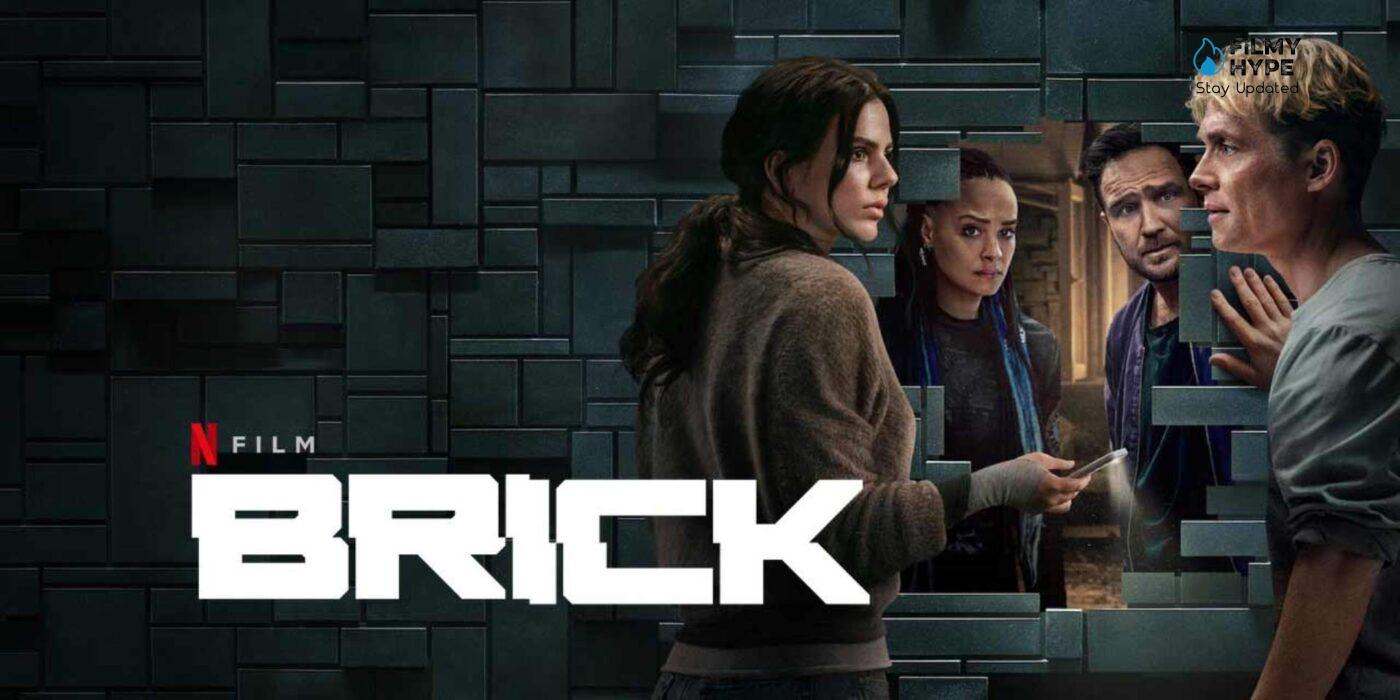
Brick 2025 Movie Review: Brick, a German film directed by Philip Koch and distributed by Netflix, begins with a premise that is as simple as it is disturbing: a couple wakes up to discover that they are prisoners in their apartment, sealed by a mysterious wall of black Bricks. An impenetrable prison that blocks every escape route, every signal, every contact with the outside world. From here, a claustrophobic science fiction story unfolds that mixes mystery, introspection, and social allegory. The film moves between evident influences – Cube, Vivarium, The Twilight Zone – but seeks its path, focusing more on human dynamics than on the construction of a large narrative universe. Original. Very current. Deep. Brick, one of those films that knows how to get noticed in the immense catalog of the streaming platform and manages to do so from the first minutes. After all, when a product is of quality, you immediately understand it and entering Brick‘s paradoxical world, even if only for an hour and forty minutes of your time, is a very interesting, exciting experience with frightening current events.
The film optimizes the spatial extensions of a closed and oppressive environment, uses it as an allegorical place in which to stage the phases of negotiation and acceptance of suffering nestled among the corridors of the human soul. Thus, in his journey, he brings together the fragility of human relationships with the vulnerability of feelings – the alliances and suspicions of a social microcosm subjected to pressure that puts survival at stake, and at stake an enormous dose of conjecture and paranoia. Fears, secrets, and latent unsolved issues probe the cavities of an environment (the condominium) that becomes a metaphor of mental restriction and a slow healing process. The constraint is psychological, even more than physical, and culminates in the dense escalation of an uncertain film about how to amalgamate the souls that binary circumscribe it. Brick falls apart as the mystery grows, disintegrating into the incomplete resolution of an idea unable to explode and a plot that, amid its emotional somersaults, forgets to contextualize some important narrative foundations. Like: what does the story of that enigmatic wall hide?
Brick 2025 Movie Review: The Story Plot
Tim, a video game programmer, has been going through an extremely complex period for two years, completely withdrawing into himself. Even his partner Olivia goes through an emotionally delicate phase: the couple is marked by the consequences of an unsuccessful birth, which led to the death of their son, turning a moment of family joy into a deep drama. This event generated a rift between the two, with Tim, who takes refuge in work, obsessively dedicating himself to the creation of his video game, thus avoiding facing his pain and excluding his partner from his intimacy. After two years of emotional stalemate, Olivia makes a drastic and unexpected decision: he quits his job and, one morning, communicates to Tim her will to leave him. The man, taken by surprise, is stunned and unprepared. Olivia is determined to leave for Paris, the destination of a trip they were supposed to take together.
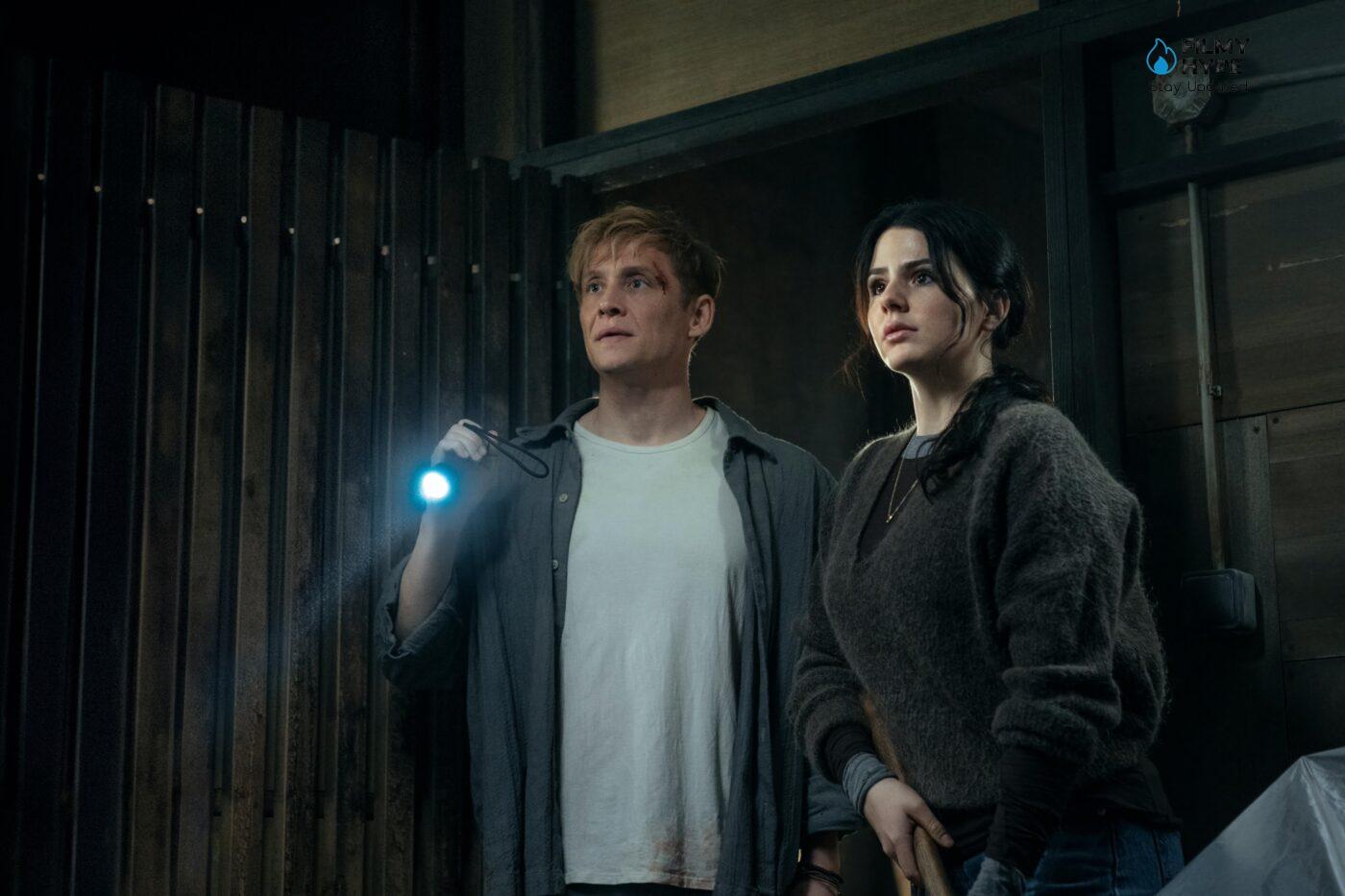
But just at the moment when he opens the door to go out, the unthinkable happens before them stands a black wall of technological Bricks, impenetrable and disturbing. Who built that wall? Why is it there? Is there a way out of this absurd and sudden situation? In addition to the impossibility of leaving the house, the couple discovers that water no longer flows from the taps, further aggravating the condition of isolation and putting their very survival at risk. Tim and Olivia decide to act they start digging passages between apartments, seeking a solution to the conundrum. During this exploration, they encounter other tenants: Ana and Marvin, a couple who use drugs; the young Leah with her grandfather; and the mysterious Yuri, an ex-cop convinced he knows the truth behind the wall. Each meeting adds tension and complexity to the narrative, transforming the condominium into an emotional microcosm where claustrophobia mixes with fear, distrust, and hope.
The premise, promising on paper, moves between the psychological metaphor and the claustrophobic thriller, but progressively loses personality and interest as the minutes pass. This German production, new exclusive to the catalogue Netflix, is more than derivative, with titles like the saga of Cube -or the most recent diptych of The Platform peeking into a screenplay that underlines his quotation streak, pulling in the middle Matrix and artificial intelligences, Squid Game and the escape room fashion and much more. The hundred minutes of viewing seem like a pop culture smoothie, and science fiction cinema entered the common imagination, failing to find original ideas in a story that moves on predictable steps, especially about the management of secondary figures. On the other hand, the heart of the story focuses on this couple in crisis, whose drama we experienced in the past and which has now brought them to the brink of breaking up: real walls and emotional walls, in a dualism that could and should have been better exploited so as not to be just a gratuitous exposure of pain. The forced isolation of this reduced number of characters it is characterized by various archetypes: we find the couple of drug addicts potentially crazy splinters, the elderly man with his niece, the conspiracy theorist and so on, with a management of interpersonal relationships that becomes relatively easy, up to that epilogue that offers a unsatisfactory answer.
Brick 2025 Movie Review and Analysis
The beauty of Brick is that he finally brings to Netflix a bit of quality not only in direction and writing, but above all in ideas. Lately, being able to find interesting, different titles or those that dare to make an effort to give the public stories that can make a difference has been a difficult task. But Brick makes it. It’s a properly done thriller. It combines action and reflection while maintaining them in perfect balance and gives the viewer not only the opportunity to be entertained with a compelling and mysterious story but also allows them to introspect by touching very deep chords of the human soul through the stories of the individual characters. Nothing is left to chance, and none of the protagonists is neglected. As the story progresses, in fact, we enter more and more into not only the story itself but the psyche of the individual characters, and each of them has something to teach the others and especially us, who are watching the film. Looking at Brick, you will find yourself feeling fear, anxiety, but also tenderness. You will be moved and horrified at the same time by some more violent scenes, but, above all, you will be asked to ask yourself many questions. “What would I have done in their place? Who would I have believed?”.
In Brick, we talk about conspiracy theories, wars, technology, but above all, human relationships and how strong man’s spirit of survival is, and his deepest beliefs push him to carry out courageous and altruistic or violent and individualistic actions. Let yourself be crossed by all these emotions, push yourself to a profound reflection on the meaning of life and fear, and dive into this absurd world that Brick offers us by trying to find your way out of this mysterious trap. It’s no surprise that a feature film like Brick immediately conquered the first position up Netflix, considering that the German film —despite having no actors or names of great appeal — presents a rather intriguing and compelling plot, at least on paper. When a user comes across a synopsis such as: “Tim and Olivia must join forces with the neighbors to save themselves, after a mysterious wall suddenly surrounds their apartment building”, the curiosity lights up, attracted both by the claustrophobic situation — a group of people stuck in a place without knowing why — and by the mystery linked to the sudden appearance of the wall.
I admit that it was precisely this synopsis that pushed me to press submit and watch the movie. However, at the end of the viewing, Brick turned out to be a real disappointment: an audiovisual product mediocre, easily forgotten. Unfortunately, this impression aligns with what many of the original films leave Netflix, giving the feeling that the platform is making mediocrity its production focus — a less-than-positive choice. Isn’t it a coincidence that Netflix, at least in Italy, continues to lose ground in favor of Prime Video, which in recent months seems to offer a more varied and qualitatively solid proposal? Returning to Brick, the filmmaker and screenwriter Philip Koch stages a double dramaturgical game during the narrative: on the one hand he presents us with a family situation marked by mourning, recounting in the first minutes of the film the emotional condition of Tim and Olivia, giving the film a component introspective; on the other hand, it constructs a narrative with tones sci-fi thriller, linked to the mysterious appearance of a technological wall which isolates a group of individuals within a building.
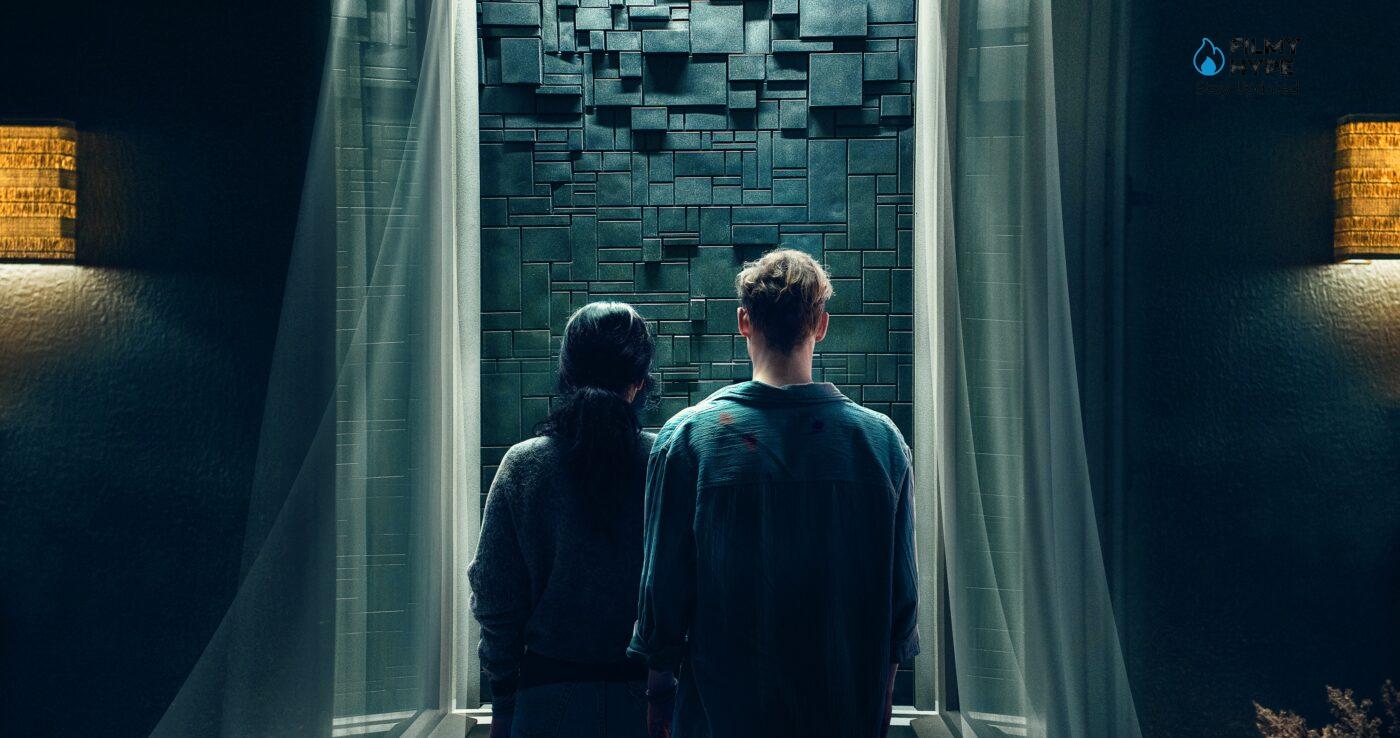
The part tied to the wall — formed by black Bricks with high magnetic capacity — manages to give the film a sense of claustrophobia (not excessively accentuated), one dramaturgical tension constant, and one narrative curiosity which pushes the viewer to follow its development until the end, even in the absence of real twists. Even the characters, like the audience, formulate the most varied hypotheses during the narrative: references to Matrix, Squid Game and Escape Room, but also theories conspiracy theories which range from the creation of a New World Order, to the hypothesis of one hybrid warfare, right down to the idea that the wall is not an enemy to be brought down, but a technological protective barrier against a global cataclysm or contaminated air. These are exactly its speculation about the nature of the wall to push the story forward, in a feature film that — for structure and the use of verticality of space — recalls, despite the necessary differences in gender and tone, another original Netflix very successful: The Platform, 2019 Spanish film directed by Galder Gaztelu-Urrutia.
In both cases, the verticality it’s not just a scenographic choice, but it becomes a narrative and symbolic device: in The Platform, the movement from top to bottom marks the distribution of power and of survival, while in Brick the descent through the apartments represents an escape route, but also of discovery and comparison with the other. The palace transforms into a closed and stratified organism, where each floor is an emotional and relational stage, and where claustrophobia is not only physical, but also psychological. Verticality thus becomes one metaphor of confinement and resistance: a way to tell isolation and the social tension through architecture. If in the Spanish film the system is imposed and inevitable, in Brick the structure is more ambiguous, almost organic, and the magnetic wall that seals the spaces takes on a changing function, oscillating between barrier and catalyst. In both cases, however, the vertical space is what defines the rhythm, tension, and deep sense of the narrative, transforming the building into a real theater of conflicts, alliances, and revelations.
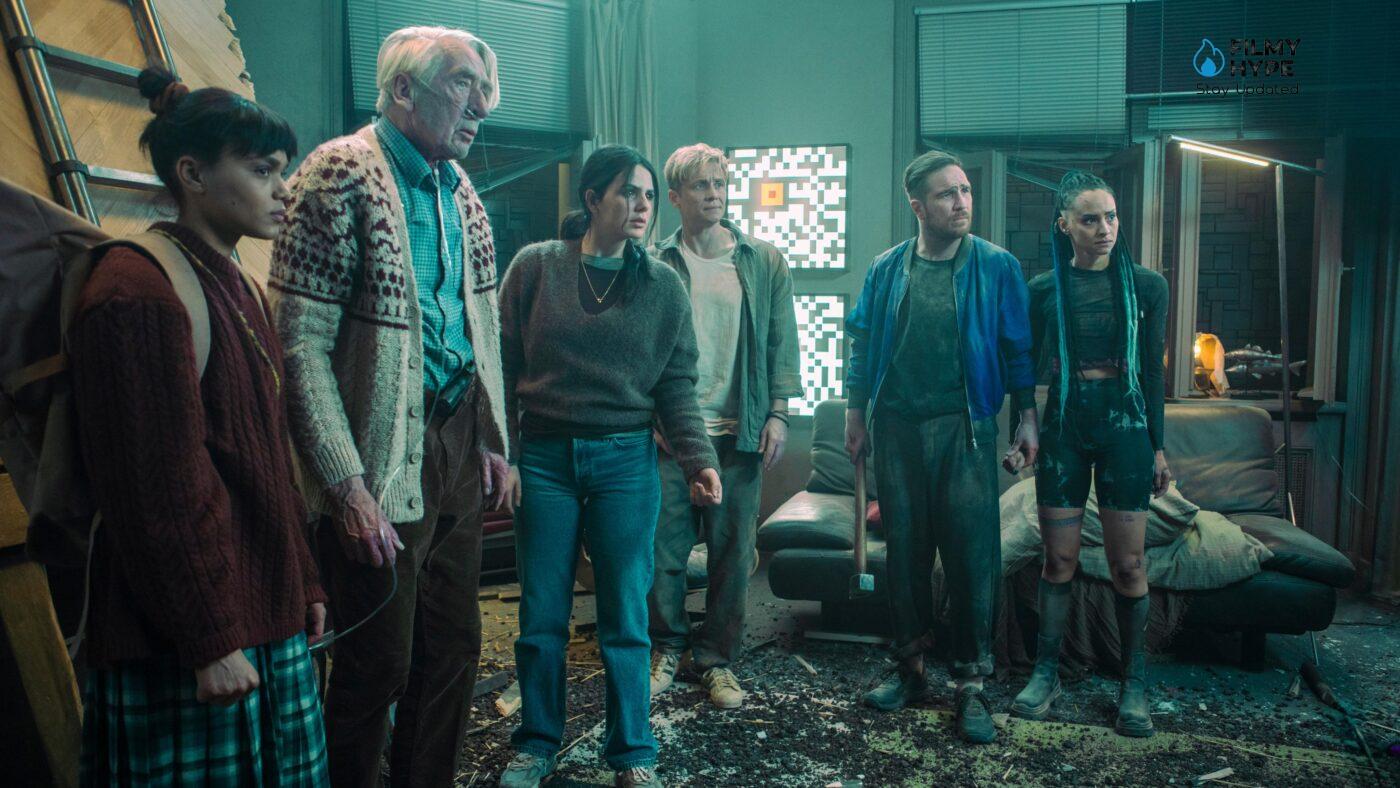
The verticality, therefore, united with the mystery related to the wall, gives the story a certain pathos and an effective narrative curiosity, despite a screenplay that proceeds to stereotypes, lacking really convincing dialogic and scenic writing. The dramaturgical situations and characters proposed within the feature film result original and superficial, starting from the couple of junkies, through the young girl with her sick grandfather, to the ex-cop Yuri. It’s about sketch figures, outlined according to overused archetypes: as soon as they appear on the screen, the viewer immediately senses their nature and narrative function, especially in the case of Yuri. Weak writing is accompanied by mediocre acting performances, starting with the protagonists Matthias Schweighofer and Ruby O. Fee, who fail to enter their respective roles emotionally, offering a fake performance and not engaging for the entire duration of the film. The other performers don’t shine either, but a deeper rendering would have been expected from the two protagonists, considering that the plot revolves around one sci-fi metaphor of their internal condition.
The intimate element — which is the weakest point of the narrative due to the stereotypical writing — and the science fiction-thriller one coincide thematically: both represent the block. From the first scenes, through a series of flashbacks, the film tells us about the emotional and family condition of Tim and Olivia, with Tim’s in the middle inner block, unable to grieve and embrace his life again. Tim, as well as Olivia, is blocked: cannot overcome the trauma of the loss of her son during childbirth, she does not accept it, does not confront it, and removes it as if it had never happened. The magnetic wall that physically imprisons the characters within the building is the visual manifestation of this internal block. The search for a way out becomes the metaphor of the need for comparison: a path that forces Tim and Olivia to speak to each other sincerely, finally, without filters. Unfortunately, however, the writing fails to make this emotional conflict intense, the thematic and narrative epicenter of the dramaturgy, thus taking away the strength of the narrative and nullifying the symbolic potential of the story.
The wall surrounding the building is at the center of the film, both physically and symbolically. Initially, it seems like an allegory of lockdown, then it becomes a possible scientific experiment, a technological weapon, a political wall, a mental prison. Hypotheses multiply: nanotech? Government? Alternative reality? Matrix? The script launches leads without really wanting (or being able) to solve them. This approach works up to a certain point: the mystery keeps you glued, but the need for internal coherence is felt. The political allegory is barely hinted at – nods to surveillance, to the deep state, to post-wall Germany – but never spelled out. The film remains vague, perhaps so as not to take sides, perhaps to leave room for interpretation. The risk, however, is that of appearing undecided about the message he wants to convey. Visually, Brick is a remarkable film. Alexander Fischerkoesen’s photography returns an unreal atmosphere, suspended between dream and nightmare. Each room is taken care of down to the smallest detail, thanks to the scenography of Theresia Anna Ficus: the apartments become extensions of the personalities who live there, offering a continuous visual variation that avoids the effect “filmed theatre” typical of some one-location movies.
Koch’s direction is effective in building tension, even if it doesn’t always manage to measure the times: the second half of the film speeds up too much, jumping between explanations and narrative turns without giving space to real anguish. The editing, the sounds, and the calibrated use of special effects help keep attention alive, but you get the feeling that the film runs towards an ending that cannot handle the power of its incipit. The performances are one of the strong points of the film. Matthias Schweighöfer offers an intense rehearsal, poised between repressed anger and vulnerability, while Ruby O. Fee shines in every scene, managing to convey Olivia’s pain, determination, and tiredness with great authenticity. The chemistry between the two is palpable and makes the weight of the years and shared scars credible. The secondary cast is more uneven: Frederick Lau stands out for his energy and stage presence, while Salber Lee Williams offers a nice rational contrast amidst the chaos.
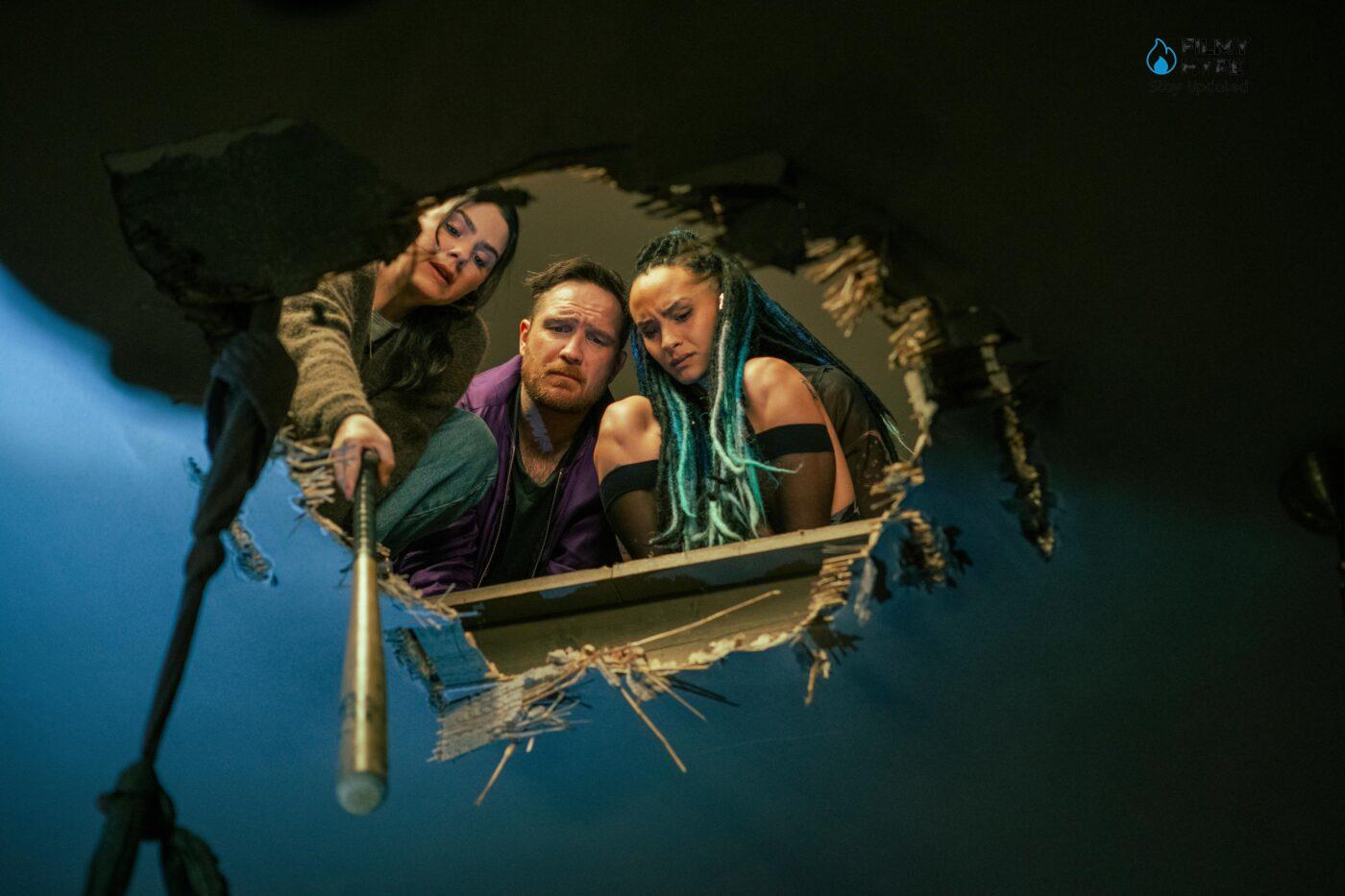
It’s a shame that other characters remain sketchy, almost symbolic, without the time or depth necessary to become truly memorable. Brick is a film that intrigues, involves, but doesn’t go all the way. It is a story of psychological rather than physical survival, a game between metaphors and nightmares, between paranoia and reconciliation. But in the end, it leaves the viewer with more questions than emotions. The lack of true resolution –whether narrative or emotional – is not in itself a flaw, but it requires a coherence and intensity that seems to be lacking here at the very decisive moment. However, it remains an ambitious film, visually powerful and performed with conviction, which deserves to be seen if only for its courage in recounting the anguish of isolation by simple but effective means.
Brick 2025 Movie Review: The Last Words
Brick is a film that, while starting from an intriguing idea and a potentially effective visual implant, fails to translate the premise into an engaging narrative experience. The symbolism, the verticality of space, and the tension of isolation could have generated profound emotional and social reflection, but they remain superficial due to weak writing and less than incisive interpretations. It is a film that intrigues, but does not leave its mark — an example of the distance between potential and realization, emblematic of a certain flat streaming production. It mixes claustrophobia, mourning, drifting relationships, and political suspicion into a visually successful but narratively timid tale. The main cast shines, but the film remains suspended between symbolism and concreteness, without ever really sinking the blow.
Cast: Matthias Schweighöfer, Ruby O. Fee, Frederick Lau, Salber Lee Williams, Murathan Muslu, Sira-Anna Faal, Axel Werner
Directed: Philip Koch
Streaming Platform: Netflix
Filmyhype.com Ratings: 3.5/5 (three and a half stars)