Below the Clouds Movie Review (Venice 82): Captures Naples Between Everyday Life and Historical Memory?
Below the Clouds Movie Review (Venice 82): “Below the Clouds” is the film with which Gianfranco Rosi, the last Italian filmmaker to have won the Venice Film Festival, proposes his vision of cinema, of narration, this hybridization between documentary and fiction which has made him distinctive, unique, and also very divisive. Vesuvius, Naples, Pompeii, Campania, different from usual, its charm is at the center of a very refined film, coherent as Rosi’s film can be, and therefore not for everyone. After the Golden Lion won in Venice in 2013 with Sacred GRA, Gianfranco Rosi came back to the Lido for his new cinematic challenge: Below the Clouds. A documentary that fits fully into the groove of its observational cinema and which, once again, starts from a specific place to broaden your gaze to become a fresco social and human. This time the director moves around the Vesuvius and the Campi Flegrei area, an area as fertile as dangerous, for centuries the crossroads and delight of those who live there.
21Uno Film)
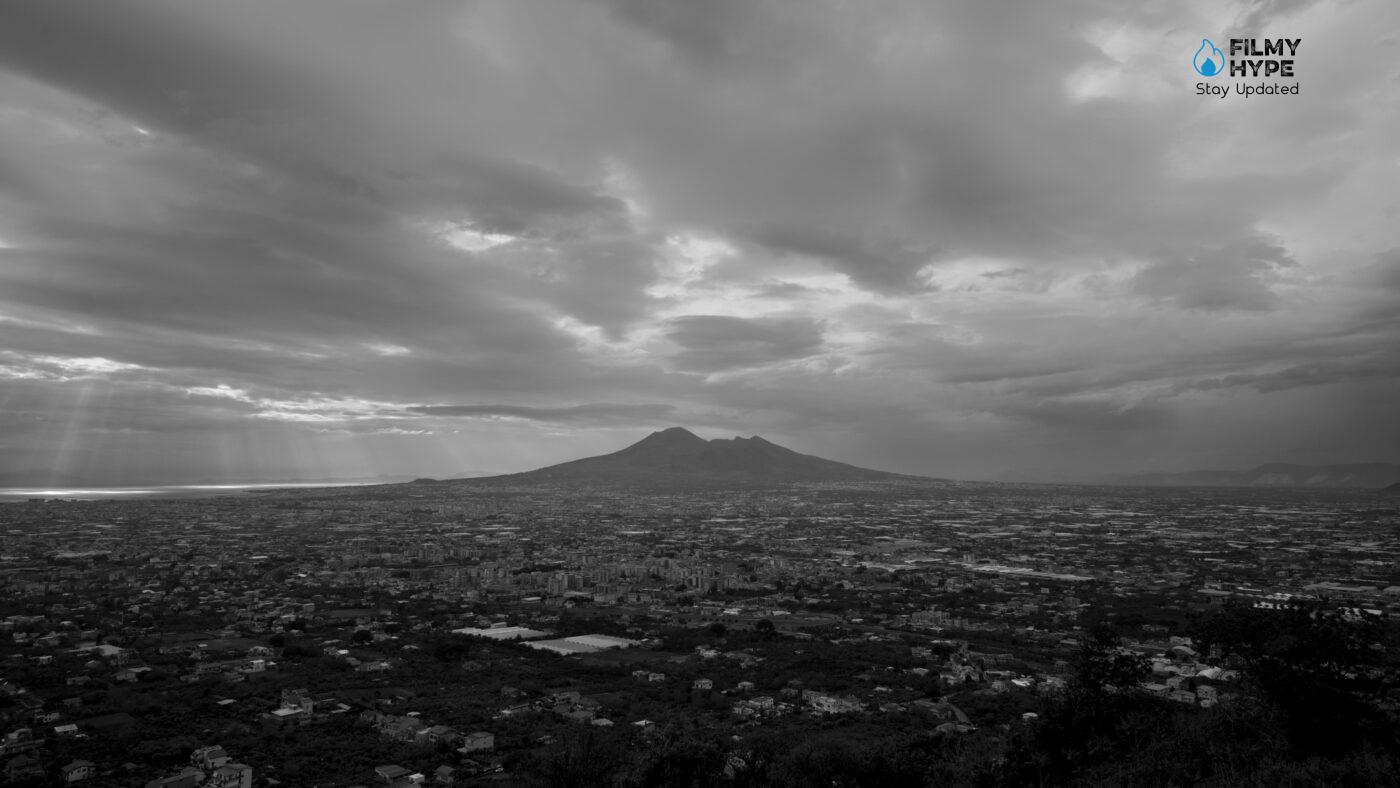
The title itself, taken from a famous phrase by Jean Cocteau — “The Vesuvius makes all the clouds in the world” —it’s already a statement of poetics: everything comes from that black and threatening mountain, from its fumaroles, from its looming silences. But Rosi never films the volcano from the front as a monument or postcard: he prefers to leave it in the background, a constant and almost mythical presence, which it filters into the stories and lives of the men and women who live in the shadow of its threat. Naples is known for being the city of the sun, conviviality, and culture, a place that Gianfranco Rosi, in his Below the Clouds it puts under an incessant shadow to tell the story of the Gulf through a past and a present that merge and interpenetrate in a path that looks at the land as well as the people who live there. The protagonists are Vesuvius, the Campi Flegrei, and those who suffer or have suffered its effects, now as in Roman times, in a flow of life that pulsates and tells the complexity of places and people.
Below the Clouds Movie Review (Venice 82): The Story Plot
Gianfranco Rosi had an objective for himself and pursued it for three years: to speak in a different way than usual about that terrifying volcano and the territory that surrounds it, about the population that lives there, about the past that re-emerges from underground thanks to archaeologists in Pompeii, Herculaneum. “Below the Clouds” is shot in black and white, with which Rosi stands in contrast to the colorful, indeed very colorful, reality, which normally besieges the eyes and senses of anyone who has visited Vesuvius, Naples, and Campania. The search for total authenticity, for an authentic look, for true and credible stories, is, as usual, mediated by the narrative vision of Rosi, a filmmaker who has long been known for a path where the documentary, in its structure, is used to create a narrative fiction, but other times, instead, he maintains his identity. Rosi has been pursuing this particular vision of his for 40 years, and with “Sacro GRA” in 2013, he won the Golden Lion here at the Venice Film Festival.
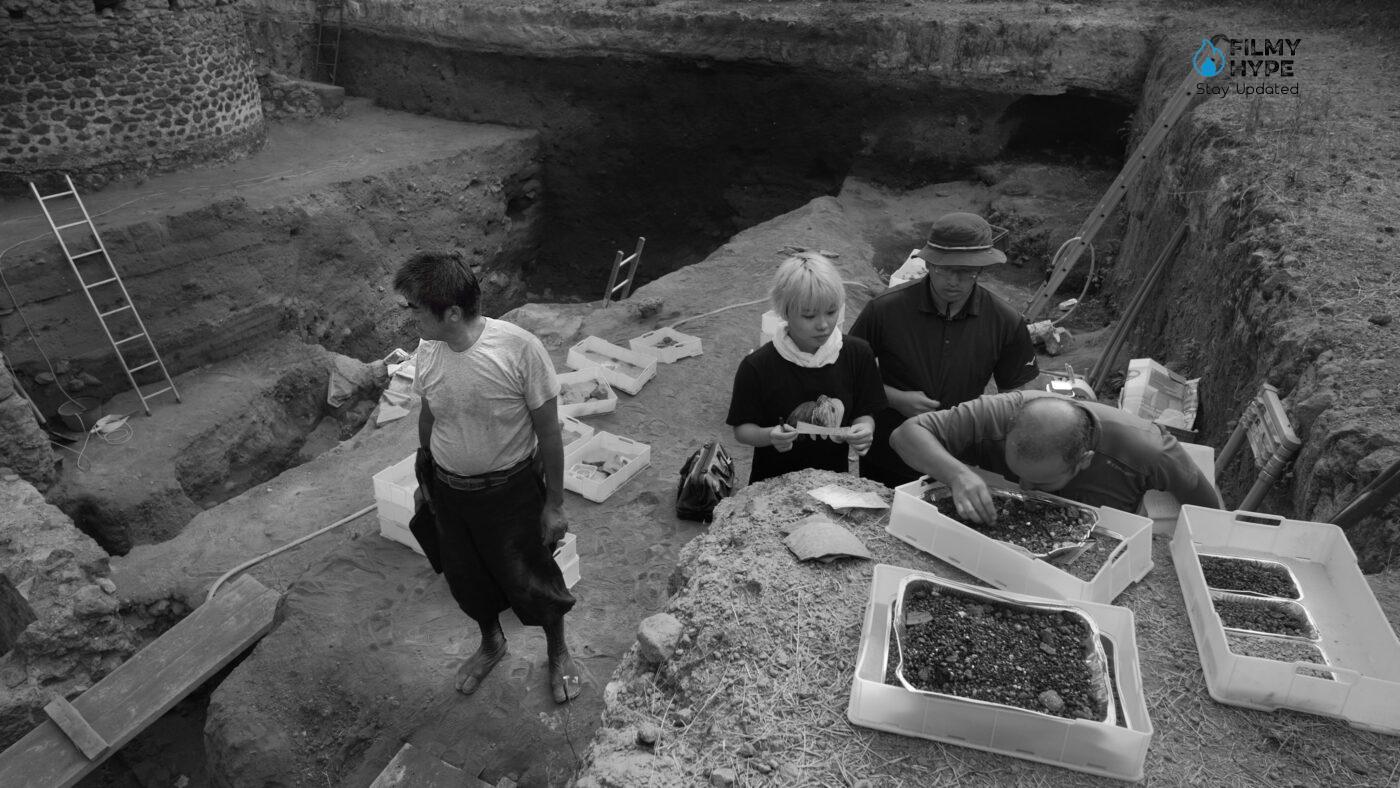
“Below Sea Level”, “Furocoumarin”, and “Notturno” were other examples. With them, he has often faced uncomfortable, difficult issues, but here there is more lightness; there is the charm exercised by this volcano, which in recent years has returned to “animate” Neapolitan evenings, scaring the inhabitants with earthquakes, two months ago, with a partial eruption. But of all this, Rosi gives us a comical real-time image, just as only the Neapolitan people can be comedians, the most anarchic and genuine that exists. But then here we are in Pompeii, finding bodies, with the University of Tokyo bringing to light what remains of those who were hit by destructive fury in 79 AD. “Below the Clouds” takes us through the tunnels of tomb robbers, and then back up on the picturesque Circumvesuviana, into churches and sanctuaries, the crypts and beaches of a varied, impenetrable universe, which Rosi knows how to enhance with her room and with alternating movement and fixity. A fun film, but not as light as it seems.
Below the Clouds Movie Review and Analysis
“Below the Clouds” suffers especially in moments in which Gianfranco Rosi asks his protagonists, actors by chance and necessity, to become such, and then everything loses naturalness, composure, and genuineness. It will be said that it is his expressive method, and it is true, but here it is clear that he did not manage this part very well, contrary to what he did even in the recent past, with “Notturno” for example, even if the Venetian Jury did not he appreciated it, he was able to give us the truth even if filtered by a script. Here from the middle onwards, we get carried away, often and willingly, and we find ourselves wondering whether and to what extent this cinematic vision needs evolution, after a long time, or whether it is right to follow the path undertaken. An unanswered question, probably, indeed, perhaps the answer is precisely in the way in which, in “Below the Clouds”, we look at Campania with foreign eyes, of other nations, in going beyond mere superficial and obvious use, the one that would bring joy to Instagrammable mass tourism.
21Uno Film)
The protagonist, however, is the time here, the one that continues to dominate us, the one we bring to light, which has transformed Naples, the population, which makes this Region so mysterious, cryptic. Extraordinary from a visual point of view, “Below the Clouds” probably suffers from an excess of variations that sometimes make it difficult to follow, but it is undeniable that Rosi knows what he wants to give us and how. Official Competition, but it is difficult for prizes to be won, just as it is difficult to think that a film of this kind can go beyond the balanced esteem of an international critic who is not actually interested in Naples, see Sorrentino and other recent examples. Gianfranco Rosi remains a unique filmmaker, for better or for worse. This film is perhaps one of his most curious, but also more accessible if you are content to be carried away by its game of perspectives, if you don’t pay attention to the artificiality of certain dialogues and reconstructions. Elements that may make it appear a little dated or perhaps treated too leniently by its creator, which, however, is not a surprise for those who followed Rosi, its strengths, and also its limits.
Rosi’s images are, as always, impeccable: horses crossing the rain-soaked beach, the port of Torre Annunziata shrouded in light clouds, the smoke from the volcano blending in with that of the city. It is an aesthetic that hypnotizes, but that risks turning into an exercise in style. Formal perfection almost becomes a cage: the gaze remains elegant, but also distant, incapable of making the viewer vibrate. Daniel Blumberg’s experimental score, which mixes natural sounds and deep vibrations recorded with scientific instruments, amplifies the feeling of suspension, but also contributes to that effect of coldness that runs throughout the film. The beating heart of the documentary, however, is found in the minimal stories that tell the story of everyday life. In the fire brigade call center, an elderly man calls several times a day just to find out what time it is, while the commander calmly always responds.
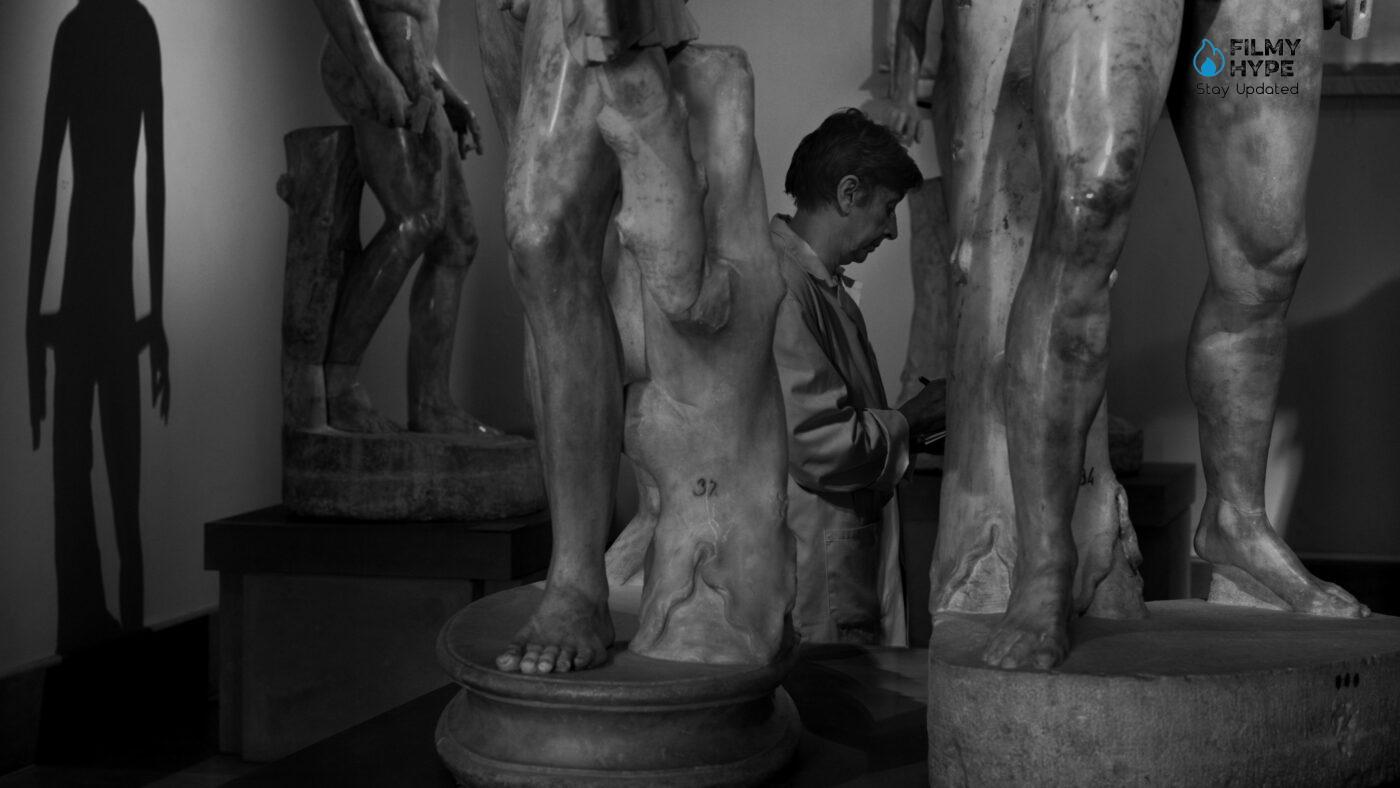
Shortly afterwards, the same operators manage a far more serious emergency: an earthquake that shakes the region and rekindles the latent fear of those who live “Below the Clouds”. In these moments, more than one laugh escapes the viewer, because Rosi’s Napoli is neither stereotyped nor forcibly dramatic: it is human, warm, and ironic. And then there is the past that resurfaces, among forgotten statues in museum deposits, archaeologists working on the excavations of Pompeii, and clandestine tunnels dug by grave robbers. And again, the port, where Ukrainian grain is dumped in silos, becomes a powerful metaphor for repeating history: the same land that has swallowed cities and lives continues to be a crossroads of global hopes and fears.
The strength of Below the Clouds is in its ability to show how time, in Naples, is not linear but circular: past and present coexist, and every daily gesture is imbued with memory. Yet, despite the depth of the theme, Rosi’s gaze remains distant. It’s as if the director prefers to contemplate rather than involve, entrusting everything to the power of the images but giving up a true emotional connection with the viewer. The result is a work of extraordinary elegance, which invites us to reflect but not always to feel. Below the Clouds is a fascinating and ambitious documentary, capable of transforming everyday life into a universal fresco and intertwining the myth of Pompeii with today’s Naples. But behind the elegance of the images and the strength of the symbols lies a limit: that of a film that is watched with admiration, but rarely with participation. It is a work that confirms Rosi as a unique observer of our time, but also as an author who is sometimes too pleased with his own aesthetics.
21Uno Film)
As already in Sacre GRA, even Below the Clouds, it’s built for episodes, for pieces that fit together without ever losing the centrality of the directorial gaze. The circularity of the journey is guaranteed by the Circumvesuviana, the regional railway line that crosses and connects the towns around Vesuvius: a run-down train and picturesque, which also became famous on social media, which here takes on the role of a real common thread. It is a path that unites places and people, past and present, memory and everyday life. Among the most touching stories is that of the firefighters, observed in their operations center: a place where funny phone calls arrive, like that of an elderly person who repeatedly asks for the time, but also dramatic calls linked to domestic or child violence, and daily disasters. Rosi’s camera remains impassive and respectful, but it captures the nuances of a profession that holds together the community, ready to face fires, tremors of earthquakes, or even the recovery of animals in difficulty.
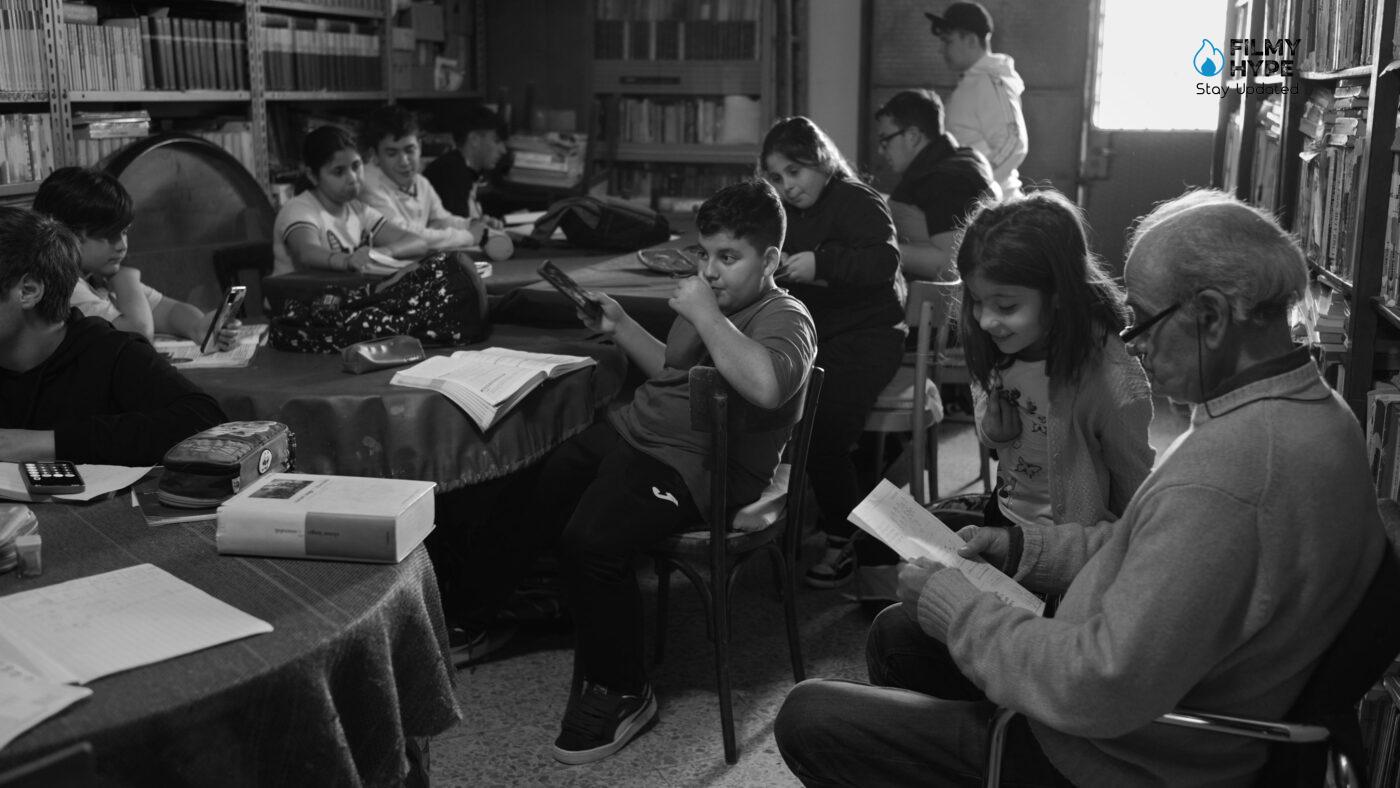
Equally intense is the section dedicated to the deposits and archives of the Archaeological Museum: here, among statues and artifacts that have remained far from light for decades, the voice of a curator is transformed into a poetic and intimate guide. Those ancient works are not just pieces to catalog, but presences of friends, life partners, fragments of a history that the territory continues guarding. It is a way of inhabiting the past that dialogues with the present. Among the characters who emerge in the documentary, impossible not to mention Titti, an elderly man who teaches giving after school to neighborhood children. With disarming simplicity and generosity, he goes from French to mathematics, from literature to history, intertwining notions of school pills of personal wisdom. He’s one of those faces that embody the silent resistance of a thick territory told only for evil.
Rosi never builds emphasis around these figures. There is no narrative voice, and there are no external explanations. They are the images, the silences, the breaks, and the details to talk about. In that sense, Below the Clouds stays consistent with the director’s style: the documentary becomes contaminated with fiction, the dialogues sometimes seem reconstructed, but the truth that emerges is deeper than any record “pure”. Rosi thus reiterates that documentary cinema is not simple news, but interpretation, visual poetry, and narrative construction. In the background of local events, Rosi lets echoes of geopolitics emerge: the silos of the port of Torre Annunziata that collect Ukrainian wheat, the faces of migrant workers like that of a Syrian refugee looking for a new beginning. They are traces that link Naples and its gulf to major global issues, without ever giving a didactic speech. As already in Nocturnal or Fire Sea, the director shows that even the most seemingly marginal lives are crossed by larger historical and economic forces. The white photograph e black, elegant and never pleased, it restores all the roughness and the beauty of the area.
The sea, the roads, the suburbs, and the faces of the protagonists emerge in clear contrasts, at times with a poignant lyricism. The sequence of horse-drawn carts along a wet, rainy beach which seems to belong to a suspended time. Below the Clouds is a work profoundly consistent with the path of Gianfranco Rosi. Again, the director doesn’t just record: he observes, reworks, stages, and through these choices we return a piece of the world with clarity and sensitivity rare. It’s not a postcard documentary, it’s not a tourist movie: it is an immersion in the folds of everyday life, in a territory marked by centuries of history and wounds, but also by one amazing resilience. With this new job, Rosi confirms his ability to transform the cinema of reality into an art that can be political and poetic at the same time. Below the Clouds is a reflection on the way in which we live together with our fears, our ghosts, and our memories. A film that, like the clouds evoked in the title, continuously changes shape and is imprinted in the memory of the spectator.
With Below the Clouds, Rosi confirms her ability to turn observation into experience. The photography, which bears his signature, is wonderful: black and white sculpts the material, transforming reality into a visual epic. The direction accompanies calmly, it never forces the gaze, building a rhythm that is not that of conventional cinema but of the life that manifests itself in its breathing. The script takes us from story to story without weighing, letting the details do the talking. The spectator finds himself suspended in a time that is no longer chronological but perceptive: a time that unites and stratifies. It’s not about understanding but about listening, about letting yourself be crossed.
21Uno Film)
The film lives as a great poetic and political breath at the same time, showing Naples not as a simple scenario but as a vibrant organism. It is a cinema that offers no explanations or certainties, but accompanies the viewer into a sensorial and contemplative experience. In the fragile balance between chronicle and myth, between here and elsewhere, lies its strength. Below the Clouds is a work that inhabits the space suspended between the visible and the invisible, and that continues to tremble in the gaze far beyond the credits. Everyone, in Rosi’s vision, is the guardian of something: knowledge, a gesture, a memory, a ritual, a profession. Not a strict religiosity, but an idea of the widespread sacred, which imbues every human act. Even the Circumvesuviana, which flows, crosses, lingers, arrives, becomes a metaphor for passages, meetings, a hinge of tracks and stories that touch each other without knowing each other. Vesuvius, meanwhile, looms. Each shot perceives its breath: fumaroles, skies, clouds that become emblems of a suspended time, in which archeology dialogues with current events, and ruins speak to the present more urgently than new buildings.
The strength of Rosi’s work lies precisely in this ability to intertwine the micro and the macro: the pizza that comes from the wheat transported from Odessa, the pleas of the devotees of the Madonna dell’Arco, the children who learn to read in the back of a shop, the volcanic activity and the tremors in the Campi Flegrei area and at the same time the thousand-year breath of Pompeii and Herculaneum. Rosi orchestrates this mosaic without ever imposing a narrative voice: let the images settle, let the stories become contaminated as in an organic montage, in which one gesture bounces into the other, a face recalls a landscape, a shadow refers to a ruin. Below the Clouds is placed in the highest line of documentary cinema, the one that rejects the dichotomy between fiction and reality and seeks, rather, a truth in the very gesture of filming. Rosi declares it: filming is an act of trust, a meeting.
And it is precisely this trust that holds together a work that might appear dispersive, but which instead, in its meditative rhythm, finds a profound unity: that of a territory that is both chronicle, myth, and destiny. It is not a film that allows shortcuts: the spectator is called to cross it like an archaeologist digging, like a devotee, like a traveler observing the landscape from the window. But those who accept immersion come away with the feeling of having contemplated a secret atlas, an archive of the soul in which the fragility of today and the eternity of the past are confused. Rosi reminds us that cinema, when it is big, doesn’t just tell stories: it preserves the signs. And the signs, Below the Clouds of Vesuvius, never stop speaking to us.
Below the Clouds Movie Review: The Last Words
Below the Clouds is a hypnotic and poetic documentary that captures Naples between everyday life and historical memory. Visually extraordinary, yet emotionally distant, it is a work to be admired rather than experienced. A complex and stratified work, just like the territory it tells: a Naples made of history as well as many stories that are intertwined with the vicissitudes of the world. Through the visual expedient of black and white, the director emphasizes lights and shadows, showing the entire stratified social and territorial structure, putting himself at the service of a spontaneous and authentic narrative.
Director: Gianfranco Rosi
Where We Watched: At the Venice Film Festival 2025
Filmyhype.com Ratings: 3/5 (three stars)