
Alice in Borderland Season 3 Review: A Much Less Incisive Season But Addictive
Alice in Borderland Season 3 Review: Who owns Borderland? This was the question that the first two seasons of the Japanese series Alice in Borderland Season 3, back on Netflix, taken from the manga by Haro Asō, had tried to address. With a balance between deadly games and psychological introspection, Netflix’s production has gained an international audience, establishing itself as a more nihilistic alternative to the Korean phenomenon Squid Game. The second season, released in 2022, consistently concluded the story arc from the manga, delivering a stark and satisfying ending to the audience. Yet, three years later, on 25 September, the platform decides to reopen the gates of the Borderland with a third season, which, already from the trailer, presented itself as a new beginning based on the mystery of the map of Joker. An expected and, at the same time, feared return, because it lacked the literary framework that had guided writing up to that point. There is always a moment of silence after suffering. That moment between one exhalation and another when even the memory of terror seems like a dream.
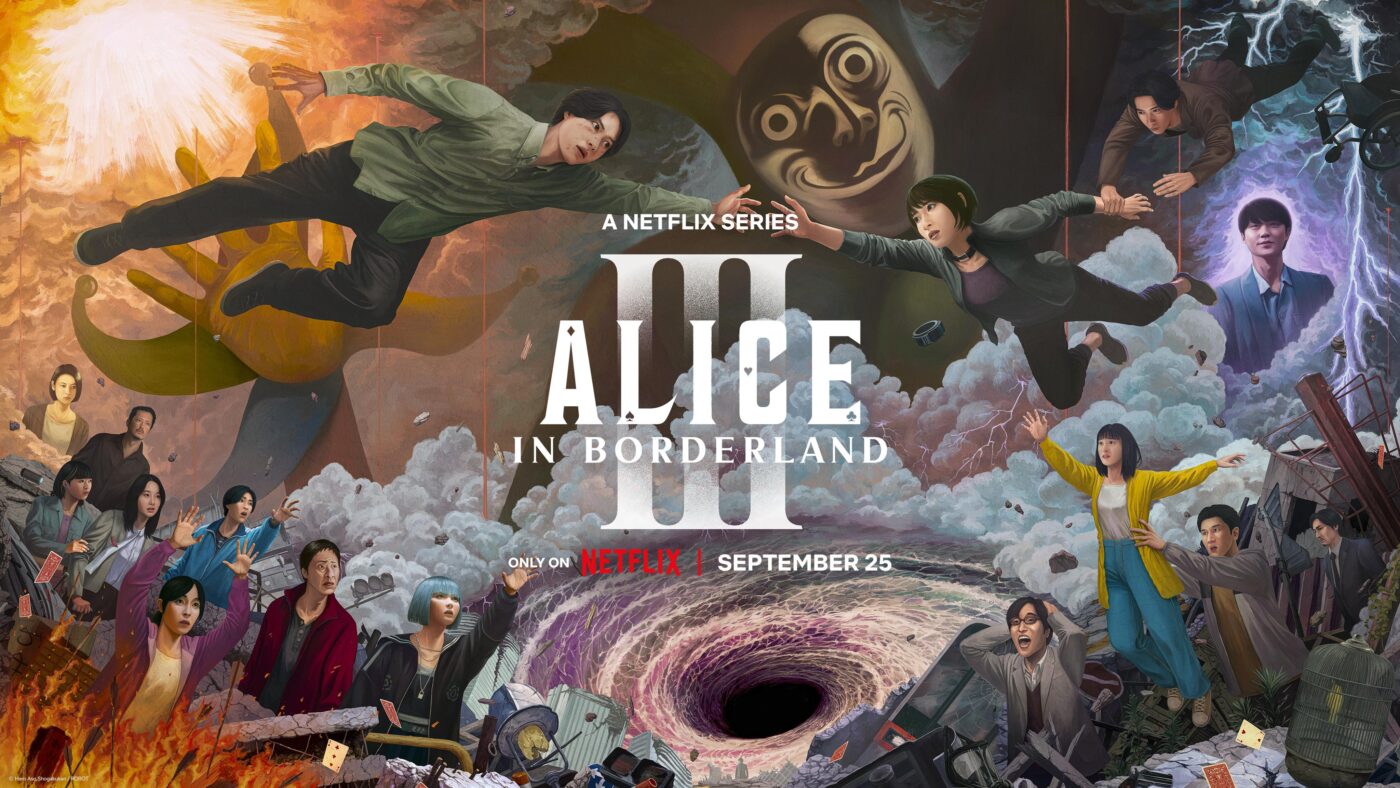
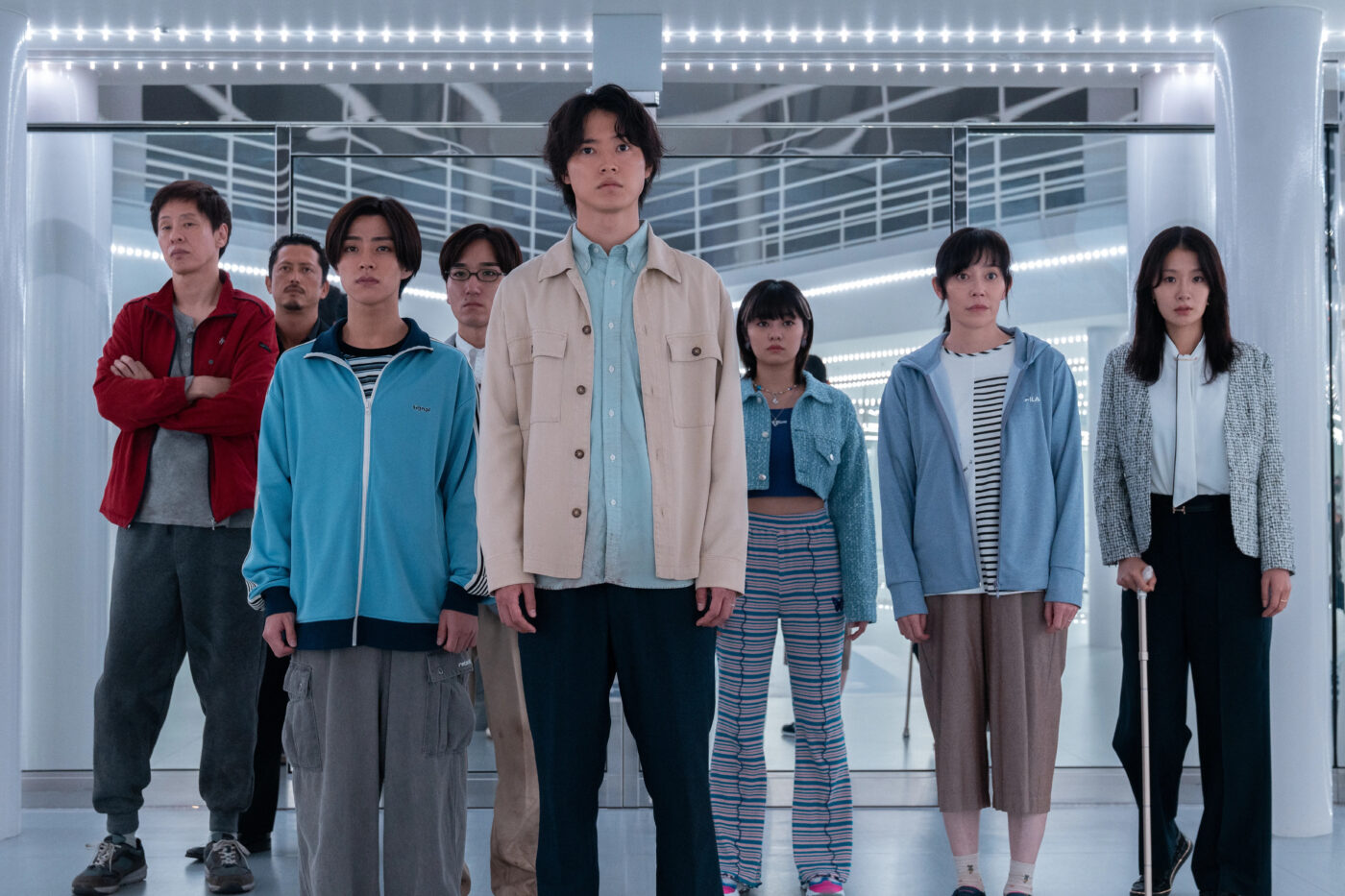
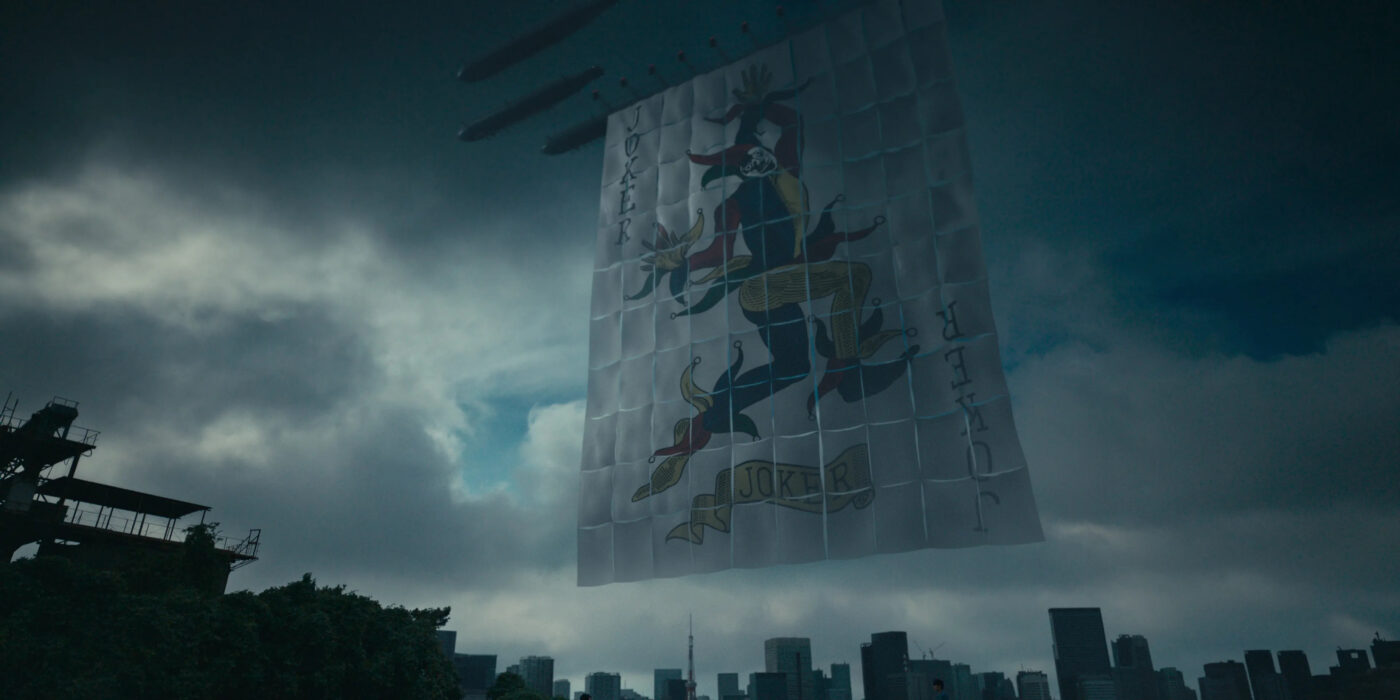
Alice in Borderland, with season 3, opens right there: in that silence that follows the chaos, with Arisu and Usagi apparently returning to normal life, but marked by what they experienced. The real world has become a place of absence: memory erased, dreams torn, a bond that resists but that time has damaged. The season promises to explore what it means to recover normality after the Borderland experience, but also that “normality” is just the scene before the next game. The appearance of paper Joker at the end of season 2 casts a shadow that cannot be ignored: the Joker is not just a symbol, but brings with it the promise of new games, rewritten rules, internal separation, and conflict. This time, the stakes are higher, more personal; the challenges are not only physical, but above all, moral and emotional. After the conclusion of season two, Arisu and Usagi try to live a normal life in the real world, but memories of the Borderland resurface as dreams and visions. Peace is broken when Usagi mysteriously disappears, bound to a new character, Ryuji, who is obsessed with the afterlife. Arisu receives the card of Joker, a sign that the Borderland is not over at all. Forced to return to that world, Arisu faces new, even more cruel and psychologically destabilizing games while trying to save Usagi and understand the profound meaning of the Joker.
Alice in Borderland Season 3 Review: The Story Plot
At the end of season 2, we discovered that the size of the Borderland was the one where all the survivors of the impact of a meteorite that fell right on the Shibuya intersection found themselves. Arisu and Usagi emerged victorious from the games and finally met in the real world. But what seemed like a happy ending is called into question by the mocking epilogue: there is still one card left to play, the Joker. Now the two are married and seem to lead a placid and happy life, which, in truth, is tormented by Borderland’s memories. In that parallel dimension suspended between life and death, they lived experiences that were impossible to forget. One day, Usagi suddenly disappears, but we quickly find out why: she decided to return to Borderland following Ryuji, a scholar obsessed with what might or might not be in the afterlife. Arisu receives a visit from Banda, who has meanwhile become a permanent resident of Borderland, and reveals to him where the woman is. He can’t help but return “to the arena” using a drug provided to him by Rizuna that will make him die for two minutes. Will Arisu be able to find Usagi, defeat the games again, and bring his wife back to the real world?
Alice in Borderland Season 3 Review and Analysis
Arisu and Usagi play the beating heart of the series. This season, Arisu appears transformed by what he has experienced – no longer just a survivor of cruel games, but a man trying to win back his place in reality, with vulnerabilities, fears, and the urgency to save those he loves. Usagi, for her part, carries within herself the weight of lost memory, disturbed dreams, perhaps the idea that “normality” does not mean freedom. Their relationship is put into crisis not only by the outside world, but by internal divisions: separate teams, game worlds that are reflected in personal fragilities. New characters are introduced: the figure of Ryuji, a scholar of the afterlife, offering a point of view other than pure survival: the idea that what is next, what escapes the boundary between life and death, can be studied, understood, or used. Other supporting characters, already known, return with changed motivations, and the fact that Arisu and Usagi are in different teams introduces the possibility of internal conflicts not perceived before, less obvious complicities, and more precise moral tensions. This can enrich the narrative, but it also risks diluting the pace if not well-balanced.
Viewers rightly expect games that are not only “physically cruel,” but that require ingenuity, moral sacrifice, and introspection – elements that have been strong points in previous seasons. The biggest challenge of this season was to maintain the balance between the visceral tension of the games, the personal pathos of the protagonists, and the construction of a credible antagonist, especially with the introduction of Joker as a mysterious card and symbol of transition between life and death. But can it be compelling? Among the most obvious strengths is the emotional drive that arises from the return to reality, not as the end of the game, but as a prelude to a new challenge. The idea that Arisu and Usagi, together, are not free from the shadows of the Borderland is powerful: it introduces dimensions of trauma, memory, and loss that can make season 3 more mature, more thoughtful. The separation between the protagonists allows us to explore not only what it means to survive together but what it means to fight alone, finding inner resources when deprived of the most cherished support. This can give the season a depth that previous seasons sometimes sacrificed in favor of pure action.
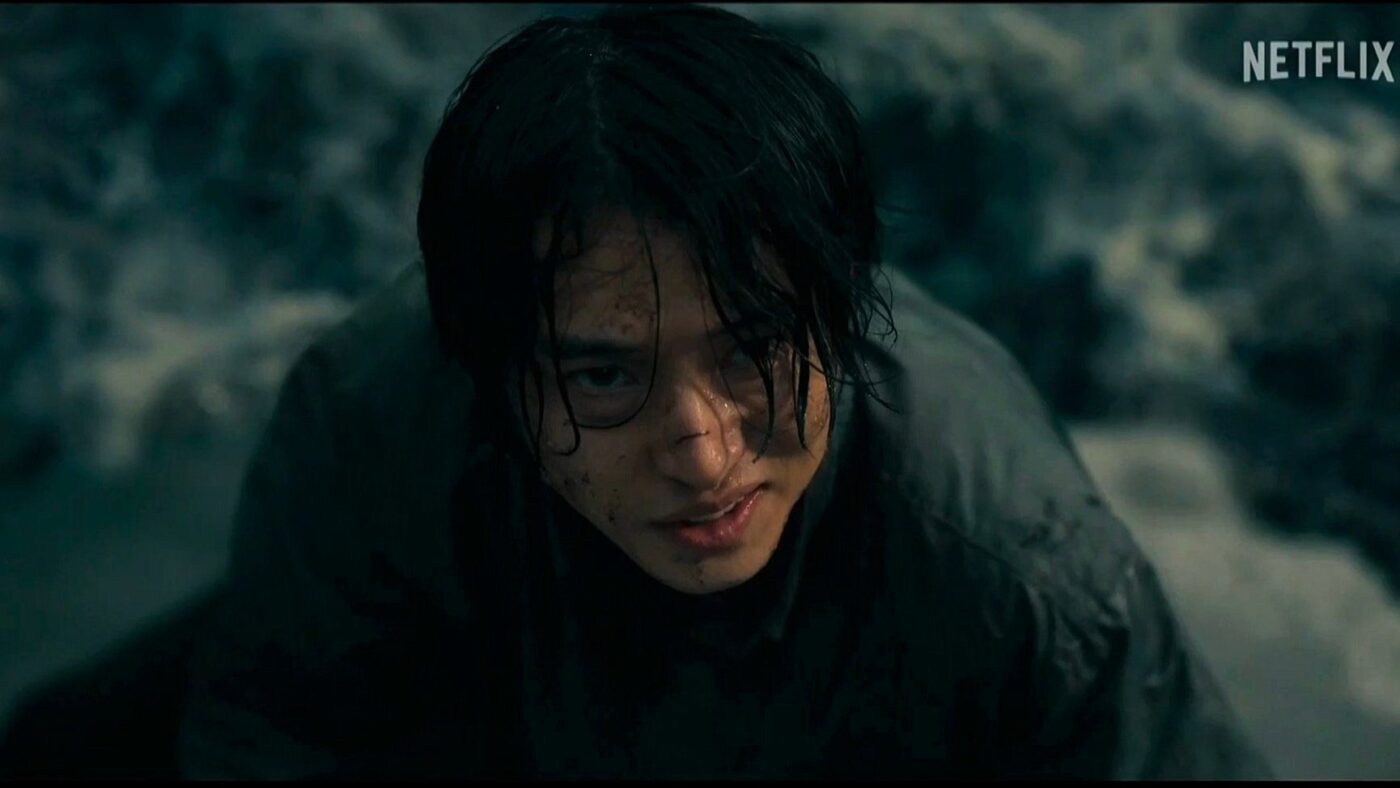
The introduction of new figures working between life and death (the afterlife scholar, etc.) promises to expand the metaphysical theme, which has always been present but not always fully developed. And the return of the Joker as a disturbing element can function as an effective symbol: not only for the mystery, but for the reflection on liminality, loss, and choice. On the other hand, critical issues are already on the horizon. The lack of source material from the manga leaves the production with the task of inventing original games and narrative arcs, with the risk that some games are less memorable or cohesive than those already known, and that some moments of pathos seem forced. Another risk is rhythm: if attention to personal history and background prevails too much over action, tension, which is one of the most loved elements of the format, could decrease. The expectation with what was built, both in the games, in the characters, and in the aesthetics, was very high. But the narrative innovations are not enough to be well justified, sometimes creating dissonance for those who know the manga or were fond of previous seasons.
Although it arrived in streaming well before Squid Game, Alice in Borderland received an important “promotional” boost thanks to the creation of Hwang Dong-hyuk due to a similar assumption: that of people dealing with deadly games in which you have to think only and exclusively for your skin. People started thinking, “Well, I saw Squid Game, I liked it, let’s try this one too”. But the similarities between the two productions stop here. Squid Game has ambitions of “realism” (with all the necessary quotes) and social criticism, and Alice in Borderland, like the manga on which it is based, has its roots in the supernatural. And in fact, although blessed with good feedback, it has not become a global phenomenon comparable to any other. And, for two seasons, it worked tremendously well. A mechanism of use was triggered, motivated both by wanting to discover how complicated and perfidious the games with which Arisu and co had to deal were, and by the relational dynamics between the characters, always poised between betrayals and unexpected alliances. Then there was the fascinating element of the Mystery Box and the question: What the heck is Borderland land? Who created it? Who really rules it? How can you get out of it?
Questions that had answers, perhaps partial, with the epilogue of the second season. The problem is that the promise made to us by that Joker card framed at the end of season 2 turns out to be much less engaging. The entire third season does nothing but show us characters struggling with the processing of traumas as if all six episodes that compose it were nothing more than a long therapy session to resolve the PTSD. Which wouldn’t be a point against it in itself, if it weren’t for the fact that the script tends to propose rather cloying and repetitive situations. Yes, because perhaps, having reached this third season, Alice in Borderland seems to show the limits of an internal “mythology” which, once it has seen its main identity as a “liminal land” revealed, seems to have lost a good part of its charm, no matter how hilarious it is to discover how subtle the new games offered are. To support a scaffolding like this, where “open cards” are now played, you need to handle and carefully build the rest of the structure. And a clever closure, which, if necessary, is very similar to that of Squid Game 3, is certainly useful for winking at a new season or a spin-off, but it is not enough to revive the fortunes of a series that could very well have closed a couple of years ago.
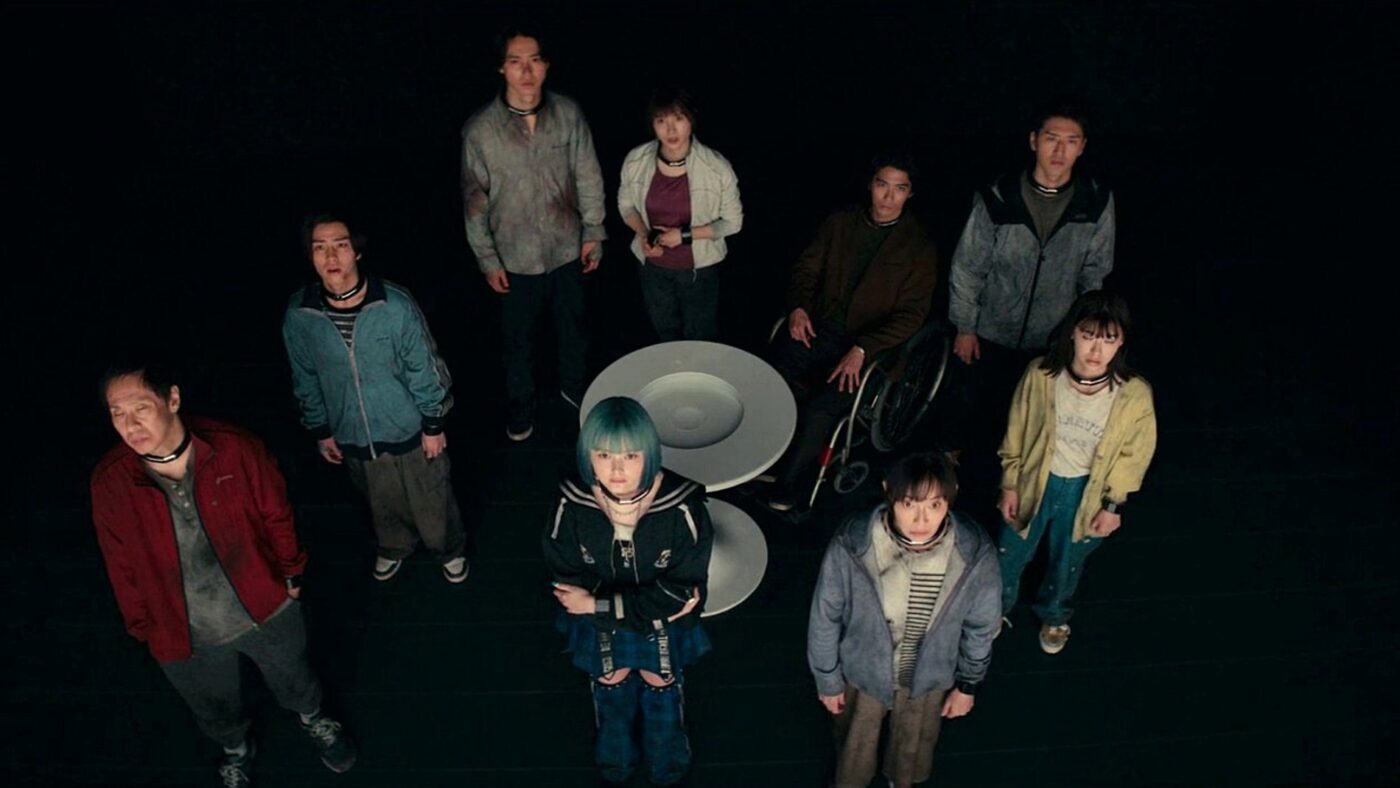
If there is one aspect that continues to work in this third season, it is the spectacular one. The games are constructed with good visual imagination: the rehearsals still manage to keep the adrenaline high, and the viewer is drawn into suspense thanks to tight editing and direction capable of alternating moments of silence with explosions of sudden violence. The design of the challenges, although less original from a narrative point of view, is striking for its ability to reinvent urban spaces and metropolitan architecture, transforming Tokyo into a deadly park that continues to amaze creativity and restlessness. The production aspect, therefore, remains one of the real strengths: Netflix has invested heavily to maintain high visual quality. The problem comes when looking for a story. The feeling is that there is nothing left to tell: the characters do not evolve, the relationships do not deepen, and the narrative dynamics appear like a faded replica of what we have already seen. The series lives only on its games, but these are no longer storytelling tools: they are circus acts, compelling but empty. The decision to continue beyond the manga finale makes the season a blatant commercial operation.
There is no creative drive that would justify returning, but only the desire to bring the public back to the Borderland world to exploit its international appeal. This weakens any narrative choice: the Joker Card, which could have opened up new and original perspectives, is used as a simple hook, without developing a real underlying theme. To aggravate the situation, we add that some junctions seem to be taken directly from the third season of Squid Game. It’s a short circuit that weighs a lot, because Alice in Borderland had built its identity precisely in distinguishing itself from that formula, but now it seems like an imitation of it, and this drastically reduces its strength. Finally, on an emotional level, the density of the first two seasons is completely missing. There are no moments of true catharsis, there are no moral dilemmas that stick, there is no balance between action and introspection that has made Asō’s work a cult.
Sometimes it’s best to let a story end. This is the inevitable thought after seeing Alice in Borderland – Season 3. The series retains its spectacular potential intact and still manages to entertain with adrenaline-filled games and evocative sets, but loses the coherence and necessity that made the first two seasons memorable. The result is a useless chapter, born more from earning logic than from an artistic need. Fortunately, despite its limitations, this season does not affect the strength of the “main story”, already told and concluded effectively. It remains a superfluous comeback, destined to divide audiences between those who will enjoy the entertainment and those who can only regret the perfect 2022 close. Honestly, what bothers me the most about season 3 of Alice in Borderland is that once I’ve seen it, I don’t really know the reason for its existence. Let me explain: the first two seasons have a careful evolution of characters and a clear objective: escape from a place that, essentially, is purgatory. This, however, brings the characters to Borderland almost “because if”. It’s not that the reason is invalid, but it’s like saying “it happens because of a potato”.
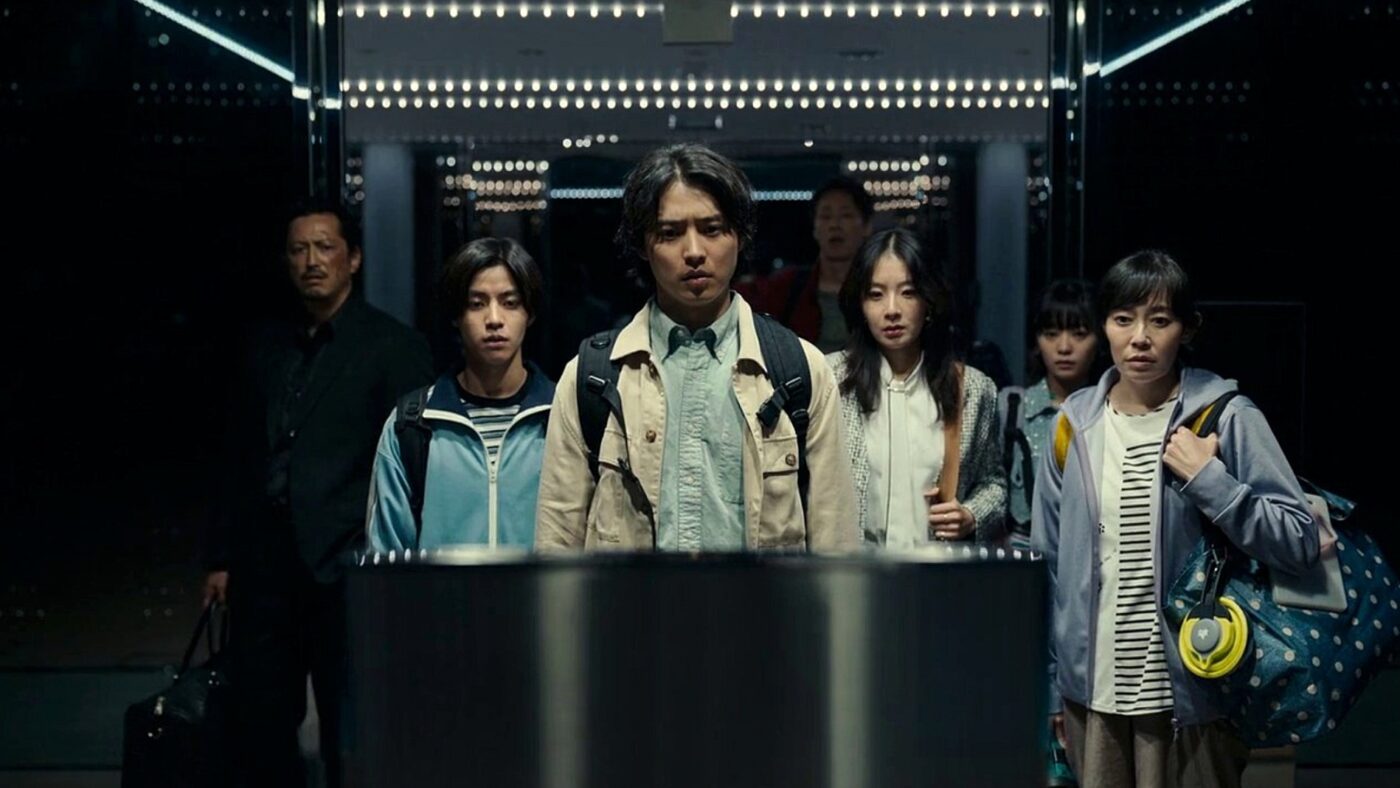
Games are still the most interesting thing about Alice in Borderland, some with a lot of creativity to unleash the massacre, and using some new locations in Tokyo, which gives even greater charm. But honestly, to shoehorn this section in, I hadn’t taken the characters to the real world, but rather I would have kept that return as a goal and put the Joker on stage just as the figures fall. And, well, speaking of the “Joker”, his motivations are… pffff… Are you going to entertain yourself by watching Alice in Borderland Season 3 on Netflix? Yes, but don’t expect a big deal when it comes to story, because we are in a season in which things “happen because it says so in the script”. Oh yeah, pay attention to the last scene, and we’ll talk about her.
Alice in Borderland Season 3 Review: The Last Words
The third season of Alice in Borderland, available on Netflix, restarts after the return of Arisu and Usagi to the real world. Apparently free, the two protagonists discover that normality is fragile and that the Borderland has not stopped claiming them. The introduction of the Joker marks a new beginning, with new games and more intimate dynamics: Arisu and Usagi, now together but separated in trials, must face challenges that intertwine action and psychology. The series deviates from Haro Aso’s manga, inventing an original narrative path. Between dark atmospheres, new enigmatic figures, and reflections on trauma, the season promises emotional maturity and visual spectacularity, despite risking suffering from narrative imbalances and a lack of coherence compared to the original material. With weak motivations for returning to the Borderland and characters that are not very in-depth, this season has nothing to do with the adrenaline-filled pace of the previous ones. The new games oscillate between interesting moments, with excellent staging, and boring ones. The season adds nothing new and ends with an ending that will make viewers roll their eyes.
Cast: Kento Yamazaki, Tao Tsuchiya, Ayaka Miyoshi
Director: Shinsuke Satô
Streaming Platform: Netflix
Filmyhype.com Ratings: 3/5 (two and a half stars)









One Comment