
After the Hunt Movie Review (Venice Film Festival 2025): When The Thriller Gets Lost In Too Many Words
After the Hunt Movie Review (Venice Film Festival 2025): Luca Guadagnino returns to Venice with After the Hunt, a film marking the debut of Julia Roberts on the red carpet of the lagoon, and which presents itself as an academic thriller-drama, crossed by delicate and potentially explosive themes. Set in the corridors of the prestigious Yale, the story intertwines accusations of harassment, generational conflicts, and ethical dilemmas, attempting to transform the story into a reflection on individual responsibility and the very concept of complicity. But if the film promises to delve into the psychology of the characters, what remains on the screen is, above all, the feeling of a job more committed to speaking than engaging. Controversial film ready to spark a strong debate on the topic of sexual consent. This time, the director personally chooses not to participate in the competition and to present “After the Hunt”, this is the title of the feature film, in the “Fuori Concorso” section of Venice82.
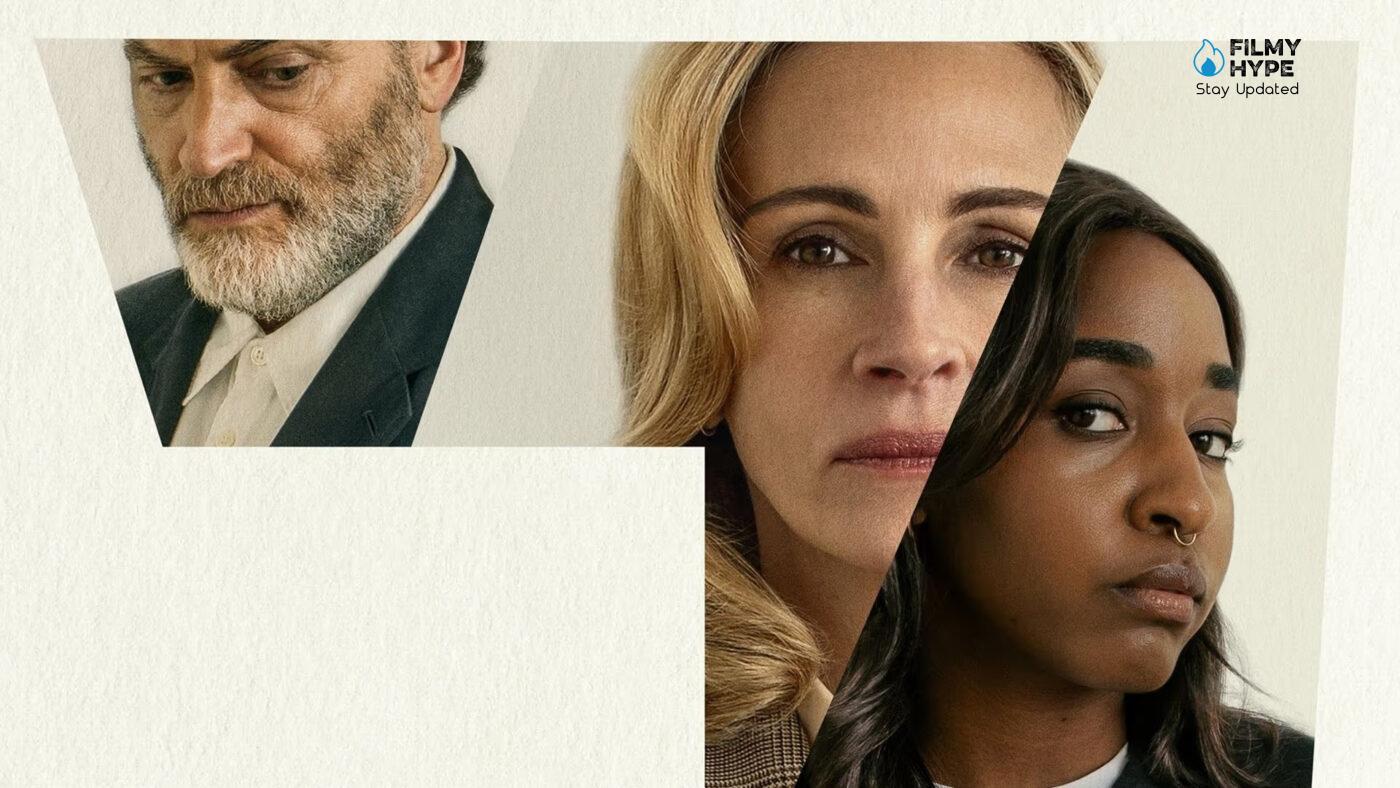
The protagonist is a surprising Julia Roberts in a very complex dramatic role, thanks to which the actress managed to tread the red carpet of the Venice Film Festival for the first time. And, as she revealed during the press conference, it is a dream for her to be in Venice. Also joining the Hollywood diva in the cast of the film are Andrew Garfield (Spiderman) and Ayo Edebiri (The Bear), each of them in the role of characters who are also controversial and fascinating, like the film itself, and capable of telling, each, the problems, contradictions, and limits of different generations of human beings. Even the environments and social class placed under a magnifying glass are very reminiscent of the American author’s filmography. The protagonist is, in fact, Alma (Julia Roberts), professor of philosophy at Yale University. Sophisticated, very elegant, intelligent. Everyone loves her: her husband, Fredrik (Michael Stuhlbarg, who returns to work with Guadagnino afterwards, Call Me By Your Name and Bones and All), a psychiatrist who cooks dishes full of love for her; colleague Hank (Andrew Garfield), bright and bold, and Maggie (Ayo Edebiri), student who sees her as more than a mentor. All are connected by Alma’s frantic search for attention and approval.
After the Hunt Movie Review (Venice Film Festival 2025): The Story Plot
The plot focuses right about her, Yale teacher, waiting for a promotion crucial to his career. The woman sees the balance of her life when one of her model students confides in her about having been the victim of harassment by a colleague. The man in question is not a simple acquaintance: he is a professor whom Alma knows well, and he admires her and shares an ambiguous bond with her, made of mutual esteem but also of subtle tension. To complicate the affair further, there is the basic helmet consisting of the fact that the colleague in question has a certain fascination with confrontations with Alma, and confesses to a controversial episode with her girl, who accused him. Alma thus finds herself at the center of a vortex: on the one hand, the pupil, who puts his trust in her absolute; on the other, a colleague who asks for understanding. And meanwhile, like a shadow stretching over the present, a dark secret resurfaces of the teacher’s past, which risks breaking it irremediably reputation and career irremediably.
The film opens with the regular sound of a metronome, a penetrating beat that will accompany the entire narrative like an internal voice, a call to truth. Alma Imhoff (Julia Roberts), an esteemed university professor, finds herself involved in the case of Maggie Price (Ayo Edebiri), a student who accuses the charismatic Hank Gibson (Andrew Garfield), Alma’s colleague, of a sexual assault. To complicate matters, the difficulty of the teacher in taking one side or the other and a personal secret, which emerged from the past, will lead her to confront her own sense of responsibility. Every scene is a minefield, every dialogue is disguised as academic eloquence that hides human weaknesses. The psychiatrist husband, played by an impeccable Michael Stuhlbarg (filmmaker’s number one fetish), seems the only lucid observer of a context in which everyone –colleagues, students, allies, and accused – seems to be unwitting patients of a great moral experiment.
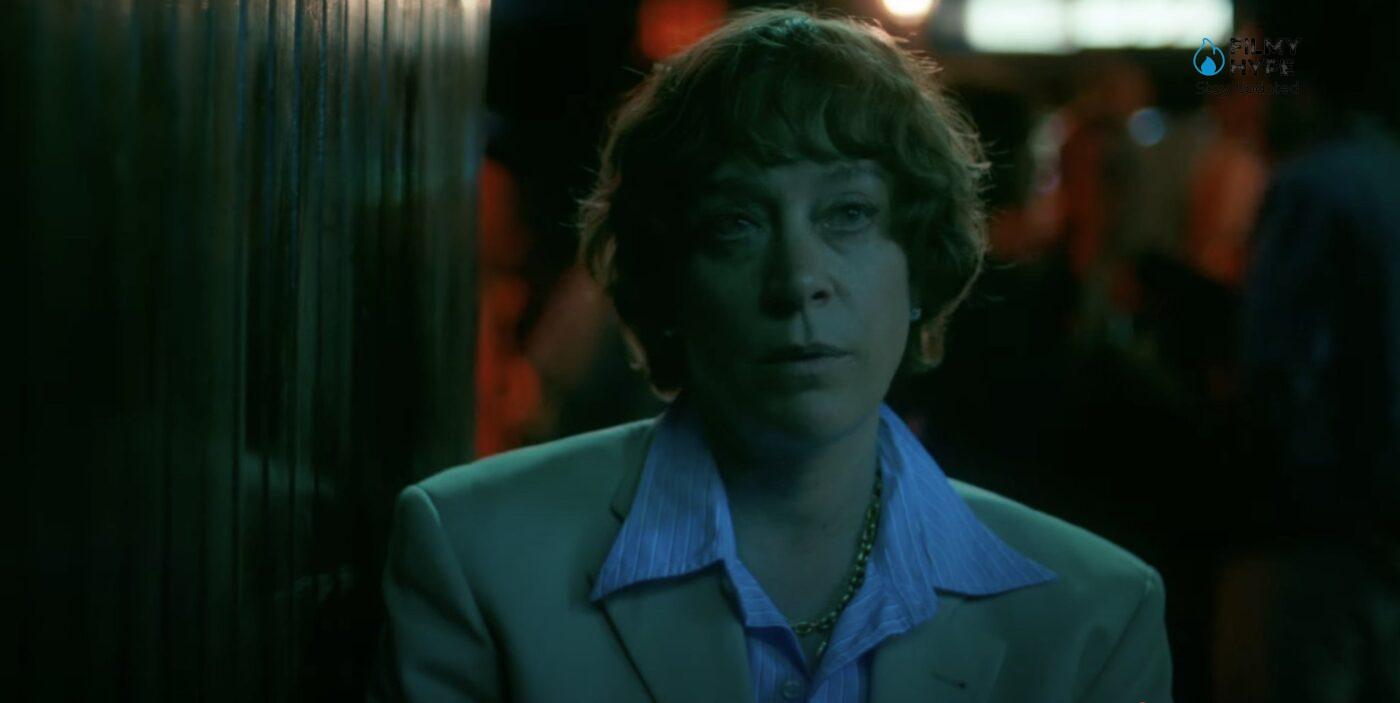
The scandal unhinges the apparent stability of a “progressive”, self-absolving world, resulting in a stratified conflict. Gender meets race, youth challenges authority, and love is tested by idolatry. Guadagnino does not take sides and does not protect anyone: the characters are imperfect, each marked by distorted morality, driven by the need to feel right. The comparison between Alma and Maggie is reflected between different generations, but also between silent pain and unheard anger. The body and the spirit become narrative tools: the tremor of a hand, an unsettling shot, an out-of-place detail tell more than words. When Alma’s past emerges (in a penultimate scene that could have closed the film perfectly), everything shatters and is recomposed into a new illusion. There is no catharsis, there is no redemption. Only the return to corrupt dynamics, carved into the systems of power that choose privilege over righteousness.
After the Hunt Movie Review and Analysis
At the center of this film, very intellectual and very philosophical, in which the theme of sexual consent is explored from multiple points of view that change depending on the age, gender and ideologies of those who find themselves having to face it, there is Julia Roberts who plays an ambitious philosophy professor at Yale University called to take a stand in a case of alleged sexual violence. One of her students, in fact, accuses a professor and friend and ex-boyfriend of the character played by Roberts of rape, who, however, declares himself innocent. And it will be precisely this position, divided between two “truths” and a reputation that must be maintained, that will lead the character of Julia Roberts to make questionable choices, not always acceptable, and also rather ruthless from the beginning to the end of the film. It must be said that the most interesting aspect of Guadagnino’s new film is not so much the direction – which in some elements refers to Woody Allen’s films as the director himself admits – or the screenplay which is burdened with intellectualism and excessive quotations but the contents which, in some way, they arouse a very heated debate in the viewer who is continually led to take a position (and even change it over the course of the film) and to realize how a simple different perspective can change the “truth” of a narrative and make one lean towards accuse someone or acquit them.
“After the Hunt” is by no means Luca Guadagnino’s best film, it is certainly less romantic and engaging than “Call Me By Your Name”, less crazy than “Queer” and less splatter and particular than “Bones and All”, however, this story of men, women, boys and girls grappling with the weight of having to continually choose and defend a moral, an identity, an image, he does a good thing: he turns on souls, moves consciences and, perhaps, this is enough to make this a memorable if not exceptional film. If After the Hunt aspires to be a psychological thriller, what is missing is precisely the tension (which we only find in musical choices). Guadagnino builds a narrative structure that should bring the viewer to the brink of doubt, but the staging remains static and suffocated by an exasperating verbosity. The two and twenty hours of duration end up further weighing down a story already devoid of emotional impulses, in which the dialogues turn into long philosophy lessons that are more affected than necessary. The absence of moments of breathing space or lightness condemns the film to a monotony that clashes with the ambitions of the genre, leaving audiences more tired than restless.
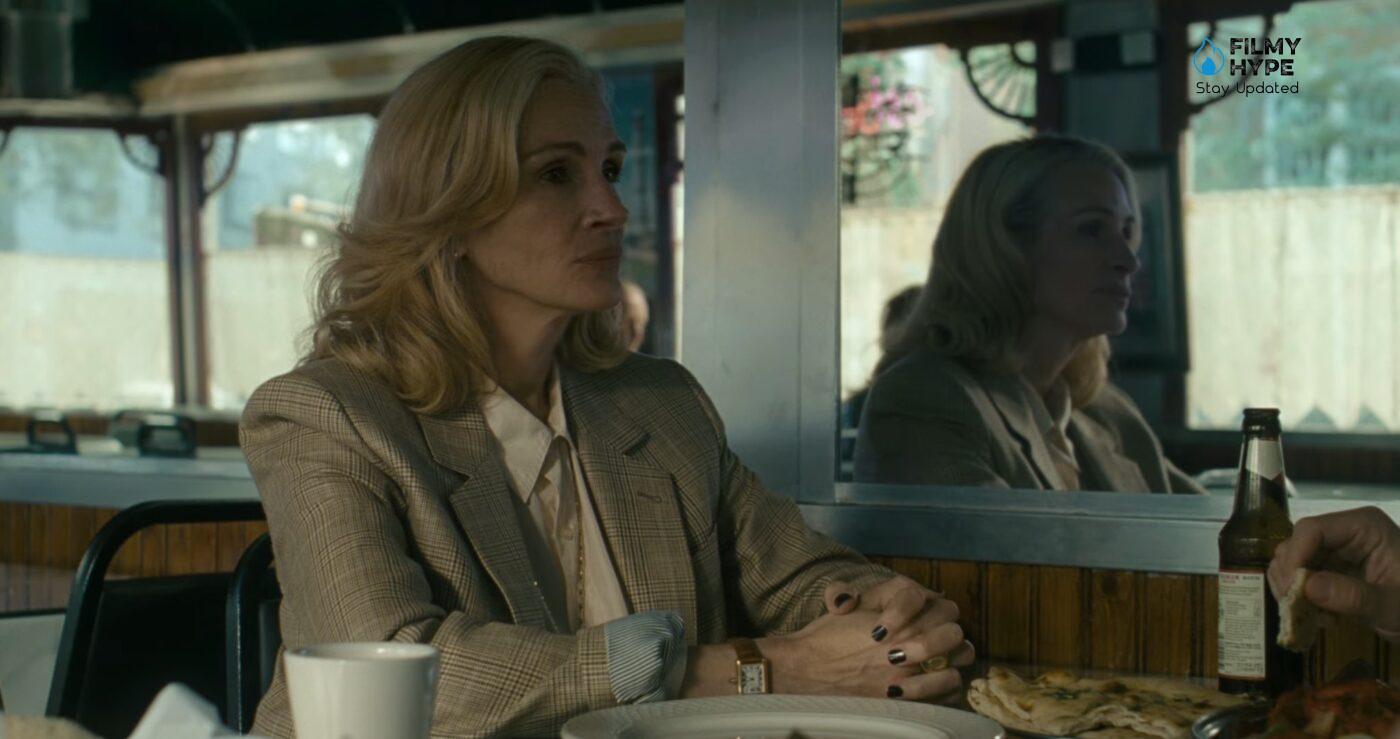
One of the most obvious limitations concerns the characterization of the characters. Julia Roberts brings solidity and authority to the role of the teacher, but finds herself caged in a writing that does not grant her nuances. Andrew Garfield, in the role of the accused teacher, is deliberately ambiguous, but ends up seeming more caricatural than complex, contributing to making his stage presence unbearable. Ayo Edebiri instead offers moments of intensity, but she too is trapped in dynamics that seem to stereotype generational conflict: idealistic Gen Z, confused millennials, disillusioned Gen X. Schematic figures that risk nullifying the human impact of the story, reducing everything to conceptual exercise. Guadagnino addresses crucial issues –consensus, privilege, responsibility for academic power – but he does so in a more declared than experienced way. Harassment, despite being the narrative engine, remains treated as a mere dialectical battlefield, reduced to a clash of opposing versions without ever restoring the human weight of what happened. The reflection on silence and personal memory could have taken the film beyond clichés, but the choice to focus on high-sounding speeches and pompous dialogues dampens any possibility of empathy. In the end, the question that remains is less about the actual topic and more about the very meaning of the operation: what does After the Hunt really want to communicate?
It is perhaps the first film that plunges the knife into the contradictions and shadows of the gen-z (and that Guadagnino, who is one of its most beloved singers, does so is intriguing), but it is also a slap in the face to the children of the twentieth century, to their internalized patriarchal culture and their poor moral integrity (something similar was already there Transfers, but there the “powerful” was truly indefensible). And, ultimately, the theme of generational conflict is another side of the prism of privilege: in the dinner that opens a film – the dialectical clash is incandescent but the balance of power is clear – there is a reflection on the question of taking offense and worrying about the sensitivity of others which determines not only the gap between “adults” and “young people”, but it also defines the rules of engagement of a new dialectical device to update the ancient scheme of ’“killing the father”.
But, in this ambiguous and disturbing story as a film by Claude Chabrol (or that same Allen mangled by the side effects of Me Too) could have been, the father she is a mother: a charming mentor who establishes very intense friendships with the protégée, triggers the Electra complex and embodies the impenetrable and desperate love of all those who gravitate around her, from the protective husband to the unruly assistant to the ambitious student. It is a role that reminds us of the greatness of an actress like Julia Roberts, as wonderful and inaccessible as the unspeakable truth of her past that resurfaces, piercing her like an ulcer. Just as Andrew Garfield is sensational, perhaps at the peak of his career, Ayo Edebiri is a character on the ridge between manipulation suffered and accomplished (the details that define his emulative process), Michael Stuhlbarg is always mammoth in calibrating tenderness and solidity (the first ending is sensational also thanks to him).
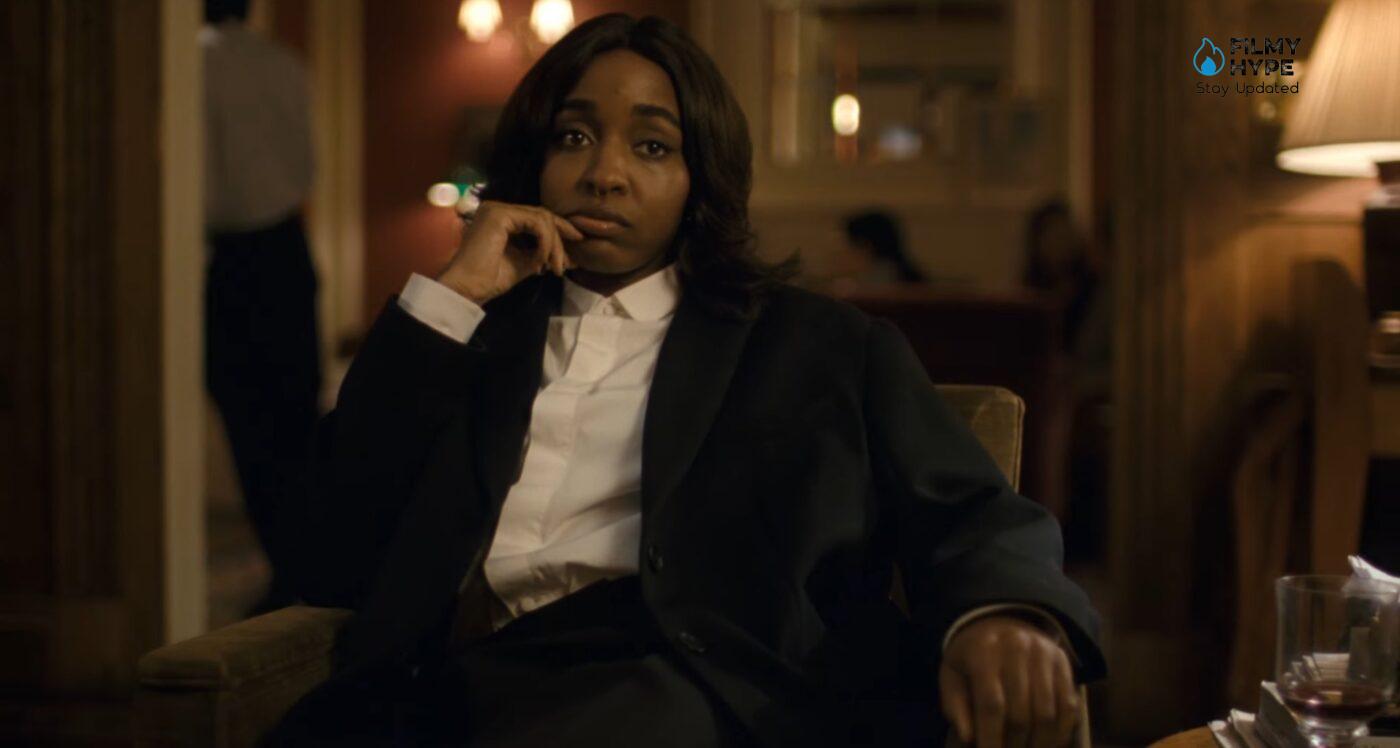
They are all pieces of a theoretical complexity with an amazing narrative impact that is exalted in an unsettling direction that discovers an unexpected and frightening sobriety and accumulates quotes (the posters of The Flower of My Secret and Dirty Harry, The Buddenbrooks on the bedside table). And where the construction of tension is entrusted to the prevailing music of Trent Reznor and Atticus Ross and to a fabric of sound that on the diegetic plane pulls in John Adams, Julius Eastman, and Piero Ciampi and in the extradiegetic modulates on the peremptory cadence of a sort of metronome. As in every Guadagnino film, love has love as its only argument, but After the Hunt tells us that love is also about power.
One of the most interesting traits about the film is its refusal to propose a unique truth. Guadagnino consciously chooses not to transform After the Hunt into a moralistic pamphlet, but to immerse the viewer in the complexity of a system of relationships in which the line between victim and perpetrator, innocence and guilt, fragility and manipulation is never entirely clear. The result is a kaleidoscopic tale, which moves through the different points of seen without favoring an absolute perspective. In this way, the director returns the real stratification of the dynamics of power in academia and work: places where desire and ambition, trust and abuse can coexist until they become indistinguishable. From the point of view, Guadagnino surprises once again. The titles of heads explicitly refer to Woody Allen, both in the font and in the graphic cleanliness, almost as if to suggest a relationship with the moral and intellectual cinema of the New York author, without obviously matching its brilliant dialogues. At the same time, however, the director does not give up his personal amount, made up of visual sensuality and obsessive attention to detail.
The tribute to Allen also warns at some moments in the soundtrack, signed by Trent Reznor and Atticus Ross, which accompanies the tensions of the film with a restless and pulsating sound carpet. It’s one choice that contrasts with the apparent lightness of some scenes, and it amplifies the sense of uncertainty, making After the Hunt a work suspended between existential drama and psychological thriller. Again, Guadagnino confirms himself as an extraordinary director of actors. Julia Roberts, in the role of Alma, offers one of the most multifaceted interpretations of his recent career: a fragile and strong character at the same time, capable of conveying to the viewer both the charisma of a successful woman let it be the deep cracks of his private life. Next to her, Andrew Garfield and Ayo Edebiri play the accused colleague and the student, respectively, precisely embodying two opposing archetypes: the charismatic man and the ambiguous, and the bright but vulnerable young woman. Michael Stuhlbarg and Chloe Sevigny further enrich the framework, offering incisive secondary characters that contribute to making the story choral and stratified.
The film also addresses the fracture between generations. Alma belongs to an academic world and profession where unwritten rules have, for decades, covered silences and complicity. His student, however, represents a generation that rejects compromise and demands transparency. Guadagnino stages this clash without ever forcing it, letting it emerge through tight dialogue and dry staging. In that sense, After the Hunt, it becomes a film about the present and the difficulty of redefining the boundary between authority and abuse, between authority and privilege. It is precisely in this tension that the heart is placed story button. There’s no shortage, of course, some limitations. The screenplay of Nora Garrett, although surprising for a debut, at times indulges in redundancies and in somewhat didactic passages. However, these little stumbles do not affect the overall strength of the story, which remains a courageous work full of food for thought.
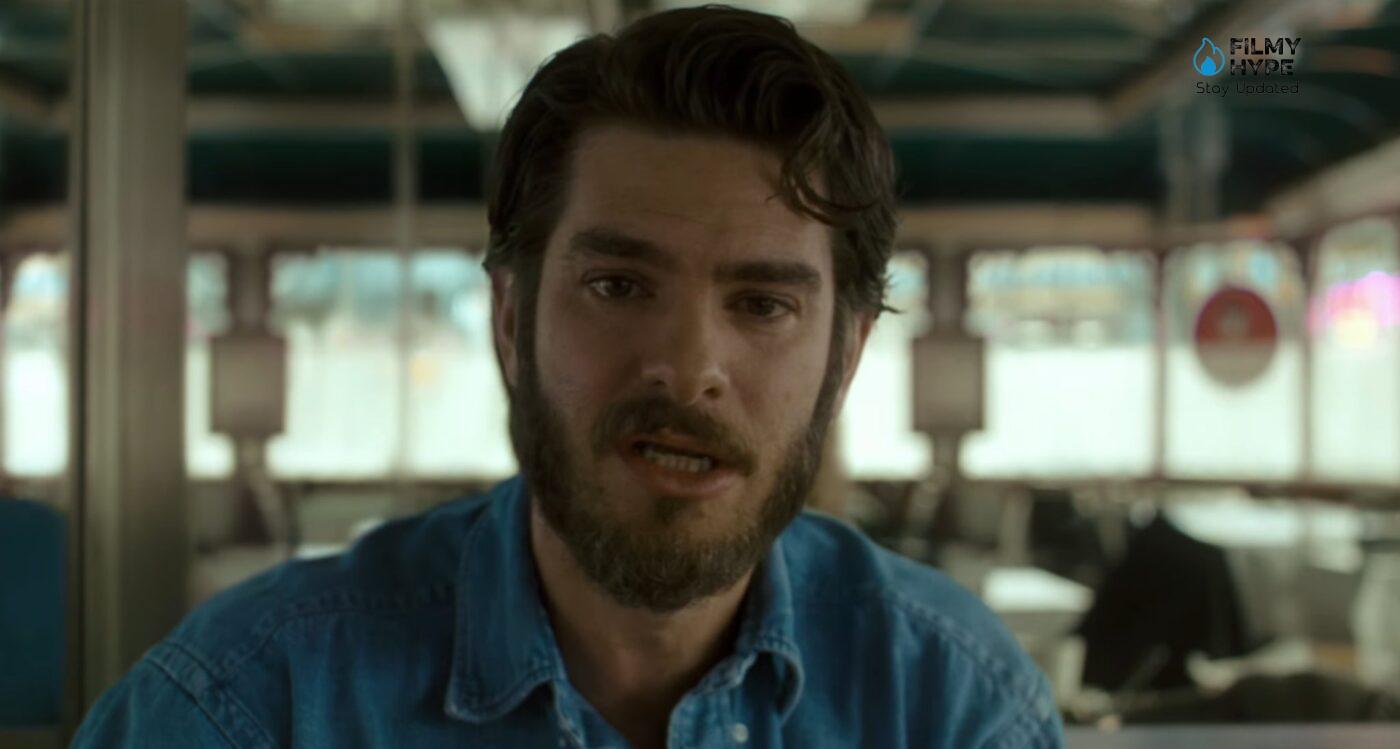
After the Hunt, Luca Guadagnino makes a film that reflects on our contemporaneity, exposing the ambiguities of a world in which power and desire, ethics and ambition are intertwined. It doesn’t offer solutions or easy answers: rather, it builds a mosaic of points of view that convey the complexity of reality. Thanks to a director elegant, with a cast in a state of grace and an approach that oscillates between introspection and thriller tension, After the Hunt establishes itself as one of the most stimulating titles in the world, Guadagnino’s route. A work that will perhaps divide, but which will hardly leave you indifferent. In After the Hunt, a great truth is told: the greatest form of discrimination comes from being poor and therefore not having power. However morally condemnable, inept, or lying, these characters are destined to always fall to their feet. Their privilege, the real one, that of money, will in fact allow them to get up and always have new opportunities.
It’s a shame that such interesting themes and ideas are not fully explored by the writing. In fact, not everything goes back to Garrett’s screenplay, which at several points seems more like a task about the “damages of political correctness”. To make up for the shortcomings of the text, however, there is the direction by Guadagnino, always engaging, the soundtrack by Trent Reznor and Atticus Ross, and an excellent cast. Julia Roberts is magnificent, engaged in a moral and physical transformation towards degradation reminiscent of that of Cate Blanchett in Blue Jasmine (perhaps Allen’s most cited film here). But his co-stars are also no exception: Garfield is ambiguous and disturbing here, Stuhlbarg makes you want to hug him, while Edebiri (Sydney in the series The Bear) confirms himself as one of the greatest talents of his generation. So it’s a shame about that last shot he would have taken After the Hunt, the most lucid photography of this generation. In any case, a vision not to be missed.
Ethics of doubt, aesthetics of discomfort. After the Hunt is a film about ambiguity as a form of honesty. Luca Guadagnino renounces visual excesses and prefers to work by subtraction, letting the directorial structure accommodate the “incorrect” nature of the characters. Editing choices, camera movements, sudden cuts, and a magnetic soundtrack build an architecture of instability. Dialogues – sharp, ambiguous, circular – become true tools of manipulation and self-defense, perfectly inscribed in history by the newcomer (and surprising) Nora Garrett. Everything is nuanced, contaminated, and even the attempt to report something dissolves into suspicion. No character is fully positive, except perhaps the therapist, an almost symbolic figure who observes, understands, and remains silent. The film is a story about the betrayal of trust, the fallibility of rational thought, and the cruel fragility of language. The decision not to really finish, but to relaunch in a final scene that reopens the game of appearances, is perhaps the only truly political act in the film. No ideology, no lessons. Just questions. Just discomfort.
After the Hunt Movie Review: The Last Words
After the Hunt starts from a delicate and current theme, that of consensus and responsibilities of power, but struggles to translate it into a truly engaging story. Guadagnino aims for a psychological thriller that soon turns into a long exercise in style, more attentive to words than emotions. Julia Roberts authoritatively takes center stage, but is forced to move between less nuanced characters and difficult dialogues. Garfield is caricatural, while Ayo Edebiri manages to give depth to a stereotyped role. The result is an ambitious but heavy film, which raises important questions without finding a clear message. After having described Gen Z in several films with eyes full of love, in After the Hunt, Luca Guadagnino is very critical of the “witch hunt” carried out, in some cases, by the generation that is very easily indignant. Invoking the irreverent spirit of Woody Allen, with screenwriter Nora Garrett, he launches into a ferocious criticism of anyone who possesses a privilege and hides it behind a facade of fake morality. It’s a shame that the writing isn’t up to the level of the direction and cast. But it is still an interesting and anarchic vision, which tries to detach itself from the hypocrisy of those who do not want to be criticized.
Cast: Julia Roberts, Ayo Edebiri, Andrew Garfield, Michael Stuhlbarg, Chloë Sevigny
Directed By: Luca Guadagnino
Where We Watched: At the Venice Film Festival
Filmyhype.com Ratings: 3/5 (three stars)


One Comment