After The Hunt Ending Explained: The Brutal Truth About Power, Guilt, and Who Really “Won”
After The Hunt Ending Explained: Luca Guadagnino has been one of my favorite directors since I was captivated by the visceral romance of Call Me By Your Name and the desolate road-trip horror of Bones and All. He’s a filmmaker who takes audacious risks and, in my eyes, almost always succeeds. That is, until I watched After The Hunt. The film left me in a state of profound unease, not because of a shocking twist, but because of its frustrating, ambiguous depth. It feels like a movie trying to be a profound philosophical statement that its own underdeveloped narrative can’t quite support. As a layman who will never be privy to the hushed, intellectual conversations in the philosophy department at Yale, I struggled to find a concrete point in its devastating conclusion. But one thing is certain: After The Hunt is not a simple “he said, she said” thriller. It’s a corrosive examination of power, trauma, and the stories we tell ourselves to survive.
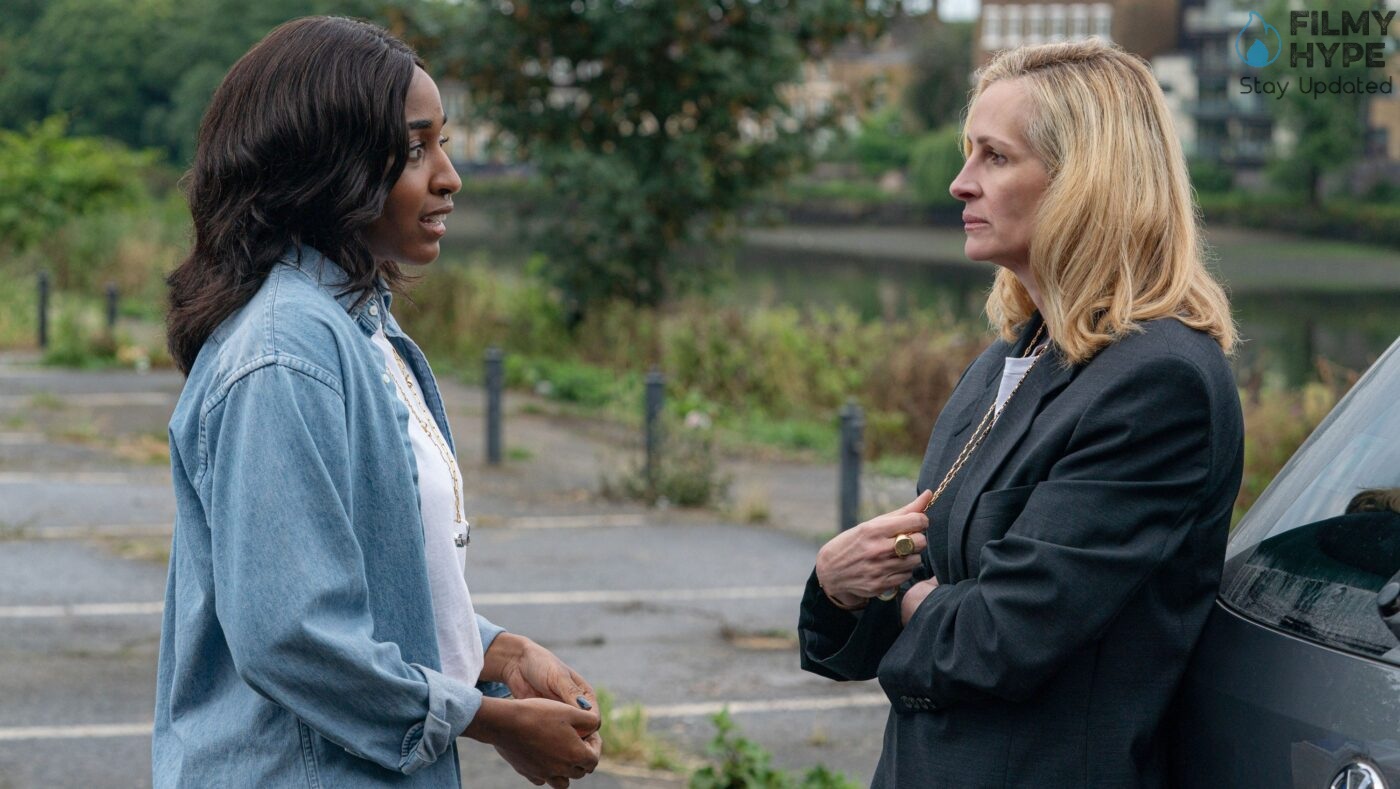
One of the first themes that After The Hunt introduces us to is the competition that characterizes the university environment, starting from the various professors, one against the other, to obtain a prestigious professorship. Alma and Hank joke about it, but that’s not enough to hide their lust for the place. In the same way, you can also feel the pressure of the place on the students, with Maggie, who, despite her talent, chooses to copy his thesis. This underlines an atmosphere full of tension, where friendly human relationships can quickly transform into a struggle linked to power dynamics. If, like me, you walked away scratching your head, let’s unravel this complex tapestry together. This is a deep dive into the ending of Luca Guadagnino’s After the Hunt.
After The Hunt Recap: What is the film Really About?
The question everyone asks is simple to say and impossible to solve: Did Hank really do it, or is Maggie lying? In After the Hunt, this question is not a puzzle with a solution, but a way to bring us into viscous territory, where truth, memory, guilt, and desire intertwine and contradict each other. We are in the university environment, made up of chairs, seminars, and reputations to defend. At its core is Alma (Julia Roberts), an esteemed teacher, linked by affection and trust to her colleague Hank (Andrew Garfield). His student Maggie (Ayo Edebiri) confides in her that she was attacked by him. And here everything breaks down.
Because Alma does not come to “pure” listening. He carries one on him lie from when she was a girl: a fabricated accusation, then retracted many years later, with devastating results. This wound makes her divided in two: she wants to believe, but she fears making mistakes again. He wants to protect, but is afraid of hitting an innocent person. And in this swing, everyone does worse. Everyone tells themselves a story that is comfortable to resist shame.
After The Hunt Ending Explained: The Central Question: Did Hank Really Do It?
Let’s address the elephant in the room first. The core mystery the film presents is whether Professor Hank Gallagher abused his student, Maggie, or if she is lying.
However, this is a misdirection. The real question isn’t about Hank’s guilt about our own perspective, and the film deliberately places us in the shoes of Professor Alma Fielding. We are conditioned to admire her, to trust her intellect, and, by extension, to be skeptical of the accusation that threatens her world and her best friend.
But the Evidence is Overwhelming. Yes, Hank absolutely harassed Maggie.
The proof isn’t just in Maggie’s tearful testimony. It’s mirrored perfectly in a pivotal scene with Alma herself. After a confrontation with Maggie, a distraught Alma seeks out Hank. In a moment of shared crisis, he confesses, becomes physically aggressive by punching a wall, and then forcefully kisses her. When Alma resists and pushes him away, he doesn’t stop. This is a near-perfect reenactment of Maggie’s description of her own assault.
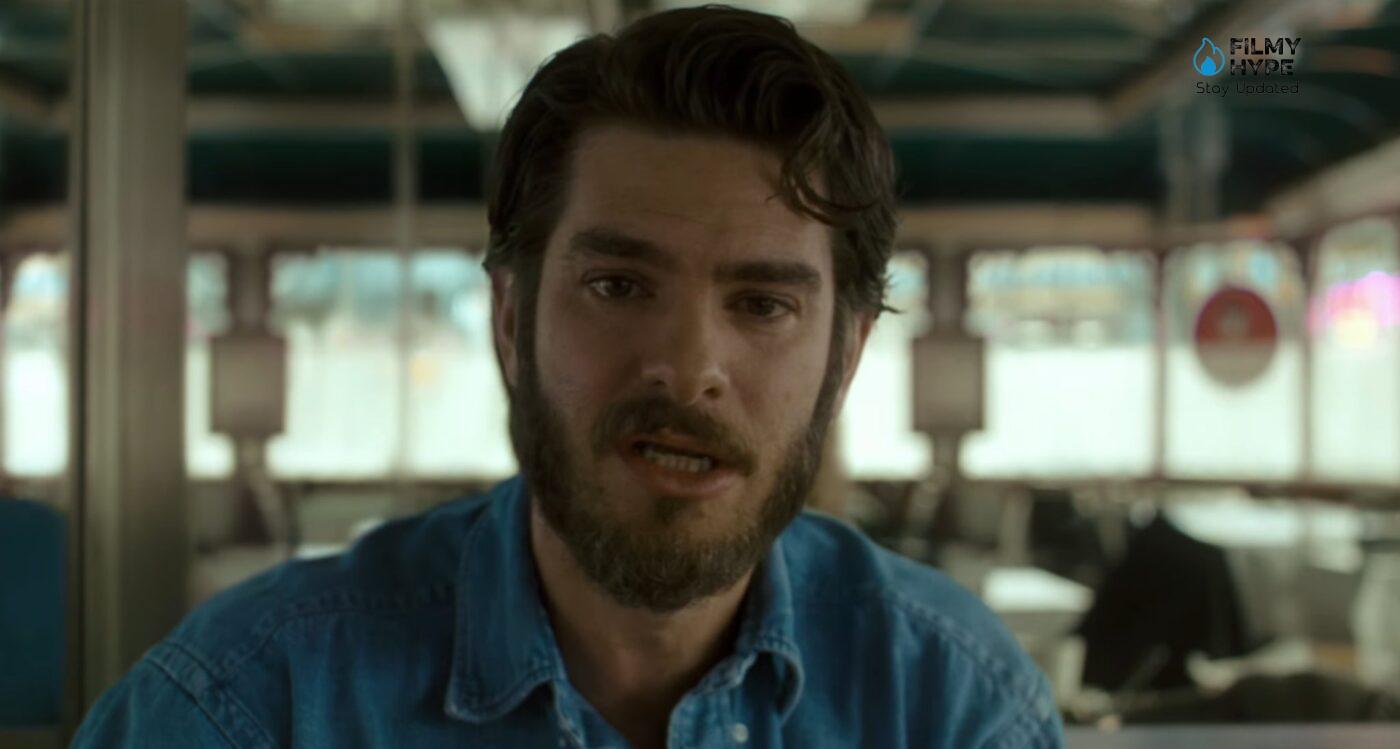
So why does Alma, who clearly knows Hank’s character, defend him so fiercely? The answer lies in a much darker truth she admits later: it was never really about believing Hank. It was about winning.
A Triangle of Toxicity: Are Any of the Three Main Characters “Good”?
The short, brutal answer is no. After The Hunt moves beyond “morally gray” into a territory of near-universal moral compromise.
- Hank is the most straightforwardly villainous. A predator who leverages his power and charm to exploit students, his behavior is indefensible.
- Maggie is presented as the victim, but Guadagnino complicates this. Her thesis on “virtue ethics” and “performative morality” is a meta-commentary on the entire film. In a brilliantly parallel scene, both she and Alma are on their laptops using Google Translate. Maggie is invasively translating a private note from Alma’s bathroom, while Alma is finally verifying Hank’s hunch that Maggie plagiarized her thesis from a German philosopher.
Maggie acts from a place of righteous pain, but her methods are manipulative and invasive. She isn’t a pure innocent; she’s a flawed human seeking validation and revenge.
- Alma is the film’s true enigma. Is she a heinous person? Her actions are certainly monstrous. She gaslights a victim, protects a predator, and ultimately uses the entire situation to her advantage. But the film provides a key to her psychology: her own traumatic past.
Alma reveals that as a young woman, she was in a relationship with her father’s friend. She believed it was love, but when he left her for someone his own age, she retroactively reframed it as abuse, weaponizing her own innocence to punish him. The guilt from this act has festered within her for decades. She sees a younger version of herself in Maggie—not as a victim, but as a manipulator. This is why her projection is so vicious; she is punishing her own past self.
The Panopticon: Your Lecture Holds the Key
To understand After the Hunt, one must pay close attention to Alma’s own classroom. Her lectures on Michel Foucault’s Discipline and Punish are not academic filler; they are the skeleton key to the film.
- The Public Execution: Alma discusses how public, gruesome executions were used to make an example of a wrongdoer. This is precisely what happens to Hank. The university doesn’t just fire him; his case becomes a national story. He is made a public example to appease the court of public opinion and protect the institution’s image.
- The Panopticon: This prison model, with a central tower allowing unseen guards to observe any prisoner at any time, creates a society of self-policing individuals. The film posits the modern university campus—and by extension, online “cancel culture”—as a 21st-century digital panopticon. Anyone can be watched, judged, and held to account by an unseen audience at any moment. The pressure is not merely to be moral, but to be seen as moral, to constantly perform acceptability.
This framework explains the film’s most puzzling disparity: why does Hank’s allegation destroy his career, while Alma’s proven prescription forgery is only a temporary setback? Hank’s case became a noisy, public spectacle—a modern-day execution. Alma’s transgression was handled quietly, discreetly. In the economy of public perception, noise is the ultimate currency of consequence.
Alma’s Truth and the Story We Tell Ourselves
The film’s most devastating scene is Alma’s confession to her husband, Frederik (Michael Stuhlbarg). She reveals that the foundational trauma of her life—being abused by her father’s friend—was a story she fabricated. She believed they were in love, and she accused him of abuse as revenge after he left her. He later died by suicide.
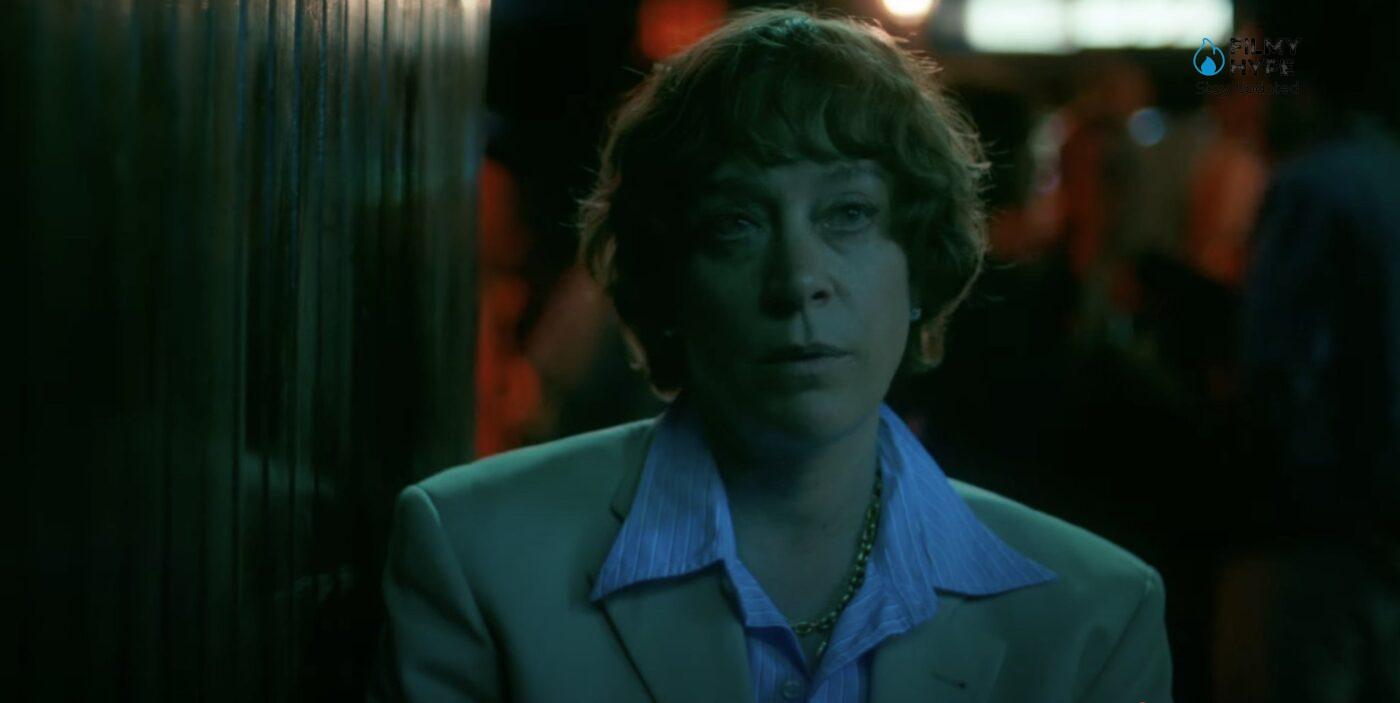
This seems like Alma’s moment of raw, unvarnished truth. But Frederik, a psychoanalyst, reframes it. He argues she didn’t lie; she was a child, and the adult was responsible. Her perception was, and remains, distorted.
This moment pays off an earlier conversation where Alma asks Frederik if he ever disagrees with his patients’ understanding of their own lives. It also connects to her lecture on Homer’s Odysseus, who only understands himself as a hero when he hears his story sung by the bard Demodocus.
The point is profound: we cannot always perceive the truth of our own experiences. Our understanding is a story we tell ourselves, shaped by time, guilt, and the narratives of others. If we can’t trust our own truth, how can we possibly sit in judgment of others?
The Final Confrontation and Alma’s Collapse
The film’s climax occurs when a group of students, mobilized by Maggie, confronts Alma and Hank. Cornered and under immense pressure, Alma doesn’t simply defend Hank. She detonates a nuclear option.
She first reveals to the students that Maggie plagiarized her thesis, publicly dismantling her credibility. Then, in a private, brutal moment with Maggie, she admits she knew about the plagiarism all along. She confesses that her defense of Hank was never about truth or loyalty, but about a simple, brutal calculus: “I wanted to win.”
This admission is the core of the film. The tenure, the reputation, the friendship, it was all a game of power. In this moment, Alma sheds the performative morality of a caring mentor and reveals the ruthless academic beneath. The psychological weight of this confession, coupled with the physical and emotional stress she’s been under, causes her to collapse, the world literally going dark around her.
The Epilogue: What Does “You Won” Really Mean?
Five years later, Alma and Maggie have a chance encounter. The power dynamic has completely shifted. Alma is now the Dean at Yale, radiant and assured. Maggie is engaged, financially secure, and has a distinct, confident style all her own—no longer emulating Alma’s austere look.
Their conversation is a masterclass in subtext. Maggie admits she was never sure if she wanted to be Alma or be with her, clarifying the nature of her complex admiration. But the most telling line is her final, quiet nod to Alma: “You won.”
This isn’t a concession of defeat. It’s an acknowledgment. Maggie is stating that she now sees Alma clearly. She understands that Alma used her, the scandal, and Hank’s downfall as stepping stones. Alma achieved her goal of ultimate power within the institution, seemingly free from the guilt that once plagued her. When Alma claims she is “very happy,” it’s the satisfaction of someone who has finally secured the prize she was always fighting for.
The Unspoken Marriage: How Are Alma and Frederik Still Together?
Maggie’s surprise that Alma and Frederik are still married is a telling detail. Their relationship is a portrait of quiet, simmering resentment. Frederik performs the duties of a “good husband,” he cooks gourmet meals, lays out her medication, but this care feels oppressive to Alma. She keeps him at a profound distance, hiding her physical pain and psychological turmoil from him.
Frederik, in turn, feels neglected, particularly in terms of his sexual needs, and his resentment manifests as passive-aggressive rudeness, such as blasting music to interrupt Alma’s conversation with Maggie.
They remain together not out of passion or deep understanding, but because their union is a “safe” facade. It provides the stable, respectable image they both, especially Alma, need to maintain within their world. They are partners in a performance, trapped in a cycle of resentment and co-dependency that, for Alma, is a price worth paying for her career.
Final Conclusion: What Is After The Hunt Really About?
After The Hunt is not a mystery about an assault; it is a scathing indictment of institutional power and the corrosive nature of ambition. The “hunt” of the title isn’t just for the truth about Hank; it’s the ruthless pursuit of status, tenure, and self-preservation.
In the end, Alma “wins” the game by fully embracing her ruthless nature. Maggie finds a form of happiness by freeing herself from the need to be like her mentor. And Hank, we presume, faced consequences. The film offers no easy answers or moral victories. Instead, like the best of Guadagnino’s work, it holds up a dark, uncomfortable mirror and asks us to question where we see ourselves in the reflection. Who are the Almas in our world? And what are they willing to sacrifice to win?