
Aaryan Movie Ending Explained: The Twisted Morality of a Sociopathic Savior
Aaryan Movie Ending Explained: Praveen K.’s Aaryan is a Tamil crime thriller that dives headfirst into a provocative and unsettling premise: what if a killer believed he was not a murderer, but a liberator? The film introduces us to Alagar, a failed writer who takes his profound frustration with society to a shocking extreme. His method isn’t protest or litigation; it’s a meticulously choreographed series of events that begins with a live television suicide and culminates in a string of seemingly benevolent murders. While the film’s execution, particularly its dramatic flair and character development, may not resonate with all viewers, the moral puzzle at its core is undeniably compelling.
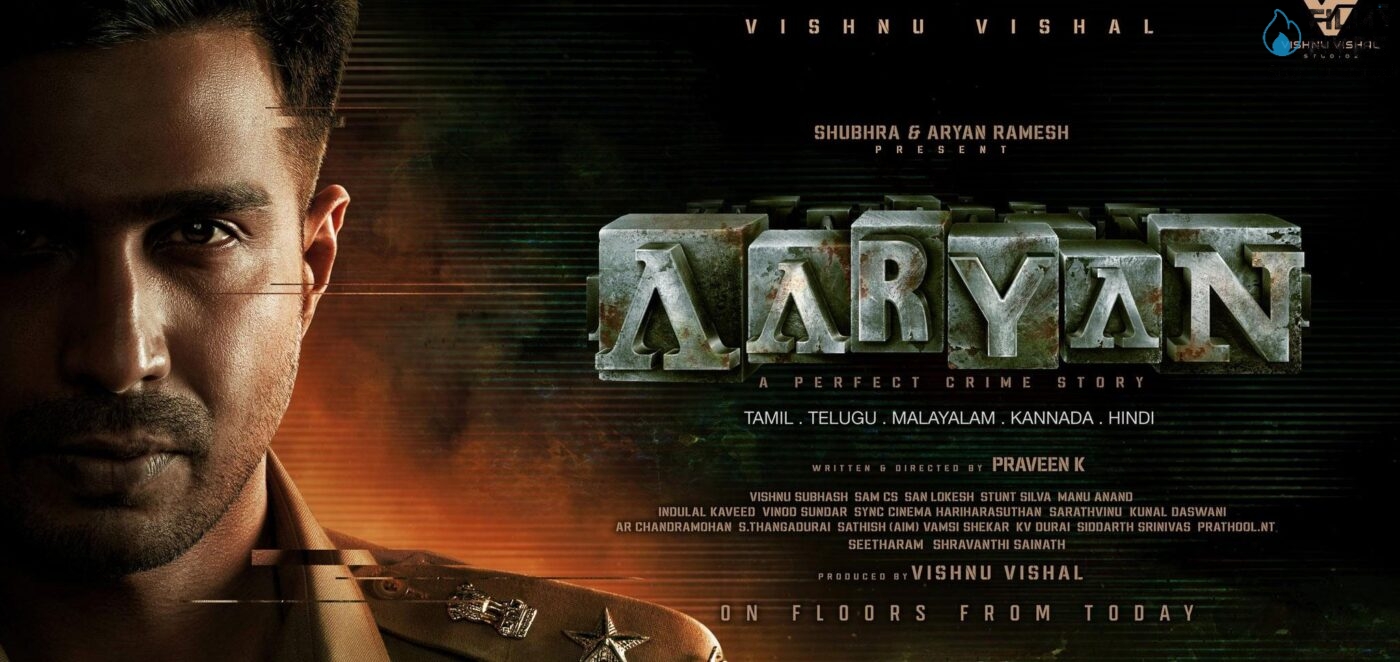
Aaryan Movie Ending Explained: The Twisted Morality of a Sociopathic Savior
This ending explanation will break down Alagar’s master plan, the true nature of his victims, and the film’s final, lingering question: Did the celebrated DSP Arivudai Nambi ever truly have a choice, or was he merely the final, unwitting player in Alagar’s grand, twisted narrative?
The Premise: A Suicide That Was Just the Beginning
The film opens on the set of “Porulathikaram,” a popular and confrontational talk show hosted by Nayana. When a last-minute guest, a controversial Tamil actor, is being interviewed, a man from the audience—Alagar—stands up. He reveals himself as a failed writer, his life’s work (including a novel titled Aaryan) ignored by producers. In a stunning act of theatrical despair, he shoots the actor in the leg, declares he will kill five people, and then, in a horrifying twist, turns the gun on himself.
Before his death, he made a cryptic proclamation: the hero of his story would emerge after he was gone, Nayana would be a character in it, and he had handpicked every victim to play a specific part. Initially dismissed as the ravings of a dead man, his threat becomes terrifyingly real when hacked LED screens across the city announce his first target: an ex-army man named Ashok.
The Investigation: DSP Nambi and the “Noble” Victims
DSP Arivudai Nambi, a cop grappling with a pending divorce, is assigned to the case. He quickly realizes he is facing an opponent unlike any other—a deceased one. Alagar’s posthumous plan unfolds with chilling precision:
- Ashok Pandian: Blown up by a bomb in a telephone booth, he used to call his granddaughter every other day.
- Raziya: A Bharatanatyam teacher was poisoned via cyanide-laced makeup before her stage performance.
- Yuvaraj: An environmental activist who dies when his oxygen cylinder is tampered with during an underwater protest.
- Asha: A nurse who is poisoned by a candle she lights in church on her husband’s death anniversary.
Nambi discovers that Alagar used Python programming to schedule the threatening videos and made strategic donations to charities related to his victims (Army Welfare Fund, Teacher Welfare Fund, etc.). The connection between the victims baffles Nambi until he uncovers the horrifying truth: they were all, in Alagar’s warped view, “noble souls” trapped in miserable existences, who had lost the will to live.
The Final Trap: Was Nambi the Target or the Savior?
The investigation zeroes in on the fifth victim, hinted to have a name starting with ‘N’. While everyone assumes it’s Nambi himself, the DSP correctly deduces it’s a diversion. His intuition leads him to a missing transgender woman, Nalini.
Following clues in Alagar’s diary (revealed with a heat source), Nambi discovers a hidden room beneath Alagar’s house. This is the film’s climactic sequence, where Nambi is lured into a death trap—a glass box filling with water—set specifically for him. He escapes, and his team rescues Nalini, who was kept alive in a concealed compartment. On the surface, it appears Nambi has won. He saved the final victim and stopped Alagar’s reign of terror.
Ending Explained: The Unsettling Truth Behind the Murders
In the film’s final act, the full scope of Alagar’s philosophy is laid bare. The press and public begin to see him not as a villain, but as a rebel who exposed societal flaws. Nambi, in a press conference, firmly states that Alagar’s methods were criminal and unjustified. However, the film forces the audience to confront Alagar’s twisted logic:
- Ashok was a lonely, forgotten war veteran.
- Raziya was hounded out of her passion by communal hatred.
- Yuvaraj was mocked by his own family for his environmental activism.
- Asha was drowning in grief, unable to properly mourn her husband, lost to COVID-19.
- Nalini was abandoned by her family and oppressed for being transgender.
Alagar’s motive was not malice, but a sociopathic form of martyrdom. He believed that by killing these individuals in dramatic, public ways, he was not ending their lives, but liberating them from their suffering and, more importantly, eternalizing their struggles. He gave their silent pain a microphone, forcing society to see the individuals it had failed. His “donations” were a final, cynical nod to the causes they represented.
The Final Twist: Did Alagar Choose Nambi For The Job?
This is the film’s most sophisticated and chilling question. At the end, Nambi publicly dismisses the idea that Alagar could have orchestrated his involvement as a mere coincidence. But the film’s flashbacks tell a different story.
We see that Alagar was present during Nambi’s breakthrough “Kodaikanal serial murder case.” A cryptic scene shows a man’s hand (implied to be Alagar’s) dragging a body and setting it on fire. The film heavily suggests that Alagar was the true architect of that case, orchestrating events to ensure Nambi would solve it and rise to fame. He handpicked Nambi long before the talk show incident, grooming the “hero” for his final story.
Therefore, the answer is a resounding yes. Alagar did not just predict Nambi would take the case; he engineered his entire career path to ensure it. Nambi was never just the investigator; he was the final, crucial character in Alagar’s novel. His role was to be the brilliant detective who would unravel the mystery, thereby giving Alagar’s grand narrative the credibility and closure it needed. The “choice” Nambi thought he had was an illusion. His pursuit, his deductions, and his ultimate “victory” in saving Nalini were all part of the script Alagar had written for him.
Final Thoughts
Aaryan presents a classic unreliable narrator scenario, where the villain’s philosophy challenges the hero’s black-and-white worldview. While the film’s narrative execution may feel patchy and its characters superficial to some, its strength lies in this morally gray conclusion. Alagar succeeds in his ultimate goal: he becomes the author of his own story, and Nambi, the law, and society itself are merely his readers, left to debate the meaning long after the final page is turned. The film ends not with the triumph of good over evil, but with the unsettling victory of a perfectly executed idea, leaving the audience to wonder who the real “Aaryan” (the noble one) of the story truly was.