


It: Welcome to Derry Season 2: The first season of It: Welcome to Derry is fully streaming on HBO Max, but creator Andy Muschietti isn’t wasting any time looking ahead. He’s already deep into work on the next chapter, and he recently opened up to Variety about where the story is headed — and it sounds like season two is going to be considerably bleaker than what fans have seen so far.
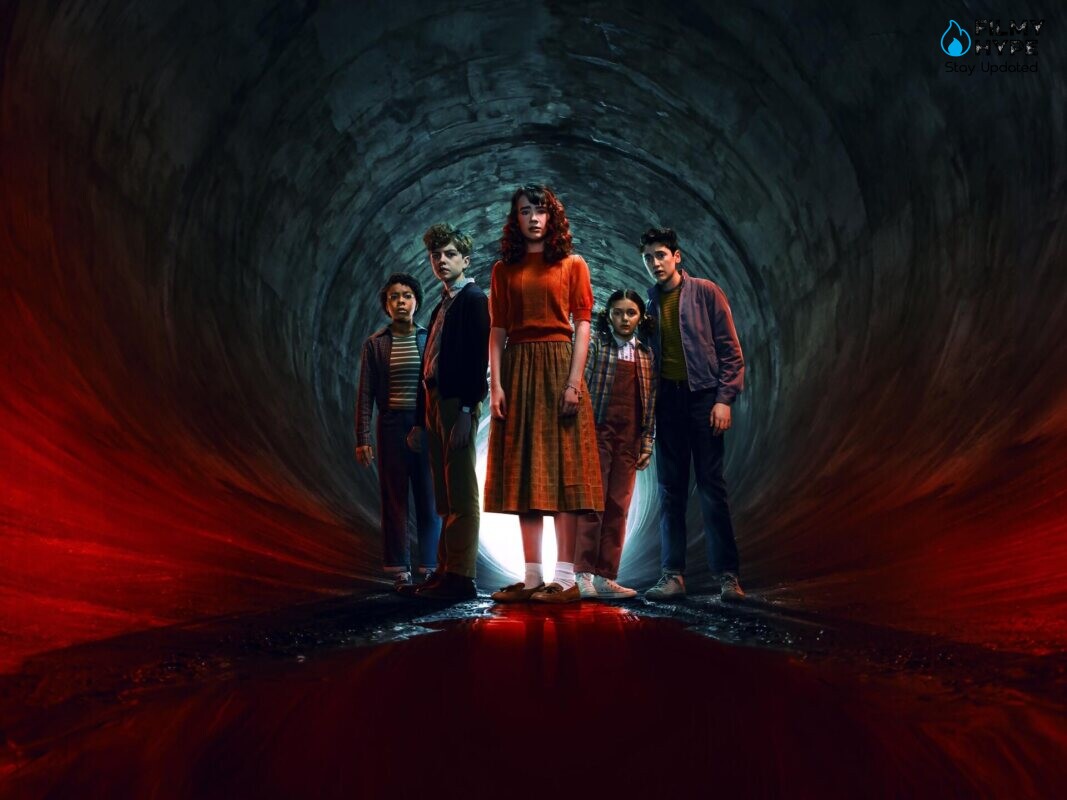
In a recent interview with Variety, Muschietti laid out where season two is headed, and the details suggest something considerably darker than what the first season delivered. The 1962 setting of season one had its share of dread, but it also had a certain suburban texture, a sense that normal life was still possible in Derry as long as you didn’t look too closely at the storm drains. Season two is heading to 1935, and the version of Derry waiting there isn’t hiding behind picket fences. It’s already broken.
Where and When It: Welcome to Derry Season 2 Takes Place
The centerpiece of the new season will be an event that Stephen King readers know well. The Bradley Gang Massacre is one of the darker footnotes in Derry’s fictional history, a chapter buried in the interludes of the original novel. The broad strokes are this: a gang of bank robbers, led by a man named Al Bradley, rolled into Derry expecting easy pickings. They found something else entirely. The townspeople, rather than cowering or calling for the sheriff, took matters into their own hands. The result was a slaughter, a mass shooting that left the gang members dead in the street.
But in King’s telling, and presumably in Muschietti’s adaptation, there’s more to the story than vigilante justice. Derry has always been a place where violence comes too easily, where the line between self-defense and something uglier gets blurry. Pennywise doesn’t just kill people. He poisons the whole ecosystem. The Bradley Gang Massacre isn’t just a historical event in the novel. It’s evidence of how deeply the entity under Derry has infected the people who live above it. The town didn’t just defend itself. It participated in something that felt, in the moment, almost like a ritual.
Muschietti seems to understand that the massacre is more than just a set piece. It’s a window into what Derry becomes when the economy collapses and the social fabric frays. Which is exactly the backdrop he’s building for season two.
The Great Depression as a Horror Setting
The 1930s in America were defined by the Great Depression, and Muschietti isn’t planning to treat that context as mere background decoration. He described the era’s realities, mass unemployment, grinding poverty, families torn apart by economic forces they couldn’t control, as forming the emotional core of the entire season. “Everyone tries to survive and will do desperate things,” he told Variety, and the implication is clear enough. This isn’t a period setting chosen for its aesthetic. It’s chosen because desperation makes people vulnerable, and vulnerability is what Pennywise feeds on.
The Derry of 1935 won’t look like the Derry of 1962, or the Derry of the films. Muschietti described a town that feels genuinely hollowed out, populated by orphaned children, families who’ve lost everything, and people with nowhere left to go. The suburban calm that characterizes later versions of the town hasn’t arrived yet. This is Derry in the raw, a place where the Depression has stripped away whatever protective layer of normalcy might have existed, leaving the darkness underneath closer to the surface than it’s ever been.
That’s a smart choice for a horror series. Economic despair isn’t just sad. It’s destabilizing. It makes people do things they wouldn’t do in better times. It makes communities turn on each other. It creates the kind of atomized, frightened population that can’t protect itself, let alone its children. A Derry where everyone is already hungry, already scared, already looking for someone to blame, is a Derry where Pennywise doesn’t have to work very hard. The monster doesn’t need to create fear. It just needs to shape the fear that’s already there.
The Reverse Chronology
Muschietti has been consistent about the show’s structural ambition. Welcome to Derry was conceived as a story told in reverse. Season one was 1962. Season two is 1935. If the series gets a third season, he’s talked about pushing back to 1908, another significant date in Derry’s history, another moment when the cycle of violence that defines the town surfaced in particularly awful ways. The pattern is 27 years, the same cycle that brings Pennywise back to feed. Each season lands on one of those years, tracing the evil backward to its roots.
The connections between seasons won’t just be thematic. Muschietti confirmed that the different eras are linked through the family trees of recurring Derry families. Characters in 1962 have ancestors in 1935, and presumably those ancestors have their own encounters with the thing living under the town. The evil touches generations, and the show seems interested in tracing how trauma gets passed down, how families carry the imprint of what happened to them even when they don’t remember it consciously. That’s a richer approach than simply dropping Pennywise into different time periods for scares. It suggests a story that’s accumulating meaning as it moves backward, each season adding context to the ones that came before.
The Bleaker Tone
Muschietti made a point of saying the show won’t soften the uglier realities of the 1930s. That’s worth paying attention to, because period horror can sometimes sand off the edges of history, turning the past into a theme park version of itself where the costumes are accurate but the suffering is safely contained. That doesn’t seem to be the plan here. The Great Depression wasn’t a backdrop. It was a prolonged, grinding catastrophe that reshaped an entire generation. People starved. Families disintegrated. Children were abandoned because their parents simply couldn’t feed them anymore. The social safety net that exists today didn’t exist then. When things fell apart, there was nothing to catch you.
That kind of environment is fertile ground for the kind of horror that It Movie specializes in. Pennywise preys on fear, and fear is abundant when survival itself is uncertain. But the deeper horror of the Bradley Gang Massacre, and of Derry itself, is that the monster doesn’t always have to do the killing. Sometimes the town does it for him. The massacre in the book isn’t presented as mind control or supernatural compulsion. It’s presented as something the people of Derry chose to do, something they were capable of doing, and the presence of Pennywise simply lowered whatever inhibitions might have stopped them. Muschietti’s Derry in 1935 sounds like a town where those inhibitions are already worn thin. The massacre, when it comes, might feel less like an eruption of violence and more like an inevitability.
Muschietti’s Bigger King Dreams
The interview also touched on Muschietti’s broader relationship with Stephen King’s work. He mentioned that he still holds onto the dream of adapting more of King’s catalog someday, and he specifically pointed to The Jaunt, a short story he says had a real impact on him as a teenager. The Jaunt is one of King’s more purely science fiction stories, a tale about teleportation technology and the unimaginable horror of what happens to the human mind when it’s forced to experience an eternity in the space of a moment. It’s a very different kind of story than It, and the fact that Muschietti wants to tackle it suggests his interest in King goes beyond the obvious hits.
For now, though, Derry has his full attention. Season two is in development, heading for a version of the town that’s poorer, hungrier, and more desperate than anything the franchise has shown before. The Bradley Gang is coming. The Depression is grinding on. And Pennywise, as always, is waiting underneath it all, patient and hungry, watching the town tear itself apart.