


Blade Runner 2099 Teaser: The wait for concrete news about Blade Runner 2099 has felt, at times, like something out of the Blade Runner universe itself—stretched across years, heavy with anticipation, full of half-glimpsed details that never quite came into focus. That changed at San Diego Comic-Con, where Prime Video took over Hall H with Michelle Yeoh, Hunter Schafer, and showrunner Silka Luisa to finally give fans what they’ve been asking for. The series is real. It’s finished. And all eight episodes will drop on November 25, 2026.
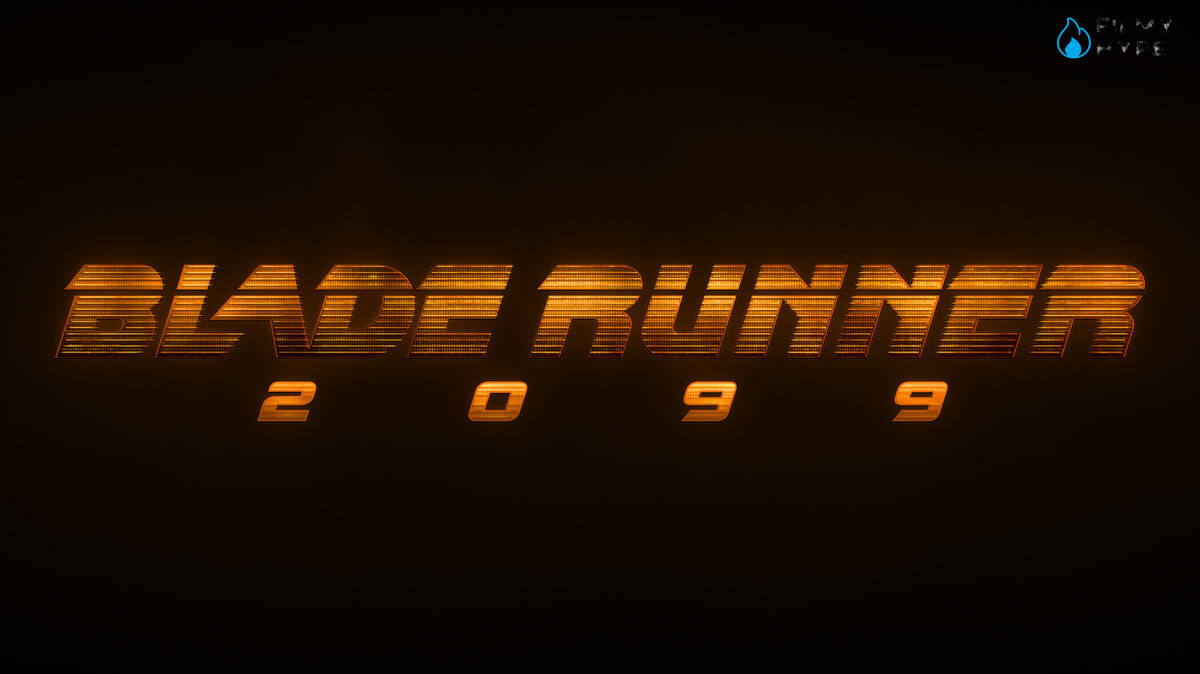
The panel, held in front of over 6,500 fans, didn’t just announce the date. It laid out the premise in more detail than we’ve had before, confirmed a cast that blends rising talent with established names, and made clear that this series intends to honor the visual and philosophical legacy of Ridley Scott’s original while pushing the story into genuinely new territory. Fifty years after the events of Blade Runner 2049, the world has changed in ways that neither Rick Deckard nor Officer K could have predicted. Humanity lost the war. The replicants are in charge. And the question of what it means to be human has never been more urgent—or more inverted.
Blade Runner 2099 Teaser: The Story So Far
The official synopsis from Prime Video sets the stage with admirable economy: “Fifty years after the events of Blade Runner 2049, Los Angeles is reborn, but not thanks to humanity.”
That’s the hook. The rebellion that both previous films warned about has come and gone. The replicants didn’t just fight for their freedom. They won. Los Angeles now belongs to them, and humans have been relegated to second-class status in the city they once built and controlled. The power structure that defined the original Blade Runner—humans hunting replicants, enforcing their dominance through violence and expiration dates—has been completely flipped.
At the center of this new order are two women who couldn’t be more different.
Cora, played by Hunter Schafer, is a human who has spent years on the run. She’s lived as a fugitive, constantly changing identities, staying one step ahead of the authorities. Now, in what the synopsis calls “an extreme attempt to stop running,” she takes on one final identity: that of a Blade Runner. The hunters have become the hunted, and Cora’s only way out is to pretend to be one of them.
Olwen, played by Michelle Yeoh, is a replicant Blade Runner who is running out of time. She’s in the final days of her life cycle, knowing with exact precision when she’s going to die. The existential clock that defined Roy Batty in the original film—the four-year lifespan, the terror of mortality, the famous tears in rain—is now built into Olwen’s daily existence. She’s hunting a fugitive who holds a secret that could destabilize the fragile city they both inhabit.
The two women are forced to work together, despite being on opposite sides of the divide that structures their world. Olwen is a replicant, Cora is a human. Olwen is the hunter, Cora is the hunted. Olwen has days to live, and Cora is trying to survive. Their partnership, whether they like it or not, is going to expose the fault lines running beneath the surface of this new Los Angeles.
The Cast Expands the World
While Yeoh and Schafer are the anchors, the ensemble around them suggests a series that intends to populate its world with complexity and texture.
Dimitri Abold, who made an impression in The Hunger Games: The Ballad of Songbirds and Snakes, and Lewis Gribben, from the acclaimed British series Somewhere Boy, are listed among the main cast, suggesting their characters will be central to the unfolding narrative.
The guest and recurring cast are even more intriguing for fans of genre television and film. Katelyn Rose Downey, who appeared in The Nun II, and Daniel Rigby, from Nell – Renegade, are both involved. Johnny Harris, recently seen in A Gentleman in Moscow, brings his particular intensity to the project. Amy Lennox, Sheila Atim, and Maurizio Lombardi—who was so memorable in Ripley—round out a cast that spans British and European talent.
For House of the Dragon fans, Matthew Needham’s presence is particularly notable. Needham played Larys Strong, one of the most quietly menacing figures in the Targaryen civil war, and his casting here suggests the series is looking for actors who can convey moral ambiguity without telegraphing it.
Tom Burke, fresh off his striking turn in Furiosa: A Mad Max Saga, is another name that catches the eye. Burke has a talent for playing men whose surfaces are calm and whose depths are turbulent, which feels perfectly suited to the Blade Runner universe.
The Creative Team Behind the Camera
The producing and directing roster for Blade Runner 2099 reads like a who ‘s-who of people who understand how to build worlds that feel lived-in and real.
Silka Luisa serves as showrunner and executive producer, and her involvement is the clearest signal yet that the series is in the hands of those who understand the source material. Luisa has spoken about the influence of Philip K. Dick’s original novel Do Androids Dream of Electric Sheep? on the series, suggesting the show will engage with the philosophical questions that have always been the franchise’s true subject, not just its aesthetic.
Ridley Scott, who directed the 1982 original and whose production company Scott Free is involved in the series, serves as an executive producer. His presence is a bridge between the film that started it all and this new chapter. Andrew Kosove and Broderick Johnson, co-founders of Alcon Entertainment, which holds the rights to the Blade Runner franchise, are also executive producers. Ben Roberts, Alcon’s President of Television, is similarly involved, along with David W. Zucker and Clayton Krueger from Scott Free.
Tom Spezialy, an executive producer with credits that include Watchmen and The Leftovers, brings experience in serialized storytelling that balances genre elements with character drama. Richard Sharkey, Michael Green—who wrote Blade Runner 2049—Cynthia Yorkin, Frank Giustra, and Isa Dick Hackett, Philip K. Dick’s daughter, round out the producing team.
Perhaps the most significant creative hire is Jonathan van Tulleken, who serves as executive producer and director of the first two episodes. Van Tulleken was a key creative force behind Shogun, the FX limited series that became a cultural phenomenon and demonstrated a rare ability to build immersive, fully realized worlds on a television scale. Having him set the visual and tonal template for Blade Runner 2099 is a strong signal of intent. This isn’t going to look like a TV show trying to imitate a film. It’s going to look like a Blade Runner story told with the scale and attention to detail the material demands.
What the Teaser Reveals
The teaser trailer, shown at Hall H and released online alongside the panel, is deliberately withholding. Prime Video knows that the Blade Runner audience is built on patience, on the slow accumulation of atmosphere and detail. The teaser doesn’t try to summarize the plot or introduce the characters in conventional terms. It communicates through imagery and sound.
Los Angeles in 2099 is recognizable but transformed. The perpetual rain that defined Scott’s original is still there, but the city now carries the visual markers of replicant dominance. The neon-and-shadow aesthetic that has influenced decades of science fiction is intact, but it has evolved. The production design suggests a world that has moved on from the corporate dystopia of the original films into something stranger and more unstable.
We see brief flashes of Yeoh as Olwen, her face carrying the weight of someone who knows exactly how much time she has left. Schafer’s Cora moves through the frame with the wariness of someone who’s been running so long she’s forgotten what stillness feels like. There are shots of the city at night, of flying vehicles cutting through smog, of faces half-lit by the glow of advertisements. It feels like Blade Runner. That’s the most important thing the teaser needed to communicate, and it does so with confidence.
Where This Fits in the Blade Runner Timeline
The timeline is now clear. The original Blade Runner took place in 2019. Denis Villeneuve’s sequel jumped thirty years forward to 2049. Blade Runner 2099 moves another fifty years into the future, into a world that neither Deckard nor K would recognize.
The war between humans and replicants that was always threatening to break out has broken out. The power structure has inverted. The questions that animated both previous films—What is a person? What do we owe the things we create? Can humanity survive its own obsolescence?—are being asked again from the other side. When the replicants hold power, when they set the rules, when they decide who lives and who dies, what does that do to the moral calculus of the entire story?
The television format gives the series space to explore these questions in ways the films couldn’t. A two-hour movie can gesture at philosophical complexity. An eight-episode series can live inside it, developing characters whose arcs are shaped by the contradictions of their world rather than the demands of a three-act structure. Olwen’s ticking clock, Cora’s fractured identity, the fragile city they inhabit—these are elements that can breathe across a season.
The Wait Is Almost Over
November 25, 2026. All eight episodes are available at once in over 240 countries and territories. The Blade Runner saga has always rewarded patience. The original was a commercial failure that became a classic. The sequel was a box office disappointment that deepened the original’s themes in ways still being unpacked. If Blade Runner 2099 follows that tradition, it’ll be dense, challenging, visually extraordinary, and probably ahead of its time. The pieces are in place. The release date is set. Now all that’s left is to see what the future actually looks like.