


In the late 19th century, Lizzie Borden’s name came to the center of one of the most controversial crime stories of the time. The woman was accused of killing her father and stepmother with an axe, but was surprisingly acquitted at the end of the trial. A story that has remained in the collective imagination and has been told over the years through various films and television series.
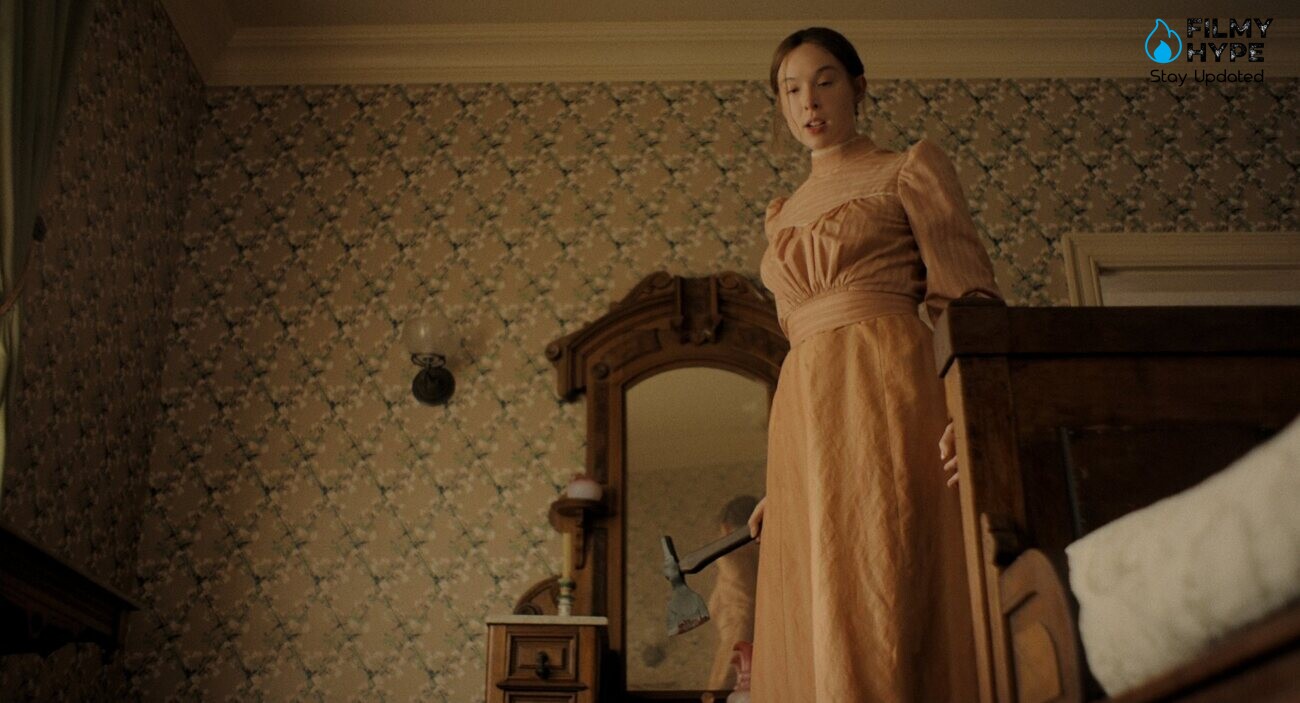
Now Lizzie Borden’s story returns to the small screen with the fourth installment of “Monster”, Netflix’s anthology series dedicated to history’s most controversial figures and brutal killers, directed by Ryan Murphy and Ian Brennan. Actress Ella Beatty plays Lizzie in the Netflix production. But what really happened at the end of the nineteenth century? What is the true story of Lizzie Borden? Let’s retrace the case that continues to raise questions today.
Who is Lizzie Borden? The True Story of Monster 4’s Killer
Born in Fall River, Massachusetts, in 1860, Lizzie Borden was a woman accused of brutally murdering her father and stepmother in 1892 using an axe. The protagonist, then, of a famous trial, was acquitted due to a lack of physical evidence, even though her guilt was obvious. But let’s take it one step at a time.
Who the Bordens Were: From the Savings Mania to the Unaccepted Second Marriage
The Borden family lived, at the time of the events, in a building in Fall River, a small town in Massachusetts. Andrew Borden was the head of the family and lived with his second wife, Abby Borden, his eldest daughter Emma, 42, and Lizzie, 32. A maid of Irish origin, Bridget Sullivan, had also been living with them for a short time, and she had her ancestors in their chores.
Andrew Borden was very wealthy, owning land, farms, and banks, but despite these possessions, which, at the time, were not within the reach of many, he was extremely thrifty in nature. In fact, to earn some extra money, he even sold his chickens’ eggs to his neighbors. A behavior that, for Lizzie, was unbearable. The girl, in fact, did not have a good relationship with her father, nor with her stepmother. She had never approved of her second marriage and still mourned the death of her mother, Sarah A. Morse, twenty years earlier. So was her sister Emma, who couldn’t stand her dad’s new woman.
Emma and Lizzie lived together with their parents despite being adults and had resigned themselves to a spinster life without services, despite their father’s wealth. In fact, they lived in an uncomfortable house without running water and a bathroom that were considered unnecessary expenses on the father’s part. Andrew, then, was so attached to money that, to save money, he had sold the carriage and the horse, leaving only pigeons in his stable, which were then, in part, stolen. From the anger of this theft, Andrew had killed the remaining pigeons, and Lizzie, very attached to those birds, was left with a terrible feeling, mourning their deaths for a long time. But anger towards his father grew when he discovered that he had donated a house to his wife’s sister.
The Day of the Murder: What Happened
It was August 4, 1892, when Abby, the maid, and Lizzie were at home. At 10:40, Andrew returned home and began reading the newspaper while Lizzie and her stepmother were in their rooms.
At 11:10, the maid heard a terrible scream from Lizzie, who had found her father murdered on the couch. When Sullivan returned with the doctor and a neighbor she had gone to call, she also found her stepmother’s body in the house. Both had been torn apart with 18 blows of the axe to the head for her and 13 for him. After the autopsy, it was understood that the woman had died an hour before her husband.

Neighbors’ testimonies quickly erased any suggestion of strangers in the house and confirmed that the only ones present were Lizzie and her stepmother. So Lizzie was charged with double murder with the motive of inheritance. The murder weapon found in the house and cleaned also led back to her, and the woman had been seen burning a dress, the one she had worn on the day of the murder, which, in fact, was never found.
The Trial and Acquittal
The only person charged with the double murder was Lizzie, but the defense attorney focused everything on the fact that a woman could never have the physical strength to inflict all those axe blows, 18 on her stepmother and 13 on her father. Lizzie, after all, was thin, religious, and had only a hobby of modeling pottery, conditions that worked in her favor at the trial.
For the lawyer, it must have been a monster who committed such a violent act, and it couldn’t have been a woman. Cos, the jury, given the beliefs of the time that a woman could not be so violent, acquitted the defendant of all charges.
Three years after the trial, Lizzie was accused of stealing two expensive china pieces from a Providence art gallery and was forced to confess to the theft. Despite this, Lizzie Borden lived as a very wealthy woman with her inherited father’s estate and died in 1927.