

The Witness Netflix Series Ending Explained: There is a moment in the final episode of Netflix’s The Witness where the judicial truth finally, after decades of devastating wrong turns, clicks into place. The man who murdered Rachel is Robert Napper. The evidence—DNA, cross-referenced timelines, the chilling links to other violent crimes—becomes an ironclad cage. In a lesser, more traditional crime drama, this would be the crescendo. The screen would bleed to black, a title card would deliver a grim sense of closure, and we’d be left with the comforting lie that the system, however slowly, works.
The Witness Netflix Ending Explained: Who Killed Rachel and What It Really Means?
But The Witness, a three-episode miniseries released on June 4, 2026, and inspired by the infamous Rachel Nickell case, is not interested in that comfort. It makes a radical, deliberate choice from its very first frame: this is not a story about a murder investigation. It is a story about the two people who survived it—André and his son Alex, the child who stood on Wimbledon Common and watched his mother die. And in its finale, the series pulls off a gut-wrenching bait-and-switch. It gives us the killer’s name only so it can solemnly, methodically, show us how meaningless that name really is.
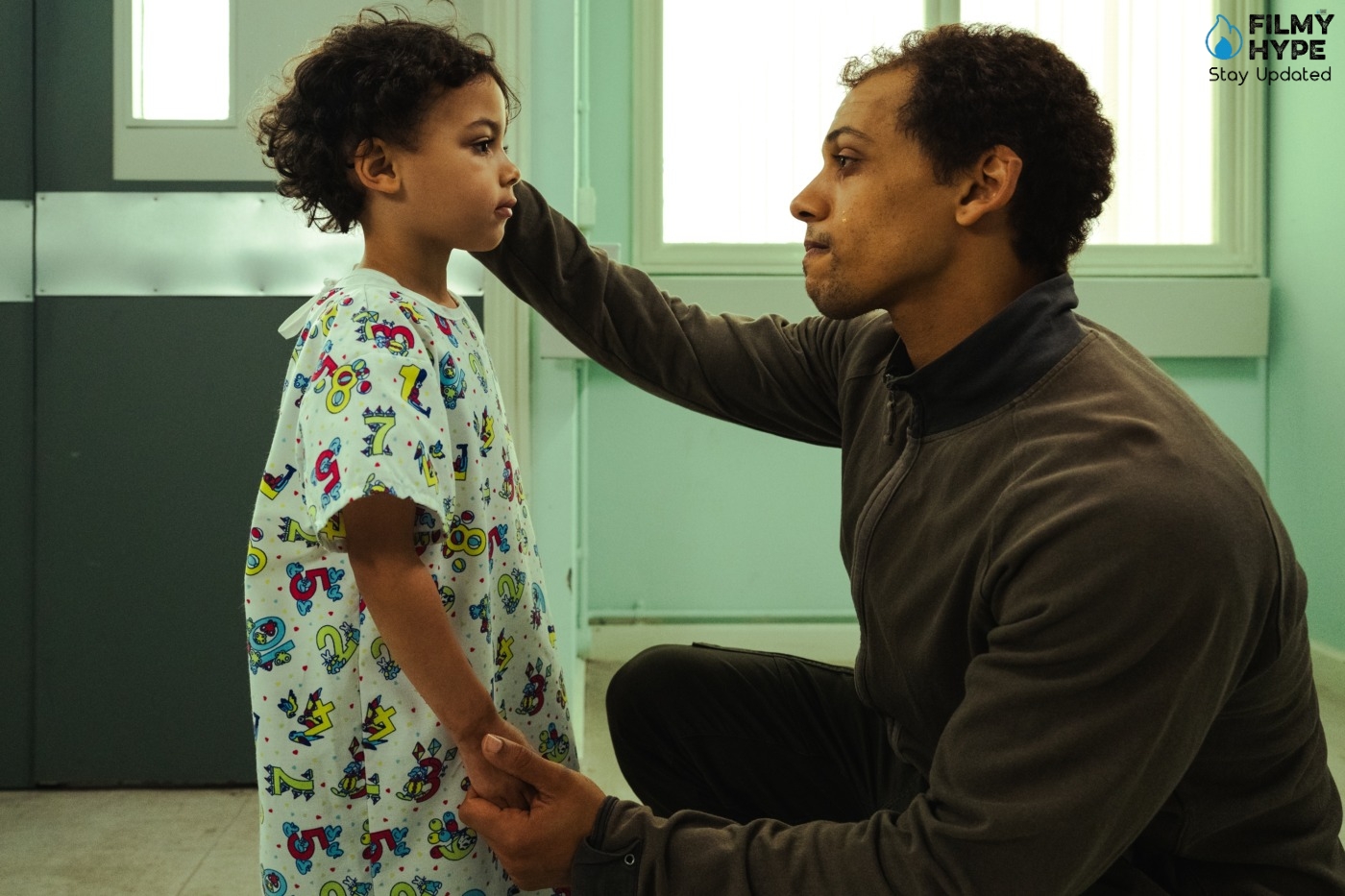
The real ending of The Witness is not delivered in a courtroom. It happens in a quiet room between a father and a son who have spent a lifetime drowning in unspeakable pain, finally gasping for air together.
The Phantom Closure of Robert Napper
To understand the finale, you have to understand the exhaustion it depicts. When Robert Napper is confirmed as the perpetrator, the revelation is presented less as a bombshell and more as the final, sad piece of a puzzle everyone should have solved years ago. The series doesn’t build its narrative tension around a “whodunit” twist. From the mid-point, the question shifts from “Who killed Rachel?” to the far more damning: “Why wasn’t he stopped?”
Napper, as the series painstakingly illustrates, was not a shadowy specter who materialized from the void. He was a known entity, a man whose trail of red flags was visible to any institution that bothered to look. The ending, therefore, isn’t an exercise in pointing a finger at a monster. It’s a systemic indictment. The initial, frantic question of the investigation dissolves, replaced by a slow-burning horror: How much time was wasted? How much pain was multiplied because the police became obsessed with the wrong man?
This is where the ghost of Colin Stagg haunts the finale more than Napper himself. The series dedicates a significant portion of its runtime to the catastrophic tunnel vision that led the Metropolitan Police to build a flimsy, psychologically manipulative case against an innocent man. Stagg isn’t a side character in this tragedy; he is the thematic core of the institutional failure.
The show argues that the need for a narrative—the need to close a case and quell public fear—can create a distortion so violent that it becomes a secondary crime. When Napper’s name is finally spoken, the victory is pyrrhic. It’s a devastating proof of concept for just how lethal the “wrong direction” can be. The ending forces us to sit with the thought that is more unbearable than the killer’s identity: this tragedy was never inevitable. It was allowed to happen.
“Why Did He Let Me Live?”
But The Witness isn’t just an institutional critique; it’s a profound psychological excavation of Alex. His survival is the series’ central, aching mystery. Rachel is attacked with primal ferocity, yet the child is left physically untouched, a silent witness perched on the border of life and death. For Alex, now a young man wracked with anger, impulsivity, and a deep-seated sense of contamination, that “why” has festered into an identity crisis.
The finale’s most psychologically daring scene is not about police procedure but about Alex’s desperate need to understand the killer’s mind. He is not satisfied with a conviction. He needs a profile. He needs to look into the architecture of Napper’s madness to ensure he doesn’t see a reflection of himself. The terror that drives him is the unspoken fear that the evil which destroyed his family somehow left a seed inside him, that surviving meant inheriting a fragment of the monster.

The answer the series offers is a clinical, human interpretation, not a divine truth. It posits that Napper, with a catastrophically warped perception of love, saw in Rachel’s maternal bond something threatening and intolerable. In Alex, a small, fragile figure, he might have perceived not a son to be envied, but a vulnerable entity to be, in his twisted logic, spared. This is not mercy. It’s the crooked, amoral calculus of a shattered mind. For Alex, this framework is a lifeline. It doesn’t heal him, but it externalizes the question. His survival was never a moral statement about him. It was a detail in the killer’s pathology. He is not his mother’s murderer. He is simply the boy who was left behind.
The Only Closure That Matters
This clinical separation clears the ground for the series’ true, emotional culmination. For three episodes, André and Alex’s relationship is a masterclass in the corrosive nature of shared trauma. They are bound by a ferocious, desperate love, but it has calcified into a dynamic of suffocating overprotection and rebellious anger. André sees the shadow of the common every time Alex steps outside; Alex sees a father whose fear feels like a prison. They are two wounded men speaking different dialects of the same pain.
In the finale, this dam breaks. It doesn’t happen because the killer is named. It happens because both of them, exhausted, finally understand the true shape of the other’s grief. Alex recognizes that his father’s overbearing control was never about authority; a terrified man attempted to stop history from repeating. André, in turn, stops being just a sentinel and allows himself to be seen as what he is: a devastated widower who lost his partner and spent decades in an agonizing, single-handed mission to save what was left of her.
When they finally, quietly, tell each other they love each other, the series finds its home. The legal justice that arrives in a courtroom is an administrative formality, a piece of paperwork that arrives decades too late. The affective justice that passes between father and son is the real verdict. It is a mutual recognition that the world failed them, the police failed them, but somehow, they have not failed each other. The text card that follows, stating that they continue to share a life in Spain grounded in “faith, hope, and love,” isn’t a saccharine epilogue.
It’s a declaration of resistance. It’s the final, hard-won thesis of The Witness: the crime scene tape can be put away, the files can be archived, but true closure is found not in a killer’s conviction, but in the miracle of two people who, after years of speaking only through grief, finally learn to say “I love you” and mean it as a promise for the future, not a lament for the past.