

The Chestnut Man Season 2 Ending Explained: The Chestnut Man Season 2 presents a new case in which Naia Thulin and Mark Hess must work together. It’s been 2 years since they caught the serial killer who left chestnut dolls at his crime scenes, and now they must investigate the case of a woman from Copenhagen, who disappeared after being harassed by a mysterious figure who uses nursery rhymes to play with your mind. Eventually, the victim is found murdered, and Thulin and Hess discover three things: that this is the work of a new serial killer, that the killer uses games and nursery rhymes to pursue his victims, and that everything could be connected to the disappearance of a teenager 2 years ago.
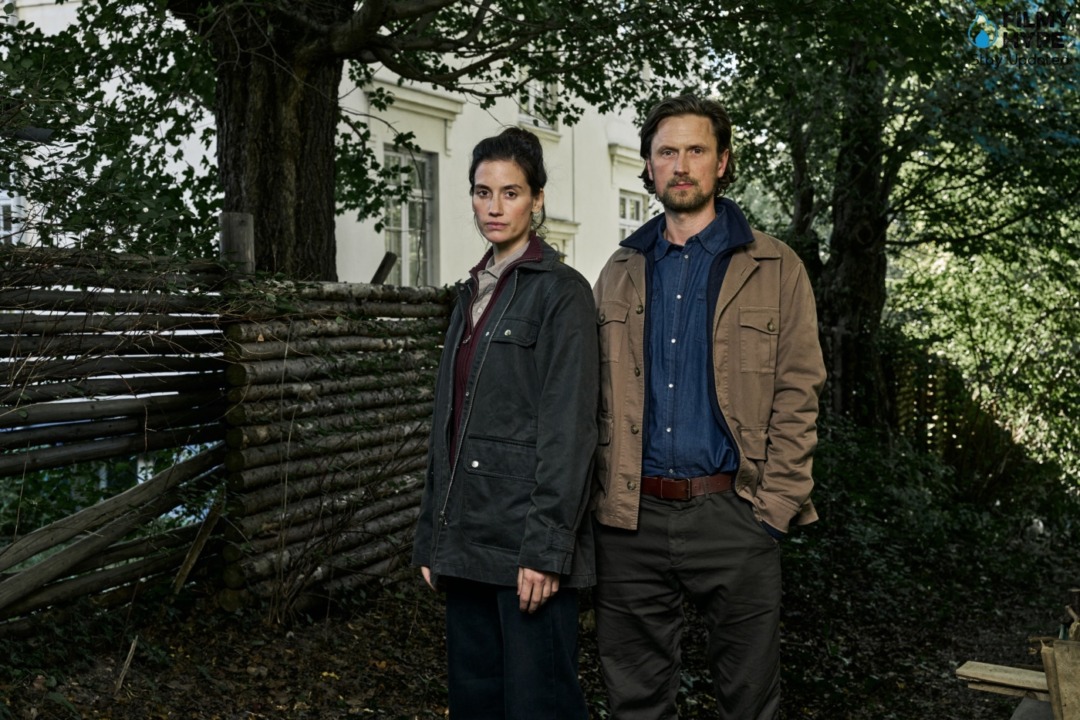
Throughout its 6 chapters, the nordic series explore the complex relationship between Thulin and Hess (wondering if they are really capable of building something stable), and Naia’s daughter, Le– but also a series of disturbing crimes and, as in the first season, the psychology of a murderer who has a strange obsession with childhood games, which suggests that he may have had a terrible childhood. He is a murderer who not only kills but also uses psychological elements to leave his victims upset and scared, invading their personal space with messages, videos, and rhymes that make them feel increasingly desperate, and that is one of the most terrifying aspects.
The Chestnut Man Season 2 Ending Explained: Connection With Emma, The Teenager Who Disappeared 2 Years Ago? Who is the Murderer?
The case of The Chestnut Man: Hide and Seek begins when Thulin and Hess investigate the disappearance of a single mother from Copenhagen, who was receiving strange messages from someone who kept harassing her. The investigation leads them to discover that the woman had been murdered, and eventually to realize that they are facing a serial killer who is killing women. Originally, Thulin and Hess found no connection between the victims, beyond these rhymes and childish games, but eventually they discover that the murderer does not choose them at random, but that there is something that all of these victims have in common (they represent abandonment and all victims have gone through divorce and complex family cases), and that everything is connected to the murder that appears in the first episode of the season, which happened in 1992, where three children were murdered and one of them is placed in what appears to be a huge nest.
The murderer was a man named Thoger Staal. The murderer is Thea (who also calls herself Signe), she was the daughter of that murderer from the 90s and was abandoned in an orphanage after those murders in the 90s, which destroyed her family and led to her mother leaving her alone. to move to Poland. Thea also lost her husband (who had been cheating on her) and her children in an accident, and that pushed her to the limit of sanity and suffer a mental breakdown. Destroyed, Thea, who works at the Agency for Family Law, begins to become obsessed with divorce cases in which she considers abandonment, and decides to unleash her fury against the people she believes deserve it.
What is the Connection with Emma, the Teenager Who Disappeared 2 Years Ago?
The case of Hide and Seek has a connection to the disappearance of a teenage girl years ago, and everything becomes clearer when the DNA of Thoger Staal, the 1992 killer, is found under the fingernails of Emma’s body. But Thoger is dead, and that leads Hess to find his daughter, Thea, and the authorities to discover that the family home still exists.
It turns out that Emma was the daughter of Marie, who strikes up a friendship with Thea, not knowing that the murderer considers her responsible for the destruction of her family and her marriage. Thea murdered Emma as revenge. When Hess tries to confront her, she tries to kill him, and it is Marie, Emma’s mother, who kills Thea and saves Hess’s life (who by this point had already lost Naia, who is murdered during the investigation, by the husband of one of the victims). Mark Hess survives and decides to go find Le, Naia’s daughter, and become a father figure to her.
Why Does the Murderer Use Games and Nursery Rhymes?
Søren Sveistrup, the author of the novels, revealed that he was interested in showing how a terrible childhood can shape a person and take them to a very dark place, and from there comes this decision to include the element of childhood games, which makes a contrast between the innocent and the terrible. But that is not the only reason why this game is in the series; the use of rhymes and harassment seeks to destroy the victims psychologically and make them feel desperate, alone, and afraid, leaving them even more vulnerable and alone, before killing them. Thea wants those victims to experience the same pain and trauma as her, and also takes her father’s crimes as a reference.
A Nordic Noir Archaeology of Inherited Pain
Hide and Seek, the second part of The Chestnut Man, leads the way to much more disturbing places than just providing a new puzzle. It purposefully moves the murder thriller slowly into a bleak look at generational pain. The search for the guilty becomes an excavation, disclosing not only the criminal but a trail of misery transmitted as a polluted inheritance. The question moves from the reconstruction of events to the exploration of deep wounds that calcify, deform personalities, and poison relationships long after the original offense.
In this season, Denmark is more than a backdrop. The silent streets, the impersonal offices, the silence under the ever-present rain congeal into a chilly, opaque emotional terrain. It is an environment in which truth always seems to arrive late; it arrives, technically, but never soon enough to provide redemption. The last episode takes this notion to the extreme, providing no satisfactory conclusion, but a slow fall into a darkness born of an original sin that continues to reverberate, mutated, through successive generations.
A Game Where You Must Remain Hidden
The thematic shift is announced by the title itself, Hide and Seek. It began as a game for children, unfortunately devolving into a psychological struggle for existence. The villain’s trademark combination of poem and surveillance is the language of a damaged adolescent. So the probe is not to find someone put there quietly. It is a continual digging back into the past, a frantic and limitless digging to bring to light what was torn away and allowed to rot, leaching its poison into the present.
This fits perfectly into the history of Nordic noir, a genre that has never been about clean puzzles to be solved. Series such as The Killing and The Bridge have used the detective as a social critic to explore the flaws in an apparently calm social order. The Chestnut Man: Hide and Seek lives up to this legacy and takes it further. The directorial concept of Milad Alami and Roni Ezra is central here; their visual style demands that every setting become an emotional reservoir. The offices of the Family Law Agency, the youth care homes, the private homes – none of them are neutral ground. They are chroniclers of broken relationships, of emotional inadequacies, of shaky identities. Crime becomes a type of existential drama, where each character is characterized more by their past of suffering than by their deeds, and turns away from procedure.
Thea: Crime as a Learned Mode of Communication
The big reveal in the final episode changes the whole significance of the investigation. The enemy is Thea (aka Signe), who is not a ghostly adversary but the product of a broken family background. Her father, Thoger Staal, perpetrator of mass murder, is the “primal wound”—the cataclysmic incident that forever scarred her adolescence and fractured her family unit, driving her mother away and leaving her alone within an institutional framework unable to contain her pain.
The wonder of this disclosure is not the surprise, but the terrible sense it renders. The pattern does not change throughout Thea’s adult life; it only reconfigures itself in more and more distorted ways. Her failed marriage to Roy and the heartbreaking loss of her offspring are not fresh wounds but virulent recurrences of the original, sharpening her anguish into a precise, intentional fixity. It is in her work at the Family Law Agency that she has the key psychological domain. Listening to stories of divorce, disloyalty, and the breakdown of the family is not an objective task for her. It is a self-destructive act of empathy and projection that she repeats over and over again. The final tipping point comes when she learns about Marie’s daughter Emma’s participation. Emma’s death is not a sudden, surprising aberration, but the natural result of a mindset that sees Emma and Roy’s relationship as a further reflection of the first betrayal. Vengeance turns into a desire for interior coherence, a distorted effort to impose emotional order on a universe that provided her with none.
This is where your comment about the “dissolution of individual culpability” is so powerful. Thea isn’t merely an avatar of evil. She’s the terrifyingly rational product of systematic breakdowns in legal frameworks, family relationships, and emotional attachments. Criminality is an acquired behavior, not an individual act. She doesn’t wear it as a brand. It’s the only language she keeps — her suffering.
Mark’s Final Option: Breaking the Cycle
In contrast to Thea’s painful road, Mark’s final, unobtrusive act. His decision to be a father figure for Le is not a winning solution. It is an intentional rupture, a break in the cycle of violence. It is not a moral resolution of the case, but a direct, human attempt to stop the machinery of recurrence by the radical act of nurturing.
This moment radically re-contextualizes the series’ idea of ‘family.’ It is no longer about biological origin or about guaranteed shelter; it is an active creation. The show appears to imply that the only treatment for inherited trauma is to be present at the moment of transmission. We cannot change the past, but we may form a new kind of bond that can hold it without consuming it. This is the only faint gleam of brightness in an otherwise structurally gloomy future. The end of the case doesn’t resolve the narrative environment; it just stops one particular string of cruelty, with the underlying systems that created it left unchallenged. The demise of Thea finishes the arc of an individual, yet the conditions of her development endure.
An Unsettled End that Lingers
The ending of The Chestnut Man: Hide and Seek is a masterful, hazardous balance of finality and unsolved, lingering questions. Thea’s death, it would seem, breaks the chain of events, restoring a procedural order. But Mark’s choice has a new thematic emphasis on emotional obligation rather than punishment. The story doesn’t end, but moves to a more immediate, more intimate level, to the daily duty of care as the only possible form of resistance in a world of absence.
This is the most disturbing brilliance of the epilogue. It doesn’t really end the story; it leaves it hanging in a larger question: How much of evil is the result of individual choice, and how much is just handed down? The door is left slightly ajar for any follow-up. The world is still a fundamentally unstable place, populated by people with unprocessed memories. The structure could not be simply repeated in a subsequent installment, but must examine the reverberations of this freshly structured emotional inheritance. The answer to the question raised by the concluding scenes is chillingly open, a chill to which no arrest or rescue can truly put an end.