

“Was I a phoenix rising from the ashes?” Aunt Lydia asks in a voice-over in Episode 6 of The Testaments. “Or was I a cockroach enduring amidst the rubble?” Portrayed by Ann Dowd, who seems born to inhabit the space between maternal tenderness and bureaucratic sadism, Lydia Clements becomes something more than just a villain who tortures handmaids: she is now an enigma of survival.

Unlike Serena Joy (Yvonne Strahovski)—whose blind faith and desire for motherhood justified her cruelty—Lydia was always something else entirely: an incomprehensible blend of twisted care and a thirst for power. The Testaments seeks out the origins of her personal mythology. This is the story of the moral corpse of one of the most contradictory characters in the dystopia of Gilead.
The Testaments and the Origin of Aunt Lydia: From Miss Clements to the Architect of Gilead
Episode 6 of “The Testaments”, titled “Stadium,” depicts the formative years of the monster. This sequel series to *The Handmaid’s Tale* moves away from the domestic nuances of her past life as a lawyer—where a romantic rejection reveals her propensity for informing—and focuses instead on her traumatic entry into the hierarchy of Gilead. In a flashback that remains faithful to the essence of Margaret Atwood’s novel, we see a Lydia Clements who is still a schoolteacher, trapped in the staff room, bickering over a lack of coffee before the coup d’état drags her into the epicenter of a systemic horror.
The stadium becomes the laboratory where Aunt Lydia is manufactured. There—amidst rations of dry bread and the thunderous sound of “sinners” being executed on the tennis courts—Lydia realizes that morality is a luxury she cannot afford if she wishes to keep breathing.
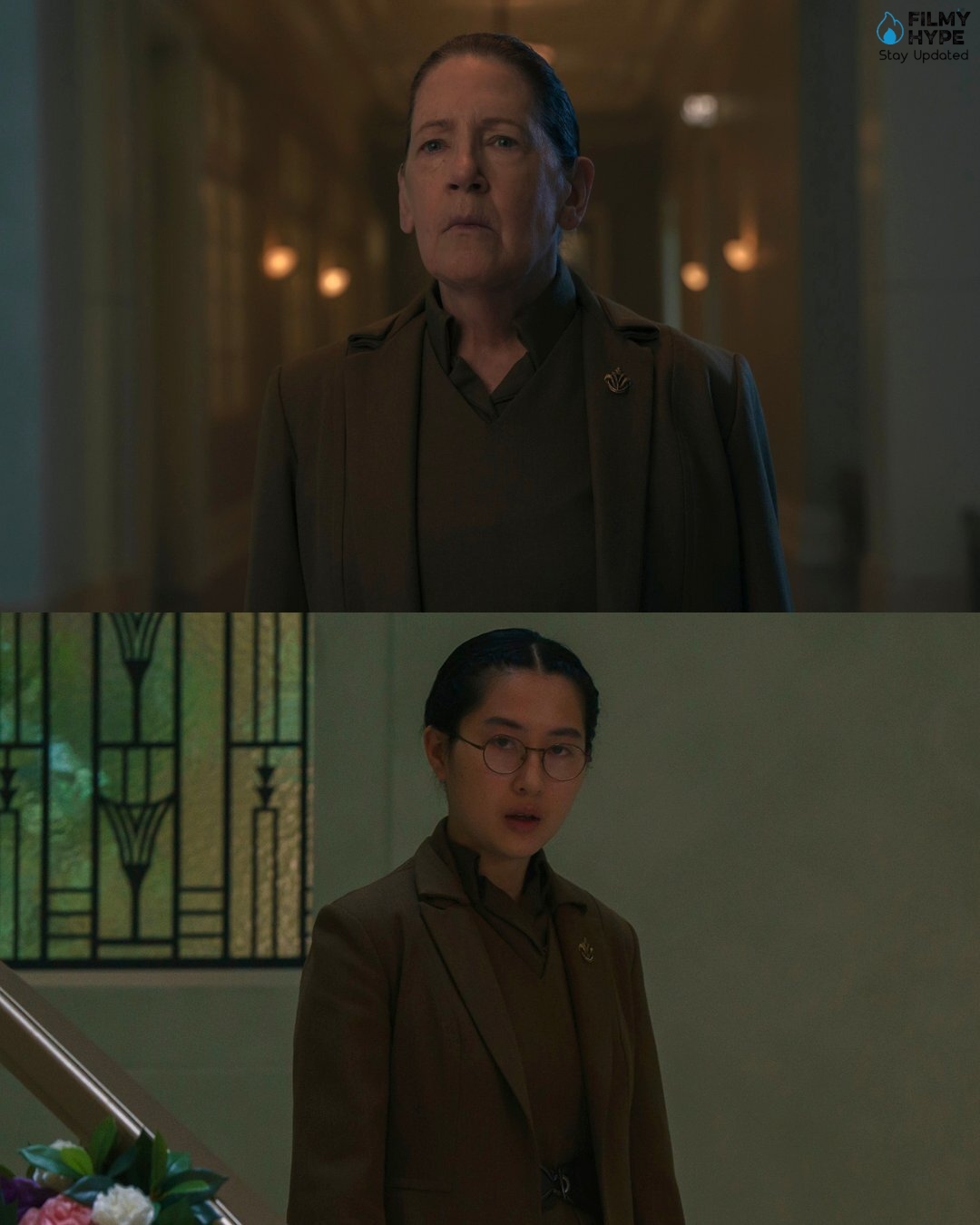
Her encounter with Commander Judd (Charlie Carrick) marks the birth of the Aunts: she is to “teach girls how to be women of God.” To test her loyalty, Judd forces her to shoot her colleague Vivian—the future Aunt Vidala (Mabel Li); Lydia pulls the trigger. The gun was unloaded, but that symbolic shot had already killed the primary school teacher, giving birth to the legend of Ardua Hall.
Lydia After The Handmaid’s Tale
Lydia does not merely accept her role; she designs it. She chooses the color brown and coarse fabrics—resembling burlap sacks—as a form of sensory mortification. Her philosophy is clear: “My greatest grievance with the old world was its emphasis on comfort and ease. We had become spoiled brats.”
This violent “tenderness” is precisely what makes her return in The Testaments problematic in terms of narrative cohesion with *The Handmaid’s Tale*. After having helped the Handmaids escape, her current position as the “Supreme Aunt”—complete with her own statue at the school’s entrance—suggests that she possesses the ability to regain the favor of the leadership. For Lydia, friendship and loyalty are liabilities that bring only suffering; consequently, her sole true alliance lies with the paper on which she records the weaknesses of her enemies.
Gilead has “worshipped her, reviled her, and worshipped her once more,” yet the process by which she managed this—after having advocated for the regime’s destruction—remains a shadow within the script.
The Testaments: Lydia’s Secret Archive
In The Testaments, Lydia has evolved from being the regime’s hammer into its most dangerous archivist. Just as in the novel, the series reveals that she has been compiling the darkest secrets of Gilead’s elite, using them as a tool for extortion to ensure her own survival.
Ultimately, Lydia’s story in The Testaments is that of a woman who learned that having friends in Gilead was a vulnerability that brought nothing but suffering. Whether she is a phoenix or a cockroach depends on the angle from which one views her trail of blood and discipline.
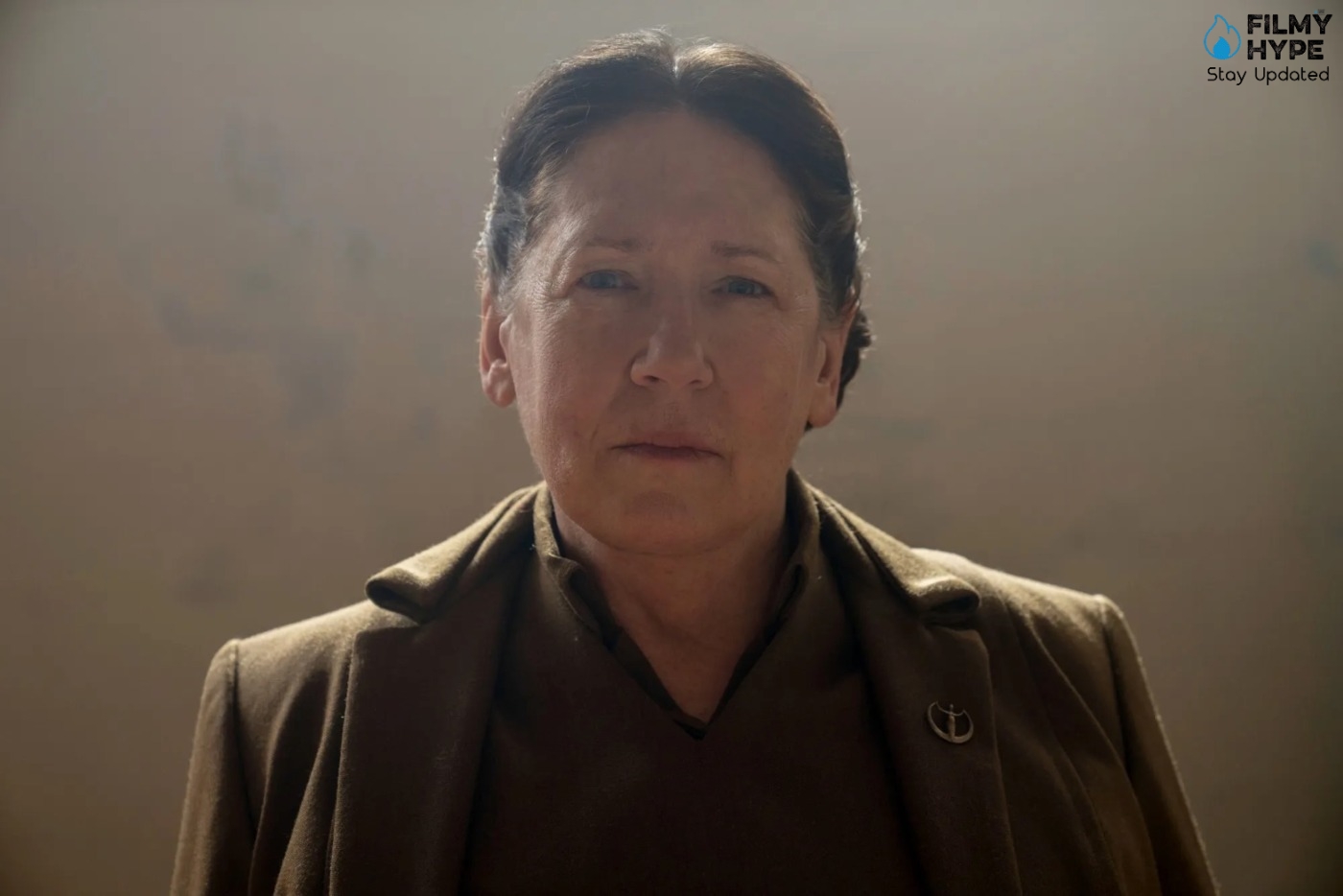
She has survived two waves of systematic torture and a change of regime, proving that—in Margaret Atwood’s world—the most enduring power belongs not to the one who wields the weapon, but to the one who writes the instruction manual for using it. Lydia Clements died in that stadium, but Aunt Lydia has achieved something no Commander ever could: she has become indispensable to the very system that despises her.
In the end, she is a woman who discovered that the power to destroy lives was the only haven against her own destruction. At Ardua Hall—amidst secret archives and burlap uniforms—Aunt Lydia continues to draft the terms of her own survival, reminding us that in Gilead, knowledge of others’ sins is the only possible form of absolution.