
The Law According to Lidia Poët Season 3, the hit Netflix series, is coming soon. The Law According to Lidia Poët, with protagonists Matilda de Angelis, Eduardo Shoe, and Pier Luigi Pasino. This TV series reinterprets the true story of Italy’s first female lawyer, who practiced in Turin at the end of the 1800s. The first two seasons were a great success, and there are very high expectations for the third and final season. But at what point had we left Lydia, her brother Enrico, and all the other characters? This will be the last season of the series, and for this reason, it will have the most difficult case for the protagonist at the center of the story.

Turin, with its 19th-century allure, period buildings and retro atmosphere, it is preparing to once again be the backdrop to the adventures of Italy’s most stubborn lawyer: The Law According to Lidia Poët, among the most significant Italian successes of Netflix of recent years, will return in 2026 with the third chapter of the saga freely inspired by the life and legal adventures of the true Lidia Poët, first woman to enter the Bar of our country in 1883. On screen, in the series produced by Groenlandia by Matteo Rovere (and directed by Rovere himself, by Letizia Lamartire and by Goofy Half-Weigh), the strong-willed lawyer will once again be the one to play Matilda De Angelis: TV’s Lidia Poët is a determined, intelligent and shrewd woman, ready to do anything to practice a profession she loves and that rejects her as a woman in an all-male universe.
The Law According to Lidia Poët Season 3: Trailer
The images alternate very heated court moments – with speeches, clashes, and hostile judges – with more intimate scenes that show the personal side of the protagonist, divided between the bond with Prosecutor Fourneau (with whom he also shares the case, but on opposite sides) and the return of Jacopo, which reopens unresolved romantic tensions. The trailer also insists on the historical and social context, with Lidia continuing to challenge a male-dominated system as her brother pushes through Parliament the law that could restore her right to practice; it’s all accompanied by a more dramatic tone and a sense of final reckoning, consistent with the fact that this season will close the series.
The Law According to Lidia Poët Season 3: Story Plot
It is April 1887: Enrico has become a Member of Parliament, frequently traveling back and forth between Rome and Turin with Teresa, and has succeeded in bringing Lidia’s bill before a parliamentary committee. Lidia is impatient, yet she knows she must place her trust in her brother; meanwhile, she continues to see Fourneau—though, naturally, she has no desire to commit, marry, or make their relationship public. Fourneau has received a professional promotion; he now serves on the Court of Assizes, and his proving ground—the opportunity to demonstrate his worth—is the prosecution of a woman accused of murdering her husband. The complication is that the defendant is Lidia’s dearest friend, Grazia Fontana, whose trial—centered on a plea of self-defense—is set to shake both public opinion and the bonds between them. Jacopo, having returned to Turin with his new partner, decides to remain in the city to cover the press fallout surrounding the most high-profile and controversial trial of the era—one in which Lidia and Fourneau find themselves on opposing sides.
Proving that an abused wife killed in self-defense is a titanic undertaking—one perfectly suited to Lidia. Will she succeed in convincing an all-male jury to acquit Grazia Fontana by arguing that the true crime lies in the violence—both perpetrated and endured—that led to the act? And when it comes to matters of the heart, will she continue to believe that Fourneau is the right man for her, or will she finally find the courage to embrace the relationship with Jacopo—a possibility she has always denied herself? Is it truly possible to rebalance the relationship between the sexes? And if politics offers no aid—if society itself stands in the way—can such a balance at least be achieved within the confines of one’s own life? The Law According to Lidia Poët—and her very existence—once again ignites a spark of hope.
The Law According to Lidia Poët Season 3 Brings New Challenges, Public and Private For All?
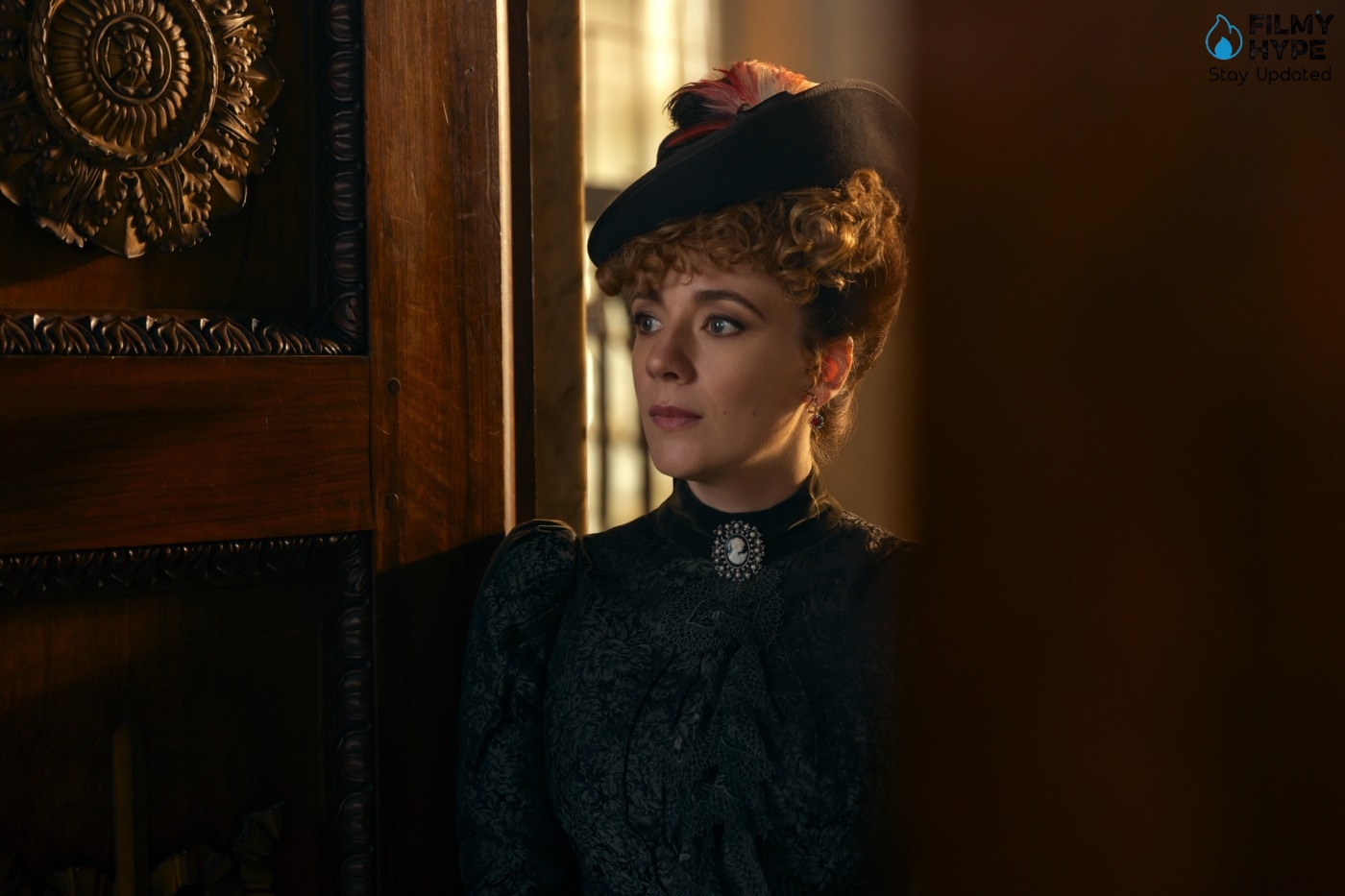
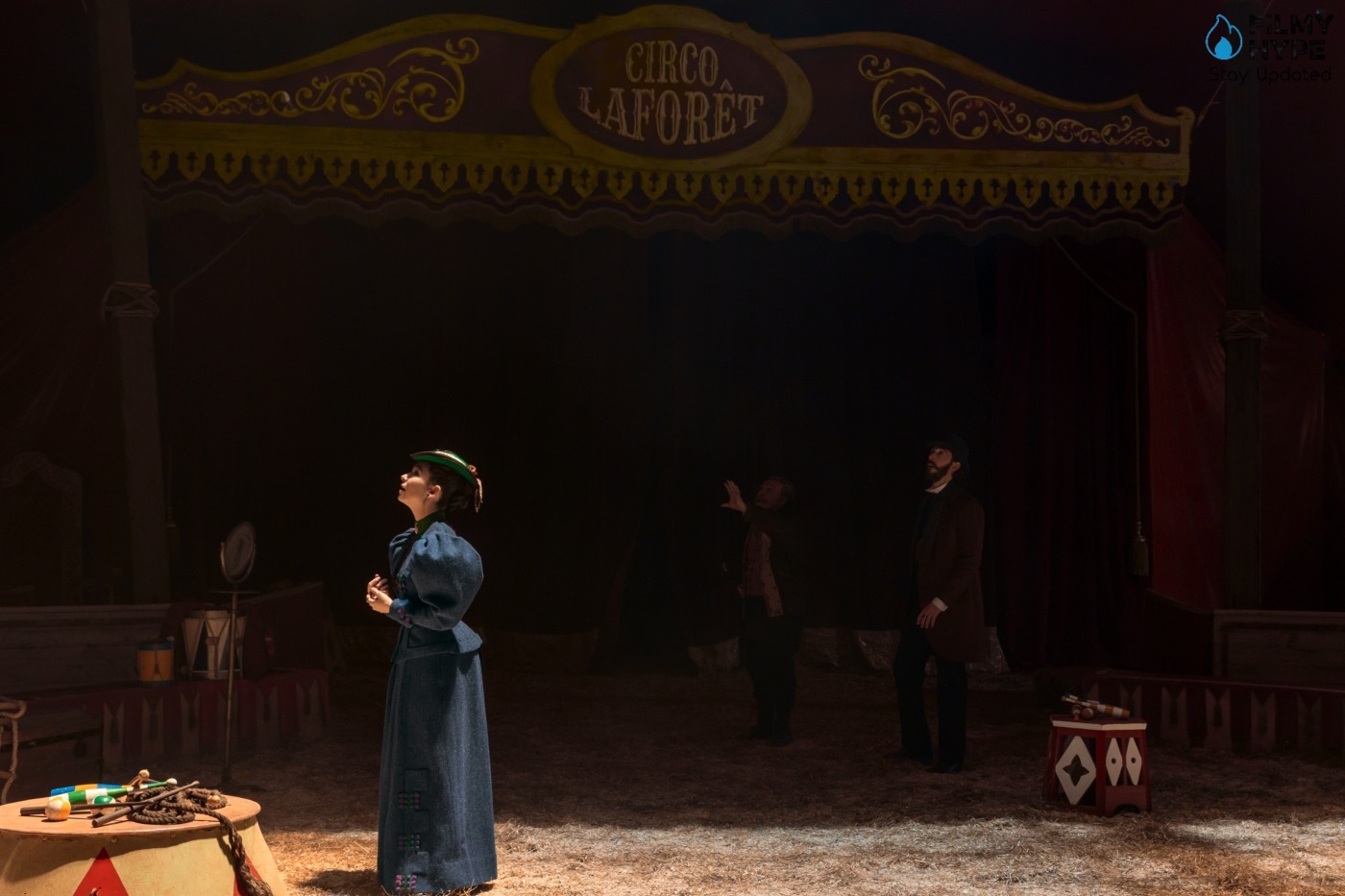
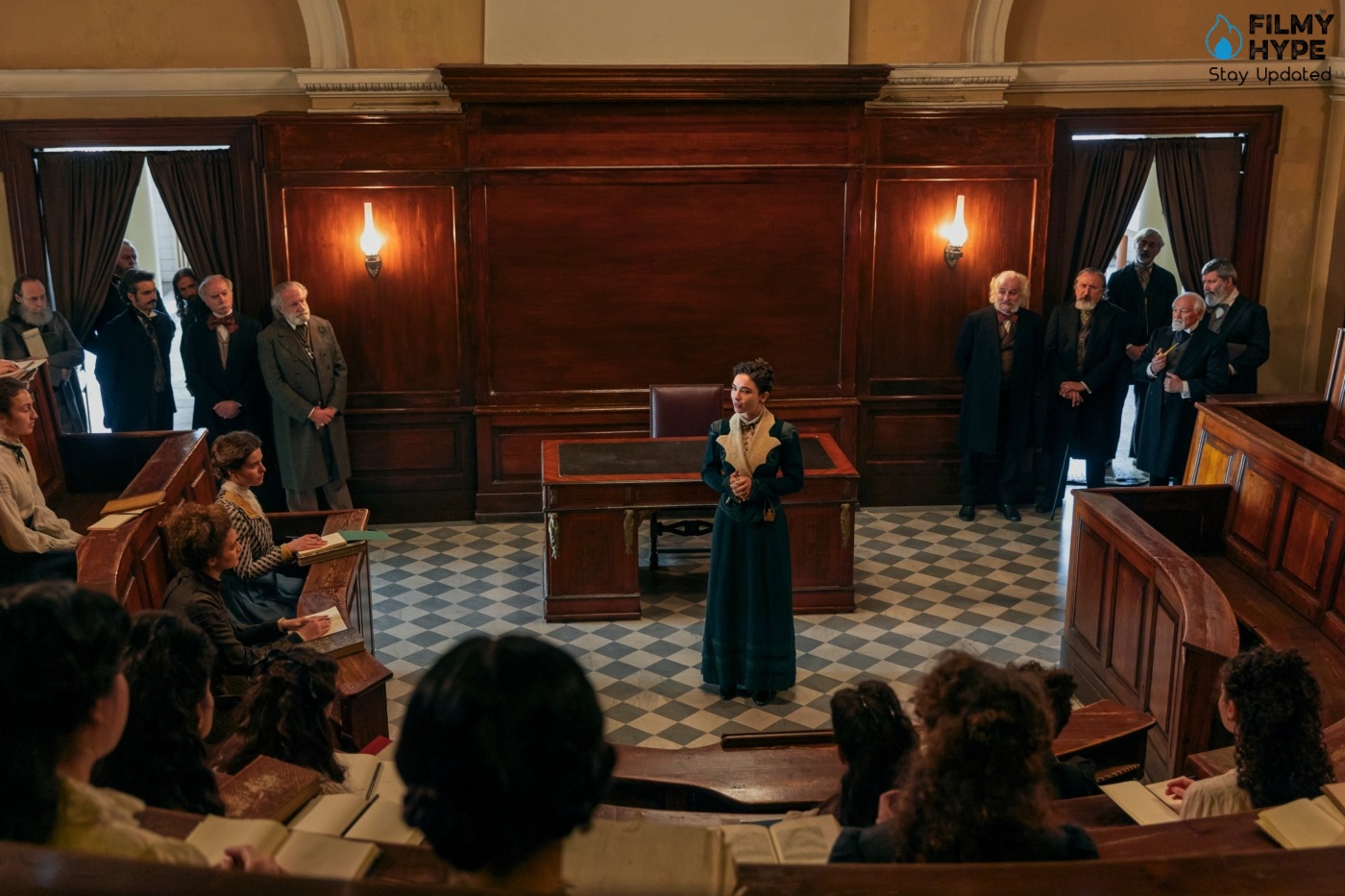
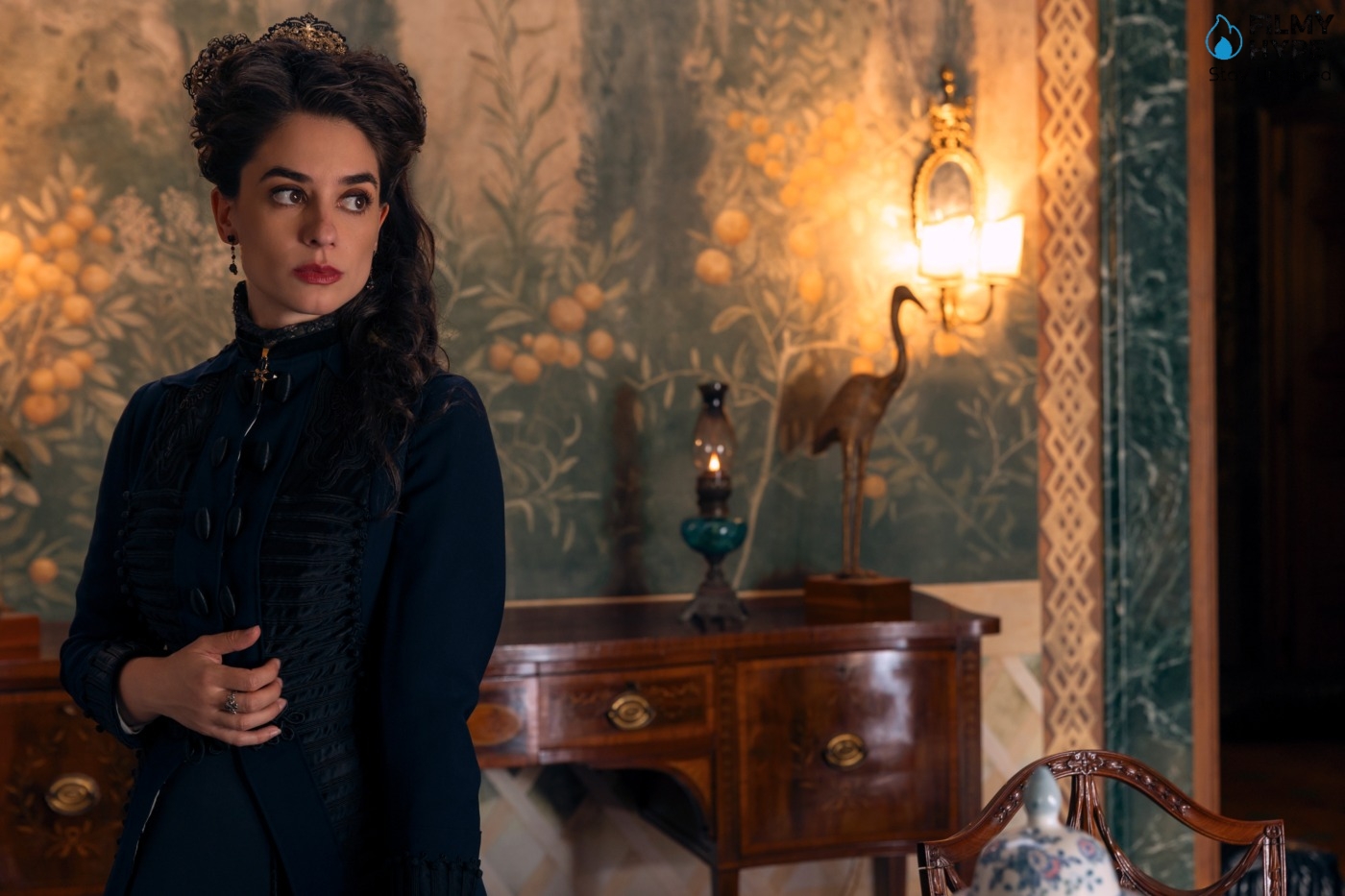
With the conclusion of filming of the final chapter, which consisted of 6 episodes, the first images were released, from which you can already glimpse some more delightful situations. Meanwhile, we discover a moment of intimacy between Lidia and Fourneau, finally ready to experience a real story, even if not in the light of day. Ultimately, with Jacopo’s departure, the protagonist seems quite serene in leaving behind her previous proposal and the kiss on the train, but always without ties or obligations.
As for the plot, the new season of The Law According to Lidia Poët, it is April 1887, and important changes have occurred. Elected as a surprise member of parliament, Enrico is forced to commute between Rome and Turin with Teresa, after finally bringing his sister’s law to committee. Meanwhile, Lydia’s impatience grows, but her newly formed relationship with Fourneau, which is kept strictly secret, keeps her quite busy. Between his promotion to the Assize Court and her assignments as a defense attorney, life turns out to be quite hectic. To make matters worse, the fact that the two are assigned to the same case of an abused woman who murdered her husband. Self-defense? Who knows. Not only that, but the defendant is also Lidia’s closest friend, Grazia Fontana. His trial will shake public opinion, as well as erode the balance between Lidia and Fourneau. As if that weren’t enough, Jacopo decided to return to Turin with his new partner to cover press coverage of what promises to be the most media-driven and controversial event of the time.
The Protagonists of The Netflix Series Between Confirmations and New Entries
The series is loosely based on her story, focusing on the changes the protagonist brought about in her time, whose benefits we still enjoy today. Matteo Rovere, Letizia Lamartire, and Pippo Mezzapesa have taken turns directing episode after episode-there are currently two seasons, while we await the arrival of the third, for a total of 12 episodes-who are skilled at directing an ensemble cast and capturing the atmosphere of an era.
It is no coincidence that Lamartire and Mezzapesa return to direct, with the addition of Jacopo Bonvicini (director of some episodes of Battle Study). The choice appears functional, especially because Lamartine’s female point of view embraces and exalts the protagonist, favoring an excellent balance with the gaze and hand of her male colleagues. Rovere remains as producer with his Greenland, a company of the Banijay Group.
Obviously, without De Angelis, none of this would be possible, but fear not, the Bolognese actress has decided to return to the role of Lidia Poët, now fond of the role and the values it symbolizes. Freedom, resolve, wit, charm, ambition. The protagonist of The Law According to Lidia Poët not only represents a prototype of a modern woman, but also establishes a model to look up to and aspire to. In the cast of the third and final season, together with De Angelis, we find the inevitable and irresistible Eduardo Scarpetta, interpreter of Jacopo Barberis, Pier Luigi Pasino (Enrico Poët, brother of Lidia), Sara Lazzaro (Teresa Barberis, wife of Enrico and sister of Jacopo), Sinéad Thornhill (Marianna Poët, daughter of Teresa and Enrico) and Gianmarco Saurino, reprising his role as prosecutor Fourneau and Lidia’s new love interest. Newcomers include Liliana Bottone and Ninni Bruschetta, who play Grazia Fontana and King Cantamessa’s Prosecutor, respectively.
The Law According to Lidia Poët Season 3: Release Date
The third and final season of The Law According to Lidia Poët will land on Netflix on April 15, 2026. The cast, in addition to Matilda De Angelis, also includes Eduardo Scarpetta, Pier Luigi Pasino, Sara Lazzaro, Sinéad Thornhill, and Gianmarco Saurino. Newcomers to the new episodes include Liliana Bottone, who plays Grazia Fontana – a key character in the new plot – and Ninni Bruschetta, as King Cantamessa’s Prosecutor.
Season 1 Recap
The series opens in 1883. Lidia Poët (Matilda de Angelis) is a young woman law graduate who has just passed the exam to register with the Bar Association. However, this inscription is appealed by the King’s procurator, since the legal profession is a public office closed to women. Lidia, however, as we understand from the first episode, is not a woman who gives up easily. After asking her brother for hospitality, Henry (Pier Luigi Pasino), also a lawyer, begins working “in the shadows” for his law firm.
Each case of the Poët brothers (not without some reservations on Henry’s part, of course) turns into a tireless search for what is the scientific truth behind all crimes, including with the help of techniques pioneering for the time, such as fingerprints or ballistics. Between one issue and another, Lidia weaves a complicated relationship with Jacopo Barberis (Eduardo Scarpetta), journalist of the Piedmontese Gazette and Henry’s brother-in-law. Jacopo helps her with her investigations thanks to his connections in the Turin underworld, but he hides a decidedly opaque past. After solving various crime cases, Lidia has her final appeal rejected: she cannot be a lawyer. Despite a proposal of marriage and of escape to America by her ex-boyfriend, Andrea (Dario Aita), Lidia decides to stay in Turin to continue her battle.
Season 2 Recap
If the first season was about professional recognition, the second moves to a more political and legislative: in fact, a very important topic is touched upon, namely that of women’s suffrage in Italy. Lidia understands that although laws are written by men, it must be a woman who changes them. Our protagonist, therefore, decides to actively engage in the women’s voting movement. We also witness a role reversal: Lidia still collaborates with Enrico, but now he is the one who needs his sister’s intuition to solve the cases, after realizing his natural talent.
A new antagonist also enters the scene: the new King’s Procurator, Pierluigi Fourneau (Gianmarco Saurino), a modern and intelligent man who does not underestimate Lidia, but rather the intellectually challenging, becoming his ambiguous love interest (but also a constant thorn in the side). This is also where the relationship between Lydia and Jacopo cracks for several reasons. The second season of The Law According to Lidia Poët ends with a partial success for Lidia, who manages to influence public opinion and politics regarding women’s voting; the road to equality, however, is still long. The lawyer is more determined than ever not to accept compromises, ready to challenge the entire patriarchal system to obtain not only the right to defend, but to participate in the life of the State.