

The Industry Season 4 finale comes after eight episodes in which the rise of Tender confirms that contemporary capitalism does not reward ethics but rather the speed of the story. If the fintech of Whitney Halberstram had settled in that gray area where technological innovation coexists with political speculation and financial opacity, the end shows the moment when that promise becomes a domestic, political, and stock market apocalypse. The fraud becomes public, the company collapses, and the system that allowed its growth begins to reorganize around the disaster.
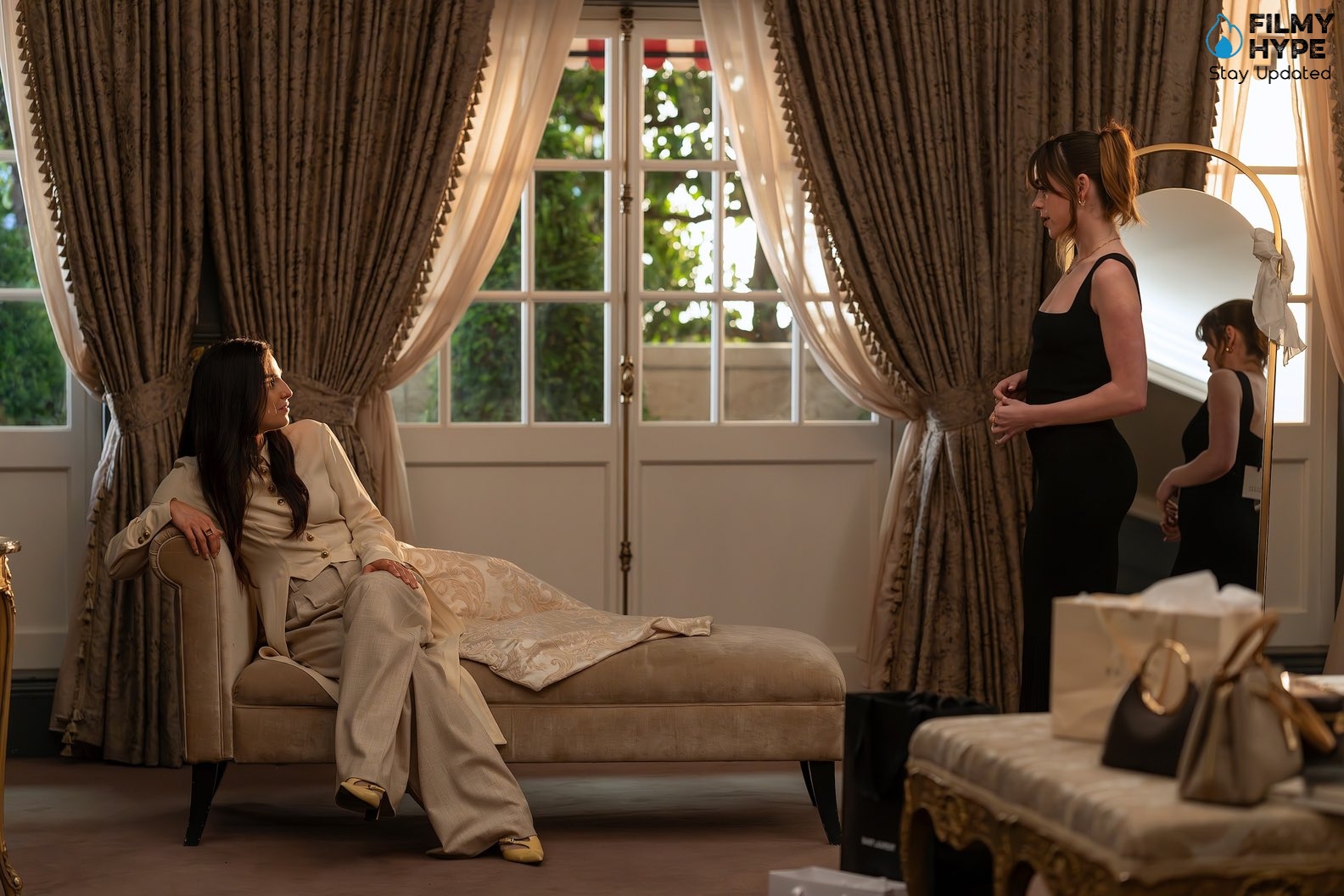
In the last scene shared in End of Games, the final episode of Industry Season 4, Yasmin (Marisa Abela) pronounces the word—”indispensable”—addressing it to Harper as a verdict, a reckoning that comes after years of mutual humiliation. Become indispensable to hell, and you will have turned into a demon. This phrase means accepting metamorphosis: stopping being human and taking the form of a demon. Harper (Myha’la), the prodigious “world-eating,” never missed an opportunity to remind Yasmin of her irrelevance: Yasmin the superfluous, the foolish, the girl reduced to an object. Yet Yas’s choice to orchestrate a sex market in luxury hotel rooms has none of Dante’s imagery: he doesn’t rule that hell; he doesn’t shape it. She became its silent guardian, not the priestess. It administers the sexual and political appetites of the global 0.01%, without ever touching on the power that generates them. When Harper begs her to leave that room populated by extremists and young women exploited or presented as such, Yasmin remains motionless. It has become part of the furniture.
Industry Season 4 Ending Explained: Henry Muck and the Definitive Collapse of Tender?
Industry Season 4×8, titled Both, And, works with the hangover from the collapse. The episode opens with the crisis already installed in the public conversation. British Secretary of Commerce Jenni Bevan (Amy James-Kelly) appears on a television panel defending the government and promising reparations for customers harmed by Tend. The political system is attempting to absorb the blow while transforming it into discourse. Tender stops being a company and becomes a court case. Tony Day (Stephen Campbell Moore) is arrested as the investigation begins to take public form. The fall of the project drags with it the reputation of those who supported it. Henry Muck (Kit Harington) returns from New York convinced that he can still order chaos, but the scandal already has a narrative of its own. The media and regulators have decided who will be visibly responsible, and his name is at the center of that story.

The fall of Henry Muck also functions as the closing of his arc during season 4. Episode 2 depicted him ensnared in an inherited depression, persuaded that his family history shaped his fate. Tender offered him a possible way out: a company, a purpose, the illusion that he could still run his life. The ending reveals that this exit was never real. Henry did not control the project on which he had placed his future.
Whitney Halberstram: Lithuania, Mon Amour?
The figure that completes this discovery is Whitney Halberstram (Max Minghella). Throughout Industry Season 4 was the brilliant founder of Tender, the entrepreneur capable of seducing investors and politicians with a mix of technological audacity and personal magnetism. In the last episode, he prepares his escape on a private flight to Vilnius. The conversation he has with Henry confirms that they operated behind tender Russian services with the capacity for political and economic pressure. Fintech was not simply an overrated startup founded by an egomaniac but a strategically useful vehicle for accessing banking data on a massive scale and intervening in the Western economy.
Whitney is responsible for the fraud, but she is also someone who understands that the real danger no longer comes from the police or regulators. His decision to escape responds to another threat. Those who control Tender do not tolerate uncomfortable witnesses. Henry rejects the proposal to run away with him because he is confident that his last name can still offer some form of institutional protection.
Yasmín and Her VIP Escort Service?
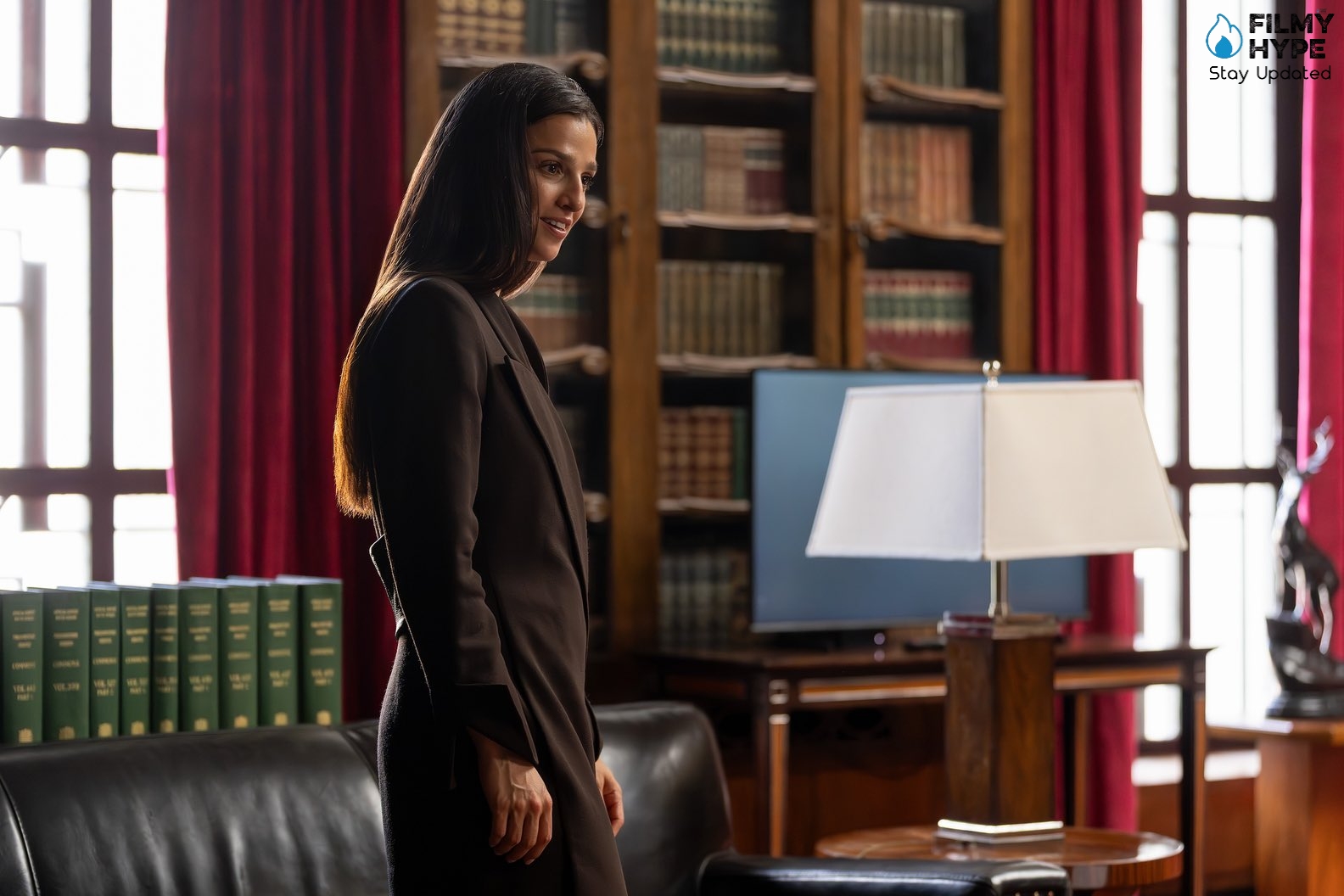
In the season 4 finale, Industry, another story advances in silence. Yasmin (Marisa Abela) begins to occupy a different place within the power system that surrounds the company. Her relationship with Henry has deteriorated throughout the season, marked by the husband’s emotional fragility and the growing weight of family scandals. The end transforms that intimate crisis into a social reconfiguration. Yasmin comes into contact with Sebastian Stefanowicz’s political project (Edward Holcroft), a conservative figure who represents post-democratic politics, a kind of aristocratic neo-fascism. The operation moves to Paris, where Yasmin organizes a dinner with businessmen and donors interested in financing her campaign.
However, the murkiest aspect of the season 4 finale of Industry is that Yasmin becomes a version of Ghislaine Maxwell (the partner of Jeffrey Epstein, who was convicted of child prostitution and human trafficking): she pays young women, enabled by Hayley (Kiernan Shipka), to “accompany” the men in the room. They argued that it gives them access, agency, and a gateway to a world that would otherwise be closed to them. Yasmin views power not as a structure that requires moral justification, but rather as a space that she either occupies or loses.
The final scene with his father’s voicemail introduces a more intimate nuance. Yasmin listens to the recording repeatedly, as if she needs to confirm that family history continues to operate in every decision she makes. Industry thus returns to one of his recurring themes: the relationship between money and inheritance, between financial capital and emotional capital.
Harper: Victory and Loneliness
Harper goes through the final episode of season 4 of Industry from another place. Your short bet against Tender, organized together with Sweetpea (Miriam Petche) and Kwabena (Toheeb Jimoh), becomes one of the most lucrative operations of the season. From the hotel suite where Eric installed a Bloomberg terminal, the group follows the collapse of the company’s value and calculates its profits. The fall that ruins other characters becomes a financial victory for them. In the season 4 finale, Industry closes with Harper on a private plane, interviewing the journalist Patrick Radden Keefe, who prepares a profile about his career. The conversation revolves around a simple question: What does it mean to be right when everyone else is wrong?

Harper’s response sums up the state the season ends in. Being right produces money and recognition, as well as isolation. The series has built its trajectory around that tension. Each professional advance implies an equivalent loss on a personal level. The season 4 finale Industry leaves the characters in radically different positions. Henry faces the judicial process that follows the fraud. Whitney disappears before the investigation can catch up. Yasmin moves towards a space where politics and money mix openly. Harper continues to advance within the financial system with a talent and danger award.
Tender disappears as a company, but the structure that allowed its existence remains intact. That is the movement that Industry has observed from the beginning: capital changes shape, companies are born and disappear, scandals make headlines, and then everything dissolves into the normal flow of the system. All that remains is the market, the structure that enables everything to restart. And Harper is ready for another gin and tonic.
