

The Big Fake Movie Review and Analysis (Il falsario)
Cast: Pietro Castellitto, Giulia Michelini, Andrea Arcangeli, Aurora Giovinazzo, Edoardo Pesce, and Claudio Santamaria
Directed: Stefano Lodovichi
Streaming Platform: Netflix
Filmyhype.com Ratings: 3/5 (three stars)
With The Big Fake (original title – Il falsario), available on Netflix from January 22, 2025, Stefano Lodovichi will tackle one of the most ambiguous and elusive characters in recent Italian history, starting with the book Il Falsario di Stato by Nicola Biondo and Massimo Veneziani. The film is loosely based on the real-life figure of Antonio Giuseppe Chichiarelli, known as Tony, a forger, criminal, and opaque presence in the mysteries of the 1970s, but it immediately chose the path of narrative reworking rather than historical reconstruction. At the centre of the story is Toni, played by Peter Castellitto, magnetic and deliberately over the top, immersed in a 1970s Rome suspended between creative vitality and political shadows. The film intertwines personal ambition and moral compromises, moving between noir, heist movies, and period stories, without ever openly declaring which of these souls truly wants to prevail.
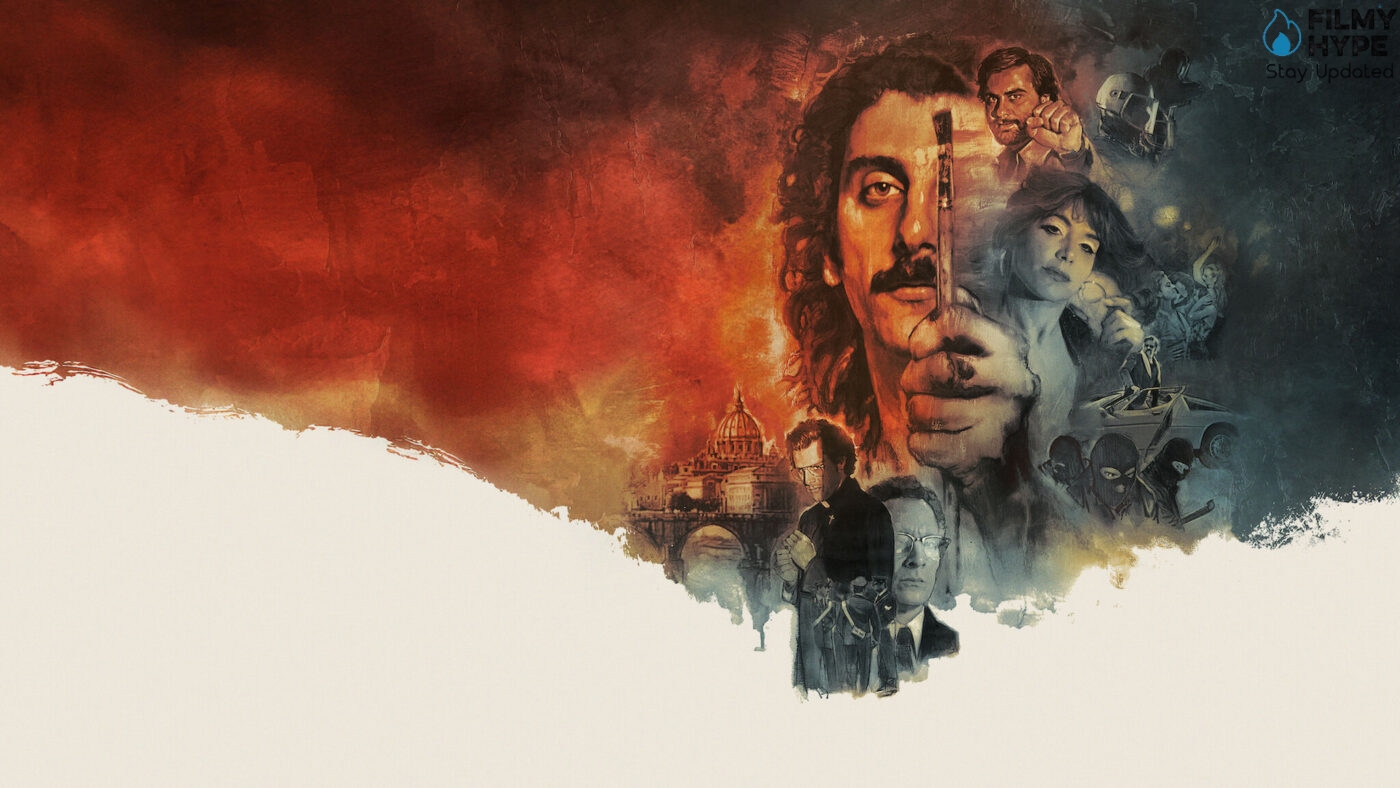
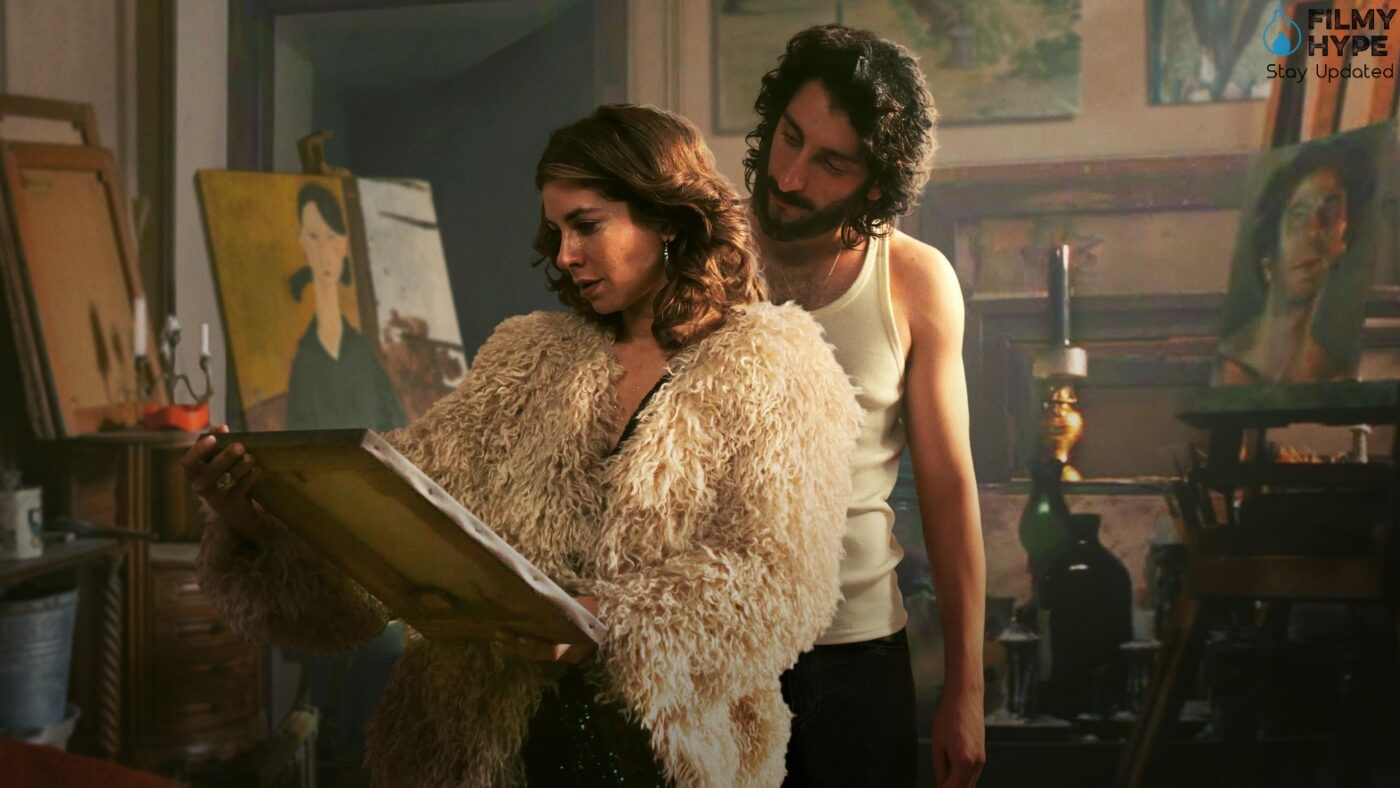
Rome, early seventies. Toni Chichiarelli, originally from the Abruzzo village of Magliano de’ Marsi, arrives in the Eternal City with a simple yet ambitious dream, namely of becoming a great artist. It brings with it the talent of the brush, the hunger for life typical of those who arrive from the province to the metropolis, and two friends at opposite ends of the spectrum: one will become a priest, the other a worker interested in politics. The ambitions of the protagonist of The Big Fake quickly crash against the reality of a closed and classist art world. But the boy possesses a particular gift and has no intention of giving up: he knows, in fact copy any work perfectly, reproducing masterpieces with a mastery that makes his fakes practically indistinguishable from the originals. This talent catches Donata’s attention, an ambitious gallery owner who made her way from the village into Rome well. A passionate relationship was born between them, a profitable professional partnership and an ascending parable that would lead Toni to become the most sought-after forger in Italy, alpha and omega of partisan and criminal plots involving the Magliana Gang, the Red Brigades, the secret services, the mafia, and even the Vatican, up to the dramatic kidnapping of Aldo Moro.
The Big Fake Movie Review: The Story Plot
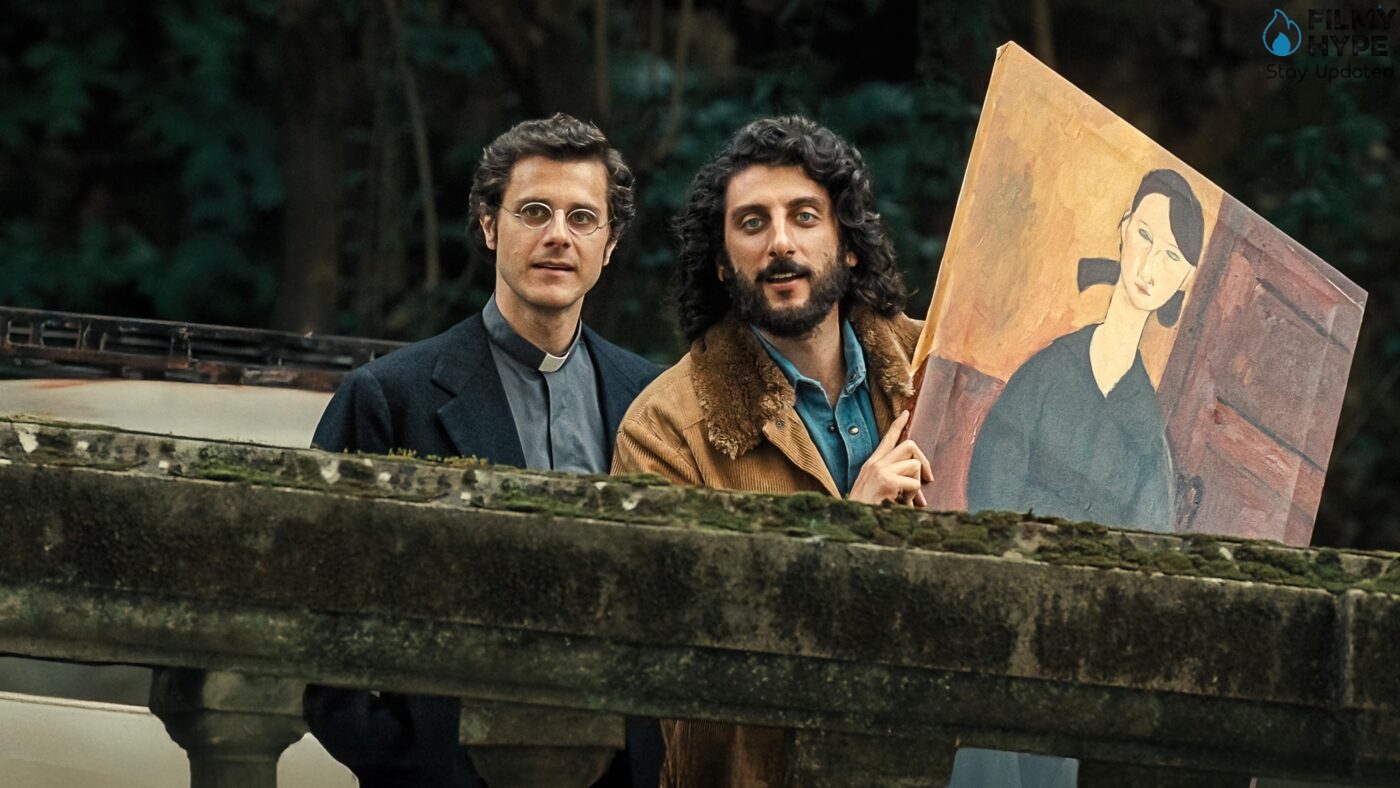
Years ’70, the aspiring artist Toni (Peter Castellitto) – with “i”, as he himself is keen to point out – decides to move, together with his childhood friends Vittorio (Andrea Arcangeli) and Fabione (Pierluigi Gigante), from the village, overlooking Lake Duchessa, to Rome in search of fortune. While the other two choose, respectively, the path of priesthood and armed struggle, the young painter comes into contact, thanks to his relationship with the gallery owner Donata (Giulia Michelini), with the world of organized crime. Toni, in fact, has the incredible ability to replicate, down to the smallest details, the paintings of any famous artist, as well as any type of document. A skill that will lead him, against his will, to find himself involved in a game bigger than himself.
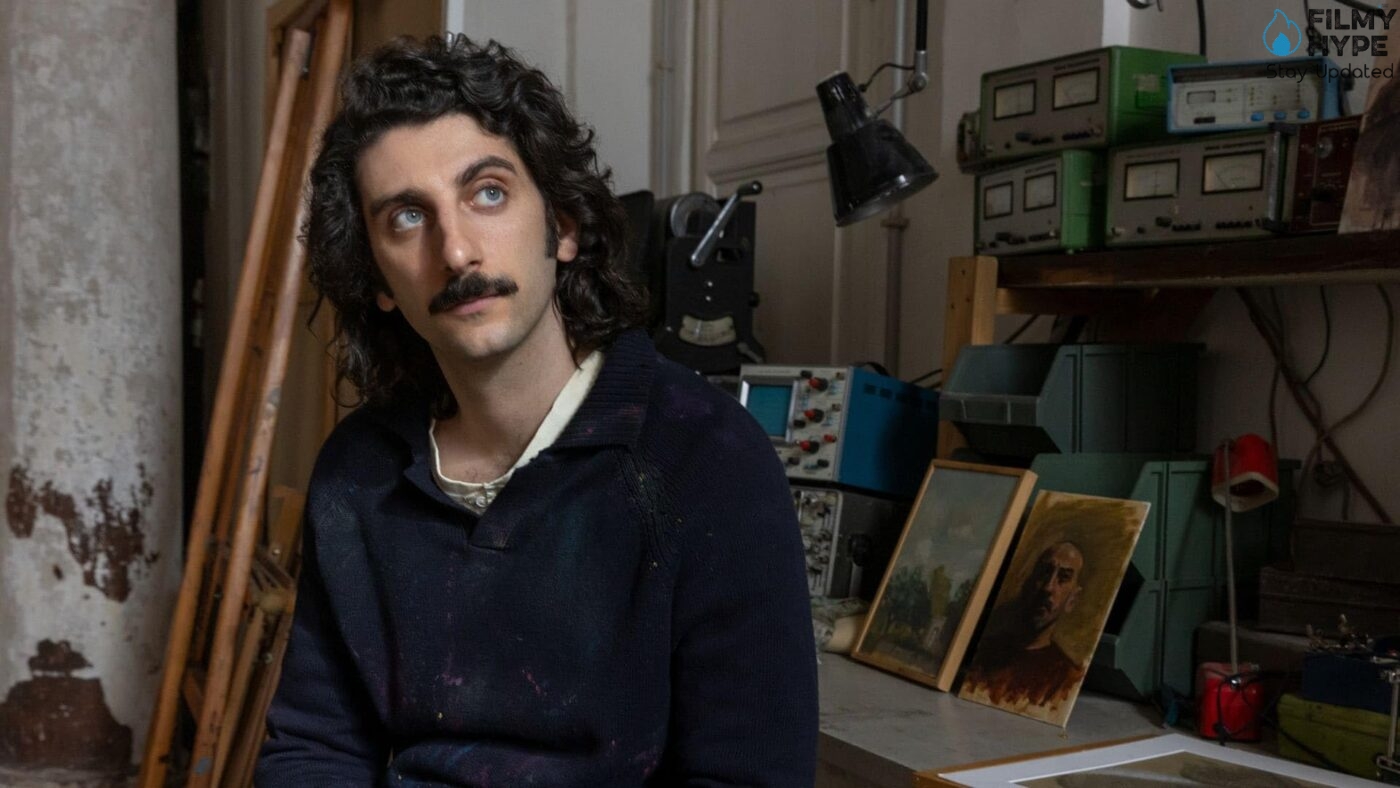
Set in a postcard-perfect Rome years ’70, The Big Fake presents itself from the very first lines as a stereotypical and crude “criminal novel”. A bignami that almost slavishly re-proposes all the clichés of crime, not just Italian (as in Criminal novel, for example, we find at the centre of the story three fraternal friends, among whom of course there is an inevitable Judas) but also Hollywood (the classic formula of the rise and fall of the gangster movie, because if you choose the path of crime “there is always a bill to pay”, a very “original” line uttered by the protagonist himself).
The Big Fake Movie Review and Analysis
The film lives above all on the performance of Pietro Castellitto, who builds a character who is deliberately repulsive and charismatic at the same time. His Toni is driven by an oversized ego, bigger than his own talent, and Castellitto makes him a protagonist constantly poised between what he tells about himself and what he really is. It’s an energetic, magnetic test, which holds up even when the film tends to get a little lost. The supporting cast works effectively around him, particularly Giulia Michelini and Edoardo Pesce, even if many characters remain underdeveloped, functional to the story rather than endowed with true narrative autonomy.
Lodovichi chooses a strongly stylized Rome, in which she almost looks like she came out of a comic book, far from any realistic or documentary ambition. It is a beautiful, noisy, at times winking city, which becomes the ideal theatre for a story built on appearance and manipulation. The film prefers to evoke the climate of the Years of Lead rather than analyze it, using historical events and real figures as mere narrative elements. This choice makes The Big Fake more accessible and fluent, but also limits its depth, especially when the story approaches historically delicate passages.
The film shows its limitations, especially in the second part, when it tries to hold too many elements together and ends up losing pace. The story expands in several directions, but without really delving into them, choosing a simpler and more predictable path. Toni’s character is also gradually toned down, becoming more of a charming con man than a truly disturbing figure. The Big Fake thus remains a carefully crafted and well-acted film, but one that avoids going all the way to the most uncomfortable points of its story, leaving the impression of something that could have dared more.
The Big Fake follows the canons of a modern noir with action rhythms and inlaid here and there with tones of a tragicomedy that seeks to lucidly outline a historical period that is extremely complex and still rich in unknowns today, revisiting those political-criminal scores of the seventies. And he looks no little at the last part of Marco Bellocchio’s career – from Good Morning, Night (2003) to The Traitor (2019), ending in Exterior Night (2022), with the kidnapping of Aldo Moro taking over, albeit off-screen, in a narrative that becomes darker in the third act. The gender atmospheres they emerge with a certain personality, even if at times the narrative rhythm appears unbalanced, and that vaguely light and pop-oriented flavour risks superficializing even too much a very harsh context, and is worthy of much more mature insights. The insistent voice-over, necessary to get us into Toni’s mind and heart, is perhaps a little too overused, and the space dedicated to secondary figures is not always homogeneous.
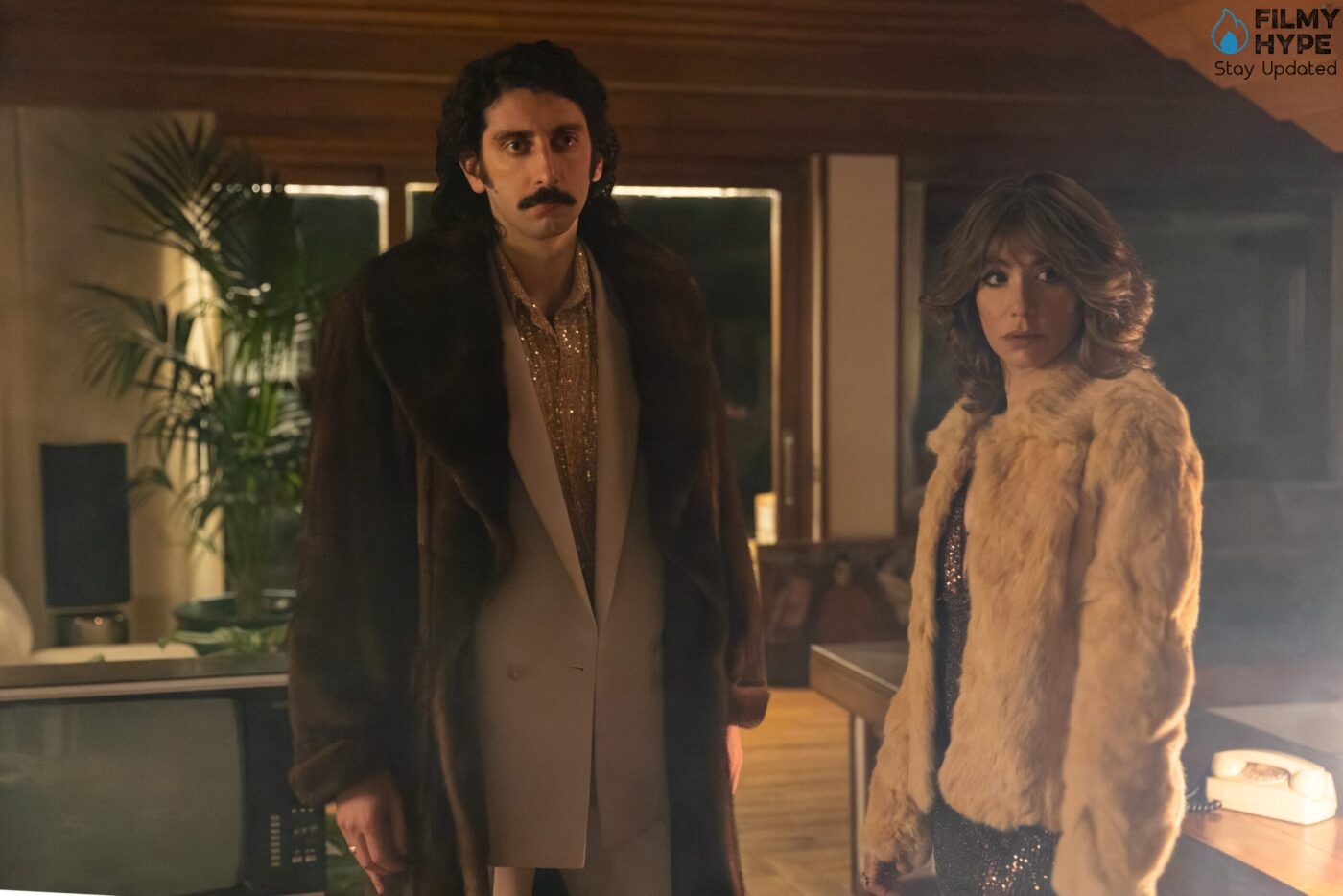
The capital that emerges from the film is a feverish city, a port and storm that attracts and repels with its sirens, where easy gain goes hand in hand with getting your hands dirty and jeopardizing your own skin or that of others. It is Rome where drunken musicians play until dawn, where everything flows slowly and mercilessly, caput mundi that bewitches and crushes. City of artists and the dead killed on the streets, of local mala and avant-garde ateliers, of the harshest class clashes and parties in Rome’s upper classes. At the heart of the film is the reflection on the boundary between true and false, on the authenticity of talent when it is expressed through copying rather than original creation. Is Toni a failed artist or an artist who found his own expressive form in falsification? It’s an ingenious con artist or a victim of circumstances, dragged into events bigger than him? Ambiguity could perhaps have been expressed with greater nuance, and a certain didacticism peeks out here and there, for a work that juggles like its protagonist between strengths and weaknesses, between brilliant solutions and avoidable pitfalls, capable of disorienting and dividing spectators.
The murky fresco is, after all, a far more compelling element of human drama, on whose muddy backdrop Toni and those around him inevitably become bogged down. The sauce is pop and functional, but the flair lacks something of a rawer, rising and falling cinematic dimension à la Goodfellas (which it watches). There is the obstacle of some tariffs to be paid to the streaming nature, such as the unnecessary pedantry of a voice superimposed on the protagonist. And then there’s also the insistence on a period musical framework to launch into the usual well-known pieces, elements that enhance the commercial and legible nature, along with a standardized photograph typical of these costumed stories that the red N so likes (it’s, however, a question of production formatting, not artistic limitations).
What makes the difference, however, is the excellent acting (there is also an Edoardo Pesce who plays “his”, that is, the criminal, but still a guarantee) and a solid direction of the actors based on interesting characters, well characterised even in their appearance only for a few moments – Mattia Carrano’s Sansiro appears in two scenes, but his laughter makes him remember. There is the risk of embellishment, of fetishization of the protagonist in a story in which the “real villains” respond to enigmatic nicknames (The Tailor by Claudio Santamaria) and masters in suits and ties. The risk, in short, of being fooled by the charismatic charm of a character who is always loose and perhaps slimier than the film a little’ saves him from being. But to respond to his nature, which is nevertheless very evident, The Big Fake then closes a moral on him that in the end strikes with guilt, pettiness, and fatal opportunism. A successful operation, adept at connecting entertainment to the profound and dark historical memory of a country with many, many black holes.
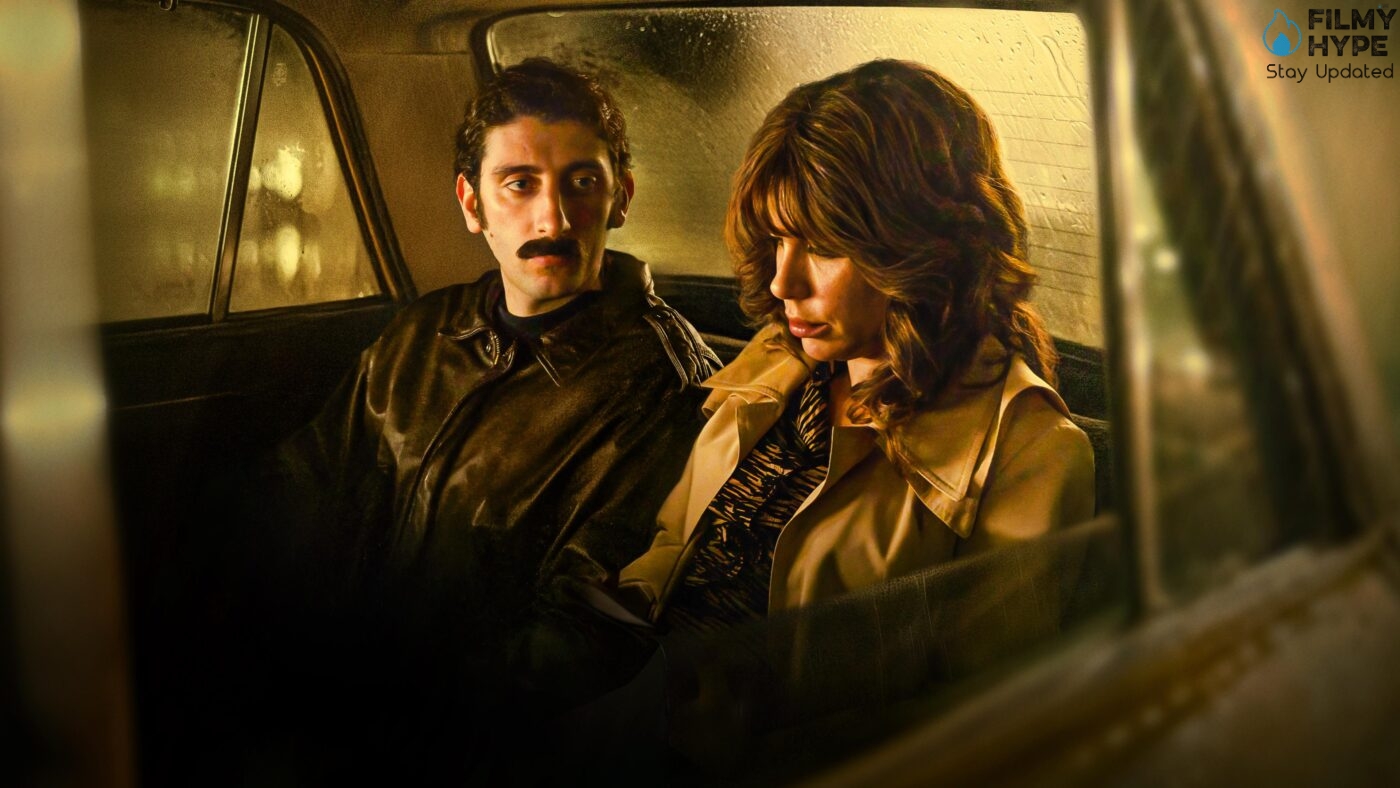
From a purely visual point of view, looking at The Big Fake, he left himself with the feeling of a flattening of the standards of certain contemporary serial productions that invade the catalogs of the various streaming platforms. A film almost exclusively composed of night or interior scenes, all photographed with the usual yellow ochre tones, seen and revisited in products of a similar genre. A not at all original choice, which proves incapable of giving back the vibes of the vibrant decade painted in the film. The Big Fake is a modest film, to be generous. A film that can only emerge with broken bones from the comparison with productions with a similar subject, first and foremost, the one mentioned several times Criminal novel by Placidus. This return to the complicated criminal world of the Years of Lead gives the impression of having been achieved on autopilot. Even the final twist proves futile.
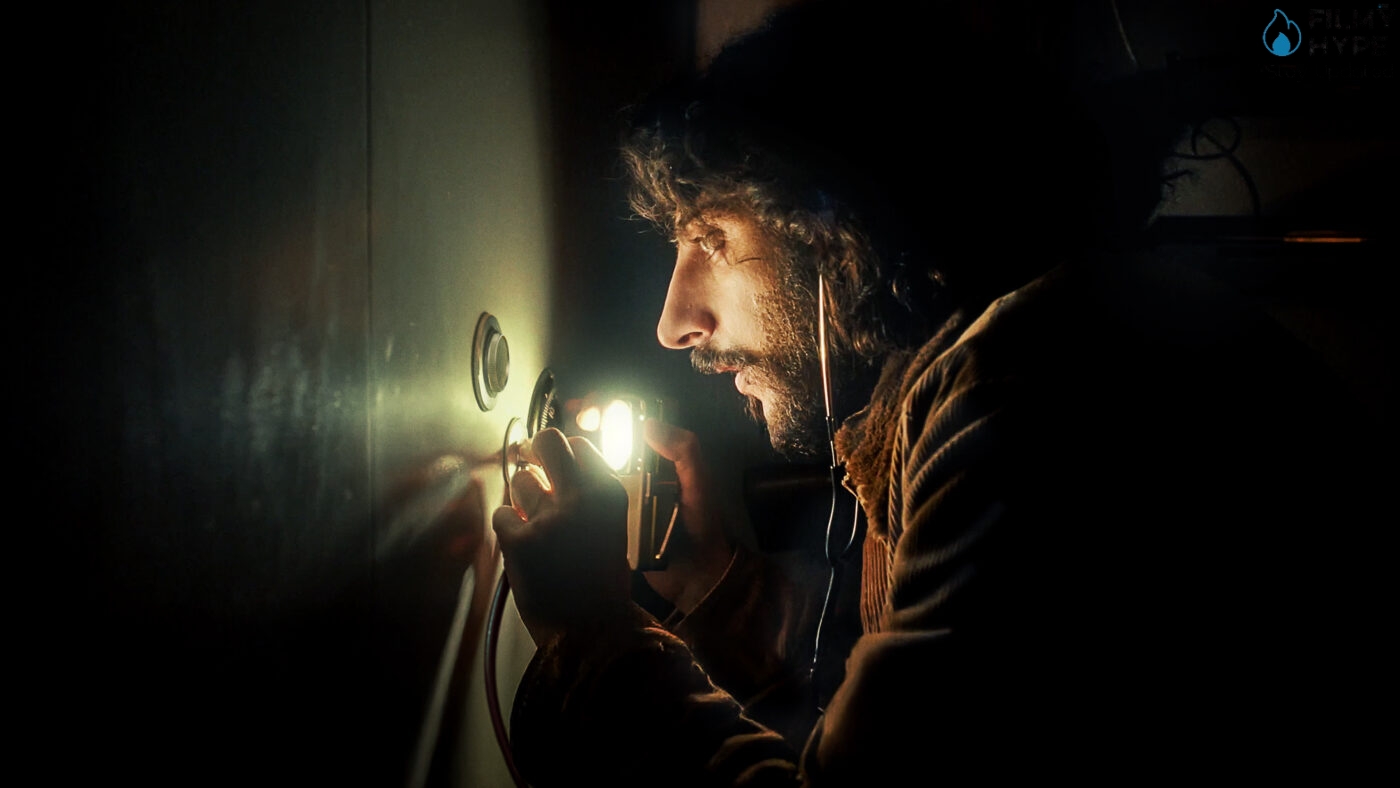
We are once again faced with an Italian film that winks at Americans. Not always succeeding, but taking each element into its own place. The Big Fake cites the heist movie without being all the way there. It uses a voiceover that is sometimes redundant but serves to let us into the mind and heart of the protagonist. Less choral than other operations, tip in on Castellitto’s charisma, but at the same time, he does not forget the other interpreters. This is an interesting experiment that demonstrates once again how Italian Netflix originals are better able to channel international archetypes, without being completely constructed on the table. The film, in fact, does its part: it intrigues the viewer, especially at the end of the story. Even when you think you’ve got it all figured out, Toni is always one step ahead.
The Big Fake Movie Review: The Last Words
An ambitious but imperfect work, it entertains by telling a story rich in insights and just as many freedoms through the lens of a controversial protagonist: Pietro Castellitto’s forger, a true alpha and omega around which everything revolves, from political opponents to the women who compete for him, from traitors to conscientious scruples. Stefano Lodovichi demonstrates his ability to manage a wide-ranging production, delivering an enjoyable portrait of 1970s Rome, effective both as a period reconstruction and as a narrative context, even if at times the script appears more superficial than it should be, preferring not to get too involved in one of the darkest and still unresolved pages in our country’s history. After many local crime serial products, director Stefano Lodovichi brings the genre back to the feature film format with Il Falsario. Unfortunately, the Netflix production soon turns out to be a “criminal novel”, intent on slavishly replicating the genre’s clichés without any verve. A film that aims to paint a picture of a complicated era in our history, like the Years of Lead, but which emerges with broken bones from its comparison with illustrious predecessors like Michele Placido’s Romanzo criminale.