
Marty Supreme Movie Review: Human Drama, Black Comedy, and Surreal Thriller!
Marty Supreme Movie Review and Ratings
Cast: Timothée Chalamet, Gwyneth Paltrow, Odessa A’zion, Kevin O’Leary, Tyler Okonma, Abel Ferrara, Fran Drescher
Director: Josh Safdie
Filmyhype.com Ratings: 4/5 (four stars)
“Marty Supreme” first shown in New York and now at a special event at the Turin Film Festival, could be a good time for Timothée Chalamet and that Oscar he’s come close to in the past. Josh Safdie “challenges” his brother Benny Safdie, his “The Smashing Machine” with The Rock, thanks to another story that tells us about obsession, sport, victory, redemption, and fall: that of Marty Reisman. The film immediately received critical acclaim from American critics, garnering significant recognition, boasting nine nominations at the 2026 Academy Awards, most notably for Best Picture, Best Director for Josh Safdie, and Best Actor in a Leading Role for Timothée Chalamet. In terms of seasonal awards, the film received significant recognition even before the Oscars: Timothée Chalamet won a Golden Globe for her performance, while the film was celebrated by critics and industry companies for its screenplay, cinematography, and editing, garnering awards and nominations at the Critics’ Choice and Boston Society of Film Critics.
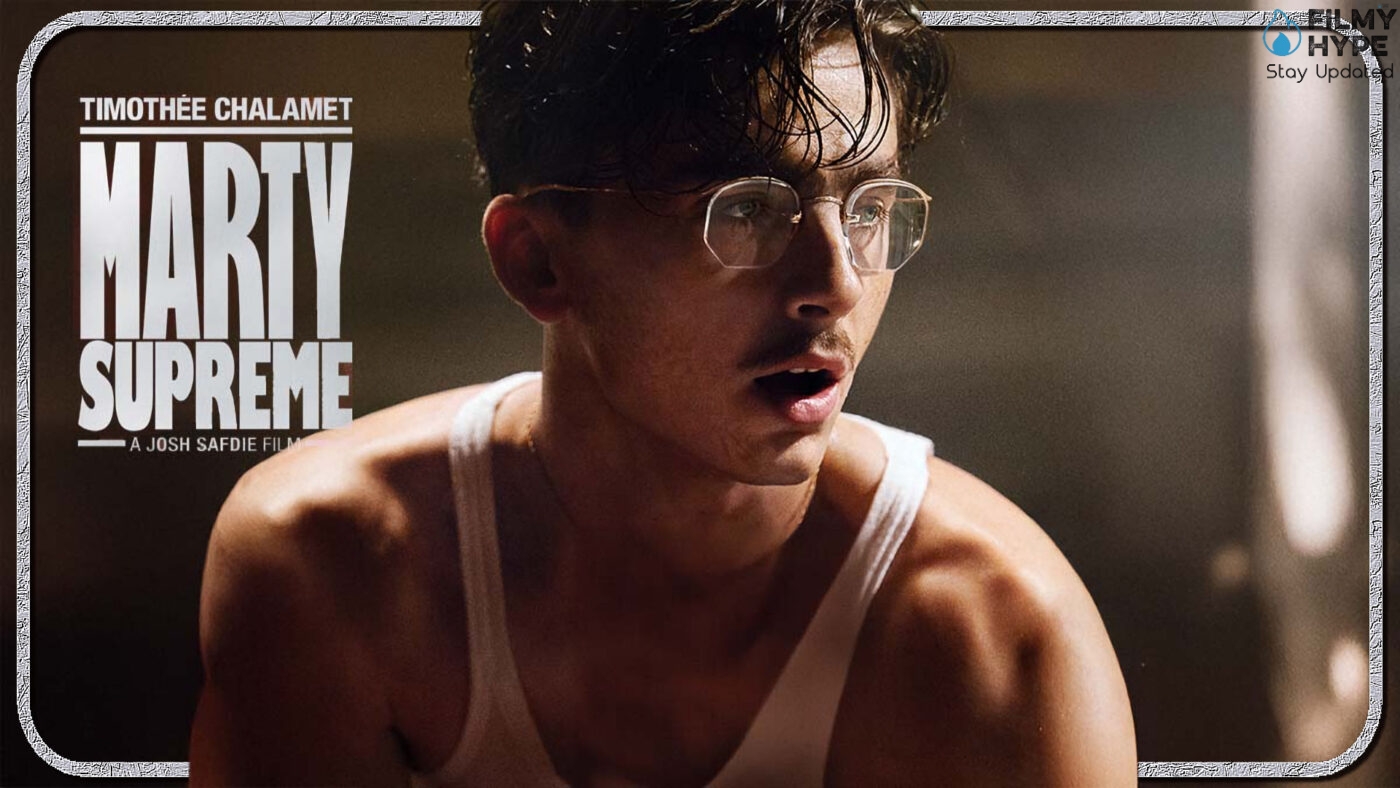
Marty Supreme is a film that abandons the most classic linearity to embrace the essence of a protagonist always on the edge, always in a rush, always projected towards an “and then” that torments his life and, above all, his growth. Perhaps it would be more correct to say that the story in images, with Timothée Chalamet at its center, attempts in every way to follow and chase the exploits of a protagonist who is difficult to read at first glance. Everything is constantly dragging on towards something. In Marty Supreme, everything unfolds by looking elsewhere, always distracted by the goal to be achieved and the next scene, by the next absurd moment designed to mark a narrative rhythm that feeds on the classic “growth story” to shape its fate through a “cinematic way” far from any classicism of the case. Horizontality, yes, but crazy and unruly. Such an approach continually cuts the same formal rendering of a film between the dirty and the constructed, between the tangible and the unattainable (always on the subject of talent, dream, and damnation.
Marty Supreme Movie Review: The Story Plot
“Marty Supreme” transports us to the Big Apple of the early ‘50s, when so many sports are experiencing a strong expansion in popularity. And among them, few like ping pong, which has in Marty Mauser, young and talented, a face that could make that sport the new fashion in America. Raised in one of the worst neighborhoods in the city, among scammers, brawls, and street kids, Marty works in the shoe shop of Christopher Galanis (John Catsimatidis), who dreams of having him as manager of the shop, to raise money to participate in those tournaments, which should crown him the new face of the Stars and Stripes sport.
Shrewd, narcissistic, selfish at the highest levels, a sort of stray cat, he is capable of using everything and everyone, of pushing himself to every possible extreme to pursue his dream. The young Marion (Odessa A’zion), who loves him madly, the rich and decadent former Hollywood diva Kay Stone (Gwyneth Paltrow), her husband, the greedy Milton Rockwell (Kevin O’Leary), and many others will understand him very well over time.
But when in England he finds a Japanese champion armed with a new racket on his way, his dream seems to drift away. It will be the beginning of a grotesque, miserable, dazed, and unpredictable Odyssey, which will lead that boy to have to confront the truth about his nature, his flaws, and his inability to mature. All in blackmail, theft, pathetic escapes, in an America where no one has mercy on anyone, and second chances are always a mirage.
“Marty Supreme” is loosely based on the life of Marty Reisman, but the screenplay by Ronald Bronstein and director Josh Safdie then takes a very different turn, allowing Timothée Chalamet to pull the strings like never before and give us his greatest career performance. All this while telling us about the American dream as a lie, while combining classicism and modernity, a dreamlike odyssey with realism, making unpredictability the very matrix of an excessive film, but certainly coherent from the first to the last minute, and with a crazy protagonist.
Marty Supreme Movie Review and Analysis
“Marty Supreme” is without a doubt John Safdie’s most ambitious film, the one in which the young American filmmaker, one of the symbols of a new generation of indie directors, clearly detaches himself from this universe. He decides to connect rather to the grotesque and bewitching cinema of Martin Scorsese, but there is also room for the Nouvelle Vague, for Italian Neorealism, and for John Ford. His continuous movement, however, also ultimately led him to incorporate the narratives of John Steinbeck, Francis Scott Fitzgerald, and James Ellroy.
“Marty Supreme” is a car launched at full speed, which continuously scales gears, often even risks going off-road, and suffers from a certain abundance of minutes; let’s just say that 25 minutes less could have been spent. Maybe Safdie loves his creature a little too much, but even so, it’s a film that hits you, gets into your gut, armed with a bittersweet black humor, which often makes it a perfectly guessed dramedy. Of course, Safdie is bulimic, he doesn’t filter, he gets lost halfway down the road, but then he straightens the rudder.

There is no mercy for anyone here; no one is truly innocent, but no one is also fully guilty. Abel Ferrara is another author called into question, and it is no coincidence that he is involved in a cameo of absolute value, while we follow this boy to whom Timothée Chalamet gives an arrogance, a lack of realism, a hunger (in every sense) simply gigantic. There is also room for the sporting epic, in that ping pong that would soon also become a diplomatic weapon during the Cold War. Here, however, it is a sport that was slowly beginning to emerge; it is the fixed nail of this black belt boy in the art of curling up, metropolitan cicadas who wander impudently even where they shouldn’t. Moving, funny, tragic, “Marty Supreme” is the negation of the classic American dream and “Rocky” heroism. This film can aim for something important at the next Oscars; Chalamet can do it with a stratospheric performance. Certainly a film that deserves your consideration, a very powerful cinematic experience.
Marty Supreme demonstrates how overwhelming and emotional a sports biopic can be, even when narrative liberties are taken with the facts to prioritize the emotional power of the story. The story is already compelling in itself — between sporting exploits and life events in a post-war America that seems distant to us — but the interpretation of Timothée Chalamet and the fast pace of the narrative complement the recipe effectively. The film develops in two hours and twenty-nine minutes, during which there is not a moment’s respite: no pause, no sigh, no silence. Neither the viewer nor Marty has time to pause to evaluate or reflect; we are drawn by the waves of events and a fast pace that seems to dictate the protagonist’s life as well. Throughout the film, we await the moment of revelation, the turning point that should change his destiny and that of those around him; the real added value, however, is the anticipation itself —dense with anxiety and expectations— that leads to a sweet, slow, and relaxed conclusion.
The choice to tell a sports film «with so much life between the lines» gives the film the touch of magic necessary to move Marty and us when the final word arrives: a conclusion that seems partial yet complete, an awareness that everything left behind helps define who we are today. Throughout all this, Timothée Chalamet confirms here his transition to a first-rate performer: his performance is an exercise in control and abandonment together. He works on the body and voice with precision — small gestures, micro‑expressions, a timbre that changes according to the impact of events — and manages to make every moral oscillation of the character believable. The result is a dramatic arc completed: hateable and moving, irritating and irresistible, where Marty emerges through Chalamet as a complex man who drags us along until the last shot, never giving up and finally punching us, tearing our hearts out.
Thus begins a hyperkinetic, frenetic, exalted (and exhilarating) film, exaggerated in the best possible sense of the term. A train (or a ball, to use a more appropriate comparison) that travels at the speed of light and drags the viewer into a magnetic vortex that is much more than just a sports drama, although every time Safdie places his gaze on the ping pong courts – this time no longer just through a screen as happened with basketball in Rough diamonds – it feels like witnessing an otherworldly event. Marty Supreme It’s made up of moving bodies, whether during a shootout in the most extravagant gangster movie, in the impossible exchanges of two incredible athletes, or in passionate sexual acts – between adults acting like teenagers in full hormonal explosion – consumed in luxurious hotel rooms and night parks. It is a hypersensory cinematic triumph, which does not allow a moment’s respite, populated by a diverse cast of supporting actors, dominated by Odessa A’zion as Rachel, the only one capable of truly keeping up with the protagonist.
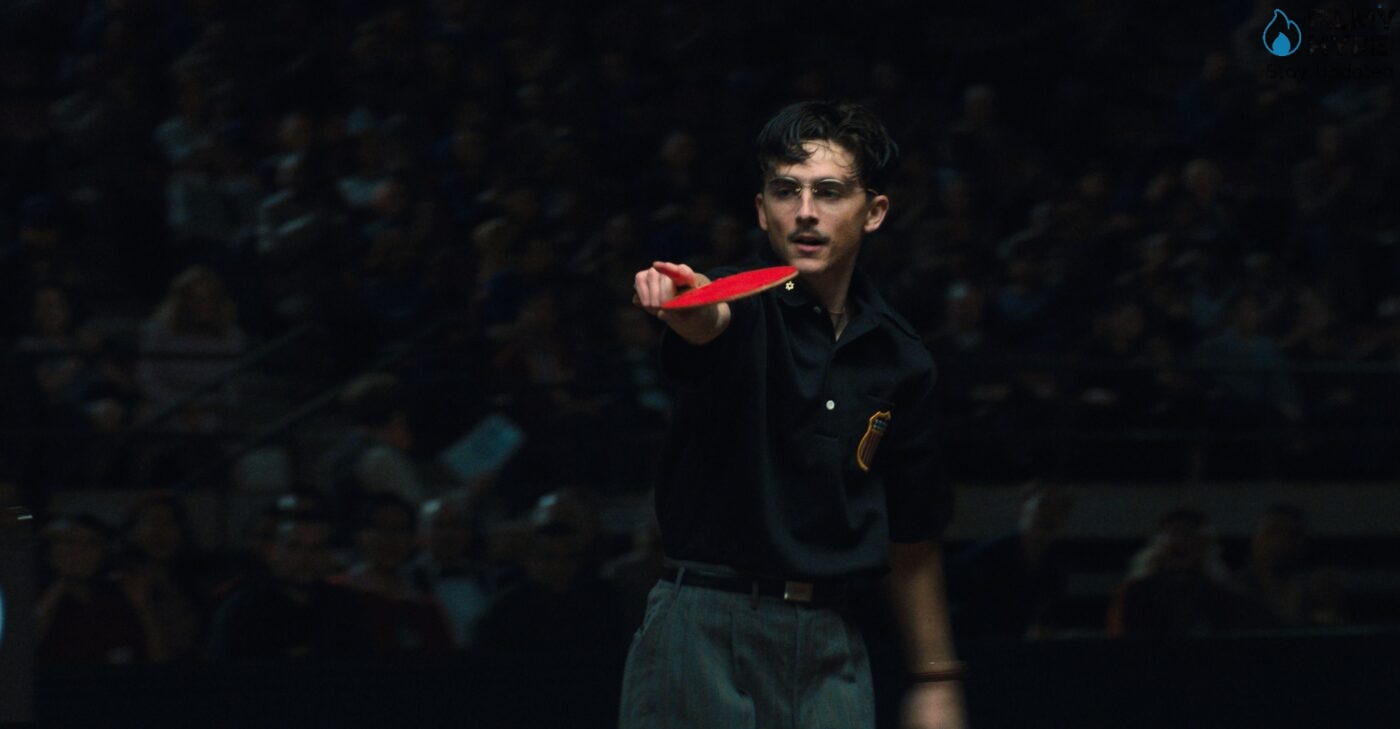
But Marty Supreme, it’s above all – it doesn’t even need to be said – Timothée Chalamet in its pure state. The actor perfectly embodies the neurosis of a repulsive, pompous, self-centered character, unscrupulous and childish, with infinite speech, and at the same time all-encompassing and irresistibly fascinating, undoubtedly among the most representative characters of this century conceived in recent years. An eternal loser who tries in every way to make a big voice and would like to resemble, in charisma and persuasive skills, the Jordan Belfort of The Wolf of Wall Street, and instead (like Ratner/Sandler) he is constantly humiliated: from the aforementioned Ferrara gangster to the decadent diva Kay Stone of Gwyneth Paltrow (a great return), up to the Milton Rockwell of Kevin O’Leary, a real entrepreneur who joins Kevin Garrett, Bas Rutten and others in the ranks of non-actors in Safdian operas. Even when he manages to obtain the long-awaited revenge, it is still a partial, suffocated victory, which finds comfort only in the sweetness of the final sequence.
Marty Mauser is a restless protagonist, we said. Always on the move and always impossible to predict, he takes over the narrative of a feature film that immediately adapts to his existential verve, his tormented approach to everyday life, imparting a rhythm to Josh Safdie’s work that manages to keep up a challenging overall narrative. Marty Supreme travels fast, yet its duration is felt. Wrapped in this historical-aesthetic study, the film knows well how to charm and leave its mark, complicit in the direction of Safdie himself, here totally immersed in a dirty and sweaty world, close and at the same time distant. The camera is the second protagonist of a work that highlights all the imperfections of the case, moving by hand with its protagonist without leaving breath, even in terms of images.
The race is central, as is the desire to emerge and pursue a goal that seems to continually ask for too high a price, or at least a tough one. So Marty Supreme also gets restless, continually cut by Ronald Bronstein’s editing and the already iconic soundtrack to Oneohtrix Point Never, a fundamental nourishment of an essence between the historical and the most intimate and distorted epic at its core. The sporting element, the crazy love for ping pong, clutters up the whole continuation of a story that is covered in many different things, traveling very quickly between the existence of one’s current one and the hypothesis of a dream that consumes everything else, which literally burns the existence of a protagonist who never thinks of anything else, always and in any case acting on it.
This work proceeds hand in hand with a cinematic approach that is very reminiscent of American cinema of the 70s and 80s, in its own formal modalities and movements in terms of writing for images, but also of screenwriting and, in some way, of staging. Furthermore, Marty Supreme is full; he is rich, in what he offers, with insights and reflections that also go beyond the protagonist’s own intentions. At the bottom of a seemingly unattainable goal is always and in any case the rebellious verve of a young man at a particular stage of his existence. Growth and conflict with a hypothetical, more “normal” adult life are fundamental in reading a story that continually clashes with the existence of others, in which a young man does not want to surrender to the dictates of America and a specific life.
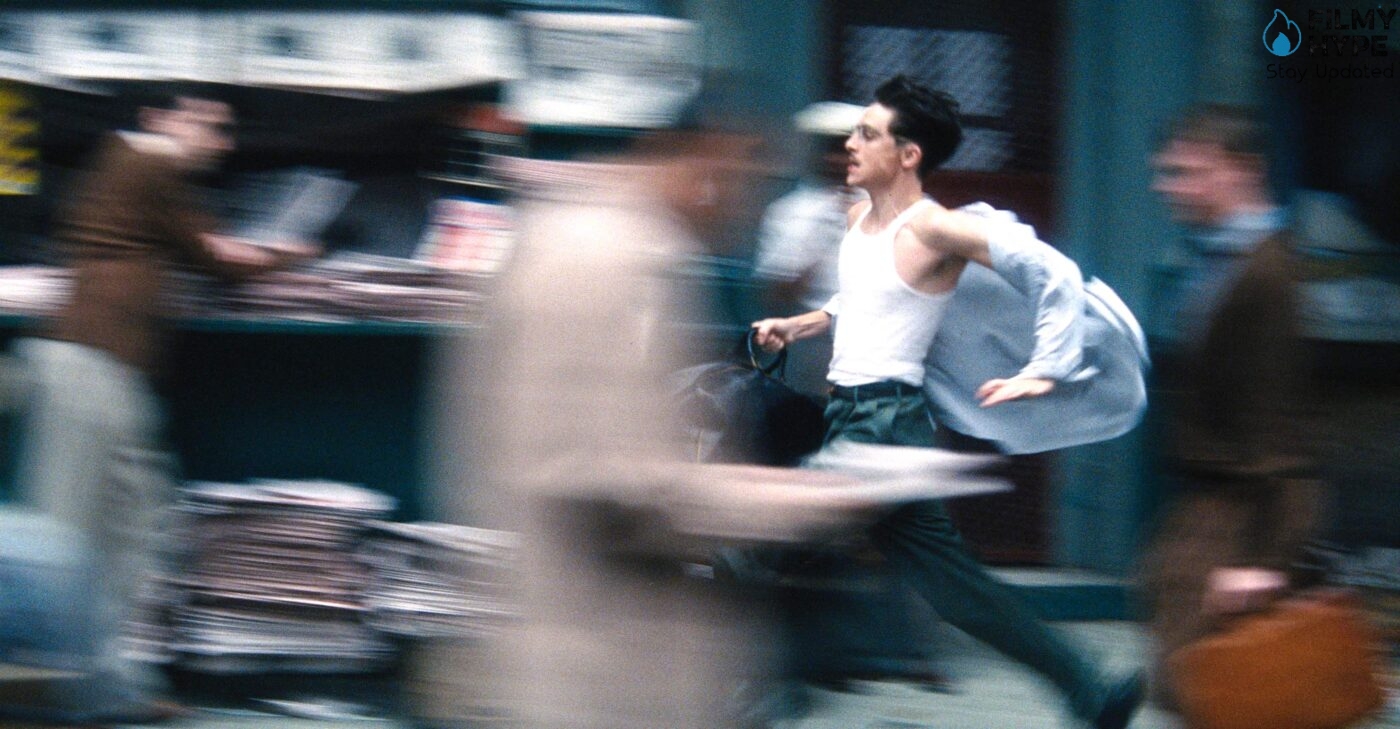
In its accumulation and dispersion of energy, Marty Supreme also ends up paying the price of a race that never includes a real finish line. Josh Safdie watches his protagonist without judging him, but not absolving him either, leaving him to clash with the limits of a self-perpetuating ambition that, precisely for this reason, risks devouring everything else. When the credits roll, the feeling of having witnessed an endless game remains with you, played more against oneself than against a real opponent. Marty Supreme takes the audience by the hand and urges them to follow him, to chase him as you do with someone who never stops talking about their dream without ever wondering what’s left around. A restless and imperfect film, just like its protagonist, which transforms ping pong into an existential question and obsession into a form of identity. More than winning or losing, Marty seems to want to prove one thing: that stopping running would be the only real failure.
Marty Supreme Movie Review: The Last Words
Marty Supreme is a restless and unruly film that tackles the classic tale of growing up through a dirty and frenetic cinematic form, relentlessly chasing its protagonist. Josh Safdie’s film builds a tense, breathless narrative, underpinned by close-up direction, fast-paced editing, and an already iconic and nostalgic soundtrack. Suspended between an unattainable dream and concrete reality, Marty Supreme observes without judging the price of an ambition that knows no respite, recounting a race without a finish line in which energy, excess, and the risk of self-destruction become an integral part of the identity of his own protagonist. Separated from his brother Benny, who is also on a parallel path, Josh Safdie returns to the streets of New York and still moves on the common thread of obsessive addiction, of the exhausting tension towards the unattainable. Marty Supreme is an extraordinary work, hyperkinetic, overstimulating, and with unbridled ambitions, exactly like its protagonist, embodied by a pure Timothée Chalamet, now in full artistic maturity.