
Sorry, Baby Movie Review: A Strong Debut That Highlights Eva Victor’s Talent!
Sorry, Baby Movie Review and Analysis By Filmyhype
Cast: Eva Victor, Naomi Ackie, Lucas Hedges, John Carroll Lynch, Louis Cancelmi, Kelly McCormack, E. R. Fightmaster, Hettienne Park, Natalie Rotter-Laitman, Cody Reiss, Jordan Mendoza
Director: Eva Victor
Filmyhype.com Ratings: 4.5/5 (four and a half stars)
Sorry, Baby is the film debut of Eva Victor, with whom, at 31, she announces to the public that she has finally arrived. She, who wrote, directed, and starred in him, had already won a major screenplay award at last year’s Sundance Film Festival. Now, after having also moved on to the last Cannes Film Festival, Sorry, Baby arrives in Italian cinemas. And let’s repeat it: finally. Eva Victor’s voice is unique, witty, with an intensity so measured, controlled, and adapted to the context that it is astonishing for the quality of the talent that has remained “hidden” up to this point. But it was the time needed to tell (and not spectacularize) the processing of trauma, the central theme of his debut, Sorry, Baby. Writing, directing, and starring in the lead role. Between gamble and egomania, when you happen to come across artists taking a similar initiative, you often end up with nothing. This is not the case of Eva Victor, born in 1994, one of the stars of the moment in the United States and present in many nominations of the current awards season with her “Sorry, Baby”.
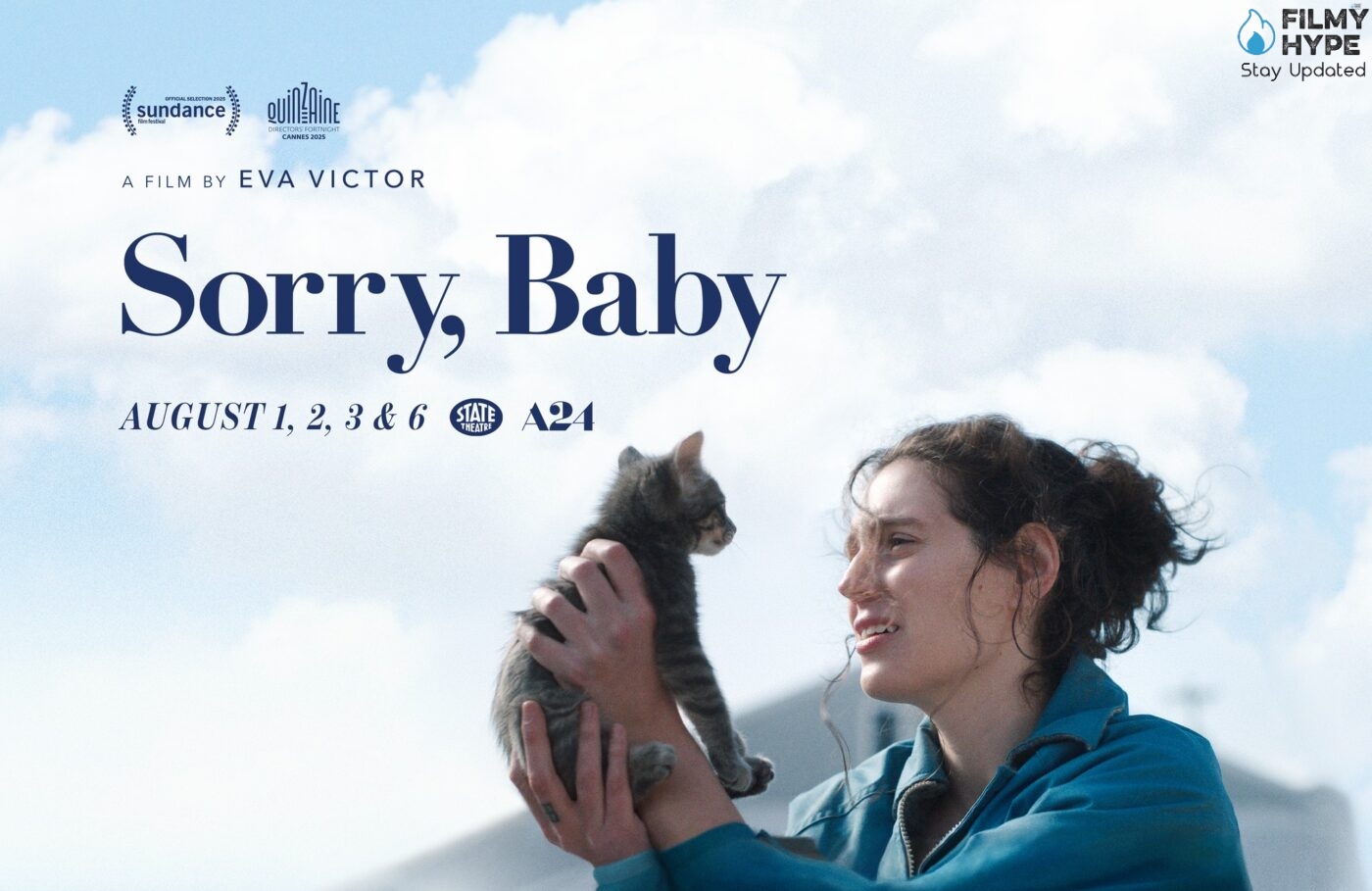
Which is actually a truly remarkable film. What’s more: a debut. He brought it to the cinema on January 15th, I Wonder Pictures, the story of a depression dug by the deep wound of sexual abuse suffered and which Victor envelops in pastel tones, soft outfits, and melancholy of trees stripped by autumn. In this recent period, viewers, critics, and journalists have often found themselves questioning a question that has become almost existentialist, invasive of both the emotional sphere of each of us, but also a sign of an ongoing cultural shift: what is the function of cinema? And even more broadly than art in general? Many films coming to theaters in 2026 will try to answer this question indirectly, while one of them definitively confirms one of the most powerful skills of the seventh art: treating, if not completely healing, a wound we all carry within us, however personal it may be, simply by telling the equally personal story of a character who tries to mend that crack, to move forward.
Sorry, Baby Movie Review: The Story Plot
Sorry, Baby is divided into chapters. It begins with the reunion of Agnes (Victor) and Lydie (Naomi Ackie), former friends from their college days when they were in literature school in New England. Agnes stayed there because she had become an associate professor right where the two had studied, while Lydie, who goes to visit her, has started a family and is now expecting a baby girl. From this reunion, the film then goes back, comes back, and then goes on. He entrusts his fragmented narrative structure with the shards of a life that has remained, in a certain sense, crystallized, stuck in the psychological consequences of that trauma that has become a watershed. Because it took place in the university environment, a place of knowledge and resistance whose core principles have disappeared. Which Agnes continues to frequent daily, almost as if it were a cruel form of contingency-induced Stockholm syndrome.
She was abused by a teacher (Louis Cancelmi), and the relationship between teachers and students –more generally the balance of power between mentors and acolytes– seems to be a hot topic in today’s crazy and schizophrenic USA. In 2025, he had already taken it head-on. After the Hunt by Luca Guadagnino, who, in any case, with Sorry, Baby has nothing to share except the theme of abuse and the interception of the underlying vibration, that is, the collapse of certainties. In the biting After the Hunt, certainty as such was lacking (in the wake of the paradoxical reverse of post-MeToo social struggles), no longer placeable because it was in the mouth of polarized half-truths and personal interests. In Victor’s film, it is the crumbling of certainty as personal security and intellectual sharing.
Sorry, Baby Movie Review and Analysis
Sorry, Baby presents us with a further story of rebirth and revenge against life. A person who suffers abuse, in this case, sexual abuse suffered by a woman by a person she trusted, whom she respected. It’s a disheartening image when the violence comes from someone you know, someone who should give you security rather than negatively change you forever. Fortunately, in the life of Agnes, the protagonist, there is Lydie, her best friend, who gives her constant comfort. In the film, we see numerous shots where Lydie amicably and patiently supports her friend, the victim of an unpleasant episode. A bad thing that Agnes tries to forget or not classify as such. Lydie is a loyal friend, but she also has her life to carry on. In fact, continues with her life caring for her newborn daughter. This doesn’t distract attention from Agnes, but she understands that it can’t be her focus, that there are other priorities, and that she must find them too. Furthermore, Agnes feels stuck, as if her life is at a standstill, and she cannot adequately overcome the trauma.
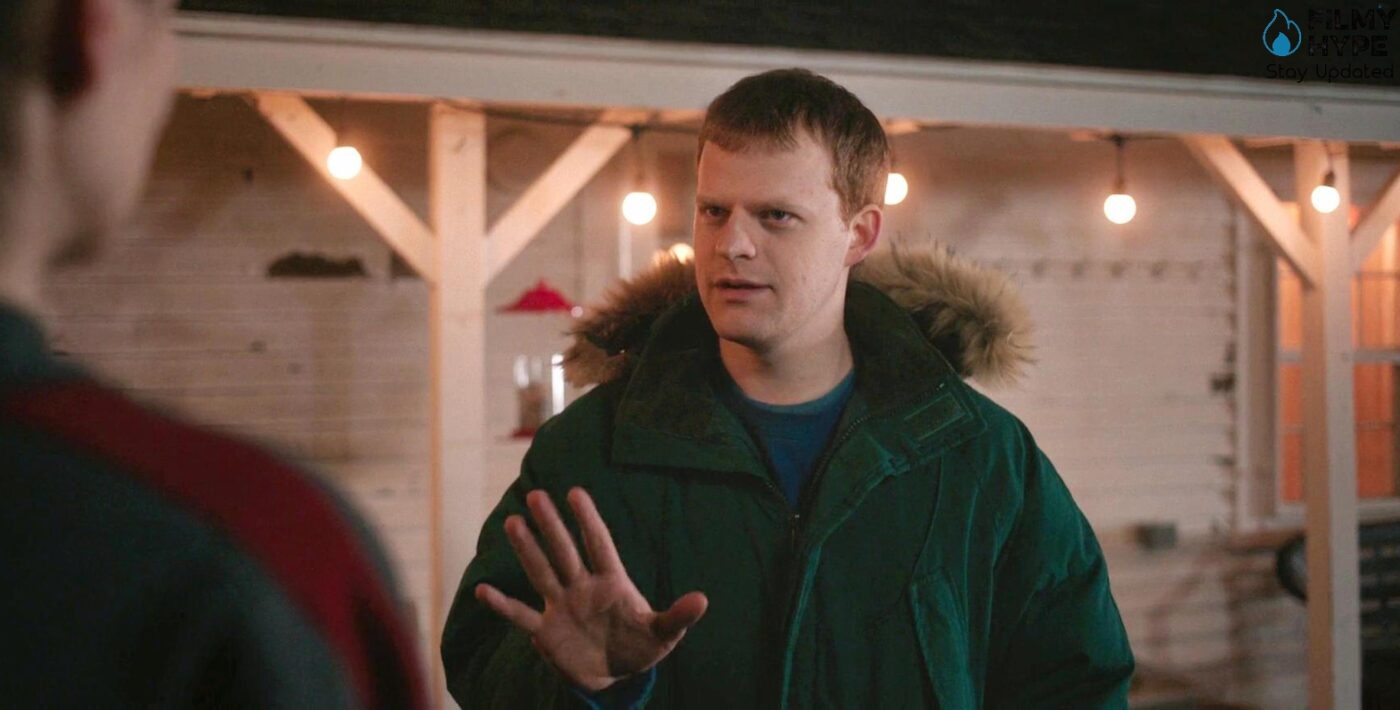
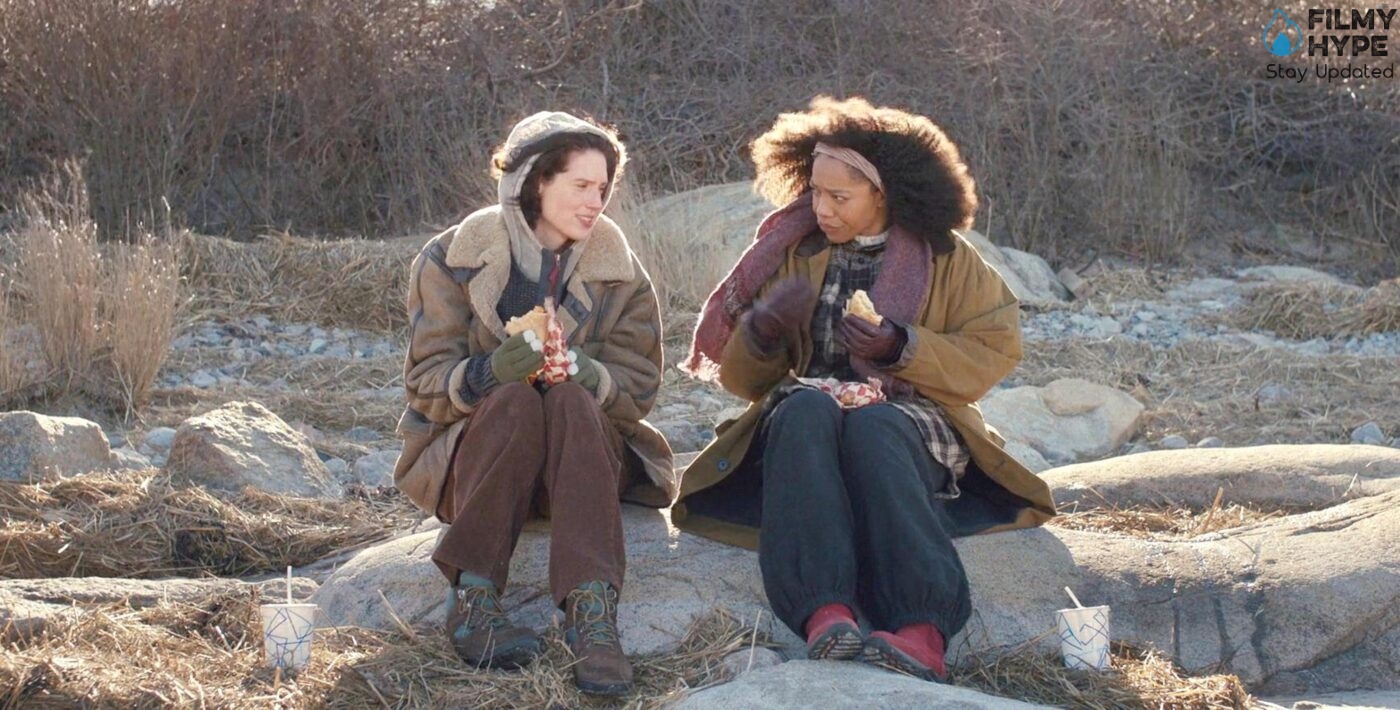
This is an important theme that we find in Sorry, Baby, leading to a reflection on the character of Agnes, but more generally on the situation of many young people her age (she is twenty-eight when she is abused), and then following the time that passes after the event. For many young people, this is a difficult time in life where they are faced with choices to make that shape the path forward. They are, therefore, crucial decisions, and there is a lot of stress to be experienced. Also, as with Agnes, it’s unpleasant to see how other people realize themselves and get what they want from life, while you’re still looking for a breakthrough. Sorry, Baby classifies as a drama film, but the lively and original writing of Eva Victor also places it with merit in the genre of comedy. This is because the script offers us funny scenes where the protagonist hardly cries at herself; she prefers to use her irony to go further. Probably the most intense scene is where Agnes recounts what happened to her in Lydie, reliving the violence she suffered. This is where Agnes seriously realizes what happened to her, watching Lydie’s reaction. Sexual abuse victims often don’t realize what they’ve been through, trying to downplay it to make their brains see it as fiction. The film, therefore, never has a heavy, melancholy-soaked pace, preferring light scenes full of good feelings. The reference is, for example, to Agnes, who finds a cat on the street and decides to take care of it, or to the news of a job that Agnes has been anxiously waiting for. Or again, to a stranger who helps her with a panic attack and offers her a sandwich. A simple gesture, but one that restores trust in humanity.
Many films that deal with a similar theme focus on the victim’s stress and melancholy, making her a helpless character who can do nothing against a terrible event. In this case, Agnes tries to get over it thanks to her strong character, but it is precisely this close relationship with Lydie that helps her. The director favors scenes between the two of them, in which they perform simple actions that make the viewer understand how strong their friendship is. One enters the intimacy of the other while still maintaining a boundary. Sorry, Baby It’s a film of hope, reminding us how life continues even after a terrible event that seems to have put an end to everything beautiful, but that’s not the case, because there’s always something new to discover and worth getting emotional about.
In short, the institutions and places where growth and reassurance were thought to be found slip into threat. It is not surprising that Victor then casts a shadow over the houses, too. In particular, she remains outside the house where her tutor invited her to enter, which she frames from the outside with a fixed room as if it were a house of horrors. And then he does something very simple, that is, through the direction, a chilling narrative commentary: he remains with this still image for thirty interminable seconds, making time pass forward with an ellipsis that passes from day to afternoon, then from afternoon to night. In short, a horror-film language that chills the blood in the veins before returning to the tone of bitter sarcasm that pervades the film, which, however, never shrugs off the shift in perception of safety spaces that are in fact no longer such. And while it still finds cold distance in institutional restorative procedures –medical and human resources–, the film seeks the lopsided irony of everyday life with essential writing, with dialogues that are never verbose, whose effectiveness seems to be validated by the small silences that lie between one joke and the next.
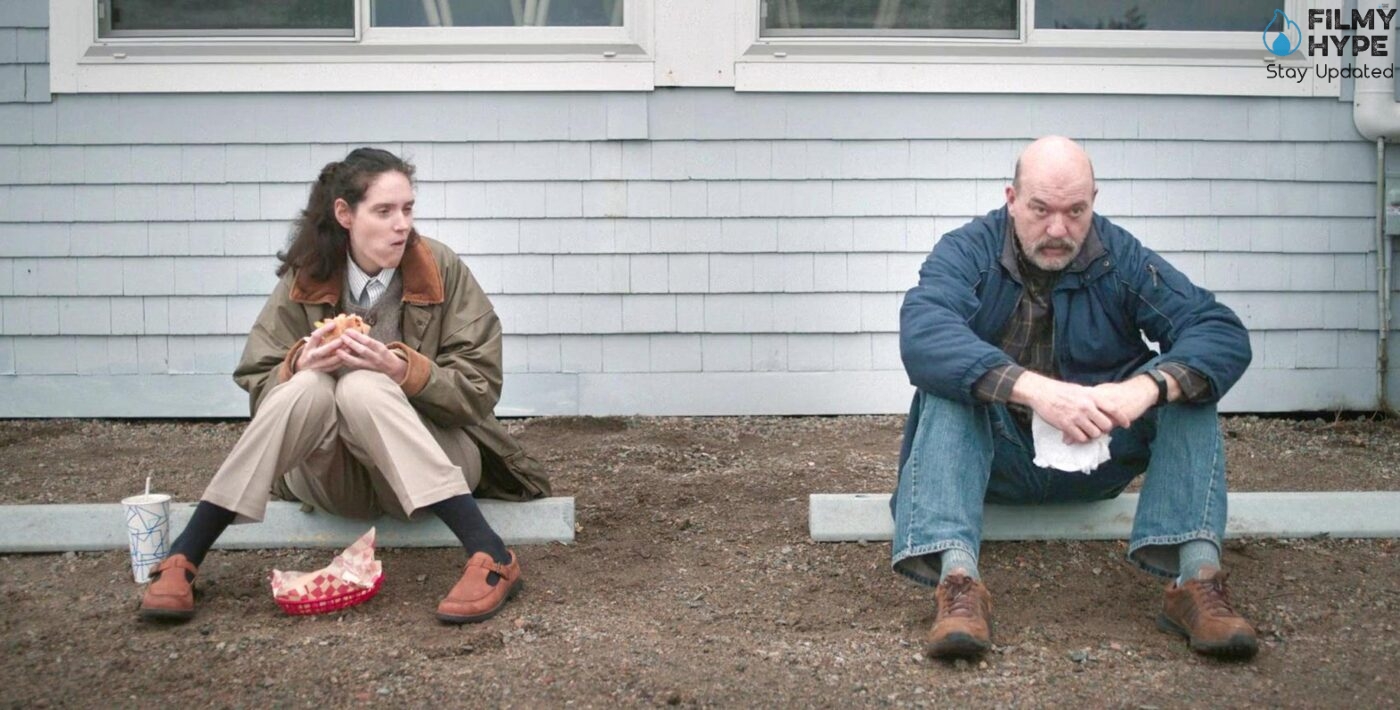
He also deserves recognition for his excellent choice of supporting and counterpoint casting, including the courteous and reassuring faces of Lucas Hedges and John Carroll Lynch in small roles. Because in overlooking the abyss, Sorry, Baby emphasizes the importance of networking and networking, of carving out little kindnesses and acts of thoughtfulness, daily balms with which to soothe wounds. Wounds that, if his skill in screenwriting and behind the lens weren’t already enough, Victor (with a career already in acting) tightens and represses on his sharp face, landing a very tough and fragile role to which he restores a wide range of feelings never subcontracted to pietism. Was a talent born?
The pain represented is minimal and structural. The audience is alien to it and looks at it from the outside, forced to keep up with a protagonist who approaches elaboration through words, dialogue, and reflection. It does not reject the trauma, but rather embraces it without spectacularizing it. With intimacy, Eva Victor looks straight into the abyss and – surprisingly – finds peace, through an intense script and a direction calibrated to the faces, from Agnes’s sharp one that returns a wide emotional range, to the reassuring ones of Naomi Ackie, Lucas Hedges, and John Carroll Lynch (in a big cameo). Sorry, Baby It is a debut that demonstrates a unique ability to handle not only the triple role of director-screenwriter-actress, but also in the tone of the story. It shakes and envelops you, like a suffocating embrace that you felt the need for anyway. He can be as hot as someone who can hold you tight. A film that, despite its invasiveness, still restores confidence: a necessary break from mainstream cinema.
Who writes, Sorry, Baby he saw it in Cannes, in the marasmus of a festival that, due to a busy schedule and a hectic working life, leaves little room for reflection, for the absorption of what was seen. Eva Victor’s debut work, however, managed to insinuate itself under the skin and, seven months later, become indelible. It is due above all to the care with which Sorry, Baby it is built, a composition of memorable scenes, small, sometimes very small, but fundamental to the development of the film. The best, whose dialogues remain in the air as quotes that resonate in a personal way, are those that Victor shares with the three actors to whom he has given roles that are growth opportunities, both personal and acting.
For two moments, the director chooses the bathtub, which becomes a place and means of connection. The first time that Tub witnesses a crude and incredibly detailed confession, the one in which Agnes tells Lydie what just happened to her and takes her consciousness. Naomi Ackie is empathy brought to life, that almost silent presence that welcomes and brings suffering. The second time, however, the tub finds Agnes struggling with a clumsy attempt to share an intimate moment with Gavin (Lucas Hedges), a neighbor and possible companion. “Do you think you want the same things everyone wants?” Agnes asks him. Who hasn’t wondered this at least once?
Sorry, Baby has been called a black comedy, and Eva Victor has been compared to Phoebe Waller-Bridge for the caustic irony they have in common. All true, but Victor’s uniqueness lies in his ability to respect that drama, that violence, his pervasiveness without getting lost in it. Agnes and Lydie never give in to this; they use irony as a weapon or as a shield to defend themselves from those who belittle them and invalidate their feelings. Comedy is power in the hands of Eva Victor to discover every nuance of her Agnes, capable of making bitter jokes while getting checked out after the violence or with an enviable bronze face while clearly hiding a kitten under her shirt, in a supermarket. Laughs are often in Sorry, Baby, with and thanks to Agnes, while the film reminds us how, paradoxically, it can also be beautiful to find ourselves facing a life different from the one we had planned.
Sorry, Baby Movie Review: The Last Words
Sorry, Baby is a strong debut that highlights Eva Victor’s talent. The director avoids complacency and simplification to tell the story of the processing of trauma with a calm and fragmented narrative. There is no spectacularization in the story, but the story delves into the intimacy of the matter to find authenticity and truth. Sorry, Baby is a mature and courageously silent film, capable of making its mark thanks to a lucid and reassuring narrative intensity, which launches Eva Victor towards a brilliant cinematic future. After moving to Sundance and Cannes, Eva Victor’s debut film, Sorry, Baby, produced by Barry Jenkins, arrives in theaters with I Wonder and gives us the ironic and delicate story of a young woman on the alternating journey of healing from a trauma she has suffered. A lucid, streamlined, and intelligent film about the possibility of embracing a version of oneself, restored and different from what one dreamed of, but equally valid.