

Spartacus House of Ashur: For more than a decade, the Spartacus saga delivered a rich, emotionally charged narrative through a fragmented storytelling structure: multiple protagonists, seasons set in different time periods, a prequel released mid-series, and a deepening internal mythology. While the core story was always clear—a gladiator’s rise, a rebellion’s growth, and a tragic, historic fall—the timeline could sometimes feel complex.
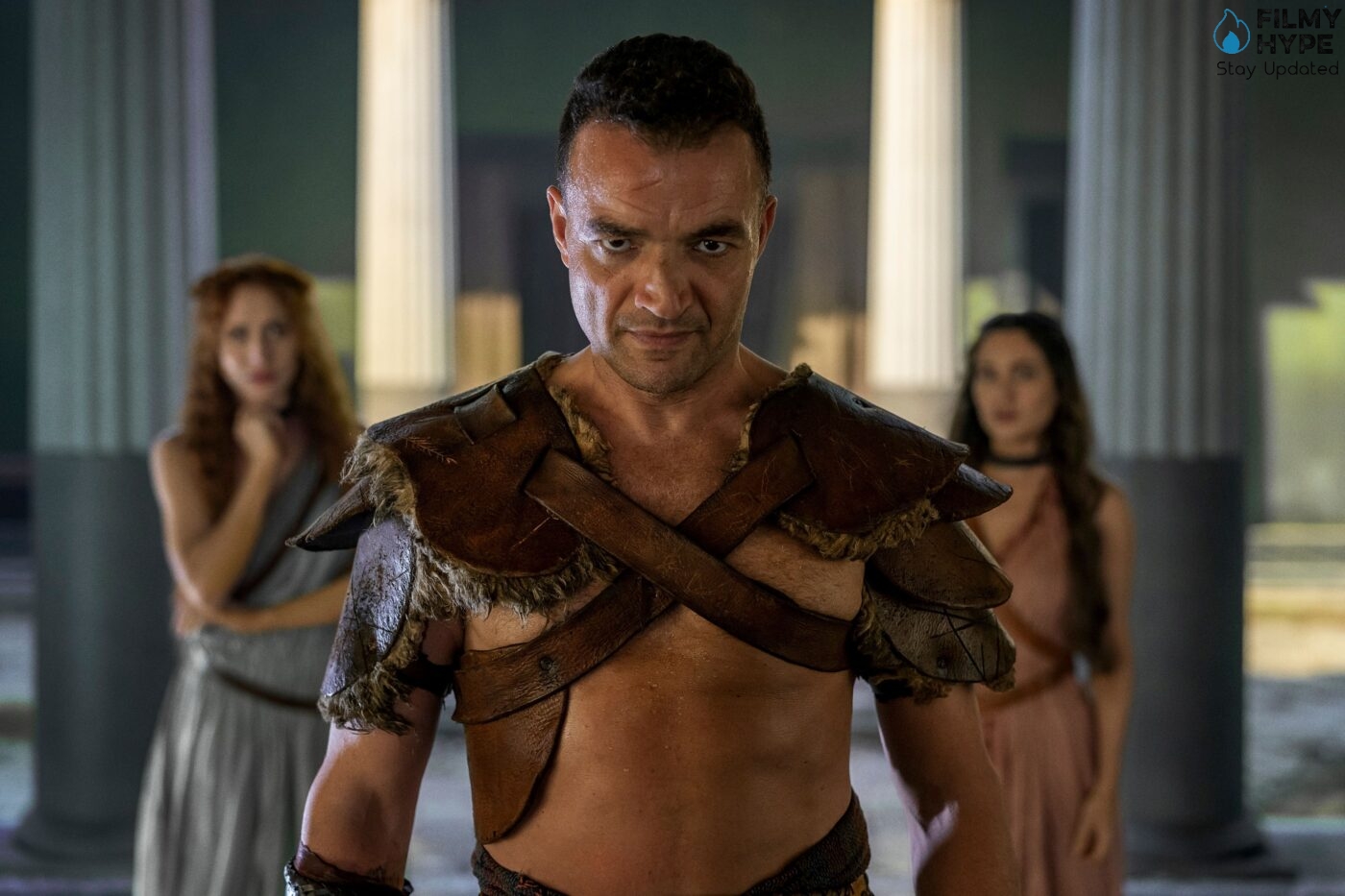
Spartacus House of Ashur: The Complete Timeline of the Spartacus Saga, Explained
Now, with the 2025 arrival of Spartacus: House of Ashur, that linear narrative has fundamentally changed. The spin-off doesn’t just continue the story—it revisits and rewrites it from its foundations, introducing a bold new concept: an alternate universe. This guide will break down the original timeline, pinpoint the exact moment it splits, and explain the new parallel reality created by the gods themselves.
The Original Spartacus Timeline (73–71 BC)
This is the “historical canon” of the series, the story as viewers originally experienced it between 2010 and 2013.
73 BC — Gods of the Arena (Prequel)
Chronologically, this is where it all begins, set five months before the rebellion.
- The Story: A young Quintus Batiatus struggles to elevate his father’s fading ludus (gladiator school) in Capua.
- Key Events:
- Gannicus rises to become the Champion of Capua.
- Oenomaus (then called Doctore) serves as the house’s moral backbone.
- Crixus arrives as a raw, talented recruit.
- Lucretia masterfully navigates the political and social machinations of the house.
- Why It Matters: This season establishes the brutal economy of the gladiator world—the ambition, corruption, and casual cruelty that make the eventual rebellion inevitable. It’s the essential prologue.
73–72 BC — Blood and Sand (Season 1)
The combustion point. A captured Thracian warrior is forced into the arena.
- The Story: After surviving a death sentence in the sands, the warrior is given the name Spartacus and purchased by Batiatus. What follows is a personal tragedy of betrayal that ignites a historic uprising.
- Key Events:
- Spartacus is molded into a champion, forming a fierce rivalry with Crixus.
- He discovers Batiatus orchestrated the capture and death of his wife, Sura.
- The season culminates in the Massacre at the House of Batiatus. Spartacus kills his dominus, liberates the slaves, and the rebellion is formally born.
- The Turning Point: This is the irreversible break from the Roman order. The gladiator is now a rebel leader.
72 BC — Vengeance (Season 2)
The rebellion becomes a war.
- The Story: Spartacus and Crixus lead their growing band of freed slaves, striking at Roman villas and evading the forces of Praetor Gaius Claudius Glaber.
- Key Events:
- The rebels take refuge on Mount Vesuvius, staging a legendary defensive battle.
- Gannicus rejoins the narrative, a free man reluctantly pulled back into the conflict.
- Ashur, the cunning Syrian former slave, becomes Glaber’s right-hand man, promising him power and a future with Lucretia.
- The Fracture Point: At the summit of Vesuvius, a vengeful Naevia confronts and beheads Ashur. In the original timeline, this is his definitive end.
- The Stakes Rise: Rome can no longer ignore the rebellion. A greater threat will be needed to crush it.
71 BC — War of the Damned (Season 3)
The final, tragic act.
- The Story: Marcus Licinius Crassus, the richest man in Rome, buys supreme command to destroy Spartacus. Alongside him is a cunning young military officer, Gaius Julius Caesar.
- Key Events:
- Strategic differences split the rebel army, leading to Crixus’s death in battle.
- Spartacus’s forces are eventually cornered near the Silarus River.
- In a final confrontation, Spartacus defeats Crassus in single combat but is mortally wounded by a barrage of Roman spears.
- The surviving rebels are crucified along the Appian Way, a brutal warning to all who would defy Rome.
- The Original Ending: The story of Spartacus ends here, in martyrdom. The original timeline is closed.
House of Ashur: The Alternate Timeline, Explained
House of Ashur doesn’t retcon the original story—it creates a breathtaking “what if” scenario that branches from a single, supernatural moment.
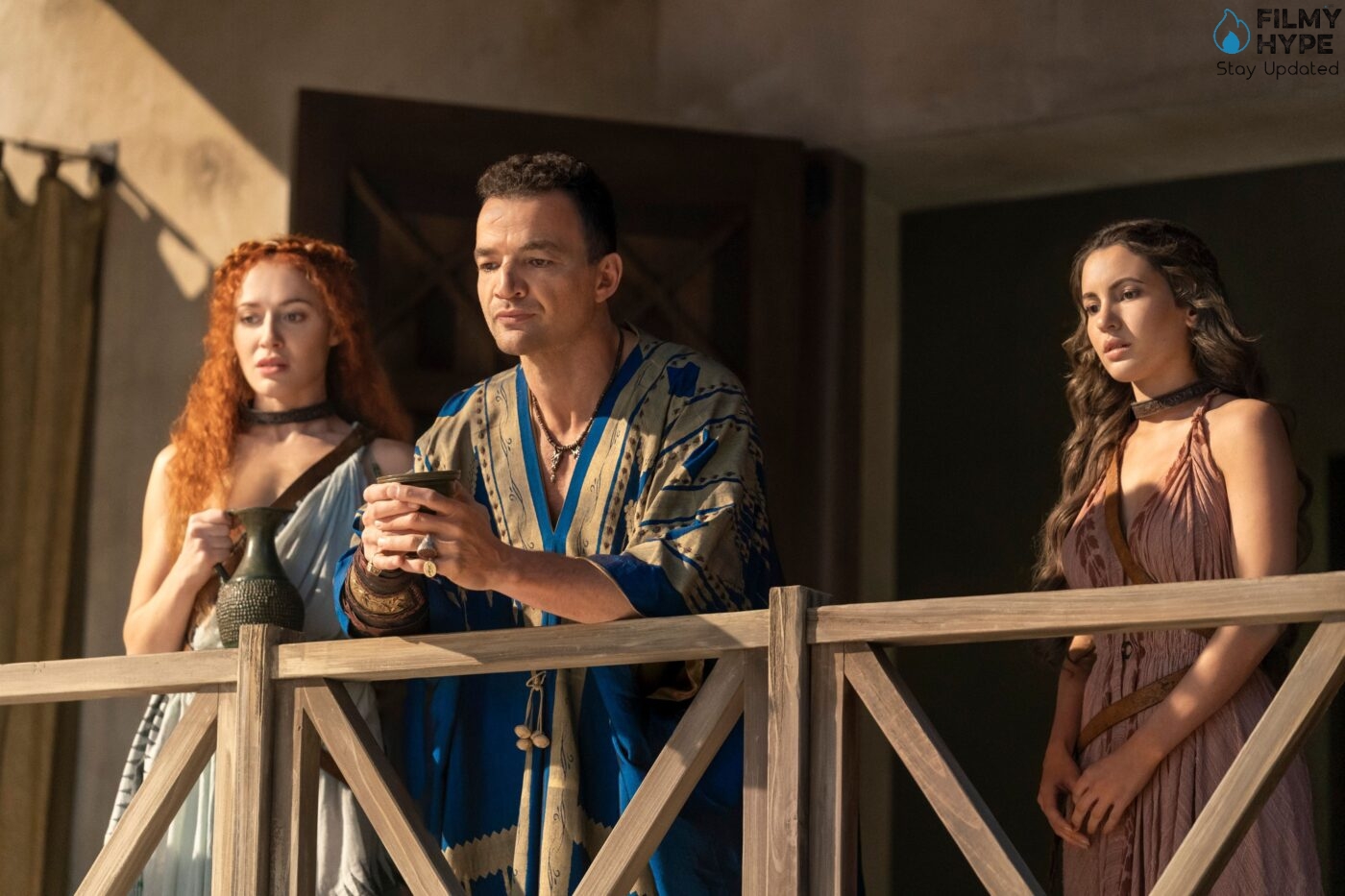
The Fracture: A Deal in the Underworld
The split occurs in the afterlife. Following his death in Vengeance, Ashur is condemned to suffer in the Underworld for his betrayals. There, he is visited by the specter of Lucretia, accompanied by the ghost of her son.
- The Offer: Lucretia reveals that his death was merely “one thread of fate.” She shows him an alternate reality, a life that “could have been,” where he survived Vesuvius.
- The New Destiny: In this vision, Ashur allies with Crassus and Caesar at the climax of the war. Critically, he—not an anonymous Roman soldier—is the one who throws the spear that kills Spartacus. This act of usurpation rewrites history.
The House of Ashur Timeline (Alternate Reality)
72 BC — The Battle of Vesuvius (Revised)
- The Change: Ashur defeats Naevia and survives.
- The Consequence: He escapes the mountain and presents himself to Crassus, offering his intimate knowledge of the rebels. He becomes a valuable, if despised, asset to the Roman war effort.
71 BC — The Death of Spartacus (Revised)
- The New Version: At the Battle of the Silarus River, Ashur plays his pivotal, treacherous role. He delivers the killing blow to Spartacus, saving Crassus’s life and claiming the glory.
- The Reward: A grateful Crassus grants Ashur his freedom, citizenship, and an unimaginable prize: ownership of the rebuilt House of Batiatus in Capua.
71 BC (Six Months Later) — The Start of House of Ashur
This is where the new series begins.
- The New Status Quo: Ashur is now a Dominus, master of the very ludus where he was once a slave and schemer. He must navigate a world of new gladiators, political enemies, and lingering hatred from those who remember his past.
- The Larger Game: Rome is not at peace. The rivalry between Crassus, Pompey Magnus, and Caesar is intensifying. Ashur, now a player with a valuable asset (his gladiators), finds himself a pawn—and potentially a disruptor—in this high-stakes power struggle.
- The Supernatural Element: Lucretia’s intervention hangs over everything. This new timeline is a deliberate act, a thread pulled by divine (or infernal) hands. Ashur’s second chance comes with unknown cosmic strings attached.
Key Differences: Original vs. Alternate Timelines
| Event | Original Timeline | House of Ashur Timeline |
| Ashur’s Fate | Beheaded by Naevia at Vesuvius | Survives, becomes dominus of Batiatus |
| Spartacus’ Death | Killed by Roman soldiers | Killed by Ashur, per Lucretia’s vision |
| Crassus’ Survival | Dies in battle | Lives, allies with Ashur |
| Lucretia’s Role | Ambitious wife of Batiatus | Spectral mediator between gods and mortals |
| Rome’s Future | Rebellion crushed; Republic intact | Tensions between Caesar, Pompey, and Ashur |
Why House of Ashur Matters
The spin-off transforms Spartacus from a linear historical drama into a mythic exploration of fate and choice. By introducing an alternate timeline, the series asks:
- What if destiny is not fixed? Lucretia’s intervention challenges the inevitability of history.
- Can a traitor become a hero? Ashur’s rise from slave to dominus redefines the series’ moral compass.
- How do gods shape human affairs? The Underworld’s role adds a supernatural layer to the saga’s realism.
Conclusion: Two Realities, One Saga
House of Ashur successfully creates a dual-continuity universe for the franchise:
- The Original Timeline: A complete, tragic historical epic about freedom and sacrifice, ending with Spartacus’s martyrdom on the field of battle.
- The Alternate Timeline: A supernatural-infused drama of ambition and consequence, where a villain is granted a second chance to reshape his destiny, asking profound questions about fate, power, and redemption.
The genius of House of Ashur is that it respects the original story while boldly expanding its possibilities. It allows fans to revisit a beloved world without undoing its iconic ending, exploring a thrilling new path where the most cunning survivor of all finally gets to rule the house. The saga is no longer just about defying history—it’s about rewriting it.

[…] Spartacus House of Ashur: The Complete Timeline of the Spartacus Saga, Explained […]