

BEWARE, SPOILER ALERT. Based on the 2011 novel of the same name by Denis Johnson, Train Dreams is a Netflix drama film that tells the moving story of Robert Grainier (Joel Edgerton), a lumberjack and railroad worker whose life takes place in a time of unprecedented change in the United States, from the beginning of the 20th century. What are the events that mark the life of the protagonist of the film directed by Clint Bentley from the script by Bentley himself and Greg Kwedar? The film, which received critical acclaim and nominations for Best Picture and Best Adapted Screenplay at the 2025 Gotham Film Awards, features a narrator (Will Patton), who mentions that Robert Grainier was orphaned since childhood and has no memories of his parents. In fact, one of his first memories is the mass deportation of Chinese families from their town in the north of the country. Those images stuck with him because of how casual the violence seemed.

Nothing interested the protagonist of “Train Dreams” until he met Gladys Olding (Felicity Jones). Although he had been accustomed to loneliness since childhood, after meeting that peculiar woman, he finally realized that his life had meaning. Little by little, they build a strong relationship and establish the foundation for a family. This movie, based on the novel of Denis Johnson, tells the story of Robert Grainier, who worked on railroads in the early 20th century, at a time when the world was changing rapidly, as he witnesses all those changes that don’t stop, and how His own life is changing. Some things that stand out in this film are its photography, the performance of Joel Edgerton and the entire cast, and the story in which everyday life becomes something extraordinary (something we can see in films like Perfect Days, Past Lives, or Winter in Sokcho). Throughout this story, we discover that Denis had a difficult life, he was orphaned when he was very little and went through a series of obstacles that led him down an unexpected path, such as getting married and having a daughter (who becomes the center of his world), and to suffer a tragedy that left him full of doubts about the meaning and value of his own life.
Train Dreams Story Plot
Throughout “Train Dreams”, we follow Robert Grainier, a railroad worker at the beginning of the 20th century, who witnesses a country that changes at a speed that he himself cannot understand. His life, which has been marked by tragedies and silences, becomes an uncomfortable but necessary mirror, and it is one where we see how grief, guilt, and loneliness transform a man. Finding your home reduced to ashes and losing, supposedly, his wife, Gladys, and daughter Kate, is the breaking point that leaves him suspended in a kind of emotional limbo. From there, Robert becomes a man who lives more in his ghosts than in his own reality, especially in the figure of that Chinese worker who saw him die and whose presence returns again and again as a memory, guilt, or warning. The film, without underlining it too much, shows how Robert clings to what little he has left, which is Ignatius’ friendship, conversations with Claire Thompson, and the unexpected company of a pack of dogs that finds in him something more than a caregiver improvised.
Train Dreams Ending Explained: Did Robert Really Reunite With His Daughter?
However, the job forces Robert to spend long periods away from his wife and daughter, Katie. While he dedicates himself to felling trees and building railways, his family is always in Grainier’s thoughts. However, he refused to be accompanied despite his wife’s insistence on avoiding separation. During his time cutting down trees and doing other activities, Robert witnessed many injustices and moments that made him reflect on death. One of the most important is the death of his friend Arn Peeples (William H. Macy). After that sad farewell, she couldn’t stop thinking that he could have the same destiny.
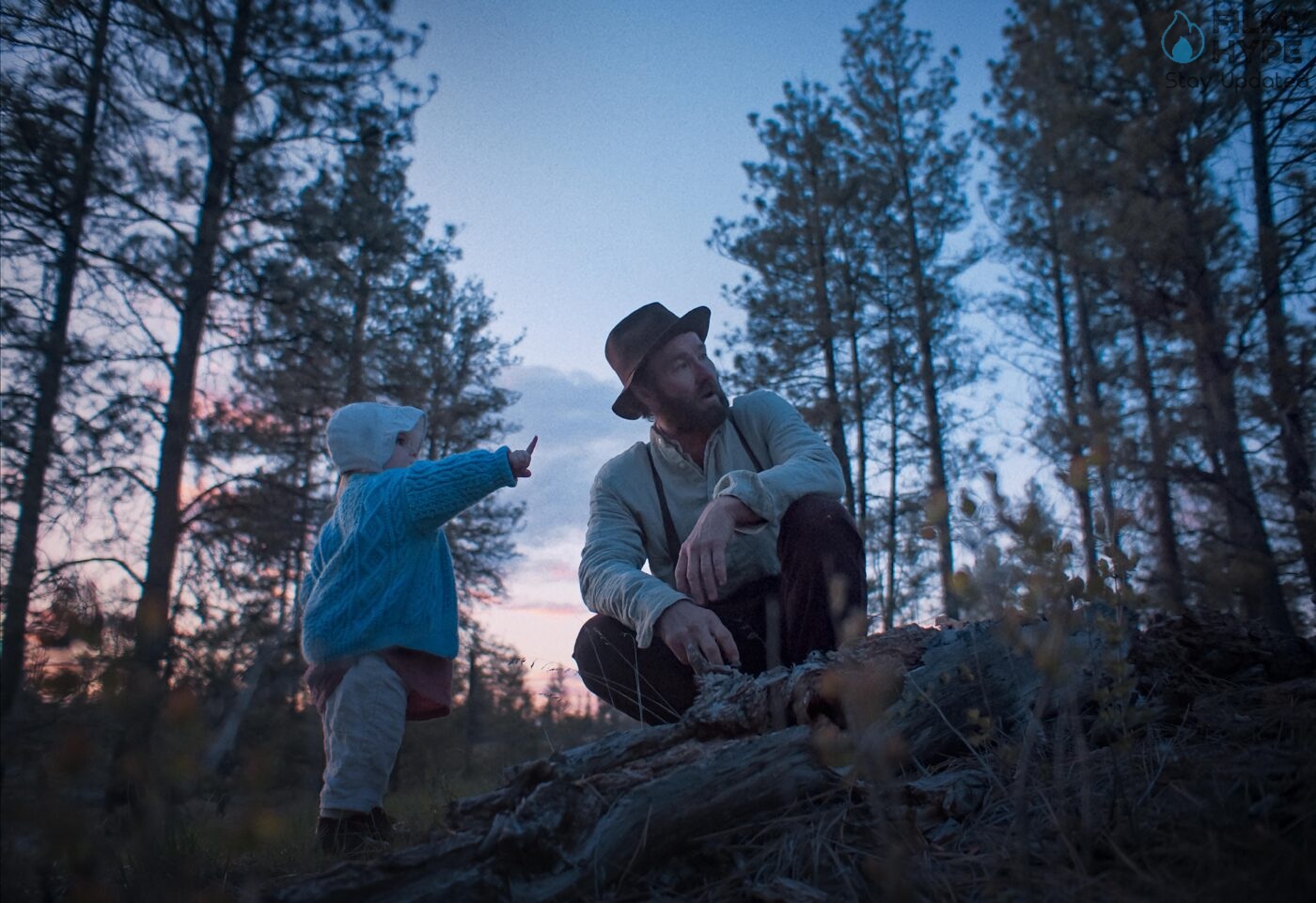
Upon returning home, he discovered that tragedy had come to his family, but in a different way. He lost his wife and daughter in a terrible fire. At that moment, Robert’s life stops; he has nothing to continue fighting for, and he only watches as nature regenerates around him. He can’t help but feel guilty for not being with his family when they needed him most. Eventually, the protagonist of “Train Dreams” learns to navigate a world without his wife and daughter, but remains hopeful that one day they will return. A part of him knows that’s impossible, but he sticks to that idea. In fact, that’s the only reason he rebuilds his cabin.
What Happened to Robert and Claire?
When Grainier meets Claire Thompson (Kerry Condon), a globetrotter who also lost her family, he understands that there is another way to deal with that painful experience. Although she chose another path, she does not judge Robert for being a hermit. Although the viewer’s first thought might be a new romance for both of them, their relationship focuses solely on understanding loneliness.
Edgerton mentioned Tudum that he loved that the relationship between Robert and Claire didn’t follow any narrative cliché. “The beautiful thing about the story is that the typical thing audiences might feel about Robert’s relationship with Claire is the possibility of a new romance. And I love that, while that may occur to the public, who feel that Robert is looking for something to replace Gladys, I think the most admirable thing is that he is not thinking about replacing her”.
Is the Girl Robert Saves Real?
One night, Robert helps an injured girl. Although he knows it is impossible, he decides to believe that it is his daughter Katie. But the next day, there is no trace of the girl. He imagined? Was it really a girl? Grainier didn’t stop looking for her, but he never saw her again.
“It’s not entirely clear if this is what’s really happening or if it’s just happening in your mind”, Bentley explained, “but it’s his way of processing his grief, this kind of strange reunion with his daughter, or with this girl who may or may not be his daughter. It was a crucial scene for the film. It is crucial to the book. It was a very delicate scene to pull off because it’s Grainier’s way of processing his grief. It was always a balancing exercise between trying to find the beauty and sweetness of the reunion you’re having, whether you’re having it in your mind or it’s actually happening, and balancing that sweetness with the tragedy and horror of what you’re experiencing… And whether it’s real or not, I really don’t know, but I don’t think it matters because that’s what’s important to him at that moment”.
“Train Dreams” ends with Robert flying over the earth in a plane while the narrator points out that only at that moment did Grainier feel connected to the whole. It also mentions that Robert died in his sleep in November 1968.
Guilt As Silent Punishment!
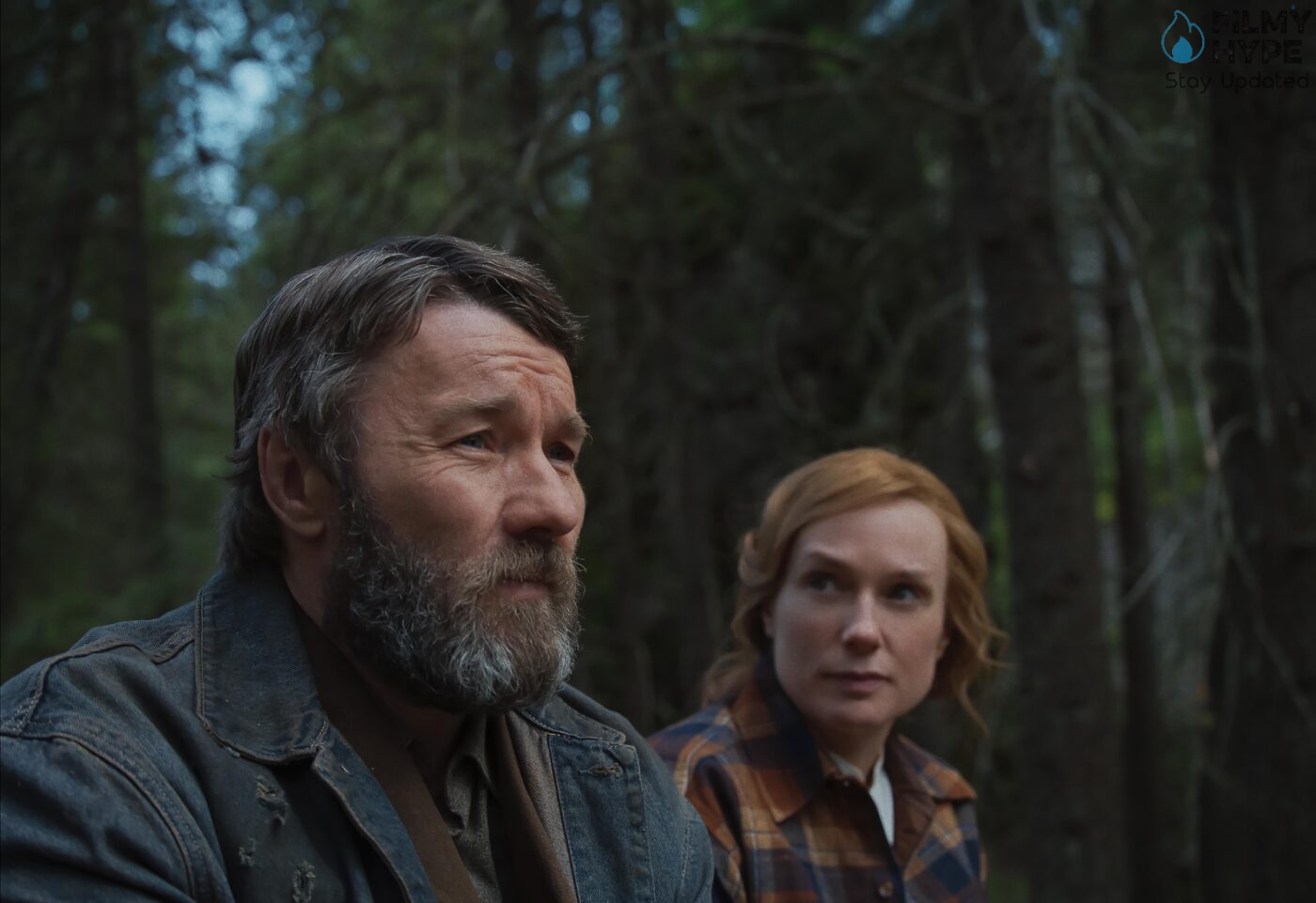
Robert drags for years an image that never fades: that of the Chinese worker thrown into the void while he observes without intervening. He didn’t participate, but he didn’t do anything either. And that passivity haunts him even after the tragedy that devours his own life: the fire that devastates his home and supposedly kills his wife Gladys and daughter Kate. When the ghost of that man appears in his imagination, Robert understands something painful: life does not only punish the direct culprits, but also those who looked the other way. It is not an explicit moral lesson, but it is deeply human: silence also has consequences. Robert never gets around to verbalizing it, but his subsequent existence is marked by that awareness: that of someone who understands that it is not enough to “not be bad”, but that you have to be fair, even when it involves risk.
Life That Follows, Even When Nothing Is Expected Anymore?
After the disappearance of Gladys and Kate, Robert becomes a shadow that survives rather than lives. He is half rebuilt he takes care of dogs, raises his house again, tries to adapt to a world that advances without him. That’s when Claire enters the stage, leaving him a simple but powerful idea: Even if you think your life doesn’t matter, you are always part of something bigger. Robert was never a hero, but he was presence, refuge, silent kindness. For Ignatius, for the abandoned dogs, for the women he transports through the forest without demanding anything in return. His existence, although he does not value it, leaves its mark. And that is the heart of the film: even the most discreet lives sustain others without knowing it.
The Girl in the Forest: Reality or Desire?
When Robert finds an injured young woman and believes he recognizes his daughter in her, the story moves on a blurred border between memory, dream and hallucination. He takes care of her, tries to save her… and the next day she has disappeared. The most likely explanation is that this young woman was not his daughter, but a projection of his longing, a materialization of his unresolved desire. Robert never had a body to bury, he never had a farewell, and his mind needs to make one last gesture of care. When she doesn’t come back, Robert understands —even if it hurts— that his daughter won’t come back. And that recognition is the last step toward acceptance.
The End: Accept Without Bitterness
In his later years, Robert allowed the world to continue moving forward around him. See how many steps are on the Moon, how modernity transforms everything. He observes, is amazed, even cries at a grotesque spectacle like that of the “wolf boy”, perhaps because he sees in it the same social cruelty that destroyed so many others. But there is no longer anger. Just lucidity. Robert dies peacefully, without great deeds or revelations, having understood that his life was not useless, even if it was not great. It was imperfect, silent, marked by errors, but also by small goodness that sustained other people’s lives.
What Does the Ending Mean?
The Netflix movie it ends with Robert, many years later, walking the streets and stopping to watch a broadcast in which he can see Earth from the astronauts’ perspective, and then we see him flying in a small plane, where he can see that same terrain in the that he worked for so many years, but from a different perspective. With all this, it seems that Robert manages to realize that we are all a small part of something much bigger. It is a poetic and moving ending, as it talks about a man who finally feels connected to his own story, to his past and his present, a man who is finally at peace and who has learned to accept everything he experienced, from his hard childhood, to the moments of happiness he lived with his wife and daughter, and the moment of pain that left him almost empty inside. It is an ending that tells us about the fact that life goes on, time does not stop and we must learn to keep moving forward, even if we have regrets, dreams that were not fulfilled or if we encounter grief, loss and loneliness.
