
Train Dreams Movie Review: Beautiful Film That Risks Not Being Seen By Anyone?
With Train Dreams, Clint Bentley brings up Netflix, an intimate tale spanning the entire life of Robert Grainier, played by an intense Joel Edgerton. Set in early twentieth-century America, the film follows a lumberjack working on railroad construction as the country changes face and progress advances. Between memories, encounters, and moments that mark the fate of an ordinary man, Train Dreams explores the link between time, landscapes, and personal choices through a direction that alternates realism and poetry without ever losing sight of the humanity of its characters. Streaming undoubtedly has many positive sides, first of all that of having broken down –figuratively speaking – every border. There is really nothing strange these days about seeing a Spanish, Korean, or Argentine series or film become a global phenomenon, seen and loved by tens of millions of people in all four corners of the planet. For those born directly in this habitat, it is the practice, but any cinema or TV lover who was a teenager in a remote era in which it was impossible or almost impossible to see or discover something different from the usual (translated: from American productions or European) is a quality impossible to miss and appreciate.
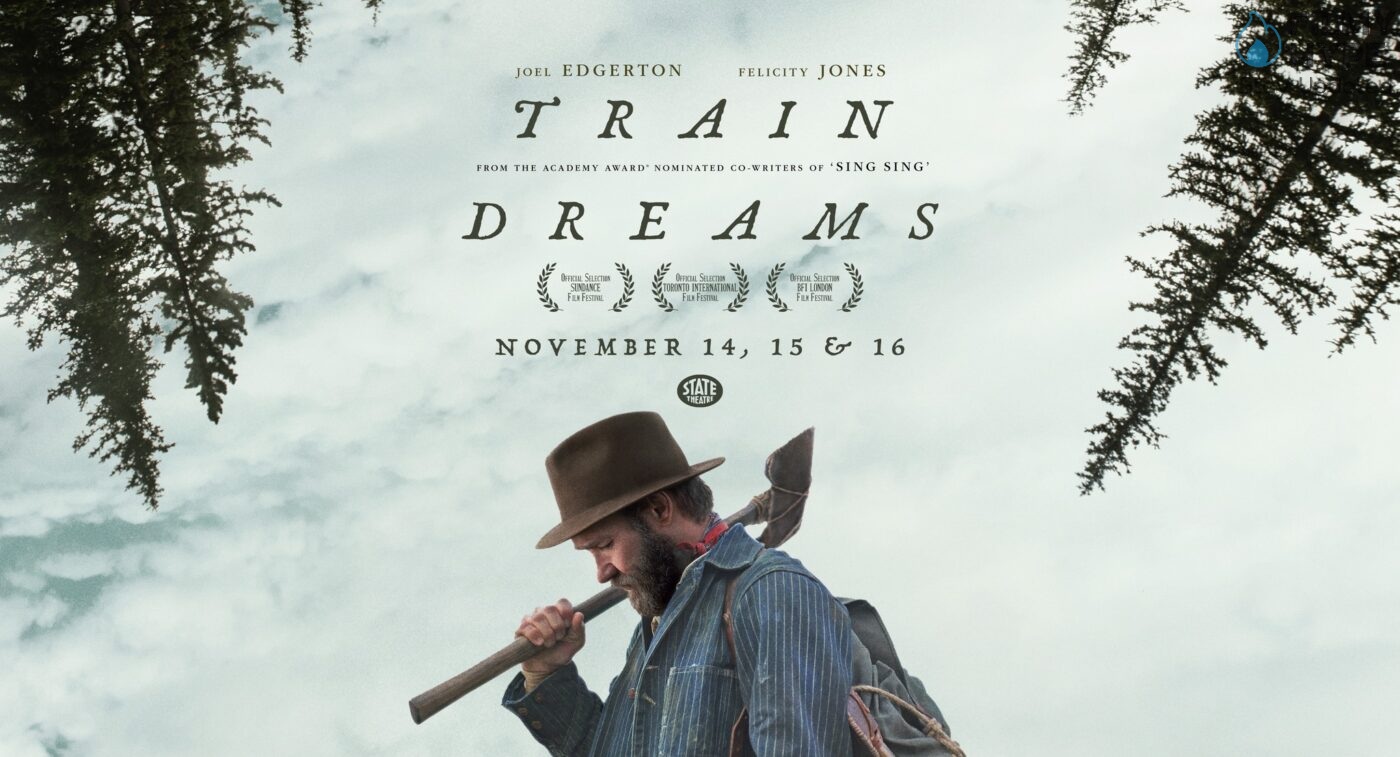
But in recent years, we have inevitably witnessed the flip side of the coin. The enthusiasm, haste and need to fill the platforms with content have led, on the one hand, to an impoverishment of the cinematographic experience with increasingly less crowded theaters because people prefer to save money and wait to see a film at home, on the other to an increase in the offer that ends up hiding small ones, great pearls in the sea of algorithms that do not favor the exit from our comfort zone, clipping the wings of a curiosity already lazy and weakened by the various problems that the life of each of us places before us. Why look for something “different” if “my Netflix” already offers me something that “could” be in line with my tastes? This is why a film like Train Dreams – which twenty years ago would have arrived at the cinema anyway after a minimum of hype that would have made people aware of its existence, and which today is available on Netflix – he could end up lost among the sesquicentennial docudramas produced by the Los Gatos giant. And that would be a shame. Probably, if I hadn’t had to write this article, it would have escaped me too in the midst of the frenzy of days always full of things to do that leave little time to breathe. Which, curiously, is also a bit of the assumption behind the feature film directed by Clint Bentley.
Train Dreams Movie Review: The Story Plot
The film follows the entire existence of Robert Grainier (Joel Edgerton), an Idaho orphan who gets a job as a laborer building railroads. It’s a tough job, made up of endless shifts and forests to be cut down in an America that is leaving the Old West behind. Through the narrative voice of Will Patton, we discover key episodes in his life: a traumatic encounter with a Chinese immigrant, eccentric or deeply loneliness-scarred workmates, and figures such as Arn, the explosives expert played by William H. Macy. During periods away from the railway line, Robert meets Gladys (Felicity Jones), with whom he builds a house, a family, and a plan for the future. Their brief period of serenity is, however, broken by a dramatic event that changes Robert’s fate and forces him to confront what remains: time, memory, the nature that changes around him, and the echo of desires never realized.
Train Dreams Movie Review and Analysis
Bentley demonstrates one stylistic maturity. Working with the director of photography Adolpho Veloso (who had already illuminated his “Jockey”) creates a visual fabric that oscillates between brutal realism and dreamlike lyricism. Malickian inspiration is evident, especially in scenes with Felicity Jones (Gladys, Robert’s wife), who remembers the magic hour by “The Days of Heaven”. But where Bentley really excels is in the tonal balance; the film slips into pretentiousness. Even when it reaches heights of pure visual lyricism, it remains anchored to the concreteness of human experience. Those boots nailed to a tree in the opening sequence? They are banal and mythical at the same time, exactly like the life the film tells. Let’s be clear: Edgerton delivers the best performance of his career here. Robert is a man of few words, and the Australian actor builds everything through looks, posture, and silences full of meaning.

It is a minimalist acting masterclass, amplified by voiceover narration by Will Patton, whose voice becomes the protagonist’s stream of consciousness. The supporting cast is equally notable: William H. Macy steals every scene as an explosives expert in what is paradoxically one of his best works despite lasting very little, while Kerry Condon appears in the finale with a line that encompasses the whole meaning of the film: “The dead tree is as important as the living one”. The soundtrack by Bryce Dessner (member of The National) envelops the narrative without ever overwhelming it, creating an emotional carpet that supports images without ever becoming intrusive. The assembly proceeds by ellipses, like fragments of memory emerging from the fog of time. Bentley uses the voiceover not as a narrative crutch but as a poetic tool, turning the story into an oral tale that could be passed down around a fire.
What do you think of this lyrical approach to biographical cinema? Do you like the idea of a film that tells an ordinary life as if it were a dream, or do you prefer more linear narratives? Let us know in the comments what your relationship is with this type of contemplative cinema! One of the most interesting aspects of the film is the way he connects Robert’s life to the changes in America at the time. Bentley builds a visual story made up of very concrete but also very evocative images: forests illuminated by the sunset, cities that grow rapidly, and tracks that cut through the landscape. It is a film that observes and lets us observe where even a seemingly banal detail, such as a pair of boots nailed to a tree, becomes significant. Robert speaks little, but his way of looking around tells what he feels better than any joke. Thus, his personal history is mixed with that of industrial America, and the film manages to do it with naturalness and sensitivity.
While dealing with complex themes (progress, mourning, memory, the inevitability of change), Train Dreams never falls into the didactic. Robert’s story becomes an invitation to question what deserves the most time, more attention, more care. The film suggests without imposing and accompanies the viewer in a reflection on the speed of our lives: on the inability to stop, on the habit of putting aside what matters, on the continuous tension towards a tomorrow that risks obscuring the present. Precisely this simplicity, combined with the sincerity of the staging, makes the film accessible and profound at the same time, capable of speaking both through the historical context and through emotions that know no eras. Joel Edgerton here builds one of the most intense tests of his career: a role made up of micro-expressions, looks, and physicality that reflects the weight of work and responsibilities. His performance finds a perfect counterpoint in the narrative voice of Will Patton, which he does not limit himself to telling, but seems to “remember” with him.
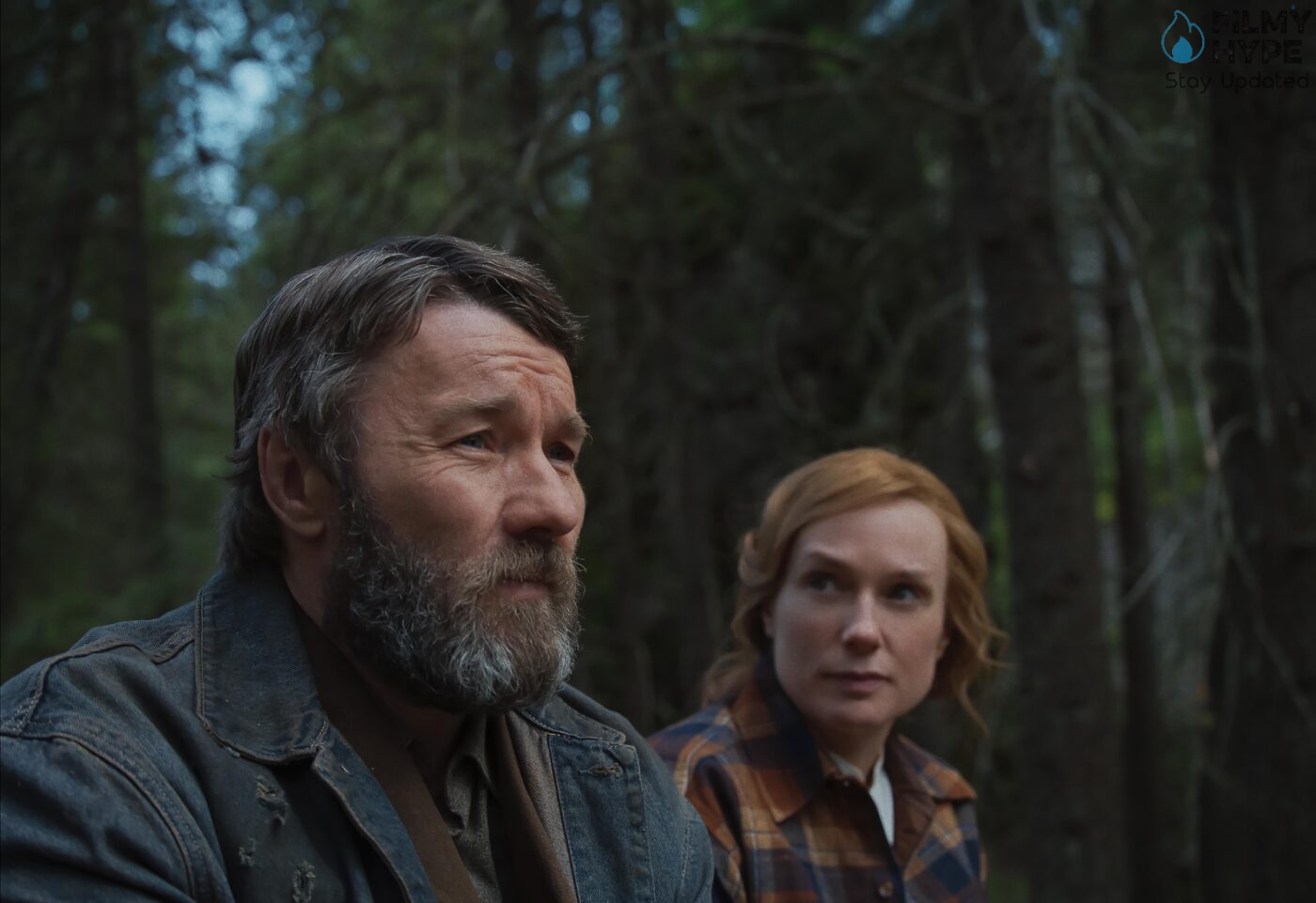
Bentley directs the cast with a confident hand, never letting aesthetics overwhelm the characters, and gives the supporting actors memorable moments: William H. Macy, Paul Schneider, and Kerry Condon. They create intense little portraits, critical to understanding Robert’s emotional world. It’s really worth giving yourself an hour and forty-five minutes to watch Train Dreams on Netflix. A perfect, almost unusual period of time: films must now last a minimum of two and a half hours regardless, but I don’t want to open this Pandora’s box. This is a film that thinks, with simplicity, lyricism, and sincerity, on a complex topic such as the question “what is life really worth fighting for?”. And he wisely does so by setting Robert Grainier’s story in a period of fundamental changes in North America, in which a value system and the pace of lives based on the aforementioned were inevitably speeding up. Except that, as Ferris Bueller teaches in that masterpiece known as A Crazy Day’s Vacation, life runs away quickly; if one doesn’t stop and look around, one risks wasting it.
It is seriously worth giving in to this moral blackmail which prevents us from being more with our children, with the person we love, with friends, from giving ourselves time to read a book or, more simply, to stay still and enjoy the spectacle of the passing clouds while we lie on a meadow not thinking about anything other than something like “how nice to be here at this very moment”. A reflection that is not made in a cloying, honeyed or, worse, didactic way, but which is actually carried forward thanks to a direction that is fascinated by what it frames and which inevitably fascinates the spectator who observes, from a story populated with fundamental encounters for a protagonist divided between the need to stay away from the only family he has for long periods of time on a personal journey that leads him to understand, every day a little more, what really matters in life. There is a need to slow down a bit, even if everything around you seems to be pushing in the opposite direction.
To find the good in the people around you and the beauty of the world you have been thrown into by who knows what strange case. Are there echoes of Terrence Malick in all this? Undoubtedly. But we think in a much more direct and pragmatic way, less grandiloquent, which is certainly more in terms of “accessibility,” so to speak. In an incredibly apt cast in which every face has been carefully chosen so much so that it will be impossible not to be impressed by the explosive expert played by the always excellent William H. Macy, Joel Edgerton gives us one of the best performances of his career, full of nuances, sweetness, and intimacy. However, he is a man with whom one immediately gets in tune with how he deals with everything that life puts in front of him, both the beautiful things and the less beautiful ones… I don’t know what Netflix algorithm usually recommends to you. But if the poster of this film is not present on your home page, go and look for it if you want to see a good film that talks about the meaning of life in a truly frank way.
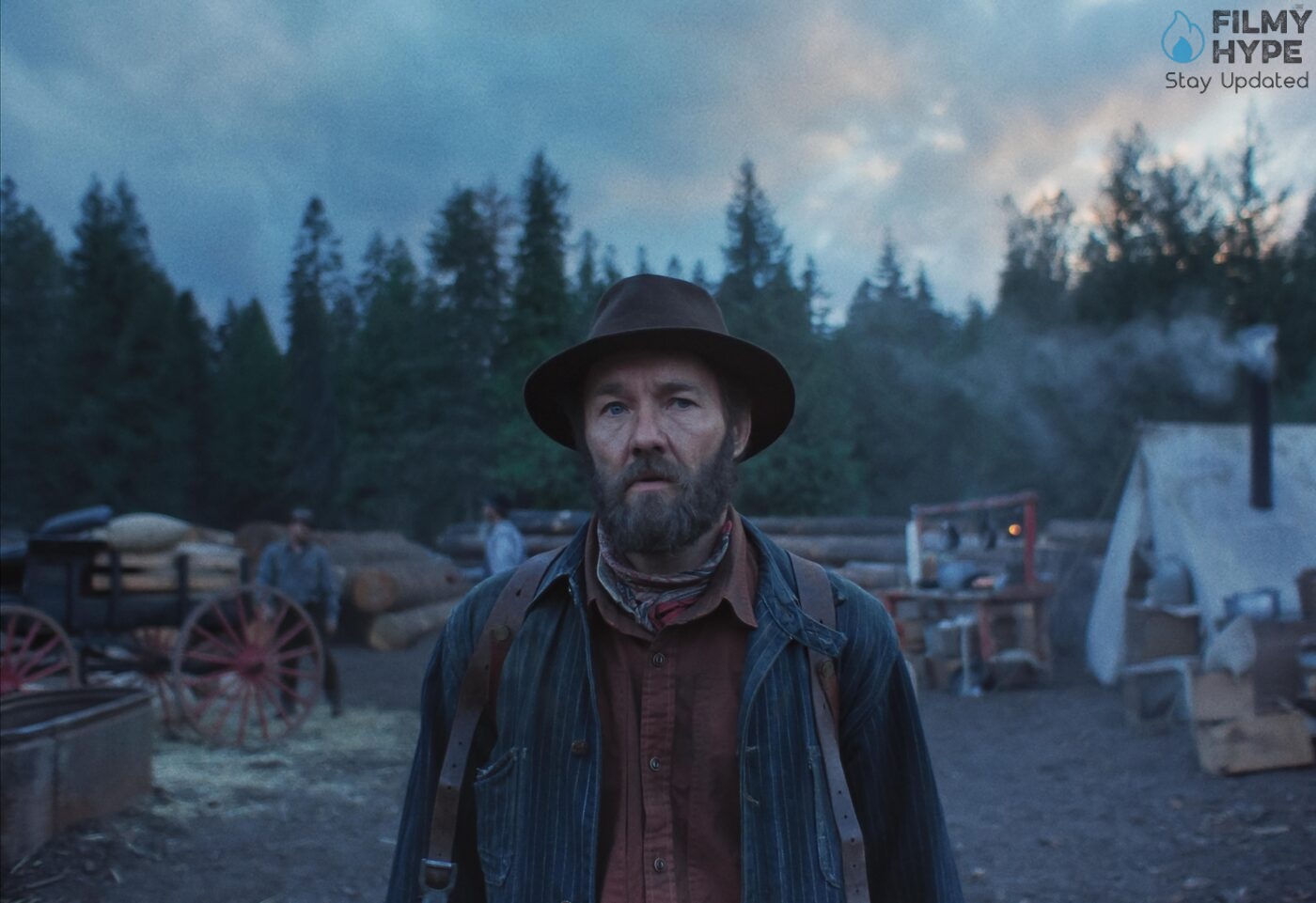

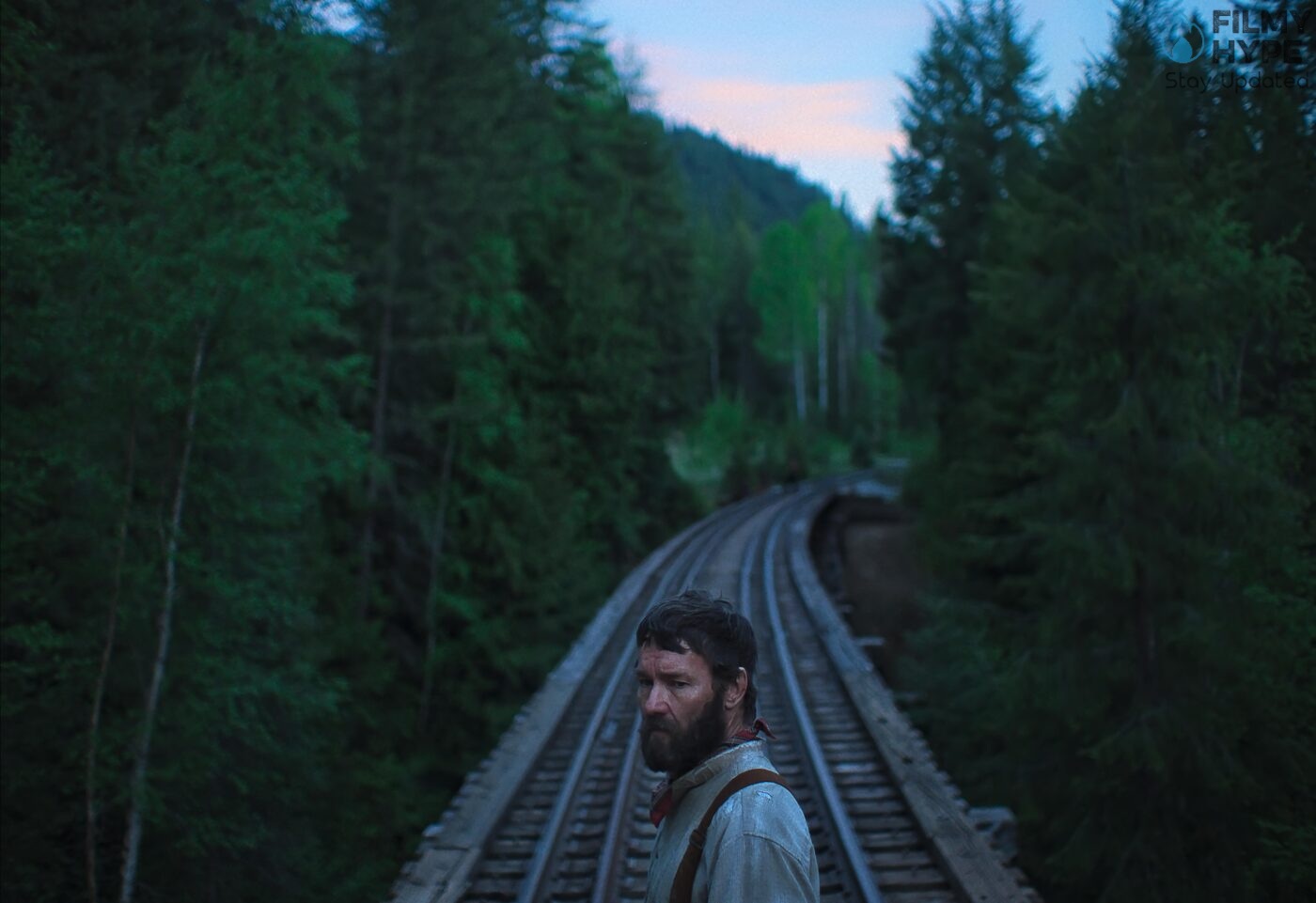
Behind Train Dreams, there is a certain potential cinematic quality in which perceptions and actions intertwine. Halfway through, in frontier land, extreme and blinding, a man eaten by pain (re)finds the lost path, reflecting on nature as an element of connection between the soul and the stars. A sweet and majestic temperature, measured by Edgerton’s performance, accompanied by a cast that also sees on stage William H. Macy and Kerry Condon. Although the dialogues are often similar to God’s pre-set quotes, there is no obvious forcing or redundant artificiality, so much so that drama never takes over sensitivity, and vital to maintaining clear and honest authenticity. In Train Dreams, it then becomes a path of healing, the deepest decline of what beauty means, reviewing “the sense of high and low”. In just two hours – a miracle, given the current durations of the films – Bentley solves the equation that leads to the construction of America – and therefore of Capitalism – by dedicating the story to ordinary men capable – still – of dreaming, reflecting on the story that anticipates the change social and, consequently, cultural (or upheaval). A story filtered by damp leaves and a worn pair of boots, reflected in the frizzy fur of a traveling dog.
Train Dreams Movie Review: The Last Words
Train Dreams is one of those films that doesn’t try to impress but stays. It tells of an ordinary existence with rare attention to detail, silence, and the relationship between man and landscape. Joel Edgerton drags the viewer into a character who speaks little but feels a lot, while Bentley’s direction builds a rhythm that reflects the way we remember in fragments, images, and sensations. It is a film that asks you to slow down, observe, and let yourself be crossed, without looking for definitive answers. A small work only in appearance, which continues to move within the viewer even after the closing credits. Train Dreams is a masterpiece of contemplative cinema that elevates ordinary life to visual poetry. Bentley conducts with extraordinary maturity, Edgerton delivers career performance, and photography reaches lyrical heights. A film that perfectly balances realism and lyricism, telling how life is simultaneously magnificent and devastating. Unmissable for those who love auteur cinema.
Cast: Joel Edgerton, Clifton Collins Jr., Felicity Jones, Alfred Hsing
Directed By: Clint Bentley
Streaming Platform: Netflix
Filmyhype.com Ratings: 4/5 (four stars)