
Predator: Badlands Review: Through Breathtaking Scenes, Hyperdynamic Combat, and The Excellent Performance of Elle Fanning
Predator: Badlands Review: Time for the numbers: nine, seven, six. They mean a lot to Predator: Badlands, directed by Dan Trachtenberg and in cinemas from November 6, 2025. They serve to give the coordinates of the project, to understand what type of current the film fits into, and to recognize its merits. Nine: is the ninth installment of the eponymous franchise, inaugurated by the 1987 classic directed by John McTiernan, starring Arnold Schwarzenegger, it’s an alien monster who beats her in a tropical, unspecified location elsewhere in Central America. Seven: the seventh film in the series, if we exclude the two crossovers with Alien (Alien vs. Predator 1 and 2, 2004 and 2007 respectively). Six: the sixth live action, because there was also an animated film. There is a need for another number, the three. Indeed, Predator: Badlands is the third film in the saga directed by Dan Trachtenberg, after Prey (2022) and the Animated Predator: Killer of Killers (2025). The American director, also a screenwriter together with Patrick Aison, knows the franchise, its potential, and its blind spots. After almost forty years – and a certain number of unsuccessful experiences following the lucky progenitor – perhaps the time has come to get back on top. Cast: Elle Fanning and Dimitrius Schuster-Koloamatangi.
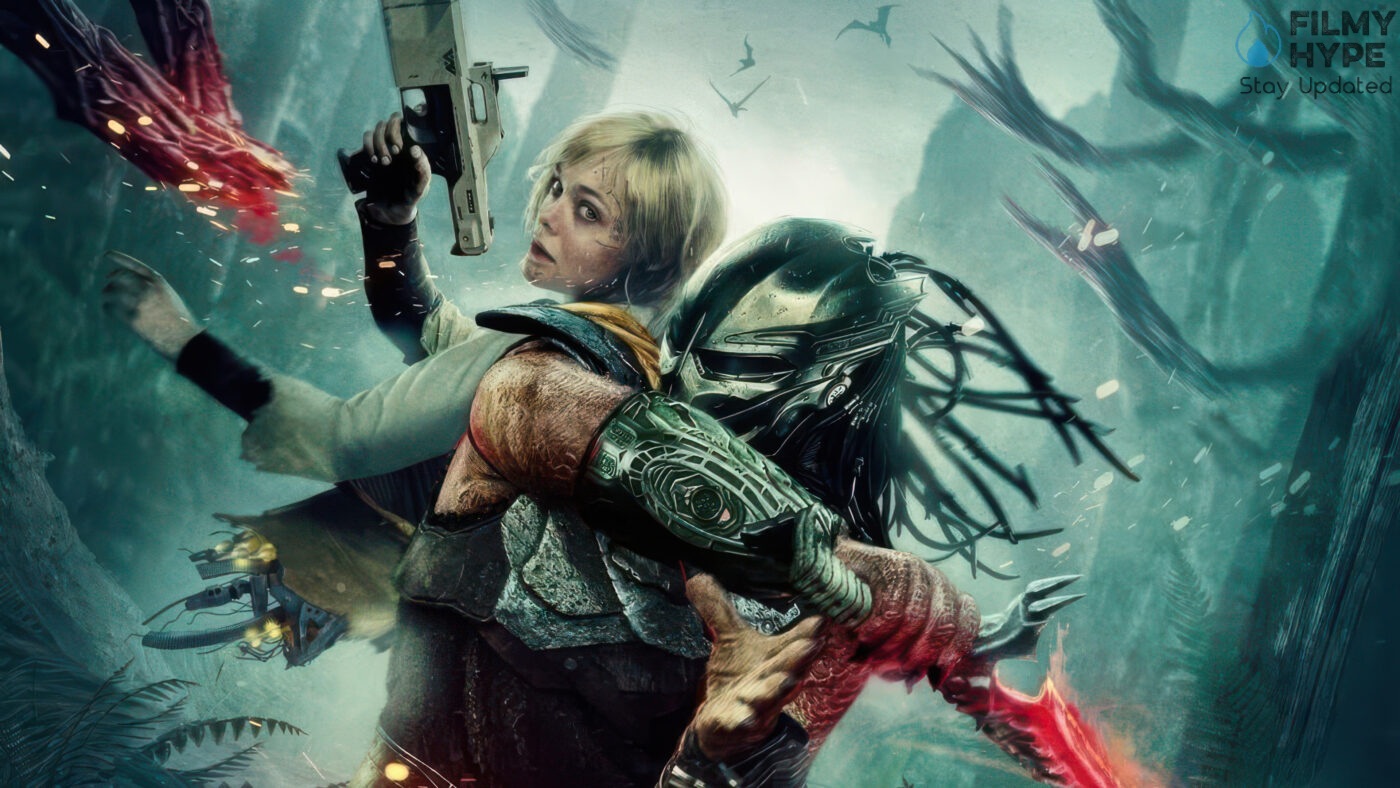
We had already mentioned it when we left Predator: Killer of Killers, directed by Dan Trachtenberg, who is managing to give greater depth to one of the most loved and interesting villains in the history of cinema. After the convincing Prey and the animated film available on Hulu, the director releases Predator: Badlands: a step forward in the story of the complex world of Yautja (for those who don’t know, this is the name of the species to which the combative alien belongs) which shows perhaps the most “human” face of these unstoppable hunters, without however falling into easy sentimentality. An unprecedented aspect that elevates the entire franchise beyond mere action canon. A very good one Elle Fanning in a double role, and an unrecognizable Dimitrius Schuster-Koloamatangi, become pillars of two worlds: that of Alien and that of Predator, which meet, reiterating, once again and with better results than previous cinematic attempts, that these two narratives inhabit the same universe in an eternal struggle, where blood flows freely and tension is always very high.
Predator: Badlands Review: The Story Plot
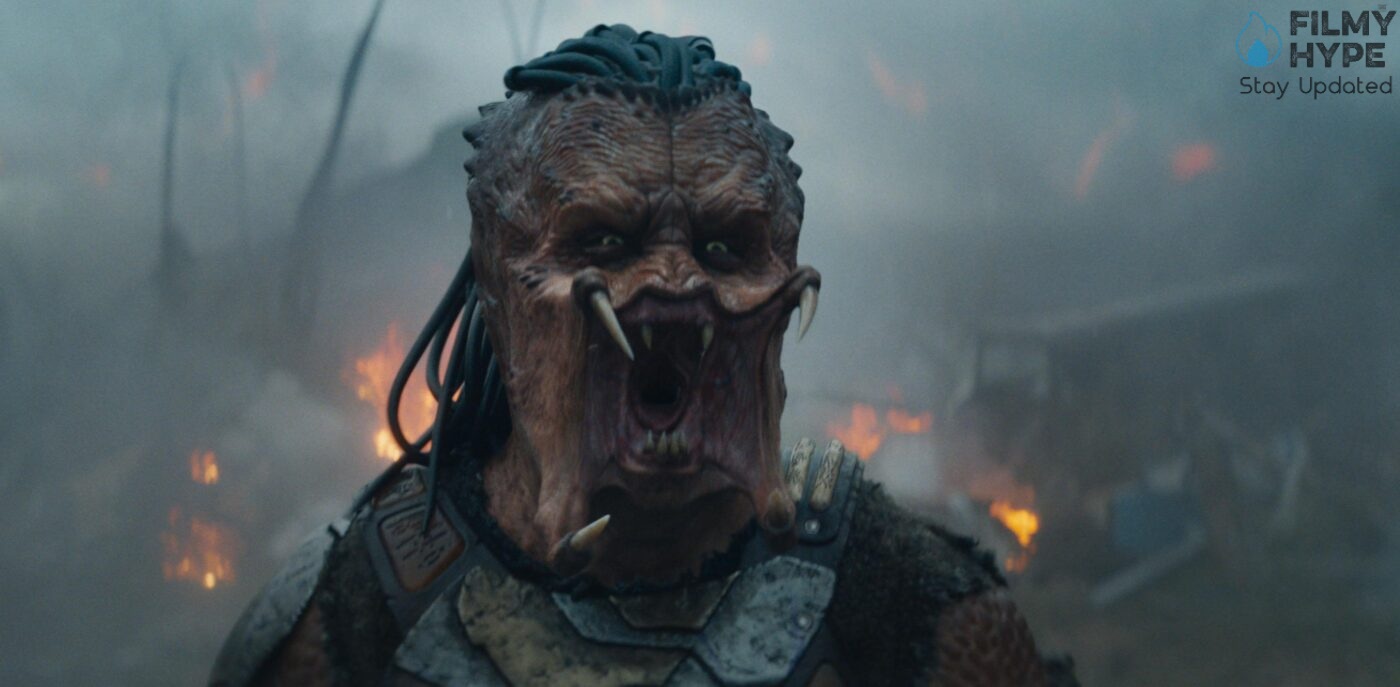
Dek is a young Yautja, an outcast to his people, as his physicality is more minute than that of most other warriors. When he reaches the age to access his first hunt, to become an official member of his people, he wants to do things big, searching for one of the toughest and most dangerous creatures in the galaxy: a monster that none of his clan has ever managed to defeat. After helplessly witnessing the moment in which his father murdered his brother, guilty of having helped him, Dek decides that he will add vengeance to his mission. Having gone to one of the most dangerous planets in the cosmos to begin his hunt, he soon realizes that he is incredibly easy as a hunter becoming prey, and if he wants any hope of survival, he will have to ally himself with Thia, a Weyland-Yutani synthetic, trapped in the nest of a gigantic creature.
We know that it’s hard to be a Yautja. The young Dek knows this above all, who, despite trying hard, is considered by his clan, led by his powerful and ruthless father Njohrr, to be a complete failure. Only his older brother, Kwei, believes in him so much that he refuses to kill him as his father ordered him, and allows him to escape to a planet that the Yautja themselves fear: Genna. There is essentially everything, from plants to animals to insects, that is lethal, ready to tear you to pieces, eat you, cut you, in short, it is a sort of minefield. However, the Kalisk lives there, a terrible and mysterious monster, feared by every Predator; it is said that it is impossible to kill it. However, Dek knows that to return and reclaim his place in the clan, there is no other way than to return with that creature’s head. Small problem: first, he has to find it and maybe survive the rest of the arsenal. And it is here that fate makes him meet Thia (Elle Fanning), a synthetic (or rather half synthetic) survivor of a Weyland-Yutani search team, who offers to be his guide. It will be the beginning of a very strange adventure.
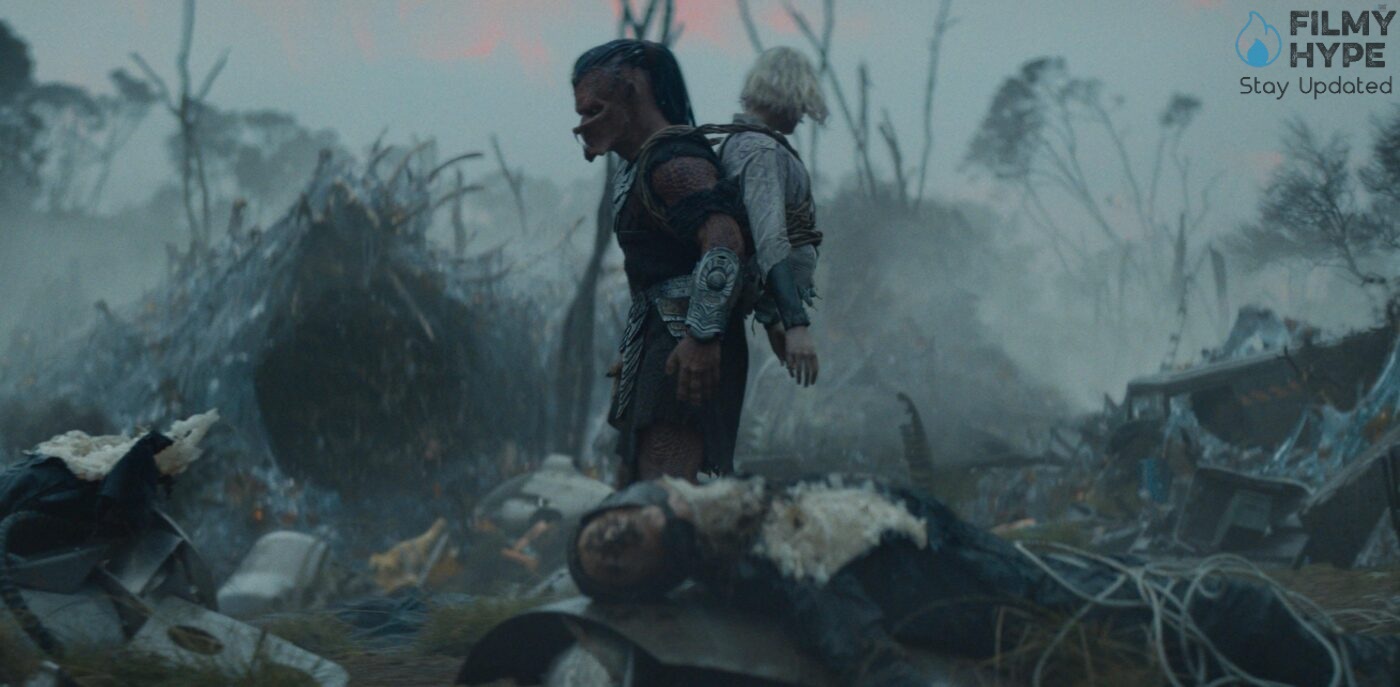
“Predator: Badlands” represents Disney (which acquired 20th Century Studios five years ago), the first truly great attempt to bring another chapter of the franchise to the big screen. They chased it with caution, they allowed Trachtenberg to move with a good dose of autonomy, giving us two rather spectacular and beautiful Gargantuan films. However, this is the first to be PG-13 and not R-rated, and the reason is simple: it is a Disney film in strong colours. There are pros and cons, of course, but for those fond of the franchise’s old scent of horror and fear, the film could be a disappointment. The screenplay is written by Patrick Aison and Brian Duffield, and is not without elements of great value, fascinating world-building, and the beautiful idea of subverting the comfort zone of the Yautja world. Rebellion against authority is the great underlying theme of everything, as it goes beyond appearances, what we are told, making self-determination the true backbone of our lives. However, there is little to say about tone and atmosphere.
Predator: Badlands Review and Analysis
“Predator: Badlands” can still claim a truly fantastic visual dimension, as we haven’t seen in years. The planet is used to create a gigantic homage to King Kong’s Skull Island, its various film versions, with a fascinating and deadly ecosystem, in which Trachtenberg also inserts an increasing dose of humor. This is perhaps the most problematic point. This and good feelings. The theme of family being the one you choose, not the one you’re born into, makes it all seem like a Pixar movie with sabers and machine guns, which, for goodness’ sake, is still better than a normal Pixar movie. We don’t want to praise the two here “Alien vs Predator” (and yes!) or for “Predators” of Amtal (obviously yes!), but if there is one thing that is not useful for today’s cinema, it is precisely to push on the teen component even in products of this type, those that should chase the epic before that wanting to water everything in rose water, trying to humanize the very essence of a villain that is absolutely unique in terms of coolness and temperament.
Having said that, the high cinephile rate of “Predator: Badlands” gives us homages to the first films of the franchise, to “Aliens – Final Clash”, to the various King Kongs, and there is also something of “Me, Robot”, “Terminator”, in a very classic adventure structure, complete with a pet with a surprise. The fight scenes are dynamic, well-constructed, well-structured, Trachtenberg knows the material, and it shows; we already understood it. Less suspension of disbelief than “Prey”, with the 50 kg Comanche beating everyone, here the protagonists are dirty, badly beaten, losers, and even a little naive. But it’s as if from the middle onwards he pulled the brakes, forgot that we are talking about Predator, not a gang of gym bros. If we then think about the results achieved by Disney (ops 20th Century Studios okay) with “Alien: Romulus” and above all “Alien: Earth”, then this film really seems a little too clever, too diluted, too harmless, almost a middle ground which risks not being completely convincing. But they beat each other very well.
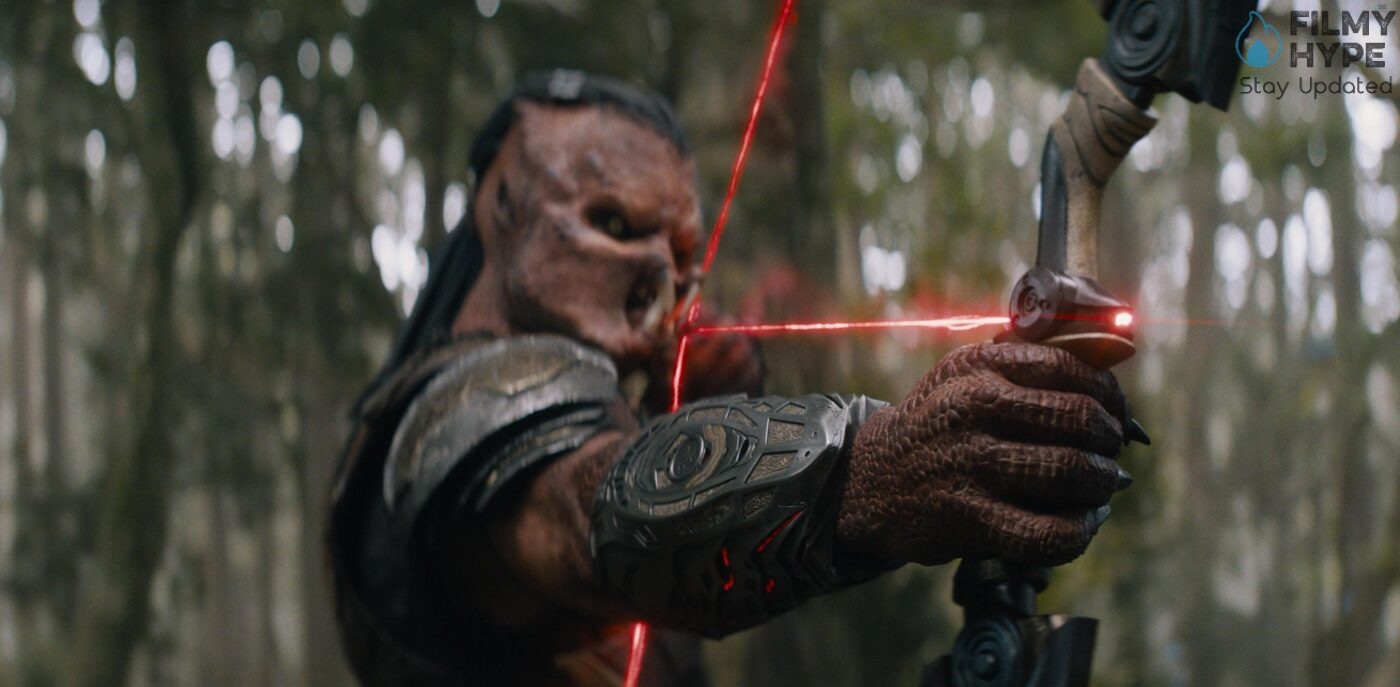
Landing on Genna, there is not even time to breathe: roots that strangle their victims, shaggy bison, plants that expel spines by exploding, worms that explode like grenades. World-building work becomes more important. Accustomed to seeing our planet on the big screen, Trachtenberg and his screenwriter, Patrick Aison, have thought well of inserting the character of Dek into a setting where there is not a moment’s respite, and both heaven and earth are not at all safe. It’s a survival fight that the young Yautja must share with Thia, a synthetic android from Weyland-Yutani, to reach the Yalicks, the supreme prey, the most powerful creature on the planet. It thus also becomes a story full of action sequences from beginning to end, in which the spirit of adaptation will force the famous predator to become the prey, overturning the paradigm that has always been accustomed to us since 1987.
A topic already used in Prey returns several times over the course of the duration: the protagonist is excluded from his family. It is an element that goes on two tracks: on the one hand, there is Dek, rejected by his father because he is considered weak. He is a renegade who tries to meet expectations, but above all to avenge his brother, already better than his father, just for defending him. On the other hand, there is Thia, abandoned to herself, without legs, by her twin sister Thessa, colder and more calculating than her, her exact opposite. The two teams try to reach the supreme prey and regain their place in their respective families. They are both driven by disappointment: he by mourning, she by the need to regain contact with a “person” she considers dear. Without ever going too deep, Predator: Badlands also wants to talk about family ties and ask us a question: are we forced to return to those who have never loved us to the end? Or do we have to create our own identity and go beyond the label given to us some time ago?
Since 1987, we have been used to horror tones and human beings chased away by the lethal alien; things certainly become different here. As mentioned before, it is the Yautja that is at the center of the narrative and of a change that humanizes the Predator, without prejudice to the fact that during the writing phase, there could have been a moment of extra attention on the development of the characters. The mood with which to see the feature film also changes: Trachtenberg had already understood with Prey how to give life to the franchise and avoid repetitions. From total action cinema, we move on to buddy movies, with a small space for those silly moments à la James Gunn, not to mention how the family drama is central, capable of revolving around the two main adventure companions who must eradicate their faults and underline their place in the system.
If that’s the question, how to make Predator great again? The answer of Dan Trachtenberg’s answer: working on things at hand, not looking for answers where it’s impossible to find them, not caring about the rest. It took the franchise a while to figure it out. Predator: Badlands does not express – this is something that needs to be clarified straight away – the originality that some American critics have reported to it. It can have it, in part, if you narrow your field of vision to just the franchise. If you consider the structure and ideas of the film in relation to the conventions of American commercial cinema, it is all very canonical. With one exception, which is the boldest choice of Predator: Badlands, even compared to their predecessors, they get rid of humans. There isn’t one, and it’s the most reasonable way to handle the structural limitation of sequels: the void left by Schwarzy’s absence. On stage, in Predator: Badlands, there are only creatures from other worlds. The emotional spectrum, values, and attitudes displayed by the film belong to us, but the rest are alien to us.
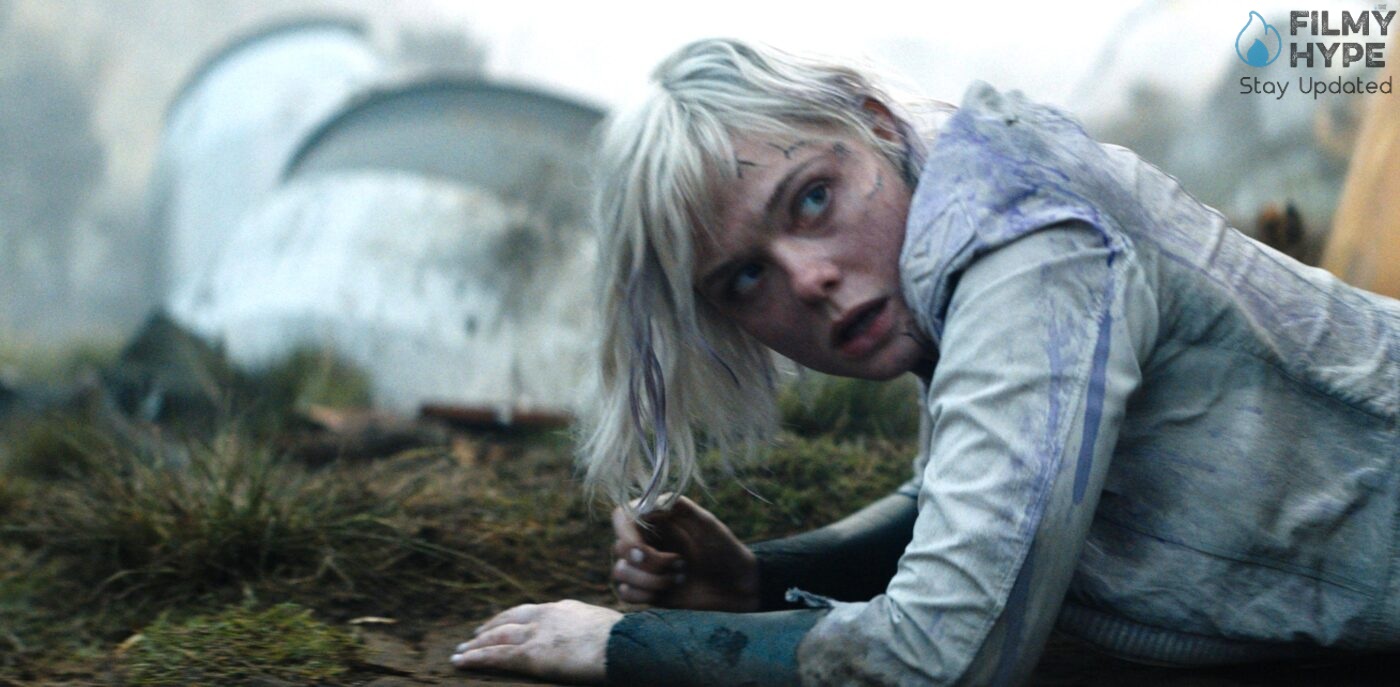
Predator: Badlands talks about the human soul through interposed species, and this indirect way of proceeding is very cinematic. It works because Dan Trachtenberg uses the limits and possibilities offered by the imagery of the film to make pure cinema, pure action, pure entertainment, with a decent emotional, sentimental background. Dek (Dimitrius Schuster-Koloamatangi) is one Yautja banned by his people because he cannot conform to the brutal and inhuman (!) codes of behavior of the species, which can be summarized in the motto: kill, kill, kill. In an attempt to regain the clan’s esteem, Dek reaches out to the planet Genna, the most inhospitable and threatening of all, to capture a specimen of Kalisk, a carnivorous beast so dangerous that even the Yautja stay away.
Much of the imaginative strength of Predator: Badlands lies in the staging of the protagonist’s unsuccessful attempts –also greeted by refreshing humorous parentheses – to survive in a hostile ecosystem. Much of the communication in the film is non-verbal, entrusted to the didactic and explanatory power of the image, punctuated by Dan Trachtenberg to build an action and suspense of unusual solidity, and which holds up without problems for the entire duration of the film, no more than an hour and forty-five, praise be given to the god of cinema. The verbal counterpoint to Dek’s grunts and relentless action is Thia’s tireless brain and unbridled gab Elle Fanning), a summary of Weyland-Yutani– Alien’s corporation – also on the planet for Kalisk. This is one half of the body of the synthetics, the upper half, the other he lost in a Kalisk accident, and the film dramatically values the impairment. Thia has a twin, Tessa (always Elle Fanning), a diabolical and amoral counterpoint to the enthusiasm of her sister, who is also on the Kalisk slopes. Everyone is looking for something in Predator: Badlands. Everyone wants Kalisk, the monster that projects collective desires and ambitions. A Dan Trachtenberg, it is of interest what you reveal, the hunt I show, of the interiority of the characters. The lowest common denominator is violence, an inescapable parameter of life; the planet Genna, where even a blade of grass can do much harm, mirrors it well.
There are no humans in Predator: Badlands– only creatures and synthetics, yet it’s all so human, in drives, desires, fears, and frailties. Humanity is a parameter, a moral standard, and violence is the unit of measurement. Human is he who fights to defend himself and those he loves, and knows when to stop. Dek and Thia, a body accustomed to reasoning little and a mind without a body, are the most dysfunctional of dysfunctional families. They know each other, they struggle to understand each other, and little by little they build a relationship, based on moral values, and here lies their humanity: in being fragile and moral at the same time, without the two things colliding. Again, none of this is truly original. Ma Dan Trachtenberghe understood that, if circumstances prevent true innovation, one must cling to pure cinema, to the pulsations of editing, to the construction of the image, to the creativity of landscapes. The result is not and will never be original. What has already been seen, however, will be an already seen of noble craftsmanship.
Predator: Badlands it has an epic prologue nestled in desert scenery in the manner of Dune, he repeatedly winks at the James Cameron (Avatar) format and frees the characters from the comfort of technology by forcing them to confront the reality of Genna without a safety net – the film enjoys scattering the path for Dek and Thia with traps – and tells the story of humanity “without humans” taking to the extreme the interesting perspective that has already made the fortune of Matt Reeves and his Planet of Monkeys (the last chapters, especially). Dan Trachtenberg is a lucid director, not only when it comes to choosing noble fathers, but also in managing the performers. He gives each his own. Give to Dimitrius Schuster-Koloamatangi a purely physical performance, while enhancing the verve and expressive possibilities of Elle Fanning, making her move relentlessly along the two poles of the spectrum – luminous goodness and evil – of her twins, throughout the film. Ideas, action, psychology: without rewriting the rules of the game, the film holds up better than many of its predecessors. The exception is inevitable.
Predator: Badlands Review: The Last Words
Predator: Badlands is perhaps the best entry in the franchise since the 1987 original. Its strength is not at all surprising but calibrated to the thousandth of a science fiction horror with a pressing action, creative in the construction of the environment, and lucid in defining the environmental relationship between characters; it even allows itself to insert, among the dark and rather brutal tones of the story, parentheses of humour. Dan Trachtenberg directs a film that is also part of a larger, more complex mosaic called the Predator franchise. Predator: Badlands discounts the limits of all “serial” films, leaves the door to the future too open, and is frustrating. But this is a marginal problem. If American commercial cinema is not able to give birth from the ashes of seriality and extreme repetitiveness to a new self, which at least presents us with the best vision of the old. This is the case with Predator: Badlands. The theme palette is clear, the entertainment is solid, the characterizations are interesting, and the look is appreciable. Finally, Predator can also look to the future with optimism.
Cast: Elle Fanning, Dimitrius Schuster-Koloamatangi
Directed: Dan Trachtenberg
Filmyhype.com Ratings: 3.5/5 (three and a half stars)







One Comment