
It Was Just an Accident Movie Review: Panahi and the Eternal Dilemma Between Revenge and Forgiveness!
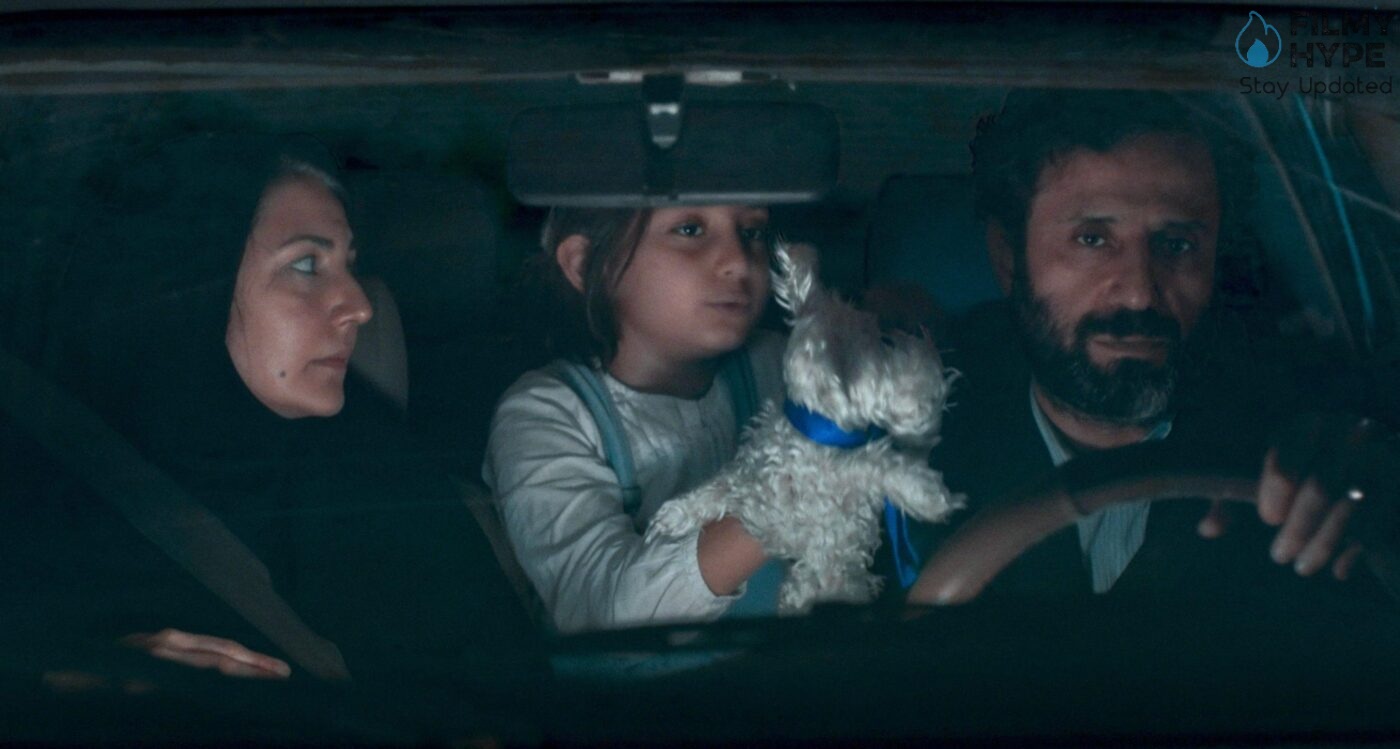
As the title suggests, it all starts with It Was Just an Accident (Yek tasadef sadeh). A family traveling by car at night accidentally runs over and kills a dog. The collision damages the vehicle, and the three –husband, pregnant wife, and little daughter – are forced to stop for an emergency repair in a workshop. Here is a man, Vahid (Vahid Mobasseri), who tries not to be seen because, in the car driver (Ebrahim Azizi), he seemed to recognize a secret service officer who, years earlier, had tortured him in prison because he had dared to protest against the regime. Vahid, however, has doubts about the identity of his tormentor, so he takes a bizarre journey in search of some people who, like him, have suffered the same violence (albeit in a different way) to identify him. The wedding photographer, Shiva (Mariam Afshari) she is certain that she recognizes the smell of it; the worker Hamid (Mohamad Ali Elyasmehr) thinks he recognizes his voice; the bride Goli (Hadis Pakbaten) is willing to give up her marriage just to find out if that man is really her rapist.
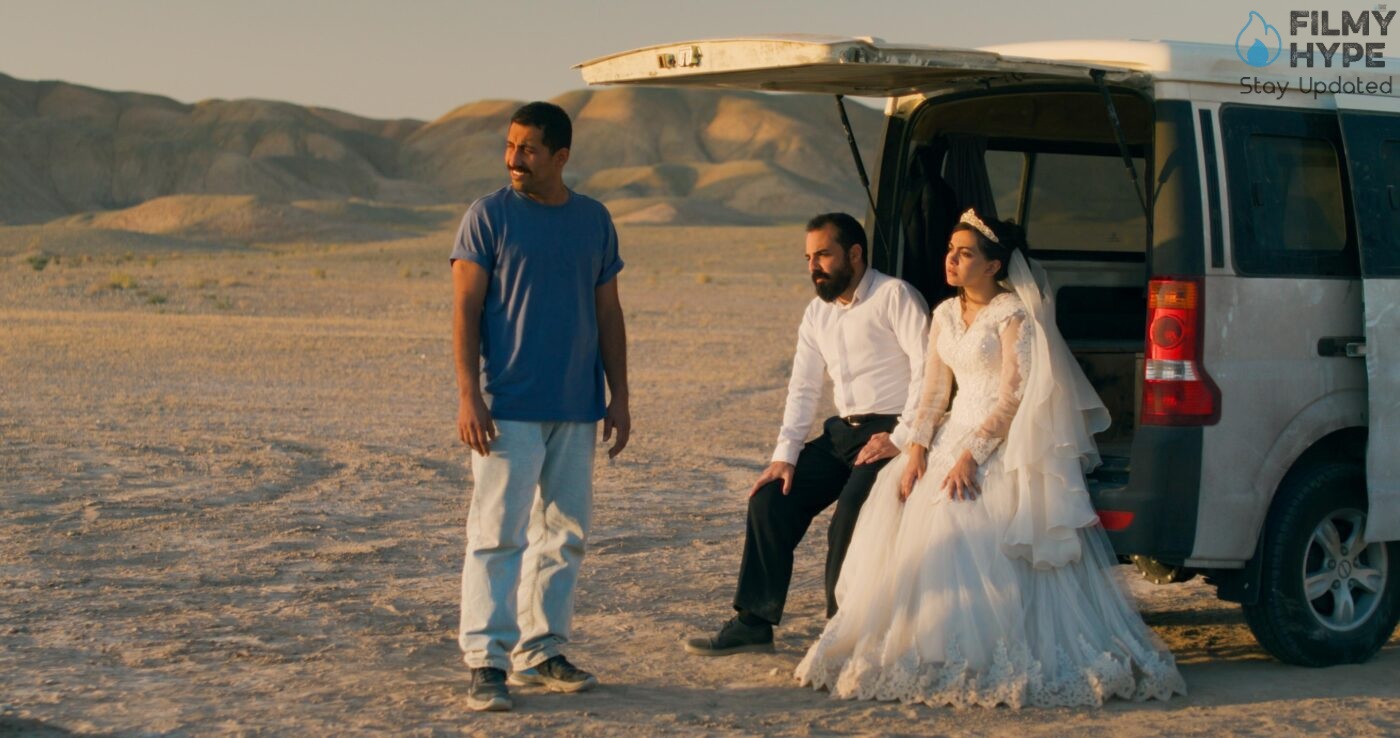
After the movie No Bears and the subsequent arrest in 2022, Iranian director Jafar Panahi returns to direct, this time doing so while remaining entirely behind the camera. It Was Just an Accident, it is a film that marks his return with great fanfare, but it is also a way to take what he has missed all these years: the direct affection of festivals and the public. The film tells the story of a group of former prisoners who have the chance to take revenge on a man who had tortured them in prison years earlier. With a delicate and decidedly balanced touch, Panahi is keen to create a tone devoid of political elements, telling the human point of view of the story. Unlike his previous works, where he experimented with a mix between documentary and fiction, here there is a clearly visible element of fiction. Also on this occasion, Panahi uses several non-actors, confirming his homage to neorealist cinema, but he also uses some already well-known faces, such as the protagonist Vahid Mobasseri, who had already worked with him in No Bears.
It Was Just an Accident Movie Review: The Story Plot
It Was Just an Accident is a very personal film for Jafar Panahi. The Iranian director, back attending an in-person festival (this year in Cannes), had not left his country since 2010. He is a cinema denouncing Iran, and for his art, he has been arrested several times, with a ban on making films, writing screenplays, and leaving the country. Yet Panahi never stopped and made films secretly, even using very limited budgets, which were then transported outside the borders and presented at festivals. It Was Just an Accident encloses that rage which the director still feels towards the regime for the torture he suffered in the years he was arrested because he refused to show the apparent beauty of Iran. Every character, starting with Vahid, who kidnapped his alleged tormentor, comes to terms with a dramatic past, made up of violence and torture. A past impossible to forget that forcefully resurfaces, and it is clear that those scars are still pulsating under their skins.
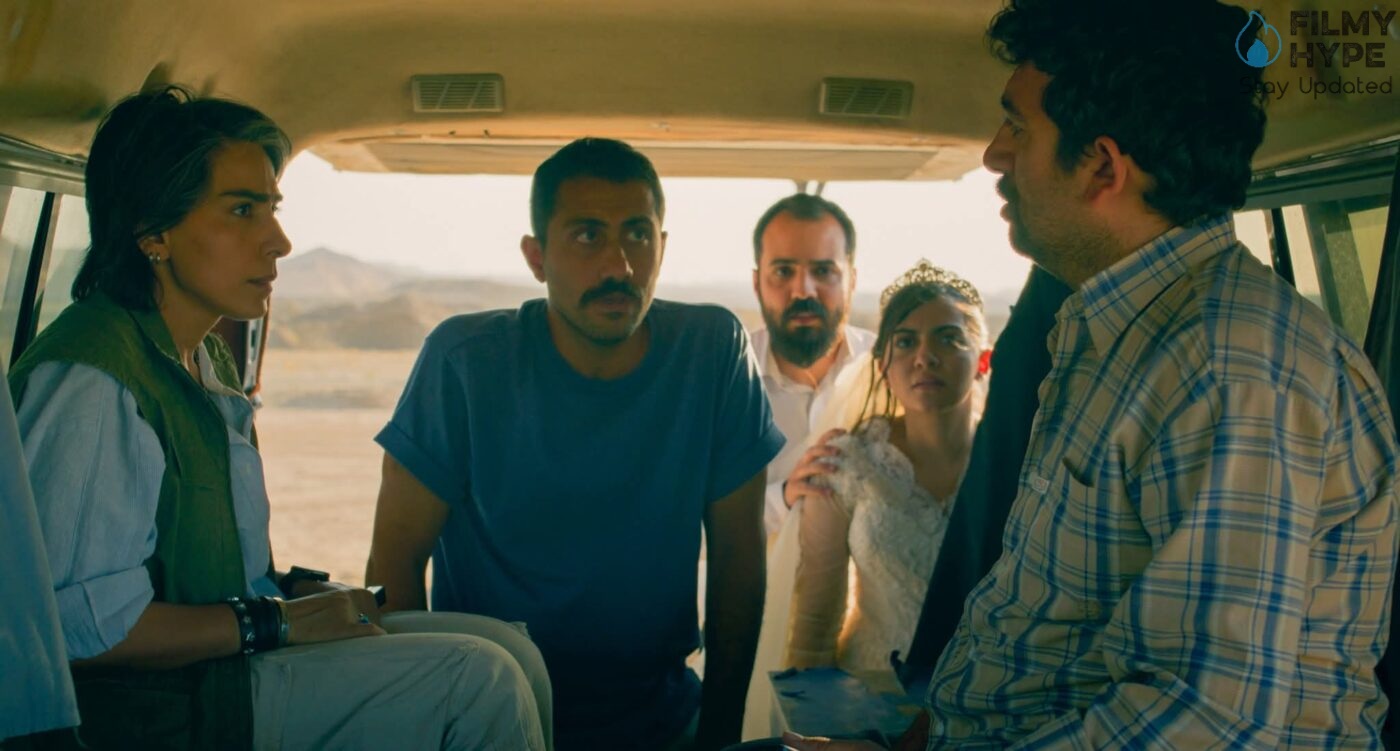
At the same time, each character has a different way of reacting in front of the man who tortured them in the cell. Hamid wants to kill him because he is part of a sick system, and he himself represents that evil; Shiva is against it and believes that man is only a means of the regime, almost a victim, and has only been obliged to obey and do his job. This is where it comes into play moral question of Panahi on what is right or wrong: to eliminate man, risking becoming like the oppressors, or to blame the rot that exists in the system? The director’s complaint is stronger than ever, and he accuses a regime whose repressive structure shows increasingly evident fractures within its society, brought to its knees by sometimes absurd rules and regulations. Narrative execution, however, is rather slow: in the first part of the film, time seems to pass too inexorably. The trauma suffered by these characters is never fully explained; perhaps too deep to be taken to the extreme, or simply an artistic choice.
It Was Just an Accident Movie Review and Analysis
It Was Just an Accident immediately opens with an interesting concept: fate can be fatal. In fact, it is precisely fate that brings a family man to the “enemy’s lair”. If not for that unfortunate incident, where an innocent creature lost its life, Vahid probably would not have acted by kidnapping that man, snatching him from his family for hours. But behind this little fragment of history, there is more, there is anger, bitterness, melancholy, but above all, there is the disease of revenge. In a country like Iran, to date one of the main ones to use the death penalty to solve problems, there is a man who has scruples. That man is Vahid; his story teaches how one should not act following revenge, because it is like a virus that enters you, sowing hatred and resentment in the person. The director, who has suffered harassment himself, immediately makes it clear what his point of view is: he does not seek revenge or even summary justice; Jafar Panahi is interested in telling a human story, of great social impact. With his expert and attentive gaze, Panahi directs a necessary film, especially in times where wars and bombings are the order of the day. With a sensitive and seminal history, It Was Just an Accident is a precise analysis of the concept of justice: Is revenge equivalent to justice?
This is the path that Vahid takes with a group of former prisoners, who, throughout the film, are undecided about what to do, because once you commit murder, you never go back; you cross a line that eliminates the distance between the tormentor and the tortured. In a world full of selfishness and appearance, there is a glimmer of hope represented by people like Vahid, who, albeit with just resentments, does not stoop to the level of a murderer, remaining in total doubt. This film is capable of keeping the viewer on tenterhooks until the end, playing well with the curiosity derived from the real identity of the man with the prosthesis. Is it really about Eghbal, or is he just an ordinary man? The answer only comes in the finale, but first, there is a well-argued path that forces the protagonist to torment himself. Unlike movies like Taxi, 3 Faces, No Bear, Panahi renounces the mix between documentary and fiction, once again embracing the fiction style: it has been since the days of Offside, which didn’t go back to this formula. Partly’ out of obligation and partly’ out of necessity, after the famous conviction in 2010, Panahi had learned to devise increasingly ingenious ways to shoot clandestinely; this time, too, it is no exception. Whether it was in a taxi, on the edge of the country, or in a residence on the lake, Panahi has never stopped doing what he can do: cinema.
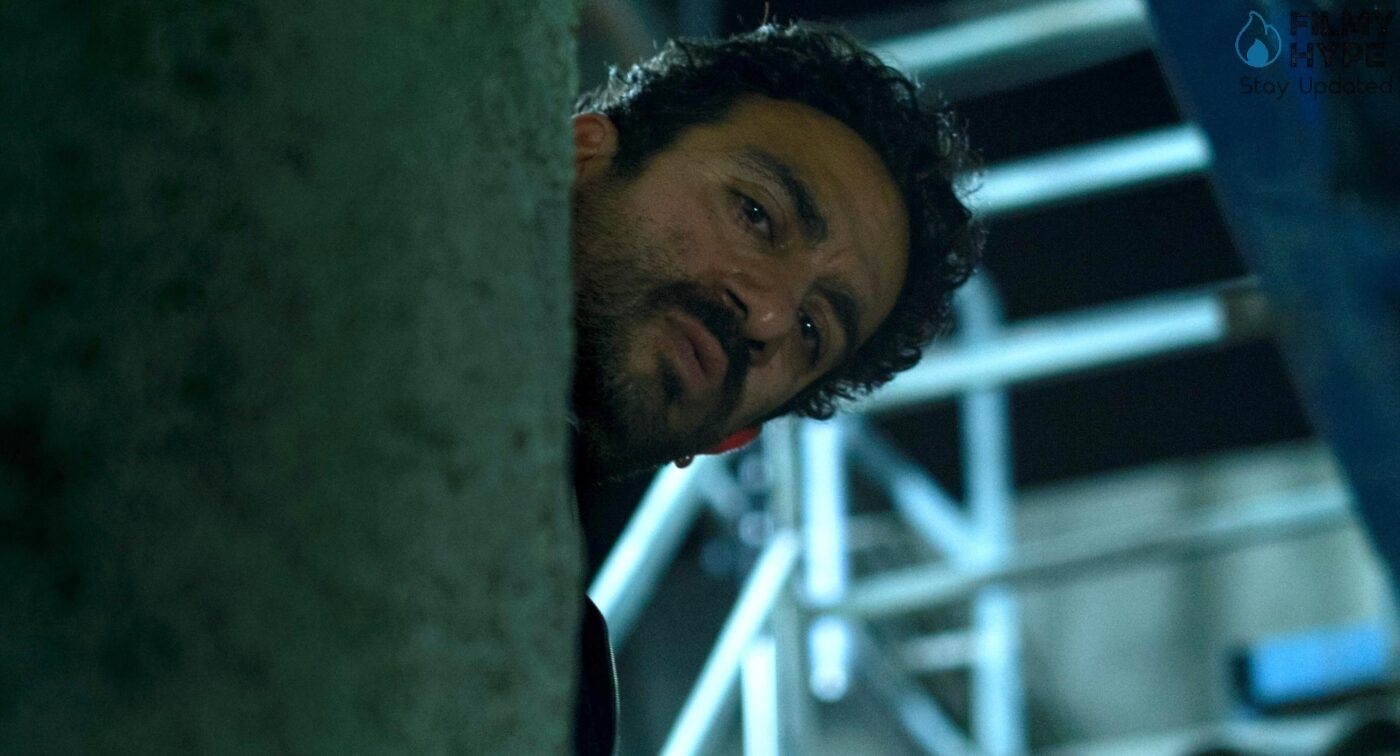
Despite the change in style, the way of telling is always the same; he does not abandon the directorial coherence that has accompanied him in all these years. Filming often takes place in an automobile, which is why it seems to be in the definition of moving ideas, since what the director says is not only the transfer of characters from one place to another, but a real transfer of ideas and opinions. If the actions are not taking place in the car, however, they take place outdoors, this is because Panahi has always admired neorealist cinema and has always emulated the choice to avoid overly constructed or sumptuous sets. Through effective directorial stratagems, Panahi can move the story from different angles, allowing the viewer to enjoy different shots, but without ever giving up his purely social point of view. Despite the absence of emblematic soundtracks, the film makes up for it with an unpredictable script, which precisely tells the characters’ difficulties, their post-prison traumas, but also their desire to leave brutal moments behind. With It Was Just an Accident, Jafar Panahi is still the voice of the voiceless. Through this film, Panahi expresses himself, making the story personal, but also speaking on behalf of many political prisoners who cannot defend themselves. Filmed clandestinely and with the support of some European countries, the film is a necessary testament to the tragic situation that continues to exist in Iran.
It Was Just an Accident, it thus becomes an atypical, claustrophobic, and full of road movie uncertainties, built through a series of stages that put into discussion every supposed truth. Vahid seeks witnesses among the ex-prisoners who, like him, have suffered torture at his hands: a photographer, a young woman getting married, a former couple. Everyone talks about the same violence, but no one can confidently state that that man — now a prisoner and in silence — really be responsible. In many cases, the only thing I remember is a sensory detail: the smell of sweat, a familiar sound, a physical impression left in the memory more than the face. The film reflects, in a direct and sharp about, what happens when justice institutions fail, and leaves room for suspicion, for hatred, for the temptation to become judges and executioners. But at the center of what I tell you, there is always doubt, which not only slows down the action, but also the salubriousness. Even when everyone seems to agree on guilt, the question remains: “What if we were wrong?”
With limited means and largely non-professional actors, Panahi builds an opera compact, free of frills, which works by subtraction. The tension grows naturally, thanks to a direction that is precisely with time and space. The environments — almost always closed or at night — contribute to creating a sense of isolation and precariousness. Editing avoids emphasis, while sound plays a central role: in the finale, a seemingly neutral shot is rendered disturbing precisely by what you feel, not by what you see. As already happened in Taxi or No Bears, Panahi makes simplicity a strong point. The staging is sparse, but every element — a fixed shot, a prolonged silence, a noise outside the field — has a specific gravity. And if the film takes inspiration from a personal experience, Panahi eschews direct autobiography for building a choral tale, in which contemporary Iran is represented through a series of faces and stories that, yes, intertwine in the precariousness of survival.
When we talk about revenge, we think of an absolute value, suitable for great Greek novels and tragedies. As cinephiles, perhaps the bride of comes to mind is Kill Bill and his katana. Instead, It Was Just an Accident brings everything to a very concrete level: how can torture victims turn the other cheek to their executioner? It is the eternal struggle between revenge and forgiveness. And violence is insidious, because once unleashed, it can only feed itself, generating an infinite spiral. It is no coincidence that forgiveness is often associated with saints and martyrs. Vahid is certainly not a saint. And he’s not even a martyr. This is why that memory ignites like a blind instinct, which leads him to kidnap, tie up, and throw the torturer into a pit. But then the question: what if it wasn’t that person? What if he was wrong? On the other hand, he was blindfolded when he was subjected to that terrible violence. Uncertainty assails him. He then decides to ask for help from other former prisoners, whose lives were broken by the hands of that man, nicknamed Eghbal (i.e., “wooden leg”, due to a prosthesis).
Having loaded the prisoner into the van, Vahid goes to look for certainties from his photographer friend Shiva (Mariam Afshari). He is about to do a photo shoot for a couple about to get married. And the bride-to-be, Golrokh (Hadis Pakbaten), was also a victim. Everyone, therefore, decides to consult with the worker Hamid (Mohamad Ali Elyasmehr) as well. Some think they have recognized the voice, those who think they have recognized the strong smell of sweat, the same one they heard during their imprisonment. But, in an escalation of anger and resentment, discovering the truth is increasingly difficult. And perhaps not even that important: those who have suffered a serious wrong are, in fact, always looking for a culprit. Given the topics covered, on paper, It Was Just an Accident, it might seem like a philosophical work, almost theatrical, rather than cinematographic. And instead, Panahi makes cinema in purity: the pace is extremely fast, the night lights are used intelligently, looking like the eyes of a predator, the suspense grows almost unbearably, following the lesson of a great master like Hitchcock.
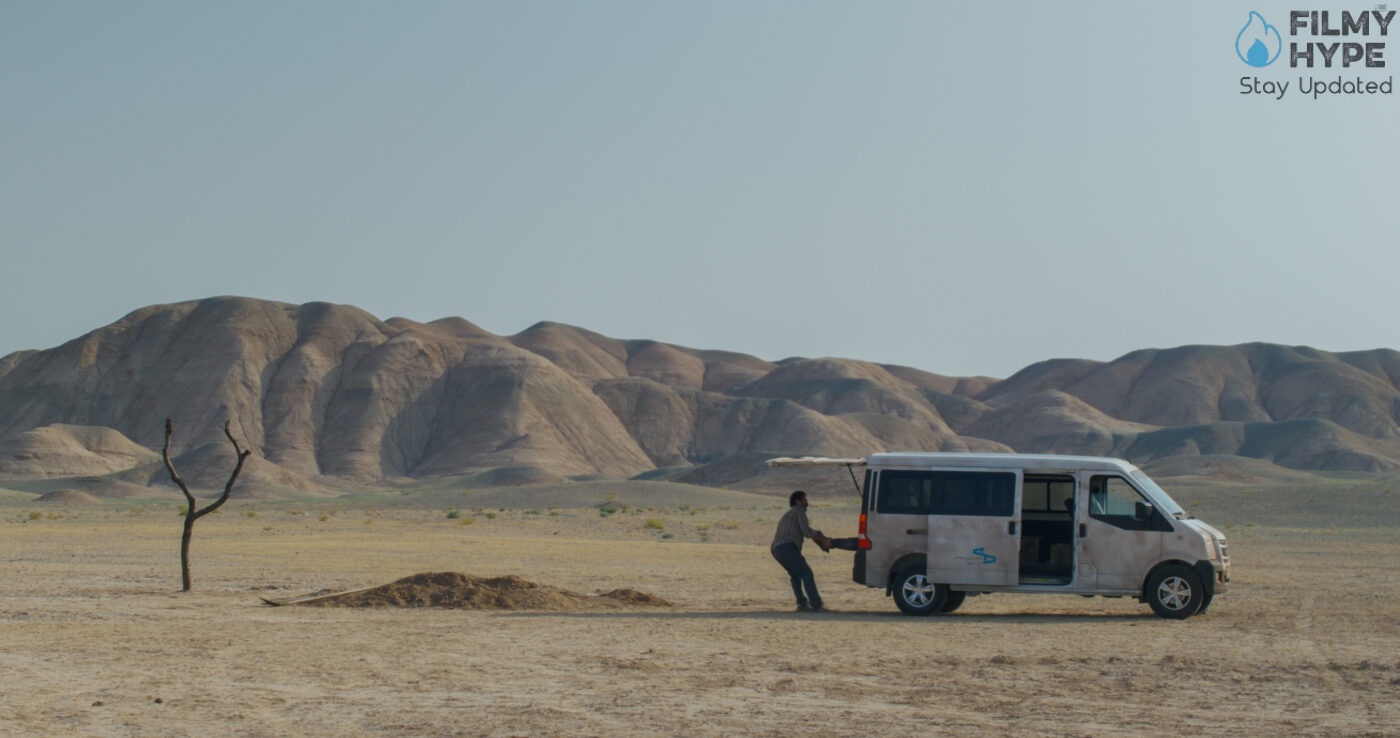
For us, as for the protagonists, the senses soon become deceptive. The contrast between moving images – i.e., cinema – and all the other senses, hearing, smell, and touch, therefore, becomes central, precisely to underline the difference between theory and practice. Forgiving is easy if it remains an abstract concept, but it becomes almost impossible in reality. Thanks to this group of troubled souls, Panahi talks about his country without giving discounts, asking the only possible question: regardless of who is to blame and what the truth is, can we remain human if we become executioners ourselves? Perhaps there is no certain and clear answer. But the director does it until the last second. Until the last shot. And it’s incredible how he himself always remains lucid, living in a state of perpetual anguish and difficulty. This is truly a great author.
It Was Just an Accident Movie Review: The Last Words
It Was Just an Accident is a classic film by Jafar Panahi, in which themes dear to him pervade, first and foremost, political and social denunciation against the repressive Iranian regime. Modest and intelligent in form, with rare moments veiled in comedy on the road, the film, however, fails in its execution. Panahi is quite cautious about exploring the drama experienced by his characters, and it almost seems to stay on the surface, without delving further. The ending suggests that there are still unresolved issues, as well as scars that are unlikely to heal. And this is also the mirror of a country that fights with all its strength to react against the continuous repression of the regime. With It Was Just an Accident, Jafar Panahi signs one of the most intense and politically aware works of the selection of Cannes 2025. A film that, starting from a minimal episode, yes, it widens to touch the deepest knots of contemporary Iran, without ever losing a sense of measure or urgency.
Stars: Vahid Mobasseri, Mariam Afshari, Ebrahim Azizi
Director: Jafar Panahi
Filmyhype.com Ratings: 4/5 (four stars)