
IT: Welcome to Derry Review: Visually Powerful and Acted with Intensity!
Returning to Derry means, once again, dealing with time: the chronological one of the sixties and the more convoluted one of childhood. IT: Welcome to Derry, it looks like an ambitious prequel that attempts to broaden the narrative and thematic horizon of Stephen King’s novel and the two films directed by Andy Muschietti. Not a simple episode that explains the origin of the Pennywise myth, but a declared attempt to give the viewer not only terror, but a social story that pushes the microcosm of Derry towards its allegorical value. The series, created by Jason Fuchs and Brad Caleb Kane it was conceived and staged by the team already linked to the films, with Andy and Barbara Muschietti and Bill Skarsgård appearing among the executive producers. In January 2025, in an interview with Radio TU, Andy Muschietti revealed details on source material and long-term plans for the new product: the director stated that the series is based on interval chapters from the original novel, adding that three seasons are planned, set respectively in 1962, 1935, and 1908. Muschietti mentions how the first season is nothing more than a window that opens onto the story that will manifest itself in the second and third seasons, focusing on why Pennywise stays anchored in the city of Derry.
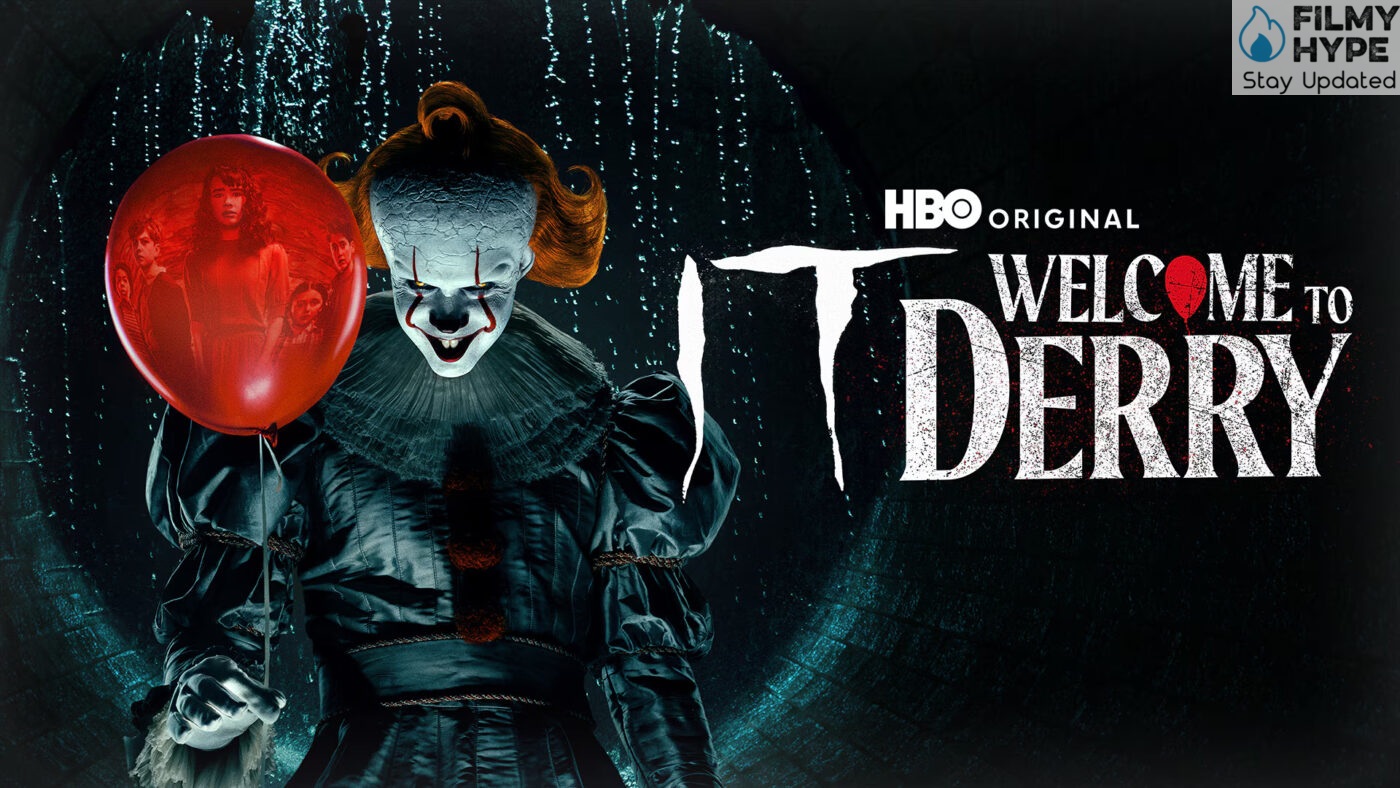
For the adaptation, however, Muschietti and co had decided not to set it at the end of the fifties as (part) of the book and to separate the battle between the Losers’ Club and Pennywise/more clearly than on the written page IT dedicating Chapter 1 to their adventures as kids and Chapter 2 to the final clash between the abominable being and the now adult Losers (even if in the meantime the cast of kids had made themselves appreciated so much that there was no shortage of flashbacks, however). As a reader of Stephen King, I loved the first film a lot and much less the second, net of some flashes such as the excellent and ferocious incipit with the brutal murder of Adrian Mellon, who, after being beaten almost fatally because he was homosexual, was then finished by Pennywise. A moment that said so much about America today, just as the similar literary passage had a lot to say about how human wickedness is like a virus that is transmitted from generation to generation. A virus that IT feeds heavily on. Here too, the film, like the book, tends to be unbalanced, more successful and incisive when it tells the fears of little losers, rather than those of adults.
IT: Welcome to Derry Review: The Story Plot
This TV production takes us into the year 1962, chronologically much closer to the original setting of the book as regards the story of the Losers as kids (between 1957 and 1958). Clearly, the theater of countless horror movies is always the town of Derry where an evil spreads that seems to infect many people. That evil that leads many people to take advantage of others or turn their gaze in another direction while someone is suffering abuse. Behind all this is, of course, IT, which, incarnating as the abominable clown Pennywise, once again played by Bill Skarsgård, attracts the victims, mostly children, necessary to calm his hunger. In the midst of all this, we discover that operations are taking place at the military base near Derry with a purpose that is not entirely clear. And we do this thanks to Leroy Hanlon (Jovan Adepo), who moves to the city with his wife, Charlotte (Taylour Paige), and their son to serve as a pilot on the base. And it is there that he will have the opportunity to meet a colleague with decidedly unconventional skills, Dick Hallorann (Chris Chalk), who, right from his name, will reveal a great deal to those who have a minimum familiarity with Stephen King’s books (or the films based on them).
All while little Lilly (Clara Stack) will find herself facing Pennywise together with her group of friends. The narrative heart of the series revolves around Leroy Hanlon (Jovan Adepo), a Major of the U.S. Air Force just moved with his family to the town of Derry. His wife Charlotte (Taylour Paige) and their son Will are ready to start a new life, but something, right from the start, seems out of place. The military base in which Leroy works is crossed by secrets, forbidden areas, and silent rituals. The same foundations on which the city rests appear to be built on contaminated soil, not just in the sense physical, but above all moral. At the same time, the series follows Lilly (Clara Stack), a girl just discharged from Juniper Hill Asylum, attempting to re-enter the life school newspaper.
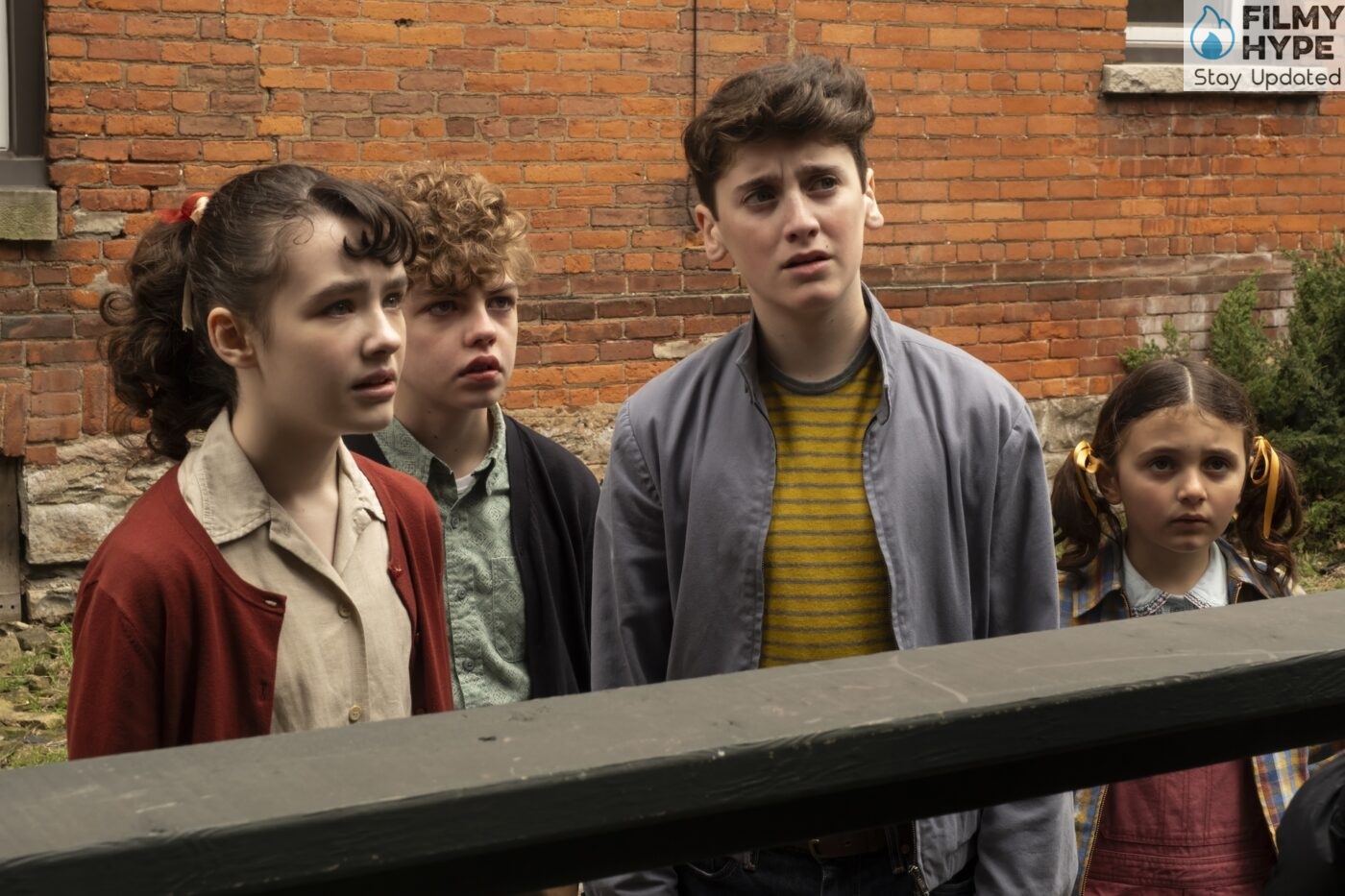
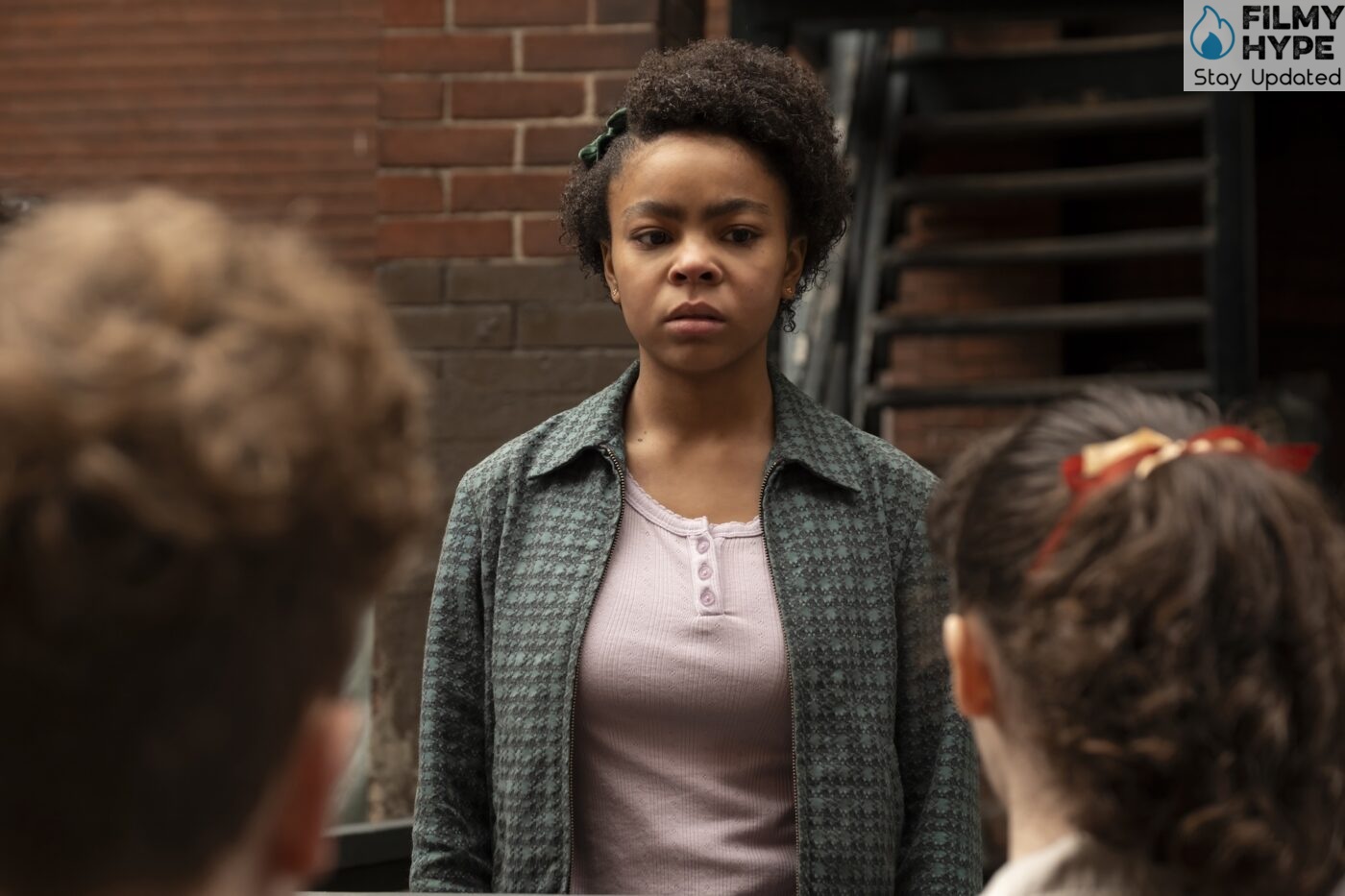
At his side, Ronnie (Amanda Christine), a young black student who fights against the prejudice of the community and against the unjust accusation levelled at the father, a city cinema projectionist, suspected of the disappearance of a child seen in the prologue. Together with a group of peers — Phil, Teddy, Pauly, and, later, Will and Rich — they embark on something of a sort of initiatory journey, in which fear becomes an instrument of discovery and resistance. Muskie and Fuchs build a choral plot in which every character embodies a different form of vulnerability. Evil is not alone Outspoken Bill Skarsgård), but anything that allows his presence to proliferate racism, silent pain, shame, and abuse. Horror thus becomes a language for telling society, and Derry transforms into a perfect symbol of a broken America between modernity and its historical faults.
IT: Welcome to Derry Review and Analysis
Apparently, the germ of IT: Welcome to Derry was born during the filming of the two films, from the chats Andy Muschietti had with Bill Skarsgård about how interesting it would have been to provide an answer to those questions that feature films didn’t solve, because, logically, already in the book, it wasn’t done at the base. A pandemic and five hundred international crises later, then became reality, clearly thanks to HBO (the clear reason is that the two feature films were produced by Warner Bros, which is part of the same media group to which HBO also belongs). I have to be honest and write, to be honest, that I had the opportunity to preview five episodes of eight in total and, of course, given things, what I’m about to say is conditioned by a partial vision. That said, IT: Welcome to Derry is promoted with flying colors. Although in the last twenty broken years, between cinema and TV, there has been an excess of stories that have expanded this or that universe with background, spin-offs or sequels that, often, left the time they found, the Muschietti series does all this and does it well, aiming to fill those gaps in Derry’s past only vaguely mentioned in the book’s interludes.
First of all, by laying the foundations of why a being that does not even belong to the same dimension as us and which seems to have considerable power, he finds himself confined to Derry. And he does so with a story which, telling the story of America in 1962, seen (also) through the eyes of various exponents of the black community, returns a less than encouraging and very allegorical painting on themes that are still very current, racism, the loneliness of childhood, and indifference towards those who find themselves in difficulty, first and foremost. But as in the pages of a work by Stephen King, a writer who has always included very profound social considerations in his novels and short stories, without these becoming boring lessons on how to behave or be in the world, IT: Welcome to Derry also thinks in the same way. He reflects on profound themes while making us sit, at the same time, on a frenetic roller coaster which, when it stops, does so only and exclusively to allow us to enter the House of Horror of Luna Park without having even a moment to take a break at the sandwich stand with sausage and onion.
The prologue of the first episode is enough to make you understand what I mean. The production level and acting quality of the cast are those that can be expected from an HBO series, which, moreover, acts as a prequel to two films conceived for the big screen. But the element that could have most worried that segment of Stephen King’s most expert and loving audience, namely being faced with a story that speciously expanded the IT universe, is completely absent. A bit like what happened with the Watchmen HBO by Damon Lindelof, which, net of how much Alan Moore disavowed all the works that Hollywood bases on its efforts, seemed truly conceived by the author of Northampton, this too IT: Welcome to Derry expands the story developed by King in a perfectly coherent manner and relevant. Bill Skarsgård briefly returns as Pennywise, but the series does his presence extremely sparingly. The horror is more atmospheric than visual: the appearances of the clown become rare and destabilizing events, capable of transforming everyday places –a cinema, a supermarket, even a bathtub – into nightmarish scenarios.
When Welcome to Derry embraces the grotesque, it works beautifully. Muschietti’s direction, always attentive to visual composition and light, offers moments of pure tension, between blood and paranoia. However, the horror tends to disperse in too dilated a pace: the narrative often turns on itself, putting off the main junctions too long and losing some of its evocative power. While moving on predictable tracks, in line with the consistency of the source material, Welcome to Derry finds a hint of true originality in its first episode. Just when it seems like we are witnessing a familiar start – almost a remake of the path of the first film – the series abruptly breaks away with a shocking, violent, and totally unexpected final twist. It is a moment that recalibrates expectations, showing that Muschietti and Fuchs do not only intend to replicate the universe of It, but also to subvert it in the cruelest ways. It is the point at which Welcome to Derry shows its potential, reminding us that, beneath the surface of the already seen, the unpredictable can still lurk.
One of the strengths of the series is the willingness to tie supernatural horror to human horror. The America of Welcome to Derry is a country that cradles in modernity but is haunted by unresolved wounds: institutional racism, the marginalization of natives, and domestic violence. These themes, although not always developed with depth, add to the story and bring King’s work back to its most authentic meaning: evil as a reflection of society. At times, the series brushes with the emotional intensity of The Outsider or Castle Rock, but fails to maintain the same consistency. The writing alternates incisive dialogues with more didactic passages, and despite the care in reconstructing the climate of the ’60s, a true psychological progression of the adult characters is often missing.
The real limit of IT: Welcome to Derry is its predictability, although this derives from a choice consistent with the original material. Despite declaring itself a prequel, it often ends up following already known patterns: children investigating, adults not listening, voices from manholes, and visions in bathrooms. Even references to King’s universe –from The Shining to Shawshank – come across as more decorative than substantial, meant for fan service more than to build new meaning. Nonetheless, the series retains a certain nostalgic charm. Suspended atmospheres, retro detail, and almost amber photography make Derry a magnetic place, where horror emerges as a collective removal. It is a city that forgets to survive, and its condemnation lies precisely in this amnesia. The young cast is the beating heart of the series. Clara Stack shines as Lilly, bringing authentic vulnerability and a grief-stricken gaze.
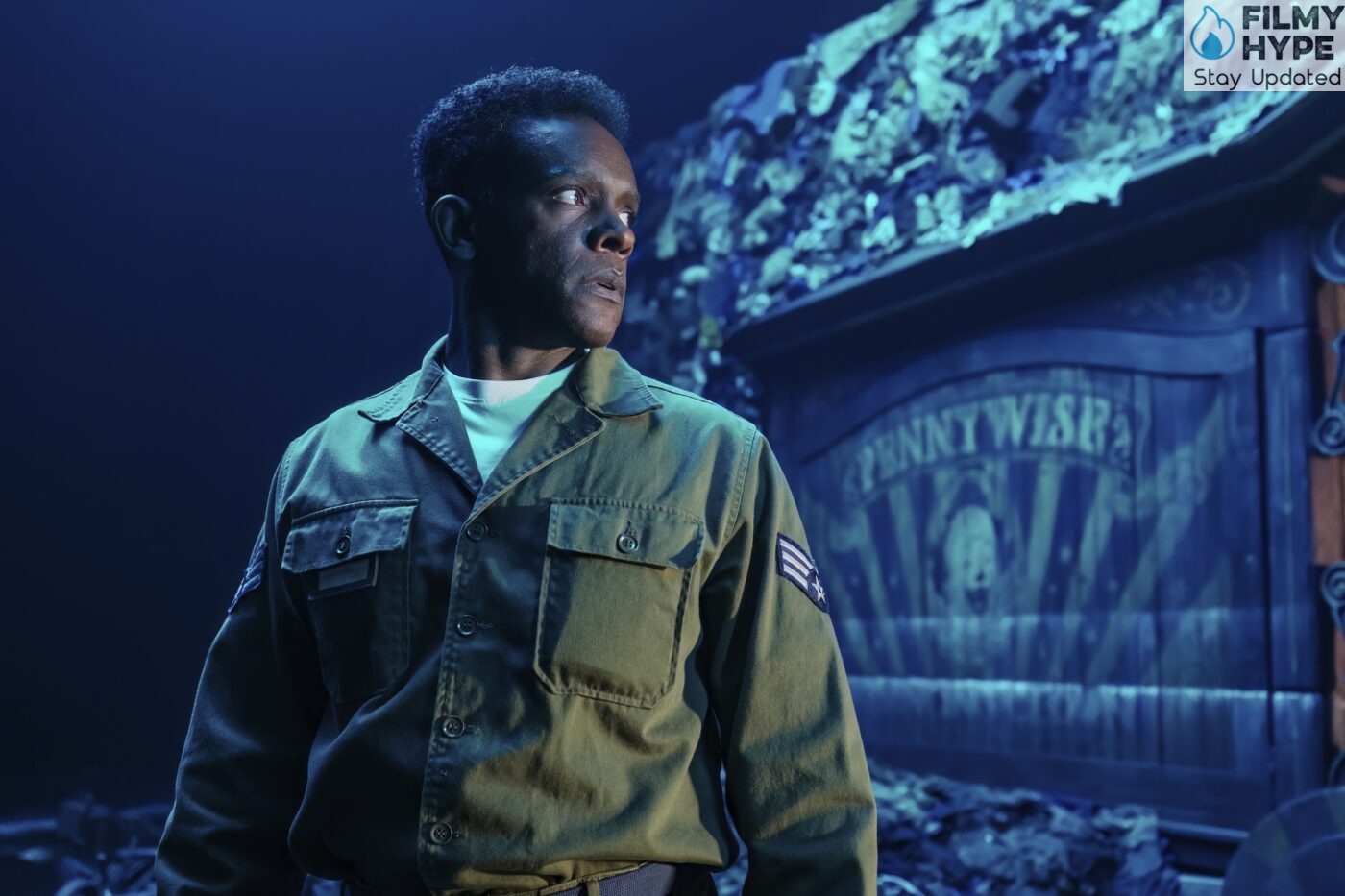
Amanda Christine and Mikkal Karim Fidler also offer intense performances, making the group of kids fighting against the impossible believable. Among the adults, Chris Chalk stands out, giving his Dick Hallorann an almost Shakespearean gravity and melancholy. Jovan Adepo and Taylour Paige are instead penalized by discontinuous writing, which alternates strong moments with long transition passages. Andy Muschietti, behind the camera of the first episodes, confirms his ability to blend fear and visual spectacle, but the subsequent direction progressively loses bite. IT: Welcome to Derry is an ambitious and curated series that expands the myth of Pennywise with historical and visual sensitivity. However, its tendency to dilute terror and repeat motifs already explored makes it more of an echo than a rebirth. The intention to blend social criticism and psychological horror is laudable, but remains unresolved, leaving the viewer torn between the allure of the atmosphere and the frustration of a tale that never really sinks its teeth. It is a journey into the dark heart of America and the collective memory of evil, but also a reminder of how difficult it is to reinvent horror when its face is already too familiar to us.
Visually, IT: Welcome to Derry is a little jewel of coherent aesthetics. The photography recalls the milky and restless light of the film by Muschietti, while the direction allows itself more extended times, favoring waiting for jump scares. Terror doesn’t explode, but yes, he insinuates in the damp corridors, in the whispers of the tubes, in the looks adults suspended pretending not to see. Unlike movies, here, horror is also political. The series the tropes of “Magical Negro” just to flip it, showing how black characters are no longer narrative tools at the service of the fate of white people, but conscious protagonists of a corrupt system. Derry thus becomes a micro-America, a symbolic city which reflects its contradictions: segregation, the fear of difference, systemic violence, and the desperate need to hide what is uncomfortable. The relationship between adults and children remains the thematic center of the story, like in King’s novel: Derry adults live in self-deception, unable to accept the existence of evil, while children — with their sensitivity and courage — become the only ones able to perceive it and fight. It’s dynamic that the series explores delicately, alternating moments of tenderness and pure terror.
Lilly, in particular, represents the emotional heart of narrative: Fragile but determined, it is the most authentic echo of that “lost innocence” that runs through the entire mythology of IT. There is no shortage of references to the mythical origins of Pennywise, which here take on a more mystical and ancestral tone. The roots of evil seem to intertwine with the violation of sacred lands and with forgotten ancient rituals: one quasi-spiritual reading of horror, expanding on the mythology of Derry, and gives the series a larger and more complex dimension compared to films, bringing the true nature of this back to the screen as bad as King had thought and written it in his novel masterpiece. Arrived at the end of the eight episodes, IT: Welcome to Derry, it’s a profound reflection on the very concept of fear — personal, collective, historical. If in Muschietti’s films fear was an enemy facing, here it becomes a legacy: something that is passed down, that shapes generations, and that only awareness can defuse.

The rhythm is not always uniform: some central episodes allow themselves perhaps deviations too slow, but overall the series maintains a constant tension, balancing the human drama and the supernatural. The cast is extraordinary in their chirality: Adepo and Paige give as gifts intense and credible interpretations, while Clara Stack imposes herself as an authentic revelation, capable of restoring all the vulnerability and strength of her young protagonist. Muschietti’s direction, flanked by that of emerging directors for the other episodes, it maintains a coherent and powerful vision, attentive to visual detail as to the psychology of the characters. The soundtrack, made of silences and dissonances, accompanies the journey perfectly in the dark, amplifying every thrill and forcefully invading the scene in the many scary and tremendously funny sequences.
IT: Welcome to Derry, it does not merely explain the origin of Pennywise, but explores that part of us that allowed it to exist. It is a story that talks about fear and guilt, innocence and rejection, of society and memory. Not everything works perfectly — some excess didacticism and a sometimes fragmented editing — but the series still manages to capture the essence of the world kinghead: that unstable balance between horror and humanity, between supernatural and everyday reality. Besides being surprisingly fun, with its thematic density and ability to blend tension, social criticism, and feeling, Welcome to Derry imposes itself as one of the most ambitious TV shows of the year, and like a dowel indispensable for understanding not only the myth of Pennywise, but even the shadows that continue to hide within us.
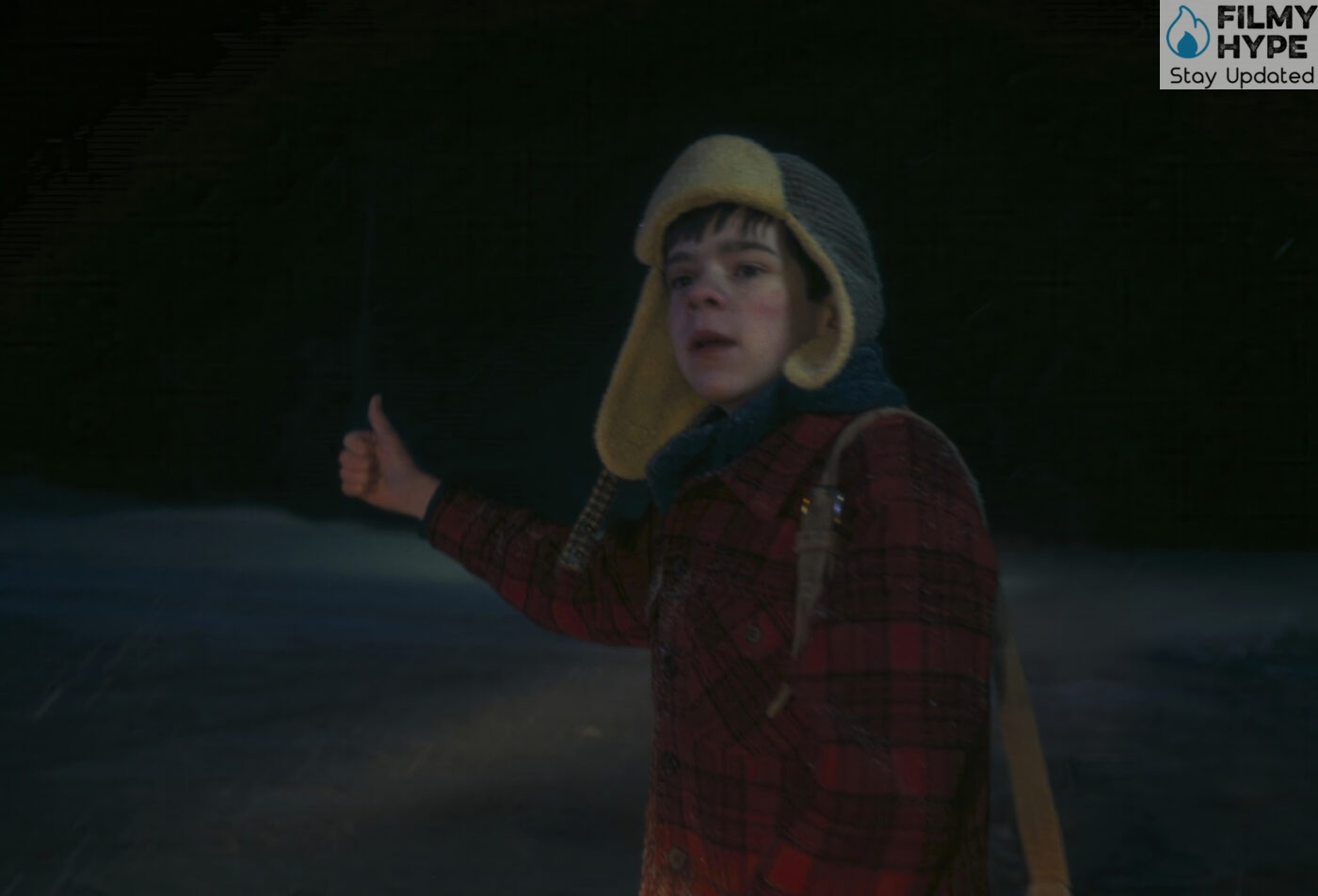
The cast is undoubtedly one of the greatest strengths, with Taylour Paige and Jovan Adepo as the Hanlons, who bring rare emotional concreteness, not only as “victims” of the plot, but as people who react, love, and make mistakes. Bill Skarsgård returns as Pennywise, and his presence is calibrated, just like in the movies: the figure of the clown is not omnipresent, but dazzling when he intervenes, to underline his role as a catalyst for evil. To this courage, however, this is accompanied by non-negligible weaknesses. The series, in some places, seems to thicken too many subplots, with the risk of fragmenting the tone and detaching itself excessively from the central narrative. In fact, some moments struggle to maintain tension and prefer the expansion of King’s world, thus showing some shifts in pace and a narrative architecture that sometimes bends to the temptation of fan service and over-explanation, losing the force of the riddle
IT: Welcome to Derry Review: The Last Words
IT: Welcome to Derry is an ambitious but honest project, and who knows how to get is perfect for a cinephile who loves the dialogue between literary text and audiovisual production, and for those who appreciate horror that looks at its historical and social context. Less suitable for those looking for an experience of pure continuous and concentrated terror: the series prefers to broaden, show off, and reason. A must-see for curious fans of the film series and novel, and for those who love series that discuss and divide their audience. Welcome to Derry is a series that does not hold back on the horror level, but at the same time works well in writing to deepen, expand, and pay homage to the work of Stephen King. The 60s setting recovers that part of the original novel, left behind by the latest film adaptation, with attention to detail and a visual reconstruction that demonstrates all the production value put in place by HBO. An excellent series, not only for King and Pennywise fans.
Cast: Jovan Adepo, Taylour Paige, Chris Chalk, Clara Stack, Amanda Christine, Mikkal Karim Fidler, James Remar, Rudy Mancuso, Bill Skarsgård, Madeleine Stowe
Directed: Andy Muschietti, Brad Caleb Kane, Shelley Meals
Streaming Platform: HBO
Filmyhype.com Ratings: 4/5 (four stars)







4 Comments