One Battle After Another Movie Review: Cinema That Vibrates, That Explodes, That Grants No Respite
One Battle After Another Review: “One Battle After Another” is written, directed, and produced by Paul Thomas Anderson, starring Leonardo DiCaprio, Sean Penn, and Benicio Del Toro, alongside Regina Hall, Teyana Taylor, and Chase Infiniti. The screenplay is original by Anderson, while the production is entrusted to Adam Somner, Sara Murphy, and Anderson himself, with Will Weiske in the role of executive producer. Behind the camera, the creative team brings together Anderson’s historical collaborators: Michael Bauman on photography, Florencia Martin on production design (Oscar nominee® and BAFTA winner), Andy Jurgensen on editing (BAFTA nominee), Colleen Atwood on costume design (Oscar Award® and BAFTA), and Cassandra Kulukundis on casting. The music is signed by Jonny Greenwood, nominated for an Oscar® and a BAFTA. It is difficult to say which master Paul Thomas Anderson looks up to most admiringly and takes inspiration from, eventually pulling off a film that is an exaltation of his mastery: whether Thomas Pynchon, the Coen brothers of No Country for Old Men, Alfred Hitchcock, or, at heart, himself.

From Pynchon, cult author highly celebrated by critics and considered one of the great American masters, Anderson takes the source material. It is not the first time that he has done so. Still, compared to Vice of Form, the challenge is even more demanding: Vineland (1990) is unanimously considered an unfilmable novel, due to the writing style, the complexity of the plot, and the polyphony of voices it collects. Anderson, who is engaged here as an author, director, producer, and cinematographer, while a great admirer of the author, obviates the problem with a mastery that makes the writing operation he does seem easy. Or take the essence of that novel, that something Pynchon understood about U.S. identity as it was changing in the ’80s, but only in the sense that is directly related to our present. From there, he brings out his story, Andersonian to the core and, for the first time in mainstream American cinema, truly capable of telling the United States about Donald Trump’s second term (and, by extension, a good part of the West). With a start, with the accelerator already pressed all the way down, very horny, violent, scurrilous, with two foreheads measuring each other.
One Battle After Another Review: The Story Plot
The close-knit, highly sought-after duo of Bob Ferguson (Leonardo DiCaprio) and Perfidia Beverly (Teyana Taylor) head the French 75, a group of anti-government revolutionaries operating along the Mexico-US border with the ultimate aim of liberating and protecting immigrants. Between robberies aimed at self-financing, bombs positioned in retaliation (without civilian deaths and injuries) and the facilitation of immigration, the French 75 are rightfully one of the primary objectives of the armed forces; in particular they ended up in the sights of the ruthless nationalist colonel Steven J. Lockjaw intent on climbing the ranks of the military ranks and also making a career in the political sphere. Despite his cynical appearance and mental rigidity, Lockjaw still ends up falling in love with the beautiful Perfidia Beverly, contradicting his own nature, which, after quite some time, will trigger quite a bit of trouble. Years after those events, despite the situation having radically changed, the government appears unwilling to forget its old enemies. So Bob, who became a father and aged in paranoia, is forced once again to escape, as well as save his daughter’s life. The problem is getting back in touch with the French 75 network, remembering those schemes, but mostly coded passwords…
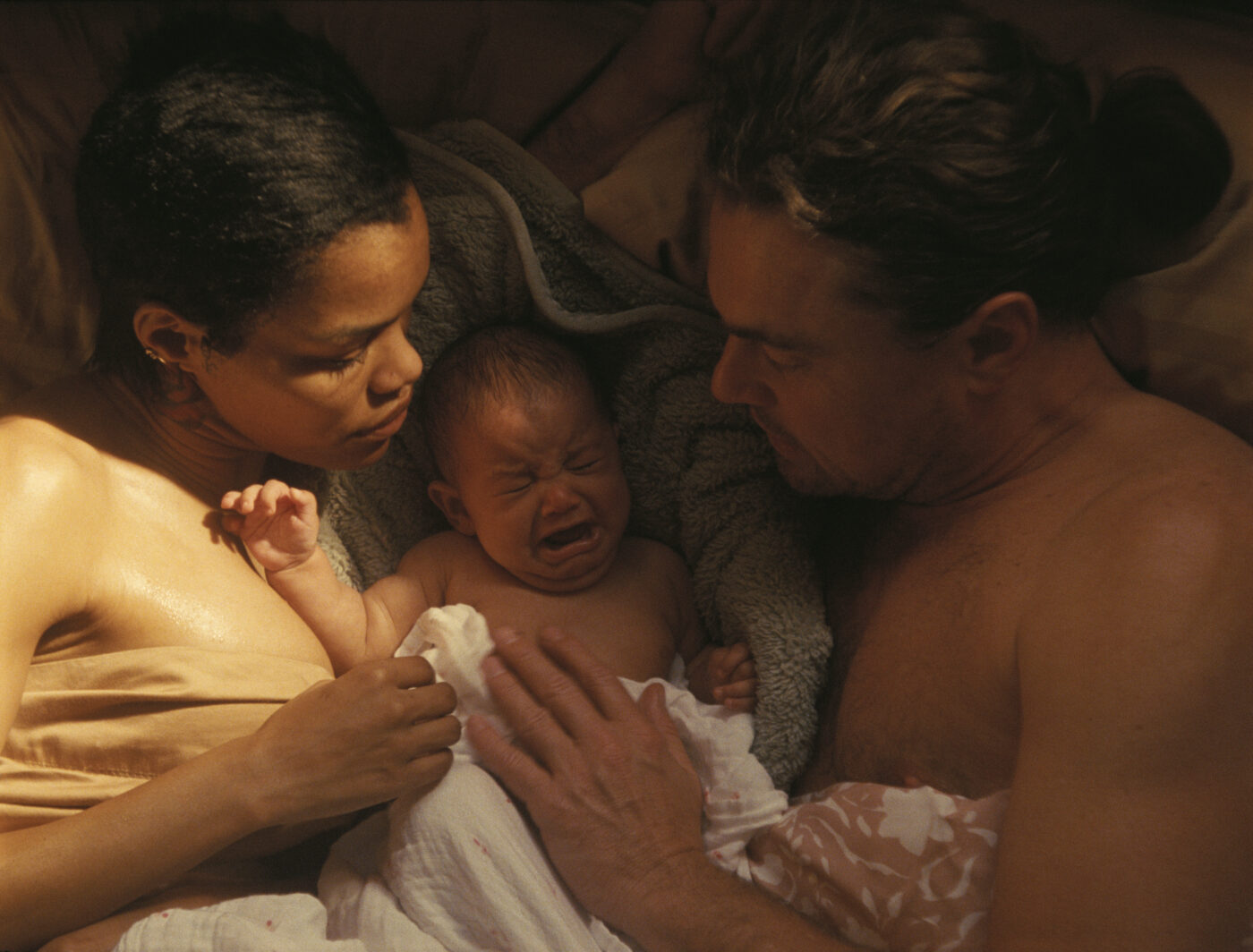
The film opens with the first subversive demonstrations of the French 75, a collective of anarchists on a mission to liberate detention camps in which migrants and refugees are locked up, as in modern concentration camps. Among the group stand out Perfidia (Teyana Taylor), a woman with magnetic and authoritarian leadership, and Bob (Leonardo DiCaprio), a disoriented and at the same time euphoric companion, a restless soul who stumbles continuously, from the first scene. The counterpart reports to Colonel Steven “Lockjaw” (Sean Penn), a figure who embodies the discriminatory and racist culture to be fought, but who, despite this, under the macho mask, develops an obsessive attraction towards Perfidia, triggering a spiral of tension and ambiguity. The girl becomes a mother but, torn and angry, ends up abandoning her infant daughter, leaving Bob alone to raise her and forcing him to run away. Sixteen years later, Lockjaw re-emerges with renewed ferocity, searching for fugitives and above all for answers. The battle –internal and collective – has never stopped, and when the old wounds bleed again, the French 75 find themselves choosing whether to stay in the shadows or return to the front lines.
One Battle After Another Review and Analysis
One Battle After Another is, as the title suggests, a very long (over one hundred and forty minutes), exciting, pressing sequence of actions and reactions of a father and daughter who are suddenly catapulted into his political past and try to reunite. The characters they embody the two fronts into which the United States is split: the one obsessed with Caucasian purity, sexual orientation, a vision of the nation made up of men plotting in secret rooms and mothers making pancakes upstairs, the other the paranoid one with tunnels to escape under the bed, books revolutions to be sent from memory to exchange coded signals, paranoia for technological tracking and institutional paternalism. They are two monoliths that define themselves as much in their identity as in the opposition of the other, but Anderson does not forget to put stumbles, inconsistencies, and unexpected events on both sides of the ideological barricade. Thus the cell phone addiction of younger people or the fussiness of a revolutionary who is a little’ too obsessed with slogans can make a difference in one or the other sense, as well as Penn’s macho military, duck walking and horrendous crew cut, who has an irrepressible (and reciprocated) fixation on the African-American revolutionary who in theory embodies everything she wants to destroy but in practice “puts it to attention” even at the genital level, with her presence alone.
The ruthless way in which one side hunts the other can only remind us it’s not a country for old people, that is, one of the last mainstream US films to tell a certain evolution of US identity. In a cinematic moment in which many authors talk about the recent or remote past due to the difficulty of saying something about this present that is anguished but never easy to explain, Anderson manages to do everything Ari Aster couldn’t achieve with his Eddingto, to cite the most recent failure in this regard. He does it through his characters, of course, but also by weaving around them an endless series of references to the strict present that work incredibly well with the story it tells. Details such as the children in the ICE center playing ball inside the plays, the three errand boys whose dark silhouettes spin away between the rooftops of the city as protests rage, are diverted to violence artfully by police infiltrators. It is no coincidence that the film opens with Bob’s nervous and anguished walking that fades into Willa’s, both on a viaduct from which a small tent city of migrants can be seen.
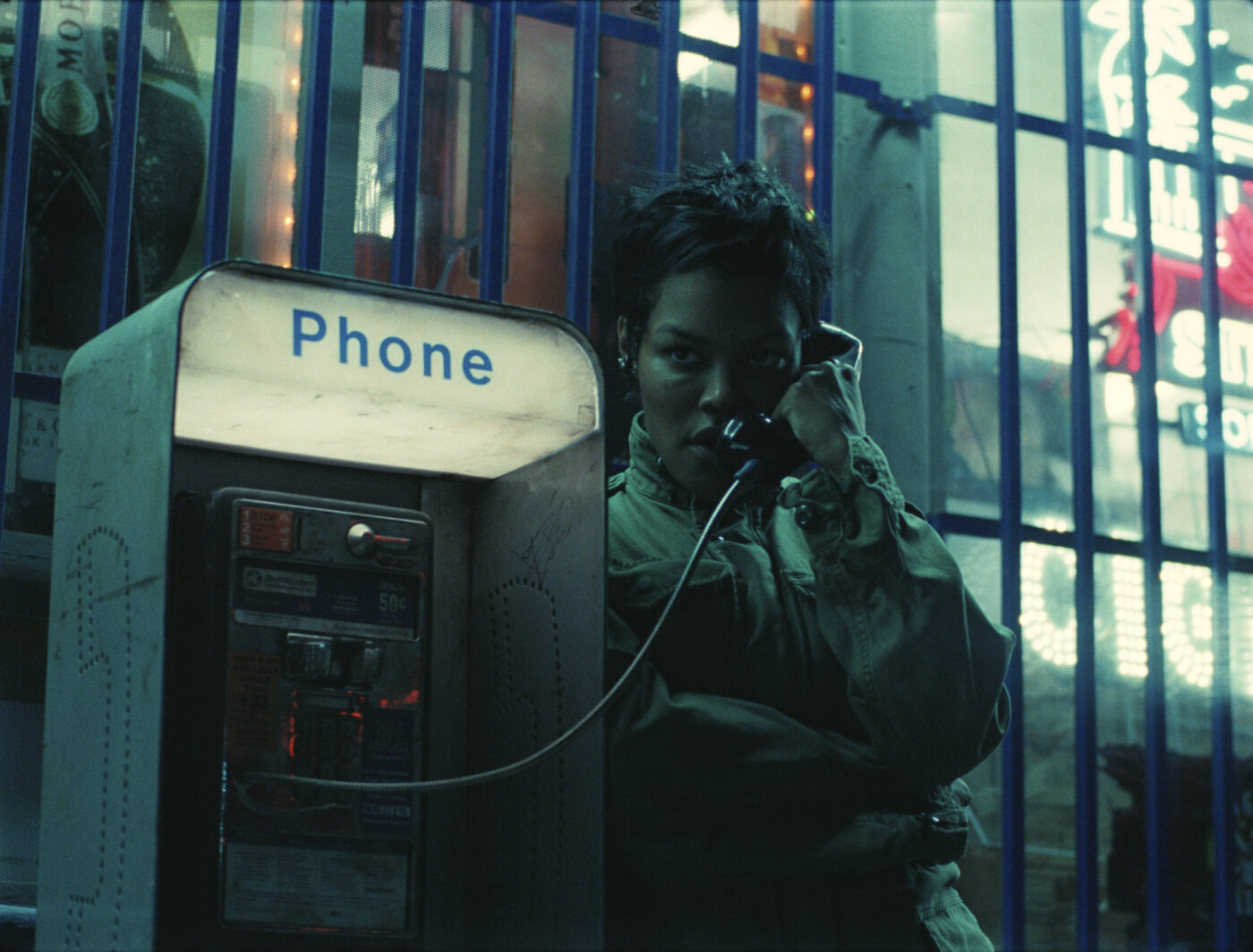
One Battle After Another is an America that can no longer hold multiple souls together and longs to be a monolith. Thus, it can no longer be both the embodiment of that Caucasian, religious, and conservative image that it would like to project and, at the same time, the melting pot of cultures that keep it alive and set it in motion. The contrast is such that it ends up becoming a thriller, an endless chase on the margins of which the “resolved” characters remain as sensei Sergio: the excellent Benicio Del Toro embodies the director of a gym that facilitates the entry of migrants into the United States, on a supportive, non-economic basis. A man morally upright but not without irony, calm, faithful, quietly sure of what needs to be done on a human and social level. It is the embodiment of a third America, supportive, different, which remains in the background of the contrast of the two militarized and opposing visions.
Inside this endless film that portrays a nation at war with itself to really define what it is and who represents it, there is also a family story: that of a father who failed as a parent because he let himself go, but despite the dangers and his brain melted by drugs, he continues to look for his daughter. Willa is so strong-willed, so similar to her mother, that she left him because she was scared of pigeonholing yourself into a bourgeois life, full of routines and certainties that deep down Bob would like and she wouldn’t. Yet Willa, who gradually becomes the protagonist of the story, is similar only to herself, despite having to live with the legacy of her parents and their mistakes: she is the voice of her generation in comparison with the father figures who are placed before her, she is the embodiment of a hope for change and solution where previous generations have failed. Thus, One Battle After Another becomes a little counterpoint to The Oilman, another Andersonian film based on a family relationship that defines the United States, starting from the most domestic nucleus that forms them.
There, however, the father-son relationship was the very root of the tension of the film, while here, despite Bob being anything but an ideal father, he becomes decisive precisely thanks to the bond with his daughter, to the family he built on the run and under a false identity. The very long ending in the middle of the desert is also very Andersonian, among the ups and downs of a sunny and isolated road where Bob and Willa continue to touch and miss each other, to chase each other, confirming the director’s bizarre obsession with the scenes behind the wheel sui generis, of which he also gave us a small taste in Liquorice Pizza. Surprisingly, it’s the scale, the epic magnitude of this film, ambitious as perhaps Anderson had not been since The Master. An ambition that Anderson highlights and pursues, for example, also in the emphatic and open-stage use of the orchestral themes composed by his long-time collaborator Jonny Greenwood. A magnitude that is reflected in the format chosen for the film – shot entirely in VistaVision 70 millimeter film – and in how the story is not afraid to linger, expand, and relaunch in terms of spaces, presences, and spectacularity.
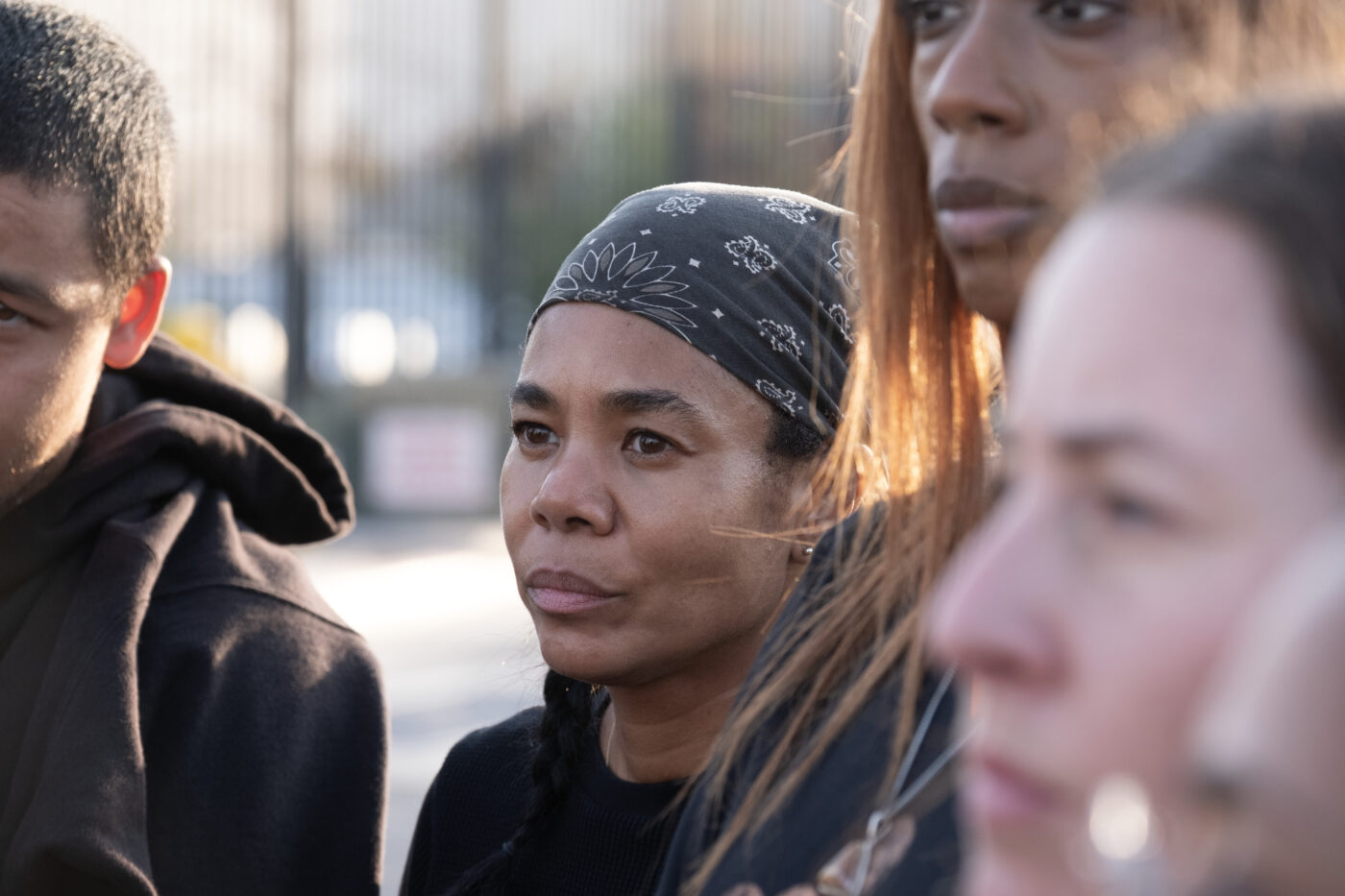
One Battle After Another chronicles America and the world through intimate and gigantic revolutions, personal and political, often doomed to fail but always necessary. Anderson unmasks imperialism, colonialism, and a toxic masculinity that ends up poisoning her first and foremost. Colonel Lockjaw, played by Sean Penn, is the symbol of a virility that pretends to be invincible but turns out to be fragile and grotesque: a “tough guy” who plays the part only to cover the inner void. In the beginning, there is the relationship between Bob and Perfidia: he is chaotic, nervous, unable to stop; she is determined, confident, authoritarian, a concentration of anger and determination that inspires fear and reverence. Bob is disoriented but euphoric, Perfidia is a guide who gets lost, and their relationship, like that between parents and daughter, between leaders and followers, between lovers and revolutionaries, is always wrong, always out of place. Anderson paints everyone as lovers who can’t love each other, parents who can’t educate, revolutionaries who know nothing but battle.
Sensei arrives as a counterpoint, the imperturbable calm of Benicio Del Toro, which reflects the patience and clarity that Bob does not possess, creating a precarious but necessary balance, as his nemesis, as his salvation. Around them, an America in disarray: Nazis and segregated, refugees and partisans, oppressors and revolutionaries. Anderson mixes impossible loves and ideological rebellions, showing how the private and the political intertwine to the point of confusion. The film moves like Bob, in continuous imbalance, chaotic and impulsive, as anarchic as the protagonists it tells. Yet chaos becomes form, a logic of anarchy that strikes a miraculous balance. It is a revolution that becomes a story, a story that becomes a metaphor for all the wars – intimate and collective – that America and the world fight and will continue to fight. Paul Thomas Anderson confirms, if ever needed, to be one of the greatest living directors. With One Battle After Another, he signs yet another work that defies everything: narrative conventions, the rules of political correctness, and the certainties of a society that one would like to be impenetrable. It is a film that entertains, shakes, reflects, and fights.
The direction is a roller coaster of visual inventions, nervous and sublime, supported by a photograph that he himself takes care of with a feverish eye and by a soundtrack (curated by his trusted collaborator Jonny Greenwood) which amplifies every jolt. Leonardo DiCaprio gives another test of great intensity: his Bob is a bundle of nerves, a man always out of place, capable of dragging the viewer into a vortex of energy and desperation. Benicio Del Toro, of magnetic quietness, sinks into Sensei’s shoes as if he were born to do so. Teyana Taylor and Chase Infiniti prove to be solid and surprising presences. But the already legendary performance, which we will certainly not forget, is that of Sean Penn, highly excessive and over the top to be made iconic; the perfect villain for a film that makes exaggeration a virtue. Everything from the millimeter editing to the pulsating soundtrack contributes to a crescendo that culminates in a final chase – a continuous ups and downs, a roller coaster vertigo – that encapsulates the very essence of the film: pure adrenaline, revolution in the cinematic state. Anderson doesn’t look anyone in the face; he’s not afraid to saturate every shot with themes and reflections, yet nothing appears out of place, ever. It really is One Battle After Another, and it is another, extraordinary, undeniable masterpiece.
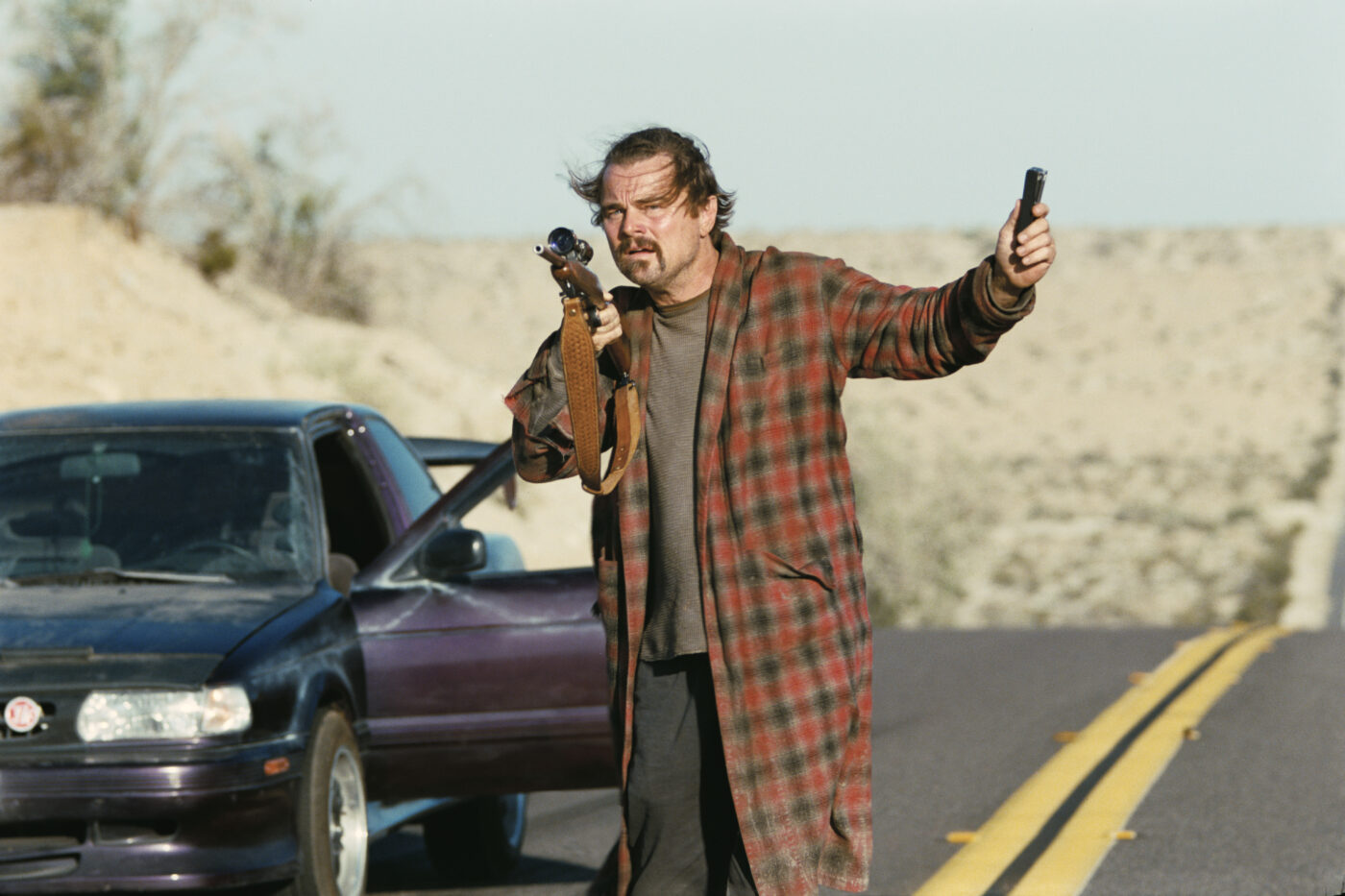
The choice of a particularly narrow format in its proportions, with frequent close-ups on the faces of the protagonists, suggests a very specific directorial choice: projecting a frame with an image that “is short of breath”, giving us almost a claustrophobic feeling with the eye claiming spatiality and greater openness. The point is perhaps to pass on to us the lives of the protagonists, forced to live secretly, in paranoia, with the fear that there may always be some pitfall around the corner, something that leads them to discover by putting an end to their freedoms. PTA shows off all its directorial skills, and the quality of the product from a technical point of view reaches its peak right at the end with that skilful use of the telephoto lens to emphasize the verticality of the landscapes, to crush the planes in a dizzying way with an increasing tension.
From these few lines, it could be deduced that the film is a success from several points of view. And yet the PTA film is wonderfully flawed just like its characters. It is certainly not a story suitable for everyone, especially in terms of content, rhythms, and the strange evolution of a plot that seems to definitively collapse halfway through the shot. The long running time (almost three hours of film), the relatively little downtime, the search for irreverent, bizarre, and grotesque comedy with the underlying irony could make someone turn their nose up, especially the lovers of the more classic PTA. A film with situations and characters full of contrasts and contradictions, with single frames capable of enclosing in the same image a young girl practicing with a machine gun and nuns in the background. Given what has been said, One Battle After Another for us, it is certainly a successful, although imperfect film that makes the characters and the evolution of the story its strong point, also taking inspiration from other well-known directors whose influences seem to be evident. It must be seen at the cinema.
Paul Thomas Anderson is one of the few contemporary directors capable of mixing such different registers without losing coherence. In One Battle After Another, he blends the purest action with moments of corrosive satire, slapstick flashes, and sudden emotional accelerations. The film alternates between breathtaking car chases (the final one on the rolling hills, already cult, is unforgettable), dialogue as sharp as blades, and scenes that seem to come out of a psychedelic cartoon. Yet nothing is out of place. Even in its most surreal moments, the narrative stands firm, underpinned by a fast-paced, pulsating montage reminiscent of Magnolia’s, but with an even more nervous, more visceral energy. Jonny Greenwood’s soundtrack doesn’t accompany the images: it guides them. It is an emotional score that becomes a story, made up of dissonant, obsessive, broken sounds, which increase tension to the point of making it unsustainable.
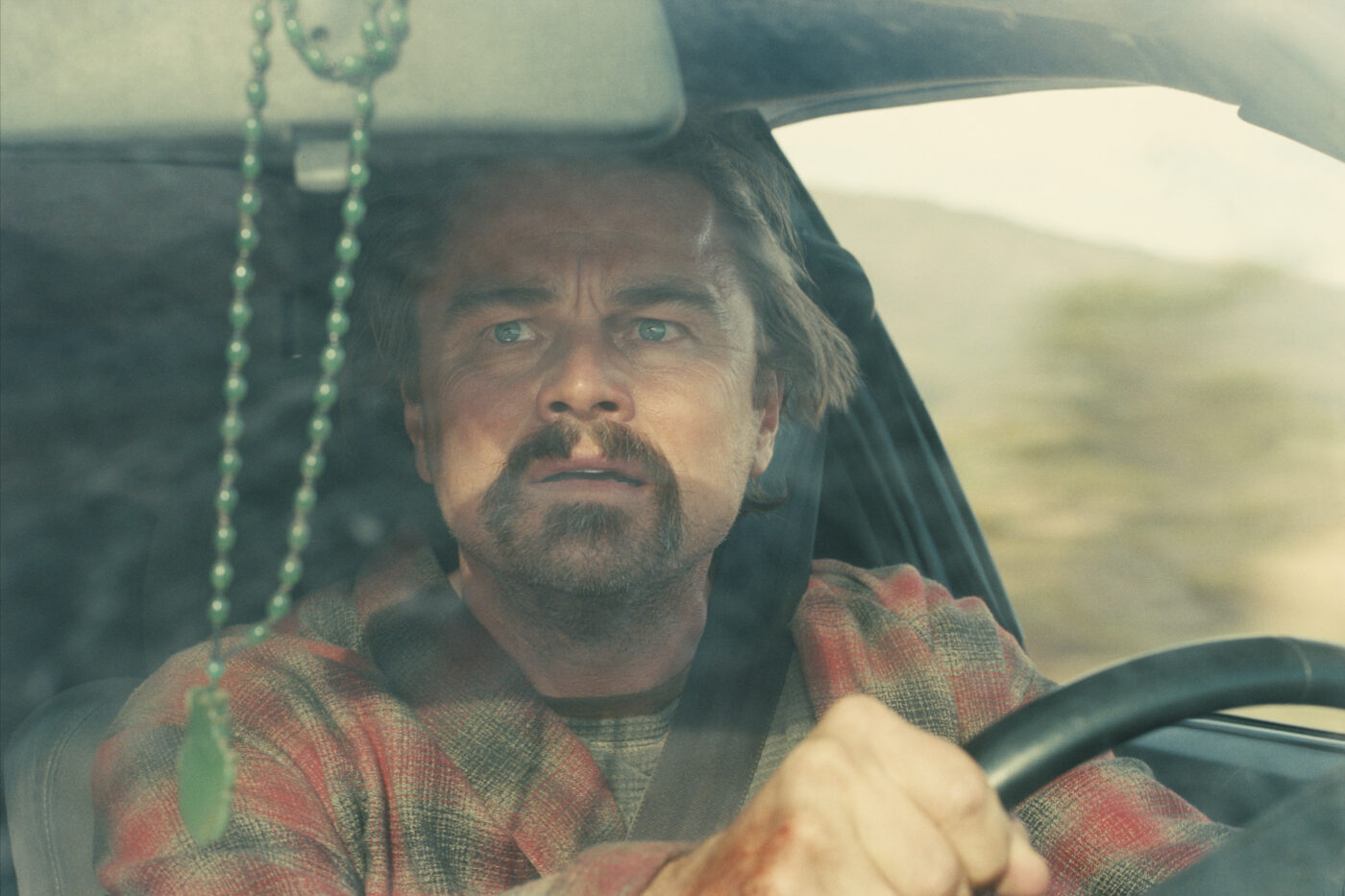
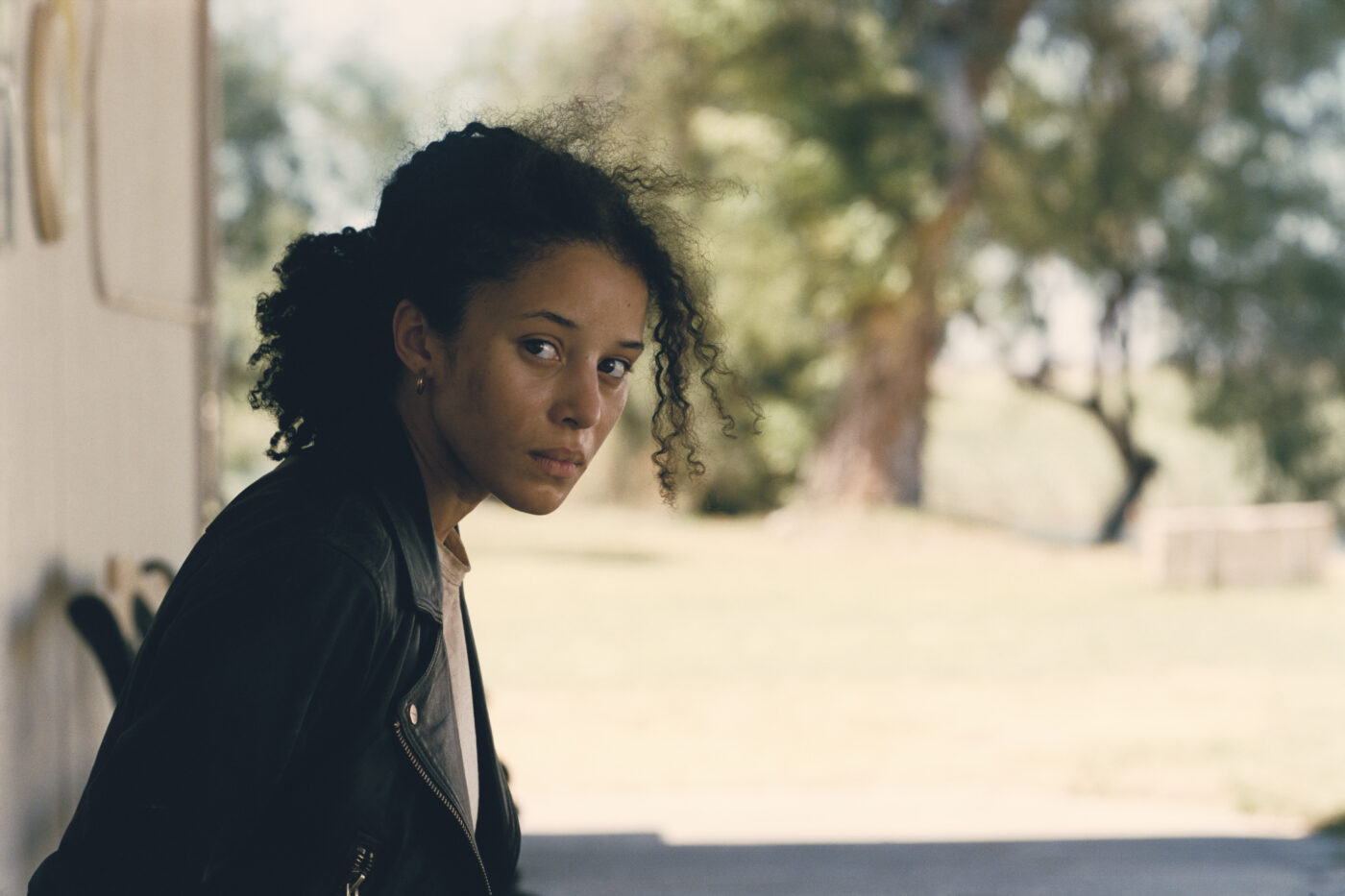
Greenwood builds an unstable sound fabric, always in disequilibrium, which perfectly reflects the instability of the protagonists. There is no refuge in this film: each scene is an attack on the nervous system of the viewer, a sensory and moral bombardment. But behind the chaos, there is a disarming sincerity. Anderson doesn’t just shock or make you think: he wants to excite, to show that even in the most ferocious disorder, a gesture of tenderness, a fragment of truth, can be hidden. The title – One Battle After Another – is more apt than ever. Each character fights a private war, and none are simple or linear. Bob is struggling with his inability to change, with a worn-out masculinity, full of excuses and failures. Perfidia fights against a world that has taught her not to trust anyone, not even those she loves. Willa, the youngest, finds herself forced to become an adult too early, seeking meaning within a legacy she did not choose.
No victory is final, no defeat is total: the revolution is not a heroic moment, but a long daily resistance, made up of compromises, silent efforts, obstinate love. Anderson is not looking for a decisive ending. It offers no redemption, nor does it yield to cynicism. His gaze is human, deeply empathetic. It tells us that the revolution, perhaps, is not in barricades or proclamations, but in the ability to stay true to who we are, even when the world asks us to harden. Protecting those you love, not giving in to apathy, continuing to seek a common language even when communication seems impossible: perhaps it is little. Maybe that’s all we have left. But it is also the only act of real resistance that is still worth fighting. One Battle After Another.
One Battle After Another Review: The Last Words
One Battle After Another is a glowing play, combining political satire, fast-paced action, and family drama. Paul Thomas Anderson looks contemporary America in the face and gives a grotesque, but profoundly human portrait of it. DiCaprio surprises in one of his most ironic and vulnerable tests, while Teyana Taylor and Sean Penn give substance to the two extremes of a conflict that is impossible to resolve. The heart of the film, however, lies elsewhere: in the bond between a father and daughter who resist, One Battle After Another. Paul Thomas Anderson orchestrates a visual and narrative revolution that weaves politics, love, and chaos into one, overwhelming movement. Every scene is necessary, every character a fragment of an America that looks in the mirror and does not recognize itself. A film that remains with you, that shakes and enchants at the same time, impossible to forget in terms of power, vision, and courage.
Cast: Leonardo DiCaprio, Chase Infiniti, Teyana Taylor, Sean Penn, Jesse Plemons, Regina King, Luis Guzman
Directed: Paul Thomas Anderson
Filmyhype.com Ratings: 4.5/5 (four and a half stars)