

Father Mother Sister Brother Movie Review (Venice 82): With Father Mother Sister Brother Movie, we are faced with a work that eschews major twists and instead chooses the path of subtraction. Built as a triptych of three autonomous episodes but connected in some details, the film explores the relationships between now adult children and parents (distant and otherwise), alternating lightness and melancholy. Each chapter is placed in a different context –the United States, Ireland, France – but what unites them is the director’s discreet gaze, Jim Jarmusch, who observes his characters delicately, without imposing judgments. There is a film, in Venezia 82, which stood out not so much for its beauty but for its surprising particularity. The protagonist is Cate Blanchett, together with Adam Driver and many other names on the big screen, such as Tom Waits, Mayim Bialik, Charlotte Rampling, Vicky Krieps, Sarah Greene, Indya Moore, Luka Sabbat, and Françoise Lebrun. And the plot? Well, it’s impossible to tell because it’s basically not there.
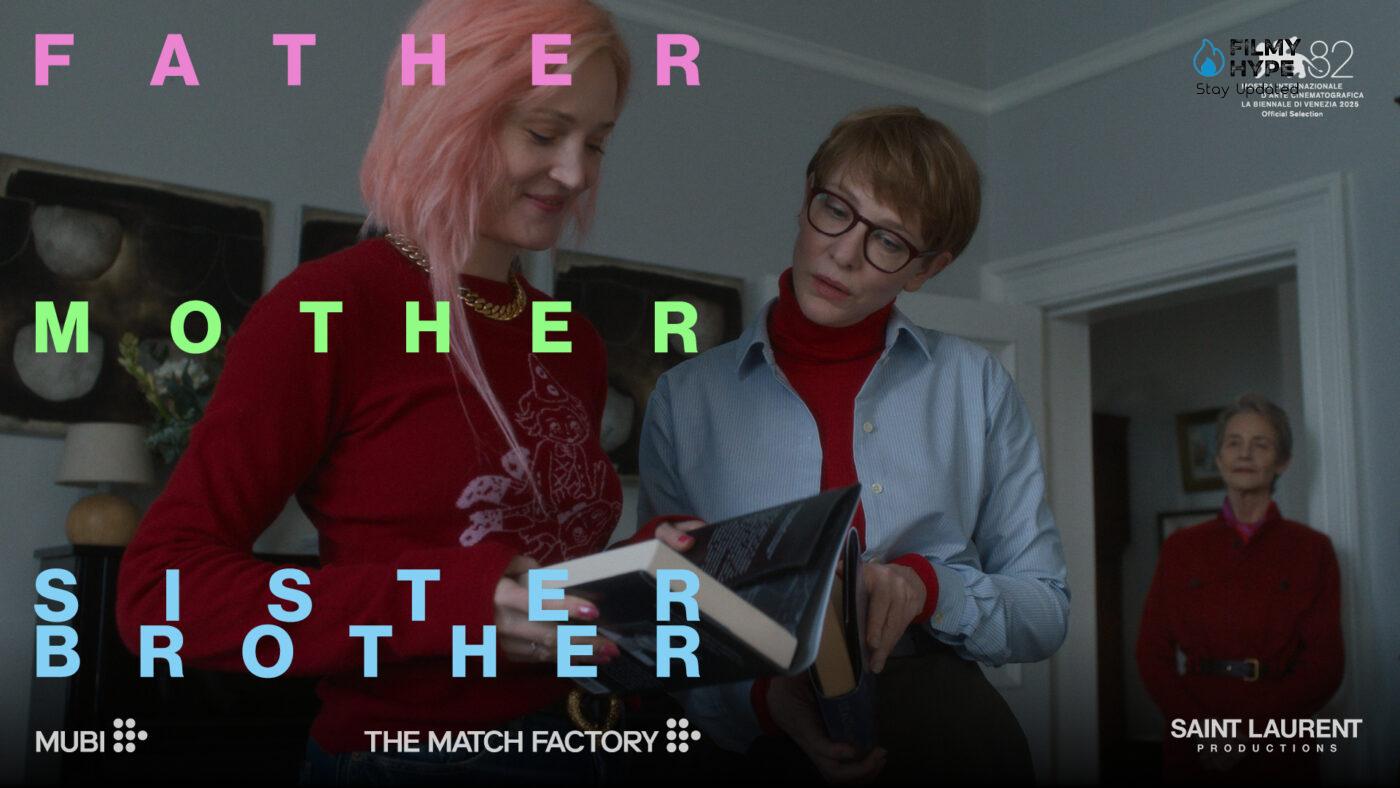
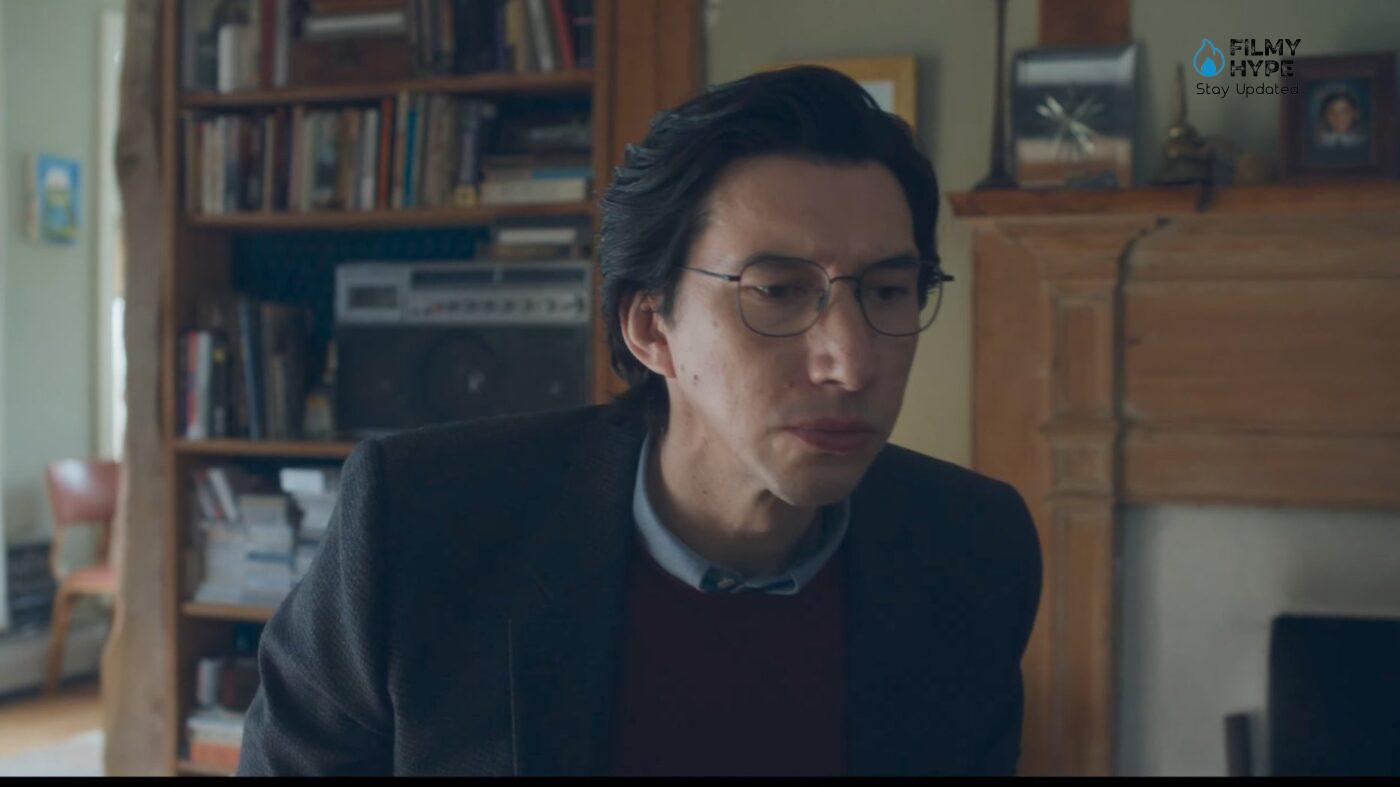
The first episode, Father, set in the northeastern United States, chronicles the encounter between two sons (played by Adam Driver and Mayim Bialik) and a father who seems unable to bridge the emotional distance that separates them. In Mother, the scene shifts to Dublin, where two sisters (Cate Blanchett and Vicky Krieps) return for the usual annual meeting with their mother (Charlotte Rampling): they had moved there to be close to her, yet they are the ones who most need that appointment, which reveals fragility and emotional addictions that have never been overcome. Finally, in Sister Brother, set in Paris, a brother and sister (Luka Sabbat and Indya Moore) must face the sudden death of their parents and the old family home in which memories forcefully resurface.
Father Mother Sister Brother Movie Review (Venice 82): The Story Plot
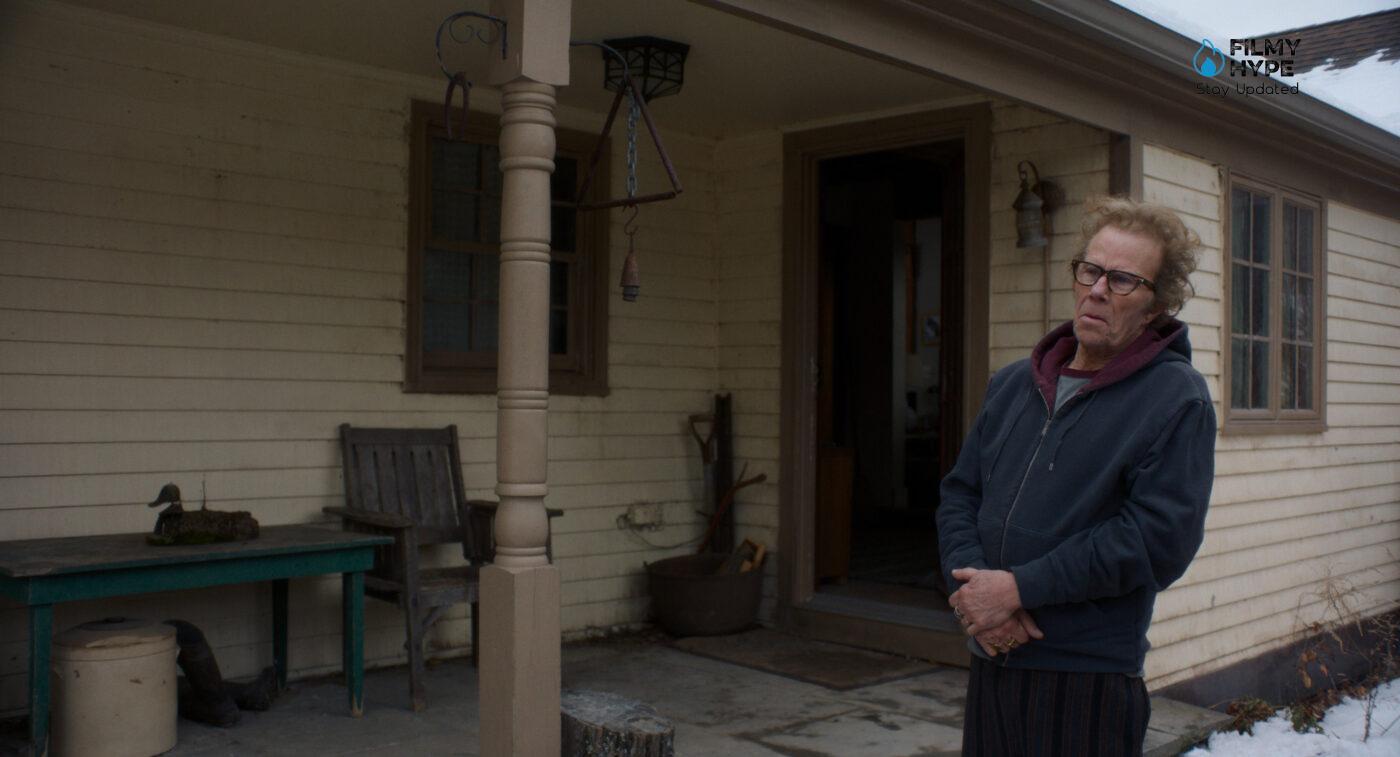
The film is divided into three chapters, autonomous but mirror-image. In the first episode, two sons visit their widowed father. The situation, for example, an emotionally charged self, is told by Jarmusch in an alienating tone; instead of pathos of mourning, a sense of palpable discomfort emerges. Father and children are rarely seen; yes, they speak naturally, and every gesture is full of tension withheld. This is where the director demonstrates his usual skill in making cinematic what, in words, seems unrepresentable: embarrassment. Through fixed shots, essential dialogue, and protracted silences, Jarmusch returns with surgical precision is the emotional distance that is often created in many royal families.
The second episode takes the viewer into a dimension apparently lighter but equally significant. Two sisters go to their mother’s house for tea. The woman is a writer, while the daughters navigate in personal precariousness and a professional environment that makes them vulnerable. Again, the rapport is not idyllic: conversation is formal, detached, pervaded by a subtle competition between maternal authority and the uncertainty of daughters. Jarmusch stages another face of the family, that of generational distance, of asymmetry between those who have found their place in the world and those he’s still looking for it.
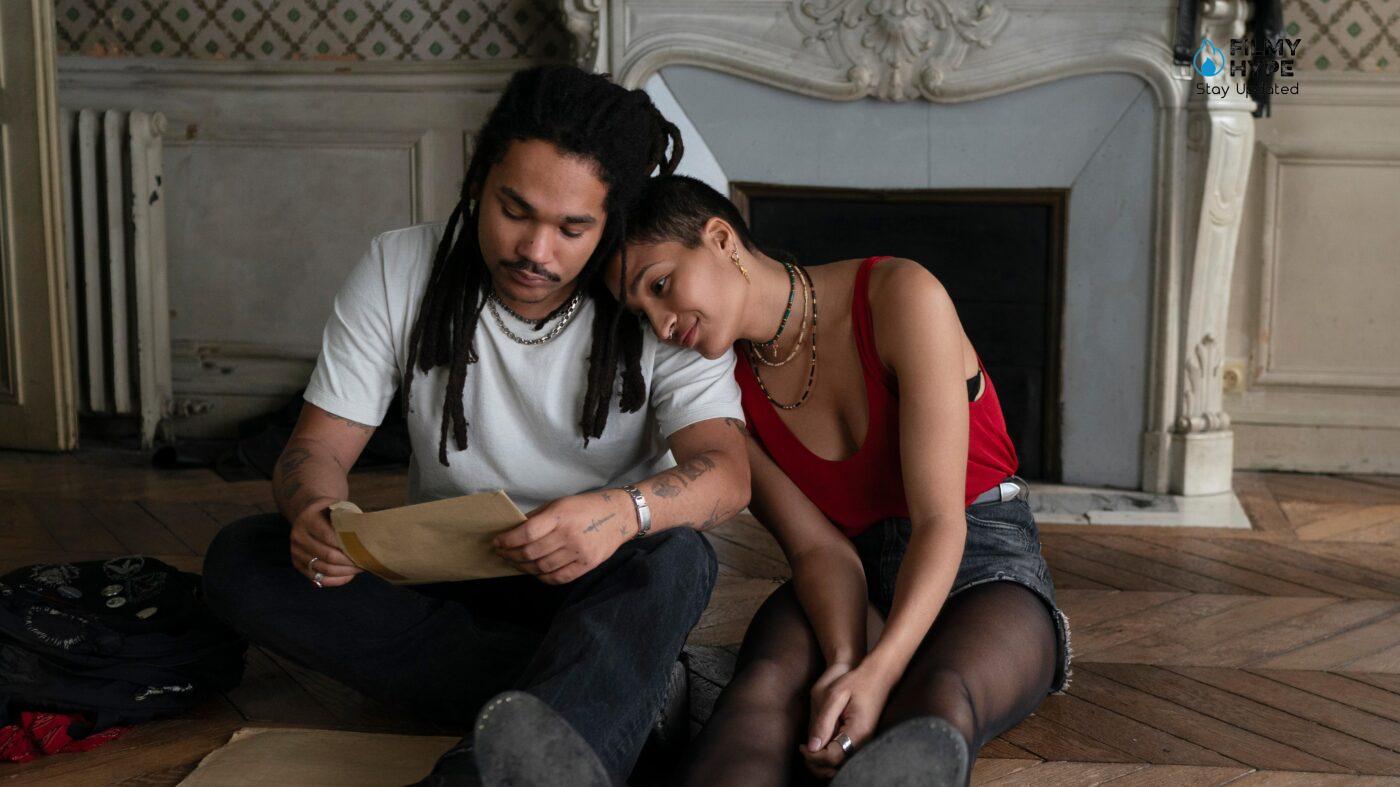
The third episode radically changes tone. Here, the protagonists are two twin brothers, a boy and a girl, orphaned following a plane crash. Together, they remember their parents, a couple as messy as she is affectionate, and they do it with tenderness, which finally dissolves the coldness of the previous episodes. It’s the most intimate and moving moment of the film, where memory becomes an act of love and silence is no longer charged with embarrassment, but with nostalgia.
Father Mother Sister Brother Movie Review (Venice 82) and Analysis
It is a very unusual choice for the American director who opts for the anthology genre, which, in cinema, could not be very engaging, and it must be said that this is a bit of what happens with this film, at least until you totally enter into its narrative scheme and you appreciate it in all its “strangeness”. In “Father Mother Sister Brother Movie”, we see two sisters with opposite characters having tea with their mother, we see two brothers drinking coffee at the bar while they face a new everyday life after the death of their parents, and two children, now adults, going to visit their elderly dad at home. Nothing shocking from a content point of view, but what is striking about this film is its ability to convey emotions without having to resort to narrative patterns, story development, twists, or other means. Seeing Jim Jarmusch’s latest work is like witnessing, on the big screen, small extracts from his life, and with its irony and apparent lightness, this film manages to touch very deep chords, perhaps much more than a work in which the plot has a beginning, a development, and an end.
We are not used to seeing feature films with such a particular structure and dialogue that might seem random and meaningless, but we must give ourselves time to take measurements with this film, appreciate its uniqueness, and understand how emotionally strong it can be to see simple and apparently insignificant excerpts of everyday life. After all, aren’t these moments the ones that matter most in life? Jim Jarmusch offers a new look at contemporary society through an episodic film. In the first two, he uses an exceptional cast, with a Tom Waits who stands over Adam Driver and Mayim Bialik, and Charlotte Rampling, who tries to reconnect with her daughters, Cate Blanchett and Vicky Krieps, whom she hasn’t seen for some time. While in the first two, a more comedic style predominates, where the long silences of unease are dotted with faces turning their gaze elsewhere, in the third, however, the story of the two orphaned twins (Indya Moore and Luka Sabbat) takes on a more melancholic tone, bordering on the dramatic.
Father Mother Sister Brother Movie have the characteristic of having elements of repetition that become the protagonists of “empty” conversations between the various characters: we talk about toasting with water or tea, guys appear on the skateboard, and in each of the first two episodes, there is a predominant color – purple and red. Father Mother Sister Brother Movie it can be placed in the genre of family dramedy, which, however, tends to lose in the last part. The story of the two twins, due to the change in tone, seems detached compared to the first two episodes, which are much more brilliant from a narrative point of view. Although the structure appears repetitive and follows the same pattern, the episodes on “father/father” and “mother/mother” are the ones that strike the most. The choice of different locations for each segment (the north-east of the United States, Dublin, and Paris in this succession) does not seem to have a particular meaning. In reality, they seem to indicate that everywhere in the world, parents and children have their problems, and this persists in their inability to communicate. At the end of the meeting, the father, played by Tom Waits, reveals to the audience that he has hidden something from his children.
As well as Charlotte Rampling’s mother, whose first scene sees her engaged in a psychotherapeutic session on the phone, something she won’t talk about with her daughters. Even in this film by Jim Jarmusch, as often happened in his previous ones, the traits of his unmistakable style can be perceived: the repetitive spaces, characters incapable of evolving and remaining on the same starting point. Father Mother Sister Brother Movie is a tale about complicated relationships between parents and adult children, which stands on excellent writing and a cast that best manages to express feelings of unease and inadequacy as required by the situation. However, the last episode appears much more distant than the first two due to the tone and its length, which could be diluted. The tone of the film oscillates with a balance between comedy and drama. Relationships between parents and children are never treated with excessive tones or shouted conflicts: what remains on the surface are the silences, the sentences left halfway, the glances that betray a much more complex inner world. In this way, the film manages to tell the daily life of family relationships, with its ambiguities and difficulties, without falling into rhetoric.
It is precisely this melancholic lightness that makes each episode credible and recognizable, offering the viewer the opportunity to find themselves in the simplest details. The most interesting aspect of Father Mother Sister Brother Movie is the way it manages to transform everyday life into cinematographic matters. There are no major narrative turns, but a direction that observes with respect and lets the truth emerge from the details. A repeated phrase, a gesture made without thinking about it, an object that returns: all these elements, apparently minor, take on value precisely because they are constantly accumulated. Photography returns an intimate atmosphere, capable of enhancing shades of light and emotional vibrations. It is a cinema that does not impose, but which invites us to observe and reflect, transforming the lives of the characters into a mirror of ours.
Jarmusch hints at the past; he lets us imagine what brought these characters there at that moment before our eyes. It shows us photos, furniture, drawings, books, and clothes (the film is co-produced by Saint Laurent Productions, the film production company of the famous fashion brand), which tells us who the characters we see moving on the screen are. Let the naturalness of the dialogues intertwine with the bizarre typical of his cinema, let the pleasantries be confused with the lies, the embarrassed silences with the sincerity of a burst of affection. There really is nothing simpler and more complicated than family, the director seems to suggest. A family you can’t choose, as it is said in the first episode of Father Mother Sister Brother Movie, but which represents the roots of who we are, for better or for worse. In just under two hours, Jarmusch, also a musician, chose to limit the use of music to a minimum.
Only two songs, the opening on the notes of Spooky of Dusty Springfield and the closure on Those of These Days, as well as short passages of melody written by the director himself, together with Anika. This leaves it up to the word – and its absence – to come to the surface along with the embarrassment, the irony, the sweetness. The editing by Affonso Gonçalves, here in his fifth collaboration with Jarmusch, lingers on the shots and speaks the same language as its director, whose poetics it only elevates between real Rolexes and imitations, glasses of water and cups of tea, Elliptical and skaters that slow down time, the power of the twin, and clothes of the same color. Divided between sequences filmed in the car and others delimited within the walls of the house, Father Mother Sister Brother Movie, he’s a Jim Jarmusch in purity. Those who love their films and their bizarre and melancholy characters will only be able to immerse themselves in a bitter-sweet family triptych. But his style, so well defined over the course of a forty-year career, is, for some, also his Achilles’ heel. What risks leaving at the door those who cannot abandon themselves to their idea of cinema?
In Father Mother Sister Brother Movie Jarmusch summarizes his style in a way almost programmatic. Dead times, subtle reflections, silences that weigh more than words: everything that has always distinguished his cinema is present and amplified. Lo spectator is deliberately taken aback, forced to stop inside moments that in real life would easily be avoided or let pass in silence. This is not a film “pleasant” in the most immediate sense of the term. On the contrary, the vision can be tiring, precisely because it forces us to do the accounts with the essence of the most difficult relationships to deal with: the ones with our family members. The director doesn’t try to console the viewer, nor offer solutions. Rather, he puts a mirror in front of him in which to recognize embarrassments and conflicts and fragility that belongs to everyone.
In light of these features, it’s hard to imagine that Father Mother Sister Brother Movie may win the main prizes of the competition, the Venice. It is not a film designed to amaze the jury or to offer immediate entertainment: it is, rather, an exercise in coherent and rigorous style, intended above all for admirers of the director. However, the presence of a stellar cast, from Tom Waits and Adam Driver, passing through Cate Blanchett, Charlotte Rampling, Vicky Krieps, and many others, guarantees the film a strong appeal media. On the red carpet, the work turns into one of the events more anticipated than the Exhibition, and for fans it will undoubtedly be a party being able to see many leading names gathered under the direction of Jarmusch.
Ultimately, Father Mother Sister Brother Movie it’s not a film you’ll remember for twists or for the spectacularity, but for the delicacy with which it addresses a universal theme: the family. Jarmusch builds three variations on the same motif, showing how the bonds of blood can be a source of embarrassment at the same time, conflict, pain, and tenderness. A film that requires patience and willingness to listen, and which is likely to divide the audience and critics. But it is precisely in this radical loyalty of his to the style of its author that lies its value: Father Mother Sister Brother Movie is a sincere portrait of the condition human, where the most authentic intimacy is often hidden behind the silences that are more difficult to fill.
Father Mother Sister Brother Movie Review: The Last Words
Father Mother Sister Brother Movie is a film that prefers the subtraction of spectacularity, building three minimal stories that find their strength in silences and small emotional cracks. The gaze is attentive, almost documentary-like, and allows the complexity of family relationships to emerge without judgment. The choice to postpone themes and objects from one episode to another adds a sense of unity, despite the geographical and narrative diversity. It is not a film that aims at the viewer’s heart, but at their spirit of observation, asking for patience and attention. The result is an elegant but cold work, which fascinates at times without ever really overwhelming. Jim Jarmusch summarizes his style almost programmatically. Dead times, subtle reflections, silences that weigh more than words: everything that has always distinguished his cinema is present and amplified.
Cast: Tom Waits, Adam Driver, Mayim Bialik, Charlotte Rampling, Cate Blanchett, Vicky Krieps, Sarah Greene, Indya Moore, Luka Sabbat, Francoise Lebrun
Directed By: Jim Jarmusch
Where We Watched: At The Venice Film Festival 2025
Filmyhype.com Ratings: 3.5/5 (three and a half stars)