

La Grazia Review (Venice Film Festival 2025): Paolo Sorrentino opens the Venice Film Festival 2025, talking about euthanasia, but not only. “La Grazia”, this is the title of his latest film in competition at Venezia 82, is a complex, intense, sensitive reflection on life, on the passing of time, on memory, on love, on betrayal, on moral integrity. In terms of skill, the Neapolitan director does not deny himself with this film, which stars, in addition to Anna Ferzetti, his great ally Toni Servillo. They are now in their seventh collaboration on the big screen and swear they have never argued. “Ours is an unconditional love”, they revealed to us in a press meeting, and seeing them together seems to be the case. After the Silver Lion won in 2021 with It was the hand of God, the Neapolitan director returns to deal with the great themes of life and death, once again entrusting Toni Servillo with a role that seems sculpted for his monumental acting: that of the President of the Republic. Alongside him, Anna Ferzetti in a role of intimate counterpoint, in a story that intertwines love and memory, ethics and faith, law and human fragility. A film that, as often happens in Sorrentino’s cinema, transforms the personal story of a man into a broader allegory about our time and the contradictions of a society suspended between the need for certainties and the desire for lightness.
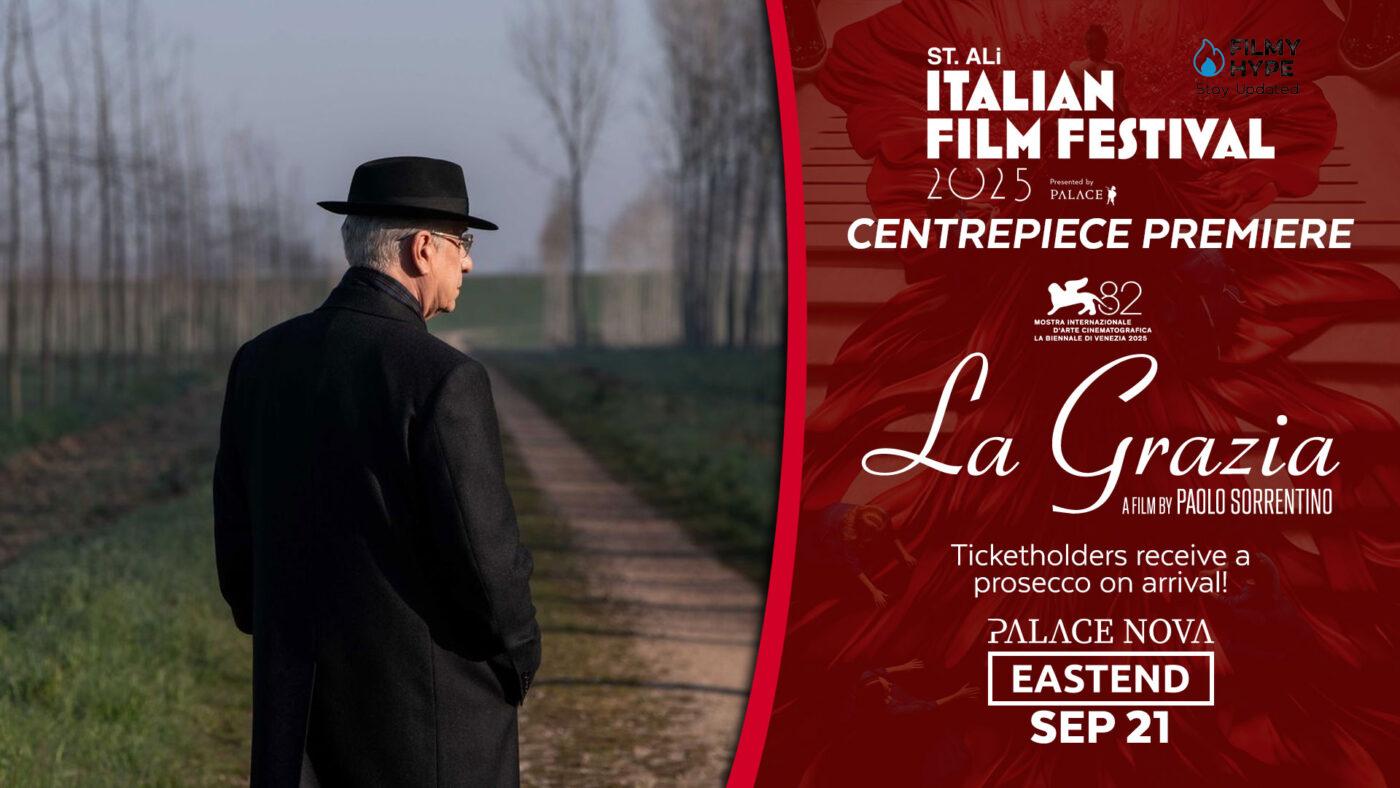
Four years ago, Paolo Sorrentino he had left Venice with a Grand Jury Prize for It was the hand of God, and now returns to the Lido with La Grazia, and we say it right away: there are all the conditions for it to be repeated with a reward. Obviously, talking about a prize after having only seen one film in the competition is senseless, but the quality of the work leads us to hope that it can leave the Exhibition with some recognition that can push (and perhaps anticipate) the release set by PiperFilm for January 15th. Meanwhile, what matters is the film, the one we can tell you about in preview of the 2025 Venice Film Festival, which was the opening. A film about which little was known until this morning, and the first screening to the press, but which surprised and convinced us. Risky to talk about the best film by Paolo Sorrentino, as we have heard around, but the film is certainly a successful, balanced, intimate, and at the same time political work in terms of how it talks about its protagonist and the challenges he faces.
La Grazia Review (Venice Film Festival 2025): The Story Plot
In “La Grazia” Toni Servillo plays the role of an imaginary President of the Republic (perhaps inspired by Sergio Mattarella?), close to the end of his mandate and dealing with the latest decisions to be made, including the debated euthanasia law. He doesn’t know if it’s right or not to sign this law – “If I don’t sign I’m a torturer and if I sign I’m a murderer,” he says in the film and so he questions himself and makes us question what the best choice is, what the truth, what the method to adopt to decide on this type. The subject of the film, which also speaks very well of the parent-child relationship, comes from an event that actually happened and linked to one of the choices made by Sergio Mattarella during his mandate as President of the Republic: “He granted pardon to a man who killed his wife suffering from Alzheimer’s and this struck me”, says Sorrentino who also reveals that the idea for this movie goes back four years, well before “Parthenope”. Thus, Sorrentino brings back to the Venice Film Festival the same theme that last year won Pedro Almodovar the Golden Lion with “The Next Room”. But the approach to the topic of euthanasia, in this case, is without moralism, less obvious, and therefore even more impactful than that proposed by Almodovar.
La Grazia Review (Venice Film Festival 2025) and Analysis
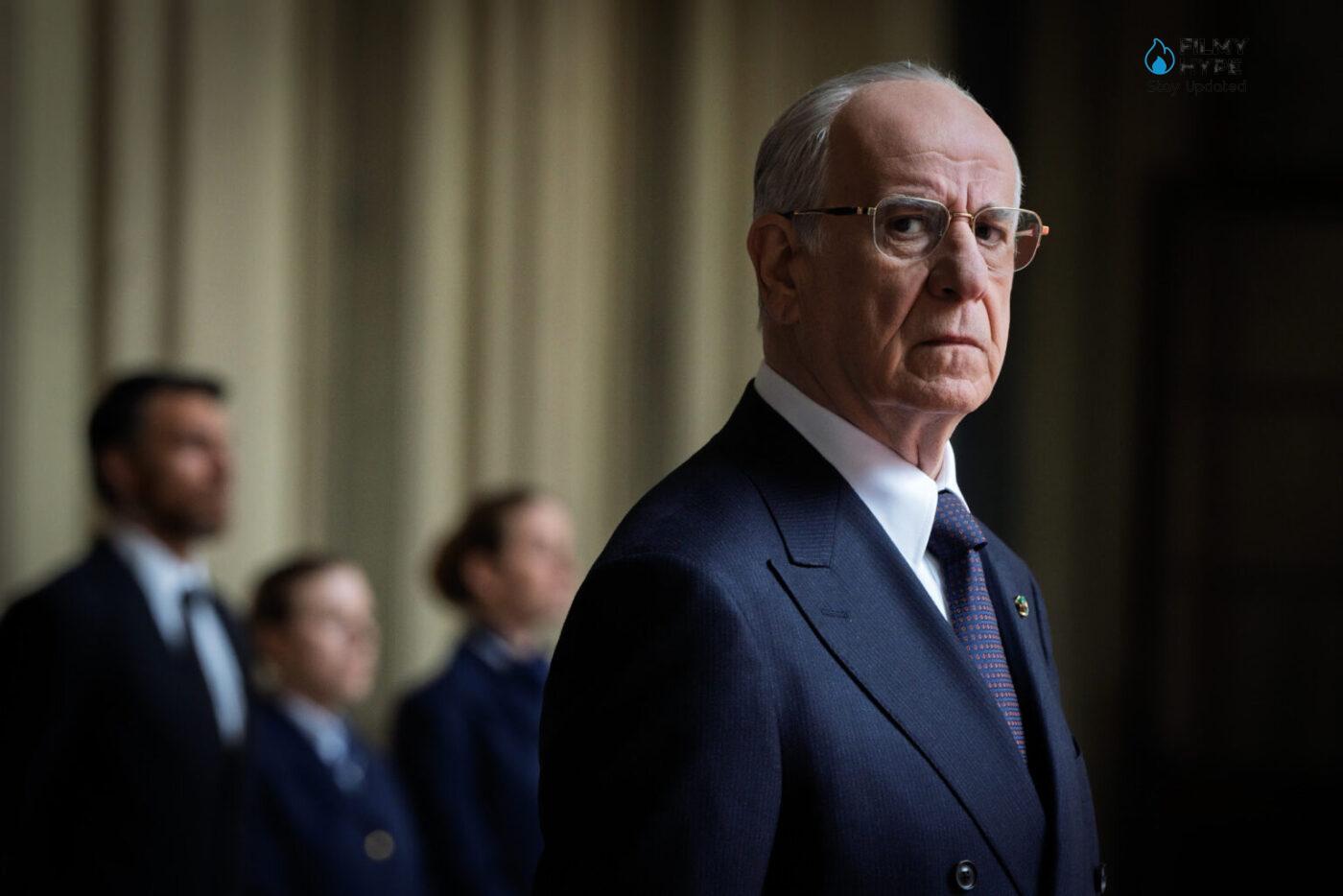
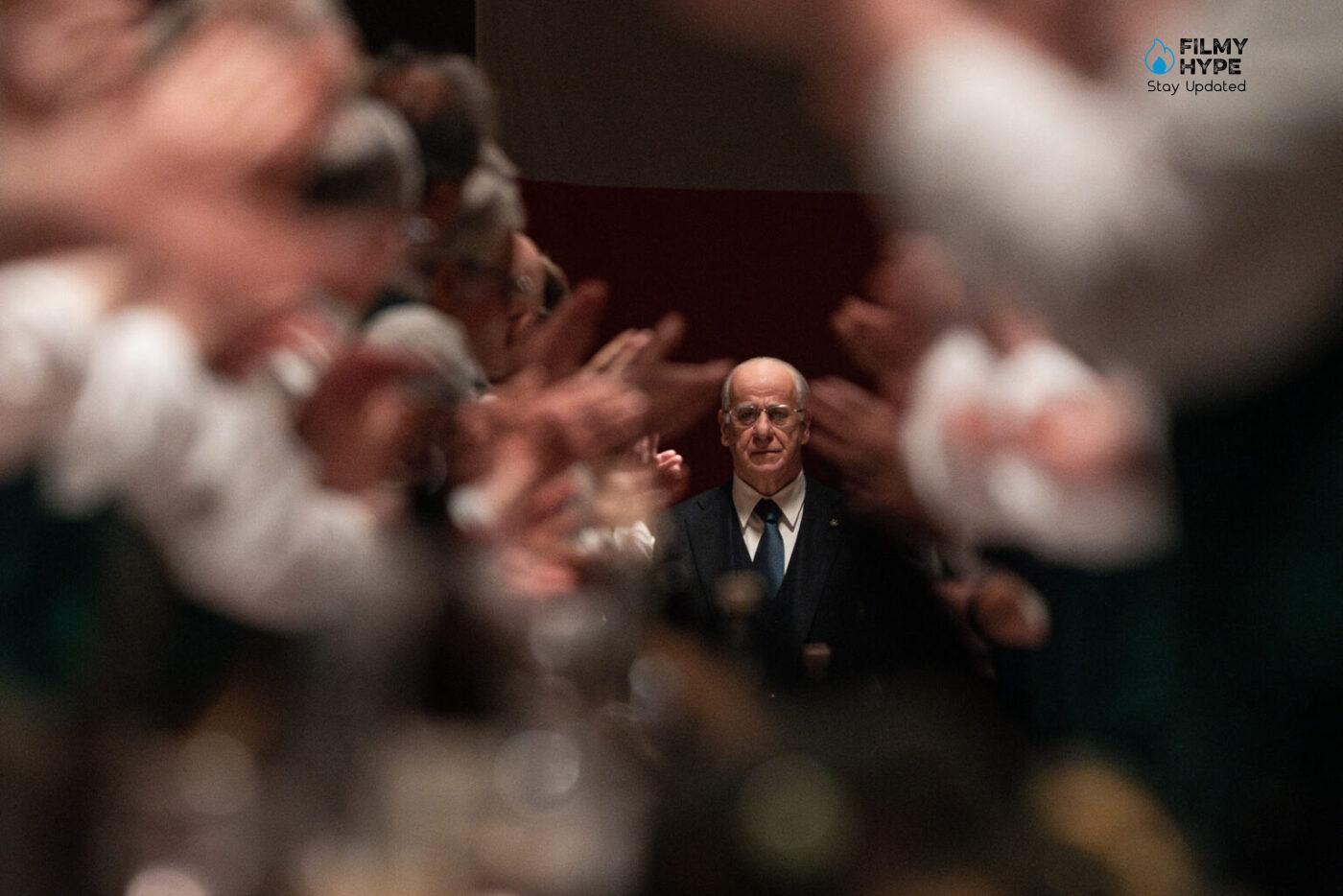
Toni Servillo does an exceptional job of entering body and mind into her character: a man struggling with difficult choices but who continually pines inside, remembering his wife, who passed away, and trying to understand who, 40 years earlier, was her lover. And it is precisely by becoming his character that Servillo shows us, with great generosity, what it means to lose passion for life, to always have to do the right thing, how inevitable but also beautiful the generational clash is with those who are still in their life journey beginning and still dreaming of a future. It shows us the man behind the institution and how difficult it is to be responsible, correct, and never make a misstep. In this film, Servillo is in his state of La Grazia to the point that, in person, the actor can barely be distinguished from the character, but perhaps this is precisely the ultimate goal of those who act: to give themselves completely to art.
Get ready to laugh with “La Grazia”, because unlike what you might imagine, you laugh a lot in this film, which chooses irony as the key to understanding life’s dilemmas, but you are also moved and pushed to reflect a lot. This, after all, is one of the key elements of Sorrentino’s cinema, which is always very recognizable and extremely profound in its cinematographic expressions. In fact, Sorrentino’s hand can be found everywhere in this film. It is in the shots that he is always attentive to aesthetics, in the refined direction, in the music that sees Guè’s rap as the protagonist, but also in the dialogues, where every word is weighed and important for the story. Sorrentino can be seen in the slowness of the story, which is itself part of his unmistakable style, and in that desire to reflect on the internal worries of human beings and go to the deepest points of the soul. With “La Grazia,” the Venice Film Festival opens with great sensitivity, giving us the story of an Italy grappling with the necessary changes of its contemporaneity and the legacies of its conservative thought that shaking off is not so easy.
When it comes out in cinemas on January 15, 2026, “The La Grazia” will certainly be talked about and probably already dreams of the Oscars, even if Sorrentino – perhaps superstitiously – says he doesn’t want to think about it. Go and watch this film next year, but know that to appreciate all its nuances, you will have to totally indulge in every single emotion that this film can offer. The beating heart of the film is the reflection on the end of life, which is also a reflection on life itself. “Whose days are these?” is the question that comes up again and again and that becomes the key to understanding the whole affair. Mariano is unable to untie the knot that blocks him: whether life truly belongs only to those who live it, or also to the religious, moral, and legal conventions that surround it. The law on euthanasia, in this sense, is not only a measure to be signed: it is the mirror of a society that struggles to look suffering in the face and that delegates to politics and justice what belongs to the most radical intimacy of the human being.
Through the requests for mercy that arrive on the President’s table – a woman who killed her violent partner, a husband who suffocated his wife suffering from Alzheimer’s – Sorrentino shows how the norm, although necessary, risks moving away from the truth experienced. And that truth, the film suggests, cannot be understood from a distance, but only looked at closely, in the pain and concrete fragility of people. Mariano is not just a President struggling with political decisions: he is a man crushed by memories. The love for his lost wife Aurora consumes him, and the protagonist himself admits it in a phrase that remains imprinted: “Aurora, when I remember I die”. The past becomes for him a refuge and at the same time a condemnation, a way of not living in the present and not imagining the future. Even the end of the mandate takes on the contours of a symbolic death: it is not just the end of an institutional function, but the end of an identity that has defined it for seven years. Yet, under this armor, one can glimpse a fragile but insistent desire: that of lightness.
The image of the engineer in space laughing and crying at his own tears in weightlessness becomes a metaphor for a deep, almost childish need to abandon the weight of certainties and free himself from the anchors that hold firm but prevent flying. It is the paradox of power: a life built on rigor and control, which generates the nostalgia of an abandonment and a lightness never granted to itself. The title of the film finally opens up to a further level of reading. The “pardon” is, on the one hand, the legal act that belongs to the Head of State, and clemency towards those who have broken the law in extreme circumstances. But it is also, and above all, the state of La Grazia to which our protagonist aspires: a spiritual dimension that cannot be reduced to either the categories of jurisprudence or those of politics. Granting or denying La Grazia means dealing with the possibility of looking at life without the filters of law, with the awareness that truth does not always coincide with justice. And at the same time, seeking La Grazia within oneself means recognizing one’s own fragility and accepting the possibility of redemption. In that sense, La Grazia is a film that questions not only the protagonist, but the spectator: it asks us if we are willing to give up our certainties to conquer a fragment of lightness, a moment of freedom, an instant of La Grazia.
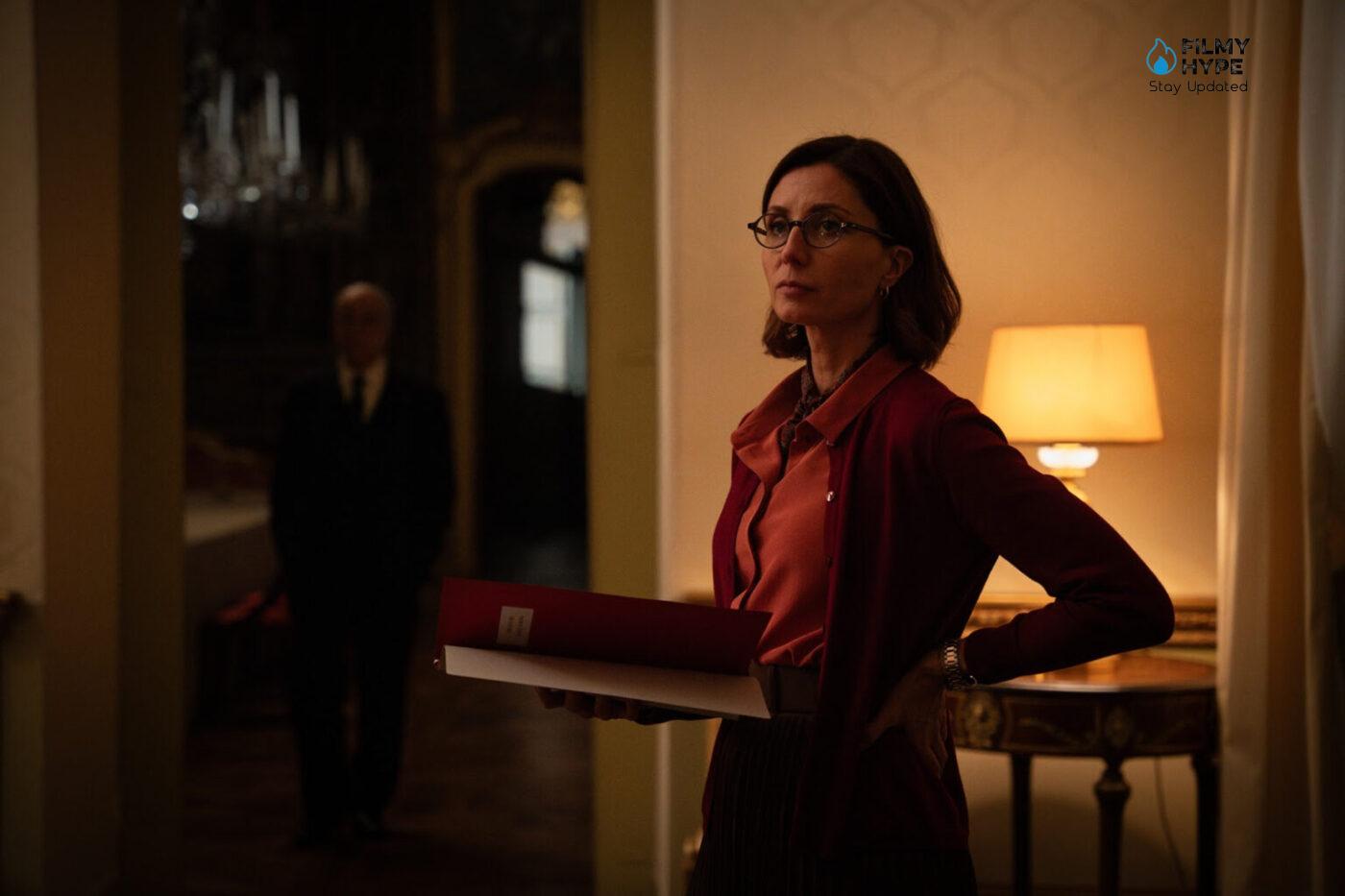
The role of Mariano De Santis seems to be tailored to Toni Servillo, which offers an interpretation of rare intensity. Its President of the Republic is a serious man, capable, however, of sudden outbursts of irony and self-irony; an intelligent man, but at the same time fragile and afraid. Servillo manages to make people laugh and move, confirming once again his extraordinary ability to give life to contradictory and very human characters. At his side, Anna Ferzetti is perfect in the role of her daughter Dorotea: through her gaze and her silences, you perceive a total love for a father who does not fully understand, but to whom she has chosen to dedicate her existence. The real revelation is Milvia Marigliano as Coco Valori, art critic and longtime friend of Mariano: energetic, unsettling, with a sharp tongue that can snatch genuine laughter while enunciating uncomfortable truths. A memorable character, who illuminates the film with unexpected vitality.
On the opening titles, we see the Frecce Tricolori pass through the sky, scrolling through passages of art. 87 of the Constitution, well known, such as “The President of the Republic is the Head of State and represents national unity”. It is the intro of the story, to introduce the protagonist, an imaginary (everyone will find elements of the true, past, and current) President of the Italian Republic (played by Toni Servillo (seventh collaboration with Sorrentino), who lives the last days of his mandate at the Quirinale, and in which he must necessarily make important decisions. The man, Mariano De Santis, lives and looks at the present with responsibility, but also enveloped and overwhelmed by a profound nostalgia, represented by the disappearance of his beloved wife, Aurora. He smokes (now little), he is a rigorous, habitual, almost boring character, and next door, around, beyond secretaries, officers, rituals, institutional appointments, there is above all his daughter Dorotea (Anna Ferzetti), a jurist like him, who dedicated herself entirely to following his path, to sacrificing herself, even calling herself to control him in her diet (an old friend of hers, an art critic, invited in a funny scene, to dinner, calls her “a hypothesis of dinner”), clashing and confronting each other on multiple fronts.
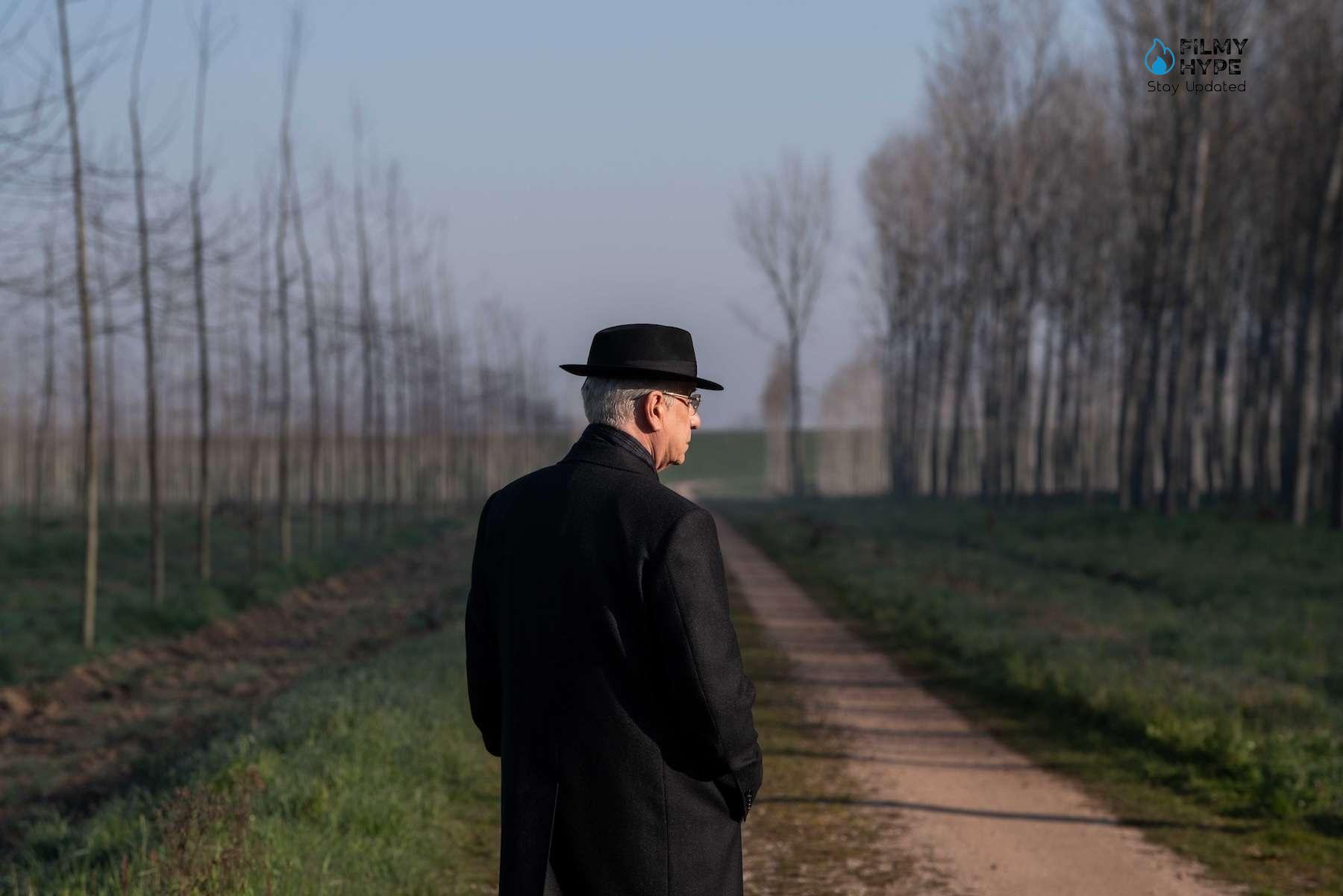
The crucial issues on the table are different, in fact, open and high. It must first be decided whether or not to pardon two people. On the one hand a man, a former history teacher, esteemed in his community, confessed to having killed his wife afflicted by Alzheimer’s (a point that Sorrentino himself had taken a similar episode in which Mattarella, in 2016, had granted pardon to a man, Giancarlo Vergelli, who had strangled his 88-year-old wife suffering from Alzheimer’s), while on the other we have a young woman, in prison for stabbing her husband in his sleep, who however raped her every day, mistreating her and segregating her. In addition, the draft of a legal hypothesis on euthanasia, to be drafted and signed, entrusted primarily to the daughter, is pending. A series of moral and role dilemmas: what to do, how? Whom not to displease? This even led him to talk to the Pope (colored and with a Rasta pigtail), his friend and confessor, who obviously warns him. But it is above all with himself that he tries to undertake the most introspective path, perhaps of change. He tries to learn the present through the gaze of his daughter (he has another musician son, but he lives in Canada), even though the memory of his wife is there, and that torment, a betrayal of her 40 years earlier, remains unresolved.
The President of the Republic, painted by Sorrentino, is a complex and afflicted character, yet he tries to evolve. Listen to the rap of Guè (cavaliere della Repubblica will also do it), humming the lyrics, alternating rigorous moments with some of great hilarity. But it is Sorrentino who orchestrates; he presents it to us like this, also because our existences are not based only on one aspect, they are crossroads of dramas and comedies. In his departure from the Quirinale, De Santis tries to ultimately show extremely unexpected courage and surprises us. And this is where Vogue also comes into play in the story. In fact, initially, the secretary asks him if he wants to accept an interview with the editor of the newspaper, asks for an opinion on fashion, and sketches an answer, “Fashion is a big industry…”. No, No, we need a personal opinion. He clears up the idea, he says, “I’m not elegant, my wife was”. The request will still be sent back to the sender.
But just when he has finished the assignment, something happens. He is the one who calls the director back on the phone, extremely surprised. “I am the former President of the Republic”, he tells her. An unexpected, intimate conversation arises, the roles decline, De Santis talks about politics, and above all, about his wife; he wanders among his wife’s remaining wardrobe, hanging clothes, touching them, and describes their colours. “Aurora liked to wear autumn green; she liked blue colors”. On the other hand, the director listens to it, and it becomes a moment of private confession, full of empathy, memory, and emotion, in which we don’t talk about fashion. It’s a voice, but that voice helps him overcome the last limits and prejudices. That director (the name is never said) is a person he trusts, and who, in a second phone call, will tell him, “President, take all the time”. As if to say, there is no rush for the interview; in fact, perhaps that aspect is no longer of interest, because behind everything, there is the desire to get to know people, to tune into their stories and experiences.
If the heart of the film is the relationship between the two, a series of characters gravitate around them who stand out, even where there is little time available. Paolo Sorrentino has always known how to brush secondary characters of the highest level, but no La Grazia, he outdid himself with the disruptive and priceless Coco Values, to which the author entrusts at least one joke, which we are sure will enter the list of cult quotes from the director of The Great Beauty. And her interpreter is amazing, Milvia Marigliano, who becomes part of the Olympus of unforgettable Sorrento characters. The presence of this type of character is only one of the recurring aspects of the Neapolitan director’s cinema, of which this film ends up being a summa: the use of irony, the unmistakable care of the shot, the lightning-fast but at the same time profound dialogues, and a certain look at Rome.
La Grazia Review (Venice Film Festival 2025): The Last Words
La Grazia is a work that stages the fragility of power and the power of memories. Sorrentino constructs a film that is both political and intimate, moving between the rooms of the Quirinale and the most secret folds of the human soul. Toni Servillo gives an extraordinary interpretation, made of irony, fear, and melancholy. A film that does not offer simple answers but questions the viewer about the meaning of life and the mystery of La Grazia. The new work by Paolo Sorrentino is convincing; he, with La Grazia, gives Venice 2025 an excellent opening. The seventh collaboration with Toni Servillo is of absolute value, with the actor in great shape and totally in focus, but an extraordinary Anna Ferzetti also stands out alongside him. The usual irony is present and well calibrated, concentrating its best shots on the priceless character of Coco Valori, already our guiding spirit here at the Lido. A Paolo Sorrentino who can convince even Parthenope’s detractors.
Cast: Toni Servillo, Anna Ferzetti, Orlando Cinque, Massimo Venturiello, Milvia Marigliano, Giuseppe Gaiani, Linda Messerklinger, Vasco Mirandola
Director: Paolo Sorrentino
Where We Watched: Venice Film Festival
Filmyhype.com Ratings: 4/5 (four stars)