

Wild Horse Nine Movie Review and Ratings
Cast: Sam Rockwell, John Malkovich, Steve Buscemi, Parker Posey, Tom Waits, Mariana Di Girolamo, Ailín Salas, Paola Giannini, Morgan Grace Champ
Director: Martin McDonagh
Where We Watched: At Venice Film Festival 2026
Filmyhype.com Ratings: 4.5/5 (four stars)
Martin McDonagh returns to Venice with Wild Horse Nine and, once again, builds a film that begins with a relationship between two men and gradually broadens the gaze to something much bigger. After The Banshees of Inisherin (2022), the director revisits the theme of male friendship, but moves it to Chile in 1973, shortly before the coup d’état, transforming it into a bitter reflection on guilt, power, and the role of the United States in the political history of the second half of the twentieth century. Presented in competition at Venice 83, the film follows Chris and Lee, two CIA agents played by John Malkovich and Sam Rockwell, who are sent from Santiago to Rapa Nui by their superior, MJ, played by Steve Buscemi. What should be a trip away from the nerve centers of Chilean politics, however, becomes the moment when two men accustomed to following orders all their lives finally begin to question the meaning of what they have done.
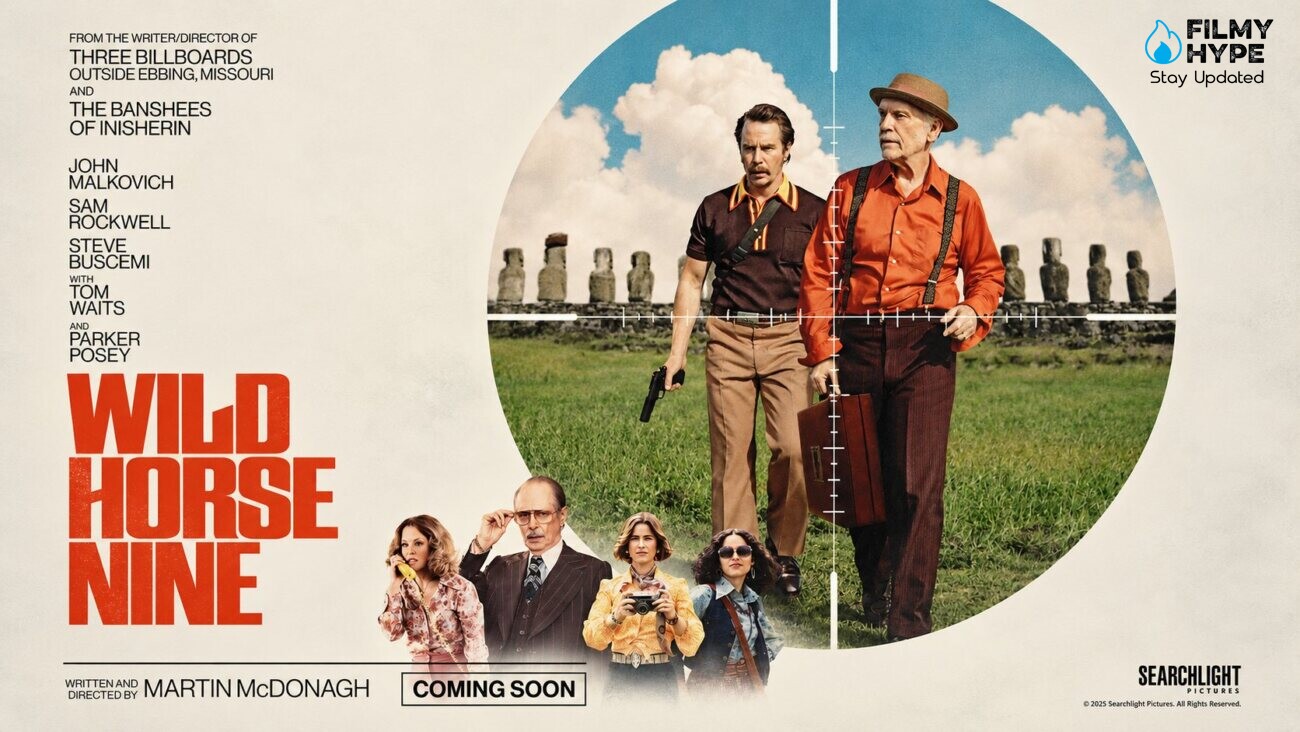
This time McDonagh brings with him a sensational John Malkovich and reunites with Sam Rockwell, already the extraordinary protagonist of Three Posters in Ebbing, Missouri. Alongside them are Steve Buscemi, Tom Waits and Parker Posey, splendid as usual even in the short time available, while Mariana Di Girolamo and Ailín Salas play the two young women met by the protagonists on Easter Island. And it is from Rapa Nui that, somehow, Wild Horse Nine is born. McDonagh visited the island about thirteen years before the film was made, becoming fascinated by the Moai and the mystery that still surrounds them. He knew he wanted to set a movie there, but he hadn’t found the right story yet. It took him years for that idea to intersect with another of his interests: US interventionism in Latin America and Chile in the early 1970s.
Wild Horse Nine Movie Review (Venice 2026): The Story Plot
For Chris (John Malkovich) and Lee (Sam Rockwell), Chile is nothing more than a country like many others. To be more precise, a country like many others for those who are accustomed to destroying them. They are two CIA agents, and they are in the late summer of 1973 in the country to fine-tune the final details for that coup that will overthrow Allende and bring the bloodthirsty Pinochet to power. But that’s not a mission like the others, because Chris still has little to live on; he’s terminally ill with cancer. Now, near the end, he is in the throes of a crisis of conscience that their superior in Washington, MJ (Steve Buscemi), tema, could lead him to release top-secret information on the worst horrors committed in the name of America around the world. Easter Island is where Chris asked his partner and friend Lee to take him so he could die peacefully, but meeting two Chilean students will make that old secret agent increasingly on the verge of a complete rethink of his life. For Lee, however, pursued by a now-failed marriage, it will mean literally being between a rock and a hard place.
“Wild Horse Nine” is without a shadow of a doubt another proof of McDonagh’s enormous writing and directing talent, an author who is never banal, always capable of surprising everything and everyone, of making us feel at the centre of something special. Here the trump card undoubtedly lies in the alternation of tone and rhythm, in the ability to be cynically funny, indeed caustic, as well as to give us tears, poetry, melancholy, as well as friendship, of course. It’s hard to decide who’s better between Sam Rockwell and John Malkovich, but what’s certain is that the two bring back the concept of the odd couple, that of the Hollywood that was. Along with them, however, also travels the average American, the one who, beyond his nose, sees and understands nothing, the one who never knows exactly what is happening, who does not accept any criticism and, above all, believes that everything is allowed to him. Lazy, choleric, always ready to bicker, they are, paradoxically, with their messy, disillusioned, and unpredictable way of acting, two of the most realistic and interesting agents seen on the big screen.
Wild Horse Nine Movie Review and Analysis
“Wild Horse Nine” is governed by the perennial contrast between Rockwell and Malkovich. The first is the responsible type, dutiful but now tired of playing the parts; he has a love-hate relationship with that friend who is dying, but remains faithful to his choice, to the flag. Malkovich, on the other hand, is a sort of Ebenezer Scrooge, or almost; he is a machine gun of absurdities, lies, and truth. He is dangerous because he is no longer afraid since death is about to visit him. McDonagh gives the two an incredible amount of dialogue, with magnificent, biting irony, where political metaphor is always around the corner, and guides into it the worst of the worst that America has committed. We’re talking about Lumumba’s Congo and Guzman’s Guatemala, the Bay of Pigs, and, of course, what that Chile will be like in a few weeks.
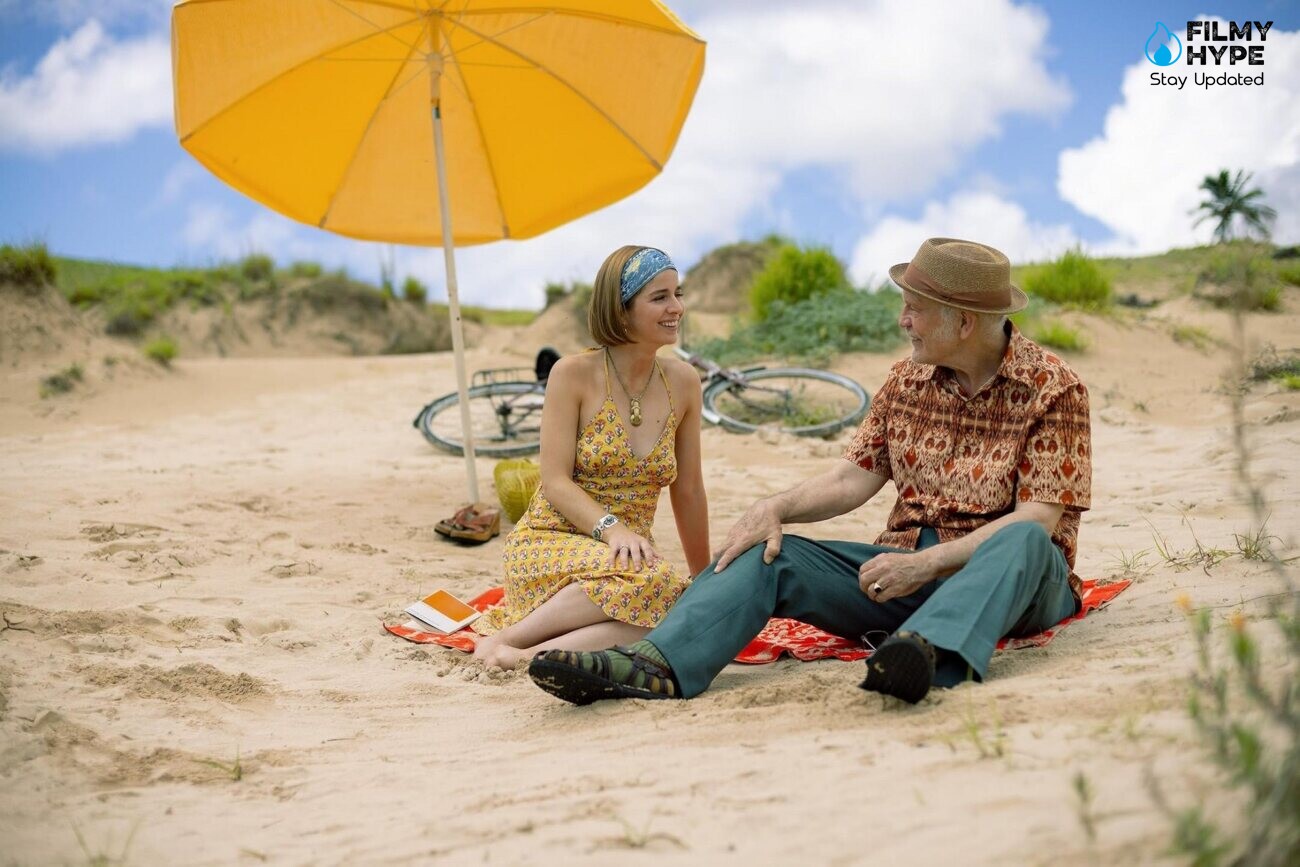
“Wild Horse Nine” peppers it all with metaphorical symbols- the horse, the statues, the telephone- while talking to us about the end of life coinciding with the end of democracy. Twilight, painful, then here he is again making us smile, before reminding us how real the danger the two make a caricature. McDonagh has an exemplary, surgical direction; he knows when to let the two protagonists loose, when to then bring everything back to more classic tracks. “Wild Horse Nine” is pure black comedy; it doesn’t deny drama, it doesn’t even deny its metaphorical dimension, it often winks at the great masters of noir and spy thrillers. It’s hard to decide who’s better between Rockwell and Malkovich, but their exchanges are certainly the spice of a film that never loses pace, never loses balance, and never gets boring for a moment.
Some sequences are simply brilliant, bold but consistent with the intent of telling us about two souls from one country, any two people who ended up in the whirlwind of the story. In times like these, when the White House has returned to churning out magnificent ideas on how to destroy freedom and peace in other countries, a film like this is doubly important. It is because it reminds us how far the United States has not only never paid for its misdeeds, but is still far from taking historical and political responsibility for them. They just can’t do it. The real strength of Wild Horse Nine, however, remains the writing. McDonagh is first and foremost a playwright, and here you can feel it in every comparison between the characters. Dialogues do not simply serve to advance history, but become the place where remorse, contradictions, ideologies, and power relations emerge. Some sequences built almost exclusively on words are among the most successful in the film.
The seemingly absurd and meaningless cheese dialogue is one of the best examples of McDonagh’s ability to start with something ridiculous and turn it into a small duel between actors. It is precisely this tight writing that allows Malkovich, above all, to work on the pauses, intentions, and nuances of a character who continually seems to hide something behind the irony. McDonagh also knows when not to explain. Many of the worst things these men have accomplished belong to a past that emerges in fragments, through jokes and memories uttered almost carelessly. And it is precisely this normalization of violence that makes them most disturbing.
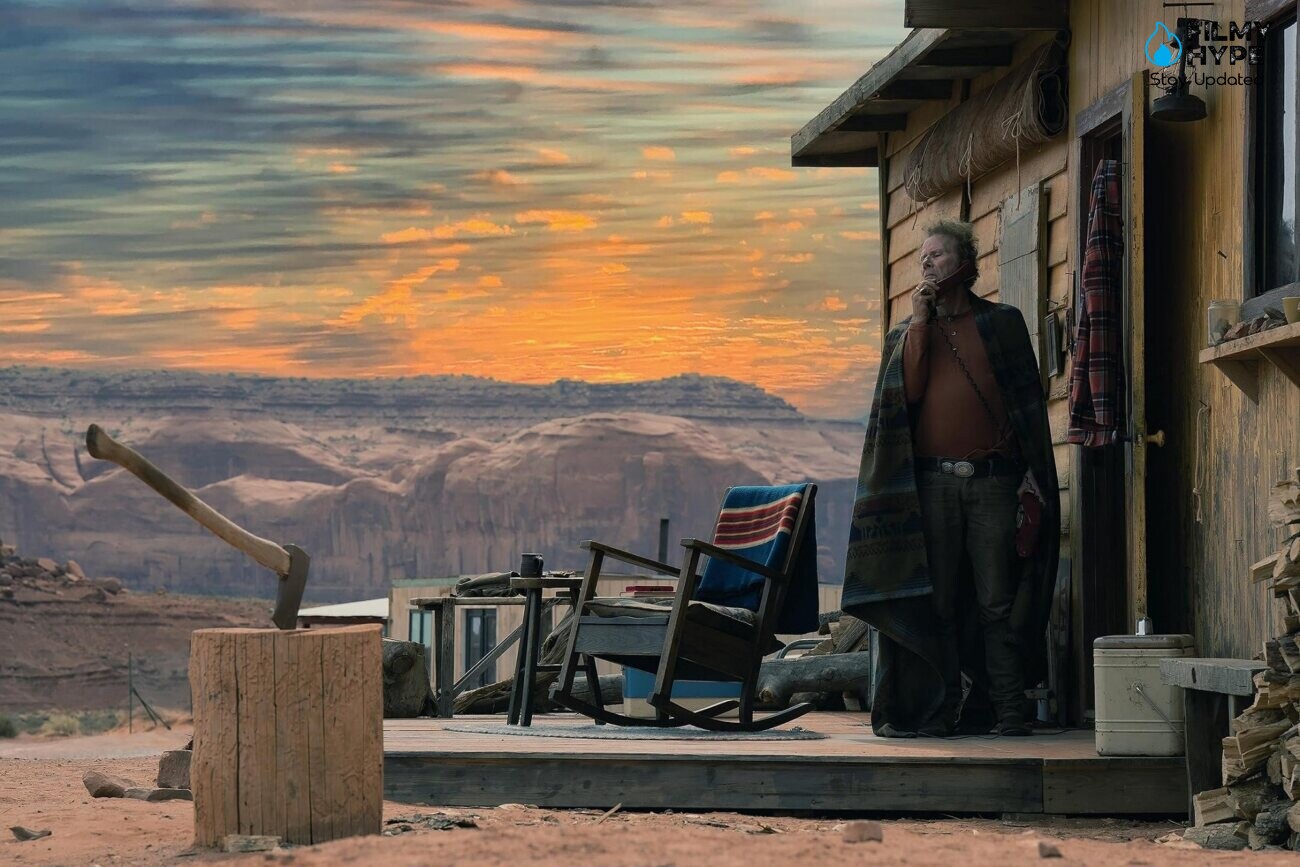
The film was actually shot in Rapa Nui and other locations in Chile, including Santiago, and the island doesn’t simply function as an exotic backdrop. The production worked in Rapa Nui National Park with the involvement of the local community and with special precautions to protect archaeological sites and the land. Visually, however, it is interesting above all how McDonagh manages to bring such a distant place back to the aesthetics of his own cinema. The great outdoors, the isolation, the wind and the almost overwhelming presence of the landscape inevitably recall The Banshees of Inisherin. The continent changes, the story changes, but there remains that idea of a remote environment that progressively engulfs the characters and reflects their loneliness.
Rapa Nui thus becomes an integral part of the narrative. It is a place on the fringes of the world where two men who helped determine its political balance can finally stop and look back. And it is precisely the geographical distance from the places where decisions are made that seems to make even more evident the absurdity of the power they have exercised. This is where Wild Horse Nine finds its most ferocious speech. The film is set shortly before the Chilean coup of September 1973, but McDonagh uses that framework to question more broadly American interventionism and the consequences of decades spent attempting to shape the international political order.
Chris and Lee begin to wonder if all the operations they participated in actually produced the world they thought they were building. The film takes this reflection to the point of provocation, also referring to the assassination of John F. Kennedy and suggesting a universe in which the men who acted in the shadow of American politics are now incapable of distinguishing what they protected from what they destroyed. McDonagh avoids a simplistic reading, however. It does not seek a history lesson or construct a political manifesto. Rather, he is interested in observing the people who participated in that system when the great words –democracy, security, national interest– have lost some of their strength and only the concrete consequences of their actions remain.
It’s probably in the last line that Wild Horse Nine sums up everything he told. When Chris comes to consider that he should have killed fewer people and spent more time with horses, McDonagh closes the protagonist’s personal journey with a phrase that makes you smile, but which also contains a much broader consideration. Because it’s hard not to hear it as a joke aimed at America itself. As if, behind the regret of an old CIA agent, there was that of a country that, for decades, crossed the world convinced it could correct, direct, and often rewrite it. Perhaps it would have been better to stay a little’ more cowboy-like and a little’ less inclined to export one’s idea of order.
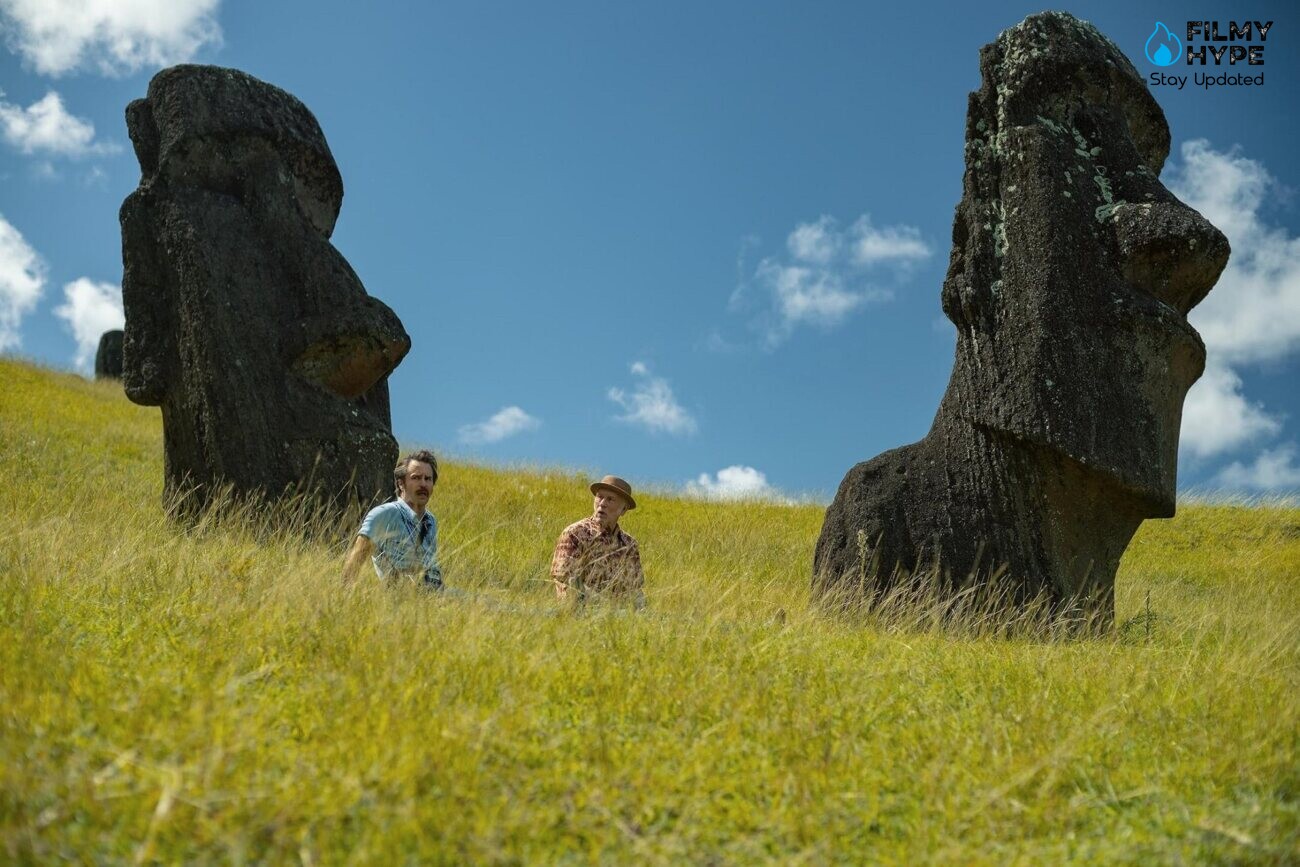
It’s a perfectly consistent closure with McDonagh: absurd and bitter at the same time. Wild Horse Nine is about 1973, but it never remains confined to that historic moment. He talks about the need to find justification for one’s actions when it’s too late to change them, and how easy it is to tell oneself that everything we’ve done was for something. Between formidable dialogue, a dark comedy and two protagonists in a state of grace, McDonagh makes perhaps the film that most clearly collects the different souls of his cinema. And in John Malkovich he finds the ideal interpreter to transform the remorse of one man into that, much greater, of an entire nation.
The narrative idea is already deeply McDonaghian: take two men who built their existence around violence, secrecy and fidelity to a system and place them in a place where everything seems to slow down. Chris and Lee arrive on the Island of Easter, bringing with them a cumbersome past and a complicity that appears almost indestructible. Their report contains that mixture of friendship, rivalry, and mutual endurance that the director knows well and that here he finds a new declination. The natural reference is In Bruges, due to the presence of two men linked by a dirty profession and a past that continues to influence the present. The atmosphere changes radically. Where Bruges became an urban space crossed by guilt, the island becomes an open, almost metaphysical space. The Moai observe the characters with their thousand-year-old immobility and seem to suggest a completely different time perspective from theirs.
This is where the spirit of The Banshees of Inisherin comes in. McDonagh re-discovers that ability to tell stories of men locked in relationships with complicated affect, capable of hurting themselves and loving each other at the same time. Humor keeps the film moving, while beneath the surface grows an increasingly evident melancholy, amplified by the contemplative nature of the location outside of time. The real engine of Wild Horse Nine is the cast. John Malkovich and Sam Rockwell have personalities in cinematic films so strong that they transform every dialogue into a small duel. McDonagh writes quick jokes for them, eccentric and unpredictable, leaving the interpreters the space necessary to play with pauses, glances, and variations in tone. Chris and Lee work precisely because their bond contains many contradictions.
They are colleagues, friends, accomplices, and men who know each other’s flaws perfectly. Their relationship brings with it years of shared experiences and several things that neither of them really needs to explain. In this sense, the brilliant script also becomes a tool to tell their intimacy. A group of equally significant performers moves around them: Steve Buscemi, Tom Waits, Parker Posey, Mariana Di Girolamo and Ailín Salas help build a universe populated by unpredictable figures, each with a twist in store, small or large, to make the story vibrate even more. McDonagh seems to enjoy putting these actors inside a narrative machine that requires comic precision and rhythm.
Under the plot of the conspiracy and beneath the surface of comedy, Wild Horse Nine develops a much more intimate reflection: what remains of a person when the time of choices is it ending? It is a question that runs through the cinema of McDonagh with particular strength. Its protagonists are often men who arrive with a form of moral budget. They made mistakes, hurt other people, built imperfect relationships, and have spent a good part of their existence seeking justification for their actions. Chris brings this dimension testamentary inside the film. His reflection on the end of life does not take the form of a solemn monologue. McDonagh prefers to filter it through conversations, absurd situations, emotional relationships, and everyday life.
One of the most successful elements of the film is McDonagh’s treatment of morality. Chris and Lee work for a secret government apparatus and move inside a political reality of manipulation and interests. Although apparently marginal characters, the two young students seem to introduce another point of view and bring out the distance between generations, between those who have spent their lives inside a system and those who want to change it. Politics remains on the margins; Chile ’73 is a distant affair in space, from the perspective of Rapa Nui. This allows McDonagh to maintain its characteristic tone. The joke can come in the most unexpected moment, a potentially dramatic situation can take an absurd direction, and a morally questionable character decisively wins a form of sympathy. The ethics of the protagonists always remain unstable and, for this reason, deeply human.
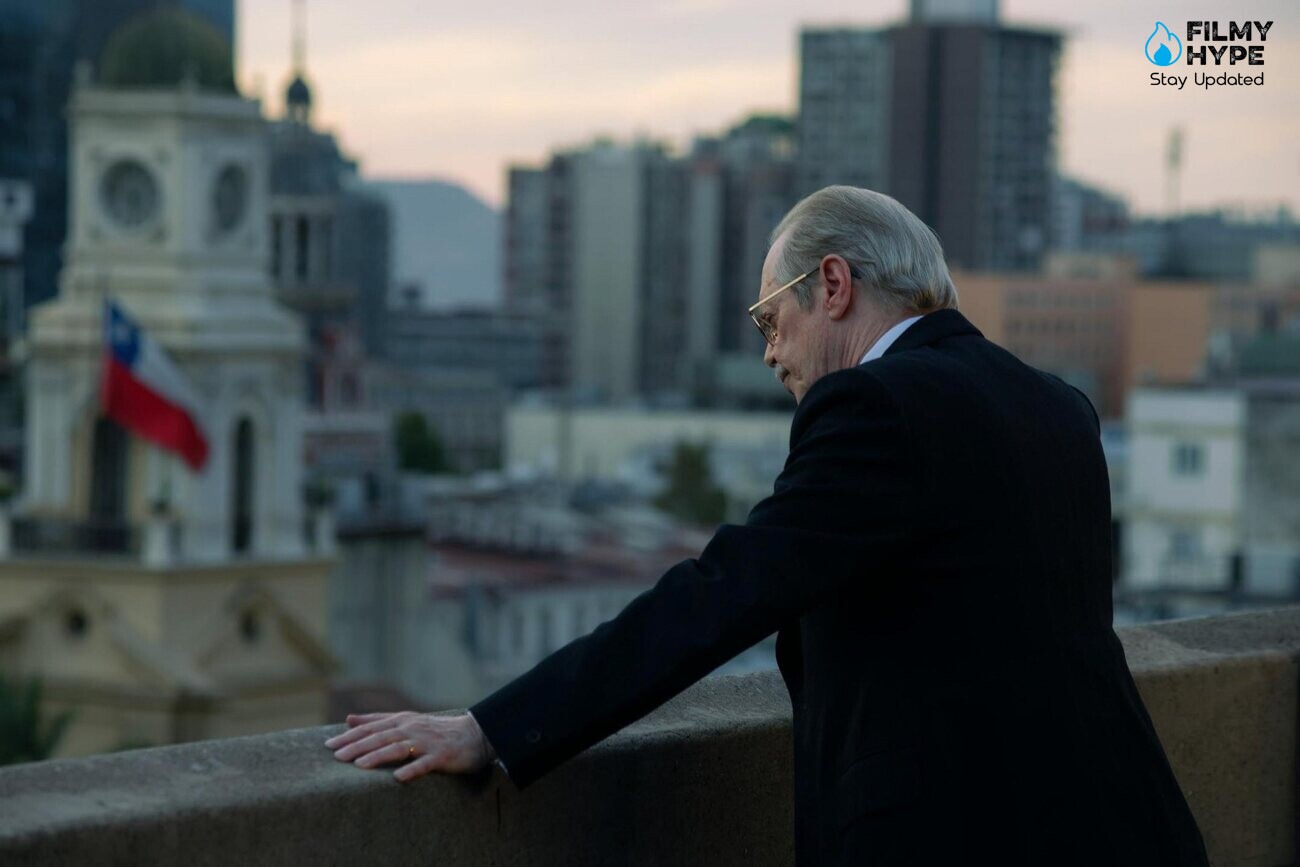
The strength of Wild Horse Nine is in the ability to keep different records together. The film has a tight, brilliant script full of opportunities for the interpreters, and at the same time retains a contemplative tone that leaves room for melancholy. Laughter coexists with the awareness of its protagonists that the end is approaching and that there is no more time to postpone final decisions. McDonagh builds a kind of existential balance comedy. His men continue to talk, argue, joke, plot, and cause trouble while their time is running out. The island becomes the perfect place for this suspension: a remote paradise in which the past comes to present itself anyway. Wild Horse Nine tells of people who have spent much of their lives trying to control events and who discover how difficult it is to control the meaning of one’s existence. McDonagh approaches this idea with lightness, irony and a surprising tenderness.
Wild Horse Nine Movie Review (Venice 2026): The Last Words
Wild Horse Nine takes everything that makes Martin McDonagh’s cinema recognizable to the extreme: brilliant dialogue, dark, absurd comedy, and a melancholy capable of suddenly emerging. John Malkovich delivers one of the most successful performances of his career alongside a fine Sam Rockwell, as the relationship between two veteran CIA agents becomes the starting point for a lucid and scathing reflection on American interventionism and the weight of its consequences. What else to add? Wild Horse Nine is proof of what an excellent director Martin McDonagh is, capable of understanding cinema as vivid, colorful, in-tune matter. A free and sincere look, which uses humor to emphasize the drama. A work that talks about how dangerous democracy is, and threatened by those countries that profess it. Crazy John Malkovich and Sam Rockwell, rightfully among the best couples seen recently.