Bucking Fastard Review and Analysis
Cast: Kate Mara, Rooney Mara, Orlando Bloom, Domhnall Gleeson, Hugh O’Conor, Michael Hough, Simon Delaney, Terry McMahon, Shane Connellan, Malcolm Adams, Brendan Conroy, Tadhg Murphy, Paul Reid, Maeve Fitzgerald
Director: Werner Herzog
Where We Watched: At Venice Film Festival 2026
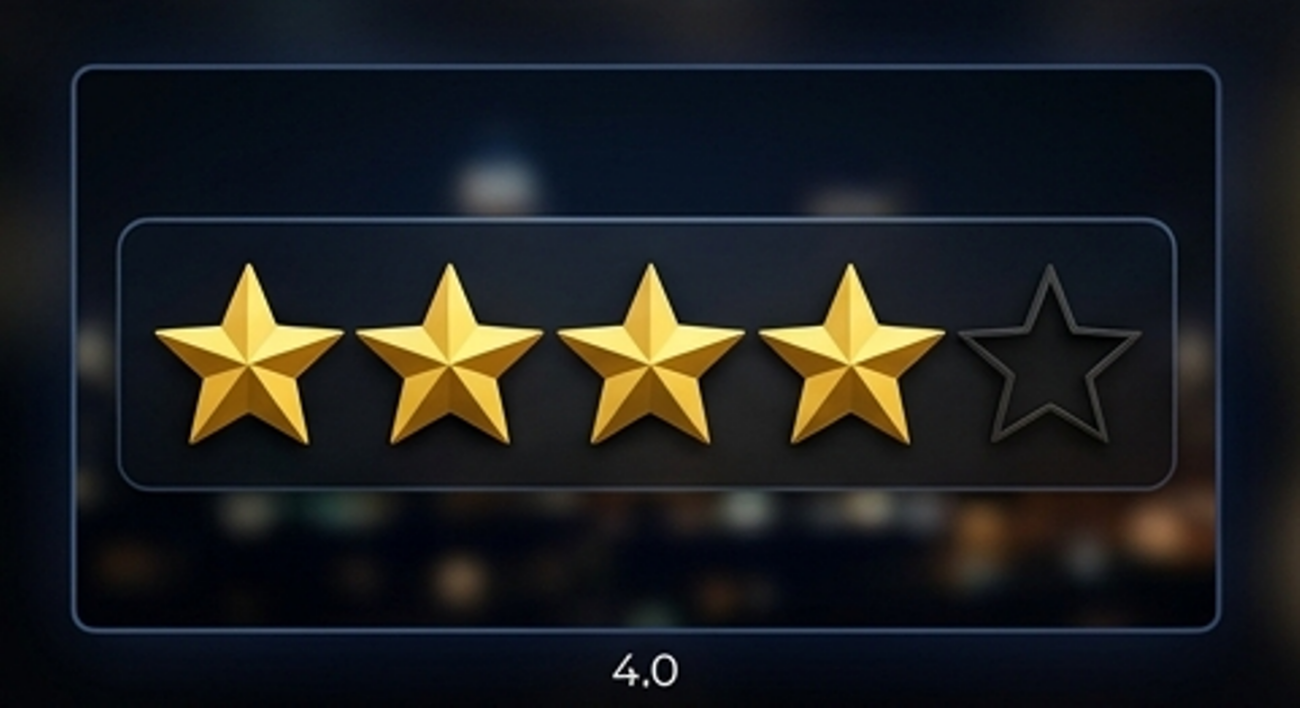
Filmyhype.com Ratings: 4/5 (four stars)
Bucking Fastard is a film by Werner Herzog, released in 2026, featuring sisters Rooney and Kate Mara starring together for the first time. The project stems from an idea the German director had been nurturing since the 1980s, following several encounters with identical twins Freda (1943–2020) and Greta Chaplin (1943–2007)—sisters from York known for speaking and moving in unison and for their unconventional lifestyles. Their story made headlines in 1980 when they were accused of stalking a local truck driver, Ken Iveson; during the trial, the pair uttered the phrase “Bucking Fastard” in unison—an unintentional spoonerism of “fucking bastard” that sparked a media sensation—and the film adopts this very phrase as its title. Herzog was fascinated by these eccentric figures and for years toyed with the idea of a film inspired by their story, though he never managed to bring it to fruition.
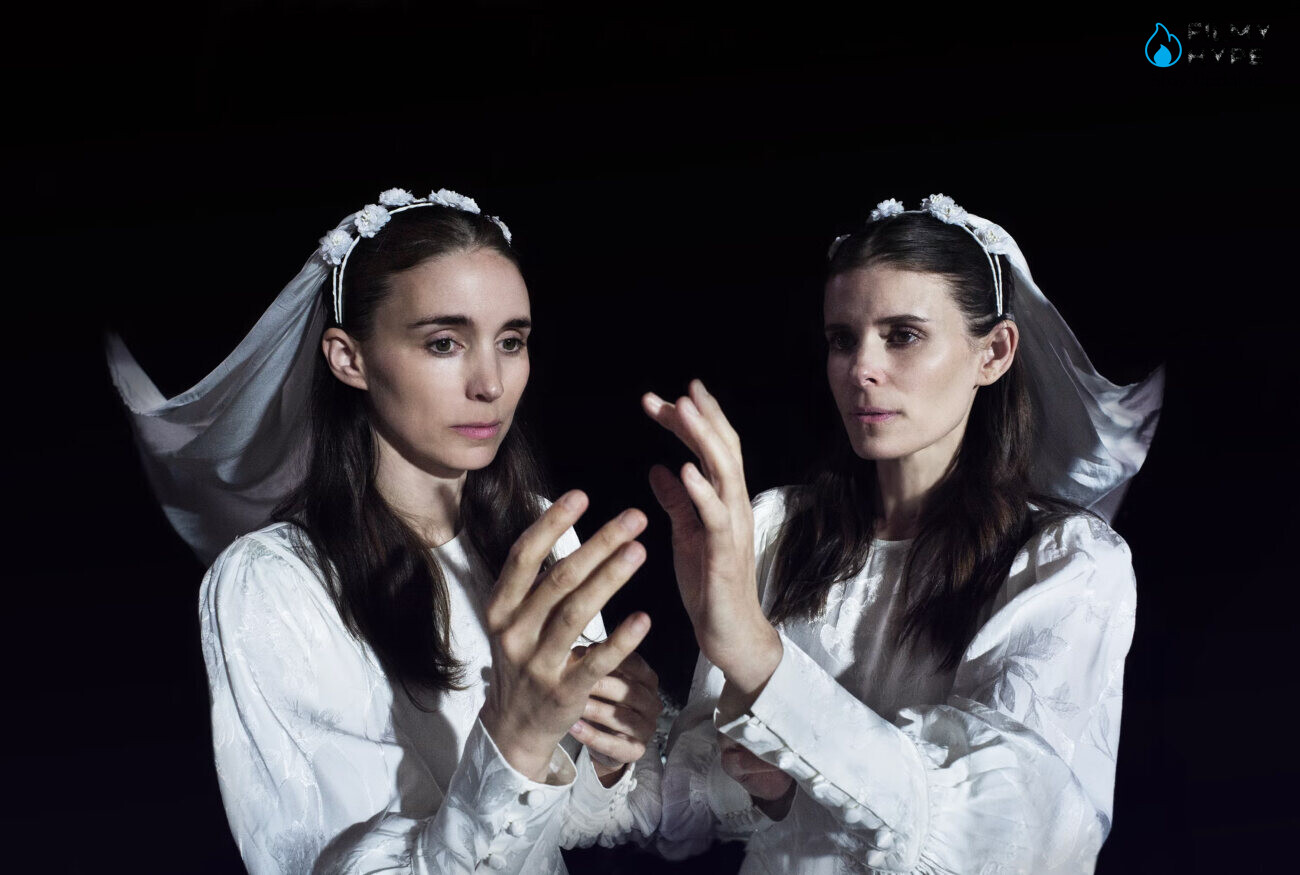
The project was revived in 2024 during a trip to Patagonia with producer Ariel León Isacovitch; on that occasion, Herzog recounted the entire film orally and was encouraged to finally turn it into a screenplay. The director completed the script in just one week, choosing to take only a “pinch” of the Chaplin sisters’ real-life story to craft a modern fable about the unbreakable bond between two sisters and the quest for true love—a tale far removed from the original biography yet deeply rooted in his own imagination. The film secured full financial backing from philanthropist Clara Wu Tsai—a development Herzog described as “unprecedented” in his career. Agnes Chu and Isacovitch himself joined the production, while filming took place in Ireland—specifically in Dublin and Naas—during March and April 2025, with support from Screen Ireland.
Bucking Fastard Review (Venice 2026): The Story Plot
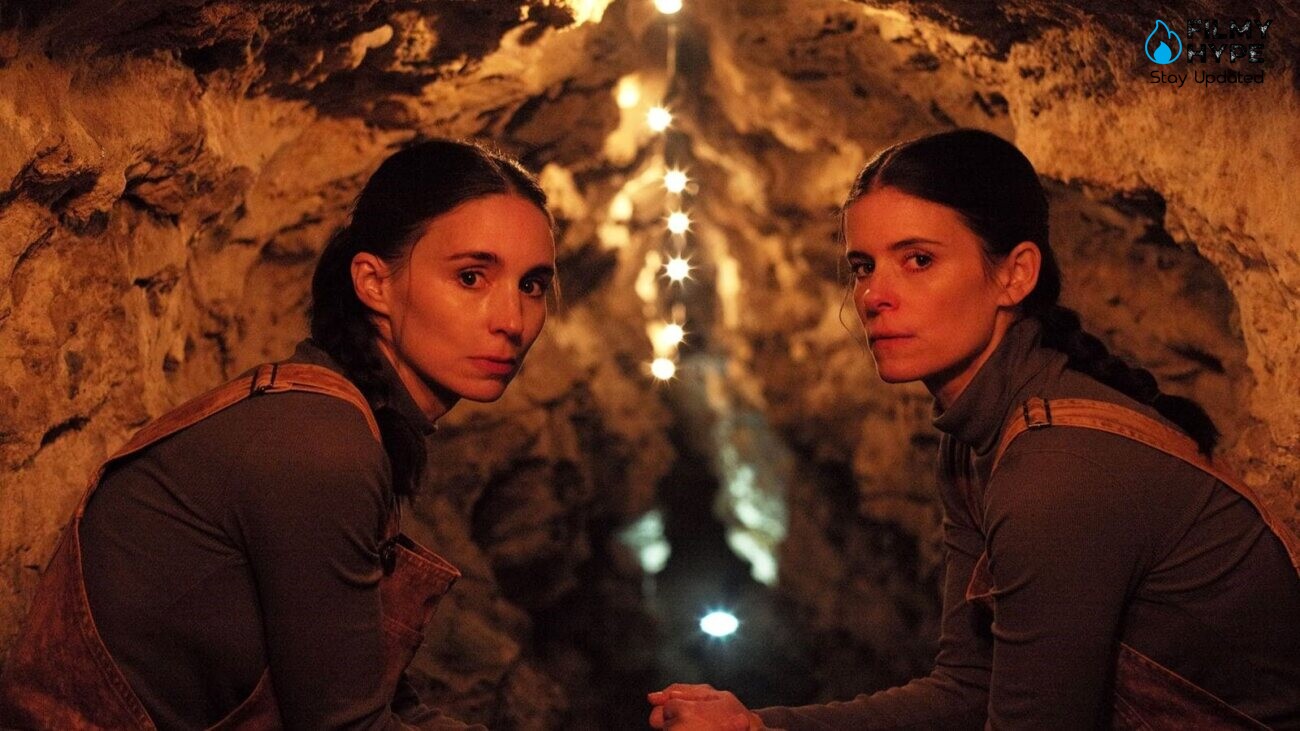
Jean (Rooney Mara) and Joan Holbrooke (Kate Mara) are two inseparable sisters living in Ireland. But their bond goes far beyond that normally existing between twins: they speak in unison, seem to have the same thoughts, share dreams, and perform any daily activity. Likewise, love, inevitably, also becomes something to be shared. In fact, both fall in love with Gareth (Orlando Bloom) and, when that feeling becomes unattainable, the two transform desire into an undertaking as crazy as it makes perfect sense in their personal vision of reality: digging a tunnel through a mountain to reach a land where they believe true love can exist.
The icing on the cake of Bucking Fastard, the choice to entrust the role of Jean and Joan to Kate and Rooney Mara, sisters in life too. The Maras had so far kept their acting careers strictly separate, but the opportunity Herzog offered was a golden trope. So we see them winking, bursting into complicit giggles, hugging and hopping through the streets of Dublin as their trial becomes a media sensation. Unbeknownst to them, of course, since the two don’t have internet. As Joan comments, “There can’t be any photos of us on the internet since we don’t have internet.”
While giving space to the comic component, embodied by the handsome and sex-loving neighbor played by an amused Orlando Bloom, at times Herzog reveals all the drama of the two sisters’ condition and the isolation in which, despite the men’s attentions, they live. Just think of the meeting with the social worker, who has the face of Domhnall Gleeson, or the fruitless trip to visit his parents that ends in a painful discovery. The director, who met the real Chaplin twins in his youth, interrupting their relationship when he realized that he risked becoming the object of their desire himself, proves capable of piety and stages their oddities without ever ridiculing them.
Bucking Fastard Review (Venice 2026) and Analysis
Bucking Fastard isn’t always as punchy as he could be. After a scathing start, the central part seems to stall due to two protagonists who have no evolution, stubbornly cultivating their obsession with love and thus fueling their psychosis. But the director has a surprise in store for the sisters by indulging in an imaginative third act that wreaks havoc on the tables. Thanks to his fascination with caves, Herzog gives Jean and Joan a breathtaking journey into a cave with symbolic value that finally seems to have the turn he so dreamed of in store.
Will love triumph? Who knows. What is certain is that the eighty-three-year-old German director’s love for cinema is triumphing. Although far from the masterpieces of the past, Werner Herzog demonstrates that he still has aces up his sleeve and that he retains intact the cinephile passion that leads him to create elegant and evocative sequences. Of course, we could have expected some deeper reflections on the content level from him. Even the choice to translate the Holbrook sisters’ story from the 1980s to the present seems like a quirk devoid of sociological ambition given the fairytale limbo situation in which the two women seem to live. But all the Herzogian humor is contained in the enigmatic finale of the film, which once again turns the tables, leaving the viewer wondering how much fun the director had in transforming a youthful encounter into a double, alien, and disconcerting female portrait.
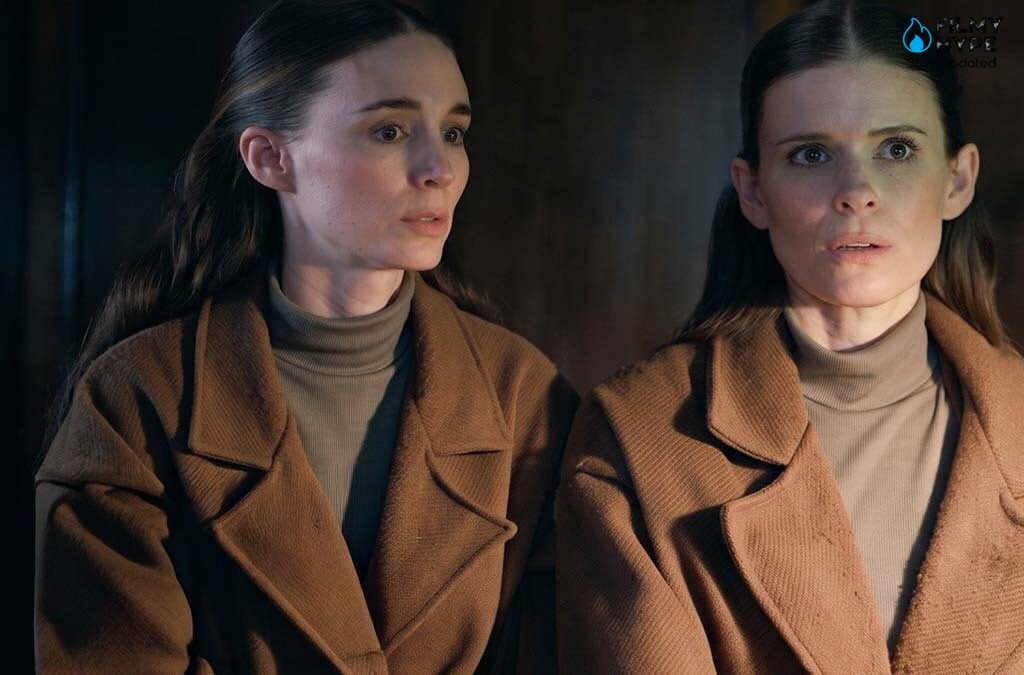
Bucking Fastard‘s most interesting idea is that Herzog doesn’t try to get inside the minds of the two protagonists, but rather the others tell us about them through their own reactions: those who want to help them, those who consider them a problem, those who observe them with curiosity, and those who glimpse something to exploit in their story. Jean and Joan thus remain a small closed universe, governed by a logic that belongs only to them. Rooney and Kate Mara manage to make this symbiosis believable without simply turning it into a show-off weirdness. Their speaking in unison could easily become a repetitive device, but instead it contributes to the film’s comedic pace and, progressively, tells something much deeper.
Why does the relationship between the two sisters inevitably ask a question: where does the “us” end and where does the “I” begin? Jean and Joan seem to possess a common identity, yet their journey leads to continually questioning the possibility of existing as individuals as well. Herzog does not provide an answer, but lets this doubt accompany the film until the end. The pursuit of true love may seem like just another eccentricity of the protagonists, but it is precisely here that Bucking Fastard finds her most human side. The tunnel progressively becomes something more than an impossible undertaking: it is the materialization of a desire, the belief that somewhere there must be a place where one finally feels in the right place.
Herzog treats this obsession with irony without ridiculing it. You laugh at the situations, the reactions of the outside world, and the sheer determination with which Jean and Joan deal with something obviously crazy, but you never get the impression that the film is actually laughing at them. Beneath the surreal surface, there is a story of loneliness and belonging, but also of the difficulty of finding someone capable of accepting us for who we are. The true love pursued by the protagonists doesn’t just concern Gareth: it almost becomes the hope of finding a place, physical or emotional, where they won’t be considered wrong.
It goes without saying that a sense of weirdness pervades the entire film, also showing the consequences of that process within a society that views them as freaks, like freaks in a circus or victims of the attentions of unpleasant men. It’s very entertaining to observe all the interactions that can arise between two bizarre people accustomed to living in their own way (and in a world)—from problems with the buttons on their jackets to the difficulty of opening a small box with both hands. A morbidity that characterizes Jean and Joan, to the point of engaging in activities that are dangerous to others.
In Bucking Fastard, the narrative begins to falter in the second half: after getting to know the Holbrooke twins and their obsessions thanks to careful writing and direction that enhances them, just when it seems the story is about to open a true conflict between the two, a clear decline occurs. However, Herzog makes up for this shortcoming with exquisite direction: in addition to cinematography that fully exploits the story’s settings, the camera movements dominate the mise-en-scène, guiding the narrative with an elegance that becomes the film’s true strength. The German filmmaker is at his best, particularly when the Irish nature takes center stage. However, a masterful work of form and technique isn’t enough, because the substance runs out just when things can get interesting.
Perhaps the hope was for something more. The two sisters have their moment of crisis and separation, but it’s brief, ephemeral, stuck in that moment and never fully developed. The Holbrookes’ swarm consciousness is never fully questioned, leaving room for monotonous experiences and an absent transformation. Hence Herzog’s major mistake in not allowing for a leap towards something more, leaving the film a series of bizarre situations without any future development. Of course, the technical level is beyond question, but perhaps a different approach would have been better.
Bucking Fastard Review (Venice 2026): The Last Words
Bucking Fastard is a work that confirms Werner Herzog’s formal mastery, transforming the Holbrooke twins’ daily lives into a disturbing and profoundly weird universe. The direction elegantly dominates the scene, exploiting Irish settings and nature to construct compelling imagery. However, when the narrative seems ready to explode, the film retreats, leaving powerful insights without any real development. It remains a fascinating exercise in style, but lacks the dramatic thrust that could have made it truly memorable. Werner Herzog finds in the two sisters played by Rooney and Kate Mara a story about love, identity and the desire to find their place in the world. Eccentric and brilliant, he manages to make you smile without losing the tenderness that his protagonists’ journey goes through.