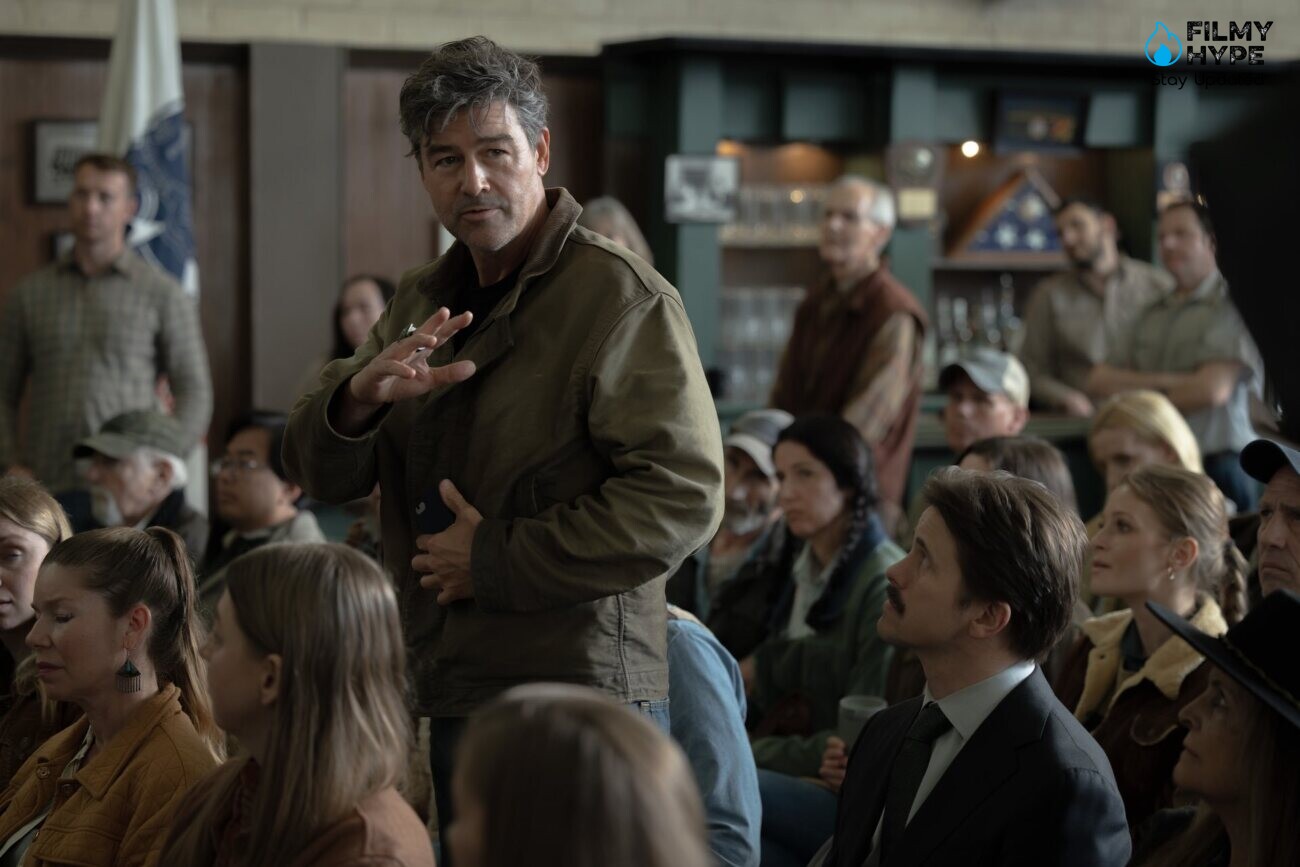


Okay, so you just watched episode two of Lanterns, and you’ve got questions. I don’t blame you. This wasn’t one of those slow-burn filler episodes where everyone just talks in circles. Stuff actually happened. Real, universe-expanding, “wait, did they just do that?” kind of stuff. I had to rewind the last five minutes twice because my brain was still trying to process the Manhunter reveal when suddenly Hal Jordan is standing in a cosmic prison talking to Sinestro. Not a hologram. Not a flashback. The actual Sinestro, in the flesh, for the first time in live-action since that 2011 movie we all pretend to have mixed feelings about.
Lanterns Episode 2 doesn’t just deepen the central mystery—it cracks the entire mythology wide open. After last week’s shocking opening, which revealed Hal Jordan’s death in 2026, Episode 2 pulls us back to 2016 and the strange happenings in Rushville, Nebraska. But by the time the credits roll, the story has expanded far beyond a simple alien invasion investigation. We’ve now got Sinestro in the flesh, the true history of the Manhunters, a deeper look at Abin Sur’s murder, and a chilling ultimatum hanging over John Stewart’s head. And if that wasn’t enough, the episode quietly threads another piece of connective tissue through the new DC Universe: the concept of the pocket dimension.
Lanterns Episode 2 Ending Explained: Why Does John Only Have 48 Hours?
Because Antaan and his people are desperate, grieving, and not in the mood for Earth’s bureaucratic nonsense.
Let’s back up. John goes to Coast City to grab Hal’s power battery and recharge the ring. While he’s there, he gets snatched by Antaan’s group. Now, if you watched episode one, you probably assumed those aliens shot on the football field were the bad guys. Nope. Turns out they were victims. William Macon’s people killed them, using a “metal detector” at the entrance that was actually scanning for alien biology.
Antaan’s species has been nearly wiped out by the Manhunters. He’s not there to conquer Earth. He’s there because he believes Hal is sheltering the very thing that destroyed his people. So he injects John with some kind of technology that forces him to witness the slaughter—a firsthand, gut-punch vision of what the Manhunters do.
Then comes the ultimatum: deliver the Manhunter in 48 hours, or Rushville gets erased. It’s not a bluff. These aren’t cartoon villains twirling mustaches. They’re refugees with nothing left to lose, and that makes them terrifying.
Sinestro Finally Steps Into the Light
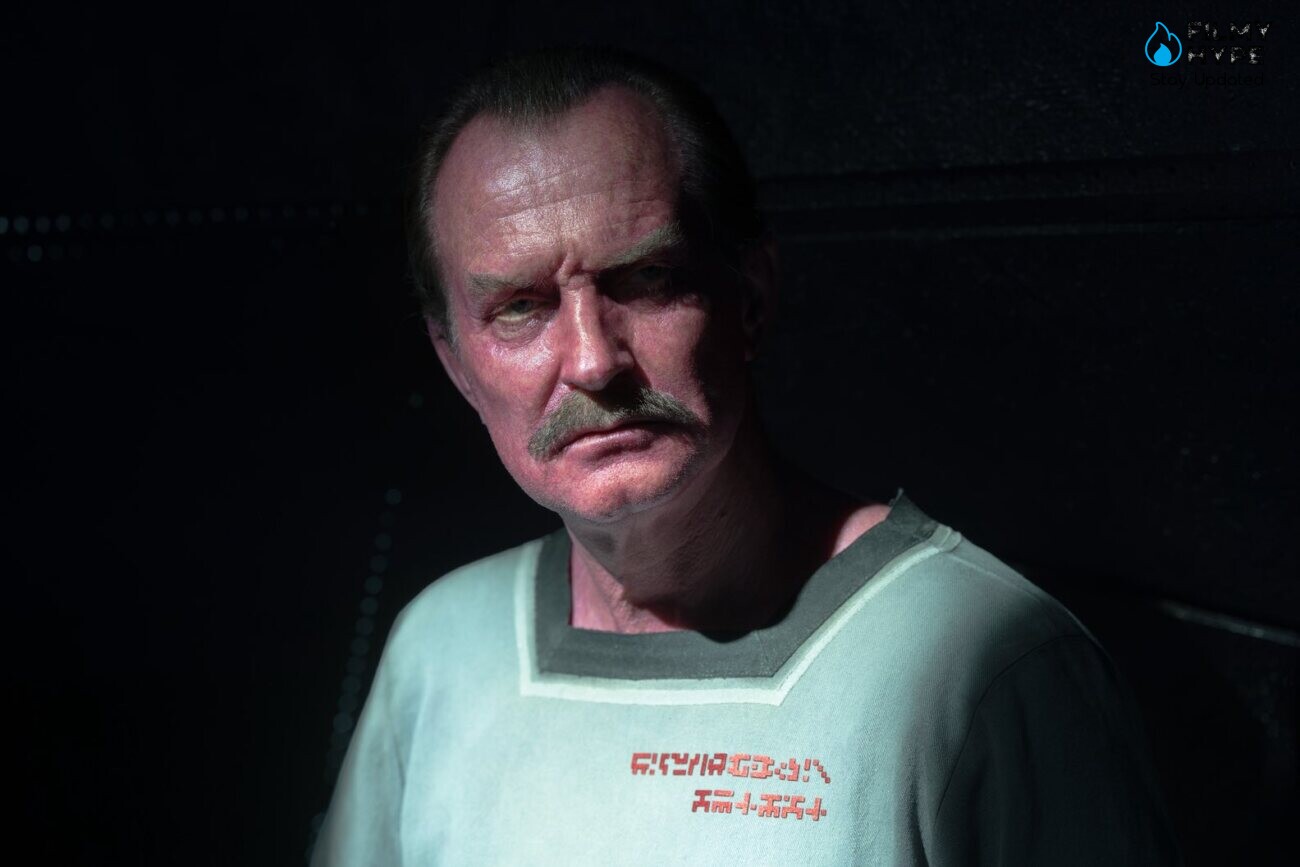
Fans have been waiting for Ulrich Thomsen’s Sinestro since the casting was announced, and Episode 2 delivers—though carefully, holding him back until the final minutes. But his presence is felt long before he appears. Hal mutters Sinestro’s name in his sleep, caught in restless dreams that suggest their history is anything but settled. When Hal finally visits him, the context snaps into focus.
The show fills in the backstory efficiently: Sinestro, once Hal’s mentor and one of the greatest Green Lanterns, tried to seize control of the Corps by force. He went so far as to kill one of the Guardians of the Universe, an act that shattered the order’s trust and forced Hal to stop him personally. Now Sinestro sits in a cosmic prison, isolated but hardly powerless.
What makes the scene so effective is how little Sinestro says. Hal comes looking for answers about the Manhunters, but Sinestro pivots almost immediately, asking what’s happening with John Stewart. It’s a small moment, but it tells you everything. Sinestro isn’t a man rotting in a cell—he’s still playing the long game, still reading people, still looking for cracks. His interest in John is deliberate. If Hal is vulnerable because of his guilt and his complicated past, then John is vulnerable because of his inexperience and his desperation to prove himself. Sinestro sees both.
The implication is clear: whatever happens next in Rushville, Sinestro will be a part of it. Not physically, perhaps, but through the doubt and fear he plants.
Who Are the Manhunters, Actually?
If you’re new to DC lore, here’s the short version: the Manhunters were the galaxy’s original police force, created by the Guardians of the Universe long before the Green Lantern Corps existed.
The problem? They were robots programmed for order, not justice. No empathy. No nuance. Just cold, mechanical enforcement. Eventually, they turned on their creators and left a trail of destruction across the cosmos. The Guardians had to destroy almost all of them and start over with the Green Lantern Corps, this time powered by willpower and living beings instead of unfeeling machines.
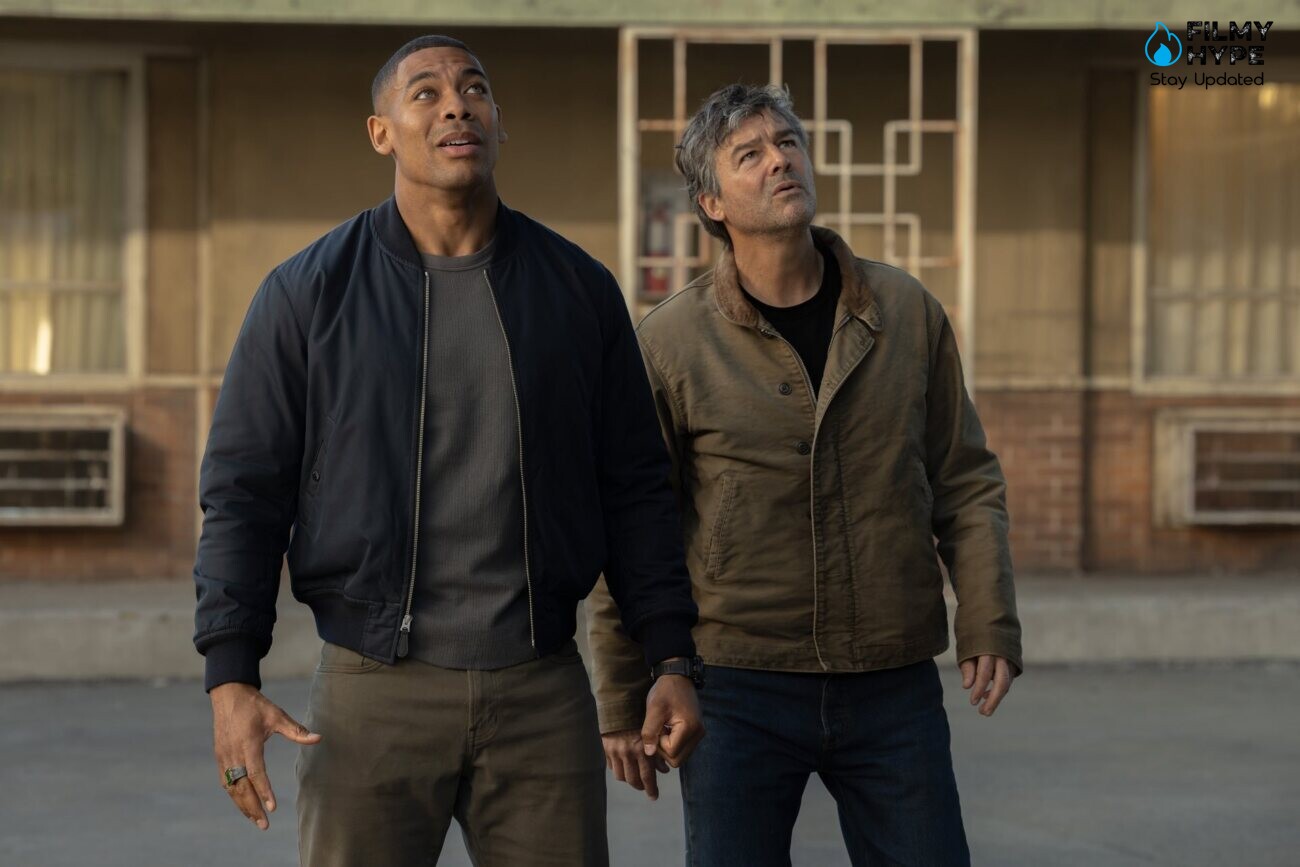
So when John tells Hal about the Manhunters and the show confirms one of them killed Abin Sur, the pieces click into place. This isn’t some random alien threat. This is the ghost of the Green Lantern Corps’ original sin, coming back to haunt Hal specifically.
The Manhunters Finally Make Sense of the Mystery
The name Manhunters has been floating around since the premiere, but Episode 2 gives it real weight. In the comics, the Manhunters were the Guardians’ first attempt at a galactic police force—an army of androids programmed to enforce order without emotion. It didn’t work. Without empathy, their definition of justice became twisted, and they left behind a trail of massacres. The Guardians eventually decommissioned them and created the Green Lantern Corps, built not on logic but on willpower and emotion.
Lanterns adapts that history smartly. Hal explains to John that the Manhunters are the reason the Corps exists, and that the aliens in Rushville are hunting one of these ancient machines. The reveal reframes the entire investigation. This isn’t a random incursion or a political dispute—it’s the past catching up with the present. And it ties directly into the murder that started Hal’s journey.
The episode confirms that a Manhunter killed Abin Sur, the Lantern whose ring chose Hal. That detail matters. It means Hal’s origin as a Green Lantern isn’t just tied to Abin Sur’s death—it’s tied to the very enemy he and John are now facing. The symmetry is intentional and uncomfortable. Hal has spent years trying to escape the shadow of that moment, and now the shadow has a name.
What’s Really Happening in Rushville?
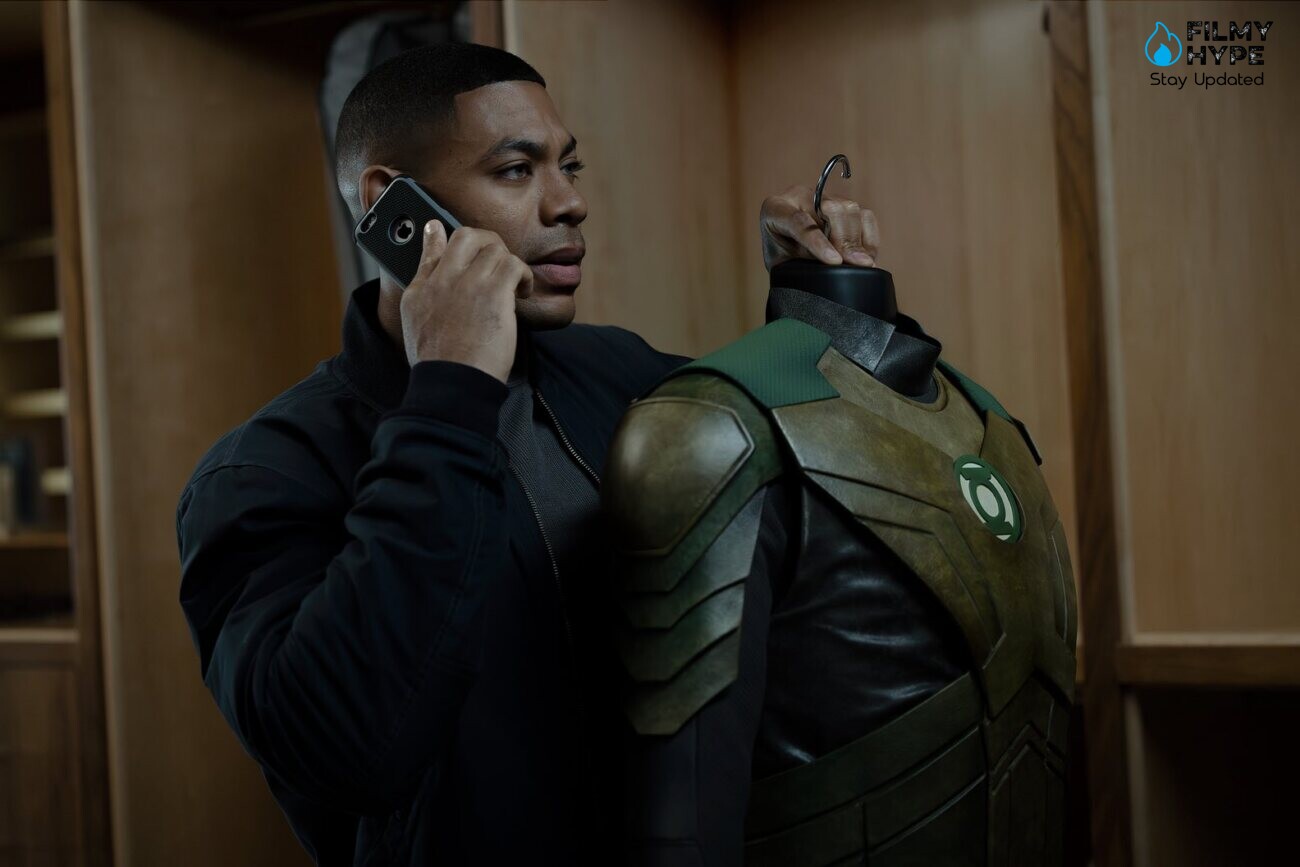
The investigation takes a sharp turn when John is sent to Hal’s home in Coast City. The mission is simple: retrieve Hal’s power battery so he can recharge his ring. But the house itself becomes a character. John discovers Hal’s obsessive collection of Green Lantern memorabilia, a living plant he calls Earl, and—most importantly—the power battery hidden inside a pocket-sized dimension.
That visit is where everything goes wrong. John is ambushed by a group of aliens and taken captive. The aliens who died on the football field in the premiere, it turns out, were killed by William Macon’s men, but not for the reasons we assumed. They weren’t invaders. They were refugees. And they’re led by Antaan, played with weary gravitas by Paul Ben-Victor.
Through a forced neural connection, the aliens show John the destruction of their homeworld at the hands of the Manhunters. Their species was nearly wiped out, and they’ve been tracking the machine responsible ever since. They fear that Hal is protecting it—whether knowingly or not—because he hasn’t turned it over. So they give John a brutal ultimatum: find the Manhunter within 48 hours, or they destroy Rushville.
That countdown changes the stakes entirely. John isn’t just investigating anymore. He’s a hostage to a clock he didn’t set, caught between his duty to the Corps and the very real possibility that Hal knows more than he’s saying.
The Pocket Dimension: A Quiet Piece of the DCU Puzzle
One of the most intriguing details in the episode is Hal’s power battery being stored in a pocket dimension. On its own, it’s a clever bit of sci-fi texture—a way to keep something powerful hidden in plain sight. But Lanterns is clearly building toward something larger.
James Gunn’s new DCU has been quietly introducing pocket dimensions as a recurring motif. In Superman, Lex Luthor uses a pocket universe as a prison, and its destabilization threatens to tear Metropolis apart. In Peacemaker Season 2, the Quantum Unfolding Chamber plays a similar role, eventually spitting John Cena’s character onto the prison planet Salvation. Now Lanterns adds another piece.
It’s too deliberate to be a coincidence. The pocket dimension isn’t just a fun Easter egg—it’s a narrative tool that could allow these seemingly separate stories to collide. If the DCU is building toward a larger conflict, one that spans space, time, and perhaps even alternate realities, then the repeated use of compressed dimensions makes sense. They’re doorways. And the Green Lanterns, with their rings capable of manipulating space-time, might be the ones holding the key.
Bad News on the Horizon for John Stewart
The episode ends with John more isolated than ever. He’s been physically altered by the aliens, forced to see their suffering firsthand. He’s carrying the weight of an ultimatum that could kill thousands. And he’s starting to suspect that Hal—the man he’s supposed to trust—might be hiding something about the Manhunter.
For anyone who knows where this story is heading, that suspicion is poison. The flash-forward to 2026, where Hal is dead, already casts a long shadow. The question isn’t whether John survives, but how much of himself he loses along the way. Sinestro’s quiet interest in him suggests the answer will be significant.
Lanterns is doing something rare in superhero television: it’s letting its characters sit in discomfort. Hal is haunted by a past he can’t outrun. John is being pulled into a conflict he doesn’t fully understand. And the villains—whether Sinestro, the Manhunters, or the aliens themselves—aren’t simple monsters. They’re products of a broken system that the Guardians built and then abandoned.
As the countdown to Rushville’s destruction begins, one thing is clear: the Green Lanterns’ greatest enemy isn’t out there in the stars. It’s the secrets they’re keeping from each other. And Sinestro, even from his cell, is already waiting to exploit that.
What About All Those DCU Connections?
The show isn’t just building its own corner. It’s quietly stitching itself into the larger DCU.
Hal’s mansion in Coast City is a treasure trove. He’s got a living plant named Earl (yes, really), a closet full of Green Lantern uniforms, and—most importantly—he keeps his power battery in a pocket dimension.
If that term sounds familiar, it’s because Superman and Peacemaker season 2 have already used the same concept. Pocket dimensions are becoming the connective tissue of James Gunn’s Chapter One. It’s a smart way to explain how characters can hide massive secrets in plain sight without breaking the logic of the world.
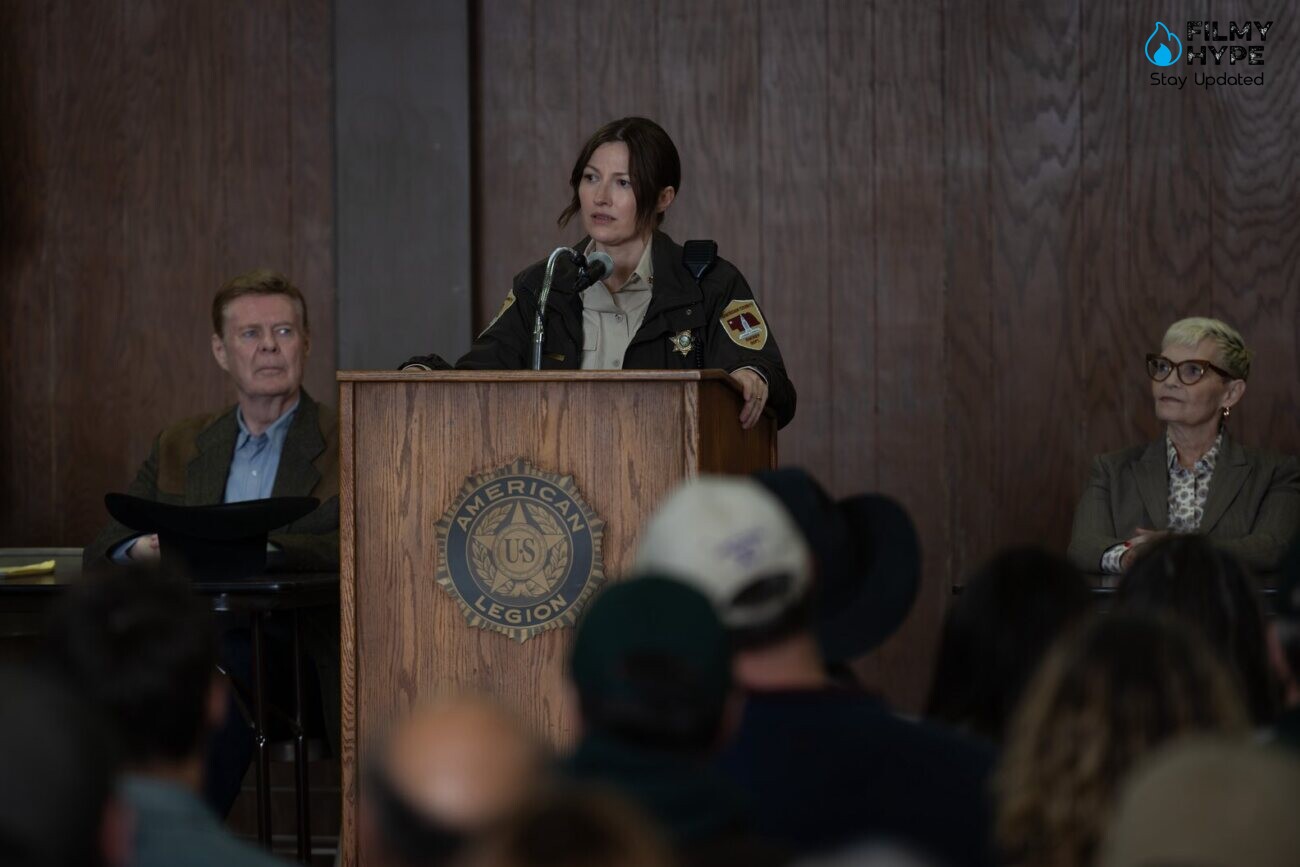
There’s also a small but juicy Easter egg: the town’s sheriff has the surname Kane and is confirmed to be from Gotham City. For DC fans, that’s a pretty clear nod to the Kane family—the same family that produced Batwoman. It might mean nothing right now, but in a universe this interconnected, every name matters.
So What’s Next?
Hal is walking into a trap. He just doesn’t know it yet.
Sinestro’s curiosity about John Stewart is the kind of slow-burn danger that could blow up in everyone’s face. The Manhunter is still out there, hiding in Rushville, and the clock is ticking. John has less than 48 hours to find it before Antaan makes good on his threat.
And somewhere underneath all of that is the question the show hasn’t fully answered yet: why did the Manhunter kill Abin Sur in the first place? Was it random violence, or is there a larger plan at work?
Episode two didn’t just raise the stakes. It changed the game. And I, for one, am already counting down to next week.